1. Search Result
Search Result
Results for "

CCI

" in MedChemExpress (MCE) Product Catalog:

42

Inhibitors & Agonists

2

Inhibitory Antibodies

5

Natural
Products

1

Isotope-Labeled Compounds

Cat. No. Product Name Target Research Areas Chemical Structure
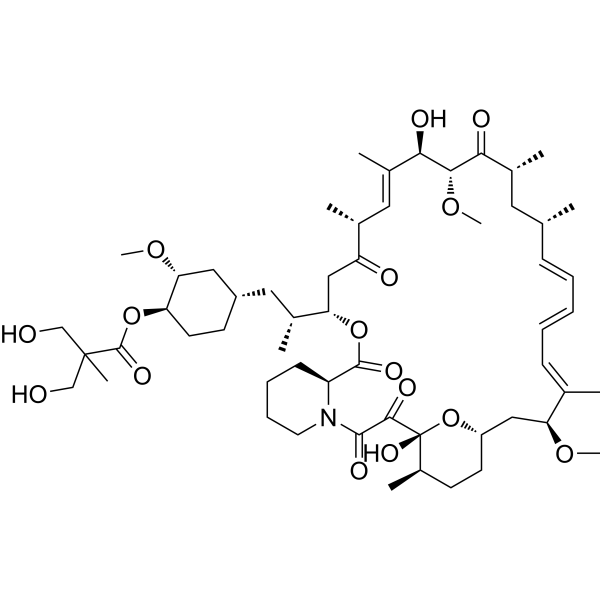
  • HY-50910
    Temsirolimus
    Maximum Cited Publications
    31 Publications Verification

    CCI-779

    mTOR Autophagy Apoptosis Bacterial Cancer
    Temsirolimus is an inhibitor of mTOR with an IC50 of 1.76 μM. Temsirolimus activates autophagy and prevents deterioration of cardiac function in animal model .
    Temsirolimus
  • HY-A0082

    Difenidol hydrochloride

    mAChR Sodium Channel Neurological Disease
    Diphenidol hydrochloride (Difenidol hydrochloride) is a non-selective muscarinic M1-M4 receptor antagonist, has anti-arrhythmic activity. Diphenidol hydrochloride is also a potent non-specific blocker of voltage-gated ion channels (Na +, K +, and Ca 2+) in neuronal cells. Diphenidol hydrochloride can be used in the study of antivertigo and antinausea .
    Diphenidol hydrochloride
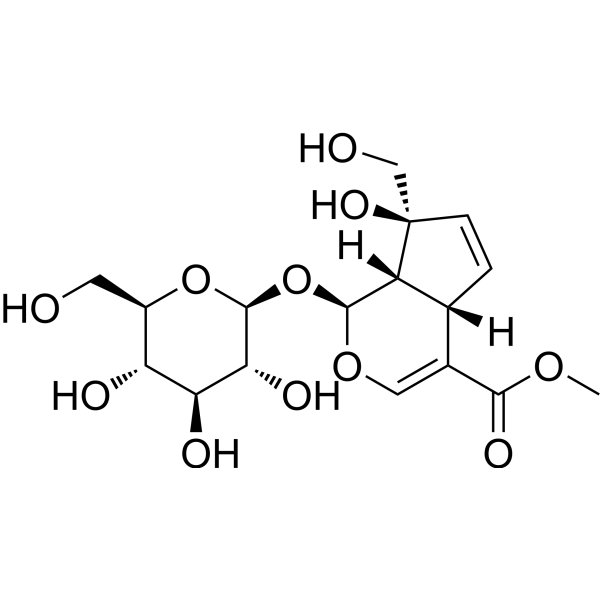
  • HY-N1478
    Gardenoside
    2 Publications Verification

    P2X Receptor Reactive Oxygen Species (ROS) Neurological Disease Inflammation/Immunology
    Gardenoside is an orally active natural compound found in Gardenia fruits. Gardenoside reliefs chronic constriction injury (CCI)-induced neuropathic pain by regulating the P2X3 and P2X7 receptors. Gardenoside has an inhibitory effect on free fatty acids (FFA)-induced cellular steatosis. Gardenoside reduces reactive oxygen species (ROS). Gardenoside can be used for anti-inflammatory, antinociceptive and hepatoprotective study .
    Gardenoside
  • HY-N0440
    Germacrone
    2 Publications Verification

    Influenza Virus NF-κB 5 alpha Reductase Keap1-Nrf2 Lactate Dehydrogenase Apoptosis Infection Neurological Disease Inflammation/Immunology Endocrinology Cancer
    Germacrone is a sesquiterpene compound with multiple biological activities. Germacrone inhibits the H1N1 and H3N2 influenza A virus and the influenza B virus. Germacrone blocks the progressionof arthritis by regulating Th1/Th2 balance and inhibiting NF-κB signaling. Germacrone can arrest the cell cycle at G0/G1 and G2/M phases and induce apoptosis in breast cancer cells. Germacrone inhibits 5α-reductase and has anti-androgenic effect. Germacrone has neuroprotective functions and can be used for the study of traumatic brain injury (TBI). Germacrone also has antioxidant activity .
    Germacrone
  • HY-N3710

    Kumujian G; O-Methylpicrasidine I

    JAK Apoptosis Neurological Disease Cancer
    Dehydrocrenatidine, a natural alkaloid, is a specific JAK inhibitor. Dehydrocrenatidine inhibits voltage-gated sodium channels and ameliorates mechanic allodia in a rat model of neuropathic pain .
    Dehydrocrenatidine
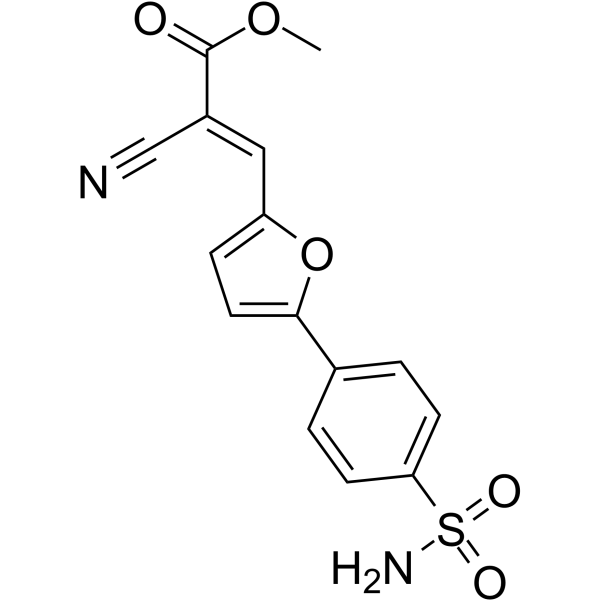
  • HY-178281

    Potassium Channel Sodium Channel Neurological Disease
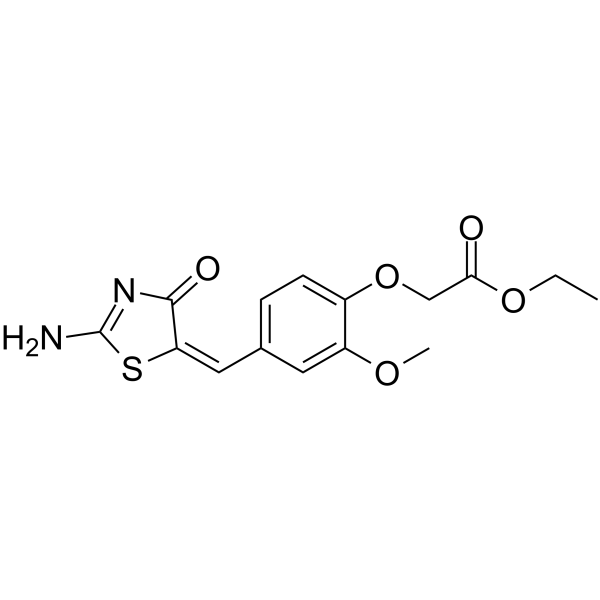
    E0199 is a novel potent dual-target KV7/NaV modulator that activates the KV7 channel (KV7.2/7.3 (EC50 = 12.78 nM), KV7.2 (EC50 = 0.50 μM), and KV7.5 (EC50 = 27.14 nM) channels) while simultaneously blocks the NaV1.7 (IC50 = 0.52 μM), NaV1.8 (IC50 = 0.24 μM), and NaV1.9 (IC50 = 0.16 μM) channels. E0199 shows a potent analgesic effect without affecting heart and skeletal muscle ion channels critically in a chronic constriction injury (CCI) mouse model. E0199 can be used for Neuropathic pain (NP) research .
    E0199
  • HY-135871

    AAK1 Neurological Disease
    BMT-124110 is a potent, selective AAK1 inhibitor with an IC50 of 0.9 nM. BMT-124110 shows antinociceptive activity. BMT-090605 inhibits BMP-2-inducible protein kinase (BIKE) and Cyclin G-associated kinase (GAK) with IC50s of 17 and 99 nM, respectively .
    BMT-124110
  • HY-114410

    Mitochondrial Metabolism Cancer
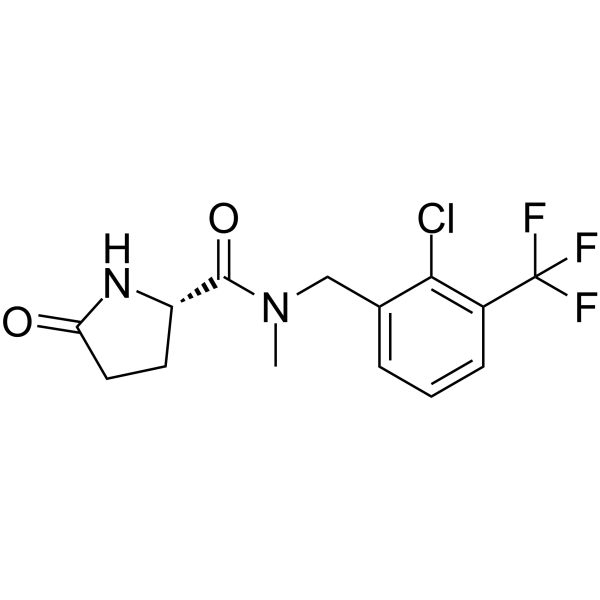
    CCI-006 is a selective inhibitor and chemosensitizer of MLL-rearranged leukemia cells, by inhibits mitochondrial respiration resulting in insurmountable mitochondrial depolarization and a pro-apoptotic unfolded protein response (UPR) in a subset of MLL-r leukemia cells .
    CCI-006
  • HY-101290A

    Cyclin G-associated Kinase (GAK) AAK1 Neurological Disease
    BMT-090605 hydrochloride is a potent, selective the adapter protein-2 associated kinase 1 (AAK1) inhibitor with an IC50 value of 0.6 nM. BMT-090605 hydrochloride shows antinociceptive activity. BMT-090605 hydrochloride inhibits BMP-2-inducible protein kinase (BIKE) and Cyclin G-associated kinase (GAK) with IC50 values of 45 nM and 60 nM, respectively. BMT-090605 hydrochloride can be used for the research of neuropathic pain .
    BMT-090605 hydrochloride
  • HY-106189

    Opioid Receptor Neurological Disease
    CCI-1008 is an opioid receptor agonist. CCI-1008 can be used for research on nervous system diseases .
    CCI-1008
  • HY-W987949

    Others Neurological Disease
    Z-4105 is an orally active nootropic agent. Z-4105 reverses the amnesic effects of electroconvulsive shock (ECS) and methylazoxymethanol acetate (MAM), and improves learning and memory functions. Z-4105 enhances the activity of the brain cholinergic system without affecting other neurotransmitter systems. Z-4105 significantly alleviates neuropathic pain in rats. Z-4105 can be used in the research of neuropathic pain and brain dysfunction .
    Z-4105
  • HY-19888

    P2X Receptor Interleukin Related Neurological Disease Inflammation/Immunology
    GSK-1482160 is an orally active and blood-brain barrier penetrant P2X7 receptor (P2X7R) negative allosteric modulator with pIC50s of 8.5 (human) and 6.5 (rat). GSK-1482160 reduces the efficacy of ATP at the P2X7 receptor without affecting its affinity, thereby inhibiting the release of IL-1β. GSK-1482160 is an effective radioligand and can be labeled with radioactive isotopes like 11C or 18F to image P2X7R. GSK-1482160 can be used for the studies of chronic joint pain and chronic constriction injury (CCI) .
    GSK-1482160
  • HY-178006

    P2Y Receptor Neurological Disease
    MRS4917 is an orally active, potent selective P2Y14 receptor (hP2Y14R) antagonist (IC50 = 2.88 nM, Ki = 1.67 nM) that shows >18,000 fold selectivity against P2Y6R (IC50 = 54 μM). MRS4917 demonstrates oral efficacy in reversing established mechanoallodynia in the chronic constriction injury (CCI) mouse model, while having no effect on thermoregulation. MRS4917 can be used for neurological diseases research .
    MRS4917
  • HY-177691

    Prostaglandin Receptor Neurological Disease Inflammation/Immunology
    CCI17464 is a selective, orally active EP4 partial agonist with a pKi of 7.1. CCI17464 can be used in a Freund's complete adjuvant (FCA) acute rat inflammatory pain model and shows complete reversal of allergic reactions .
    CCI17464
  • HY-101290

    AAK1 Cyclin G-associated Kinase (GAK) Neurological Disease
    BMT-090605 is a potent, selective the adapter protein-2 associated kinase 1 (AAK1) inhibitor with an IC50 value of 0.6 nM. BMT-090605 shows antinociceptive activity. BMT-090605 inhibits BMP-2-inducible protein kinase (BIKE) and Cyclin G-associated kinase (GAK) with IC50 values of 45 nM and 60 nM, respectively. BMT-090605 can be used for the research of neuropathic pain .
    BMT-090605
  • HY-W115558

    Serine Racemase (SR) Neurological Disease
    L-Serine-O-sulfate potassium is a serine racemase (Srr) inhibitor. L-Serine-O-sulfate potassium attenuates the chronic constriction injury (CCI)-induced increases in NO levels, nNOS phosphorylation at Ser847, PKC-dependent GluN1 phosphorylation at Ser896, and the development of mechanical allodynia in mice. L-Serine-O-sulfate potassium can be used for the research of peripheral neuropathy .
    L-Serine-O-sulfate potassium
  • HY-50910R

    CCI-779 (Standard)

    mTOR Autophagy Apoptosis Bacterial Reference Standards Cancer
    Temsirolimus (Standard) is the analytical standard of Temsirolimus. This product is intended for research and analytical applications. Temsirolimus is an inhibitor of mTOR with an IC50 of 1.76 μM. Temsirolimus activates autophagy and prevents deterioration of cardiac function in animal model .
    Temsirolimus (Standard)
  • HY-P990248

    Cadherin EGFR PERK Akt mTOR Neurological Disease Inflammation/Immunology Cancer
    Anti-Mouse E-Cadherin/CD324 Antibody (DECMA-1) is an anti-mouse E-Cadherin/CD324 IgG1 monoclonal antibody. Anti-Mouse E-Cadherin/CD324 Antibody (DECMA-1) can downregulate the HER signaling axis and PI3K/Akt/mTOR signaling pathway. Anti-Mouse E-Cadherin/CD324 Antibody (DECMA-1) can inhibit the proliferation of tumor cells and induce their apoptosis. Anti-Mouse E-Cadherin/CD324 Antibody (DECMA-1) can be used for researches on cancer and inflammation conditions such as breast cancer, chronic compression injury (CCI) and asthma .
    Anti-Mouse E-Cadherin/CD324 Antibody (DECMA-1)
  • HY-A0270

    mAChR Sodium Channel Neurological Disease
    Diphenidol is a non-selective muscarinic M1-M4 receptor antagonist, has anti-arrhythmic activity. Diphenidol is also a potent non-specific blocker of voltage-gated ion channels (Na +, K +, and Ca 2+) in neuronal cells. Diphenidol can be used in the study of antivertigo and antinausea .
    Diphenidol
  • HY-N1478R

    Reference Standards P2X Receptor Reactive Oxygen Species (ROS) Neurological Disease Inflammation/Immunology
    Gardenoside is an orally active natural compound found in Gardenia fruits. Gardenoside reliefs chronic constriction injury (CCI)-induced neuropathic pain by regulating the P2X3 and P2X7 receptors. Gardenoside has an inhibitory effect on free fatty acids (FFA)-induced cellular steatosis. Gardenoside reduces reactive oxygen species (ROS). Gardenoside can be used for anti-inflammatory, antinociceptive and hepatoprotective study .
    Gardenoside (Standard)
  • HY-122698

    Apoptosis Cancer
    CCI-007 is a small molecule with cytotoxic activity against infant leukemia with MLL rearrangements, with IC50 values of 2.5-6.2 μM in sensitive cells .
    CCI-007
  • HY-143264

    FAAH MAGL Neurological Disease
    FAAH/MAGL-IN-2 is a potent, reversible, orally active, and cross the blood-brain barrier FAAH and MAGL inhibitor with IC50s of 11 nM and 36 nM (Kis of 28 nM and 60 nM), respectively . FAAH/MAGL-IN-2 has the potential to research neuropathic pain without causing locomotion impairment .
    FAAH/MAGL-IN-2
  • HY-105818

    CCI 18773; S-Chlorofluticasone propionate

    Drug Intermediate Others
    Cloticasone propionate (CCI 18773) is an intermediate in the synthesis of Fluticasone propionate (HY-B0154). Fluticasone propionate is a potent topical anti-inflammatory corticosteroid, is a selective glucocorticoid receptor agonist .
    Cloticasone propionate
  • HY-19202

    rac-EMA401; rac-PD-126055; EMA400

    Angiotensin Receptor Neurological Disease
    rac-Olodanrigan (rac-EMA401; EMA400) is a racemic mixture of the S-enantiomer (EMA401; HY-13106) and R-enantiomer (EMA402). rac-Olodanrigan is a potent and selective AT2 receptor antagonist with IC50s of 75.2 nM and 2918 nM for AT2R and AT1R, respectively. rac-Olodanrigan evokes dose-dependent relief of mechanical allodynia in the ipsilateral hind paws of rats with a chronic constriction injury (CCI) of the sciatic nerve .
    rac-Olodanrigan
  • HY-167855

    P2Y Receptor Inflammation/Immunology
    MRS4833 (compound 15) is an orally active, potent, competitive P2Y14R antagonist with an of IC50 of 5.92 nM for hP2Y14R and an IC50 of 4.8 nM for mP2Y14R. MRS4833 reduces airway eosinophilia in a protease-mediated asthma model and reverses chronic neuropathic pain in a mouse CCI model .
    MRS4833
  • HY-A0082R

    Difenidol hydrochloride (Standard)

    Reference Standards mAChR Sodium Channel Neurological Disease
    Diphenidol (hydrochloride) (Standard) is the analytical standard of Diphenidol (hydrochloride). This product is intended for research and analytical applications. Diphenidol hydrochloride (Difenidol hydrochloride) is a non-selective muscarinic M1-M4 receptor antagonist, has anti-arrhythmic activity. Diphenidol hydrochloride is also a potent non-specific blocker of voltage-gated ion channels (Na+, K+, and Ca2+) in neuronal cells. Diphenidol hydrochloride can be used in the study of antivertigo and antinausea [4] .
    Diphenidol hydrochloride (Standard)
  • HY-135871A

    AAK1 Neurological Disease
    BMT-124110 formic is a potent, selective AAK1 inhibitor, with an IC50 of 0.9 nM. BMT-124110 shows antinociceptive activity. BMT-124110 formic inhibits BMP-2-inducible protein kinase (BIKE) and Cyclin G-associated kinase (GAK) with IC50s of 17 and 99 nM, respectively .
    BMT-124110 formic
  • HY-167855S

    Isotope-Labeled Compounds P2Y Receptor Inflammation/Immunology
    1’-Epi Gemcitabine hydrochloride- 13C, 15N2 is the 13C- and 15N-labeled MRS4833 (HY-167855). MRS4833 (compound 15) is an orally active, potent, competitive P2Y14R antagonist with an of IC50 of 5.92 nM for hP2Y14R and an IC50 of 4.8 nM for mP2Y14R. MRS4833 reduces airway eosinophilia in a protease-mediated asthma model and reverses chronic neuropathic pain in a mouse CCI model .
    1’-Epi Gemcitabine hydrochloride-13C,15N2
  • HY-168214

    Potassium Channel Neurological Disease
    Kv7.2/Kv7.3 agonist 1 (Compound 16) is an orally active agonist for KV7.2/7.3 channel (KCNQ2/3) with an EC50 of 1.03 μM. Kv7.2/Kv7.3 agonist 1 exhibits analgesic efficacy in mice chronic constriction injury (CCI) model and mice Streptozotocin (HY-13753)-induced diabetic peripheral neuropathic pain (DPNP) model, with ED50 of 12.02 and 9.63 mg/kg .
    Kv7.2/Kv7.3 agonist 1
  • HY-P991310

    LT3015; LT-3000

    LPL Receptor Neurological Disease Cancer
    Lpathomab (LT3015; LT-3000) is a human IgG1 monoclonal antibody (mAb) targeting LPA. Lpathomab reduces the release of IL-8 and IL-6 cytokines in SKOV3 cells and blocks LPA-triggered tumor cell migration. Lpathomab reduces neovascularization in Matrigel plug and CNV models. Lpathomab inhibits brain injury in the CCI mouse model. Lpathomab can be used in the study of brain injury, ovarian cancer, diabetic neuropathy, and spinal cord injury. Recommended isotype control: Human IgG1 kappa, Isotype Control (HY-P99001) .
    Lpathomab
  • HY-151392

    LPL Receptor Neurological Disease Inflammation/Immunology
    LPA5 antagonist 2 (compound 65) is a high aqueous solubility LPA5 (lysophosphatidic acid receptor 5) antagonist. LPA5 antagonist 2 significantly attenuates nociceptive hypersensitivity and it can be used for the research of inflammatory and neuropathic pains .
    LPA5 antagonist 2
  • HY-123382

    Drug Isomer Neurological Disease Inflammation/Immunology
    GSK-1482160 isomer is the isomer of GSK-1482160 (HY-19888). GSK-1482160 is an orally active and blood-brain barrier penetrant P2X7 receptor (P2X7R) negative allosteric modulator with pIC50s of 8.5 (human) and 6.5 (rat). GSK-1482160 reduces the efficacy of ATP at the P2X7 receptor without affecting its affinity, thereby inhibiting the release of IL-1β. GSK-1482160 is an effective radioligand and can be labeled with radioactive isotopes like 11C or 18F to image P2X7R. GSK-1482160 can be used for the studies of chronic joint pain and chronic constriction injury (CCI).
    GSK-1482160 (isomer)
  • HY-180985

    PROTACs Bcr-Abl Cancer
    Azo-PROTAC-4C-cis is a BCR-ABL PROTAC degrader, and its degradation efficiency of BCR-ABL is much lower than that of its trans isomer Azo-PROTAC-4C-trans (HY-180983). Azo-PROTAC-4C-cis is the product of the conformational transformation of Azo-PROTAC-4C-trans under ultraviolet (UV) light irradiation. Azo-PROTAC-4C-cis can be converted into highly active Azo-PROTAC-4C-trans under visible light, thereby initiating protein degradation. Azo-PROTAC-4C-cis can be used for the study of myeloid leukemia .
    Azo-PROTAC-4C-cis
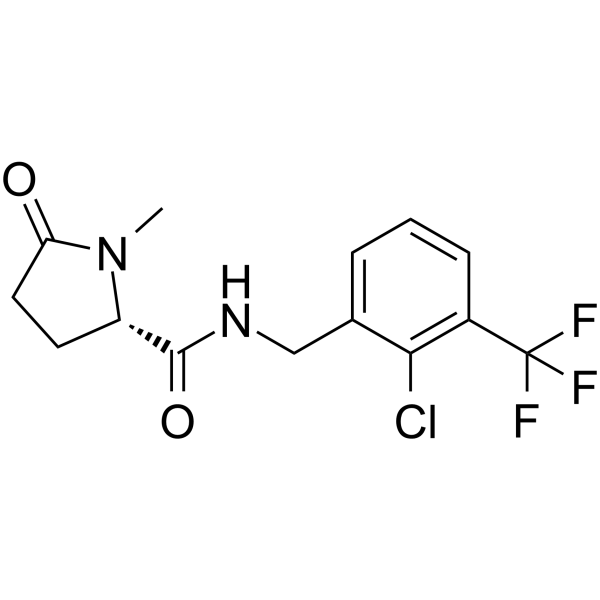
  • HY-180802

    Mas-related G-protein-coupled Receptor (MRGPR) Neurological Disease
    BCFTP is a potent, orally active and selective human Mas-related G protein-coupled receptor X1 (MrgprX1)-positive allosteric modulator. BCFTP selectively potentiates MrgprX1 signaling in HEK293 cells. BCFTP alleviates specific neuropathic pain-related behaviors in a humanized MrgprX1 mouse model of chronic constrictive injury (CCI) in a MrgprX1-dependent manner. BCFTP synergistically enhances psychoactive substances analgesia in CCI MrgprX1 mice. BCFTP can be used for neuropathic pain research .
    BCFTP
  • HY-110268

    CXCR Inflammation/Immunology
    NVP CXCR2 20 is a selective CXCR2 inhibitor with analgesic and antinociceptive activities. NVP CXCR2 20 selectively blocks CXCR2 signaling and attenuates mechanical and thermal hypersensitivity in rat chronic constriction injury (CCI) models. NVP CXCR2 20 inhibits CXCL3-induced hypersensitivity in naive mice and reduces elevated CXCL3 protein levels in the spinal cord and dorsal root ganglia (DRG) of CCI-exposed rats. NVP CXCR2 20 can be used for the research of neuropathic pain and chronic obstructive pulmonary disease (COPD) .
    NVP CXCR2 20
  • HY-180986

    E3 Ligase Ligand-Linker Conjugates Cancer
    Cis-Lenalidomide-CO-Ph-N2-Ph-O-C4-Cl is a synthetic E3 ligand-connector conjugate that can be used for the synthesis of Azo-PROTAC-4C-cis (HY-180985).
    cis-Lenalidomide-CO-Ph-N2-Ph-O-C4-Cl
  • HY-183166

    Cathepsin Neurological Disease
    Z-Arg-Lys-AOMK is a cathepsin B inhibitor that can cross the blood-brain barrier. Z-Arg-Lys-AOMK reduces cytosolic cathepsin B activity in homogenates of mouse cerebral cortex and hippocampal tissues, and alleviates motor dysfunction associated with CCI-TBI. Z-Arg-Lys-AOMK can be used in the research of traumatic brain injury .
    Z-Arg-Lys-AOMK
  • HY-N12768

    MDM-2/p53 Notch Calcium Channel Neurological Disease Inflammation/Immunology
    Rhodojaponin VI is an orally active diterpenoid compound found in hododendron molle G. Don
    (Ericaceae) (RM). Rhodojaponin VI binds rat N-Ethylmaleimide-sensitive fusion (NSF) with a Kd of 1.03 μM. Rhodojaponin VI blocks the MDM2-Notch1 signalling pathway by reducing MDM2 and Notch1 expression. Rhodojaponin VI indirectly reduces Cav2.2 current intensity by inhibiting NSF-mediated Cav2.2 trafficking. Rhodojaponin VI alleviates glomerulonephritis progression and podocyte injury in passive heymann nephritis rats. Rhodojaponin VI also has antinociceptive effects. Rhodojaponin VI can be used for the researches of heymann nephritis and pain .
    Rhodojaponin VI
  • HY-101290AR

    Cyclin G-associated Kinase (GAK) Reference Standards AAK1 Neurological Disease
    BMT-090605 (hydrochloride) (Standard) is the analytical standard of BMT-090605 (hydrochloride) (HY-101290A). This product is intended for research and analytical applications. BMT-090605 hydrochloride is a potent, selective the adapter protein-2 associated kinase 1 (AAK1) inhibitor with an IC50 value of 0.6 nM. BMT-090605 hydrochloride shows antinociceptive activity. BMT-090605 hydrochloride inhibits BMP-2-inducible protein kinase (BIKE) and Cyclin G-associated kinase (GAK) with IC50 values of 45 nM and 60 nM, respectively. BMT-090605 hydrochloride can be used for the research of neuropathic pain .
    BMT-090605 hydrochloride (Standard)
  • HY-181977

    GlyT 5-HT Receptor Serotonin Transporter Neurological Disease
    RPI-GLYT2-82 is a reversible, blood-brain barrier-permeable allosteric inhibitor of GlyT2 with an IC50 value of 554 nM. RPI-GLYT2-82 also exhibits inhibitory activity against 5-HT2AR and SERT, with IC50 values of 1.9 μM and 4.7 μM, respectively. RPI-GLYT2-82 inhibits pain signals and alleviates allodynia, shows no target-related side effects at the maximum analgesic dose, and has no addictive potential. RPI-GLYT2-82 can be used for the research of neuropathic pain .
    RPI-GLYT2-82
  • HY-182351

    Calcium Channel Neurological Disease
    ONO-2921 is an orally active and selective N-type calcium channel blocker. ONO-2921 functionally blocks N-type calcium channels. ONO-2921 reduces paw withdrawal responses during persistent nociception and hyperalgesia to heat in neuropathic pain models. ONO-2921 can be used for research on neuropathic pain and nociceptive pain .
    ONO-2921
  • HY-18101

    Sigma Receptor TRP Channel Neurological Disease
    BD-1063 is a selective σ-1 receptor antagonist with inhibitory activity against TRPC5 and TRPM3. BD-1063 exerts anti-hyperalgesic and anti-allodynic effects by inhibiting sustained calcium influx mediated by TRPC5 and TRPM3, and reverses the effects of Carrageenan (HY-125474). BD-1063 also significantly reduces excessive ethanol self-administration behavior. BD-1063 is widely used in studies on the mechanisms underlying neuropathic pain, inflammatory hyperalgesia, and alcohol abuse and dependence .
    BD-1063

Inquiry Online

Your information is safe with us. * Required Fields.

Salutation


Country or Region *

Applicant Name *


Organization Name *

Department *


Email Address *


Product Name *

Cat. No.


Requested quantity *

Phone Number *


Remarks

Inquiry Online

Inquiry Information

Product Name:
Cat. No.:
Quantity:
MCE Japan Authorized Agent:

