



1. Search Result
Search Result
Results for "

CHO K1

" in MedChemExpress (MCE) Product Catalog:

31

Inhibitors & Agonists

8

Peptides

1

MCE Kits

4

Inhibitory Antibodies

1

Natural
Products

1

Isotope-Labeled Compounds

Targets Recommended:
Cat. No. Product Name Target Research Areas Chemical Structure
  • HY-P4146

    BI 456906

    GLP Receptor GCGR Metabolic Disease
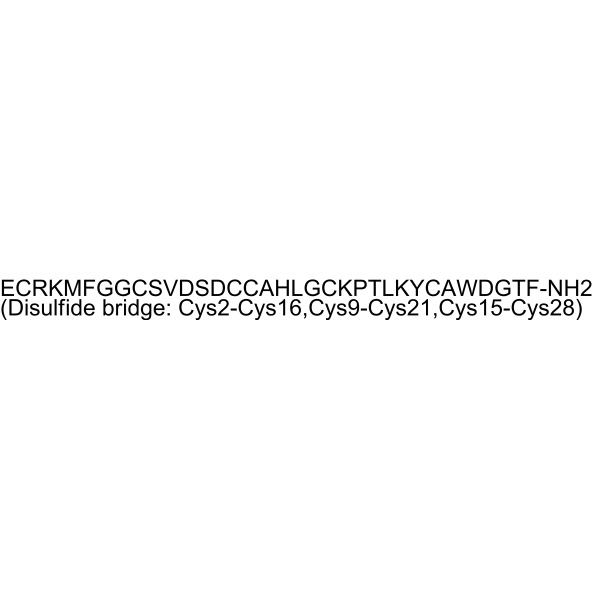
    Survodutide (BI 456906) is a potent, selective glucagon receptor/GLP-1 receptor (GCGR/GLP-1R) dual agonist with EC50s of 0.52 nM and 0.33 nM in CHO-K1 cells, respectively. Survodutide, a 29-amino-acid peptide, is a potent acylated peptide containing a C18 fatty acid. Survodutide has robust anti-obesity efficacy achieved by increasing energy expenditure and decreasing food intake .
    Survodutide
  • HY-108003

    Apelin Receptor (APJ) Cardiovascular Disease
    MM 07 is a biased apelin receptor agonist, with a KD of 300 nM in CHO-K1 cells and a KD of 172 nM in human heart.
    MM 07
  • HY-161247

    5-HT Receptor Metabolic Disease
    5HT2A antagonist 2 is an orally active, selective antagonist for 5HT2A with IC50 of 14 nM. 5-HT2A antagonist 2 exhibits good chemical, hepatocyte, and plasma stability, without significant cytotoxicity in cell lines VERO, HFL-1, L929, NIH3T3, CHO-K1 .
    5-HT2A antagonist 2
  • HY-P99870

    ASLAN004; CSL-334; MK-6105

    Interleukin Related Others
    Eblasakimab (ASLAN004; CSL-334) is a human IgG4 antibody that specifically targets IL13RA1 and is primarily expressed by CHO-K1 cells .
    Eblasakimab
  • HY-P990009

    NIS-793

    TGF-beta/Smad Cancer
    Nisevokitug (NIS-793) is a human, IgG2λ antibody targeting TGF-β (TGFB1/TGFB2). Nisevokitug is expressed by CHO-K1 cells .
    Nisevokitug
  • HY-123335A

    Somatostatin Receptor Neurological Disease
    L-796778 acetate is a selective agonist of the sst3 receptor. In CHO-K1 cells expressing the hsst3 receptor, L-796778 acetate is a partial agonist that inhibits Forskolin (HY-15371)-stimulated cAMP production with an IC50 value of 18 nM. L-796778 acetate has anticonvulsant effect .
    L-796778 acetate
  • HY-136895

    Prostaglandin Receptor Cancer
    AZ12672857 is an orally active inhibitor of EphB4 (IC50=1.3 nM) and Src kinases. AZ12672857 shows good inhibition of proliferation of c-Src transfected 3T3 cells (IC50=2 nM) as well as autophosphorylation of EphB4 in transfected CHO-K1 cells (IC50=9 nM) .
    AZ12672857
  • HY-132225

    5-HT Receptor Inflammation/Immunology
    SB 206553 is a 5-HT2C inverse agonist. SB 206553 can attenuate methamphetamine-seeking in rats. SB 206553 has activity for 5-HT2 receptor ligands in HEK-293 or CHO-K1 cells expressing human recombinant 5-HT2 receptors with pKi values of 5.6 nM (5-HT2A), 7.7 nM (5-HT2B) and 7.8 nM (5-HT2C), respectively. SB 206553 can be used for the research of psychostimulant abuse disorders .
    SB 206553
  • HY-P99888

    EGFR Others
    Pimurutamab is a humanized IgG1-κ antibody targeting EGFR. Mainly expressed by CHO-K1 cells .
    Pimurutamab
  • HY-123335

    Somatostatin Receptor Others
    L-796778 is an agonist of the hsst3 receptor. In CHO-K1 cells expressing the hsst3 receptor, L-796778 is a partial agonist that inhibits forskolin (HY-15371)-stimulated cAMP production with an IC50 value of 18 nM .
    L-796778
  • HY-117617

    Histone Acetyltransferase Cancer
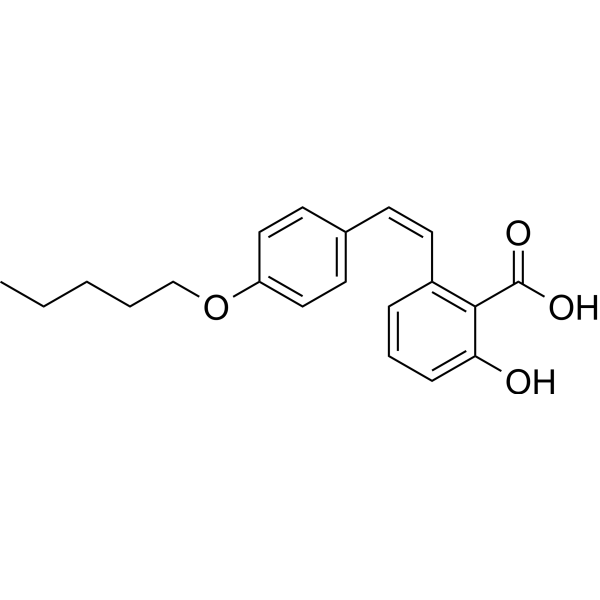
    CAY10669 (compound 6d) is an anacardic acid (HY-N2020) derivative that inhibits histone acetyltransferase PCAF with an IC50 of 662 μM . CAY10669 enhances the SAHA-induced acetylation in HEPG2 cells, exhibits cytotoxicity in zebrafish embryo, promotes transgene expression in CHO-K1 cells .
    CAY10669
  • HY-P991114

    FLT3 Inflammation/Immunology
    Adezkibart is a human monoclonal antibody immunosuppressant targeting the human FMS-like tyrosine kinase 3 ligand (FLT3LG). Adezkibart is found in the Chinese hamster ovary cell line CHO-K1, which binds to FLT3LG to block the relevant signaling pathway, inhibits the immune response, and exerts immunosuppressive activity. Adezkibart is promising for research of immune-related diseases .
    Adezkibart
  • HY-P4146A

    BI 456906 TFA

    GLP Receptor GCGR Metabolic Disease
    Survodutide (BI 456906) TFA is a potent, selective glucagon receptor/GLP-1 receptor (GCGR/GLP-1R) dual agonist with EC50s of 0.52 nM and 0.33 nM in CHO-K1 cells, respectively. Survodutide TFA, a 29-amino-acid peptide, is a potent acylated peptide containing a C18 fatty acid. Survodutide TFA has robust anti-obesity efficacy achieved by increasing energy expenditure and decreasing food intake .
    Survodutide TFA
  • HY-171854

    G2A (GPR132) Neurological Disease Inflammation/Immunology
    SB-583355 (Compound 56) is a potent G2A antagonist. SB-583355 can be prepared by a Suzuki reaction between 4-methoxyphenyl boronic acid and 3-bromo-4-hydroxybenzoic acid following the conditions followed by an amide coupling reaction. SB-583355 blocks the activation of G2A mediated either by 9-HOPE or T-10148 in human G2A expressing CHO-K1 cells. SB-583355 can be studied in research for inflammation, myeloid leukemia, and neuropathic pain .
    SB-583355
  • HY-P4146B

    BI 456906 sodium

    GLP Receptor GCGR Metabolic Disease
    Survodutide (BI 456906) sodium is a potent, selective glucagon receptor/GLP-1 receptor (GCGR/GLP-1R) dual agonist with EC50s of 0.52 nM and 0.33 nM in CHO-K1 cells, respectively. Survodutide sodium, a 29-amino-acid peptide, is a potent acylated peptide containing a C18 fatty acid. Survodutide sodium has robust anti-obesity efficacy achieved by increasing energy expenditure and decreasing food intake .
    Survodutide sodium
  • HY-137749A

    2'-Deoxy-3'-MANT-ADP trisodium

    Biochemical Assay Reagents Others
    MANT-dADP (trisodium) (2'-Deoxy-3'-MANT-ADP (trisodium)) is a fluorescent nucleotide derivative, with an emission maximum of 453 nm upon excitation at 350 nm. MANT-dADP (trisodium) can decrease inositol phoshate formation in CHO-K1 cells that express human purinergic P2Y12 receptor. MANT-dADP (trisodium) can be studied in research on the interaction between cardiac troponin I and myofibrils .
    MANT-dADP trisodium
  • HY-124104

    Drug Metabolite Cardiovascular Disease Metabolic Disease
    Aldicarb sulfoxide is a metabolite of Aldicarb. Aldicarb sulfoxide affects the glutathione-linked enzymes in CHO-K1 cells. Aldicarb sulfoxide inhibits cholinesterase (ChE) and carboxylesterase (CaE) with IC50 of 10 μM for both in zebrafish .
    Aldicarb sulfoxide
  • HY-100962A

    Tyrphostin 46; Tyrphostin AG 99

    Tyrosinase Cancer
    AG 99 (Tyrphostin 46), a tyrphostin derivative, is a tyrosine kinase inhibitor that increases sister chromatid exchange frequency in transformed CHO-K1 and primary CHE cells. AG 99 is promising for research of proliferative diseases .
    AG 99
  • HY-P5872

    JZTX-XI

    Sodium Channel Neurological Disease
    Jingzhaotoxin XI (JZTX-XI) is a sodium conductance inhibitor with an IC50 of 124 nM. Jingzhaotoxin XI slows the fast inactivation (EC50=1.18±0.2 μM) of Nav1.5 expressed in Chinese hamster ovary (CHO-K1) cells .
    Jingzhaotoxin XI
  • HY-124104S

    Isotope-Labeled Compounds Metabolic Disease
    Aldicarb sulfoxide-d3 is the deuterium labled Aldicarb sulfoxide (HY-124104). Aldicarb sulfoxide is a metabolite of Aldicarb. Aldicarb sulfoxide affects the glutathione-linked enzymes in CHO-K1 cells. Aldicarb sulfoxide inhibits cholinesterase (ChE) and carboxylesterase (CaE) with IC50 of 10 μM for both in zebrafish .
    Aldicarb sulfoxide-d3
  • HY-118048

    Sodium Channel Neurological Disease
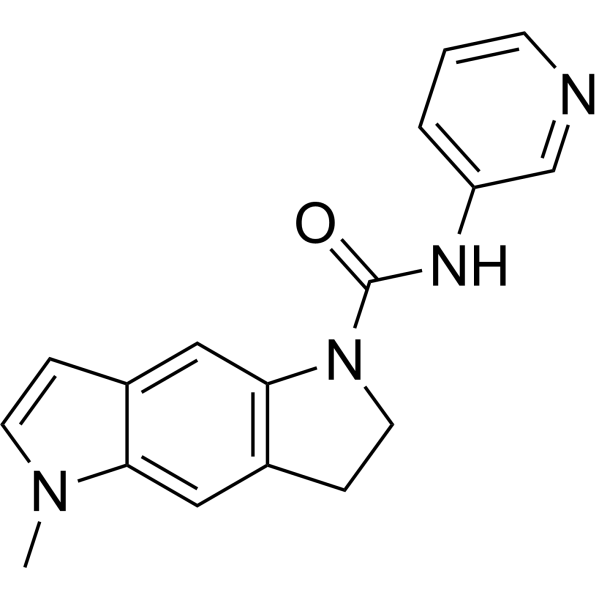
    NAV 26 (Compound 26) is a selective NaV1.7 inhibitor with an IC50 of 0.37 μM. NAV 26 is applicable for pain-related research .
    NAV 26
  • HY-174259

    mAChR Neurological Disease
    Muscarinic M4 modulator-1 is a Muscarinic M4 receptor positive allosteric modulator. Muscarinic M4 modulator-1 activates the muscarinic M4 receptor with allosteric potency EC50 s of 14 and 3 Nm in CHO-K1 cells and HEK293 cells. Muscarinic M4 modulator-1 has an antipsychotic-like activity, promising for psychiatric and/or neurological disorders research .
    Muscarinic M4 modulator-1
  • HY-163765

    PI4K Potassium Channel Infection
    Antimalarial agent 41 (Compound 17) exhibits antimalarial activity, which inhibits Plasmodium falciparum with an IC50 of 40 nM (NF54 strain) and 76 nM (K1 strain). Antimalarial agent 41 is an inhibitor for P. falciparum phosphatidylinositol-4-kinase β (Pf PI4K) and hERG channel, with an IC50 of 53 nM and 3 μM. Antimalarial agent 41 exhibits cytotoxicity to CHO cells with an IC50 of 34 μM. Antimalarial agent 41 ameliorates the malaria infection and exhibits good pharmacokinetic characters in mouse models .
    Antimalarial agent 41
  • HY-P0165B

    ITM077 acetate; R1583 acetate; BIM51077 acetate

    GLP Receptor Metabolic Disease
    Taspoglutide (R1583) acetate is an agonist of the glucagon-like peptide 1 receptor (GLP-1R) with an Ki value of 1.1 nM. Taspoglutide acetate induces cAMP accumulation in CHO-K1 cells expressing human GLP-1R (EC50 = 0.06 nM). Taspoglutide acetate decreases blood levels of glucose and increases blood levels of insulin in a glucose tolerance test in Zucker diabetic obese rats. Taspoglutide acetate reduces blood levels of gastric inhibitory polypeptide (GIP), plasma levels of triglycerides, and body weight in the same model .
    Taspoglutide acetate
  • HY-176546

    Neurokinin Receptor Endocrinology
    NK3R-IN-2 is an orally active NK3R inhibitor with an IC50 of 330.50 nM for human NK3R. NK3R-IN-2 can pass through the blood-brain barrier. NK3R-IN-2 has excellent NK3R binding affinity (IC50 = 87.31 nM) in CHO-K1 cells. NK3R-IN-2 effectively inhibits the level of luteinizing hormone (LH). NK3R-IN-2 can be used for research on hormone related conditions .
    NK3R-IN-2
  • HY-113513

    Others Cancer
    5(S)-HEPE is an active metabolite of eicosapentaenoic acid. It is formed from EPA by 5-lipoxygenase (5-LO). 5(S)-HEPE is an agonist of G protein-coupled receptor 119 (GPR119). It increases cAMP accumulation in CHO-K1 cells expressing human GPR119 when used at a concentration of 10 μM. 5(S)-HEPE increases glucose-induced insulin secretion from MING6 insulinoma pancreatic islets and glucagon-like peptide 1 (GLP-1) secretion from HuTu 80 adenocarcinoma cells when used at a concentration of 10 μM. Serum levels of 5(S)-HEPE are elevated in patients with hyperlipidemia.
    5-HEPE
  • HY-P5896

    Neuropeptide Y Receptor Neurological Disease
    Ala5-Galanin (2-11) is a galanin receptor 2 (GAL2R) specific agonist with a Ki of 258 nM .
    Ala5-Galanin (2-11)
  • HY-182645

    CRFR Neurological Disease
    CRF1 receptor antagonist-2 is an orally active, blood-brain barrier permeable CRF1 receptor antagonist, with an IC50 of 4 nM in CHO-K1 cell membranes and an IC50 of 7 nM in rat brain cell membranes. CRF1 receptor antagonist-2 exerts anxiolytic effects in swim stress-loaded rats. CRF1 receptor antagonist-2 can be used in studies related to stress-induced anxiety .
    CRF1 receptor antagonist-2
  • HY-181108

    PDGFR Parasite Infection
    GSK190937 is a type II platelet-derived growth factor receptor alpha (PDGFRA) human kinase inhibitor with antimalarial activity. GSK190937 can inhibit the formation of hemozoin in the malaria parasite, resulting in the accumulation of free hemoglobin within the malaria parasite. GSK190937 shows IC50 values of 0.22, 0.59 and 0.25 μM against P. falciparum NF54, K1 and Dd2 parasite. GSK190937 shows an IC50 of 25 μM for CHO cells. GSK190937 can be used for research of malaria .
    GSK190937
  • HY-149193

    Endogenous Metabolite Metabolic Disease
    5-Taurinomethyluridine is a taurine-containing modified uridine and translation regulator that exists in Trp and Leu (UUR) tRNAs of mammalian mitochondria. 5-Taurinomethyluridine is located at the first position of the anticodon of these mitochondrial tRNAs. 5-Taurinomethyluridine is synthesized from taurine and one-carbon metabolites by GTPBP3/MTO1, and its deficiency directly causes abnormal mitochondrial translation and various human mitochondrial diseases .
    5-Taurinomethyluridine
  • HY-P11584

    Amylin Receptor CGRP Receptor Metabolic Disease
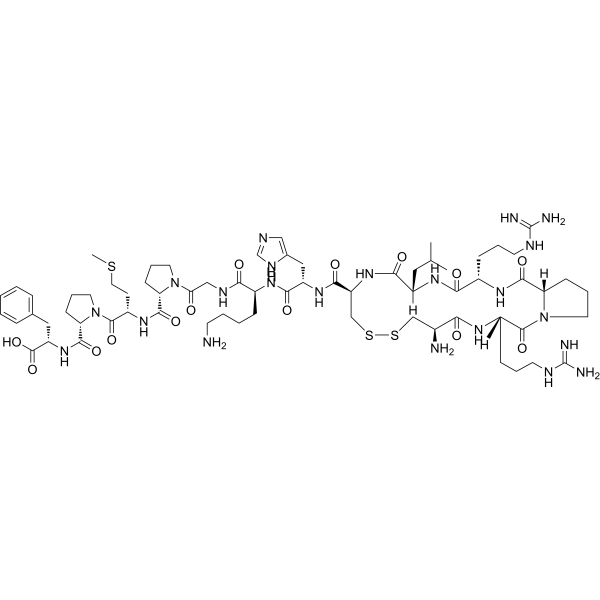
    KBP-066A is a long-acting dual amylin and calcitonin receptor agonist. KBP-066A can activate the CTR and AMY-R potently, with no off-target activity. KBP-066A reduces fasting blood glucose levels, fasting insulin levels, and body weight in diabetic rat models. KBP-066A can be used for the research of type 2 diabetes mellitus, obesity .
    KBP-066A

Inquiry Online

Your information is safe with us. * Required Fields.

Salutation


Country or Region *

Applicant Name *


Organization Name *

Department *


Email Address *


Product Name *

Cat. No.


Requested quantity *

Phone Number *


Remarks

Inquiry Online

Inquiry Information

Product Name:
Cat. No.:
Quantity:
MCE Japan Authorized Agent:

