8 Results for "

Carboxylesterase-IN-2

" in MedChemExpress (MCE) Product Catalog:
Products (8)

8 Results for "Carboxylesterase-IN-2" in MCE Product Catalog:

Cat. No.: HY-142688
CAS No.: 2764748-88-9
Purity:  99.83%
Research Areas:  

Cancer

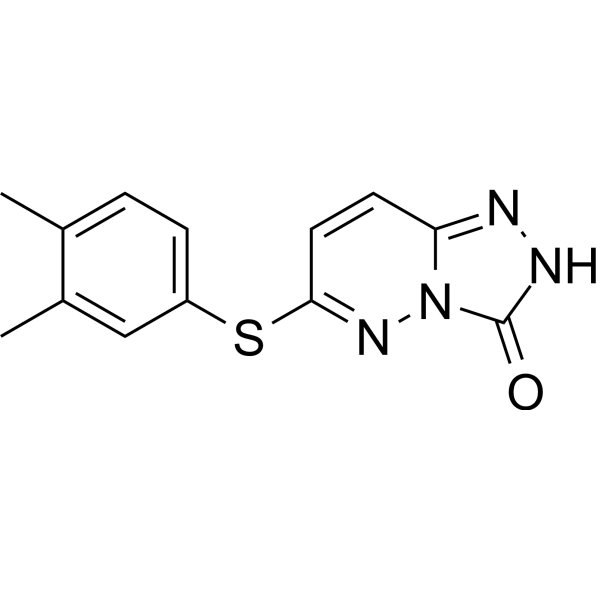
Carboxylesterase-IN-2 (compound 4u) is a potent inhibitor of Carboxylesterase Notum with an IC50 less than or equal to 10 nM. Notum is a negative regulator of Wnt signaling acting through the hydrolysis of a palmitoleoylate ester, which is required for Wnt activity. Carboxylesterase-IN-2 has the potential for the research of cancer disease .
loading...
    loading...
1
1 Cited Publications
Cat. No.: HY-134124
CAS No.: 92614-59-0
Purity:  95.8%
Research Areas:  

Metabolic Disease

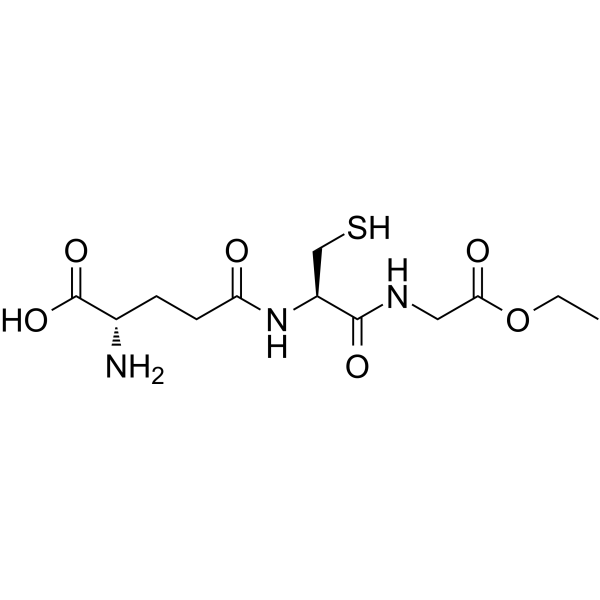
Glutathione ethyl ester is a cell-permeable GSH donor and provides an efficient supply of GSH to the oocyte. Glutathione ethyl ester shows positive effect on the in vitro production of embryos by enhancement of the antioxidative defense .
loading...
    loading...
Cat. No.: HY-114118S
Semaglutide-d8 is the deuterium labeled Semaglutide (HY-114118). Semaglutide is a long-acting, selective, competitive GLP-1R agonist that can penetrate the blood-brain barrier. After activating GLP-1R, Semaglutide promotes insulin secretion, inhibits gastric emptying and appetite, and at the same time enhances autophagy, inhibits oxidative stress and apoptosis. Semaglutide also regulates mitochondrial function and lipid metabolism (such as reducing de novo lipogenesis in the liver). Semaglutide has activities such as lowering blood sugar, reducing weight, neuroprotection (such as improving motor function in Parkinson's disease models, reducing α-synuclein aggregation) and improving hepatic steatosis. Semaglutide can be used for the study of neurodegenerative diseases and liver diseases such as type 2 diabetes, obesity, Parkinson's disease, metabolic associated fatty liver disease (MASLD), and cancer [2] .
loading...
    loading...
Cat. No.: HY-114118S1
Semaglutide-d8 tetraTFA is the deuterium labeled Semaglutide (HY-114118). Semaglutide is a long-acting, selective, competitive GLP-1R agonist that can penetrate the blood-brain barrier. After activating GLP-1R, Semaglutide promotes insulin secretion, inhibits gastric emptying and appetite, and at the same time enhances autophagy, inhibits oxidative stress and apoptosis. Semaglutide also regulates mitochondrial function and lipid metabolism (such as reducing de novo lipogenesis in the liver). Semaglutide has activities such as lowering blood sugar, reducing weight, neuroprotection (such as improving motor function in Parkinson's disease models, reducing α-synuclein aggregation) and improving hepatic steatosis. Semaglutide can be used for the study of neurodegenerative diseases and liver diseases such as type 2 diabetes, obesity, Parkinson's disease, metabolic associated fatty liver disease (MASLD), and cancer [2] .
loading...
    loading...
Cat. No.: HY-N3474
CAS No.: 94805-83-1
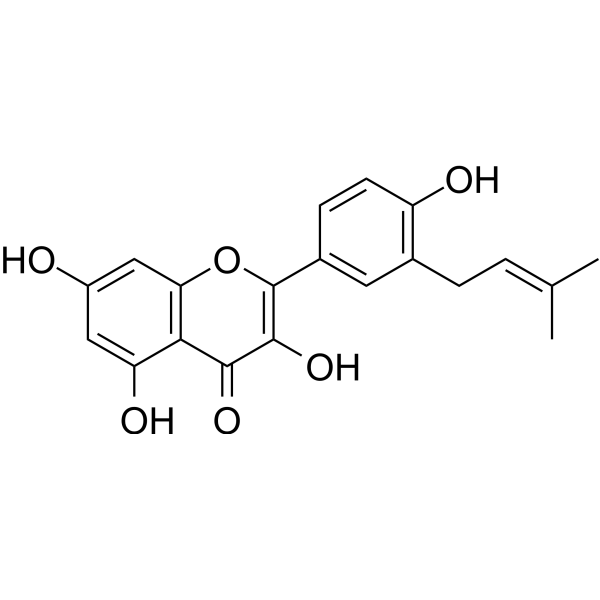
Isolicoflavonol potently inhibits hCES2A (Human carboxylesterase 2)-mediated fluorescein diacetate hydrolysis in a reversible and mixed inhibition manner, with Ki values less than 1.0 μM .
loading...
    loading...
Cat. No.: HY-P2424
CAS No.: 144396-38-3
Synonyms: CCK-J
Target:  

Calcium Channel

Research Areas:  

Others

Cholecystokinin-J (CCK-J), a cholecystokinin, stimulates Ca 2+ release .
loading...
    loading...
Cat. No.: HY-184061
CAS No.: 2590661-64-4
Research Areas:  

Others

Carboxylesterase 2-IN-1 is a potent carboxylesterase CES2 inhibitor with an IC50 of 0.13 μM. Carboxylesterase 2-IN-1 blocks the hydrolysis of fluorescein diacetate by CES2 via non-competitive inhibition. Carboxylesterase 2-IN-1 also effectively inhibits adipogenesis induced in mouse preadipocytes .
loading...
    loading...
Cat. No.: HY-187682
CAS No.: 27783-53-5
Target:  

Drug Derivative

Research Areas:  

Cardiovascular Disease

Deacetyl acebutolol is a disinfection by-product and in vivo deacetylated metabolite of Acebutolol (HY-17497). Deacetyl acebutolol is generated from Acebutolol via a series of reactions including chlorination, dealkylation, hydroxylation and oxidation. In vivo, Deacetyl acebutolol is produced by the carboxylesterase CES2-catalyzed hydrolysis of Acebutolol. Deacetyl acebutolol can be used in the research of arrhythmia [2].
loading...
    loading...

