17 Results for "

Chloroacetamide inhibits

" in MedChemExpress (MCE) Product Catalog:
Products (17)

17 Results for "Chloroacetamide inhibits" in MCE Product Catalog:

2
2 Cited Publications
Cat. No.: HY-W010629
CAS No.: 79-07-2
Target:  

Bacterial

Research Areas:  

Infection

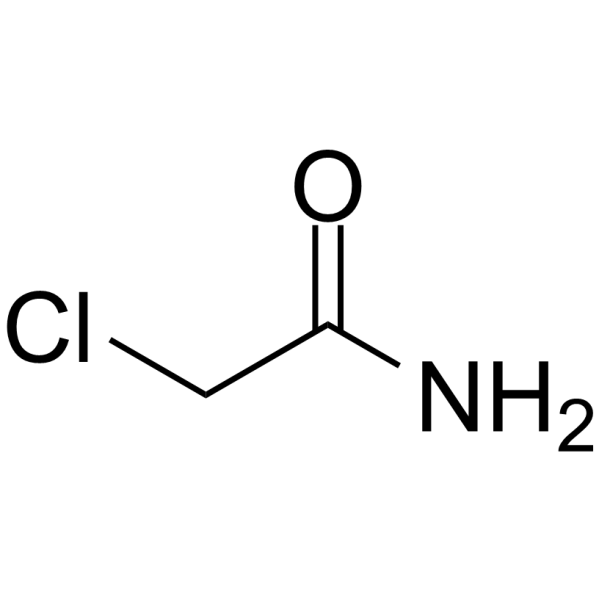
2-Chloroacetamide is a preservative and is a herbicide for both uplands and paddy fields. 2-Chloroacetamide is a biocide in agriculture, glues, paints and coatings. 2-Chloroacetamide inhibits very-long-chain fatty acid elongase .
loading...
    loading...
Cat. No.: HY-136373
CAS No.: 67129-08-2
Purity:  99.76%
Synonyms: BAS 479H
Research Areas:  

Others

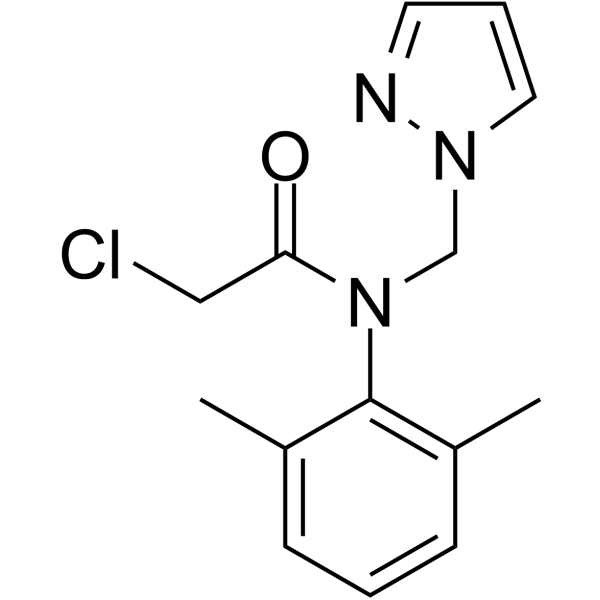
Metazachlor (BAS 479H) is a herbicide belonging to the chloroacetamides class. Metazachlor can inhibit the synthesis of very long chain fatty acids during the germination and emergence of weed seeds, thereby interfering with cell division and tissue differentiation, and thus hindering the normal growth and development of weeds .
loading...
    loading...
Cat. No.: HY-136563
CAS No.: 2649154-57-2
Purity:  99.31%
Research Areas:  

Cancer

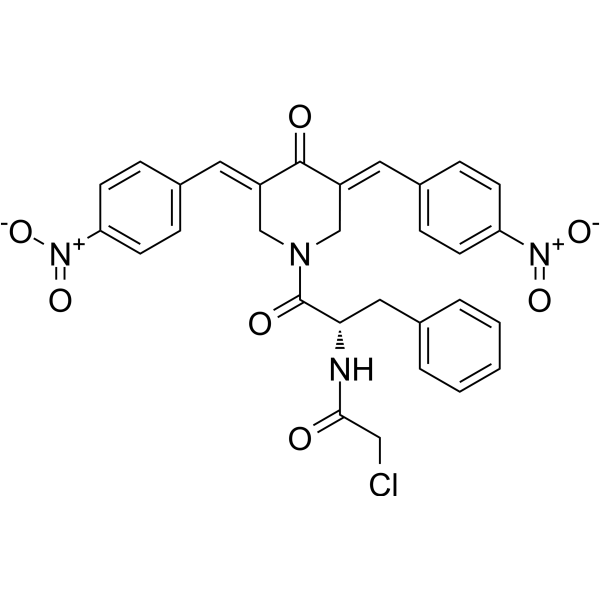
RA375 is a RPN13 (26S proteasome regulatory subunit) inhibitor. RA375 activates UPR signaling, ROS production and apoptosis. RA375 exhibits ten-fold greater activity against cancer lines than RA190, reflecting its nitro ring substituents and the addition of a chloroacetamide warhead .
loading...
    loading...
Cat. No.: HY-B2035
CAS No.: 51218-49-6
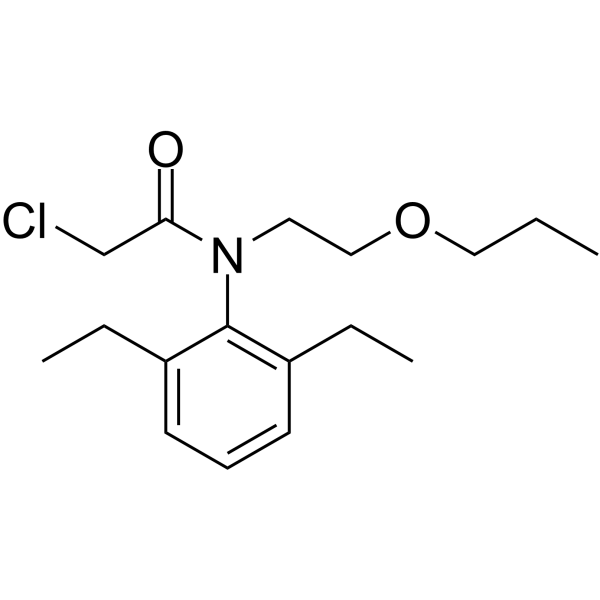
Pretilachlor is a chloroacetamide herbicide with biological activities including endocrine disruption, oxidative stress induction, apoptosis induction, and immunotoxicity. Pretilachlor exerts its effects by interfering with hormone metabolism, inducing oxidative stress, activating apoptotic pathways, and inhibiting immune functions. Pretilachlor upregulates the transcription of P53, Mdm2, and Bbc3, and increases the activities of Caspase3 and Caspase9; it upregulates the transcription of genes in the HPG/HPT axis and the activity of aromatase; it induces oxidative stress, elevates ROS levels, and upregulates CAT, SOD, and GPX. Pretilachlor downregulates the transcription of CXCL-C1C, IL-1β, and IL-8. Pretilachlor disrupts the normal physiological processes and embryonic development of fish, exhibiting significant toxicity. Pretilachlor can be used in studies related to weeding, environmental pollution, and behavioral toxicity in fish .
loading...
    loading...
Cat. No.: HY-136373S
CAS No.: 1246816-51-2
Synonyms: BAS 479H-d6
Metazachlor-d6 (BAS 479H-d6) is a deuterium labeled Metazachlor (HY-136373). Metazachlor (BAS 479H) is a herbicide belonging to the chloroacetamides class. Metazachlor can inhibit the synthesis of very long chain fatty acids during the germination and emergence of weed seeds, thereby interfering with cell division and tissue differentiation, and thus hindering the normal growth and development of weeds .
loading...
    loading...
Cat. No.: HY-162154
CAS No.: 2738323-08-3
Target:  

SARS-CoV

Research Areas:  

Infection

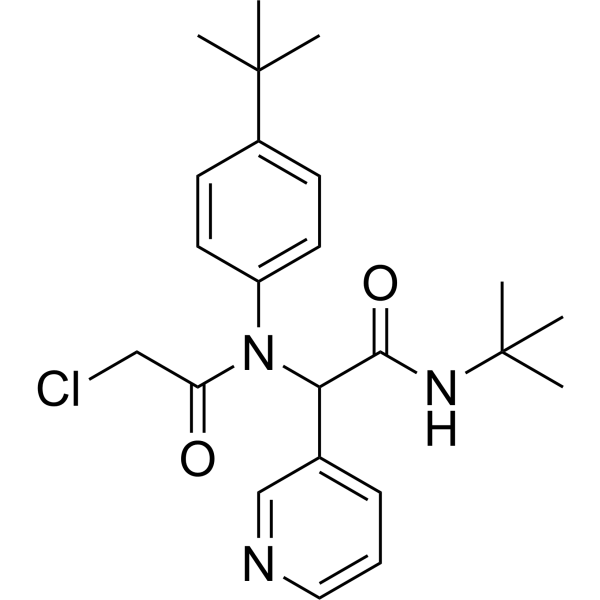
SARS-CoV-2-IN-75 (compound 13) is a SARS-CoV-2 inhibitor based on chloroacetamide inhibition. SARS-CoV-2-IN-75 inhibits cellular SARS-CoV-2 replication with an EC68 (half-log reduction in viral titer) of 3 μM .
loading...
    loading...
Cat. No.: HY-W010629S
CAS No.: 122775-20-6
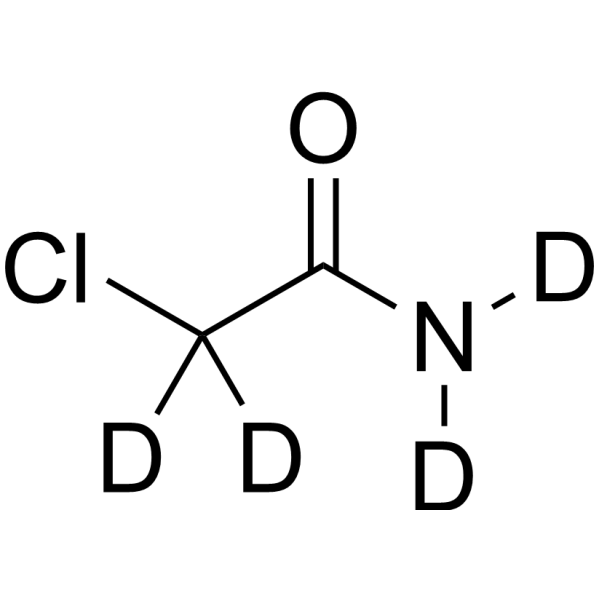
2-Chloroacetamide-d4 is the deuterium labeled 2-Chloroacetamide . 2-Chloroacetamide is a preservative and is a herbicide for both uplands and paddy fields. 2-Chloroacetamide is a biocide in agriculture, glues, paints and coatings. 2-Chloroacetamide inhibits very-long-chain fatty acid elongase .
loading...
    loading...
Cat. No.: HY-W010629R
CAS No.: 79-07-2
Research Areas:  

Infection

2-Chloroacetamide (Standard) is the analytical standard of 2-Chloroacetamide. This product is intended for research and analytical applications. 2-Chloroacetamide is a preservative and is a herbicide for both uplands and paddy fields. 2-Chloroacetamide is a biocide in agriculture, glues, paints and coatings. 2-Chloroacetamide inhibits very-long-chain fatty acid elongase .
loading...
    loading...
Cat. No.: HY-151373
CAS No.: 2164447-18-9
Target:  

Bacterial

Research Areas:  

Infection

MurA-IN-2 (compound 37), a chloroacetamide fragment containing a primary aliphatic amine, is a potent MurA inhibitor with an IC50 value of 39 μM. MurA-IN-2 has antibacterial activity and inhibits the bacterial cell wall synthesis .
loading...
    loading...
Cat. No.: HY-136373R
CAS No.: 67129-08-2
Synonyms: BAS 479H (Standard)
Metazachlor (Standard) (BAS 479H (Standard)) is the analytical standard of Metazachlor (HY-136373). This product is intended for research and analytical applications. Metazachlor (BAS 479H) is a herbicide belonging to the chloroacetamides class. Metazachlor can inhibit the synthesis of very long chain fatty acids during the germination and emergence of weed seeds, thereby interfering with cell division and tissue differentiation, and thus hindering the normal growth and development of weeds .
loading...
    loading...
Cat. No.: HY-161910
Research Areas:  

Cancer

SH-E4A-66 is a C 2-COUPLr (COvalent Protein Ligator) with carbazole scaffold barring heterogeneous cysteine reactive warheads (acrylamide and chloroacetamide). SH-E4A-66 is capable of coupling with EML4-ALK (EC50=1.5 μM) and inhibiting the activity of EML4-ALK kinase (IC50=2.3 μM) .
loading...
    loading...
Cat. No.: HY-B2035R
CAS No.: 51218-49-6
Pretilachlor (Standard) is the analytical standard of Pretilachlor (HY-B2035). This product is intended for research and analytical applications. Pretilachlor is a chloroacetamide herbicide with biological activities including endocrine disruption, oxidative stress induction, apoptosis induction, and immunotoxicity. Pretilachlor exerts its effects by interfering with hormone metabolism, inducing oxidative stress, activating apoptotic pathways, and inhibiting immune functions. Pretilachlor upregulates the transcription of P53, Mdm2, and Bbc3, and increases the activities of Caspase3 and Caspase9; it upregulates the transcription of genes in the HPG/HPT axis and the activity of aromatase; it induces oxidative stress, elevates ROS levels, and upregulates CAT, SOD, and GPX. Pretilachlor downregulates the transcription of CXCL-C1C, IL-1β, and IL-8. Pretilachlor disrupts the normal physiological processes and embryonic development of fish, exhibiting significant toxicity. Pretilachlor can be used in studies related to weeding, environmental pollution, and behavioral toxicity in fish .
loading...
    loading...
Cat. No.: HY-186140
SHP1‑IN‑2 is a selective and orally active SHP1 inhibitor. SHP1‑IN‑2 covalently binds to Cys480 of SHP1. SHP1‑IN‑2 elicits potent antitumor immunity and suppresses syngeneic tumor growth. SHP1‑IN‑2 blocks tumor progression in a svngeneic cancer model by activating natural killer cells and cytotoxic CD8 T cells, along with reduced T cel l. SHP1‑IN‑2 can be used for cancer‑related research .
loading...
    loading...
Cat. No.: HY-L0118V
942 compounds

A unique set of molecules containing mild electrophilic moieties that covalently interact with amino acid residues in the target protein. The diversity of our compounds for covalent drug discovery ranges from natural product-like scaffolds to macrocycles, creating multiple opportunities in hit generation for a selected target.

Cat. No.: HY-L153
5,267 compounds

Covalent inhibitors are small molecules that can bind specifically to target proteins through covalent bonds and inhibit their biological functions. Although for a long time, covalent targeting has been playing a subordinate role in drug discovery, with an increasing number of reports on successful clinical applications of such drugs, the potential of these agents is now being acknowledged. Currently, cysteine is the most common covalent amino acid residue in a variety of covalent drugs, and various warheads have been developed that can react with cysteine, providing the key building blocks for covalent drugs to form covalent bonds.

To meet the development needs of covalent inhibitors targeting cysteine, MCE has designed a unique collection of 5,267 compounds with different covalent warheads that target cysteine. The MCE Cysteine Targeted Covalent Library is designed using the following covalent warheads: Acrylamides, Propiolic acid ester, Dimethylamine functionalized acrylamides, Chloroacetamides, Acrylonitrile, 2-Cyanoacrylamide, Aziridine, Haloacetamide, etc.

Cat. No.: HY-L154
3,728 compounds

Covalent inhibitors are small molecules that can bind specifically to target proteins through covalent bonds and inhibit their biological functions. Although for a long time, covalent targeting has been playing a subordinate role in drug discovery, with an increasing number of reports on successful clinical applications of such drugs, the potential of these agents is now being acknowledged. Currently, cysteine is the most common covalent amino acid residue in a variety of covalent drugs, and various warheads have been developed that can react with cysteine, providing the key building blocks for covalent drugs to form covalent bonds.

To meet the development needs of covalent inhibitors targeting cysteine, MCE has designed a unique collection of 3,728 fragments with different covalent warheads that target cysteine. The MCE Cysteine Targeted Covalent Fragment Library is designed using the following covalent warheads: Acrylamides, Propiolic acid ester, Dimethylamine functionalized acrylamides, Chloroacetamides, Acrylonitrile, 2-Cyanoacrylamide, Aziridine, Haloacetamide, etc. All fragments are pre-filtered with the Rule of Three restrictions which can be used for fragment-based covalent drug development.

Cat. No.: HY-182024
Target:  

SARS-CoV Virus Protease

Research Areas:  

Infection

SARS-CoV-2 3CLpro-IN-36 is a SARS-CoV-2 3CLpro inhibitor and antiviral agent with a human sub-micromolar IC50 against SARS-CoV-2 3CLpro.SARS-CoV-2 3CLpro-IN-36 forms a covalent bond with catalytic Cys145 of SARS-CoV-2 3CLpro; its tetrazole core occupies the S1 pocket and interacts with His163, while its chloroacetamide carbonyl forms hydrogen bonds with the backbone amides of Gly143 and Ser144 in the oxyanion hole.SARS-CoV-2 3CLpro-IN-36 reduces SARS-CoV-2 replication in infected cells.SARS-CoV-2 3CLpro-IN-36 can be used for the research of SARS-CoV-2 infection .
loading...
    loading...
  • 1

