1. Search Result
Search Result
Results for "

Cu(II)

" in MedChemExpress (MCE) Product Catalog:

30

Inhibitors & Agonists

5

Fluorescent Dyes

2

Biochemical Assay Reagents

1

Peptides

1

Natural
Products

6

Isotope-Labeled Compounds

1

Click Chemistry

Cat. No. Product Name Target Research Areas Chemical Structure
  • HY-156376
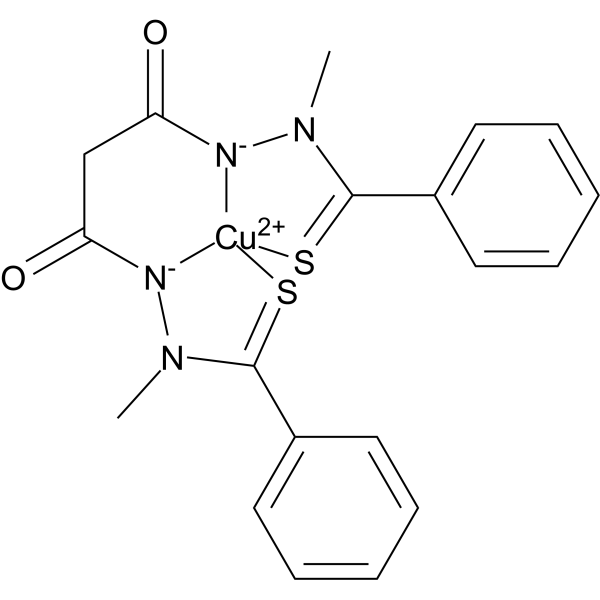
    Cu(II)-Elesclomol
    5 Publications Verification

    Cuproptosis Apoptosis Topoisomerase Reactive Oxygen Species (ROS) Inflammation/Immunology Cancer
    Cu(II)-Elesclomol is a complex formed by Elesclomol (HY-12040) and Cu 2+ (copper ions). Cu(II)-Elesclomol is also a weak inhibitor of DNA topoisomerase I. Cu(II)-Elesclomol exerts anticancer effects by inducing oxidative stress and DNA damage through copper chelation. Cu(II)-Elesclomol can inhibit tumor cell proliferation and induce cell cycle arrest and apoptosis. Cu(II)-Elesclomol can be used in the study of cancer .
    Cu(II)-Elesclomol
  • HY-N2362

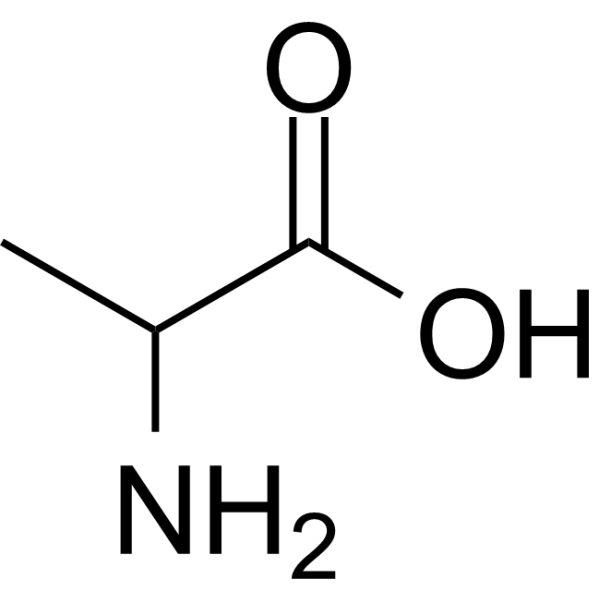
    DL-2-Aminopropionic acid

    Endogenous Metabolite Metabolic Disease
    DL-alanine, an orally active amino acid, is the racemic compound of L- and D-alanine. DL-alanine is employed both as a reducing and a capping agent, used with silver nitrate aqueous solutions for the production of nanoparticles. DL-alanine can be used for the research of transition metals chelation, such as Cu(II), Zn(II), Cd(11). DL-alanine, a sweetener, is classed together with glycine and sodium saccharin. DL-alanine plays a key role in the glucose-alanine cycle between tissues and liver .
    DL-Alanine
  • HY-139324
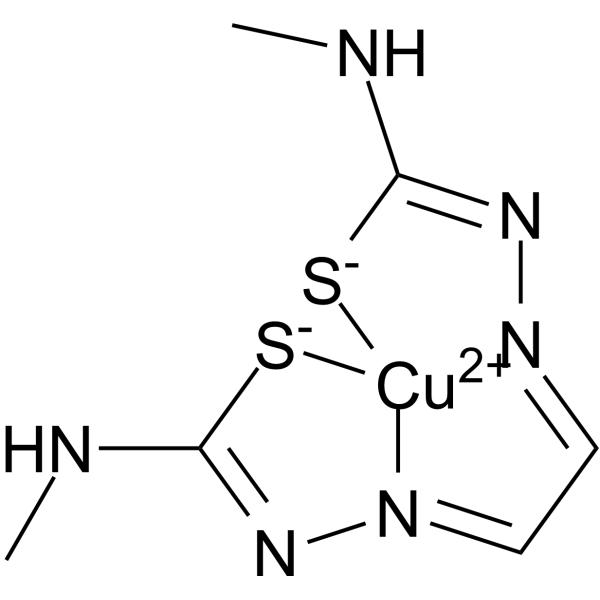
    Cu(II)GTSM
    1 Publications Verification

    GSK-3 Amyloid-β Neurological Disease Cancer
    Cu(II)GTSM, a cell-permeable Cu-complex, significantly inhibits GSK3β. Cu(II)GTSM inhibits Amyloid-β oligomers (AβOs) and decreases tau phosphorylation. Cu(II)GTSM also decreases the abundance of Amyloid-β trimers. Cu(II)GTSM is a potential anticancer and antimicrobial agent .
    Cu(II)GTSM
  • HY-W540978

    Biochemical Assay Reagents Others
    3-Azido-7-hydroxycoumarin is a click chemistry reagent containing an azido group. Under Cu (II) catalysis, it undergoes azide-alkyne cycloaddition (CuAAC) click reaction with 3-butyn-1-ol and emits a fluorescent signal .
    3-Azido-7-hydroxycoumarin
  • HY-P4666

    Biochemical Assay Reagents Others
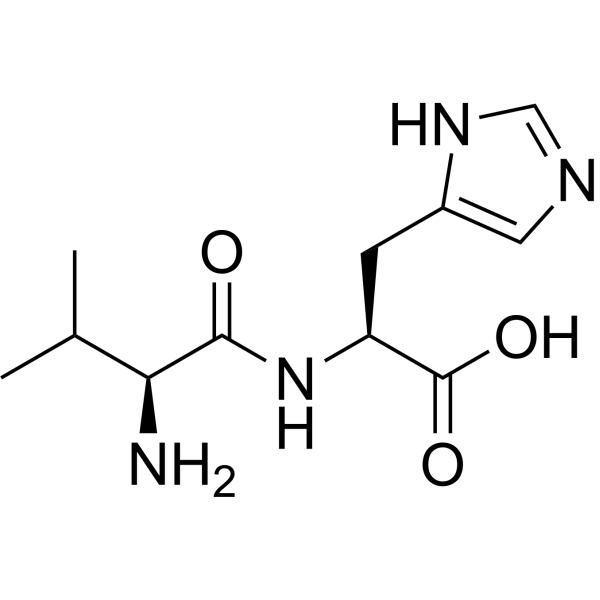
    Valylhistidine is a dipeptide composed of valine and histidine (Val-His). Valylhistidine can form a dipeptide complex with Cu (II) that mimics superoxide dismutase but lacks activity .
    Valylhistidine
  • HY-W008137

    Biochemical Assay Reagents Others
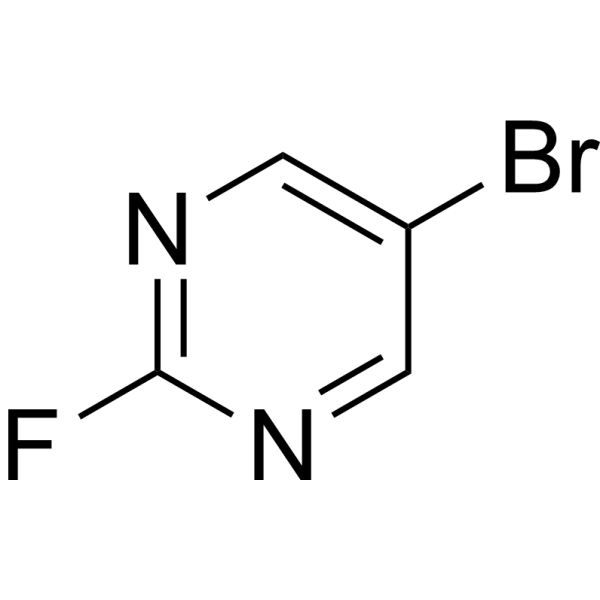
    5-Bromo-2-fluoropyrimidine is a polyhalogenated pyrimidine and chemoselective amination substrate.5-Bromo-2-fluoropyrimidine undergoes chemoselective amination at the C-2 position (C-F bond) with no amination at the C-5 position (C-Br bond) in the presence of a Cu(II)/PTABS catalytic system .
    5-Bromo-2-fluoropyrimidine
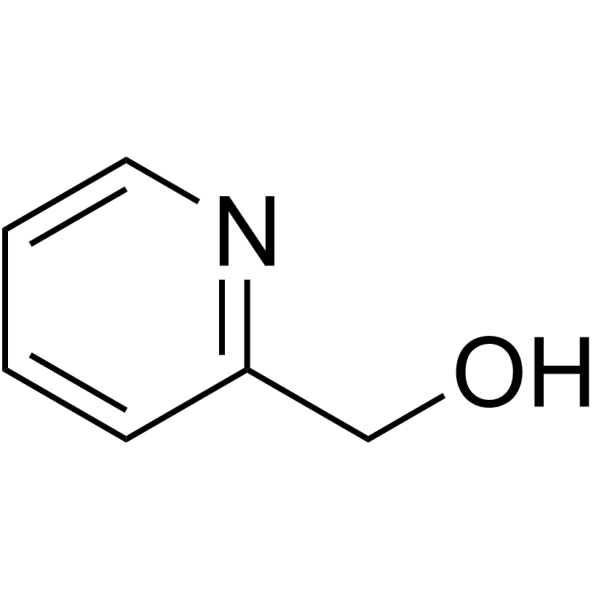
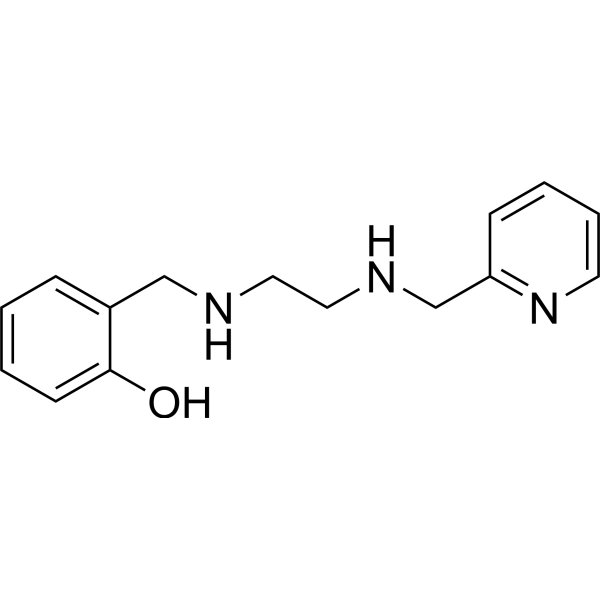
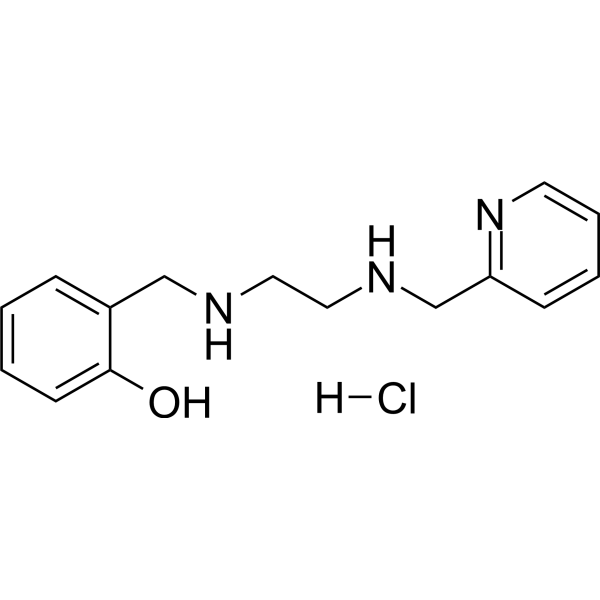
  • HY-132927B

    Reactive Oxygen Species (ROS) Inflammation/Immunology
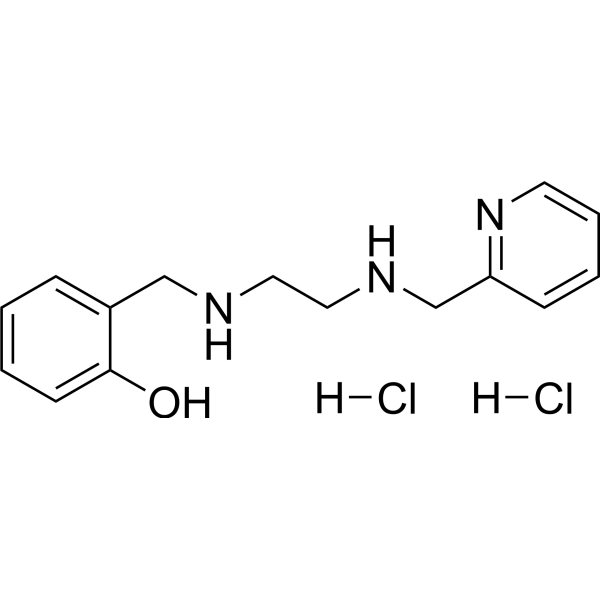
    Salpyran dihydrochloride is a Cu(II) selective chelator with therapeutic potential. Salpyran dihydrochloride prevents the formation of reactive oxygen species from the binary Cu(II)/H2O2 system .
    Salpyran dihydrochloride
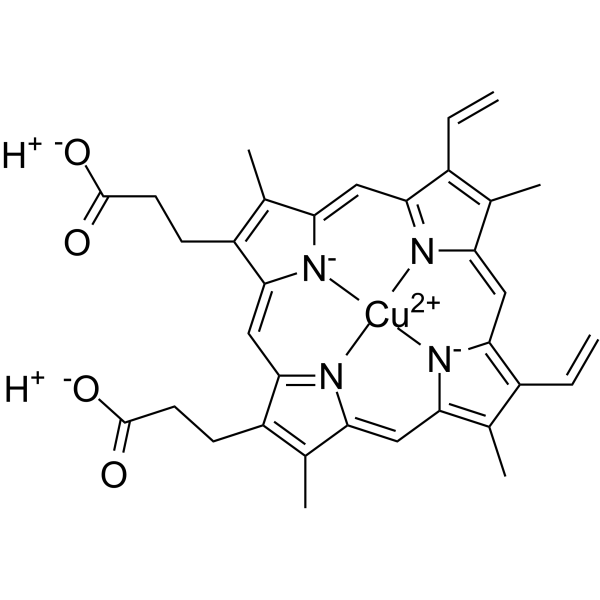
  • HY-136476B

    Heme Oxygenase (HO) MOFs Inflammation/Immunology Cancer
    Cu (II) Protoporphyrin IX is used as a negative control for Zn (II) Protoporphyrin (an inihibitor of heme oxygenase). Heme oxygenase has been implicated in tumor cell resistance to chemotherapy, reduction of free radical formation and inflammation, and associated with vascular repair .
    Cu(II) protoporphyrin IX
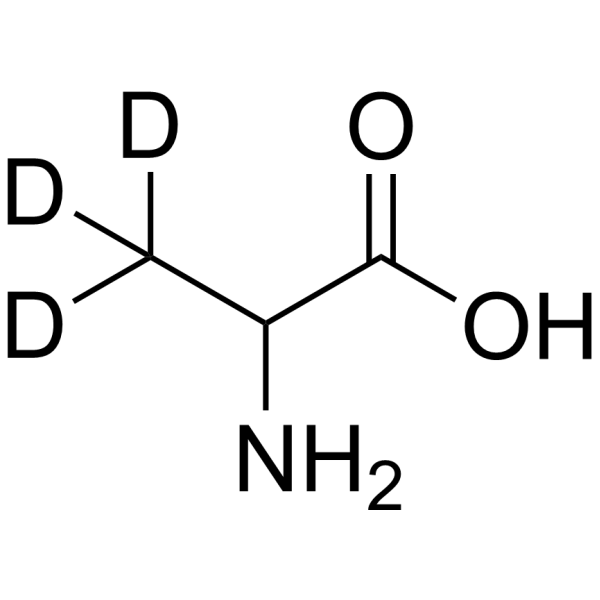
  • HY-N2362S2

    DL-2-Aminopropionic acid-d3

    Endogenous Metabolite Metabolic Disease
    DL-Alanine-d3 is the deuterium labeled DL-Alanine. DL-alanine, an amino acid, is the racemic compound of L- and D-alanine. DL-alanine is employed both as a reducing and a capping agent, used with silver nitrate aqueous solutions for the production of nanoparticles. DL-alanine can be used for the research of transition metals chelation, such as Cu(II), Zn(II), Cd(11). DL-alanine, a sweetener, is classed together with glycine, and sodium saccharin. DL-alanine plays a key role in the glucose-alanine cycle between tissues and liver .
    DL-Alanine-d3
  • HY-W582356

    MOFs Others
    CU(II) meso-Tetra(4-sulfonatophenyl) porphine is a metal-organic framework (MOF).
    CU(II) meso-Tetra(4-sulfonatophenyl) porphine
  • HY-20559

    Drug Intermediate Cancer
    4-Chloro-3-nitrobenzoic acid is a benzoic acid derivative and an important intermediate for the synthesis of anticancer agents. 4-Chloro-3-nitrobenzoic acid shows low cytotoxicity against HepG2, A549 and HeLa cancer cells in vitro (>10,000 μM). 4-Chloro-3-nitrobenzoic acid can block thymidine uptake and inhibit lymphocyte growth. 4-Chloro-3-nitrobenzoic acid serves as a ligand for Cu (II) complexes and is used in the preparation of 10H-pyrazino[2,3-b][1,4]benzothiazine derivatives .
    4-Chloro-3-nitrobenzoic acid
  • HY-W075708

    Cu(II) Meso-Tetra(4-carboxyphenyl)porphyrin

    MOFs Others
    Cu (II) MTCPP (Cu (II) Meso-Tetra (4-carboxyphenyl) porphyrin) is a copper coordination complex. Cu (II) MTCPP-sensitized TiO2 nanotubes are a type of visible-light photocatalyst. Cu (II) MTCPP-sensitized TiO2 nanotubes can expand the wavelength response range, transfer excited electrons more efficiently, and separate photogenerated electron-hole pairs .
    Cu(II) MTCPP
  • HY-132927

    Biochemical Assay Reagents Others
    Salpyran is a Cu(II) selective chelator with therapeutic potential.
    Salpyran
  • HY-132927A

    Biochemical Assay Reagents Others
    Salpyran is a Cu(II) selective chelator with therapeutic potential .
    Salpyran hydrochloride
  • HY-D3215

    Fluorescent Dye Neurological Disease
    Lyso-Cu (II) is a lysosome-targeted divalent copper ion probe. Lyso-Cu (II) is applicable to the research of Wilson's disease, Menkes disease and Alzheimer's disease .
    Lyso-Cu(II)
  • HY-N2362S5

    DL-2-Aminopropionic acid-15N

    Endogenous Metabolite Metabolic Disease
    DL-Alanine- 15N is the 15N labeled DL-Alanine . DL-alanine, an amino acid, is the racemic compound of L- and D-alanine. DL-alanine is employed both as a reducing and a capping agent, used with silver nitrate aqueous solutions for the production of nanoparticles. DL-alanine can be used for the research of transition metals chelation, such as Cu(II), Zn(II), Cd(11). DL-alanine, a sweetener, is classed together with glycine, and sodium saccharin. DL-alanine plays a key role in the glucose-alanine cycle between tissues and liver .
    DL-Alanine-15N
  • HY-N2362S

    DL-2-Aminopropionic acid-13C-1

    Endogenous Metabolite Metabolic Disease
    DL-Alanine- 13C-1 is the 13C-labeled DL-Alanine. DL-alanine, an amino acid, is the racemic compound of L- and D-alanine. DL-alanine is employed both as a reducing and a capping agent, used with silver nitrate aqueous solutions for the production of nanoparticles. DL-alanine can be used for the research of transition metals chelation, such as Cu(II), Zn(II), Cd(11). DL-alanine, a sweetener, is classed together with glycine, and sodium saccharin. DL-alanine plays a key role in the glucose-alanine cycle between tissues and liver .
    DL-Alanine-13C-1
  • HY-N2362S1

    DL-2-Aminopropionic acid-13C-3

    Isotope-Labeled Compounds Endogenous Metabolite Metabolic Disease
    DL-Alanine- 13C-3 is the 13C-labeled DL-Alanine. DL-alanine, an amino acid, is the racemic compound of L- and D-alanine. DL-alanine is employed both as a reducing and a capping agent, used with silver nitrate aqueous solutions for the production of nanoparticles. DL-alanine can be used for the research of transition metals chelation, such as Cu(II), Zn(II), Cd(11). DL-alanine, a sweetener, is classed together with glycine, and sodium saccharin. DL-alanine plays a key role in the glucose-alanine cycle between tissues and liver .
    DL-Alanine-13C-3
  • HY-D3216

    Fluorescent Dye Others
    ER-Cu (II) is an endoplasmic reticulum-selective fluorescent Cu 2+ probe. ER-Cu (II) localizes specifically to the endoplasmic reticulum of hepatocytes .
    ER-Cu(II)
  • HY-N2362S8

    DL-2-Aminopropionic acid-d7

    Isotope-Labeled Compounds Metabolic Disease
    DL-Alanine-d7 (DL-2-Aminopropionic acid-d7) is deuterium labeled DL-Alanine. DL-alanine, an orally active amino acid, is the racemic compound of L- and D-alanine. DL-alanine is employed both as a reducing and a capping agent, used with silver nitrate aqueous solutions for the production of nanoparticles. DL-alanine can be used for the research of transition metals chelation, such as Cu(II), Zn(II), Cd(11). DL-alanine, a sweetener, is classed together with glycine and sodium saccharin. DL-alanine plays a key role in the glucose-alanine cycle between tissues and liver .
    DL-Alanine-d7
  • HY-N2362S9

    DL-2-Aminopropionic acid-13C2,15N2

    Isotope-Labeled Compounds Endogenous Metabolite Metabolic Disease
    DL-Alanine- 13C2, 15N (DL-2-Aminopropionic acid- 13C2, 15N) is 13C and 15N labeled DL-Alanine. DL-alanine, an orally active amino acid, is the racemic compound of L- and D-alanine. DL-alanine is employed both as a reducing and a capping agent, used with silver nitrate aqueous solutions for the production of nanoparticles. DL-alanine can be used for the research of transition metals chelation, such as Cu(II), Zn(II), Cd(11). DL-alanine, a sweetener, is classed together with glycine and sodium saccharin. DL-alanine plays a key role in the glucose-alanine cycle between tissues and liver .
    DL-Alanine-13C2,15N
  • HY-D3269

    Fluorescent Dye Others
    Mito-Cu (II) is a mitochondria-targeted fluorescent probe (Ex/Em = 370/450 nM). Mito-Cu (II) specifically accumulates in mitochondria of living cells and enables real-time detection of exogenous Cu 2+ within mitochondria of living cells. Mito-Cu (II) achieves "on-off-on" fluorescence switching through sequential exposure to Cu 2+ and ethylenediaminetetraacetic acid (EDTA) (HY-Y0682). Its fluorescence is quenched after forming a 1:1 complex with Cu 2+, and the fluorescence recovers when Cu 2+ is chelated by EDTA .
    Mito-Cu(II)
  • HY-D3213

    Fluorescent Dye Others
    Mem-Cu (II) is a cell membrane-targeted divalent copper ion (Cu 2+) probe .
    Mem-Cu(II)
  • HY-W112279

    meso-Tera(4-methoxyphenyl)porphyrin-Cu(II)

    MOFs Others
    5,10,15,20-Tetrakis(3-methoxyphenyl)porphyrinatonickel (meso-Tera(4-methoxyphenyl)porphyrin-Cu(II)) is a metal-organic framework (MOF).
    5,10,15,20-Tetrakis(3-methoxyphenyl)porphyrinatonickel
  • HY-169383

    Apoptosis Cancer
    FA4-Cu is a complex of the potent pancreatic cancer inhibitor FA4 and Cu(II) that induces apoptosis via ER and mitochondrial stress .
    FA4-Cu
  • HY-W113007

    meso-Tetrakis(4-chlorophenyl)porphyrin-Cu(II)

    MOFs Others
    5,?10,?15,?20-?Tetrakis(4-?chlorophenyl)?porphyrin copper(II) (meso-Tetrakis(4-chlorophenyl)porphyrin-Cu(II)) is a metal-organic framework (MOF).
    5,​10,​15,​20-​Tetrakis(4-​chlorophenyl)​porphyrin copper(II)
  • HY-181116

    CDK Cancer
    Anticancer agent 298 is a bi-nuclear Cu(II)-hydrazone complexe. Anticancer agent 298 can bind to the CDK-2 active site (PDB ID: 3IG7) via hydrogen bonds with key amino acid residues. Anticancer agent 298 exerts cytotoxic effects against hepatocellular carcinoma cells, and has lower cytotoxicity against normal human embryonic kidney cells. Anticancer agent 298 can be used for the research of hepatocellular carcinoma .
    Anticancer agent 298
  • HY-183549

    Apoptosis Ferroptosis Cancer
    Ferroptosis/apoptosis inducer-4 is a pyridine-hydrazone-derived Cu (II) complex and a synergistic inducer of ferroptosis and apoptosis. Ferroptosis/apoptosis inducer-4 exerts anti-tumor proliferation and anti-metastasis effects with extremely low systemic toxicity. Ferroptosis/apoptosis inducer-4 disrupts cellular redox homeostasis by depleting glutathione and generating hydroxyl radicals through the Cu 2+/Cu + redox cycle. Ferroptosis/apoptosis inducer-4 also triggers mitochondrial dysfunction and endoplasmic reticulum stress, which in turn lead to Ca 2+ release, mitochondrial Ca 2+ overload, and the formation of a ROS−Ca 2+ self-amplifying feedback loop. Ferroptosis/apoptosis inducer-4 can be used in studies related to cervical cancer .
    Ferroptosis/apoptosis inducer-4
  • HY-D3241

    Fluorescent Dye Others
    CD649.2 is a red-emitting copper-targeted acylimidazole-reactive Fluorescent probe and a highly specific Cu 2+ detection reagent. CD649.2 enables visualization of labile Cu 2+ pools and their dynamic changes in living cells .
    CD649.2
  • HY-D0005

    Amyloid-β Neurological Disease
    Bathocuproine is a phenanthroline chelator that binds specifically to Cu +. Bathocuproine preferentially binds Cu + over Cu 2+ to form a chromogenic complex, which is used to detect the oxidation state of copper in biomolecules. Bathocuproine undergoes concentration-dependent self-association to form dimers, and it can engage in aromatic stacking interactions with aromatic residues of (Kd ≈ 1 mM). Bathocuproine is applicable to research related to Alzheimer's disease .
    Bathocuproine

Inquiry Online

Your information is safe with us. * Required Fields.

Salutation


Country or Region *

Applicant Name *


Organization Name *

Department *


Email Address *


Product Name *

Cat. No.


Requested quantity *

Phone Number *


Remarks

Inquiry Online

Inquiry Information

Product Name:
Cat. No.:
Quantity:
MCE Japan Authorized Agent:

