1. Search Result
Search Result
Results for "

DAPK inhibitor

" in MedChemExpress (MCE) Product Catalog:
Targets Recommended:
Cat. No. Product Name Target Research Areas Chemical Structure
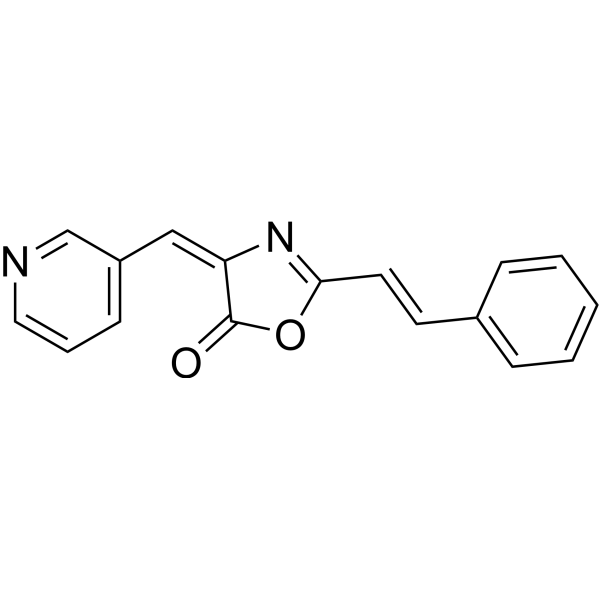
  • HY-15513
    TC-DAPK 6
    Maximum Cited Publications
    15 Publications Verification

    DAPK Cancer
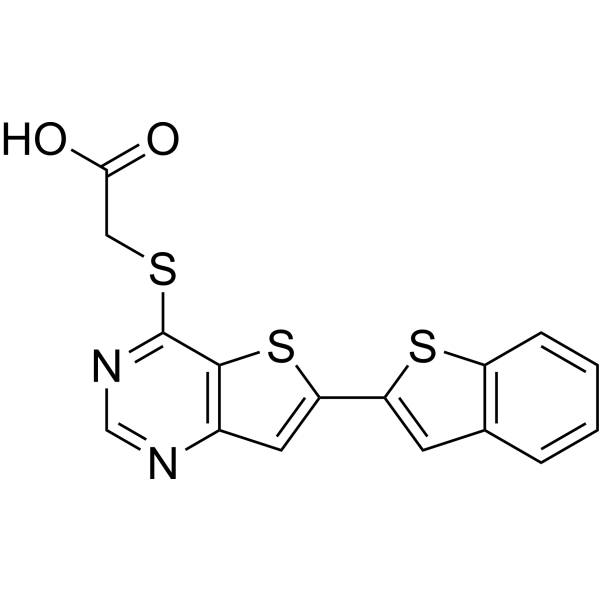
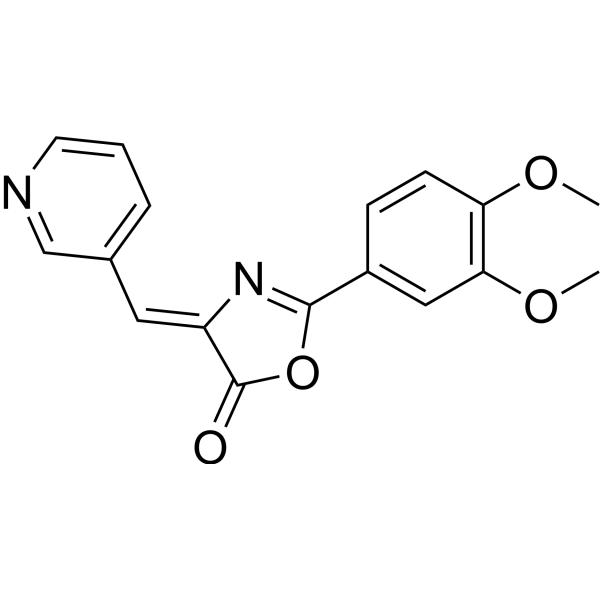
    TC-DAPK 6 is a potent, ATP-competitive, and highly selective DAPK inhibitor (IC50=69 and 225 nM against DAPK1 and DAPK3, respectively, with 10 μM ATP).
    TC-DAPK 6
  • HY-123581
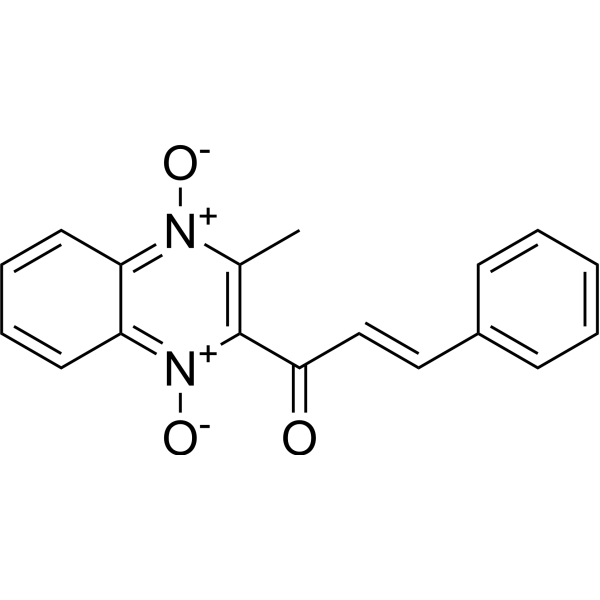
    Quinocetone
    1 Publications Verification

    Antibiotic Bacterial ATF6 DAPK Autophagy NF-κB NO Synthase Apoptosis Reactive Oxygen Species (ROS) Keap1-Nrf2 Heme Oxygenase (HO) Infection Inflammation/Immunology
    Quinocetone is an orally active animal feed additive used to increase the meat production of livestock and poultry. Quinocetone exhibits antibacterial activity against a variety of pathogenic microorganisms. Quinocetone exhibits tissue-specific (liver, lymphocyte) toxicity. Quinocetone induces autophagy in cells through the ATF6/DAPK1 pathway. Quinocetone activates the NF-κB and iNOS pathways, leading to cell apoptosis, hepatocyte vacuolar degeneration and fibrosis. Quinocetone can inhibit Nrf2/HO-1 and induce the generation of reactive oxygen species (ROS), leading to oxidative stress and DNA damage .
    Quinocetone
  • HY-15847
    HS38
    3 Publications Verification

    DAPK Cardiovascular Disease
    HS38 is a potent, selective, and ATP-competitive inhibitor of death-associated protein kinase 1 (DAPK1) and zipper-interacting protein kinase (ZIPK, also called DAPK3), with Kds of 300 nM and 280 nM, respectively. HS38 is also a PIM3 inhibitor with an IC50 of 200 nM. HS38 can be used for the research of smooth muscle related disorders .
    HS38
  • HY-112056
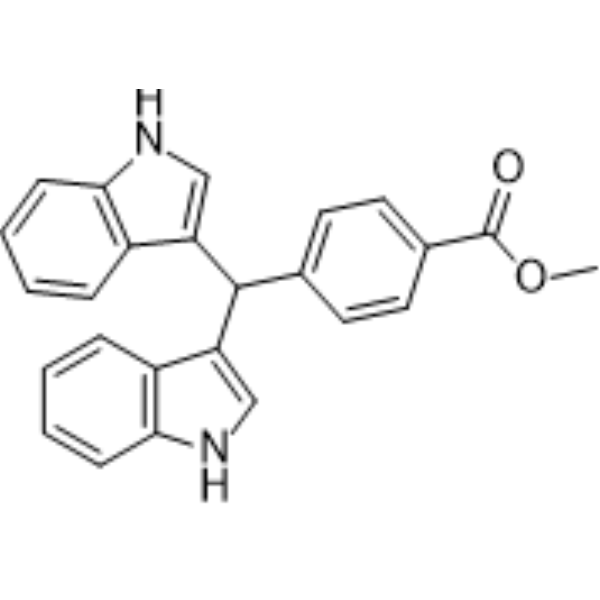
    DIM-C-pPhCO2Me
    1 Publications Verification

    Nuclear Hormone Receptor 4A/NR4A Apoptosis DAPK Isocitrate Dehydrogenase (IDH) PERK Cancer
    DIM-C-pPhCO2Me is a nuclear receptor 4A1 (NR4A1) antagonist. DIM-C-pPhCO2Me induces Apoptosis. DIM-C-pPhCO2Me decreases PAX3-FOXO1A, N-Myc, Rassf4, MyoD1, Grem1, and DAPK1 proteins. DIM-C-pPhCO2Me decreases expression of TXNDC5 and IDH1, induces markers of ER stress (CHOP, ATF4 and p-PERK). DIM-C-pPhCO2Me inhibits renal cell carcinoma, breast cancer. DIM-C-pPhCO2Me can also be used in rhabdomyosarcoma research .
    DIM-C-pPhCO2Me
  • HY-149006

    DAPK Inflammation/Immunology Cancer
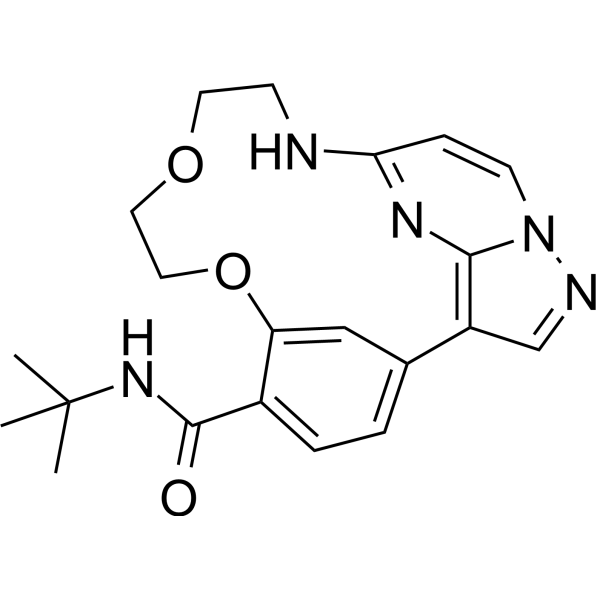
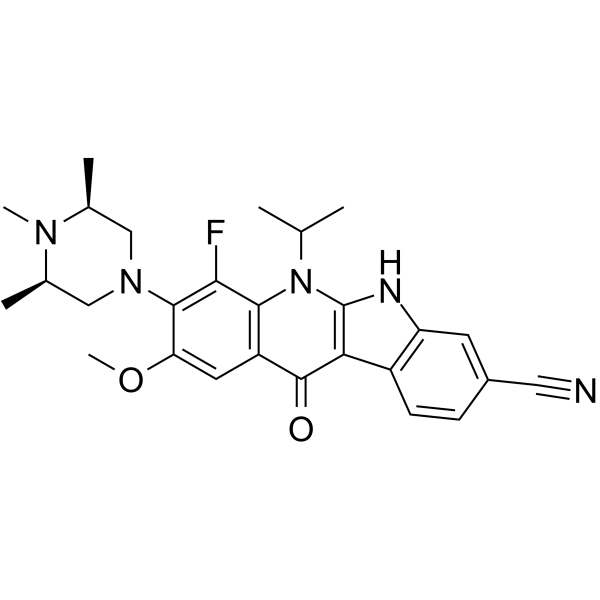
    CK156, a chemical probe, is a highly selective death-associated protein kinase (DAPK) inhibitor with IC50s of 182 nM,34 μM, and 39 μM in the DRAK1 NanoBRET assay for DRAK1, CK2a1, and CK2a2, respectively. CK156 can be used for the research of autoimmune and inflammatory diseases .
    CK156
  • HY-117364

    DAPK Others
    HS148 (compound 22) is a selective DAPK3 inhibitor with an Ki value of 119 nM .
    HS148
  • HY-169109

    DAPK Neurological Disease
    DAPK1-IN-1 (compound 10) is a death-associated protein kinase 1 (DAPK1) inhibitor with a Kd value of 0.63 μM. DAPK1-IN-1 can be used in Alzheimer’s disease research .
    DAPK1-IN-1
  • HY-179055

    PROTACs DAPK Neurological Disease
    PROTAC DAPK1 Degrader-1 (Compound CP1) is a DAPK1 PROTAC degrader with a DC50 of 119.6 nM. PROTAC DAPK1 Degrader-1 significantly increased the MDM2 protein level. PROTAC DAPK1 Degrader-1 significantly reduced the levels of cleaved caspase-3 and cleaved PARP in a cell apoptosis model induced by the neurotoxin ceramide, indicating that it effectively inhibits neuronal apoptosis by degrading DAPK1. PROTAC DAPK1 Degrader-1 can be used to study neurological diseases such as cerebral ischemia and traumatic brain injury (pink: DAPK1 ligand (HY-179071); blue: CRBN ligand (HY-10984); black: linker (HY-40171)) .
    PROTAC DAPK1 Degrader-1
  • HY-120040

    DAPK Cardiovascular Disease
    HS94 is a selective DAPK3 inhibitor. HS94 can be used for research of hypertension .
    HS94
  • HY-123983

    Pim DAPK Cardiovascular Disease
    HS56 is an ATP-competitive dual Pim/DAPK3 inhibitor with Ki values of 0.26, 0.208, 2.94, and >100 μM for DAPK3, Pim-3, Pim-1, and Pim-2, respectively. HS56 inhibits LC20 phosphorylation and smooth muscle contraction. HS56 decreases blood pressure in spontaneously hypertensive mice. HS56 can be used in research of hypertension .
    HS56
  • HY-156350

    DAPK Cancer
    SGC-STK17B-1, a chemical probe, is an ATP-competitive and selective STK17B (a member of DAPK family) inhibitor (IC50: 34 nM, KD: 5.6 nM) .
    SGC-STK17B-1
  • HY-153595

    DAPK Cardiovascular Disease
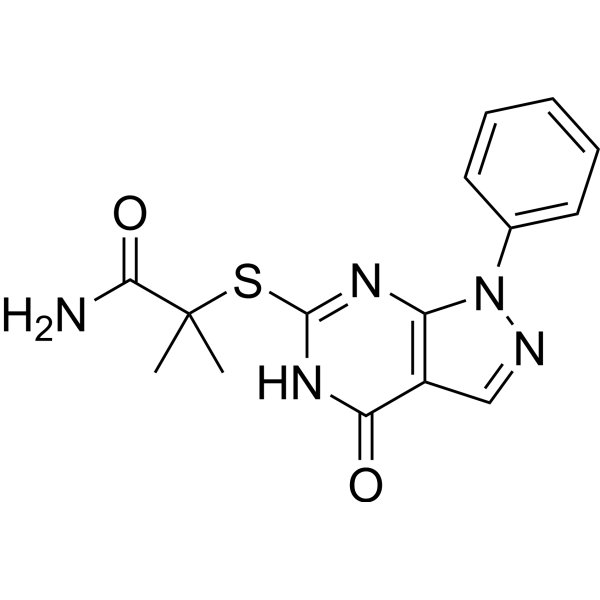
    DAPK-IN-2 is a DAPK inhibitor. DAPK-IN-2 can be used for the research of cerebral infarction and ischemic diseases .
    DAPK-IN-2
  • HY-123853

    Casein Kinase Cancer
    CAM4066 is a potent CK2α inhibitor, with an IC50 value of 300 nM. CAM4066 exhibits high selectivity, with IC50 values of 22.35, 43.55, and > 50 μM for HIPK3, DAPK3, and CLK2, respectively. CAM4066 shows no cell activity. CAM4066 can be used for the development of highly potent CK2 inhibitors .
    CAM4066
  • HY-175477

    DAPK DYRK PDGFR IPK Superfamily Cancer
    UNC9750 is an inositol phosphate multikinase (IPMK) inhibitor with IC50 values ​​of 31.6 and 374 nM for IPMK and IP6K2, respectively.. UNC9750 inhibits cellular accumulation of InsP5, the direct product of IPMK kinase activity, while having no effect on either InsP6 or InsP7 levels. UNC9750 has ≥ 75% inhibition of four kinases (DAPK1, DYRK1B, PDGFR, and KDR). UNC9750 can be used for the study of glioblastoma .
    UNC9750
  • HY-131909

    Anaplastic lymphoma kinase (ALK) Cancer
    CJ-2360 is a potent and orally active ALK inhibitor with IC50s of 2.2, 4.0, 8.8, 6.3, and 8.9 nM against wild-type ALK and F1197M, G1269A, L1196M, and S1206Y ALK mutants, respectively. CJ-2360 displays potent inhibitory activity against two clinically reported ALK mutants (C1156Y and L1196M) and a few other kinases (LTK, MERTK, CLK1, DAPK1, and DAPK2) among the 468 kinases evaluated .
    CJ-2360
  • HY-123581R

    Reference Standards Antibiotic Bacterial ATF6 DAPK Autophagy NF-κB NO Synthase Apoptosis Reactive Oxygen Species (ROS) Infection Inflammation/Immunology
    Quinocetone (Standard) is the analytical standard of Quinocetone (HY-123581). This product is used for research and analytical purposes. Quinocetone is an orally active animal feed additive used to increase the meat production of livestock and poultry. Quinocetone exhibits antibacterial activity against a variety of pathogenic microorganisms. Quinocetone exhibits tissue-specific (liver, lymphocyte) toxicity. Quinocetone induces autophagy in cells through the ATF6/DAPK1 pathway. Quinocetone activates the NF-κB and iNOS pathways, leading to cell apoptosis, hepatocyte vacuolar degeneration and fibrosis. Quinocetone can inhibit Nrf2/HO-1 and induce the generation of reactive oxygen species (ROS), leading to oxidative stress and DNA damage.
    Quinocetone (Standard)
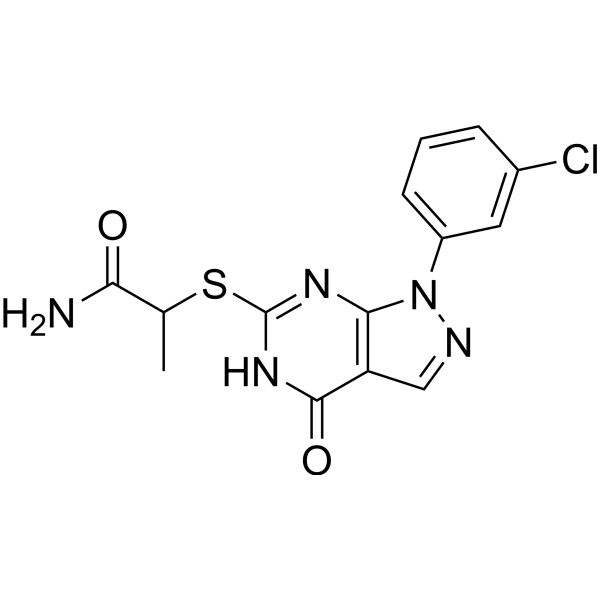
  • HY-125404

    DAPK Cardiovascular Disease Neurological Disease Metabolic Disease
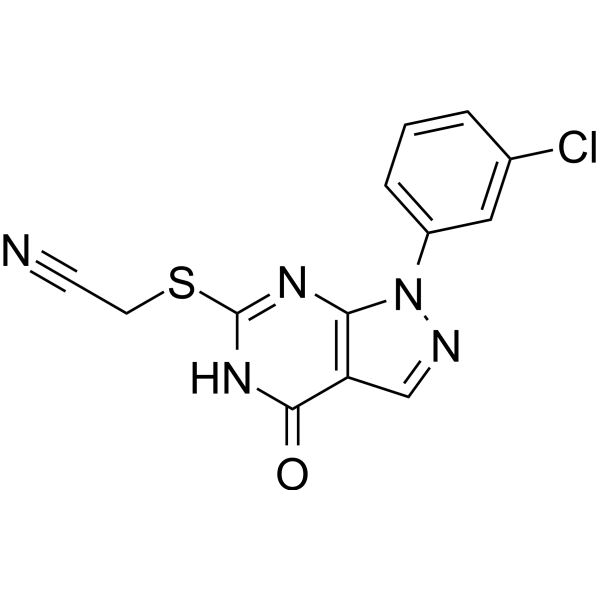
    DAPK-IN-1 (The fifth compound in page 19) is a DAPK1 and DAPK3 inhibitor. DAPK-IN-1 is applicable to research related to cerebral infarction, myocardial infarction and renal failure .
    DAPK-IN-1

Inquiry Online

Your information is safe with us. * Required Fields.

Salutation


Country or Region *

Applicant Name *


Organization Name *

Department *


Email Address *


Product Name *

Cat. No.


Requested quantity *

Phone Number *


Remarks

Inquiry Online

Inquiry Information

Product Name:
Cat. No.:
Quantity:
MCE Japan Authorized Agent:

