Search Result
Results for "
Enterobacteriaceae
" in MedChemExpress (MCE) Product Catalog:
3
Biochemical Assay Reagents
5
Isotope-Labeled Compounds
| Cat. No. |
Product Name |
Target |
Research Areas |
Chemical Structure |
-
- HY-N1423
-
|
|
P-glycoprotein
Bcl-2 Family
G protein-coupled Bile Acid Receptor 1
Endogenous Metabolite
Bacterial
Apoptosis
FXR
Caspase
MDM-2/p53
LPL Receptor
|
Metabolic Disease
Inflammation/Immunology
Cancer
|
|
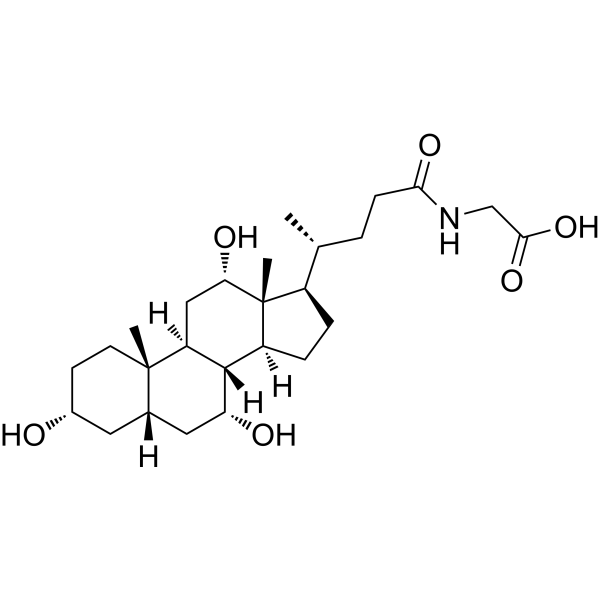
Glycocholic acid is a bile acid derivative. Glycocholic acid downregulates MDR1, Bcl-2, MRP1, MRP2 and FXR, upregulates Bax, p53, caspase-9, caspase-3, TGR5 and S1PR2. Glycocholic acid inhibits multidrug resistance and efflux pumps, induces mitochondrial apoptosis, and enhances chemosensitivity. Glycocholic acid modulates related bile acid receptor signaling. Glycocholic acid suppresses growth and conjugation of Enterobacteriaceae and increases their antibiotic susceptibility. Glycocholic acid can be used for the research of colon adenocarcinoma and cholangiocarcinoma (CCA) .
|
-
-
- HY-B0593
-
Ceftazidime
Maximum Cited Publications
42 Publications Verification
GR20263
|
Beta-lactamase
Bacterial
Antibiotic
|
Infection
Cancer
|
|
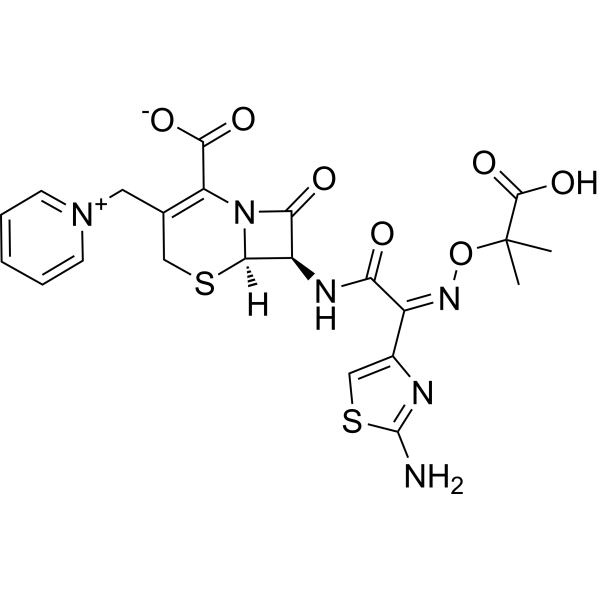
Ceftazidime (GR20263), an antibiotic, has a broad spectrum activity against Gram-positive and Gram-negative aerobic bacteria. Ceftazidime is also active against Enterobacteriaceae (including β-lactamase-positive strains) and is resistant to hydrolysis by most β-lactamases .
|
-
-
- HY-16752
-
|
MK-7655
|
Beta-lactamase
Bacterial
|
Infection
|
|
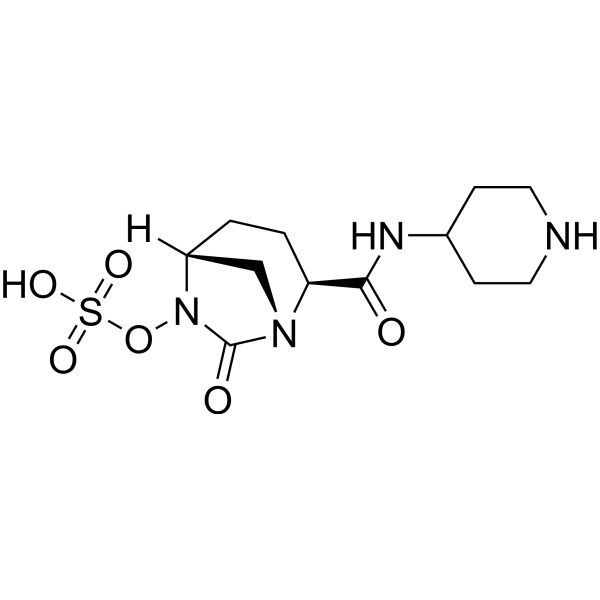
Relebactam is a diazabicyclooctane inhibitor with activity against a wide spectrum of β-lactamases, including class A (extended-spectrum β-lactamases and KPC) and class C (AmpC) enzymes. Relebactam shows antibacterial activity .
|
-
-
- HY-136072
-
|
|
Bacterial
|
Infection
|
|
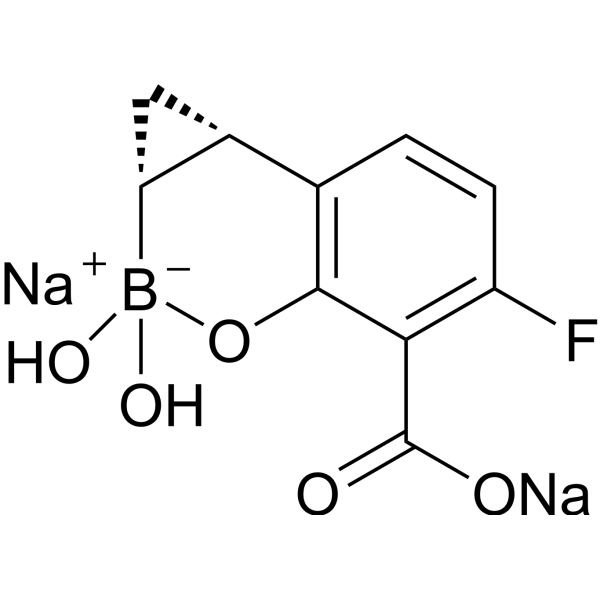
Xeruborbactam disodium is a potent, ultra-broad-spectrum boronic acid beta-lactamase inhibitor. Xeruborbactam disodium inhibits key serine and metallo beta-lactamases at a nano molar range .
|
-
-
- HY-19806A
-
|
CXA-101; FR264205
|
Bacterial
|
Infection
|
|
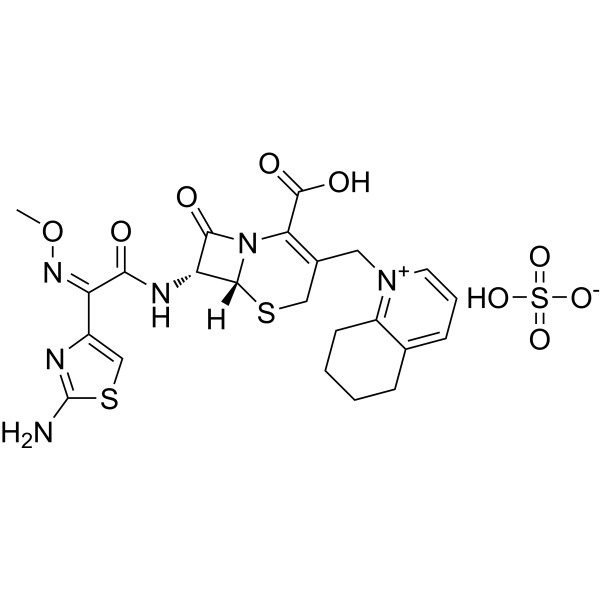
Ceftolozane (CXA-101) sulfate is an antipseudomonal cephalosporin. Ceftolozane binds to P. aeruginosa essential PBPs (1b, 1c, 2 and 3) with high affinity. Ceftolozane inhibits cell wall synthesis by binding the PBPs. Ceftolozane sulfate inhibits P. aeruginosa and Enterobacteriaceae .
|
-
-
- HY-164036
-
|
|
Antibiotic
Bacterial
|
Infection
|
|
Lolamicin is an orally effective inhibitor that specifically targets the Gram-negative bacteria lipoprotein transport system LolCDE complex. It selectively inhibits the transmembrane transport of outer membrane lipoproteins by competitively binding to lipoprotein binding sites. Lolamicin destroys the integrity of the bacterial outer membrane, leading to cell death, and has both bactericidal and antibacterial activity. It has significant effects on multidrug-resistant Enterobacteriaceae pathogens (such as Escherichia coli and Klebsiella pneumoniae). Lolamicin can be used to inhibit the study of acute pneumonia, sepsis and other infections caused by Gram-negative bacteria .
|
-
-
- HY-B0593A
-
|
GR20263 pentahydrate
|
Beta-lactamase
Bacterial
Antibiotic
|
Infection
Cancer
|
|
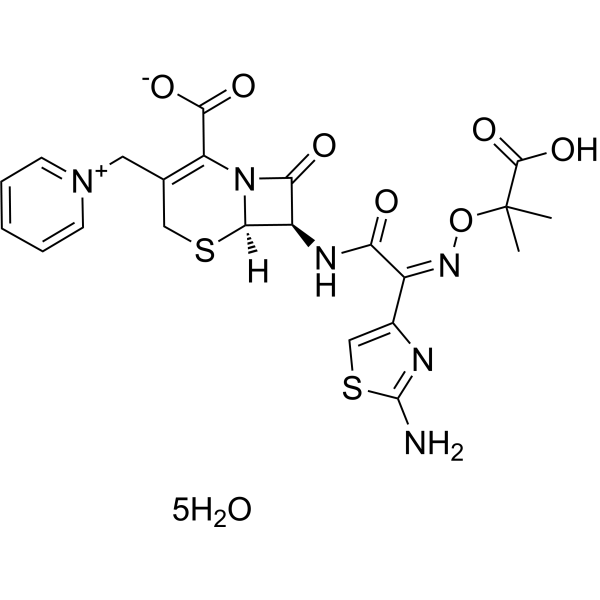
Ceftazidime (GR20263) pentahydrate , an antibiotic, has a broad spectrum activity against Gram-positive and Gram-negative aerobic bacteria. Ceftazidime pentahydrate is also active against Enterobacteriaceae (including β-lactamase-positive strains) and is resistant to hydrolysis by most β-lactamases .
|
-
-
- HY-W009168
-
|
|
Bacterial
Antibiotic
|
Infection
Cancer
|
|
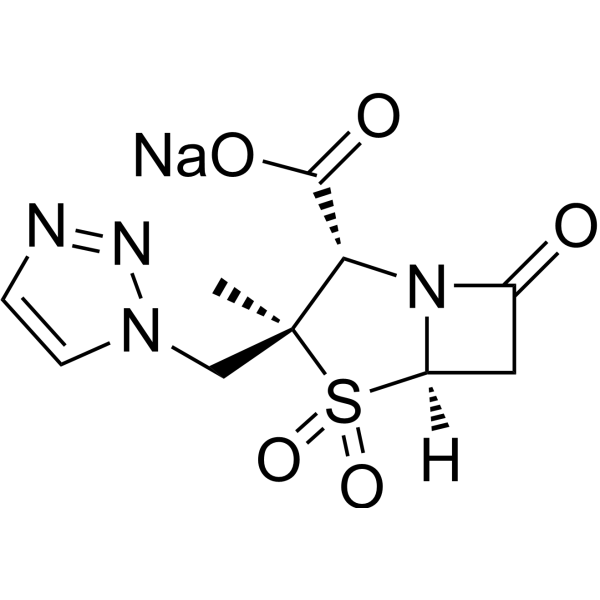
Tazobactam sodium is an antibiotic of the beta-lactamase inhibitor class. Ceftolozane combines with Tazobactam, extends the activity of ceftolozane against many ESBL-producing Enterobacteriaceae and some Bacteroides spp..
|
-
-
- HY-111521
-
|
Carbavance
|
Antibiotic
Bacterial
Beta-lactamase
|
Infection
|
|
Meropenem-vaborbactam (Carbavance) is a Carbapenem Antibiotic and Boronic acid-based beta-lactamase inhibitor, is a fixed-dose combination product with potent in vitro activity against Enterobacteriaceae that are Klebsiella pneumoniae carbapenemase producers. Meropenem-vaborbactam exhibits activity against Pseudomonas aeruginosa isolates , with an MIC50 of 0.5 μg/mL and an MIC90 of 8 μg/mL .
|
-
-
- HY-N1423A
-
|
|
P-glycoprotein
Bcl-2 Family
G protein-coupled Bile Acid Receptor 1
Bacterial
Apoptosis
FXR
Caspase
MDM-2/p53
LPL Receptor
Endogenous Metabolite
|
Metabolic Disease
Cancer
|
|
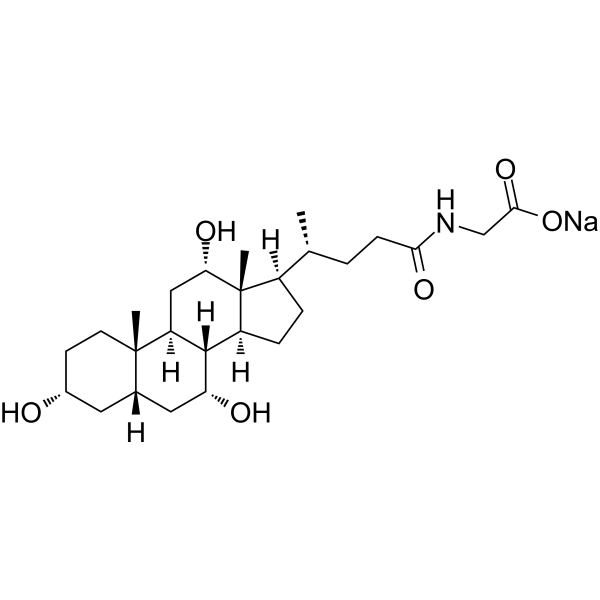
Glycocholic acid sodium is a bile acid derivative. Glycocholic acid downregulates MDR1, Bcl-2, MRP1, MRP2 and FXR, upregulates Bax, p53, caspase-9, caspase-3, TGR5 and S1PR2. Glycocholic acid sodium inhibits multidrug resistance and efflux pumps, induces mitochondrial apoptosis, and enhances chemosensitivity. Glycocholic acid sodium modulates related bile acid receptor signaling. Glycocholic acid sodium suppresses growth and conjugation of Enterobacteriaceae and increases their antibiotic susceptibility. Glycocholic acid sodium can be used for the research of colon adenocarcinoma and cholangiocarcinoma (CCA) .
|
-
-
- HY-N1423S
-
|
|
Isotope-Labeled Compounds
P-glycoprotein
Bcl-2 Family
G protein-coupled Bile Acid Receptor 1
Endogenous Metabolite
Bacterial
Apoptosis
FXR
Caspase
MDM-2/p53
LPL Receptor
|
Metabolic Disease
Cancer
|
|
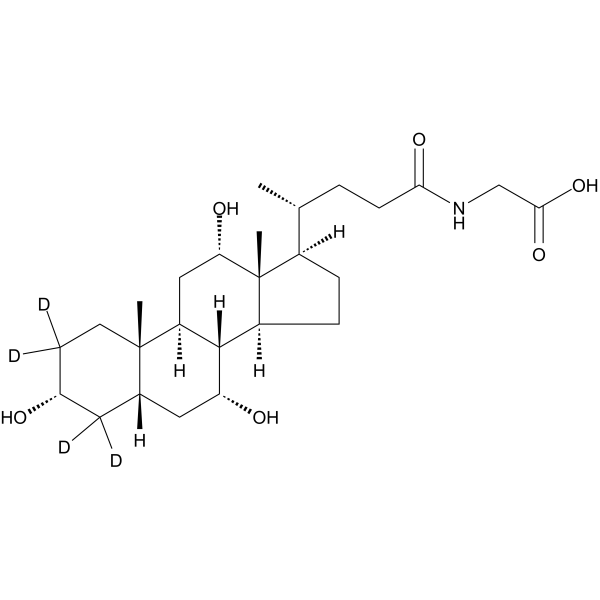
Glycocholic acid-d4 is the deuterium labeled Glycocholic acid (HY-N1423). Glycocholic acid is a bile acid derivative. Glycocholic acid downregulates MDR1, Bcl-2, MRP1, MRP2 and FXR, upregulates Bax, p53, caspase-9, caspase-3, TGR5 and S1PR2. Glycocholic acid inhibits multidrug resistance and efflux pumps, induces mitochondrial apoptosis, and enhances chemosensitivity. Glycocholic acid modulates related bile acid receptor signaling. Glycocholic acid suppresses growth and conjugation of Enterobacteriaceae and increases their antibiotic susceptibility. Glycocholic acid can be used for the research of colon adenocarcinoma and cholangiocarcinoma (CCA).
|
-
-
- HY-141619A
-
|
|
Bacterial
|
Infection
|
|
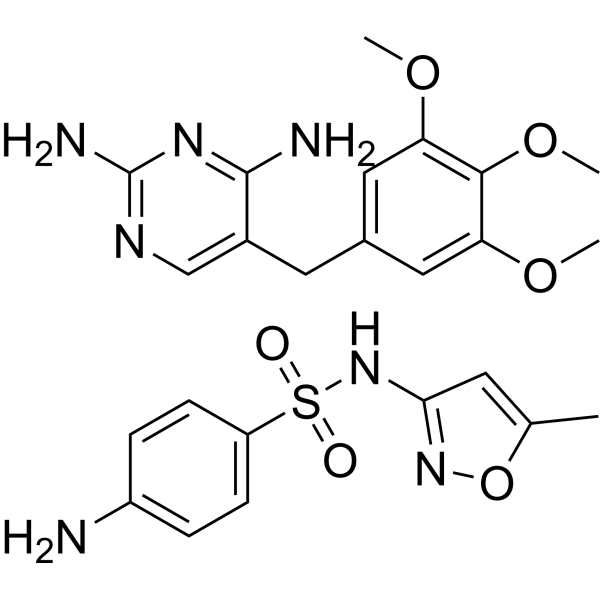
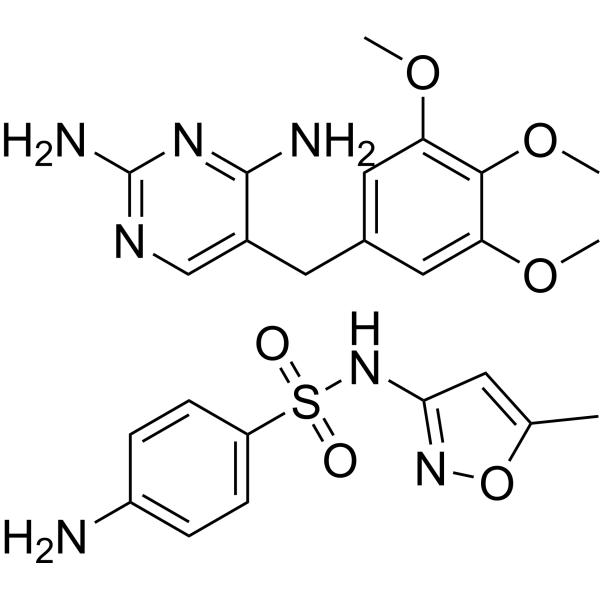
Cotrimoxazole (Trimethoprim/sulfamethoxazole 1:19), an antibacterial agent, is a Trimethoprim (HY-B0510) and Sulfamethoxazole (HY-B0322) mixture. The ratio of Trimethoprim to Sulfamethoxazole in the combination mixture is 1 : 19 .
|
-
-
- HY-121329
-
|
AMA-1080; Ro 17-2301
|
Penicillin-binding protein (PBP)
Antibiotic
Bacterial
|
Infection
|
|
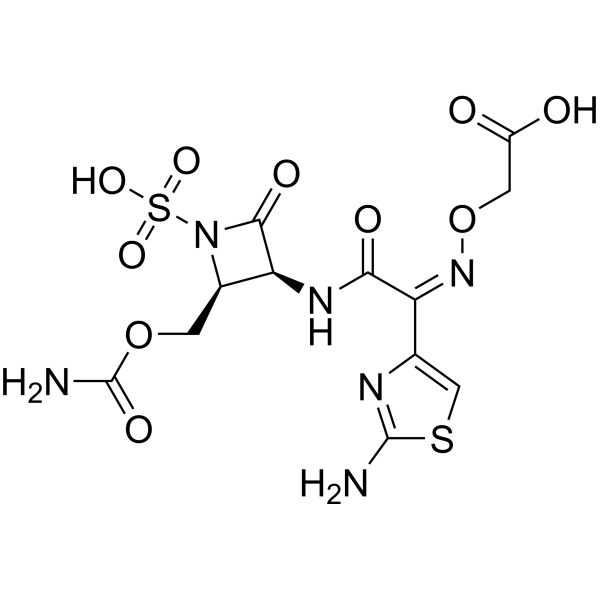
Carumonam (AMA-1080; Ro 17-2301) is a sulfonated monocyclic β-Lactam Antibiotic, targeting to penicillin-binding protein (PBP). Carumonam exerts highly activity against Enterobacteriaceae, Pseudomonas aeruginosa, and Haemophilus influenzae, while it weakly and even inactively inhibits Streptococcus pneumoniae and Staphylococcus aureus. Carumonam is resistant to beta-lactamase-mediated hydrolysis .
|
-
-
- HY-A0111
-
|
Ro 15-8074; Deacetoxycefotaxime
|
Antibiotic
Bacterial
Penicillin-binding protein (PBP)
Drug Metabolite
|
Infection
|
|
Cefetamet (Ro 15-8074) is a cephalosporin antibiotic and the active metabolite of Cefetamet pivoxil (HY-B1894A). Cefetamet binds to bacterial penicillin-binding protein (PBP) (IC50 for PBP3 in Escherichia coli W3110 is 2.5 μg/mL). Cefetamet has significant activity against Gram-negative bacteria such as Enterobacteriaceae, Neisseria species, and Haemophilus influenzae, as well as Gram-positive bacteria such as Streptococcus. Cefetamet kills and lyses Treponema pallidum. Cefetamet can be used in the research of respiratory tract, urinary tract, ear, nose and throat infections, and syphilis .
|
-
-
- HY-141619
-
|
|
Bacterial
|
Infection
|
|
Cotrimoxazole (Trimethoprim/sulfamethoxazole 1:5), an antibacterial agent, is a Trimethoprim (HY-B0510) and Sulfamethoxazole (HY-B0322) mixture. The ratio of Trimethoprim to Sulfamethoxazole in the combination mixture is 1 : 5 .
|
-
-
- HY-19806
-
|
CXA-101 free base; FR264205 free base
|
Antibiotic
Bacterial
|
Infection
|
|
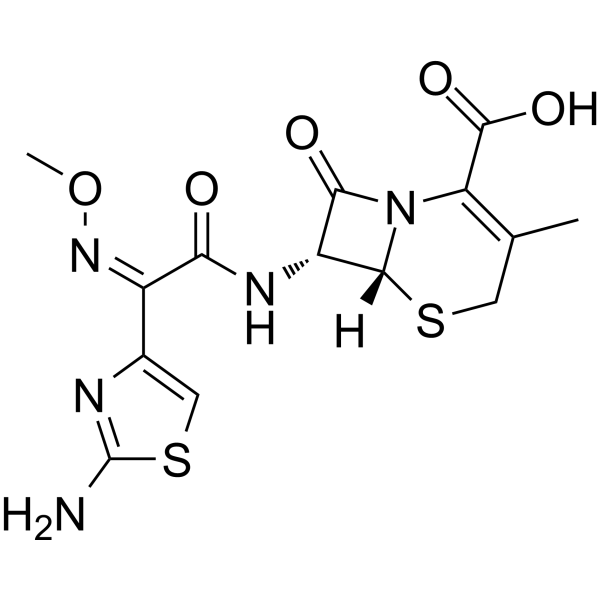
Ceftolozane (CXA-101 free base; FR264205 free base) is a cephalosporin antibiotic with potent activity againstPseudomonas aeruginosa and strains Enterobacteriaceae, with MICs of 0.5 and 0.25-0.5 mg/L .
|
-
-
- HY-B0343A
-
|
A-56620 hydrochloride
|
Bacterial
|
Infection
Inflammation/Immunology
|
|
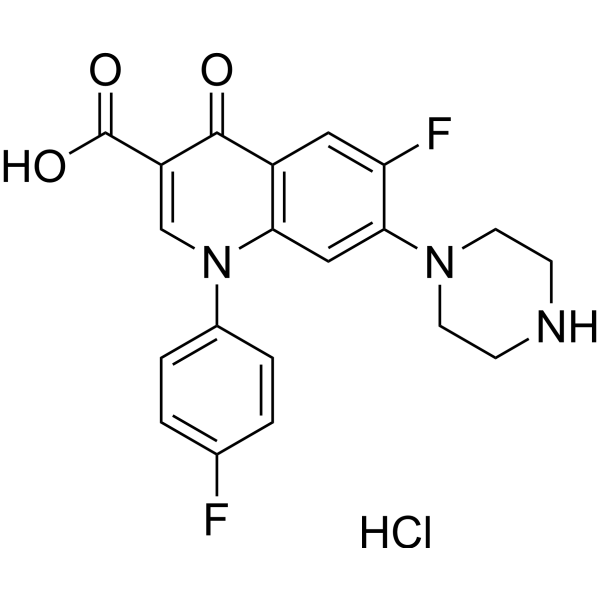
Sarafloxacin hydrochloride (A-56620 hydrochloride) is a fluoroquinolone Antibacterial agent. Sarafloxacin inhibits the growth of Staphylococcus aureus, Enterobacteriaceae, and both aminoglycoside-sensitive and aminoglycoside-resistant strains of Pseudomonas aeruginosa .
|
-
-
- HY-N6665
-
|
|
Antibiotic
Bacterial
|
Infection
|
|
Cefquinome sulfate is a broad-spectrum cephem antibiotic that has inhibitory effects on a variety of Gram-positive and Gram-negative bacteria, including Staphylococci, Streptococci, Pseudomonas, and Enterobacteriaceae .
|
-
-
- HY-157536
-
|
|
Bacterial
|
Infection
Inflammation/Immunology
|
|
SMT-738 is a bacterial bactericide. SMT-738 targets the small molecules responsible for lipoprotein transport in Enterobacteriaceae, causing abnormal lipoprotein localization and bacterial cell death. SMT-738 inhibits the growth of E. coli and K. pneumoniae. SMT-738 reduces bacterial loads in mouse models of urinary tract infection, bloodstream infection, and pulmonary infection caused by Enterobacterales. SMT-738 can be used in the research of Enterobacteriaceae infections, urinary tract infections, bloodstream infections, and pneumonia .
|
-
-
- HY-Y1106
-
|
|
Environmental Pollutants
Biochemical Assay Reagents
Bacterial
|
Infection
|
|
Tripotassium phosphate is a Bactericid with bactericidal activity primarily against Gram-negative bacteria. Tripotassium phosphate reduces the population counts of Enterobacteriaceae and Campylobacter in poultry skin rinsates. Tripotassium phosphate fails to reduce the population count of Enterococcus in poultry skin rinsates .
|
-
-
- HY-136069
-
|
|
Bacterial
|
Infection
|
|
Xeruborbactam is a potent, ultra-broad-spectrum boronic acid beta-lactamase inhibitor. Xeruborbactam inhibits key serine and metallo beta-lactamases at a nano molar range .
|
-
-
- HY-W013105
-
|
N-Cholylglycine sodium salt, 98%
|
Bcl-2 Family
Caspase
Endogenous Metabolite
Bacterial
MDM-2/p53
P-glycoprotein
LPL Receptor
FXR
G protein-coupled Bile Acid Receptor 1
Apoptosis
|
Others
|
|
Sodium glycocholate hydrate, 98% is a bile acid derivative. Sodium glycocholate hydrate, 98% downregulates MDR1, Bcl-2, MRP1, MRP2 and FXR, upregulates Bax, p53, caspase-9, caspase-3, TGR5 and S1PR2. Sodium glycocholate hydrate, 98% inhibits multidrug resistance and efflux pumps, induces mitochondrial apoptosis, and enhances chemosensitivity. Sodium glycocholate hydrate, 98% modulates related bile acid receptor signaling. Sodium glycocholate hydrate, 98% suppresses growth and conjugation of Enterobacteriaceae and increases their antibiotic susceptibility. Sodium glycocholate hydrate, 98% can be used for the research of colon adenocarcinoma and cholangiocarcinoma (CCA) .
|
-
-
- HY-B0593R
-
|
GR20263 (Standard)
|
Beta-lactamase
Reference Standards
Bacterial
Antibiotic
|
Infection
|
|
Ceftazidime (Standard) is the analytical standard of Ceftazidime. This product is intended for research and analytical applications. Ceftazidime (GR20263), an antibiotic, has a broad spectrum activity against Gram-positive and Gram-negative aerobic bacteria. Ceftazidime is also active against Enterobacteriaceae (including β-lactamase-positive strains) and is resistant to hydrolysis by most β-lactamases .
|
-
-
- HY-B0593AR
-
|
GR20263 pentahydrate (Standard)
|
Beta-lactamase
Reference Standards
Bacterial
Antibiotic
|
Infection
Cancer
|
|
Ceftazidime (pentahydrate) (Standard) is the analytical standard of Ceftazidime (pentahydrate). This product is intended for research and analytical applications. Ceftazidime (GR20263) pentahydrate , an antibiotic, has a broad spectrum activity against Gram-positive and Gram-negative aerobic bacteria. Ceftazidime pentahydrate is also active against Enterobacteriaceae (including β-lactamase-positive strains) and is resistant to hydrolysis by most β-lactamases .
|
-
-
- HY-19936A
-
|
|
Bacterial
|
Infection
|
|
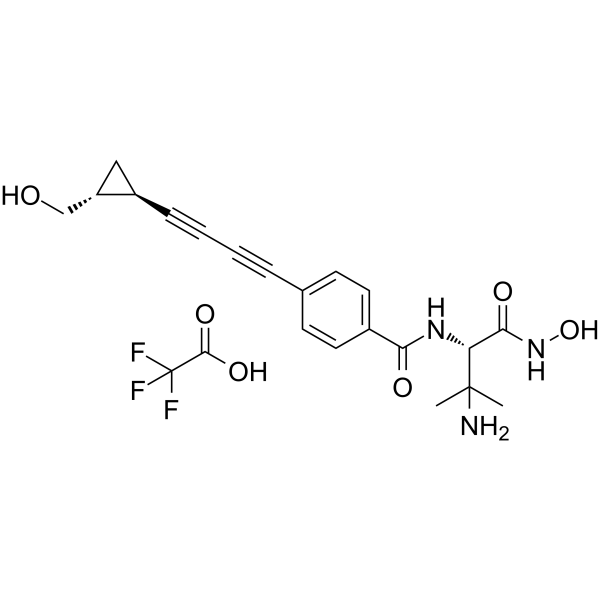
ACHN-975 TFA is a selective LpxC inhibitor and exhibits a subnanomolar LpxC inhibitory activity. ACHN-975 TFA is against a wide range of gram-negative bacterias with low MIC values (≤1 μg/mL) .
|
-
-
- HY-16955A
-
|
ACHN 490 sulfate
|
Antibiotic
Bacterial
|
Infection
|
|
Plazomicin (ACHN 490) sulfate is a semi-synthetic aminoglycoside Antibiotic. Plazomicin sulfate acts as a substrate for Aminoglycoside acetyltransferase and Aminoglycoside phosphotransferase. Plazomicin sulfaten is not modified by various common aminoglycoside-modifying enzymes. Plazomicin sulfate selectively inhibits MATE2-K. Plazomicin sulfate exhibits activity against multidrug-resistant bacteria, including carbapenem-resistant Enterobacterales .
|
-
-
- HY-N1423B
-
|
|
Endogenous Metabolite
Caspase
G protein-coupled Bile Acid Receptor 1
LPL Receptor
MDM-2/p53
Bcl-2 Family
P-glycoprotein
FXR
Bacterial
Apoptosis
|
Metabolic Disease
Inflammation/Immunology
Cancer
|
|
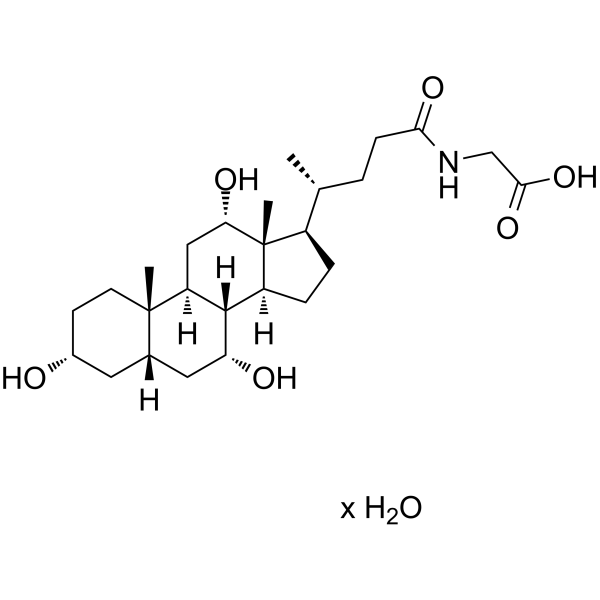
Glycocholic acid hydrate is a bile acid derivative. Glycocholic acid hydrate downregulates MDR1, Bcl-2, MRP1, MRP2 and FXR, upregulates Bax, p53, caspase-9, caspase-3, TGR5 and S1PR2. Glycocholic acid hydrate inhibits multidrug resistance and efflux pumps, induces mitochondrial apoptosis, and enhances chemosensitivity. Glycocholic acid hydrate modulates related bile acid receptor signaling. Glycocholic acid hydrate suppresses growth and conjugation of Enterobacteriaceae and increases their antibiotic susceptibility. Glycocholic acid hydrate can be used for the research of colon adenocarcinoma and cholangiocarcinoma (CCA) .
|
-
-
- HY-N6665A
-
|
|
Antibiotic
Bacterial
|
Infection
|
|
Cefquinome is a broad-spectrum cephem antibiotic that has inhibitory effects on a variety of Gram-positive and Gram-negative bacteria, including Staphylococci, Streptococci, Pseudomonas, and Enterobacteriaceae .
|
-
-
- HY-16752R
-
|
MK-7655 (Standard)
|
Beta-lactamase
Reference Standards
Bacterial
|
Infection
|
|
Relebactam (Standard) is the analytical standard of Relebactam. This product is intended for research and analytical applications. Relebactam is a diazabicyclooctane inhibitor with activity against a wide spectrum of β-lactamases, including class A (extended-spectrum β-lactamases and KPC) and class C (AmpC) enzymes. Relebactam shows antibacterial activity .
|
-
-
- HY-B0593S
-
|
GR20263-d5
|
Isotope-Labeled Compounds
Antibiotic
Beta-lactamase
Bacterial
|
Infection
Cancer
|
|
Ceftazidime-d5 (GR20263-d5) is the deuterium labeled Ceftazidime (HY-B0593). Ceftazidime (GR20263), an antibiotic, has a broad spectrum activity against Gram-positive and Gram-negative aerobic bacteria. Ceftazidime is also active against Enterobacteriaceae (including β-lactamase-positive strains) and is resistant to hydrolysis by most β-lactamases .
|
-
-
- HY-N10479
-
|
|
DNA/RNA Synthesis
Drug Intermediate
Endogenous Metabolite
Bacterial
|
Infection
|
|
Chorismic acid is a precursor for the biosynthesis of aromatic amino acids and vitamins, as well as a key metabolite in tRNA modification. Chorismic acid is a critical metabolite for the synthesis of cmo 5U. Deficiency of Chorismic acid inhibits the formation of cmo 5U and mcmo 5U. Chorismic acid can be used in studies of S. typhimurium and E. coli infections .\n
|
-
-
- HY-W009168R
-
|
|
Reference Standards
Bacterial
Antibiotic
|
Infection
Cancer
|
|
Flutianil (Standard) is the analytical standard of Flutianil. This product is intended for research and analytical applications. Flutianil is a fungicide, which specifically inhibits the powdery mildew species. Flutianil inhibits the haustorium formation and subsequent mycelia growth .
|
-
-
- HY-125604
-
|
|
Beta-lactamase
Bacterial
|
Infection
Inflammation/Immunology
|
|
WCK-4234 is a diazabicyclooctane β-lactamase inhibitor and susceptibility restorer. WCK-4234 lacks direct antibacterial activity. WCK-4234 inhibits class A, C, D β-lactamases and extended-spectrum β-lactamases to potentiate Imipenem (HY-B1369A) and Meropenem (HY-13678) activity against Gram-negative pathogens. WCK-4234 can be used for the research of gram-negative bacterial infections and β-lactamase-mediated carbapenem-resistant bacterial infections .
|
-
-
- HY-B0343
-
|
A-56620
|
Bacterial
|
Infection
Inflammation/Immunology
|
|
Sarafloxacin (A-56620) is a fluoroquinolone Antibacterial agent. Sarafloxacin inhibits the growth of Staphylococcus aureus, Enterobacteriaceae, and both aminoglycoside-sensitive and aminoglycoside-resistant strains of Pseudomonas aeruginosa .
|
-
-
- HY-145158
-
|
|
Bacterial
Antibiotic
Drug Derivative
Beta-lactamase
|
Infection
|
|
Temocillin is a derivative of Ticarcillin (HY-100577) and a β-lactamase-resistant Antibiotic. Temocillin blocks water molecules from entering the active sites of Ambler class A and class C serine-dependent β-lactamases, resisting hydrolysis by these enzymes. Temocillin exhibits antibacterial activity against Enterobacteriaceae and Neisseria gonorrhoeae. Temocillin shows antagonistic effects against some isolated strains when used in combination with Ticarcillin (HY-100577) or Cefazolin (HY-B1892). Temocillin can be used in research related to sepsis, urinary tract infections, and lower respiratory tract infections .
|
-
-
- HY-U00380
-
|
|
Antibiotic
Beta-lactamase
Bacterial
|
Infection
|
|
Tigemonam is an orally active monobactam antibiotic with a Ki of 0.86 μM against Enterobacter cloacae P99 β-lactamase and 50.8 μM against Escherichia coli TEM-1 β-lactamase. Tigemonam binds to penicillin-binding proteins 1a, 3, and 4, inhibits bacterial cell wall synthesis, and exhibits bactericidal activity against aerobic gram-negative bacteria including Enterobacteriaceae, Haemophilus influenzae, and Neisseria gonorrhoeae. Tigemonam resists hydrolysis by multiple β-lactamase enzymes, reduces bacterial load in systemic, pyelonephritic, lung, and thigh muscle infections in rodents, and shows minimal difference between minimum inhibitory and bactericidal concentrations. Tigemonam can be used for the research of gram-negative bacterial infections, acute pyelonephritis, lung infection, and thigh muscle infection .
|
-
-
- HY-125356
-
|
|
Beta-lactamase
|
Infection
|
|
ETX0282 is an orally active prodrug, with its active form being ETX1317. ETX0282 and ETX1317 are β-lactamase inhibitors of the dioxolane-dibenzo-p-heptane (DBO) type. ETX0282 exhibits high stability during intestinal absorption and can be efficiently converted into ETX1317 in the liver. ETX0282 alone has no bactericidal activity, but in a mouse model of neutropenic thigh infection, it can significantly reduce bacterial load when used in combination with Cefpodoxime Proxetil (HY-N7101). ETX0282 can be used for the study of infections caused by drug-resistant Gram-negative bacteria .
|
-
-
- HY-P11080
-
|
|
Bacterial
|
Infection
|
|
Oncocin is an antibacterial peptide. It belongs to proline-rich antimicrobial peptides (PrAMPs). Oncocin works against Gram-negative bacteria. It has MIC values of 0.125-8 μg/mL for 34 strains and clinical isolates of Enterobacteriaceae and nonfermenters. Oncocin binds to the substrate-binding domain of the chaperone DnaK. The binding has dissociation constants in the micromolar range. This binding causes protein misfolding and aggregation and the bacteria death .
|
-
-
- HY-16955
-
|
ACHN 490
|
Antibiotic
Bacterial
|
Infection
Inflammation/Immunology
|
|
Plazomicin (ACHN 490) is a semi-synthetic aminoglycoside Antibiotic. Plazomicin acts as a substrate for Aminoglycoside acetyltransferase and Aminoglycoside phosphotransferase. Plazomicin is not modified by various common aminoglycoside-modifying enzymes. Plazomicin selectively inhibits MATE2-K. Plazomicin exhibits activity against multidrug-resistant bacteria, including carbapenem-resistant Enterobacterales .
|
-
-
- HY-176519
-
|
|
Beta-lactamase
Bacterial
|
Infection
|
|
ANT2681 is a potent NDM inhibitor with a Ki value of 0.04 μM against NDM-1. ANT2681 also inhibits other MBLs, such as VIM-1 and IMP-1 with Ki values of 0.63 μM and 3.81 μM, respectively. ANT2681 can be used in combination with Meropenem (HY-13678) to inhibit infections caused by NDM-producing Enterobacteriaceae .
|
-
-
- HY-123922
-
|
|
Bacterial
|
Infection
|
|
NOSO-502 is an inhibitor of bacterial translation. NOSO-502 exhibits inhibitory activity against Enterobacteriaceae. NOSO-502 has good safety and antibacterial properties .
|
-
-
- HY-N6665R
-
|
|
Reference Standards
Antibiotic
Bacterial
|
Infection
|
|
Cefquinome (sulfate) (Standard) is the analytical standard of Cefquinome (sulfate). This product is intended for research and analytical applications. Cefquinome sulfate is a broad-spectrum cephem antibiotic that has inhibitory effects on a variety of Gram-positive and Gram-negative bacteria, including Staphylococci, Streptococci, Pseudomonas, and Enterobacteriaceae .
|
-
-
- HY-14879E
-
|
NXL-104 sodium
|
Beta-lactamase
Bacterial
|
Infection
|
|
Ent-Avibactam (NXL-104) sodium is a β-lactamase inhibitor with broad-spectrum antibacterial activity. When combined with Cefazidime (HY-B0593), rel-Avibactam sodium exhibits significant inhibitory effects on Enterobacteriaceae bacteria that produce Ambler A and C types of β-lactamases. The IC50 value of rel-Avibactam sodium is much lower than that of commonly used β-lactamase inhibitors Clavulanic acid (HY-A0256) and Ticarcillin (HY-139805), demonstrating its high efficiency in inhibiting TEM-1 and P99 enzymes .
|
-
-
- HY-171112
-
|
|
Beta-lactamase
Bacterial
|
Infection
|
|
KSP-1007 is a bicyclic boronate-based broad-spectrum β-lactamase inhibitor. KSP-1007 can effectively inhibit class A, B, C and D β-lactamases, including serine-type, metallo-type (such as NDM, VIM, IMP) and Acinetobacter baumannii OXA-type enzymes. KSP-1007 can enhance the antibacterial activity of Meropenem (HY-13678), reduce its MIC value, and be effective against carbapenemase-producing Enterobacteriaceae, Acinetobacter baumannii, and Pseudomonas aeruginosa. KSP-1007 can be used for the research of bacterial infection .
|
-
-
- HY-N1423S1
-
|
|
Isotope-Labeled Compounds
P-glycoprotein
Bcl-2 Family
G protein-coupled Bile Acid Receptor 1
Endogenous Metabolite
Bacterial
Apoptosis
FXR
Caspase
MDM-2/p53
LPL Receptor
|
Metabolic Disease
Cancer
|
|
Glycocholic acid-d5 is the deuterium labeled Glycocholic acid (HY-N1423). Glycocholic acid is a bile acid derivative. Glycocholic acid downregulates MDR1, Bcl-2, MRP1, MRP2 and FXR, upregulates Bax, p53, caspase-9, caspase-3, TGR5 and S1PR2. Glycocholic acid inhibits multidrug resistance and efflux pumps, induces mitochondrial apoptosis, and enhances chemosensitivity. Glycocholic acid modulates related bile acid receptor signaling. Glycocholic acid suppresses growth and conjugation of Enterobacteriaceae and increases their antibiotic susceptibility. Glycocholic acid can be used for the research of colon adenocarcinoma and cholangiocarcinoma (CCA).
|
-
-
- HY-106095
-
|
|
Antibiotic
Bacterial
Penicillin-binding protein (PBP)
|
Infection
|
DQ 2556 is a semi-synthetic cephalosporin antibiotic. DQ-2556 exhibits significant activity against both Gram-positive and Gram-negative bacteria, particularly Gram-positive bacteria and Enterobacteriaceae infections. DQ 2556 exerts its bactericidal effect by interfering with cell division. DQ-2556 has a strong affinity for the penicillin-binding proteins (PBPs) of Escherichia coli: PBP1A/1B (IC₅₀ = 0.57-0.73 μg/mL) and PBP3 (IC₅₀ = 0.088 μg/mL). DQ-2556 demonstrates significant in vivo protective effects. DQ-2556 can be used in the development of injectable cephalosporins .
|
-
-
- HY-W743473
-
|
Ro 15-8074-d3; Deacetoxycefotaxime-d3
|
Isotope-Labeled Compounds
Bacterial
Antibiotic
Penicillin-binding protein (PBP)
Drug Metabolite
|
Infection
|
|
Cefetamet-d3 (Ro 15-8074-d3; Deacetoxycefotaxime-d3) is the deuterium labeled Cefetamet (HY-A0111). Cefetamet (Ro 15-8074) is a cephalosporin antibiotic and the active metabolite of Cefetamet pivoxil (HY-B1894A). Cefetamet binds to bacterial penicillin-binding protein (PBP) (IC50 for PBP3 in Escherichia coli W3110 is 2.5 μg/mL). Cefetamet has significant activity against Gram-negative bacteria such as Enterobacteriaceae, Neisseria species, and Haemophilus influenzae, as well as Gram-positive bacteria such as Streptococcus. Cefetamet kills and lyses Treponema pallidum. Cefetamet can be used in the research of respiratory tract, urinary tract, ear, nose and throat infections, and syphilis .
|
-
-
- HY-105393
-
|
Antibiotic LB 10517 sodium
|
Bacterial
|
Infection
|
LB 10517 (sodium) is a type of cephalosporin. LB 10517 (sodium) has broad-spectrum antibacterial activity against both Gram-positive and Gram-negative bacteria, including Enterobacteriaceae, Pseudomonas aeruginosa, Staphylococcus, and Streptococcus .
|
-
-
- HY-120235
-
|
|
Beta-lactamase
Bacterial
|
Infection
|
|
CB-618 is a β-lactamase inhibitor. CB-618 reversibly covalently inhibits Ambler class A, C, and some class D serine β-lactamases. CB-618 has weak antibacterial activity as a single agent, but it significantly enhances the antibacterial activity of Meropenem (HY-13678) against enzyme-producing Enterobacteriaceae. CB-618 can be used in research on drug-resistant bacteria .
|
-
-
- HY-150260
-
|
|
Bacterial
|
Infection
|
|
SA09-Cu is a noncompetitive and potent NDM-1 inhibitor with an IC50 of 9.6 nM. SA09-Cu can convert NDM-1 into an inactive state by oxidizing the Zn(II)-thiolate site of the enzyme and avoids to be reduced by intracellular thiols of bacteria. SA09-Cu exhibits excellent inhibition against a series of clinical NDM-1-producing carbapenem-resistant Enterobacteriaceae (CRE) in restoring the Meropenem (HY-13678) effect, and slows down the development of carbapenem resistance .
|
-
- HY-106084
-
|
T-2525; RO 19-5247; Cefterame
|
Bacterial
|
Infection
|
|
Cefteram (T-2525) is the free acid of Cefteram pivoxil (HY-106571), which is an orally active cephalosporin ester. Cefteram potently targets to the enteropathogenic Enterobacteriaceae and Vibrionaceae .
|
-
- HY-B1894
-
|
Ro 15-8075 free base
|
Antibiotic
Bacterial
|
Infection
|
|
Cefetamet pivoxyl (Ro 15-8075 free base) is an orally active cephalosporin Antibiotic and a prodrug of Cefetamet (HY-A0111). After ingestion, Cefetamet pivoxyl is hydrolyzed by gastrointestinal esterases to form Cefetamet. Cefetamet pivoxyl is primarily active against aerobic Gram-negative bacteria (such as Enterobacteriaceae, *Neisseria*, *Haemophilus*) and some Gram-positive bacteria (such as non-enterococcal streptococci). Cefetamet pivoxyl exhibits potent in vivo antibacterial activity against strains of Gram-positive bacteria (S. pyogenes) and Gram-negative bacteria (E. coli, K. pneumoniae, S. marcescens, P. vulgaris, P. mirabilis, H. influenzae) .
|
-
- HY-W744633
-
|
|
Drug Metabolite
Bacterial
|
Infection
|
|
Cefdaloxime is an orally active cephalosporin and HR-916 ester metabolite. Cefdaloxime has a broad spectrum of activity against pathogens such as the majority of members of the family Enterobacteriaceae, staphylococci, Streptococcus spp., Neisseria gonorrhoeae, Moraxella catarrhalis, Haemophilus influenzae .
|
-
- HY-16752A
-
|
MK-7655 sodium
|
Beta-lactamase
Bacterial
|
Infection
|
|
Relebactam sodium (MK-7655 sodium) is a potent and selective β-lactamase inhibitor with the activity of delaying the development of bacterial resistance to antibiotics. Relebactam sodium can bind to a variety of β-lactamases, thereby improving the efficacy of β-lactam antibiotics. Relebactam sodium shows good application potential in inhibiting complicated bacterial infections .
|
-
- HY-122260
-
|
|
Bacterial
|
Infection
|
|
S-25932 is a potent 4-quinolones antibacterial agent. S-25932 shows broad gram-negative antibacterial activity. S-25932 shows inhibition for Enterobacter aerogenes, Enterobacter addlomerans, Enterobacter coloacae, Escherichia coli with MIC90 values of 1.0, 2.0, 1.0, 0.25 µg/mL, respectively .
|
-
- HY-106668
-
|
Sch 21420
|
Antibiotic
Bacterial
|
Infection
|
|
Isepamicin (Sch 21420) is an aminoglycoside antibacterial. Isepamicin has better activity against strains producing type I 6'-acetyltransferase. Isepamicin’s antibacterial spectrum includes Enterobacteriaceae and staphylococci. Anaerobes, Neisseriaceae and streptococci are resistant. Isepamicin exhibits a strong concentration-dependent bactericidal effect, a long post-antibiotic effect (several hours) and induces adaptive resistance .
|
-
- HY-U00092
-
|
|
Bacterial
|
Infection
|
|
BAY-Y 3118 is a quinolone antibacterial agent. BAY-Y 3118 has a broad antibacterial spectrum in vitro. BAY-Y 3118 exhibits high activity against gram-positive cocci and anaerobes. BAY-Y 3118 shows moderate activity against Enterobacteriaceae and Pseudomonas aeruginosa. BAY-Y 3118 can be used in the research of infectious diseases .
|
-
- HY-157356
-
|
|
Bacterial
|
Others
|
|
Violet Red Bile Glucose Agar can be used for counting intestinal bacteria and identification of enterobacteriaceae. The composition of 1 liter of Violet Red Bile Glucose Agar contains: 7.0 g gelatin pancreatic enzyme hydrolysate, 3.0 g yeast extract powder, 1.5 g sodium deoxycholate, 10.0 g glucose, 5.0 g sodium chloride, 0.03 g neutral red, 0.002 g crystal violet, and 15.0 g agar in per liter .
|
-
- HY-106925
-
|
E 4868
|
Antibiotic
Bacterial
|
Infection
|
|
Cetefloxacin (E 4868) is a board-spectrum antibacterial antibiotic, MIC of 0.007-8 µg/ml. Cetefloxacin exhibits good pharmacokinetic characters in mice. Cetefloxacin exhibits protective effects against Escherichia coli, Pseudomonas aeruginosa, Staphylococcus aureus, and Streptococcus pneumoniae in mice .
|
-
- HY-125579
-
|
|
Bacterial
|
Infection
|
|
Ro 25-0534 is an antimicrobial compound against Pseudomonas. Ro 25-0534 is active against Enterobacteriaceae (MIC90: 0.06-2 μg/mL), Oxacillin (HY-B0465)-susceptible staphylococci, β-hemolytic streptococci, and penicillin-susceptible pneumococci (MIC90: 1-2 μg/mL), Haemophilus influenzae (MIC90: 0.25-0.5 μg/mL), Moraxella catarrhalis (MIC90: 0.5 μg/mL), and most nonenteric Gram-negative bacilli (MIC90: 2-4 μg/mL) .
|
-
- HY-14879D
-
|
AVE1330A
|
Beta-lactamase
Bacterial
|
Infection
|
|
Ent-Avibactam sodium (AVE1330A) is a β-lactamase inhibitor with broad-spectrum antibacterial activity. When combined with Cefazidime (HY-B0593), ent-Avibactam sodium exhibits significant inhibitory effects on Enterobacteriaceae bacteria that produce Ambler A and C types of β-lactamases. The IC50 value of ent-Avibactam sodium is much lower than that of commonly used β-lactamase inhibitors Clavulanic acid (HY-A0256) and Ticarcillin (HY-139805), demonstrating its high efficiency in inhibiting TEM-1 and P99 enzymes .
|
-
- HY-A0111A
-
|
Ro15-8074/001; Deacetoxycefotaxime sodium
|
Antibiotic
Bacterial
Penicillin-binding protein (PBP)
Drug Metabolite
|
Infection
|
|
Cefetamet (Ro 15-8074) sodium is a cephalosporin antibiotic and the active metabolite of Cefetamet pivoxil (HY-B1894A). Cefetamet sodium binds to bacterial penicillin-binding protein (PBP) (IC50 for PBP3 in Escherichia coli W3110 is 2.5 μg/mL). Cefetamet sodium has significant activity against Gram-negative bacteria such as Enterobacteriaceae, Neisseria species, and Haemophilus influenzae, as well as Gram-positive bacteria such as Streptococcus. Cefetamet sodium kills and lyses Treponema pallidum. Cefetamet sodium can be used in the research of respiratory tract, urinary tract, ear, nose and throat infections, and syphilis .
|
-
- HY-A0111B
-
|
Ro 15-8074 hydrochloride; Deacetoxycefotaxime hydrochloride
|
Antibiotic
Bacterial
Penicillin-binding protein (PBP)
Drug Metabolite
|
Infection
|
|
Cefetamet (Ro 15-8074) hydrochloride is a cephalosporin antibiotic and the active metabolite of Cefetamet pivoxil (HY-B1894A). Cefetamet hydrochloride binds to bacterial penicillin-binding protein (PBP) (IC50 for PBP3 in Escherichia coli W3110 is 2.5 μg/mL). Cefetamet hydrochloride has significant activity against Gram-negative bacteria such as Enterobacteriaceae, Neisseria species, and Haemophilus influenzae, as well as Gram-positive bacteria such as Streptococcus. Cefetamet hydrochloride kills and lyses Treponema pallidum. Cefetamet hydrochloride can be used in the research of respiratory tract, urinary tract, ear, nose and throat infections, and syphilis .
|
-
- HY-N1423AR
-
|
|
Reference Standards
P-glycoprotein
Bcl-2 Family
G protein-coupled Bile Acid Receptor 1
Bacterial
Apoptosis
FXR
Caspase
MDM-2/p53
LPL Receptor
Endogenous Metabolite
|
Metabolic Disease
Cancer
|
|
Glycocholic acid (sodium) (Standard) is the analytical standard of Glycocholic acid sodium (HY-N1423A). This product is intended for research and analytical applications. Glycocholic acid sodium is a bile acid derivative. Glycocholic acid downregulates MDR1, Bcl-2, MRP1, MRP2 and FXR, upregulates Bax, p53, caspase-9, caspase-3, TGR5 and S1PR2. Glycocholic acid sodium inhibits multidrug resistance and efflux pumps, induces mitochondrial apoptosis, and enhances chemosensitivity. Glycocholic acid sodium modulates related bile acid receptor signaling. Glycocholic acid sodium suppresses growth and conjugation of Enterobacteriaceae and increases their antibiotic susceptibility. Glycocholic acid sodium can be used for the research of colon adenocarcinoma and cholangiocarcinoma (CCA).
|
-
- HY-W754548
-
|
|
Isotope-Labeled Compounds
Endogenous Metabolite
P-glycoprotein
Bcl-2 Family
G protein-coupled Bile Acid Receptor 1
Bacterial
Apoptosis
FXR
Caspase
MDM-2/p53
LPL Receptor
|
Metabolic Disease
Cancer
|
|
Glycocholic acid- 13C2,d4 is the deuterium labeled and 13C-labeled Glycocholic acid (HY-N1423). Glycocholic acid is a bile acid derivative. Glycocholic acid downregulates MDR1, Bcl-2, MRP1, MRP2 and FXR, upregulates Bax, p53, caspase-9, caspase-3, TGR5 and S1PR2. Glycocholic acid inhibits multidrug resistance and efflux pumps, induces mitochondrial apoptosis, and enhances chemosensitivity. Glycocholic acid modulates related bile acid receptor signaling. Glycocholic acid suppresses growth and conjugation of Enterobacteriaceae and increases their antibiotic susceptibility. Glycocholic acid can be used for the research of colon adenocarcinoma and cholangiocarcinoma (CCA).
|
-
- HY-A0111R
-
|
Ro 15-8074 (Standard); Deacetoxycefotaxime (Standard)
|
Reference Standards
Antibiotic
Bacterial
Penicillin-binding protein (PBP)
Drug Metabolite
|
Infection
|
|
Cefetamet (Standard) is the analytical standard of Cefetamet (HY-A0111). This product is intended for research and analytical applications. Cefetamet (Ro 15-8074) is a cephalosporin antibiotic and the active metabolite of Cefetamet pivoxil (HY-B1894A). Cefetamet binds to bacterial penicillin-binding protein (PBP) (IC50 for PBP3 in Escherichia coli W3110 is 2.5 μg/mL). Cefetamet has significant activity against Gram-negative bacteria such as Enterobacteriaceae, Neisseria species, and Haemophilus influenzae, as well as Gram-positive bacteria such as Streptococcus. Cefetamet kills and lyses Treponema pallidum. Cefetamet can be used in the research of respiratory tract, urinary tract, ear, nose and throat infections, and syphilis .
|
-
- HY-111034
-
|
|
Antibiotic
Bacterial
|
Infection
|
|
CGP 31523A is a broad-spectrum aminothiazole cephalosporin. CGP 31523A exhibits potent inhibitory effects on Enterobacteriaceae, Neisseria, Haemophilus influenzae, and Streptococcus (except Enterococcus faecalis), among others. CGP 31523A can be hydrolyzed by the common Escherichia coli type Ic β-lactamase, but is stable against the Ia type enzyme. CGP 31523A is neither an effective β-lactamase inhibitor nor does it induce the production of β-lactamase. CGP 31523A can be used for studying infections caused by Gram-negative bacteria (including drug-resistant strains) .
|
-
- HY-N14108
-
|
|
Bacterial
|
Infection
|
|
Chlorocardicin is a monocyclic beta-lactam. Chlorocardicin has moderate in vitro activity against Enterobacteriaceae and Pseudomonas aeruginosa .
|
-
- HY-U00092A
-
|
|
Bacterial
|
Infection
|
|
BAY-Y 3118 hydrochloride is a quinolone antibacterial agent. BAY-Y 3118 hydrochloride has a broad antibacterial spectrum in vitro. BAY-Y 3118 hydrochloride exhibits high activity against gram-positive cocci and anaerobes. BAY-Y 3118 hydrochloride shows moderate activity against Enterobacteriaceae and Pseudomonas aeruginosa. BAY-Y 3118 hydrochloride can be used in the research of infectious diseases .
|
-
- HY-W683763A
-
|
HSR-903
|
Bacterial
|
Infection
|
|
Olamufloxacin (HSR-903) methanesulfonate is an orally active fluoroquinolone antibacterial agent. Olamufloxacin methanesulfonate inhibits DNA supercoiling activity. Olamufloxacin methanesulfonate exhibits activity against Gram-positive, Gram-negative, chlamydial, and quinolone-resistant bacterial strains. Olamufloxacin methanesulfonate can be used for the research of bacterial infections .
|
-
- HY-W683763
-
|
HSR-903 free base
|
Bacterial
|
Infection
|
|
Olamufloxacin (HSR-903) is an orally active fluoroquinolone antibacterial agent. Olamufloxacin inhibits DNA supercoiling activity. Olamufloxacin exhibits activity against Gram-positive, Gram-negative, chlamydial, and quinolone-resistant bacterial strains. Olamufloxacin can be used for the research of bacterial infections .
|
-
- HY-125604A
-
|
|
Beta-lactamase
Bacterial
|
Infection
Inflammation/Immunology
|
|
WCK-4234 free base is a diazabicyclooctane β-lactamase inhibitor and susceptibility restorer. WCK-4234 free base lacks direct antibacterial activity. WCK-4234 free base inhibits class A, C, D β-lactamases and extended-spectrum β-lactamases to potentiate Imipenem (HY-B1369A) and Meropenem (HY-13678) activity against Gram-negative pathogens. WCK-4234 free base can be used for the research of gram-negative bacterial infections and β-lactamase-mediated carbapenem-resistant bacterial infections .
|
-
| Cat. No. |
Product Name |
Type |
-
- HY-Y1106
-
|
|
Biochemical Assay Reagents
|
|
Tripotassium phosphate is a Bactericid with bactericidal activity primarily against Gram-negative bacteria. Tripotassium phosphate reduces the population counts of Enterobacteriaceae and Campylobacter in poultry skin rinsates. Tripotassium phosphate fails to reduce the population count of Enterococcus in poultry skin rinsates .
|
-
- HY-W013105
-
|
N-Cholylglycine sodium salt, 98%
|
Biochemical Assay Reagents
|
|
Sodium glycocholate hydrate, 98% is a bile acid derivative. Sodium glycocholate hydrate, 98% downregulates MDR1, Bcl-2, MRP1, MRP2 and FXR, upregulates Bax, p53, caspase-9, caspase-3, TGR5 and S1PR2. Sodium glycocholate hydrate, 98% inhibits multidrug resistance and efflux pumps, induces mitochondrial apoptosis, and enhances chemosensitivity. Sodium glycocholate hydrate, 98% modulates related bile acid receptor signaling. Sodium glycocholate hydrate, 98% suppresses growth and conjugation of Enterobacteriaceae and increases their antibiotic susceptibility. Sodium glycocholate hydrate, 98% can be used for the research of colon adenocarcinoma and cholangiocarcinoma (CCA) .
|
-
- HY-157356
-
|
|
Biochemical Assay Reagents
|
|
Violet Red Bile Glucose Agar can be used for counting intestinal bacteria and identification of enterobacteriaceae. The composition of 1 liter of Violet Red Bile Glucose Agar contains: 7.0 g gelatin pancreatic enzyme hydrolysate, 3.0 g yeast extract powder, 1.5 g sodium deoxycholate, 10.0 g glucose, 5.0 g sodium chloride, 0.03 g neutral red, 0.002 g crystal violet, and 15.0 g agar in per liter .
|
| Cat. No. |
Product Name |
Target |
Research Area |
-
- HY-P11080
-
|
|
Bacterial
|
Infection
|
|
Oncocin is an antibacterial peptide. It belongs to proline-rich antimicrobial peptides (PrAMPs). Oncocin works against Gram-negative bacteria. It has MIC values of 0.125-8 μg/mL for 34 strains and clinical isolates of Enterobacteriaceae and nonfermenters. Oncocin binds to the substrate-binding domain of the chaperone DnaK. The binding has dissociation constants in the micromolar range. This binding causes protein misfolding and aggregation and the bacteria death .
|
| Cat. No. |
Product Name |
Category |
Target |
Chemical Structure |
-
- HY-N1423
-
|
|
Structural Classification
Human Gut Microbiota Metabolites
Classification of Application Fields
Endogenous metabolite
Disease Research Fields
Steroids
Source Classification
Cancer
|
P-glycoprotein
Bcl-2 Family
G protein-coupled Bile Acid Receptor 1
Endogenous Metabolite
Bacterial
Apoptosis
FXR
Caspase
MDM-2/p53
LPL Receptor
|
|
Glycocholic acid is a bile acid derivative. Glycocholic acid downregulates MDR1, Bcl-2, MRP1, MRP2 and FXR, upregulates Bax, p53, caspase-9, caspase-3, TGR5 and S1PR2. Glycocholic acid inhibits multidrug resistance and efflux pumps, induces mitochondrial apoptosis, and enhances chemosensitivity. Glycocholic acid modulates related bile acid receptor signaling. Glycocholic acid suppresses growth and conjugation of Enterobacteriaceae and increases their antibiotic susceptibility. Glycocholic acid can be used for the research of colon adenocarcinoma and cholangiocarcinoma (CCA) .
|
-
-
- HY-N1423A
-
|
|
Triterpenes
Structural Classification
Terpenoids
Endogenous metabolite
Source Classification
|
P-glycoprotein
Bcl-2 Family
G protein-coupled Bile Acid Receptor 1
Bacterial
Apoptosis
FXR
Caspase
MDM-2/p53
LPL Receptor
Endogenous Metabolite
|
|
Glycocholic acid sodium is a bile acid derivative. Glycocholic acid downregulates MDR1, Bcl-2, MRP1, MRP2 and FXR, upregulates Bax, p53, caspase-9, caspase-3, TGR5 and S1PR2. Glycocholic acid sodium inhibits multidrug resistance and efflux pumps, induces mitochondrial apoptosis, and enhances chemosensitivity. Glycocholic acid sodium modulates related bile acid receptor signaling. Glycocholic acid sodium suppresses growth and conjugation of Enterobacteriaceae and increases their antibiotic susceptibility. Glycocholic acid sodium can be used for the research of colon adenocarcinoma and cholangiocarcinoma (CCA) .
|
-
-
- HY-N1423B
-
|
|
Structural Classification
Classification of Application Fields
Metabolic Disease
Endogenous metabolite
Disease Research Fields
Steroids
Source Classification
|
Endogenous Metabolite
Caspase
G protein-coupled Bile Acid Receptor 1
LPL Receptor
MDM-2/p53
Bcl-2 Family
P-glycoprotein
FXR
Bacterial
Apoptosis
|
|
Glycocholic acid hydrate is a bile acid derivative. Glycocholic acid hydrate downregulates MDR1, Bcl-2, MRP1, MRP2 and FXR, upregulates Bax, p53, caspase-9, caspase-3, TGR5 and S1PR2. Glycocholic acid hydrate inhibits multidrug resistance and efflux pumps, induces mitochondrial apoptosis, and enhances chemosensitivity. Glycocholic acid hydrate modulates related bile acid receptor signaling. Glycocholic acid hydrate suppresses growth and conjugation of Enterobacteriaceae and increases their antibiotic susceptibility. Glycocholic acid hydrate can be used for the research of colon adenocarcinoma and cholangiocarcinoma (CCA) .
|
-
-
- HY-N10479
-
-
-
- HY-N1423AR
-
|
|
Structural Classification
Endogenous metabolite
Steroids
Source Classification
|
Reference Standards
P-glycoprotein
Bcl-2 Family
G protein-coupled Bile Acid Receptor 1
Bacterial
Apoptosis
FXR
Caspase
MDM-2/p53
LPL Receptor
Endogenous Metabolite
|
|
Glycocholic acid (sodium) (Standard) is the analytical standard of Glycocholic acid sodium (HY-N1423A). This product is intended for research and analytical applications. Glycocholic acid sodium is a bile acid derivative. Glycocholic acid downregulates MDR1, Bcl-2, MRP1, MRP2 and FXR, upregulates Bax, p53, caspase-9, caspase-3, TGR5 and S1PR2. Glycocholic acid sodium inhibits multidrug resistance and efflux pumps, induces mitochondrial apoptosis, and enhances chemosensitivity. Glycocholic acid sodium modulates related bile acid receptor signaling. Glycocholic acid sodium suppresses growth and conjugation of Enterobacteriaceae and increases their antibiotic susceptibility. Glycocholic acid sodium can be used for the research of colon adenocarcinoma and cholangiocarcinoma (CCA).
|
-
-
- HY-N14108
-
-
| Cat. No. |
Product Name |
Chemical Structure |
-
- HY-N1423S
-
|
|
|
Glycocholic acid-d4 is the deuterium labeled Glycocholic acid (HY-N1423). Glycocholic acid is a bile acid derivative. Glycocholic acid downregulates MDR1, Bcl-2, MRP1, MRP2 and FXR, upregulates Bax, p53, caspase-9, caspase-3, TGR5 and S1PR2. Glycocholic acid inhibits multidrug resistance and efflux pumps, induces mitochondrial apoptosis, and enhances chemosensitivity. Glycocholic acid modulates related bile acid receptor signaling. Glycocholic acid suppresses growth and conjugation of Enterobacteriaceae and increases their antibiotic susceptibility. Glycocholic acid can be used for the research of colon adenocarcinoma and cholangiocarcinoma (CCA).
|
-
-
- HY-B0593S
-
|
|
|
Ceftazidime-d5 (GR20263-d5) is the deuterium labeled Ceftazidime (HY-B0593). Ceftazidime (GR20263), an antibiotic, has a broad spectrum activity against Gram-positive and Gram-negative aerobic bacteria. Ceftazidime is also active against Enterobacteriaceae (including β-lactamase-positive strains) and is resistant to hydrolysis by most β-lactamases .
|
-
-
- HY-N1423S1
-
|
|
|
Glycocholic acid-d5 is the deuterium labeled Glycocholic acid (HY-N1423). Glycocholic acid is a bile acid derivative. Glycocholic acid downregulates MDR1, Bcl-2, MRP1, MRP2 and FXR, upregulates Bax, p53, caspase-9, caspase-3, TGR5 and S1PR2. Glycocholic acid inhibits multidrug resistance and efflux pumps, induces mitochondrial apoptosis, and enhances chemosensitivity. Glycocholic acid modulates related bile acid receptor signaling. Glycocholic acid suppresses growth and conjugation of Enterobacteriaceae and increases their antibiotic susceptibility. Glycocholic acid can be used for the research of colon adenocarcinoma and cholangiocarcinoma (CCA).
|
-
-
- HY-W743473
-
|
|
|
Cefetamet-d3 (Ro 15-8074-d3; Deacetoxycefotaxime-d3) is the deuterium labeled Cefetamet (HY-A0111). Cefetamet (Ro 15-8074) is a cephalosporin antibiotic and the active metabolite of Cefetamet pivoxil (HY-B1894A). Cefetamet binds to bacterial penicillin-binding protein (PBP) (IC50 for PBP3 in Escherichia coli W3110 is 2.5 μg/mL). Cefetamet has significant activity against Gram-negative bacteria such as Enterobacteriaceae, Neisseria species, and Haemophilus influenzae, as well as Gram-positive bacteria such as Streptococcus. Cefetamet kills and lyses Treponema pallidum. Cefetamet can be used in the research of respiratory tract, urinary tract, ear, nose and throat infections, and syphilis .
|
-
-
- HY-W754548
-
|
|
|
Glycocholic acid- 13C2,d4 is the deuterium labeled and 13C-labeled Glycocholic acid (HY-N1423). Glycocholic acid is a bile acid derivative. Glycocholic acid downregulates MDR1, Bcl-2, MRP1, MRP2 and FXR, upregulates Bax, p53, caspase-9, caspase-3, TGR5 and S1PR2. Glycocholic acid inhibits multidrug resistance and efflux pumps, induces mitochondrial apoptosis, and enhances chemosensitivity. Glycocholic acid modulates related bile acid receptor signaling. Glycocholic acid suppresses growth and conjugation of Enterobacteriaceae and increases their antibiotic susceptibility. Glycocholic acid can be used for the research of colon adenocarcinoma and cholangiocarcinoma (CCA).
|
-
Your information is safe with us. * Required Fields.
Inquiry Information
- Product Name:
- Cat. No.:
- Quantity:
- MCE Japan Authorized Agent:

