
1. Search Result
Search Result
Results for "

GM-CSF/pSTAT5

" in MedChemExpress (MCE) Product Catalog:

64

Inhibitors & Agonists

2

Biochemical Assay Reagents

4

Peptides

12

Inhibitory Antibodies

8

Natural
Products

33

Recombinant Proteins

3

Isotope-Labeled Compounds

2

Antibodies

1

Oligonucleotides

Cat. No. Product Name Target Research Areas Chemical Structure
  • HY-17042
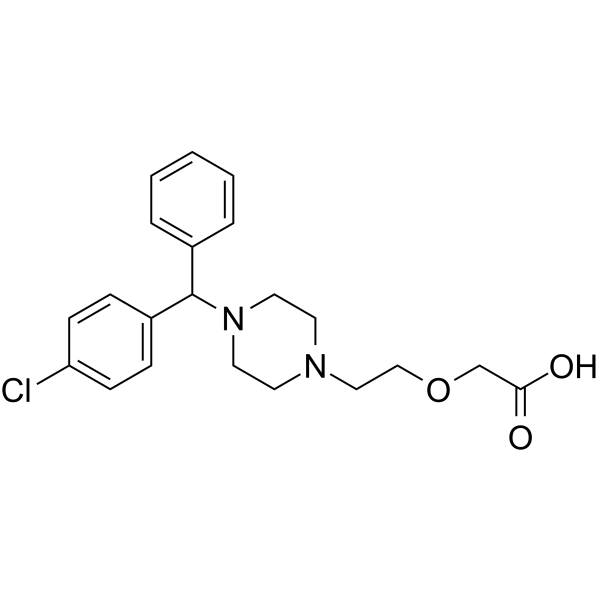
    Cetirizine
    3 Publications Verification

    Histamine Receptor Inflammation/Immunology Endocrinology
    Cetirizine, a second-generation antihistamine and the carboxylated metabolite of hydroxyzine, is a specific, orally active and long-acting histamine H1-receptor antagonist. Cetirizine marks antiallergic properties and inhibits eosinophil chemotaxis during the allergic response .
    Cetirizine
  • HY-P99207
    Lenzilumab
    2 Publications Verification

    KB 003

    SARS-CoV Infection Cancer
    Lenzilumab (KB 003) is a human monoclonal antibody targeting CSF2/GM-CSF for COVID-19, chronic myelomonocytic leukemia (CMML) and juvenile myelomonocytic leukemia (JMML) studies .
    Lenzilumab
  • HY-145015

    HM43239

    FLT3 Apoptosis Cancer
    Tuspetinib (HM43239) is an orally active and selective FLT3 inhibitor with IC50s of 1.1 nM, 1.8 nM and 1.0 nM for FLT3 WT, FLT3 internal tandem duplication (ITD) and FLT3 D835Y kinases, respectively. Tuspetinib inhibits the kinase activity of FLT3 as a reversible type I inhibitor and modulates p-STAT5, p-ERK, SYK, JAK1/2, and TAK1. Tuspetinib inhibits the proliferation and induces the apoptosis of leukemic cells .
    Tuspetinib
  • HY-17042A
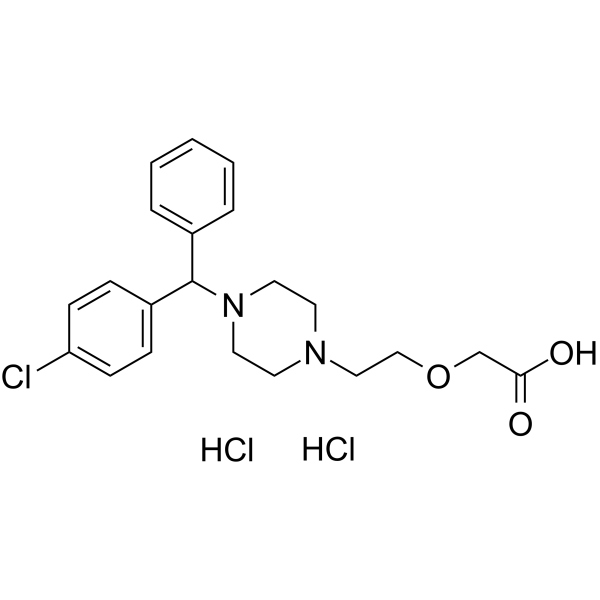
    Cetirizine dihydrochloride
    3 Publications Verification

    P071

    Histamine Receptor Inflammation/Immunology Endocrinology Cancer
    Cetirizine dihydrochloride, a second-generation antihistamine and the carboxylated metabolite of hydroxyzine, is a specific, orally active and long-acting histamine H1-receptor antagonist. Cetirizine dihydrochloride marks antiallergic properties and inhibits eosinophil chemotaxis during the allergic response .
    Cetirizine dihydrochloride
  • HY-19969
    YM-90709
    1 Publications Verification

    Interleukin Related Inflammation/Immunology
    YM-90709 is a novel IL-5 inhibitor which selectively blocks the binding of IL-5 to the IL-5 receptor (IL-5R).YM-90709 potently inhibits the binding of [ 125I]-IL-5 to IL-5R on human peripheral eosinophils and eosinophilic HL-60 clone 15 cells with IC50 values of 1.0 and 0.57 μM .
    YM-90709
  • HY-P10408

    EGFR MMP Calcium Channel NOD-like Receptor (NLR) ERK p38 MAPK Infection Inflammation/Immunology
    Candidalysin is a cytolytic peptide toxin secreted by the fungus Candida albicans. Candidalysin drives epithelial immune responses by activating the EGFR-MAPK signaling pathway, inducing MMP expression and calcium influx, and regulating the c-Fos transcription factor and MKP1 via p38 MAPK and ERK1/2 respectively. Candidalysin is essential for mucosal and systemic infections, activating NLRP3 to promote inflammatory responses, neutrophil recruitment, and Th17 immunity. Candidalysin activates LDH causing membrane damage and exhibiting cytotoxicity
    Candidalysin
  • HY-17028

    Bacterial Antibiotic DNA/RNA Synthesis Topoisomerase Infection Inflammation/Immunology
    Besifloxacin Hydrochloride is a fourth generation fluoroquinolone antibiotic. Besifloxacin Hydrochloride is a DNA gyrase and topoisomerase IV inhibitor. Besifloxacin Hydrochloride has broad-spectrum antibacterial activity, it is effective against Gram-negative and Gram-positive aerobic and anaerobic strains and reduces the incidence of drug resistance. Besifloxacin Hydrochloride has anti-inflammatory activity. Besifloxacin Hydrochloride can be used in bacterial conjunctivitis research .
    Besifloxacin Hydrochloride
  • HY-P99031

    CAM 3001

    c-Fms Infection Inflammation/Immunology
    Mavrilimumab (CAM 3001) is a monoclonal antibody that binds to the α subunit of the granulocyte-macrophage colony stimulating factor (GM-CSF) receptor and blocks intracellular signalling downstream of GM-CSF. GM-CSF might be a mediator of the hyperactive inflammatory response associated with respiratory failure and death .
    Mavrilimumab
  • HY-P990094

    CSL311

    c-Fms Inflammation/Immunology
    Trabikibart (CSL311) is a specific inhibitor targeting the βc receptor (CSF2RB) that inhibits signal transduction mediated by GM-CSF, IL-5, and IL-3. Trabikibart exhibits significant anti-inflammatory and anti-edema effects, reduces myeloid cell infiltration, and inhibits inflammatory cell survival. Trabikibart also possesses antiviral immune functions, which alleviate pulmonary inflammation, reverse airway dysfunction and fibrosis, and thereby restore impaired pulmonary function. Trabikibart can be used in research on related diseases such as acute respiratory distress syndrome, viral pneumonia, asthma, and chronic rhinosinusitis with nasal polyps .
    Trabikibart
  • HY-106228

    Fungal Bacterial Glutathione Peroxidase Infection
    HLF1-11, a human lactoferrin-derived peptide, is a broad spectrum antimicrobial agent. HLF1-11 inhibits human MPO activity. HLF1-11 also directs GM-CSF-driven monocyte differentiation toward macrophages, and enhances immune responses .
    HLF1-11
  • HY-P99134
    Anti-Mouse GM-CSF Antibody (MP1-22E9)
    1 Publications Verification

    c-Fms Infection Inflammation/Immunology Cancer
    Anti-Mouse GM-CSF Antibody (MP1-22E9) is a rat-derived anti-mouse GM-CSF IgG2a antibody inhibitor. Anti-Mouse GM-CSF Antibody (MP1-22E9) can neutralize GM-CSF. Anti-Mouse GM-CSF Antibody (MP1-22E9) can be used for the researches of cancer, infection inflammation and immunology, such as cholangiocarcinoma and arthritis [5] .
    Anti-Mouse GM-CSF Antibody (MP1-22E9)
  • HY-P1111

    Src Interleukin Related Inflammation/Immunology
    Lyn peptide inhibitor (YGYRLRRKWEEKIPNP-NH2) is a potent, cell-permeable Lyn kinase inhibitor that inhibits Lyn-coupled signaling pathways associated with the IL-5 receptor while preserving the integrity of other signals. Lyn peptide inhibitor blocks the activation of Lyn and inhibits the binding of Lyn tyrosine kinase to the βc subunit of the IL-3/GM-CSF/IL-5 receptor. Lyn peptide inhibitor can be used in the research of eosinophilic diseases such as asthma and allergy .
    Lyn peptide inhibitor
  • HY-16420

    Syk Inflammation/Immunology
    R112 is a fast and reversible inhibitor of spleen tyrosine kinase (Syk) kinase. R112 inhibits Syk kinase activity with an IC50 value of 226 nM and a Ki value of 96 nM. R112 inhibits IgE-FcεRI signaling pathway. R112 can be used for the research of allergic rhinitis .
    R112
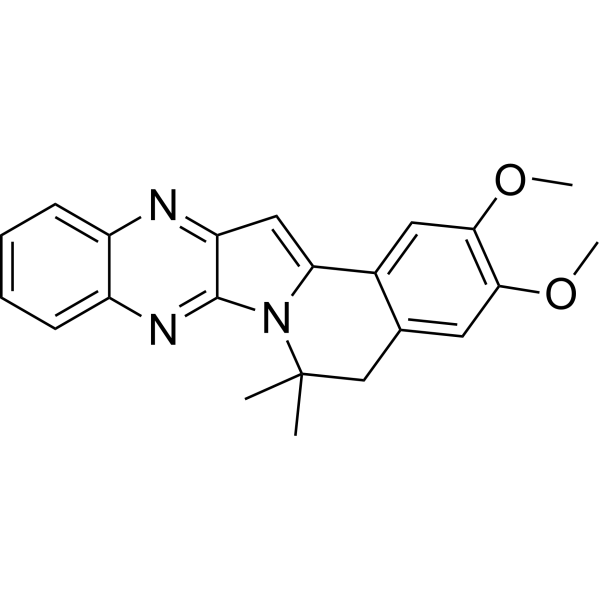
  • HY-156420

    Phosphatase Apoptosis Inflammation/Immunology Cancer
    ATUX-1215 is an activator of protein phosphatase 2A (PP2A). ATUX-1215 reduced the phosphorylation of ERK, p38, JNK, and Akt and the secretion of IL-12p70, GM-CSF, and IL1α in Bleomycin hydrochloride (HY-17565A)-treated animals. ATUX-1215 can slow the progression of lung fibrosis .
    ATUX-1215
  • HY-139410

    c-Fms Inflammation/Immunology
    Sodium caseinates is a kind of sodium salts of major milk proteins, which act as protein-based biopolymers and innate immune system activators. Sodium caseinates induce granulopoiesis, activation and differentiation, promote the production of M-CSF, and increase serum levels of G-CSF and GM-CSF. Sodium caseinates inhibit the proliferation and reduce the viability of leukemia macrophage-like cells, thereby significantly improving the survival rate of mice inoculated with leukemia cells. Sodium caseinates can serve as carriers for probiotics in edible films and exhibit anti-Listeria activity. Sodium caseinates effectively protect vitamin A from degradation, enhance its stability, bioaccessibility and bioavailability, and regulate protein digestibility when complexed with vitamin A. Sodium caseinates can be applied to research related to acute monocytic leukemia and vitamin A deficiency .
    Sodium caseinates
  • HY-P99779

    TJ003234; TJM2

    c-Fms SARS-CoV Infection Inflammation/Immunology
    Plonmarlimab (TJ003234) is an anti-GM-CSF monoclonal antibody. Plonmarlimab can be used for research of rheumatoid arthritis and COVID-19 .
    Plonmarlimab
  • HY-P99642

    MORAb-022

    c-Fms SARS-CoV Infection Inflammation/Immunology
    Gimsilumab (MORAb-022) is a human anti-GM-CSF monoclonal antibody. Gimsilumab has the potential for the research of COVID-19 and rheumatoid arthritis (RA) .
    Gimsilumab
  • HY-P99795

    GSK 3196165; MOR103

    c-Fms Inflammation/Immunology
    Otilimab (GSK 3196165) is an anti-granulocyte-macrophage colony-stimulating factor (GM-CSF) human monoclonal antibody. Otilimab neutralises the biological function of GM-CSF by blocking the interaction of GM-CSF with its cell surface receptor .
    Otilimab
  • HY-111326
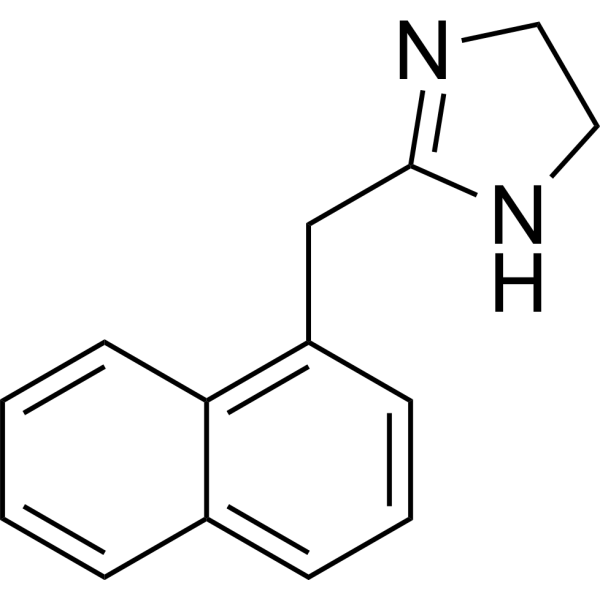
    Naphazoline
    1 Publications Verification

    Naphthazoline

    Adrenergic Receptor TNF Receptor Interleukin Related VEGFR Cardiovascular Disease Inflammation/Immunology Cancer
    Naphazoline (Naphthazoline) is a potent α-adrenergic receptor agonist. Naphazoline reduces vascular hyperpermeability and promotes vasoconstriction. Naphazoline reduces the levels of inflammatory factors (TNF-α, IL-1β and IL-6), cytokines (IFN-γ and IL-4), IgE, GMCSF, and NGF. Naphazoline can be used for non-bacterial conjunctivitis research .
    Naphazoline
  • HY-B0446
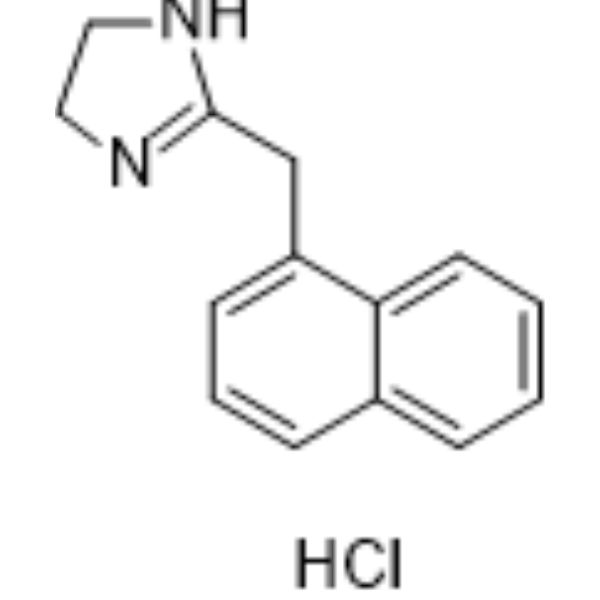
    Naphazoline hydrochloride
    1 Publications Verification

    Naphthazoline hydrochloride

    Adrenergic Receptor TNF Receptor Interleukin Related VEGFR Cardiovascular Disease Inflammation/Immunology Cancer
    Naphazoline (Naphthazoline) hydrochloride is a potent α-adrenergic receptor agonist. Naphazoline hydrochloride reduces vascular hyperpermeability and promotes vasoconstriction. Naphazoline hydrochloride reduces the levels of inflammatory factors (TNF-α, IL-1β and IL-6), cytokines (IFN-γ and IL-4), IgE, GMCSF, and NGF. Naphazoline hydrochloride can be used for non-bacterial conjunctivitis research .
    Naphazoline hydrochloride
  • HY-167846

    JAK Cancer
    YLIU-4-105-1 is a Type II JAK2 inhibitor. YLIU-4-105-1 binds to the ATP-binding pocket of JH1. YLIU-4-105-1 has in vivo pharmacodynamic activity as evidenced by inhibiting pSTAT5, reducing spleen to body weight, and lowering blood reticulocyte counts in a dose-dependent manner .
    YLIU-4-105-1
  • HY-113649
    AKB-6899
    2 Publications Verification

    HIF/HIF Prolyl-Hydroxylase Cancer
    AKB-6899, a prolyl hydroxylase domain 3 (PHD3) inhibitor, is a selective HIF-2α stabilizer. AKB-6899 also increases soluble form of the VEGF receptor (sVEGFR-1) production from GM-CSF-treated macrophages, and has antitumor and antiangiogenic effects .
    AKB-6899
  • HY-149974

    Apoptosis CDK Cancer
    CDK8-IN-13 is a potent, selective and orally active CDK8 inhibitor with an IC50 value of 51.9 nM. CDK8-IN-13 induces apoptosis. CDK8-IN-13 decreases the expression of p-STAT1 S727 and p-STAT5 S726. CDK8-IN-13 shows antitumor activity .
    CDK8-IN-13
  • HY-111326A
    Naphazoline nitrate
    1 Publications Verification

    Naphthazoline nitrate

    Adrenergic Receptor TNF Receptor Interleukin Related VEGFR Cardiovascular Disease Inflammation/Immunology Cancer
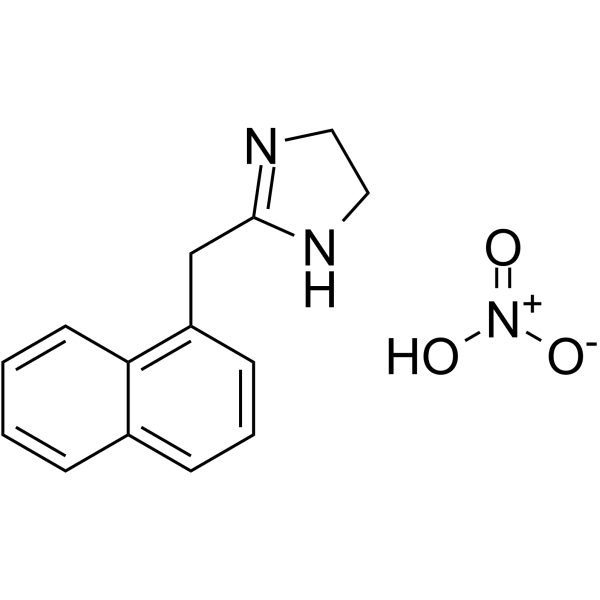
    Naphazoline (Naphthazoline) nitrate is an α-adrenergic receptor agonist. Naphazoline nitrate reduces vascular hyperpermeability and promotes vasoconstriction. Naphazoline nitrate reduces the levels of inflammatory factors (TNF-α, IL-1β and IL-6), cytokines (IFN-γ and IL-4), IgE, GMCSF, and NGF. Naphazoline nitrate can be used for non-bacterial conjunctivitis research .
    Naphazoline nitrate
  • HY-112649

    STAT Apoptosis Cancer
    Pomstafib-2 is a potent and selective STAT5b inhibitor. Pomstafib-2 decreases the expression of pSTAT5b and induces Apoptosis .
    Pomstafib-2
  • HY-17042S1

    Histamine Receptor Inflammation/Immunology
    Cetirizine-d8 is a deuterium labeled Cetirizine. Cetirizine, a second-generation antihistamine and the carboxylated metabolite of hydroxyzine, is a specific, orally active and long-acting histamine H1-receptor antagonist. Cetirizine marks antiallergic properties and inhibits eosinophil chemotaxis during the allergic response .
    Cetirizine-d8
  • HY-153893

    Mitochondrial Metabolism Metabolic Disease
    Magmas-IN-1 (compound 9) is a small molecule Magmas inhibitor (SMMI). Magmas is mitochondria associated,granulocyte-macrophage colony stimulating factor signaling molecule,as well as a GM-CSF inducible gene in myeloid cells. Magmas-IN-1 inhibits Magmas and modulates mitochondrial function. Magmas-IN-1 also inhibits proliferation in yeast at 4 μM .
    Magmas-IN-1
  • HY-P99307

    AMG-203; Anti-Human CSF2 Recombinant Antibody

    c-Fms Inflammation/Immunology
    Namilumab (AMG203) is a human IgG1 monoclonal antibody that binds with high affinity to the GM-CSF ligand, potently neutralizing GM-CSF. Namilumab can be used for the research of rheumatoid arthritis .
    Namilumab
  • HY-100849

    JAK Inflammation/Immunology
    JAK3i is a highly selective JAK3 inhibitor (IC50: 0.43 nM). JAK3i forms a covalent bond with a cysteine in JAK3, but not the closely related kinase domains in JAK1, JAK2, or TYK2. JAK3i abolishes IL-2-driven T-cell proliferation in vivo and has the potential for  autoimmune disease research .
    JAK 3i
  • HY-174988

    JAK STAT Cancer
    JAK2-IN-13 is a potent and orally active JAK2 inhibitor with an IC50 of 54.7 nM. JAK2-IN-13 downregulates the expressions of p-STAT3 and p-STAT5. JAK2-IN-13 exhibits good bioavailability and potent inhibition of rhEPO-induced extramedullary erythropoiesis and polycythemia vera. JAK2-IN-13 can be used for the study of myeloproliferative neoplasms .
    JAK2-IN-13
  • HY-151508

    Liposome Cancer
    Diamino lipid DAL4 is diamino lipid for the preparation of lipid nanoparticles (LNPs) encapsulated with mRNAs encoding cytokines including IL-12, IL-27 and GM-CSF. Diamino lipid DAL4 delivers mRNA to tumor cells to exert anti-tumor activity .
    Diamino lipid DAL4
  • HY-P990381

    c-Fms Inflammation/Immunology
    The Anti-CSF2/GM-CSF Antibody is a CHO-expressed human antibody that targets CSF2/GM-CSF. The Anti-CSF2/GM-CSF Antibody has a huIgG1-type heavy chain and a huλ-type light chain, with a predicted molecular weight (MW) of 145.02 kDa. The isotype control for the Anti-CSF2/GM-CSF Antibody can refer to Human IgG1 kappa, Isotype Control (HY-P99001).
    Anti-CSF2/GM-CSF Antibody
  • HY-120044

    Farnesyl Transferase Ras Cancer
    L-739749 is a farnesyl transferase inhibitor. L-739749 inhibits the selective hypersensitivity of JMML cells to granulocyte-macrophage colony-stimulating factor (GM-CSF) by blocking the prenylation of Ras. L-739749 exhibits a strong inhibitory effect on the growth of primary human JMML cells in vitro .
    L-739749
  • HY-145015A

    HM43239 hydrate

    FLT3 Apoptosis Cancer
    Tuspetinib (HM43239) hydrate is an orally active and selective FLT3 inhibitor with IC50s of 1.1 nM, 1.8 nM and 1.0 nM for FLT3 WT, FLT3 internal tandem duplication (ITD) and FLT3 D835Y kinases, respectively. Tuspetinib hydrate inhibits the kinase activity of FLT3 as a reversible type I inhibitor and modulates p-STAT5, p-ERK, SYK, JAK1/2, and TAK1. Tuspetinib hydrate inhibits the proliferation and induces the apoptosis of leukemic cells .
    Tuspetinib hydrate
  • HY-145015B

    HM43239 dihydrochloride

    FLT3 Apoptosis Cancer
    Tuspetinib (HM43239) dihydrochloride is an orally active and selective FLT3 inhibitor with IC50s of 1.1 nM, 1.8 nM and 1.0 nM for FLT3 WT, FLT3 internal tandem duplication (ITD) and FLT3 D835Y kinases, respectively. Tuspetinib dihydrochloride inhibits the kinase activity of FLT3 as a reversible type I inhibitor and modulates p-STAT5, p-ERK, SYK, JAK1/2, and TAK1. Tuspetinib dihydrochloride inhibits the proliferation and induces the apoptosis of leukemic cells .
    Tuspetinib dihydrochloride
  • HY-122101

    JAK Apoptosis Cancer
    NSC114792 is a selective JAK3 inhibitor. NSC114792 induces apoptosis. NSC114792 decreases the protein expression of p-JAK3 and p-STAT5 .
    NSC114792
  • HY-P1111A

    Src Interleukin Related Inflammation/Immunology
    Lyn peptide inhibitor TFA is a potent and cell-permeable inhibitor of Lyn-coupled IL-5 receptor signaling pathway, while keeping other signals intact. Lyn peptide inhibitor TFA blocks Lyn activation and inhibits the binding of Lyn tyrosine kinase to βc subunit of IL-3/GM-CSF/IL-5 receptors. Lyn peptide inhibitor TFA can be used for study of  asthma, allergic, and other eosinophilic disorders .
    Lyn peptide inhibitor TFA
  • HY-17042S

    Histamine Receptor Inflammation/Immunology
    Cetirizine-d4 is a deuterium labeled Cetirizine. Cetirizine, a second-generation antihistamine and the carboxylated metabolite of hydroxyzine, is a specific, orally active and long-acting histamine H1-receptor antagonist. Cetirizine marks antiallergic properties and inhibits eosinophil chemotaxis during the allergic response[1][2][3].
    Cetirizine-d4
  • HY-174137

    Apoptosis FLT3 Cancer
    FLT3-IN-31 (compound 10q) is a potent FLT3 inhibitor with IC50 values of 0.16, 2.4 nM for FLT3, FLT3-D835Y, resprctively. FLT3-IN-31 shows antiproliferation activity. FLT3-IN-31 decreases the protein expression of p-FLT3, P-STAT5, P-ERK. FLT3-IN-31 induces apoptosis and cell cycle arrest at G1 phase. FLT3-IN-31 shows antitumor activity .
    FLT3-IN-31
  • HY-108162A

    COX Leukotriene Receptor TNF Receptor c-Fms Inflammation/Immunology
    Ataquimast is a COX-2 inhibitor that inhibits the release of leukotrienes, TNF-α and GM-CSF. Ataquimast can be used in the study of advanced receptor-positive breast cancer .
    Ataquimast
  • HY-108162

    COX Inflammation/Immunology
    Ataquimast free base is a COX-2 inhibitor that inhibits the release of leukotrienes, TNF-α and GM-CSF. Ataquimast free base can be used in the study of advanced receptor-positive breast cancer .
    Ataquimast free base
  • HY-W553071

    Interleukin Related Inflammation/Immunology
    Cytoxazone is a cytoKine regulator found in Streptornyces sp. RK95-31. Cytoxazone inhibits the production of IL-4 and IL-10 induced by Pokeween mitogen (PWM) at 6.25-25 μg/mL, but does not inhibit the production of GM-CSF induced by PWM .
    Cytoxazone
  • HY-N15307

    Interleukin Related TNF Receptor Inflammation/Immunology
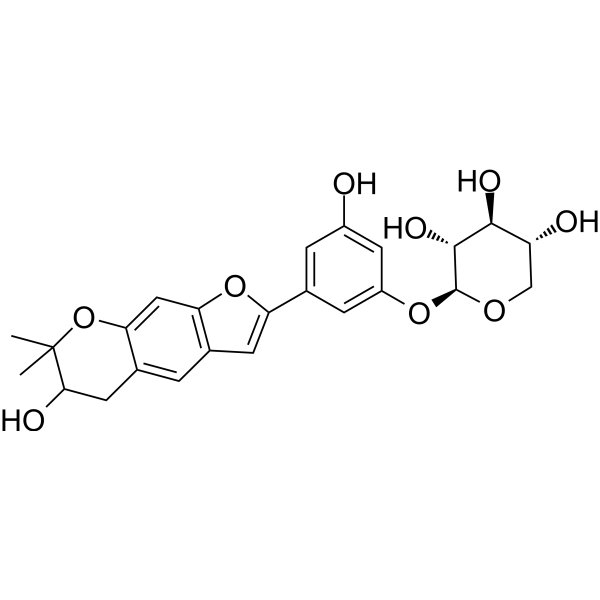
    Trigraecum is a flavonoid compound found in Dracaena steudneri and Dalbergia cochinchinensis, exhibiting anti-inflammatory activity. It can inhibit the LPS (HY-D1056)-induced production of IL-1β, IL-2, GM-CSF, and TNF-α in human peripheral blood mononuclear cells. Trigraecum holds promise for research on inflammatory diseases .
    Trigraecum
  • HY-N3989

    Bacterial UGT Interleukin Related SOD COX Infection Inflammation/Immunology
    Haplopine is a substance with anti-inflammatory, antioxidant and photoactivated antibacterial activities. It also acts as an inhibitor of UGT1A7 and a photoactivated restriction endonuclease inhibitor. Haplopine inhibits the mRNA/protein expression of IL-6, TSLP, GM-CSF, G-CSF, IL-4, IL-13 and COX-2, while upregulating the mRNA/protein expression of SOD, CAT and HO-1. Haplopine inhibits the glucuronidation reaction catalyzed by UGT1A7 through competitive hydrophobic binding. Haplopine exerts photoactivated restriction endonuclease inhibitory effects by binding to DNA. Haplopine exhibits photoactivated activity against methicillin-resistant Staphylococcus aureus. Haplopine alleviates symptoms of atopic dermatitis. Haplopine can be used in research related to atopic dermatitis and methicillin-resistant Staphylococcus aureus infections .
    Haplopine
  • HY-P991888

    STAT Cardiovascular Disease Cancer
    INCA033989 is a fully human IgG1 monoclonal antibody targeting mutCALR (KD = 1.75 nM for mutCALR del52; KD = 6.78 nM for mutCALR ins5). INCA033989 antagonizes mutCALR-driven signaling and proliferation. INCA033989 selectively inhibits pSTAT3/pSTAT5. INCA033989 prevents thrombocytosis and reduces the expansion of mutCALR-positive cells. INCA033989 is useful for research on myeloproliferative neoplasms .
    INCA033989
  • HY-117854

    Leukotriene Receptor Inflammation/Immunology
    SB 201146 is an LTB4 receptor antagonist with a potency range of 10 pM to 1 μM that plays a critical role in asthma-associated airway inflammation. Studies have focused on its effects on eosinophil survival, a hallmark of asthma pathology. Studies have shown that eosinophil-derived cysteinyl leukotrienes, including LTC4 and LTD4, as well as factors such as GM-CSF and fibronectin promote eosinophil survival. SB 201146 effectively reversed mast cell- and lymphocyte-induced eosinophil survival, highlighting its potential therapeutic role in disrupting the autocrine cysteinyl leukotriene pathway that maintains eosinophil viability. This antagonist also highlights the importance of LTB4 as a paracrine mediator that influences eosinophil survival in inflammatory settings such as asthma .
    SB 201146
  • HY-136568

    STAT Others
    Stafia-1-dipivaloyloxymethyl ester (compound 27, 0-200 μM) decreases pSTAT5a expression significantly, and has no obvious inhibition on pSTAT5b .
    Stafia-1-dipivaloyloxymethyl ester
  • HY-P991949

    c-Fms Inflammation/Immunology
    EV1007 is a fully human antibody with a neutralizing effect on GM-CSF activity. EV1007 can be used for the research of autoimmune diseases .
    EV1007
  • HY-179687

    JAK STAT Cardiovascular Disease
    JAK2-IN-18 (Compound example1) is a selective JAK2 inhibitor. JAK2-IN-18 can inhibit JAK-STAT signaling and shows an IC50 of <100 nM for pSTAT5 in HEL9217 cells. JAK2-IN-18 can inhibit the proliferation of abnormally proliferating myeloid cells and can be used for the research of myeloproliferative disorders, such as essential thrombocythemia .
    JAK2-IN-18
  • HY-182720

    HDAC Microtubule/Tubulin Cancer
    FT108 is a selective HDAC6 inhibitor with an IC50 of 0.026 μM. FT108 exhibits only modest in vitro activity against HDAC3 and HDAC8 with IC50 values of 6.68 and 4.07 μM. FT108 increases acetylation of tubulin and has little to no effect on acetylated histone H3 levels. FT108 lacks activity against myeloproliferative neoplasm cell lines, and does not suppress JAK2 phosphorylation or its downstream targets pSTAT3 and pSTAT5 .
    FT108

Inquiry Online

Your information is safe with us. * Required Fields.

Salutation


Country or Region *

Applicant Name *


Organization Name *

Department *


Email Address *


Product Name *

Cat. No.


Requested quantity *

Phone Number *


Remarks

Inquiry Online

Inquiry Information

Product Name:
Cat. No.:
Quantity:
MCE Japan Authorized Agent:

