

21 Results for "

KM mice

" in MedChemExpress (MCE) Product Catalog:
Products (21)

21 Results for "KM mice" in MCE Product Catalog:

2
2 Cited Publications
Cat. No.: HY-170621
CAS No.: 2958649-56-2
STAT1/3-IN-1 is a potent STAT1/3 inhibitor with potent anti-inflammatory effect. STAT1/3-IN-1 inhibits phosphorylation and nuclear translocation of STAT1/3 to modulate microglial inflammation, reduces LPS (HY-D1056)-induced pro-inflammatory cytokines (NO, IL-1β, IL-6, and TNF-α) and inflammatory mediators (iNOS, COX-2). STAT1/3-IN-1 exhibits low toxicity in mice. STAT1/3-IN-1 can be used for the research of neuroinflammation .
loading...
    loading...
Cat. No.: HY-B0396
CAS No.: 161715-24-8
Synonyms: L084
Target:  

Antibiotic Bacterial OAT

Research Areas:  

Infection

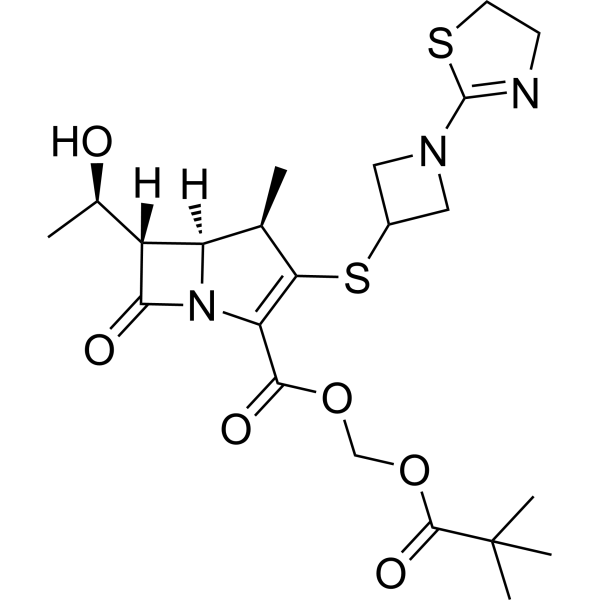
Tebipenem pivoxil (L084 hydrobromide) is an orally active carbapenem Antibiotic. Tebipenem pivoxil acts as a substrate of OATP1A2 with high affinity for this transporter (Km = 41.1 μM) . Tebipenem pivoxil achieves intestinal absorption via carrier-mediated uptake and simple diffusion. Tebipenem pivoxil inhibits the growth of Gram-positive bacteria, Gram-negative bacteria, multidrug-resistant bacteria, and pathogens producing extended-spectrum β-lactamases. Tebipenem pivoxil eliminates intestinal infection pathogens and reduces mortality in septic mice. Tebipenem pivoxil can be used in research related to bacterial pneumonia, severe gastrointestinal infections, bacterial sepsis, complicated urinary tract infections, and acute pyelonephritis .
loading...
    loading...
Cat. No.: HY-B0973
CAS No.: 132-65-0
Synonyms: DBT; Diphenylene sulfide
Dibenzothiophene is an orally active and a noncompetitive CYP1A inhibitor. Dibenzothiophene inhibits CYP1A-mediated EROD activity with a Km of 0.592 μM. Dibenzothiophene interacts with the AHR pathway. Dibenzothiophene enhances the embryotoxicity of β-naphthoflavone (HY-114740). Dibenzothiophene shows acute toxicity in mice. Dibenzothiophene is mainly used for the study of the mechanism of developmental toxicity in organisms .
loading...
    loading...
Cat. No.: HY-N0392
CAS No.: 882664-74-6
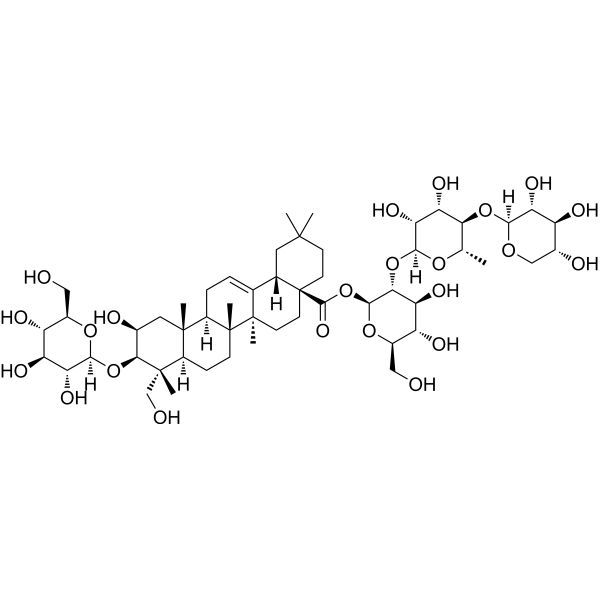
Polygalasaponin F is an orally active triterpenoid saponin monomer. Polygalasaponin F downregulates the expression of Bax, p53, caspase-3, NF-κB p65 and MEK1; restores and upregulates the expression of Bcl-2; activates the PI3K/Akt signaling pathway; inhibits the phosphorylation of p38 MAPK, nuclear translocation of NF-κB, TLR4-mediated signaling pathway, mitophagy (Mitophagy) and ROS production; enhances cell viability and suppresses apoptosis (Apoptosis). Polygalasaponin F maintains mitochondrial function, alleviates Ca 2+ overload, upregulates pCREB and BDNF, preserves cell viability and inhibits the release of inflammatory cytokines. Polygalasaponin F alleviates lung injury induced by influenza A H1N1 and cerebral ischemia-reperfusion injury. Polygalasaponin F is applicable to researches related to Parkinson's disease, cerebral ischemia, pneumonia induced by influenza A H1N1, stroke and Alzheimer's disease .
loading...
    loading...
Cat. No.: HY-144372
CAS No.: 2765294-54-8
Purity:  99.30%
Target:  

TRP Channel

Research Areas:  

Neurological Disease

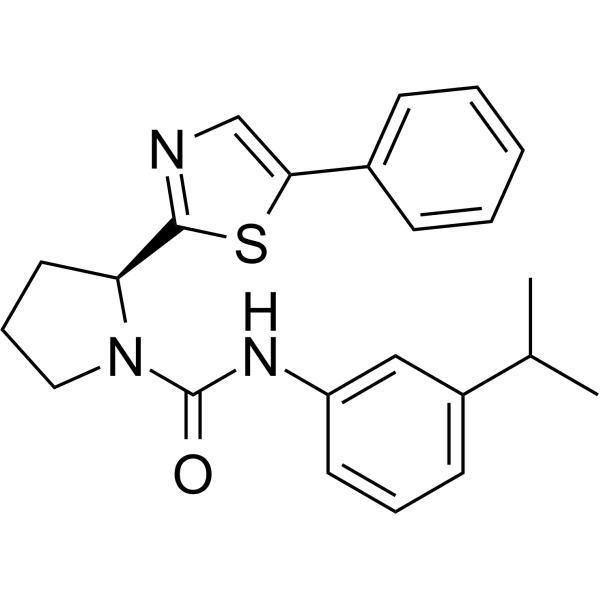
TRPV1 antagonist 3 (Compound 7q) is a potent TRPV1 antagonist with an IC50 of 2.66 nM against capsaicin. TRPV1 antagonist 3 is mode-selective, oral bioavailable (F = 60%) and CNS-penetrant .
loading...
    loading...
Cat. No.: HY-164495
CAS No.: 2128258-47-7
Sob-AM2 is a potent substrate (Km=1.3 μM) targeting fatty acid amide hydrolase (FAAH) expressed in the brain and has blood-brain barrier permeability. Sob-AM2 delivers high concentrations of Sobetirome (HY-14823) to the central nervous system with minimal peripheral systemic dose, thereby stimulating central thyroid hormone receptor β (TRβ). In addition, Sob-AM2 can prevent myelin and axon degeneration in experimental autoimmune encephalomyelitis (EAE) mice .
loading...
    loading...
Cat. No.: HY-B0396A
CAS No.: 211558-19-9
Synonyms: L084 hydrochloride
Target:  

Antibiotic Bacterial OAT

Research Areas:  

Infection

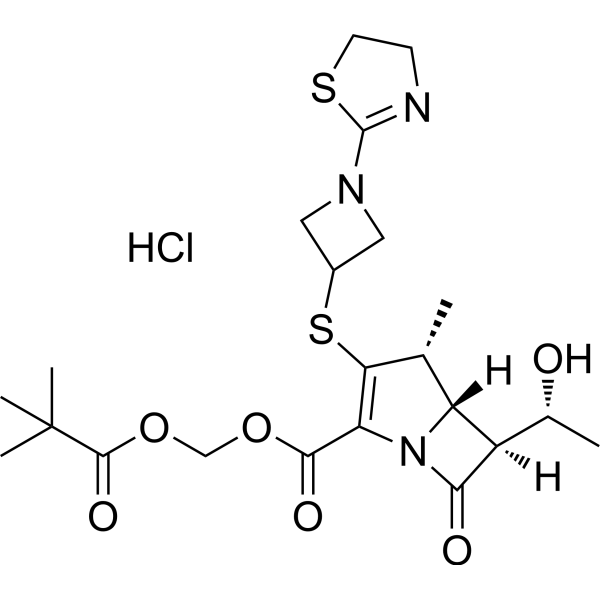
Tebipenem pivoxil hydrochloride (L084 hydrochloride) is an orally active carbapenem Antibiotic. Tebipenem pivoxil hydrochloride acts as a substrate of OATP1A2 with high affinity for this transporter (Km = 41.1 μM) . Tebipenem pivoxil hydrochloride achieves intestinal absorption via carrier-mediated uptake and simple diffusion. Tebipenem pivoxil hydrochloride inhibits the growth of Gram-positive bacteria, Gram-negative bacteria, multidrug-resistant bacteria, and pathogens producing extended-spectrum β-lactamases. Tebipenem pivoxil hydrochloride eliminates intestinal infection pathogens and reduces mortality in septic mice. Tebipenem pivoxil hydrochloride can be used in research related to bacterial pneumonia, severe gastrointestinal infections, bacterial sepsis, complicated urinary tract infections, and acute pyelonephritis .
loading...
    loading...
Cat. No.: HY-123189
CAS No.: 89139-28-6
Target:  

Dopamine Receptor

Research Areas:  

Neurological Disease

LY 171859 is a D2 receptor agonist with significant reductase activity. LY 171859 exhibits enzymatic activity in the cytoplasm of liver, lung, and kidney, and also contains significant reductase activity in rat and human blood. LY 171859 has higher hepatic reductase activity in guinea pigs, followed by hamsters, rabbits, rats, and mice. The substrate of LY 171859 shows an apparent Km of 5.6 μM. The reduction reaction of LY 171859 is NADPH-dependent with an apparent Km of 14.8 μM. Only the A-side hydrogen of NADPH is incorporated in the reduction product of LY 171859. The reaction of LY 171859 is inhibited by cyanide and thiol reagents, and phenobarbital does not induce its activity in rats .
loading...
    loading...
Cat. No.: HY-B0973S
CAS No.: 33262-29-2
Dibenzothiophene-d8 is the deuterium labeled Dibenzothiophene (HY-B0973). Dibenzothiophene is an orally active and a noncompetitive CYP1A inhibitor. Dibenzothiophene inhibits CYP1A-mediated EROD activity with Km of 0.592 μM. Dibenzothiophene interacts with the AHR pathway. Dibenzothiophene enhances the embryotoxicity of β-naphthoflavone (HY-114740). Dibenzothiophene shows acute toxicity in mice. Dibenzothiophene is mainly used for the study of the mechanism of developmental toxicity in organisms .
loading...
    loading...
Cat. No.: HY-B0973R
CAS No.: 132-65-0
Synonyms: DBT (Standard); Diphenylene sulfide (Standard)
Dibenzothiophene (Standard) is the analytical standard of Dibenzothiophene (HY-B0973). This product is intended for research and analytical applications. Dibenzothiophene is an orally active and a noncompetitive CYP1A inhibitor. Dibenzothiophene inhibits CYP1A-mediated EROD activity with Km of 0.592 μM. Dibenzothiophene interacts with the AHR pathway. Dibenzothiophene enhances the embryotoxicity of β-naphthoflavone (HY-114740). Dibenzothiophene shows acute toxicity in mice. Dibenzothiophene is mainly used for the study of the mechanism of developmental toxicity in organisms .
loading...
    loading...
Cat. No.: HY-B0396R
CAS No.: 161715-24-8
Synonyms: L084 (Standard)
Research Areas:  

Infection

Tebipenem pivoxil (Standard) (L084 (Standard)) is the analytical standard of Tebipenem pivoxil (HY-B0396). This product is intended for research and analytical applications. Tebipenem pivoxil (L084 hydrobromide) is an orally active carbapenem Antibiotic. Tebipenem pivoxil acts as a substrate of OATP1A2 with high affinity for this transporter (Km = 41.1 μM) . Tebipenem pivoxil achieves intestinal absorption via carrier-mediated uptake and simple diffusion. Tebipenem pivoxil inhibits the growth of Gram-positive bacteria, Gram-negative bacteria, multidrug-resistant bacteria, and pathogens producing extended-spectrum β-lactamases. Tebipenem pivoxil eliminates intestinal infection pathogens and reduces mortality in septic mice. Tebipenem pivoxil can be used in research related to bacterial pneumonia, severe gastrointestinal infections, bacterial sepsis, complicated urinary tract infections, and acute pyelonephritis .
loading...
    loading...
Cat. No.: HY-113798
CAS No.: 112887-62-4
Research Areas:  

Cancer

ICI 198583 is a thymidylate synthase (TS) inhibitor with a Ki value of 10 nM for both mouse and human TS. ICI 198583 serves as a substrate for folylpolyglutamate synthetase (FPGS) with a Km of 40 μM. ICI 198583 exerts persistent, dose-dependent inhibition on thymidylate synthase flux in mice. ICI 198583 is applicable to relevant research on leukemia .
loading...
    loading...
Cat. No.: HY-187561
Target:  

Bacterial

Research Areas:  

Infection

Antibacterial agent 365 is a benzothiazole-based antibacterial agent that primarily exerts its effects by disrupting bacterial cell membranes. Antibacterial agent 365 exhibits a MIC of 4 μg/mL against Staphylococcus aureus ATCC 29213, MRSA ATCC BAA41 and MRSA ATCC 43300. Antibacterial agent 365 can be used in studies of MRSA infection, bacterial cell membrane disruption, biofilm formation and antimicrobial resistance .
loading...
    loading...
Cat. No.: HY-B0396B
CAS No.: 1381788-20-0
Synonyms: L084 hydrobromide
Target:  

Antibiotic Bacterial OAT

Research Areas:  

Infection

Tebipenem pivoxil hydrobromide (L084 hydrobromide) is an orally active carbapenem Antibiotic. Tebipenem pivoxil hydrobromide acts as a substrate of OATP1A2 with high affinity for this transporter (Km = 41.1 μM) . Tebipenem pivoxil hydrobromide achieves intestinal absorption via carrier-mediated uptake and simple diffusion. Tebipenem pivoxil hydrobromide inhibits the growth of Gram-positive bacteria, Gram-negative bacteria, multidrug-resistant bacteria, and pathogens producing extended-spectrum β-lactamases. Tebipenem pivoxil hydrobromide eliminates intestinal infection pathogens and reduces mortality in septic mice. Tebipenem pivoxil hydrobromide can be used in research related to bacterial pneumonia, severe gastrointestinal infections, bacterial sepsis, complicated urinary tract infections, and acute pyelonephritis .
loading...
    loading...
Cat. No.: HY-181874
CAS No.: 1359358-36-3
Target:  

Potassium Channel

Research Areas:  

Neurological Disease

E0714 is a blood-brain barrier-permeable, selective Kv7.2 potassium channel activator, with EC50 values of 1.90 μM and 0.021 μM for homotetrameric Kv7.2 channels and heterotetrameric Kv7.2/7.3 channels, respectively. E0714 exhibits anticonvulsant activity. E0714 can be used in research related to epilepsy .
loading...
    loading...
Cat. No.: HY-181655
CAS No.: 3127060-85-6
Target:  

Cathepsin

Research Areas:  

Metabolic Disease

Anti-hepatic fibrosis agent 3 is an orally active anti-hepatic fibrosis compound targeting Cathepsin D. Anti-hepatic fibrosis agent 3 shows an IC50 of 53.18 μM against COL1A1-promoter and a Kd of 8.86 μM for binding to Cathepsin D. Anti-hepatic fibrosis agent 3 directly binds to and promotes the degradation of Cathepsin D, with no significant effect on Cathepsin B or Cathepsin L. Anti-hepatic fibrosis agent 3 inhibits hepatic stellate cell activation and reduces extracellular matrix deposition and inflammatory cytokine expression. Anti-hepatic fibrosis agent 3 exhibits remarkable anti-fibrotic activity in rat BDL and mouse CDAHFD-induced hepatic fibrosis models. Anti-hepatic fibrosis agent 3 can be used for the study of hepatic fibrosis .
loading...
    loading...
Cat. No.: HY-184287
Research Areas:  

Infection

Antibacterial agent 352 is an orally active Antibacterial agent. Antibacterial agent 352 binds to the active cavity of Staphylococcus aureus DNA gyrase via hydrogen bonding, π-π stacking and hydrophobic interactions, thereby blocking bacterial DNA synthesis. Antibacterial agent 352 exhibits antibacterial activity against Gram-positive bacteria including Staphylococcus aureus, Bacillus pumilus, Staphylococcus epidermidis and Enterococcus faecalis. Antibacterial agent 352 can disrupt established Staphylococcus aureus biofilms and inhibit the formation of Staphylococcus aureus biofilms. Antibacterial agent 352 can be used in the research of Staphylococcus aureus wound infections .
loading...
    loading...
Cat. No.: HY-125447
CAS No.: 145941-07-7
Artemisinin B is an orally active sesquiterpene natural product with anti-neuroinflammatory activity, which can be found in Artemisia annua Linn.. Artemisinin B suppresses the TLR4-MyD88-NF-κB signaling pathway by reducing the protein levels of TLR4 and MyD88, as well as inhibiting the mRNA expression of NF-κB p65. Artemisinin B reduces the expression of pro-inflammatory cytokines and attenuates synaptic loss, which can be used for the research of cognitive and behavioral impairments in Alzheimer's disease. Artemisinin B shows no cytotoxicity against human cardiomyocytes and exhibits very weak binding to hERG, suggesting its potential for cardioprotective property research .
loading...
    loading...
Cat. No.: HY-184743
Target:  

Phosphatase

Research Areas:  

Metabolic Disease

PTP1B-IN-35 is an orally active protein tyrosine phosphatase 1B (PTP1B) inhibitor, with an IC50 of 32.7 μM, a Kis of 18.8 μM, a Kii of 45.3 μM, and a Kd of 36 μM against human PTP1B. PTP1B-IN-35 promotes glucose uptake, improves glucose tolerance, enhances insulin sensitivity, and reduces blood glucose levels. PTP1B-IN-35 can be used in the research of type 2 diabetes .
loading...
    loading...
Cat. No.: HY-184691
CAS No.: 3109806-14-3
HSC-4 is an orally active anti-inflammatory agent and a derivative of Hederacoside C (HY-N0253). HSC-4 inhibits the secretion of IL-6. HSC-4 exerts protective effects in mouse models of systemic sepsis and acute lung injury. HSC-4 can be used for the research of acute lung injury and systemic sepsis .
loading...
    loading...

