17 Results for "

LPS/ATP

" in MedChemExpress (MCE) Product Catalog:
Products (17)

17 Results for "LPS/ATP" in MCE Product Catalog:

20
20 Publications Verification
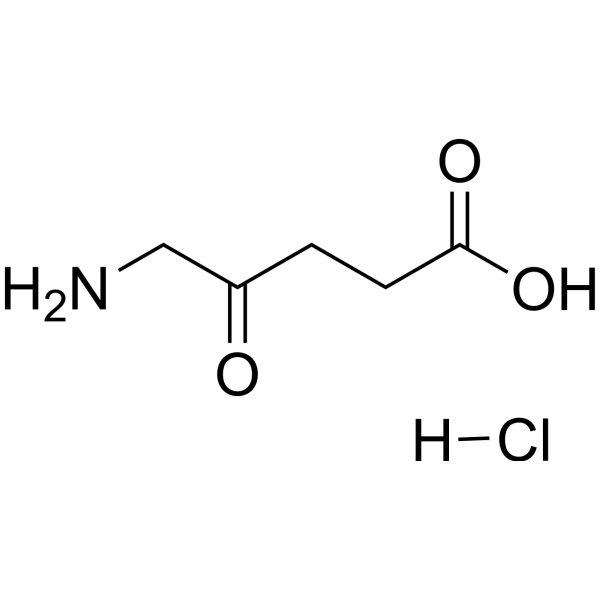
Cat. No.: HY-N0305
CAS No.: 5451-09-2
Synonyms: 5-ALA hydrochloride; δ-Aminolevulinic acid hydrochloride; 5-Amino-4-oxopentanoic acid hydrochloride
5-Aminolevulinic acid (5-ALA; δ-Aminolevulinic acid; 5-Amino-4-oxopentanoic acid) hydrochloride is an orally active heme precursor. 5-Aminolevulinic acid hydrochloride promotes aerobic energy metabolism and increases ATP levels by enhancing the activity of cytochrome c oxidase. 5-Aminolevulinic acid hydrochloride enhances LPS-induced proinflammatory cytokine production and gene activation, and restores the phagocytic activity and ROS generation capacity of neutrophils. 5-Aminolevulinic acid hydrochloride selectively accumulates protoporphyrin IX in tumor cells; as a photosensitizer and radiosensitizer, it induces ROS burst upon light or X-ray irradiation to inhibit tumor growth. 5-Aminolevulinic acid hydrochloride can be applied to the research of septic shock, melanoma, and cancer radiotherapy .
loading...
    loading...
20
20 Publications Verification
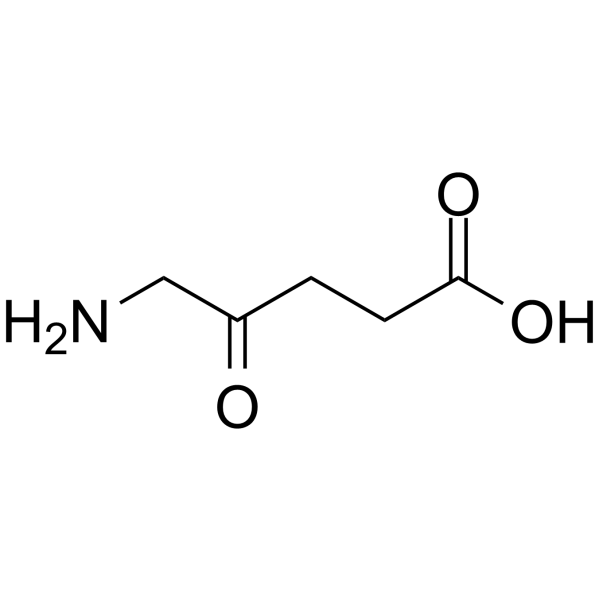
Cat. No.: HY-W000450
CAS No.: 106-60-5
Synonyms: 5-ALA; δ-Aminolevulinic acid; 5-Amino-4-oxopentanoic acid
5-Aminolevulinic acid (5-ALA; δ-Aminolevulinic acid; 5-Amino-4-oxopentanoic acid) is an orally active heme precursor. 5-Aminolevulinic acid promotes aerobic energy metabolism and increases ATP levels by enhancing the activity of cytochrome c oxidase. 5-Aminolevulinic acid enhances LPS-induced proinflammatory cytokine production and gene activation, and restores the phagocytic activity and ROS generation capacity of neutrophils. 5-Aminolevulinic acid selectively accumulates protoporphyrin IX in tumor cells; as a photosensitizer and radiosensitizer, it induces ROS burst upon light or X-ray irradiation to inhibit tumor growth. 5-Aminolevulinic acid can be applied to the research of septic shock, melanoma, and cancer radiotherapy .
loading...
    loading...
1
1 Cited Publications
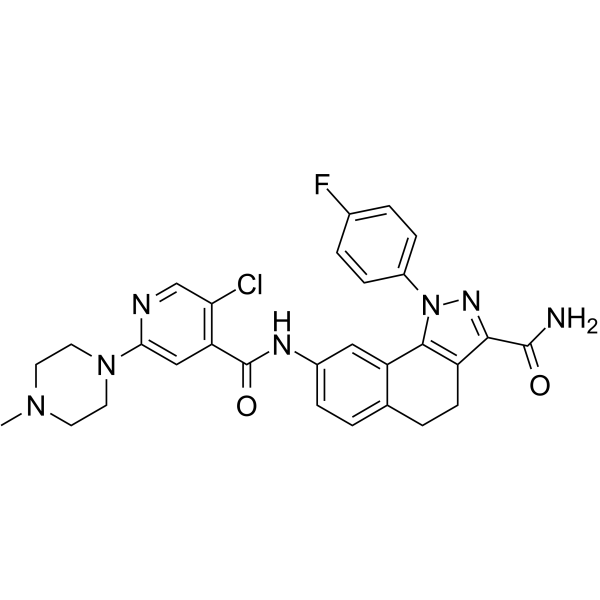
Cat. No.: HY-14180
CAS No.: 503555-55-3
Pureté:  99.40%
Target:  

IKK TNF Receptor NF-κB

Domaines de recherche:  

Neurological Disease Inflammation/Immunology

PHA-408 is a highly selective, orally active and ATP-competitive IKK-2 inhibitor with an IC50 of 40 nM. PHA-408 blocks NF-κB signaling by suppressing IκBα phosphorylation and degradation, p65 phosphorylation, and pro-inflammatory cytokine production, and prevents TNF-α-induced premature senescence in HUVECs. PHA-408 alleviates LPS-and cigarette smoke-triggered pulmonary inflammation, reduces LPS-stimulated serum TNF-α release, and ameliorates joint damage in SCW-induced arthritis in rats. PHA-408 is applicable for the research of rheumatoid arthritis, chronic obstructive pulmonary disease (COPD), and Duchenne muscular dystrophy .
loading...
    loading...
Cat. No.: HY-B2176R
CAS No.: 56-65-5
Synonyms: Adenosine 5'-triphosphate (Standard)
ATP (Standard) is the analytical standard of ATP. This product is intended for research and analytical applications. ATP (Adenosine 5'-triphosphate) is a central component of energy storage and metabolism in vivo. ATP provides the metabolic energy to drive metabolic pumps and serves as a coenzyme in cells. ATP is an important endogenous signaling molecule in immunity and inflammation . In Vitro: ATP (5 mM; 1 hour) co-treatment with LPS (1 μg/mL) has a synergistic effect on the activation of the NLRP3 inflammasome in HGFs .
ATP (2 mM; 0.5-24 hours) induces secretion of IL-1β, KC and MIP-2 from BMDMs in a caspase-1 activation-dependent manner .
ATP promotes neutrophil chemotaxis in vitro .
In Vivo: ATP (50 mg/kg; i.p.) protects mice against bacterial infection in vivo .
ATP induces the secretion of IL-1β, KC and MIP-2 and neutrophils recruitment in vivo .
loading...
    loading...
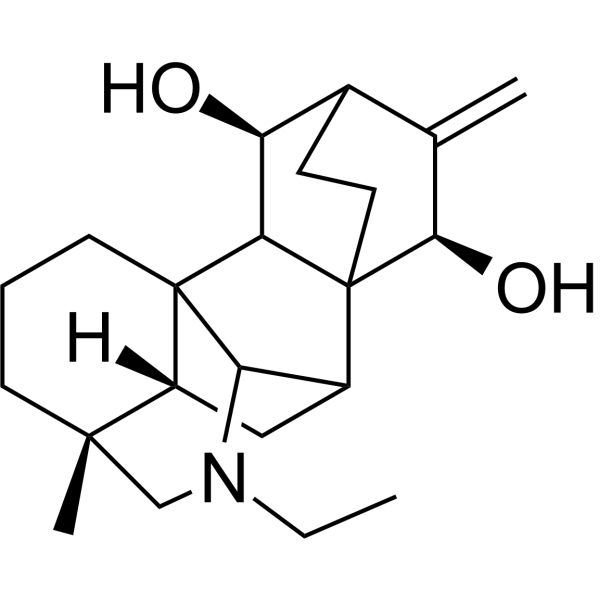
Cat. No.: HY-N5025
CAS No.: 1354-84-3
Bullatine A, a diterpenoid alkaloid, is a potent P2X7 antagonist. Bullatine A possesses anti-rheumatic, anti-inflammatory and anti-nociceptive effects. Bullatine A inhibits ATP-induced BV-2 cell death/apoptosis and P2X receptor-mediated inflammatory responses. Bullatine A suppresses glioma cell growth by targeting SIRT6. Bullatine A specifically attenuates pain hypersensitivity in rats. Bullatine A attenuates LPS (HY-D1056)-induced systemic inflammatory response by inhibiting the ROS/JNK/NF-κB pathway in mice. Bullatine A improves despair behavior in Chronic chronic social defeat stress (CSDS) mice. Bullatine A can be used for the study of inflammation, glioblastoma (GBM) and depression .
loading...
    loading...
Cat. No.: HY-117432
CAS No.: 2112809-98-8
Pureté:  98.41%
Domaines de recherche:  

Inflammation/Immunology

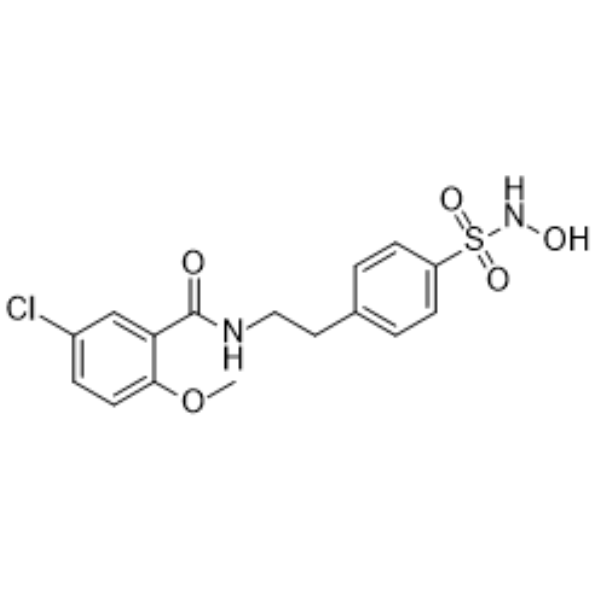
JC-171 is a selective NLRP3 inflammasome inhibitor, with an IC50 of 8.45 μM for inhibiting LPS/ATP-induced interleukin-1β (IL-1β) release from J774A.1 macrophages .
loading...
    loading...
Cat. No.: HY-162675
CAS No.: 1862177-86-3
Target:  

GSK-3

COB-187 is a potent, ATP-competitive and selective inhibitor of GSK-3β. COB-187 inhibits GSK-3 through a reversible and Cysteine (Cys)-199-dependent mechanism. COB-187 inhibits LPS induced cytokine production and SARS-CoV-2 spike protein-induced CXCL10 production .
loading...
    loading...
Cat. No.: HY-P10519
CAS No.: 2676889-05-5
Domaines de recherche:  

Infection

Brevicidine is an antimicrobial peptide with selective bactericidal activity against Gram-negative pathogens. Brevicidine disrupts bacterial morphology by binding to lipopolysaccharide (LPS) on the bacterial cell membrane to form pores. Brevicidine causes dissipation of intracellular proton motive force, outer membrane damage, inhibition of ATP biosynthesis and reactive oxygen species accumulation in bacterial cells. As a sensitizer, Brevicidine exerts synergistic activity when combined with a variety of conventional antibiotics .
loading...
    loading...
Cat. No.: HY-175645
CAS No.: 2994637-53-3
NLRP3/URAT1-IN-1 is an orally active double inhibitor of NLRP3 and URAT1 (IC50 = 3.81 μM). NLRP3/URAT1-IN-1 inhibits IL-1β release in LPS (HY-D1056) and ATP-stimulated mouse bone marrow-derived macrophages (BMDMs), with an IC50 of 2.61 μM. NLRP3/URAT1-IN-1 reduces serum uric acid (SUA) and alleviates liver/kidney damage in mice with acute hyperuricemia (HUA). NLRP3/URAT1-IN-1can be used for the study of gout and hyperuricemia .
loading...
    loading...
Cat. No.: HY-137418
CAS No.: 43170-89-4
Synonyms: 2-Methylthio-ATP
Target:  

P2Y Receptor

Domaines de recherche:  

Others Inflammation/Immunology

2-MeS-ATP (2-Methylthio-ATP) is an analog of adenosine nucleotides and acts as a P2Y purinergic receptor agonist specific for adenosine nucleotide activation. 2-MeS-ATP is also able to inhibit the release of toxic mediators from macrophages stimulated by endotoxin (LPS). 2-MeS-ATP can be used in the study of endotoxin shock and inflammatory diseases .
loading...
    loading...
Cat. No.: HY-117622
CAS No.: 1388894-17-4
Target:  

IRAK

Domaines de recherche:  

Inflammation/Immunology Cancer

ND-2110 is a selective IRAK4 inhibitor (Ki: 7.5 nM). ND-2110 binds to the ATP pocket of IRAK4. ND-2110 targets the subset of activated B cell-like (ABC) subtype of diffuse large B cell lymphoma (DLBCL) cell lines with MYD88 L265P mutations,. ND-2110 inhibits LPS-induced TNF production, alleviates collagen-induced arthritis, and blocks gout formation in mouse models .
loading...
    loading...
Cat. No.: HY-177944
CAS No.: 2829198-49-2
DC-PGKI is an orally active ATP-competitive PGK1 inhibitor(IC50 = 0.16 Μm, Kd = 99.08 nM). DC-PGKI stabilizes PGK1 in vitro and in vivo, and suppresses both glycolytic activity and the kinase function of PGK1. DC-PGKI-mediated inhibition of PGK1 leads to the accumulation of NRF2 (nuclear factor-erythroid factor 2-related factor 2, NFE2L2), which then translocates to the nucleus, binds to the proximal regions of IL-1β and IL-6 genes, and suppresses the LPS-induced expression of these genes. DC-PGKI can be used for the study of colitis .
loading...
    loading...
Cat. No.: HY-N10386
CAS No.: 755036-41-0
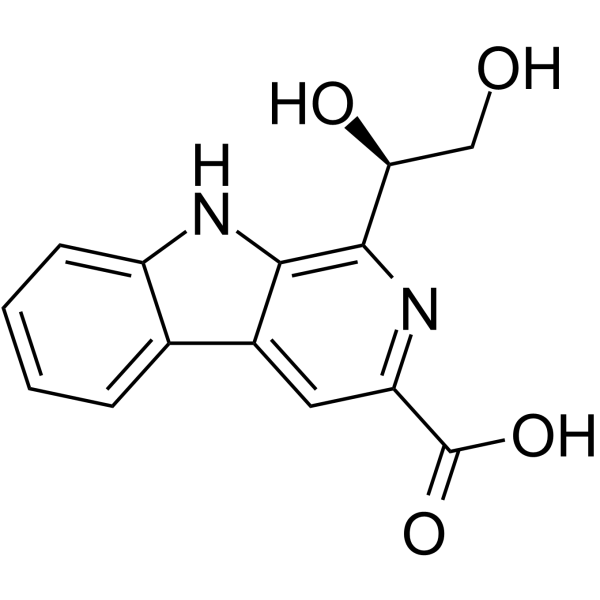
Dichotomine B, a β-Carboline alkaloid, attenuates neuroinflammatory responses in LPS/ATP-induced BV2 microglia .
loading...
    loading...
Cat. No.: HY-114730
CAS No.: 1621626-06-9
Target:  

IKK

Domaines de recherche:  

Inflammation/Immunology

CGA-JK3 is CGA-JK3 is an ATP-competitive inhibitor of IKKβ-catalyzed kinase activity. CGA-JK3 inhibits IκBα phosphorylation in LPS (HY-D1056) - induced RAW 264.7 cells .
loading...
    loading...
Cat. No.: HY-N12235
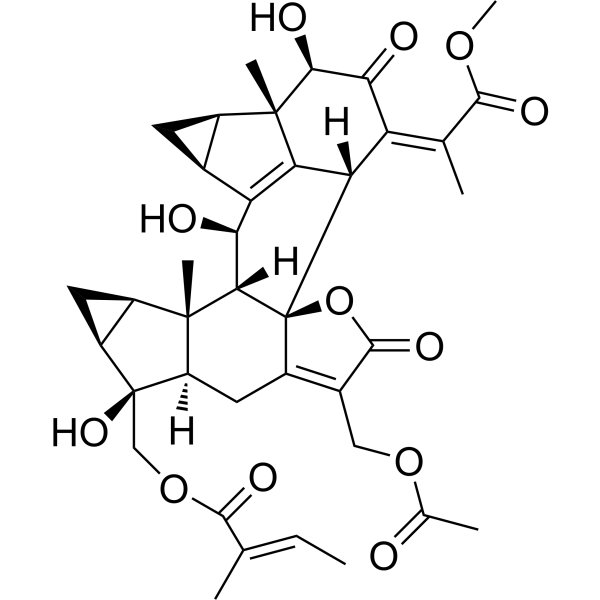
Sarglaroids F (compound 6) is an anti-inflammatory agent isolated from the roots of Grass Coral. Sarglaroids F inhibits LPS/ATP-induced IL-1β release by affecting K+ efflux and reducing Caspase-1(P20) levels. Sarglaroids F is not cytotoxic to RAW264.7 cells .
loading...
    loading...
Cat. No.: HY-P10519A
Domaines de recherche:  

Infection

Brevicidine TFA is an antimicrobial peptide with selective bactericidal activity against Gram-negative pathogens. Brevicidine TFA disrupts bacterial morphology by binding to lipopolysaccharide (LPS) on the bacterial cell membrane to form pores. Brevicidine TFA causes dissipation of intracellular proton motive force, outer membrane damage, inhibition of ATP biosynthesis and reactive oxygen species accumulation in bacterial cells. As a sensitizer, Brevicidine TFA exerts synergistic activity when combined with a variety of conventional antibiotics .
loading...
    loading...
Cat. No.: HY-186072
CAS No.: 2771019-10-2
NT-0527 is a selective, orally active, and brain-permeable NLRP3 inflammasome inhibitor. NT-0527 can specifically block the formation of the NLRP3 inflammasome, resulting in the reduction in the maturation and release of IL-1β, exhibit inhibition on CYP2C19. NT-0527 displays anti-inflammatory activity in the mouse LPS (HY-D1056) /ATP (HY-B2176)-induced peritonitis model. NT-0527 can be used for the research of neuroinflammatory disorders (Parkinson's disease, Alzheimer's disease, amyotrophic lateral sclerosis) and peripheral inflammatory disorders (type II diabetes, atherosclerosis, gout, etc.) associated with NLRP3 inflammasome .
loading...
    loading...
  • 1

