
11 Results for "

Lipoteichoic acid

" in MedChemExpress (MCE) Product Catalog:
Products (11)

11 Results for "Lipoteichoic acid" in MCE Product Catalog:

2
2 Cited Publications
Cat. No.: HY-N9481
CAS No.: 56411-57-5
Lipoteichoic acid is an orally effect anti-inflammatory and antitumor agent. Lipoteichoic acid is a crucial immune molecule in Gram-positive bacteria that activates the complement system by inducing C3 and inhibiting CD55. Lipoteichoic acid regulates macrophage autophagy through the PI3K/Akt/mTOR pathway. Lipoteichoic acid induces lung damage in mice. Lipoteichoic acid inhibits the production of melanin .
loading...
    loading...
1
1 Cited Publications
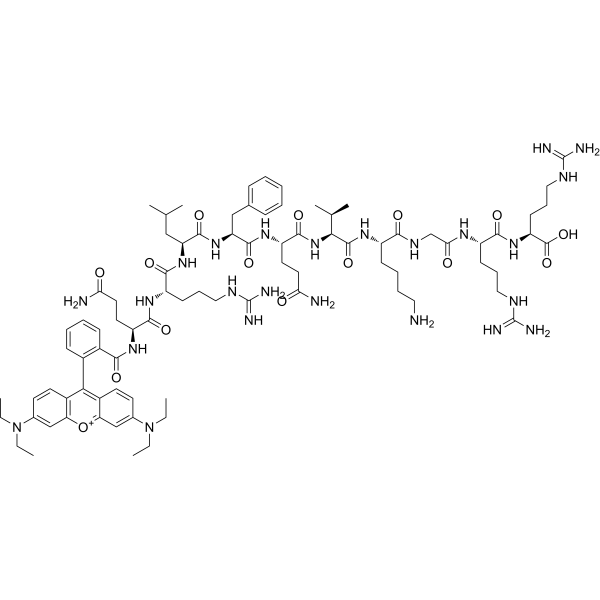
Cat. No.: HY-P1116
CAS No.: 794466-43-6
PBP10 is a decapeptide. PBP10 selectively binds to lipoteichoic acid (LTA), lipopolysaccharide (LPS) and phosphatidylinositol-4,5-bisphosphate (PIP2). PBP10 penetrates cell membranes and possesses bactericidal, anti-inflammatory, cell motility-inhibiting and actin assembly-regulating activities. PBP10 is applicable to relevant research on bacterial infections, microbe-induced inflammation, skin and soft tissue infections, as well as sepsis .
loading...
    loading...
1
1 Cited Publications
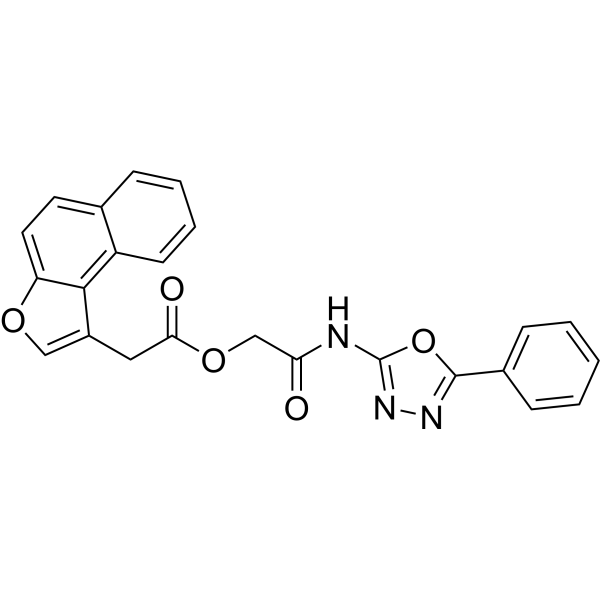
Cat. No.: HY-135813
CAS No.: 877950-01-1
Purity:  95.05%
Target:  

Bacterial

Research Areas:  

Infection

LtaS-IN-1 (compound 1771) is a potent small-molecule inhibitor of Lipoteichoic acid (LTA) synthesis in multidrug-resistant (MDR) E. faecium and by altering the cell wall morphology. LtaS-IN-1 alone inhibits Enterococcus.spp 28 strains with varying MIC values ranging from 0.5 μg/mL to 64 μg/mL. LtaS-IN-1 combination with antibiotics abolishs multidrug-resistant E. faecium growth almost completely .
loading...
    loading...
1
1 Cited Publications
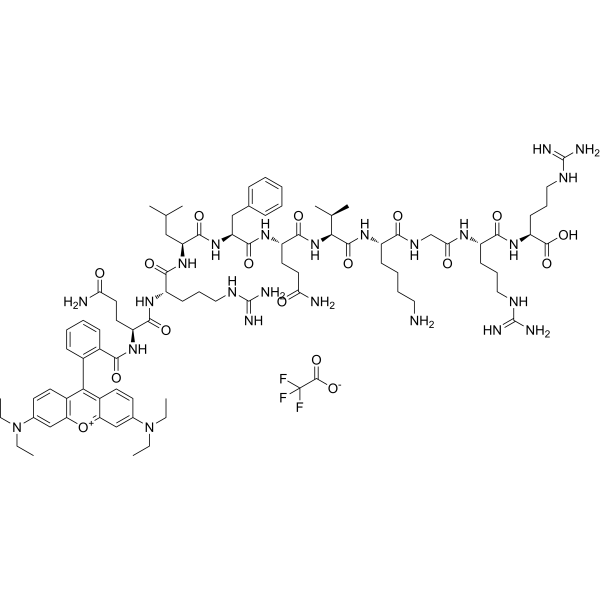
Cat. No.: HY-P1116A
Target:  

Bacterial

Research Areas:  

Infection Inflammation/Immunology

PBP10 TFA is a decapeptide. PBP10 TFA selectively binds to lipoteichoic acid (LTA), lipopolysaccharide (LPS) and phosphatidylinositol-4,5-bisphosphate (PIP2). PBP10 TFA penetrates cell membranes and possesses bactericidal, anti-inflammatory, cell motility-inhibiting and actin assembly-regulating activities. PBP10 TFA is applicable to relevant research on bacterial infections, microbe-induced inflammation, skin and soft tissue infections, as well as sepsis .
loading...
    loading...
1
1 Cited Publications
Cat. No.: HY-164051
CAS No.: 850935-88-5
Target:  

Bacterial

Research Areas:  

Infection

1650-M15 is an inhibitor of lipoteichoic acid synthase (LtaS). It has inhibitory activity against Gram-positive bacteria but has no significant inhibitory effect against Gram-negative bacteria. The IC50s of 1650-M15 against MRSA and MSSA are 62.44 μM and 66.42 μM, respectively, and the MICs are both 200 μM .
loading...
    loading...
Cat. No.: HY-P5255
CAS No.: 466691-40-7
Target:  

Bacterial

Research Areas:  

Infection Inflammation/Immunology

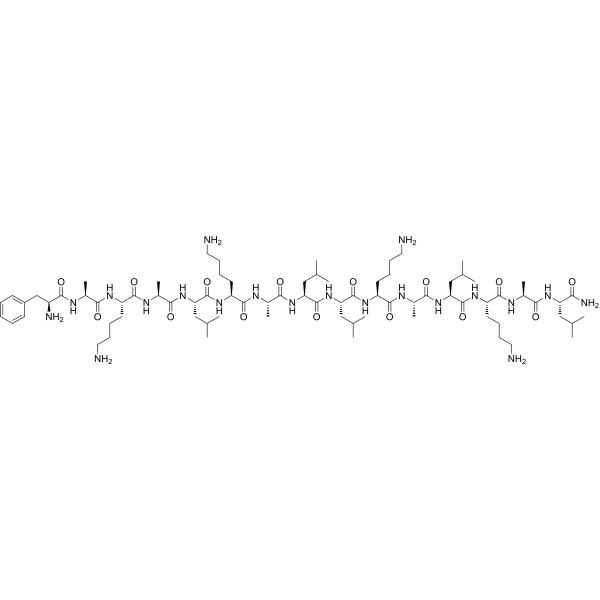
Oligopeptide-10 is a bioactive peptide with antimicrobial activity. Oligopeptide-10 exhibits broad-spectrum bactericidal effects against Gram-positive bacteria including Propionibacterium acnes and Staphylococcus aureus. Oligopeptide-10 targets lipoteichoic acid (LTA) on the surface of bacterial cell membranes, induces bacterial osmotic imbalance by disrupting the integrity of bacterial membranes, and reduces the release of pro-inflammatory cytokines induced by bacteria. Oligopeptide-10 possesses skin-protective activity. Oligopeptide-10 can be applied in research related to acne vulgaris, dandruff, seborrheic dermatitis, and tinea pedis .
loading...
    loading...
Cat. No.: HY-P99309
CAS No.: 595566-61-3
Synonyms: BSYX-A 110; Anti-S. Epidermidis LTA Recombinant Antibody

Target:  

Bacterial

Research Areas:  

Infection

Pagibaximab is a chimeric IgG1 antibody recognizing the surface component lipoteichoic acid of S. aureus and S. epidermidis. Pagibaximab can be used to prevent staphylococcal sepsis .
loading...
    loading...
Cat. No.: HY-146811
CAS No.: 2570797-85-0
Purity:  98.80%
Target:  

Bacterial

Research Areas:  

Inflammation/Immunology

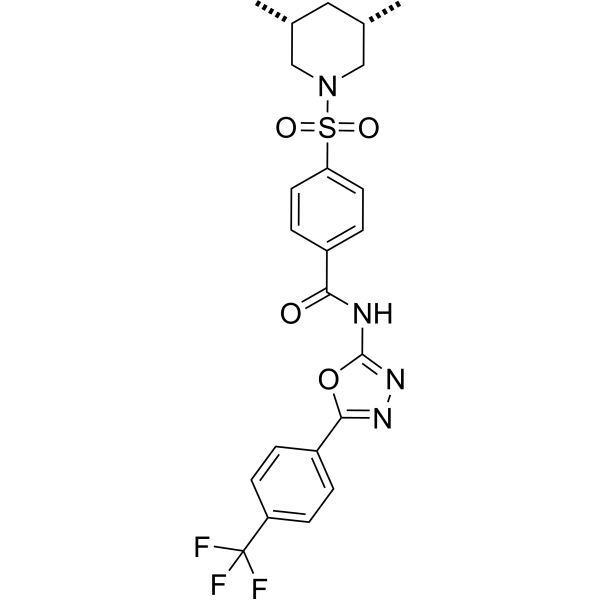
HSGN-94 is a potent antimicrobial agent with lipoteichoic acid (LTA) biosynthesis inhibition. HSGN-94 inhibits drug-resistant Gram-positive bacteria with MIC values of 0.25-2 μg/mL. HSGN-94 inhibits biofilm formation of MRSA and Vancomycin-resistant Enterococci. HSGN-94 also inhibits pro-inflammatory cytokines, exhibits in vivo efficacy in an MRSA murine wound infection model .
loading...
    loading...
Cat. No.: HY-149801A
Target:  

Bacterial

Research Areas:  

Infection

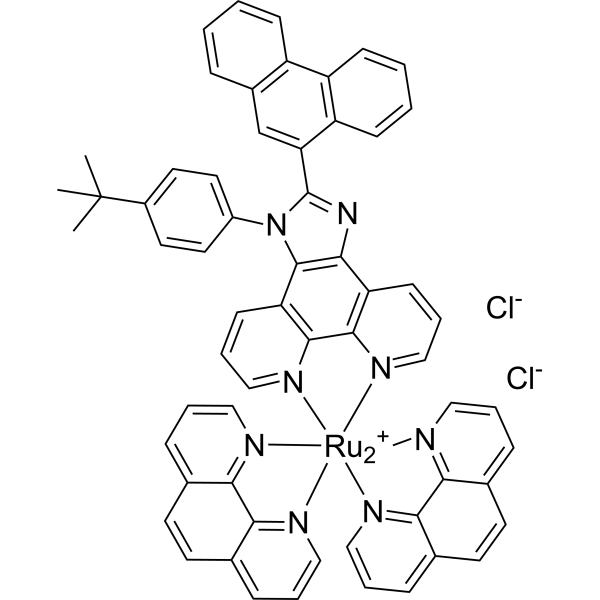
Antibacterial agent 140 chloride is a promising antibacterial agent. Antibacterial agent 140 chloride is also the first Ru-based AIEgen?photosensitizer?for simultaneous dual applications of?Gram-positive bacteria (G+)?detection. Antibacterial agent 140 chloride uniquely selective discriminates and efficient exterminates Gram-positive bacteria (G+)?from other bacteria due to its interaction with?lipoteichoic acids?(LTA). Antibacterial agent 140 chloride ?also possessed robust?antibacterial activity?for?G+ under?light irradiation .
loading...
    loading...
Cat. No.: HY-173318
Target:  

Bacterial

Research Areas:  

Infection

Anti-MRSA agent 25 (Compound 10c) is an antibacterial agent with a MIC of 0.25 μg/mL against methicillin-resistant Staphylococcus aureus (MRSA). Anti-MRSA agent 25 exerts its antibacterial activity by inhibiting biofilm formation, disrupting the cell wall (interacting with peptidoglycan and lipoteichoic acids), acting on the cell membrane (causing depolarization, increasing permeability, and disrupting integrity), reducing metabolic activity, interfering with cellular redox homeostasis, and binding to DNA. Anti-MRSA agent 25 is expected to be used in the research of the anti-infection field .
loading...
    loading...
Cat. No.: HY-P11909
Research Areas:  

Infection

3-WP is a linear 20-peptide with a C-terminal amidation modification. 3-WP acts on lipoteichoic acid (LTA) and disrupts cell wall permeability, induces intracellular reactive oxygen species (ROS) accumulation in a dose-dependent manner, and simultaneously inhibits respiratory chain dehydrogenase activity and intracellular ATP synthesis, thereby interfering with bacterial energy metabolism and exerting Bacterial antibacterial effects. The combination of 3-WP and Melittin (HY-P0233) exerts synergistic antibacterial effects against Gram-positive bacteria, reduces the required dosage of Melittin, and thus improves the cell selectivity of Melittin. 3-WP can serve as a peptide adjuvant for Melittin in food storage scenarios. 3-WP can be used in the research of foodborne diseases caused by methicillin-resistant Staphylococcus aureus .
loading...
    loading...
  • 1

