4 Results for "

Na+/phosphate cotransport

" in MedChemExpress (MCE) Product Catalog:
Products (4)

4 Results for "Na+/phosphate cotransport" in MCE Product Catalog:

1
1 Cited Publications
Cat. No.: HY-W042301
CAS No.: 14293-44-8
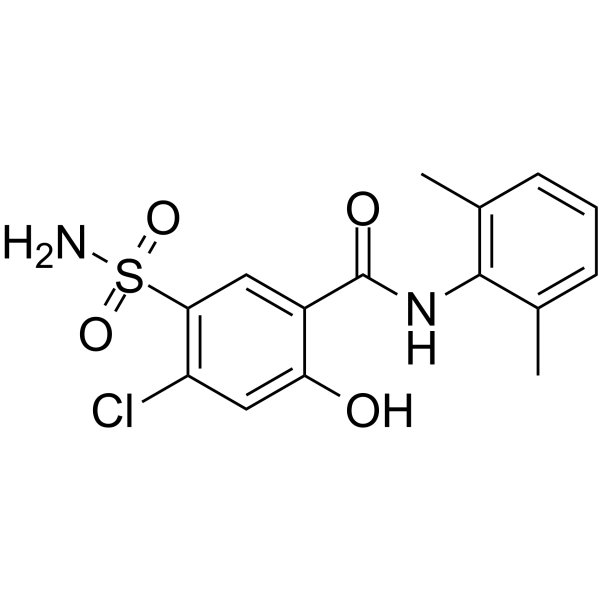
Xipamide is an orally active carbonic anhydrase (CA) inhibitor and Na +/Cl --potassium transporter inhibitor with diuretic and antihypertensive effects. Xipamide reduces NaCl reabsorption by inhibiting the Cl -/NaCO3 - anion exchanger, and increases calcium reabsorption while promoting potassium and magnesium excretion. Xipamide is mainly cleared via the renal pathway and causes a temporary decrease in glomerular filtration rate under specific conditions. Xipamide does not affect Ca 2+ signaling induced by endothelin-1 and other factors, nor does it inhibit various ion cotransport or pump activities in red blood cells. Xipamide can be used in researches related to cardiovascular diseases, hypertension (especially with left ventricular hypertrophy), advanced renal failure, and liver cirrhosis with ascites .
loading...
    loading...
Cat. No.: HY-105402
CAS No.: 339532-12-6
Research Areas:  

Cardiovascular Disease

T 162559 is a potent and selective inhibitor of the Na+/H+ exchanger isoform NHE1 with IC50 values of 0.96 nM. T 162559 does not affect Na+/HCO3- cotransport and Na+/Ca2+ exchange. T 162559 can be used for the research of cardiovascular disease .
loading...
    loading...
Cat. No.: HY-126038
CAS No.: 57410-31-8
BTS 39542 is an orally active inhibitor for Na+ K+ Cl cotransport system, that exhibits diuretic activity, and can be used in hypertension and edema research .
loading...
    loading...
Cat. No.: HY-182386
CAS No.: 13422-16-7
Target:  

NKCC

Research Areas:  

Metabolic Disease Endocrinology

Triflocin is an orally active diuretic and Na +-K +-2Cl cotransporter inhibitor with an IC50 of 3×10 -5 M. Triflocin inhibits the outward basolateral electrogenic Na-(HCO3) n>1 cotransport in the proximal tubule. Triflocin has no tendency to induce hyperglycemia, and its blood glucose-elevating effect is extremely weak, such that an increase in blood glucose levels can only be detected under special conditions such as glucose loading. Triflocin is more prone to induce hypoglycemia .
loading...
    loading...

