1. Search Result
Search Result
Results for "

Neurone

" in MedChemExpress (MCE) Product Catalog:

20

Inhibitors & Agonists

3

Peptides

3

Natural
Products

Cat. No. Product Name Target Research Areas Chemical Structure
  • HY-15640
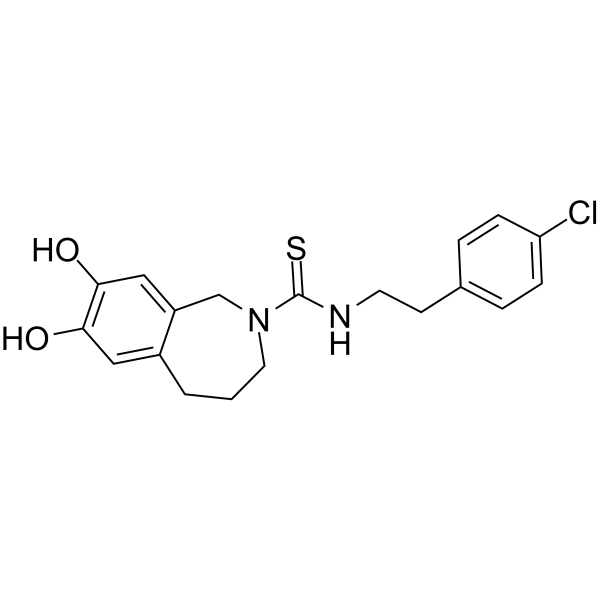
    Capsazepine
    Maximum Cited Publications
    56 Publications Verification

    TRP Channel Apoptosis Cancer
    Capsazepine is a synthetic analogue of the sensory neurone excitotoxin, and an antagonist of TRPV1 receptor with an IC50 of 562 nM.
    Capsazepine
  • HY-B0800
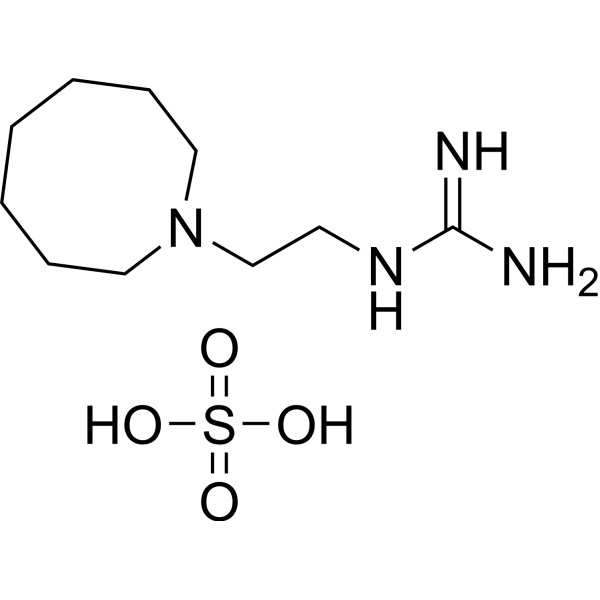
    Guanethidine sulfate
    3 Publications Verification

    Guanethidine monosulfate

    Adrenergic Receptor Cardiovascular Disease Neurological Disease
    Guanethidine sulfate (Guanethidine monosulfate), an antihypertensive agent, is an adrenergic neurone blocking agent. Guanethidine sulfate enters noradrenergic nerve terminals by the neuronal amine carrier .
    Guanethidine sulfate
  • HY-101165
    Cyclothiazide
    2 Publications Verification

    iGluR GABA Receptor Neurological Disease
    Cyclothiazide is a positive allosteric modulator of ionotropic AMPA-type glutamate receptors. Cyclothiazide inhibits GABAA receptors. Cyclothiazide is frequently used to produce a fast inhibition of AMPA receptor desensitization and a much slower potentiation of the AMPA current. Cyclothiazide can potentiate responses to kainate in hippocampal neurons. Cyclothiazide has effects on glutamatergic neurotransmission. Cyclothiazide also induces epileptiform EEG activity accompanying behavioral seizures .
    Cyclothiazide
  • HY-N8572
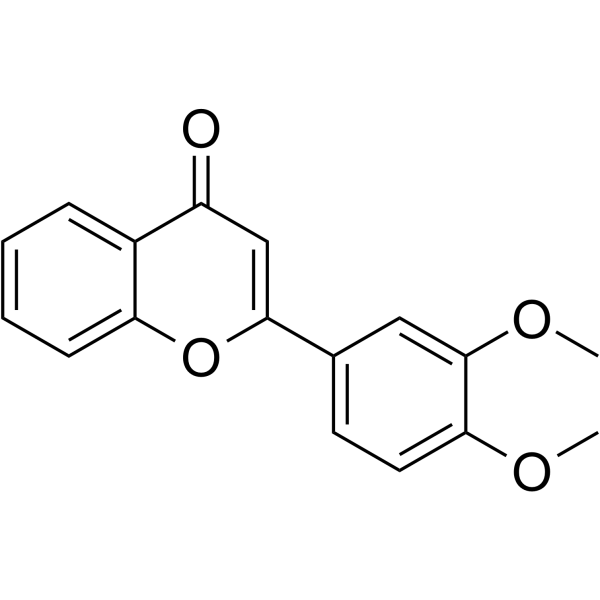
    3',4'-Dimethoxyflavone
    1 Publications Verification

    PARP Reactive Oxygen Species (ROS) Aryl Hydrocarbon Receptor Cardiovascular Disease Neurological Disease Inflammation/Immunology Cancer
    3',4'-Dimethoxyflavone is a lipophilic flavone, can be isolated from the leaves of Primula veris. 3',4'-Dimethoxyflavone can reduce the synthesis and accumulation of PARP and protect cortical neurones against cell death induced by Parthanatos. 3',4'-Dimethoxyflavone is also an aryl hydrocarbon receptor antagonist in human breast cancer cells. 3',4'-Dimethoxyflavone can promote the proliferation of human hematopoietic stem cells. 3',4'-Dimethoxyflavone has various biological activities, including antioxidant, anti-cancer, anti-inflammatory, anti-atherogenic, hypolipidaemic, and neuroprotective or neurotrophic effects .
    3',4'-Dimethoxyflavone
  • HY-141867

    Z-Phe-Phe-FMK

    Cathepsin MEK Caspase DNA/RNA Synthesis Apoptosis Cardiovascular Disease Neurological Disease
    Z-FF-FMK (Z-Phe-Phe-FMK) is a cell-permeable, irreversible, and cysteine protease inhibitor targeting cathepsin-L. Z-FF-FMK inhibits angiotensin II-induced MEK activation in vascular walls, aortic medial remodeling, blood pressure elevation, and upregulation of cystatin C in aortic walls. Z-FF-FMK prevents β-amyloid-mediated caspase-3 activation, poly (ADP-ribose) polymerase cleavage, DNA fragmentation, and apoptosis of cortical neurons (apoptosis). Z-FF-FMK can be used in research related to hypertension and Alzheimer's disease .
    Z-FF-FMK
  • HY-107520

    Drug Derivative Neurological Disease
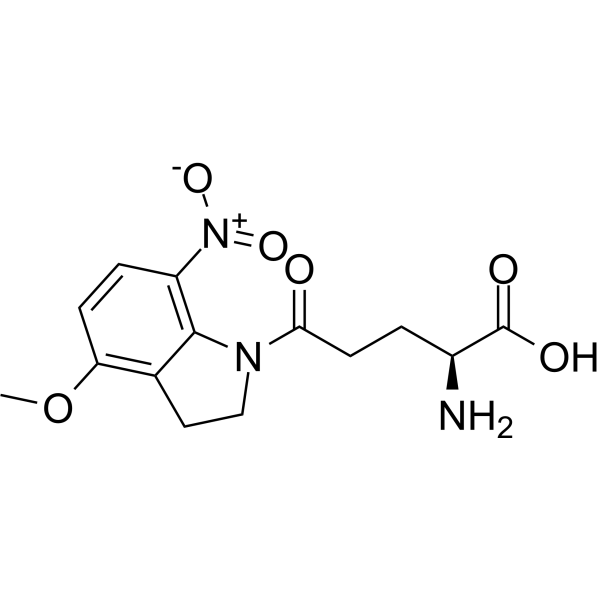
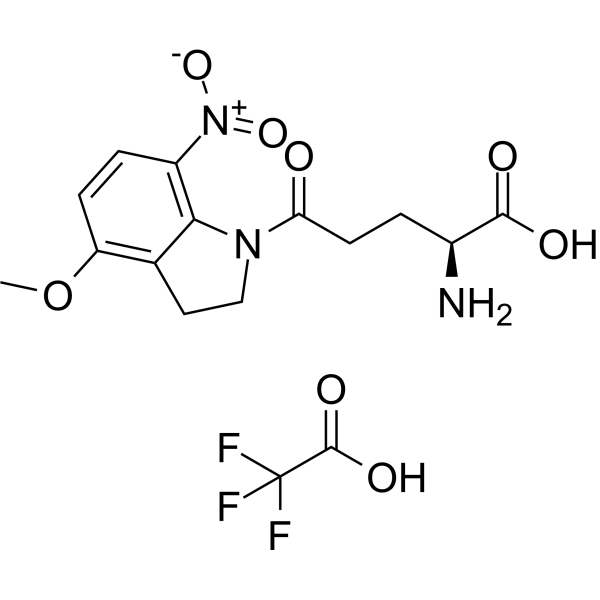
    MNI-caged-L-glutamate is an inert photolabile glutamate precursor. MNI-caged-L-glutamate does not modulate NMDA and AMPA receptor function in cultured neurones. MNI-caged-L-glutamate can be used for research on neurotransmitters .
    MNI-caged-L-glutamate
  • HY-P2325

    Biochemical Assay Reagents ROCK Neurological Disease Metabolic Disease
    Exoenzyme C3, clostridium botulinum, is a mono-ADP-ribosylating enzyme. Exoenzyme C3, clostridium botulinum specifically modifies RhoA, B, and C by transferring ADP-ribose to them, thereby inactivating these GTPases. Exoenzyme C3, clostridium botulinum can induce neuronal axonal and dendritic growth, inhibit macrophage migration, and regulate cytoskeletal dynamics. Exoenzyme C3, clostridium botulinum can be used in the research of spinal cord injury and diabetic painful neuropathy .
    Exoenzyme C3, clostridium botulinum
  • HY-126789

    Biochemical Assay Reagents Metabolic Disease
    DM-Nitrophen is a photolabile caged calcium compound that acts as a calcium releaser. DM-Nitrophen binds Ca 2+ with high affinity and Mg 2+ with considerable affinity before photolysis. DM-Nitrophen releases Ca 2+ into the cytosol upon ultraviolet light irradiation. DM-Nitrophen induces calcium concentration pulses, triggers cytosolic calcium transients, promotes calcium-dependent exocytosis. DM-Nitrophen can be used for the research of calcium-dependent cellular processes .
    DM-Nitrophen
  • HY-100796

    Vatensol

    Dopamine β-hydroxylase Cardiovascular Disease
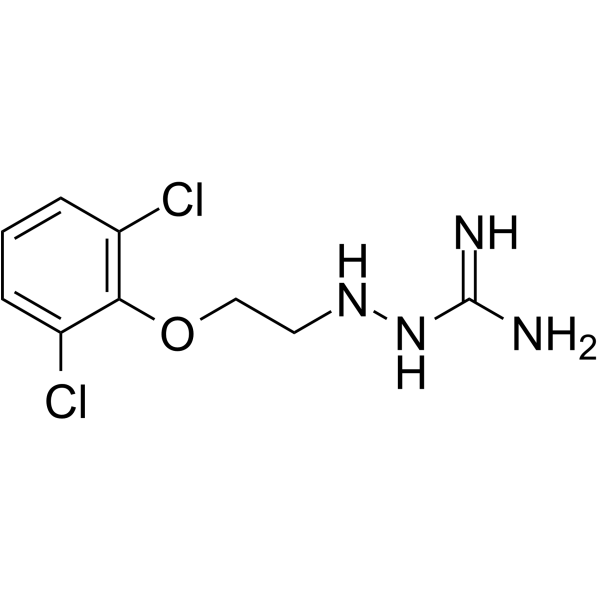
    Guanoclor is an antihypertensive compound. Guanoclor is an adrenergic neurone-blocking agent, which also interferes with noradrenaline synthesis by inhibition of the enzyme dopamine beta-hydroxylase .
    Guanoclor
  • HY-16094

    BW 467C60

    Adrenergic Receptor Cardiovascular Disease Neurological Disease
    Bethanidine sulfate (BW 467C60) is an orally active antihypertensive agent and adrenergic neuron blocker. Bethanidine sulfate exerts its antihypertensive effect by inhibiting the release of norepinephrine from sympathetic nerve terminals. Bethanidine sulfate exhibits anti-ventricular arrhythmic activity. Bethanidine sulfate can be used in research related to hypertension, ventricular tachycardia, and ventricular fibrillation .
    Bethanidine sulfate
  • HY-107712

    iGluR Neurological Disease
    TCN 213 is a selective, surmountable, glycine-dependentlly GluN1/GluN2A NMDAR antagonist with IC50s of 0.55, 3.5, 40 μM in the presence of 75, 750, 7500 nM glycine, respectively. TCN 213 can be used to monitor, pharmacologically, the switch in NMDAR expression in developing cortical neurones .
    TCN 213
  • HY-N8572R

    Reference Standards PARP Reactive Oxygen Species (ROS) Aryl Hydrocarbon Receptor Cardiovascular Disease Neurological Disease Inflammation/Immunology Cancer
    3',4'-Dimethoxyflavone is a lipophilic flavone, can be isolated from the leaves of Primula veris. 3',4'-Dimethoxyflavone can reduce the synthesis and accumulation of PARP and protect cortical neurones against cell death induced by Parthanatos. 3',4'-Dimethoxyflavone is also an aryl hydrocarbon receptor antagonist in human breast cancer cells. 3',4'-Dimethoxyflavone can promote the proliferation of human hematopoietic stem cells. 3',4'-Dimethoxyflavone has various biological activities, including antioxidant, anti-cancer, anti-inflammatory, anti-atherogenic, hypolipidaemic, and neuroprotective or neurotrophic effects .
    3',4'-Dimethoxyflavone (Standard)
  • HY-108247

    Adrenergic Receptor Cardiovascular Disease Neurological Disease
    Guanethidine sesquisulfate, an antihypertensive agent, is an adrenergic neurone blocking agent. Guanethidine sesquisulfate enters noradrenergic nerve terminals by the neuronal amine carrier .
    Guanethidine sesquisulfate
  • HY-15640R

    TRP Channel Apoptosis Reference Standards Cancer
    Capsazepine (Standard) is the analytical standard of Capsazepine. This product is intended for research and analytical applications. Capsazepine is a synthetic analogue of the sensory neurone excitotoxin, and an antagonist of TRPV1 receptor with an IC50 of 562 nM.
    Capsazepine (Standard)
  • HY-107520A

    Drug Derivative Neurological Disease
    MNI-caged-L-glutamate TFA is an inert photolabile glutamate precursor. MNI-caged-L-glutamate TFA does not modulate NMDA and AMPA receptor function in cultured neurones. MNI-caged-L-glutamate TFA can be used for research on neurotransmitters .
    MNI-caged-L-glutamate TFA
  • HY-B0800R

    Guanethidine monosulfate (Standard)

    Reference Standards Adrenergic Receptor Neurological Disease
    Guanethidine (sulfate) (Standard) is the analytical standard of Guanethidine (sulfate). This product is intended for research and analytical applications. Guanethidine sulfate (Guanethidine monosulfate), an antihypertensive agent, is an adrenergic neurone blocking agent. Guanethidine sulfate enters noradrenergic nerve terminals by the neuronal amine carrier .
    Guanethidine sulfate (Standard)
  • HY-101165R

    Reference Standards iGluR GABA Receptor Neurological Disease
    Cyclothiazide (Standard) is the analytical standard of Cyclothiazide. This product is intended for research and analytical applications. Cyclothiazide is a positive allosteric modulator of ionotropic AMPA-type glutamate receptors. Cyclothiazide inhibits GABAA receptors. Cyclothiazide is frequently used to produce a fast inhibition of AMPA receptor desensitization and a much slower potentiation of the AMPA current. Cyclothiazide can potentiate responses to kainate in hippocampal neurons. Cyclothiazide has effects on glutamatergic neurotransmission. Cyclothiazide also induces epileptiform EEG activity accompanying behavioral seizures .
    Cyclothiazide (Standard)
  • HY-100838

    L-CCG III

    EAAT Neurological Disease
    cis-α-(Carboxycyclopropyl)glycine (L-CCG III) is a potent, competitive glutamate uptake inhibitor. cis-α-(Carboxycyclopropyl)glycine is a substrate of glutamate transporters (GluT) (EC50: 13 μM, 2 μM for EAAT 1 and EAAT 2, respectively). cis-α-(Carboxycyclopropyl)glycine inhibits a Na +-dependent high-affinity L-glutamate uptake in glial plasmalemmal vesicles (GPV) and synaptosomes .
    cis-α-(Carboxycyclopropyl)glycine
  • HY-N18471

    5,7-DHP

    Monoamine Oxidase 5-HT Receptor Cardiovascular Disease Neurological Disease
    5,7-Dihydroxytryptamine (5,7-DHP) is an autofluorescent (λex≈365 nm), selective neurotoxin and a transport substrate for MAO-A and 5-HT. 5,7-Dihydroxytryptamine can specifically target and damage central and peripheral 5-HTergic neurons, while affecting 5-HT-related pathways and neurotransmitter balance. 5,7-Dihydroxytryptamine can be used to establish 5-HTergic neuron injury models for studies on neural development, neurodegenerative diseases, as well as mechanisms related to platelet function and retinal neurons .
    5,7-Dihydroxytryptamine
  • HY-183910

    GABA Receptor Glycine Receptor (GlyR) Neurological Disease
    Pitrazepin is a GABAA receptor antagonist and glycine receptor antagonist. Pitrazepin blocks synaptic GABA action, induces neuronal bursting and reduces inhibitory postsynaptic potentials. Pitrazepin can be used in research on depression and psychosis .
    Pitrazepin

Inquiry Online

Your information is safe with us. * Required Fields.

Salutation


Country or Region *

Applicant Name *


Organization Name *

Department *


Email Address *


Product Name *

Cat. No.


Requested quantity *

Phone Number *


Remarks

Inquiry Online

Inquiry Information

Product Name:
Cat. No.:
Quantity:
MCE Japan Authorized Agent:

