1. Search Result
Search Result
Pathways Recommended: Stem Cell/Wnt Cell Cycle/DNA Damage
Results for "

OVCAR3 cell

" in MedChemExpress (MCE) Product Catalog:

41

Inhibitors & Agonists

1

Fluorescent Dyes

9

Natural
Products

1

Oligonucleotides

Cat. No. Product Name Target Research Areas Chemical Structure
  • HY-N0022
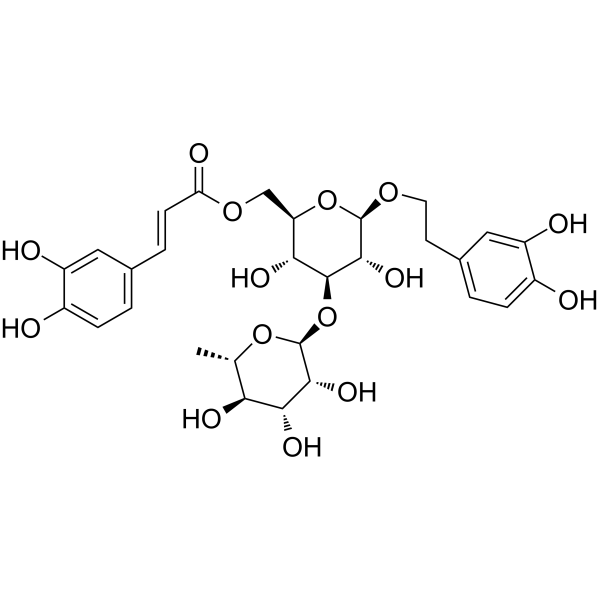
    Isoacteoside
    5+ Cited Publications

    Isoverbascoside

    Apoptosis Reactive Oxygen Species (ROS) Akt mTOR PI3K NO Synthase COX p38 MAPK Toll-like Receptor (TLR) Amyloid-β Neurological Disease Metabolic Disease Inflammation/Immunology Cancer
    Isoacteoside is a natural product that can significantly inhibit the formation of glycation end products. Isoacteoside regulates the AKT/PI3K/m-TOR/NF-κB signaling pathway, induces apoptosis in OVCAR-3 cell. Isoacteoside exhibits antitumor, anti-inflammatory, anti-obesity and neuroprotective activities .
    Isoacteoside
  • HY-153066

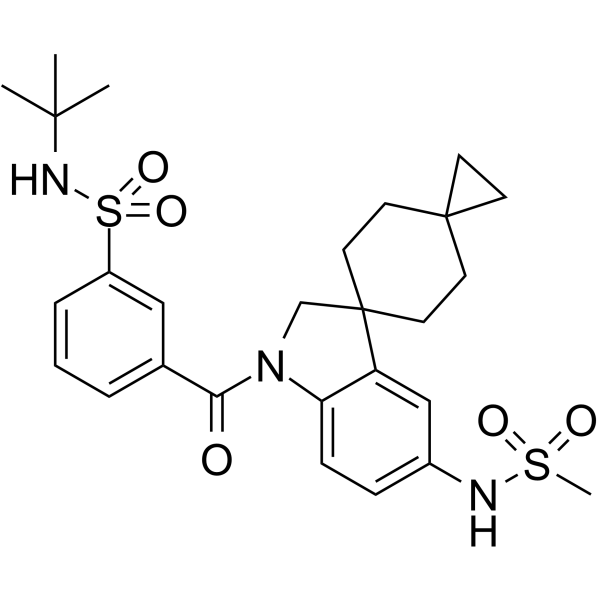
    KIF18A-IN-7

    Kinesin Microtubule/Tubulin Apoptosis Cancer
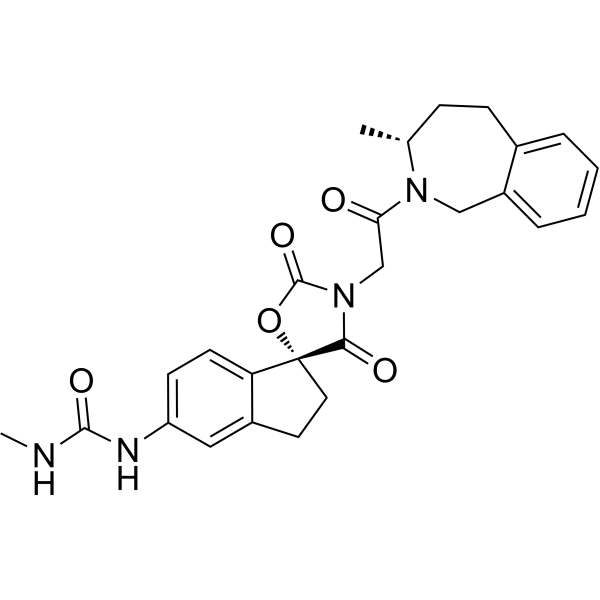
    VLS-1272 (Compound 22) is an orally active KIF18A inhibitor that binds to the KIF18A-microtubule complex in an ATP-noncompetitive manner (IC50 = 41 nM), blocking its ATPase activity and inhibiting microtubule translocation. This leads to abnormal accumulation of KIF18A at spindle poles, disrupting chromosome alignment and inducing mitotic arrest and apoptosis in CIN High tumor cells (e.g., ovarian cancer OVCAR-3, breast cancer JIMT-1). VLS-1272 is a promising candidate for anti-tumor research .
    VLS-1272
  • HY-N10544

    (+)-δ-Cadinene

    Bacterial Parasite Fungal Apoptosis Infection Cancer
    δ-Cadinene ((+)-δ-Cadinene) is a sesquiterpene in essential oils. δ-Cadinene shows antiproliferative and pro-apoptotic effects on human ovary cancer (OVCAR-3) cells. δ-Cadinene has trichomonacidal, antimicrobial, antifungal and anticancer properties .
    δ-Cadinene
  • HY-159805

    CDK Cancer
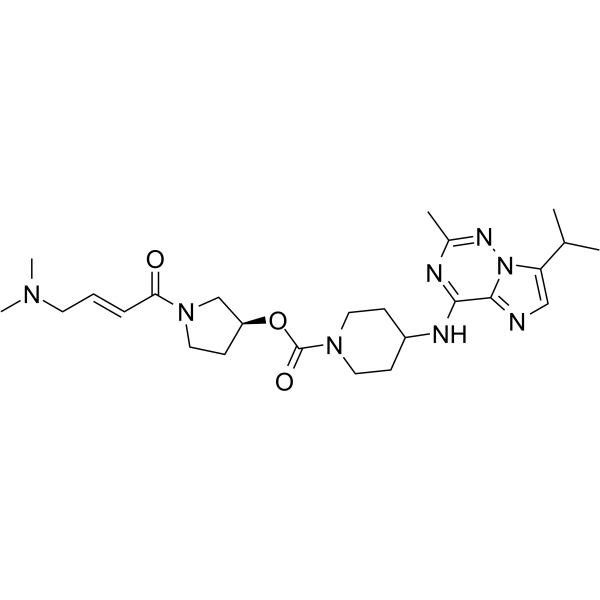
    CDK2-IN-31 is a CCNE1:CDK2 complex inhibitor with an IC50 of 0.13 μM. CDK2-IN-31 binds to a cryptic allosteric pocket at the CCNE1:CDK2 interface, inducing structural rearrangements of the CDK2 A-loop that disrupt the kinase's active conformation and interfere with substrate binding. CDK2-IN-31 inhibits phosphorylation of retinoblastoma protein 1 (RB1) in CCNE1-dependent ovarian cancer cells. CDK2-IN-31 impairs coenrichment of protein PRC1 with CCNE1-N112C:CDK2 complexes. CDK2-IN-31 can be used for the research of ovarian cancer .
    CDK2-IN-31
  • HY-161828

    PROTACs CDK Cancer
    JWZ-5-13 is a CDK7 PROTAC degrader. JWZ-5-13 inhibits the proliferation of cancer cells. JWZ-5-13 is applicable to the research of ovarian cancer, diffuse large B-cell lymphoma, acute T-lymphoblastic leukemia and non-small cell lung cancer .
    JWZ-5-13
  • HY-167876

    PI3K Cancer
    PQR514 is a potent PI3K inhibitor with anticancer activity. PQR514 is able to inhibit cancer cell proliferation. PQR514 showed significant antitumor activity in the OVCAR-3 xenograft model, with the required concentration being approximately one-eighth that of PQR309. PQR514 has good pharmacokinetic properties and minimal brain penetration, making it an optimized candidate compound for inhibiting systemic tumors .
    PQR514
  • HY-170517

    Wee1 Ephrin Receptor Cancer
    PKMYT1-IN-8 (Compound 137) is the inhibitor for PKMYT1 with an IC50 of 9 nM. PKMYT1-IN-8 inhibits EPHB3, EPHA1, KIT, EPHB1, EPHA2, EPHA3, and EPHB2with IC50s of 1.79, 3.17, 4.29, 6.32, 6.83, 8.10, and 10.9 μM, respectively. PKMYT1-IN-8 inhibits the proliferation of cancer cell OVCAR3 with GI50 of 2.02 μM .
    PKMYT1-IN-8
  • HY-120967A

    p38 MAPK Akt Interleukin Related Cancer
    (2S)-OMPT, Lysophosphatidic acid analogue, is a LPA3 G-protein-coupled receptor agonist. (2S)-OMPT selectively activates LPA3 G-protein-coupled receptor to trigger downstream cellular signaling events. (2S)-OMPT induces calcium, IL-6 release in cancer cells and activates MAPK and Akt signaling pathways. (2S)-OMPT can be used for the research of ovarian cancer .
    (2S)-OMPT
  • HY-175819

    Wee1 Apoptosis Cancer
    PD-166285 is a PKMYT1 inhibitor, with an IC50 value of 17 nM. PD166285 shows strong antiproliferative effects against CCNE1-amplified OVCAR3 cells (IC50 = 0.14 μM) and HCC1569 cells (IC50 = 0.21 μM). PD166285 induces apoptosis and arrests CCNE1-amplified HCC1569 cells at the G1/S phase of the cell cycle. PD166285 can be used for the research of PKMYT1-targeted therapies for CCNE1-amplified cancers .
    PD-166285
  • HY-145389

    CDK Cancer
    SZ-015268 is a CDK7 inhibitor with an IC50 of 23.56 nM. SZ-015268 has extremely significant anti-tumor advantages. SZ-015268 inhibits HCC70, OVCAR-3, HCT116 and HCC1806 cells proliferation with IC50s of 33, 80.56, 12.53, and 61.55 nM, respectively .
    SZ-015268
  • HY-168057

    PROTACs CDK Cancer
    PROTAC CDK2 Degrader-1 (Compound 41) is a PROTAC degrader for cyclin-dependent kinase 2 (CDK2). PROTAC CDK2 Degrader-1 inhibits the phosphorylation of RB protein in CDK2 dependent cell line OVCAR3 with an IC50 of 100-500 nM .
    PROTAC CDK2 Degrader-1
  • HY-N0022R

    Isoverbascoside (Standard)

    Toll-like Receptor (TLR) Amyloid-β Reference Standards Apoptosis Reactive Oxygen Species (ROS) Akt mTOR PI3K NO Synthase COX p38 MAPK Neurological Disease Metabolic Disease Inflammation/Immunology Cancer
    Isoacteoside (Standard) is the analytical standard of Isoacteoside. This product is intended for research and analytical applications. Isoacteoside is a natural product that can significantly inhibit the formation of glycation end products. Isoacteoside Standard regulates the AKT/PI3K/m-TOR/NF-κB signaling pathway, induces apoptosis in OVCAR-3 cell. Isoacteoside Standard exhibits antitumor, anti-inflammatory, anti-obesity and neuroprotective activities .
    Isoacteoside (Standard)
  • HY-N7760

    Others Others
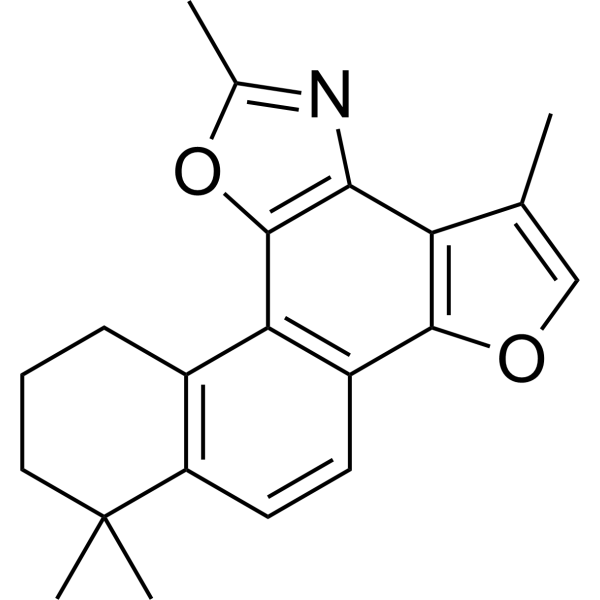
    Neosalvianen is a N-containing compound that shows cytotoxic activities against the HeLa, HepG2, and OVCAR-3 cell lines, with IC50 of 63.9 µM, 59.2 µM, and 74.6 µM, respectively .
    Neosalvianen
  • HY-N10268

    NSC 299113

    Apoptosis Cancer
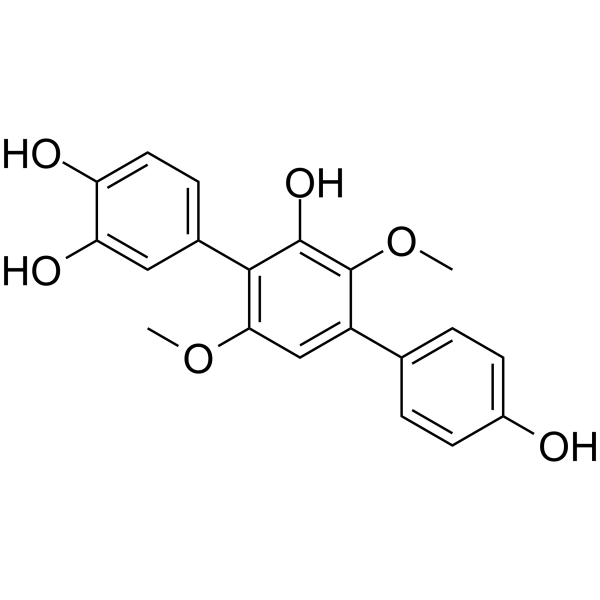
    3-Hydroxyterphenyllin is a metabolite of Aspergillus candidus.3-Hydroxyterphenyllin suppresses proliferation and causes cytotoxicity against A2780/CP70 and OVCAR-3 cells. 3-Hydroxyterphenyllin induces S phase arrest and apoptosis. 3-Hydroxyterphenyllin has the potential for the research of ovarian cancer .
    3-Hydroxyterphenyllin
  • HY-158683

    Kinesin Microtubule/Tubulin Cancer
    KIF18A-IN-11 (Compound 13) is a potent KIF18A inhibitor, with IC50 values of less than 100 nM in OVCAR3 and MDA-MB-157 cells. KIF18A-IN-11 can be used for the research of cancer .
    KIF18A-IN-11
  • HY-162531

    Kinesin Microtubule/Tubulin Cancer
    KIF18A-IN-9 (Compound 1) is a potent KIF18A inhibitor, with an IC50 value of 3.8 nM. KIF18A-IN-9 has anticancer activity, with IC50 values of less than 100 nM in OVCAR3 and MDA-MB-157 cells .
    KIF18A-IN-9
  • HY-162532

    Kinesin Microtubule/Tubulin Cancer
    KIF18A-IN-10 (Compound 24) is a potent KIF18A inhibitor, with an IC50 value of 23.8 nM. KIF18A-IN-10 has anticancer activity, with IC50 values of less than 100 nM in OVCAR3 and MDA-MB-157 cells .
    KIF18A-IN-10
  • HY-N15346

    Others Cancer
    Menominin B is a cyclic peptide found in the freshwater sponge-associated cyanobacterium Nostoc sp. with cytotoxic properties. Menominin B exhibits antiproliferative activity against the ovarian cancer cell line OVCAR3 (with IC50 of 2.4 μM). Menominin B holds promise for research in the field of anticancer therapy .
    Menominin B
  • HY-169476

    Drug Derivative Cancer
    Pyrrolidine linoleamide is a derivative of linoleic acid amide with anticancer activity. Pyrrolidine linoleamide exhibits antiproliferative activity against a range of cancer cell lines, with IC50 values of 12.0, 27.5, 7.7, 21.9, 36.6, 32.6, and 33.9 μg/mL against U251, MCF-7, NCI-ADR/RES, 786-0, NCI-H460, PC-3, and OVCAR-3 cell lines, respectively .
    Pyrrolidine linoleamide
  • HY-143339

    Epigenetic Reader Domain Histone Acetyltransferase Cancer
    CBP/p300-IN-15 (compound 13a) is a potent p300/CBP inhibitor, with IC50 values of 2.50 and 28.0 nM, respectively. CBP/p300-IN-15 shows good activity against OVCAR-3 and A2780 cell line, with EC50 values of 0.865 and 2.71 μM, respectively. CBP/p300-IN-15 can be used for ovarian cancer research .
    CBP/p300-IN-15
  • HY-168180

    Wee1 Cancer
    WEE1-IN-11 (Compound 13) is a potent CDK2 inhibitor with an IC50 of 2.0 nM. WEE1-IN-11 inhibits NCI–H446, A427, OVCAR3, C33A,and WiDr cells with IC50s of 93.9, 34.5, 86.7, 23.1, and 85 nM, respectively .
    WEE1-IN-11
  • HY-164978

    Kinesin Cancer
    KIF18A-IN-14 (Compound Example 81) is a KIF18A inhibitor. KIF18A-IN-14 is available in two forms, EX81-A and its enantiomer EX81-B. EX81-A and EX81-B inhibit OVCAR-3 cells viability with IC50s of 0-0.01 μM and 0.01-0.1 μM, respectively. KIF18A-IN-14 can be used in tumor (e.g. colon, breast, lung) studies .
    KIF18A-IN-14
  • HY-164979

    Kinesin Cancer
    KIF18A-IN-15 (Compound Example 36) is a KIF18A inhibitor, available in two forms, EX36-A and its enantiomer EX36-B, with IC50s of 0.01-0.1 μM, respectively. EX36-A and EX36-B inhibit OVCAR-3 cells viability with IC50s of 0.01-0.1 μM and 0-0.01 μM, respectively. KIF18A-IN-15 can be used in tumor (e.g. colon, breast, lung) studies .
    KIF18A-IN-15
  • HY-119216

    PAK Cancer
    AZ13711265 is an orally active PAK1 inhibitor with high selectivity. AZ13711265 has IC50 values of 0.58 nM and 0.11 µM for PAK1 and pPAK1, respectively. AZ13711265 has low lipophilicity and low clearance, and can be used as an in vivo probe compound for PAK1. AZ13711265 can be used in the study of cancer .
    AZ13711265
  • HY-175817

    Wee1 Apoptosis Cancer
    PKMYT1-IN-10 is a selective PKMYT1 inhibitor with an IC50 of 3 nM. PKMYT1-IN-10 inhibits colony formation, induces apoptosis, and induces S-phase cancer cell cycle arrest. PKMYT1-IN-10 exhibits liver microsomal stability, favorable plasma stability, minimal CYPs inhibition. PKMYT1-IN-10 can be used for the studies of ovarian cancer and breast cancer .
    PKMYT1-IN-10
  • HY-176539

    PAK PERK Cancer
    PAK1-IN-2 (Compound 35) is a selective PAK1 inhibitor with a Ki of 7.3 nM. PAK1-IN-2 can inhibit MEK phosphorylation. PAK1-IN-2 has significant inhibitory effects on PAK1/4 amplified cancer cell lines. PAK1-IN-2 can be used in the study of cancer .
    PAK1-IN-2
  • HY-145402

    CDK Cancer
    CDK7-IN-7 is a potent and selective CDK7 kinase inhibitor with an IC50 of <50 nM (Patent CN112661745A, compound T-01) .
    CDK7-IN-7
  • HY-N10922

    Others Cancer
    (3S,4aS,10aS)-3-(Acetyloxy)-2,3,4,4a,10,10a-hexahydro-6-hydroxy-1,1,4a-trimethyl-7-(1-methylethyl)-9(1H)-phenanthrenone (compound 3), a Palmitate, can be isolated from the root tissue of Salvia miltiorrhiza. (3S,4aS,10aS)-3-(Acetyloxy)-2,3,4,4a,10,10a-hexahydro-6-hydroxy-1,1,4a-trimethyl-7-(1-methylethyl)-9(1H)-phenanthrenone (compound 3) shows anti-cancer activity against human cancer cell lines with DC50s of 25.5 μg/mL (HeLa), 37.5 μg/mL (HepG2), 30.2 μg/mL (OVCAR-3), respectively .
    (3S,4aS,10aS)-3-(Acetyloxy)-2,3,4,4a,10,10a-hexahydro-6-hydroxy-1,1,4a-trimethyl-7-(1-methylethyl)-9(1H)-phenanthrenone
  • HY-N16507

    Microtubule/Tubulin Cancer
    Bruceoside D is a cytotoxic quassinoid glucoside found in Brucea javanica. Bruceoside D is a microtubule polymerization inhibitor. Bruceoside D demonstrates inhibitory activity against leukemia (CCRF-CEM), non-small cell lung cancer (A549), and ovarian cancer (OVCAR-3) cell lines. Bruceoside D is promising for research of cancers .
    Bruceoside D
  • HY-182791

    Wee1 Cancer
    BAA-009 is a selective and orally active PKMYT1 inhibitor with an IC50 of <50 nM. BAA-009 inhibits cancer cells proliferation and inhibits tumor growth in OVCAR3 xenograft mice. BAA-009 can be used for the research of cancer, such as ovarian cancer .
    BAA-009
  • HY-N15345

    Others Cancer
    Menominin A is a cyclic peptide identified from the freshwater sponge-associated cyanobacterium Nostoc sp., exhibiting cytotoxic properties. It displays antiproliferative activity against the ovarian cancer cell line OVCAR3, with an IC50 value of 3.1 μM. Menominin A holds promise for research in the field of anticancer therapeutics .
    Menominin A
  • HY-182790

    Wee1 Cancer
    BAA-065 is a selective and orally active PKMYT1 inhibitor with an IC50 of <50 nM. BAA-065 inhibits cancer cells proliferation, induces γH2AX expression and DNA damage. BAA-065 inhibits tumor growth in OVCAR3 xenograft mice. BAA-065 can be used for the research of cancer, such as ovarian cancer .
    BAA-065
  • HY-158706

    E1/E2/E3 Enzyme Cancer
    SAE-IN-2 (compound 6) is a potent inhibitor of sumo activating enzume (SAE), with the IC50 of 27.8 nM .
    SAE-IN-2
  • HY-176957

    Wee1 Cancer
    PKMYT1-IN-11 (Example 1) is a PKMYT1 inhibitor with an IC50 of 4.49 nM. PKMYT1-IN-11 inhibits the proliferation of HCC1569 cells. When combined with Gemcitabine (HY-17026), PKMYT1-IN-11 shows a significant anti-tumor effect in the OVCAR3 xenograft mouse model. PKMYT1-IN-11 can be used for the study of various cancers such as breast cancer and ovarian cancer .
    PKMYT1-IN-11
  • HY-179688

    PROTACs CDK Cancer
    PROTAC CDK2/4 Degrader-1 (Compound 5) is a CDK2/4 PROTAC degrader, with its DC50 values for CDK2 and CDK4 both ≤ 10 nM. PROTAC CDK2/4 Degrader-1 exhibits excellent inhibitory activity against cell proliferation in OVCAR3 and T47D cells. PROTAC CDK2/4 Degrader-1 can be used for research on breast cancer and ovarian cancer .
    PROTAC CDK2/4 Degrader-1
  • HY-168210

    Fungal Cytochrome P450 Infection
    Antifungal agent 122 (compound 201) is a potent and broad-spectrum antifungal agent. Antifungal agent 122 prevents fungal phase transition and the formation of fungal biofilm. Antifungal agent 122 inhibits CYP3A4-M and CYP3A4-T enzyme activity with IC50 values of 2.11, 4.53 µM. Antifungal agent 122 shows no cytotoxicity .
    Antifungal agent 122
  • HY-183312

    ATP Synthase Reactive Oxygen Species (ROS) Bcl-2 Family Apoptosis Ferroptosis Cancer
    Antitumor agent-217 is a dual mitochondria-targeted anticancer agent. Antitumor agent-217 exhibits potent and selective antiproliferative activity against bladder cancer cell line J82 (IC50 = 6.3 μM), and inhibits colony formation and migration of J82 cells. Antitumor agent-217 accumulates in mitochondria, alters mitochondrial morphology, reduces ATP production, increases ROS generation and decreases mitochondrial membrane potential. Antitumor agent-217 induces apoptosis (Apoptosis) and ferroptosis (Ferroptosis) in bladder cancer cells. Antitumor agent-217 can be used for the research of bladder cancer .
    Antitumor agent-217
  • HY-126453

    COX Cancer
    VU0487836 is a selective cyclooxygenase-1 (COX-1) inhibitor with an IC50 of 0.36 μM against ovine-derived COX-1. VU0487836 serves as a prototype for the development of radiological imaging agents targeting COX-1 for ovarian cancer. VU0487836 is applicable to relevant research on ovarian cancer .
    VU0487836
  • HY-D3186

    Fluorescent Dye Glycosidase Cancer
    HMRef-βGal is a fluorescent probe and a substrate responsive to β-galactosidase (β-galactosidase) (Ex/Em=498 nm/505-600 nm). After being cleaved by β-galactosidase, HMRef-βGal triggers significant fluorescence enhancement via intramolecular spirocyclic function regulation. HMRef-βGal generates bright fluorescence in cancer cells with elevated β-galactosidase activity, enabling visualization of tiny peritoneal metastases in mouse models. HMRef-βGal exhibits low in vitro cytotoxicity and low acute in vivo toxicity in mice. HMRef-βGal can be used for preclinical fluorescence-guided diagnosis and cytoreductive surgery of peritoneal metastases, including compatibility with real-time naked-eye detection and endoscopic imaging, as well as for studies related to peritoneal metastases of ovarian cancer .
    HMRef-βGal
  • HY-130451

    Fungal Infection Cancer
    Misakimycin is a naphthoquinone compound. Misakimycin exhibits cytotoxicity against human melanoma, breast cancer and ovarian cancer cells. Misakimycin can be found in strains of the genus Pyrenochaetopsis (strain MSX63693). Misakimycin can be used in research related to melanoma, breast cancer and ovarian cancer .
    Misakimycin
  • HY-181540

    Apelin Receptor (APJ) Cancer
    YL-GB063 is an Apelin receptor (APJ) antagonist. YL-GB063 inhibits Apelin-induced APJ β-arrestin recruitment (IC50 of 3.1 μM in HTLA cells). YL-GB063 has anti-cancer activity against ovarian cancer .
    YL-GB063

Inquiry Online

Your information is safe with us. * Required Fields.

Salutation


Country or Region *

Applicant Name *


Organization Name *

Department *


Email Address *


Product Name *

Cat. No.


Requested quantity *

Phone Number *


Remarks

Inquiry Online

Inquiry Information

Product Name:
Cat. No.:
Quantity:
MCE Japan Authorized Agent:

