
Search Result
Results for "
Orange
" in MedChemExpress (MCE) Product Catalog:
16
Biochemical Assay Reagents
10
Isotope-Labeled Compounds
| Cat. No. |
Product Name |
Target |
Research Areas |
Chemical Structure |
-
- HY-101879
-
|
|
DNA Stain
Parasite
Fluorescent Dye
|
Others
|
|
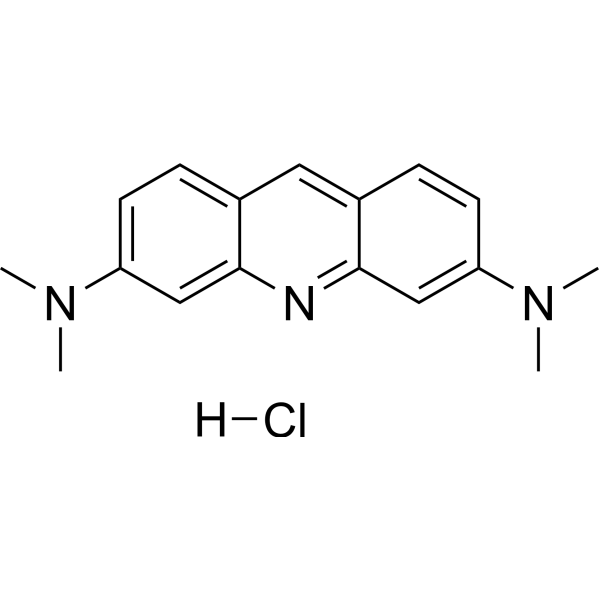
Acridine Orange hydrochloride is a cell-penetrable nucleic acid-selective fluorescent dye. Acridine Orange hydrochloride produces orange fluorescence when it binds to ssDNA or RNA, and green fluorescence when it binds to dsDNA (Ex: 488 nM; Em: green fluorescence at 530 nm, orange fluorescence at 640 nm) .
|
-
-
- HY-D1913
-
|
|
Fluorescent Dye
|
Others
|
|
Fe2Orange is a Fe 2+ selective probe with an excitation wavelength of 543 nm and an emission wavelength of 580 nm. Fe2Orange emits fluorescence after binding to intracellular Fe 2+, thereby achieving specific labeling of Fe 2+. Fe2Orange is used to detect the content and distribution of Fe 2+ in cells .
|
-
-
- HY-D0150
-
|
|
Fluorescent Dye
|
Others
|
|
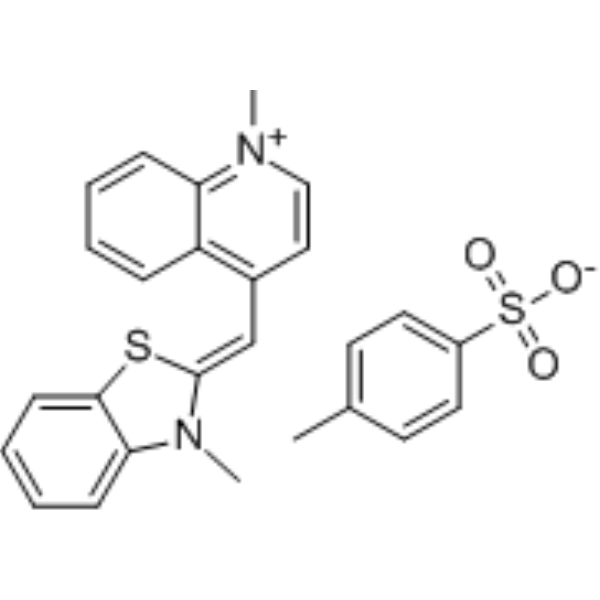
Thiazole Orange is an asymmetric anthocyanin dye that can be coupled with oligonucleotides (ONs) to prepare fluorescent hybridization probes. Thiazole Orange has been widely used in biomolecular detection and staining of DNA/ RNA in gels and can be used for reticulocyte analysis. Thiazole orange generates a significant fluorescence enhancement and high quantum yield when it binds with nucleic acids, especially RNA. Thiazole orange can permeate living cell membranes. Thiazole orange can use UV light for detection, but can also be detected with blue light. The excitation and emission of Thiazole orange are λex = 510 nm (488 nm and 470 nm also show strong excitation) and λem = 527 nm, respectively .
|
-
-
- HY-D0993
-
|
Nonylacridine Orange
|
Fluorescent Dye
|
Others
|
|
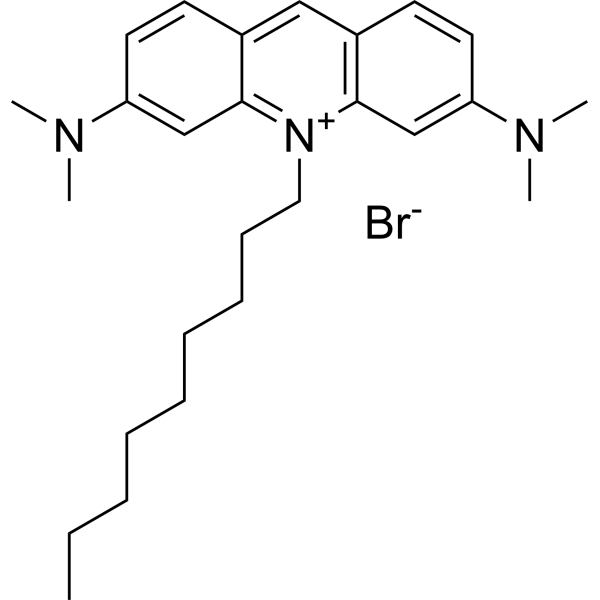
Acridine Orange 10-Nonyl Bromide is a fluorescent probe for cardiolipin (λex: 489 nm, λem: 525 nm).
|
-
-
- HY-D0952
-
|
|
Parasite
|
Others
|
|
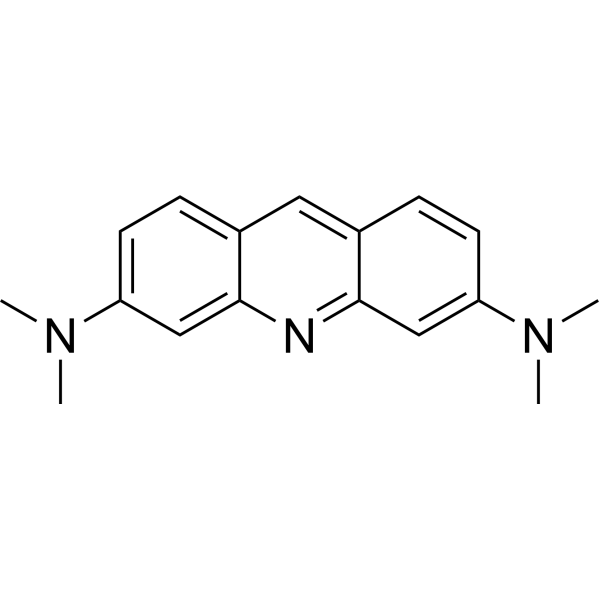
Acridine Orange base is a cell-permeable fluorescent dye that stains organisms (bacteria, parasites, viruses, etc.) bright orange and, when used under appropriate conditions (pH=3.5, Ex=460 nm), distinguishes human cells in green for detection by fluorescence microscopy. Acridine Orange base fluoresces green when bound to dsDNA (Ex=488, Em=520-524) and red when bound to ssDNA (Ex=457, Em=630-644) or ssRNA (Ex=457, Em=630-644), also can be used in cell cycle assays .
|
-
-
- HY-D1069
-
|
DBCO-Sulfo-Cy3
|
Fluorescent Dye
|
Others
|
|
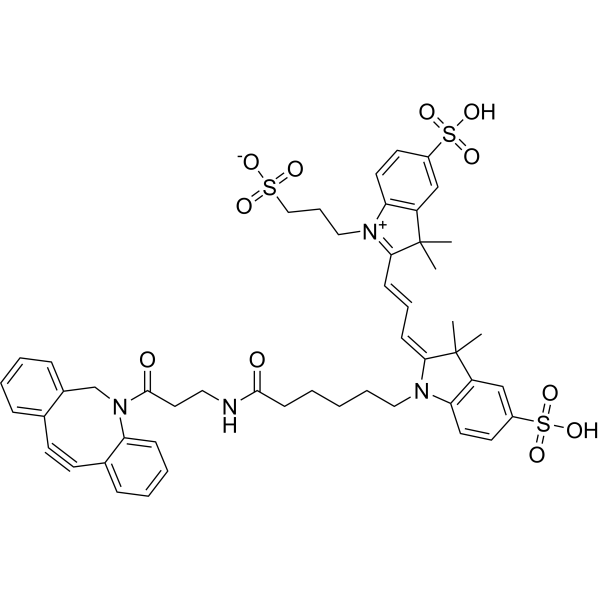
DBCO-Cy3 (DBCO-Sulfo-Cy3) is the derivative of Cyanine3 fluorophore, a pH insensitive from pH (4-10) orange fluorescent dyewith excitation maximum 555 nm and emission maximum of 580nm. DBCO-Cy3 has fast reaction kinetics and good stability, and is productive to use in many standard fluorescent instrumentations. DBCO-Cy3 is a click chemistry reagent, it contains a DBCO group that can undergo strain-promoted alkyne-azide cycloaddition (SPAAC) with molecules containing Azide groups.
|
-
-
- HY-D1696
-
|
|
Fluorescent Dye
|
Others
|
|
MitoTracker Orange CMTMRos is a fluorescent dye that labels mitochondria within live cells utilizing the mitochondrial membrane potential (Ex/Em: 551/576 nm) .
|
-
-
- HY-103469
-
|
PO1
|
Fluorescent Dye
|
Others
|
|
Peroxy Orange 1 (PO1) is a new H2O2 specific probe that can bind to green fluorescent highly reactive oxygen species (hROS) probe APF. Peroxy Orange 1 is also a living cell dye .
|
-
-
- HY-N1442
-
|
Orange II; D&C Orange NO. 4
|
Environmental Pollutants
Biochemical Assay Reagents
|
Others
|
|
Acid Orange 7 (Orange II; D&C Orange NO. 4) is an azo dye widely used in the textile, food and cosmetic industries. Acid Orange 7 is mainly used as a colorant by combining with fibers and other substances through azo bonds. Acid Orange 7 has a maximum absorption wavelength at 484-485 nm, and the concentration is measured using a UV-visible spectrophotometer. Acid Orange 7 is difficult to degrade and has a certain degree of toxicity. It is often used to study various sewage treatment technologies and photocatalytic degradation reactions, and to evaluate the removal effects of different treatment methods on organic pollutants .
|
-
-
- HY-118907
-
|
|
Fluorescent Dye
|
Others
|
|
Methyl Orange is a soluble azo dye commonly used as an acid-base indicator and for staining cells and tissue sections, as well as for dyeing textiles. Methyl Orange appears red at a pH of 3.1 and changes to bright yellow as the pH increases to 4.4. Methyl Orange (500 mg/L) exhibits cytotoxicity and can cause DNA damage .
|
-
-
- HY-D0249
-
|
Orange Yellow S; Food Yellow 3; CI 15985
|
Environmental Pollutants
Fluorescent Dye
|
Others
|
|
Sunset Yellow FCF (Orange Yellow S) is an orange azo dye with a maximum absorption wavelength of 480 nm. Sunset Yellow FCF can be used in food, cosmetics and pharmaceuticals .
|
-
-
- HY-135712
-
|
Acid Orange GG
|
Environmental Pollutants
Biochemical Assay Reagents
|
Others
|
|
Orange G is an azo dye commonly found in textile wastewater and is mainly used for textile dyeing. Orange G has a coloring function and can give textiles a specific color. The stability and potential hazards of Orange G in the environment are often used to study the removal effects of various wastewater treatment technologies on difficult-to-degrade organic pollutants, especially the degradation of azo dyes. Related research focuses on how to destroy the azo bond of Orange G through chemical, physical or biological methods to achieve harmless treatment to solve the problem of textile wastewater pollution .
|
-
-
- HY-D0942
-
|
Euchrysine 3RX
|
Parasite
Fluorescent Dye
DNA Stain
|
Others
|
|
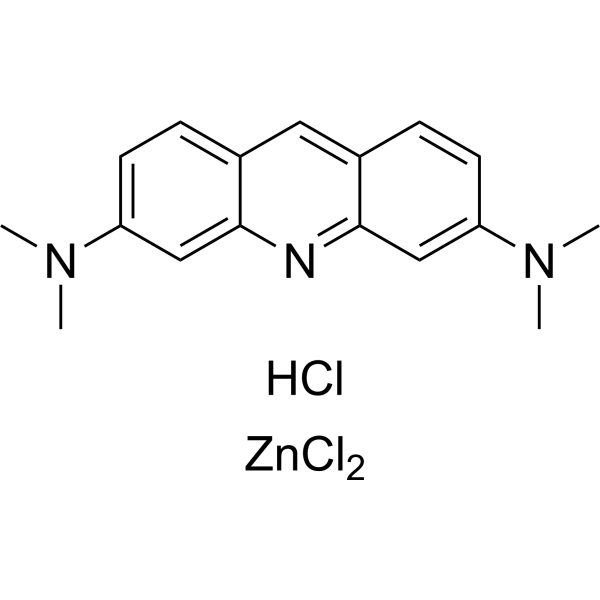
Acridine Orange (Euchrysine 3RX) zinc chloride salt is a cell-penetrable nucleic acid-selective fluorescent dye. Acridine Orange zinc chloride salt produces orange fluorescence when it binds to ssDNA or RNA, and green fluorescence when it binds to dsDNA (Ex: 488 nM; Em: green fluorescence at 530 nm, orange fluorescence at 640 nm) .
|
-
-
- HY-D1569
-
|
|
Fluorescent Dye
|
Others
|
|
CellTracker Orange CMRA Dye is a fluorescent dye. CellTracker Orange CMRA Dye can be used for cell imaging and monitoring the movement and location of cells .
|
-
-
- HY-D2264
-
|
|
Fluorescent Dye
|
Others
|
|
Caffeine orange (Compound 1) is an aqueous-phase fluorescence turn-on sensor for caffeine that is highly selective to caffeine. Caffeine orange makes caffeinated coffee appear orange when exposed to 532 nM of green excitation light. Caffeine orange has excellent photophysical properties such as high extinction coefficient, high light stability and narrow emission bandwidth, which can be used in the research of caffeine detection devices .
|
-
-
- HY-DY1038
-
|
|
Fluorescent Dye
|
Others
|
Acridine Orange hydrochloride (solution) is a cell-penetrable nucleic acid-selective fluorescent dye. Acridine Orange hydrochloride produces orange fluorescence when it binds to ssDNA or RNA, and green fluorescence when it binds to dsDNA (Ex: 488 nM; Em: green fluorescence at 530 nm, orange fluorescence at 640 nm) . Solvent and Concentration: Sterile water: 10 mg/mL The 1 mL volume is defined as the base specification. All larger sizes correspond to incremental volumes of this base.
|
-
-
- HY-W110883
-
|
|
Biochemical Assay Reagents
|
Others
|
|
Xylenol Orange (tetrasodium), metal indicator, AR is a biochemical reagent that can be used as a biological material or organic compound for life science related research.
|
-
-
- HY-D0303A
-
|
Solvent Orange 3 hydrochloride
|
Fluorescent Dye
|
Others
|
|
Chrysoidine G (Solvent Orange 3 hydrochloride) is an industrial azoic dye (cationic dye). Chrysoidine G (Solvent Orange 3 hydrochloride) is used for the construction of most textile dyestuffs and also in synthetic industrial compounds. Chrysoidine G (Solvent Orange 3 hydrochloride) concentration can be determined by UV-Vis spectroscopy .
|
-
-
- HY-D1629
-
|
|
Fluorescent Dye
|
Others
|
|
Calcium Orange AM is an intracellular calcium reporter. Specific fluorescence can be detected when free calcium binds to Calcium Orange AM (Ex/Em=549/576 nm). Calcium Orange AM does not enter the vacuoles and does not compartmentalize into acidic vesicles .
|
-
-
- HY-D0916
-
|
YOYO 1; YOYO1
|
Fluorescent Dye
|
Others
|
|
Thiazole orange dimer YOYO 1 (YOYO 1) is a cell-impermeable cyanine dimer with no inherent fluorescence, and its fluorescence intensity increases significantly upon binding to double-stranded DNA (dsDNA) . Thiazole orange dimer YOYO 1 can serve as a nuclear counterstain or a dead cell indicator (Ex/Em = 505/512 nm).
|
-
-
- HY-N7766
-
|
|
Apoptosis
|
Inflammation/Immunology
Cancer
|
|
Rubropunctatin, an orange azaphilone pigment, is isolated from the extracts of Monascus pilosus-fermented rice (red-mold rice). Rubropunctatin has anti-inflammatory, immunosuppressive and antioxidative effects, and also exhibits anti-tumor activity .
|
-
-
- HY-159051
-
|
|
Biochemical Assay Reagents
|
Others
|
|
Dragendorff reagent is used for detecting alkaloids and other nitrogen-containing compounds. Dragendorff reagent is a solution of potassium bismuth iodide composing of Basic bismuth nitrate (Bi(NO3)3), Tartaric acid (HY-N2436), and Potassium iodide (KI). When contact with alkaloids, Dragendorff reagent produces an orange or orange red precipitate .
|
-
-
- HY-D0929
-
|
α-Naphthol Orange
|
Fluorescent Dye
|
Others
|
|
Orange I (α-Naphthol Orange) is an anionic azo dye that can form a complex with Methylene blue (HY-14536) and cause fluorescence quenching. The equilibrium constant of the complex of Orange I and Methylene blue is 79900 mol -1·dm 3. Orange I can change the absorption spectrum of itself and Methylene blue .
|
-
-
- HY-DY1078
-
|
|
Fluorescent Dye
|
Others
|
Acridine Orange 10-Nonyl Bromide (solution) is a fluorescent probe for cardiolipin (λex: 489 nm, λem: 525 nm). Solvent and concentration: DMSO: 10 mM
|
-
-
- HY-D2178
-
|
|
Fluorescent Dye
|
Others
|
|
AF 568 NHS ester is a derivative of the orange fluorescent dye AF 568. AF 568 NHS ester is widely used in cell dyes, biological dyes, biomolecules and particle fluorescent labeling. AF 568 exhibits maximum absorption wavelength of 579 nm and the maximum emission wavelength of 603 nm .
|
-
-
- HY-D0332
-
|
|
Fluorescent Dye
|
|
|
Disperse Orange 1 is an orange-orange dye commonly used for fiber dyeing.
|
-
-
- HY-D0279
-
|
|
Fluorescent Dye
|
|
|
Pigment orange 13 is a pyrazolone dye commonly used in industry.
|
-
-
- HY-118320
-
|
Mordant Orange 1
|
Fluorescent Dye
|
Others
|
|
Alizarine Yellow R (Mordant orange 1), Salicylic acid derivative (HY-B0167), is an azo dye. Alizarine Yellow R is used as a pH indicator and a biological stain in chemical examinations and dyeing industries .
|
-
-
- HY-D0690
-
|
|
Fluorescent Dye
|
|
|
Pigment orange 64 is a pyrazolone dye commonly used in industry.
|
-
-
- HY-D1177
-
|
|
Fluorescent Dye
|
|
|
Solvent orange 60 is a cyclic ketone dye commonly used in plastic materials such as eyeglass frames and has been shown to cause contact allergies.
|
-
-
- HY-D0521
-
|
|
Fluorescent Dye
|
|
|
Disperse orange 29 is an orange-orange dye commonly used for fiber dyeing.
|
-
-
- HY-D0382
-
|
|
Fluorescent Dye
|
|
|
Disperse Orange 30 is an orange-orange dye commonly used for fiber dyeing.
|
-
-
- HY-D0497
-
|
|
Fluorescent Dye
|
|
|
C.I. Disperse orange 37 is an orange-orange dye commonly used for fiber dyeing.
|
-
-
- HY-D0481
-
|
|
Fluorescent Dye
|
|
|
C.I. Acid orange 67 is an acidic orange-yellow dye that can be adsorbed and removed by bentone.
|
-
-
- HY-D1207
-
|
|
Fluorescent Dye
|
|
|
Direct Orange 26 is a good dyeing agent for cotton fabrics.
|
-
-
- HY-D0640
-
|
|
Fluorescent Dye
|
|
|
Acid Orange 116 is an azo dye that can be removed from aqueous solutions by metal ions.
|
-
-
- HY-W110789
-
|
|
Biochemical Assay Reagents
|
Others
|
|
Ethyl Orange (sodium), indicator grade is an organic azo compound that can be used as a pH indicator from pH 3.0 to pH 4.8, changing color from red to orange.
|
-
-
- HY-W145129
-
-
-
- HY-W587874
-
|
|
Fluorescent Dye
|
Others
|
|
Disperse Orange 3 is a monoazo dye characterized by a dye content of 90% along with dispersing agents and surfactants; it features two aromatic rings, one of which possesses an amino group while the other is modified with a nitro group, exhibiting a prominent absorption peak at 415 nm.
|
-
-
- HY-D0488
-
|
|
Fluorescent Dye
|
|
|
C.I. Pigment orange 36 is the most important colorant used to add color or change the color of something and is chemically essentially unaffected by the carrier or medium into which it is incorporated. It can be widely used in textile, medicine, food, cosmetics, plastics, paint, ink, photography and paper industries.
|
-
-
- HY-D0510
-
|
|
Fluorescent Dye
|
|
|
C.I. Pigment orange 34 is the most important colorant used to add color or change the color of something and is chemically essentially unaffected by the carrier or medium into which it is incorporated. It can be widely used in textile, medicine, food, cosmetics, plastics, paint, ink, photography and paper industries.
|
-
-
- HY-D0445
-
|
|
Fluorescent Dye
|
|
|
C.I. Pigment orange 16 is the most important colorant used to add color or change the color of something and is chemically essentially unaffected by the carrier or medium into which it is incorporated. It can be widely used in textile, medicine, food, cosmetics, plastics, paint, ink, photography and paper industries.
|
-
-
- HY-D0489
-
|
|
Fluorescent Dye
|
|
|
C.I. Pigment orange 38 is the most important colorant used to add color or change the color of something and is chemically essentially unaffected by the carrier or medium into which it is incorporated. It can be widely used in textile, medicine, food, cosmetics, plastics, paint, ink, photography and paper industries.
|
-
-
- HY-D0249R
-
|
Orange Yellow S (Standard); Food Yellow 3 (Standard); CI 15985 (Standard)
|
Fluorescent Dye
Reference Standards
|
Others
|
|
Sunset Yellow FCF (Standard) is the analytical standard of Sunset Yellow FCF. This product is intended for research and analytical applications. Sunset Yellow FCF (Orange Yellow S) is an orange azo dye with a maximum absorption wavelength of 480 nm. Sunset Yellow FCF can be used in food, cosmetics and pharmaceuticals .
|
-
-
- HY-D2176
-
|
|
Fluorescent Dye
|
Others
|
|
AF 555 carboxylic acid is a derivative of the orange fluorescent dye AF 555. AF 555 carboxylic acid is widely used in cell dyes, biological dyes, biomolecules and particle fluorescent labeling. AF 555 exhibits average excitation wavelengths under green laser and red laser of 510 nm and 610 nm, respectively .
|
-
-
- HY-152041S
-
-
-
- HY-D0303AR
-
|
Solvent Orange 3 hydrochloride (Standard)
|
Fluorescent Dye
Reference Standards
|
Others
|
|
Chrysoidine G (Standard) is the analytical standard of Chrysoidine G. This product is intended for research and analytical applications. Chrysoidine G (Solvent Orange 3 hydrochloride) is an industrial azoic dye (cationic dye). Chrysoidine G (Solvent Orange 3 hydrochloride) is used for the construction of most textile dyestuffs and also in synthetic industrial compounds. Chrysoidine G (Solvent Orange 3 hydrochloride) concentration can be determined by UV-Vis spectroscopy .
|
-
-
- HY-D0552
-
-
-
- HY-D1038
-
|
|
Fluorescent Dye
|
|
|
Disperse orange 31 is an orange-orange dye commonly used for fiber dyeing.
|
-
-
- HY-D0542
-
-
- HY-D0364
-
|
|
Fluorescent Dye
|
|
|
Disperse Orange 44 is an orange-orange dye commonly used for fiber dyeing.
|
-
- HY-D0303
-
|
Solvent Orange 3; Chrysoidine Y base
|
Fluorescent Dye
|
Others
|
|
Chrysoidine G (free base) (Solvent Orange 3; Chrysoidine Y base) is a multifunctional dye. Dyes are important tools in biological experiments. They can help researchers observe and analyze cell structures, track biomolecules, evaluate cell functions, distinguish cell types, detect biomolecules, study tissue pathology and monitor microorganisms. Their applications range from basic scientific research to clinical A wide range of diagnostics. Dyes are also widely used in traditional fields such as textile dyeing, as well as in emerging fields such as functional textile processing, food pigments and dye-sensitized solar cells.
|
-
- HY-D0643
-
|
|
Fluorescent Dye
|
|
|
C.I. Disperse orange 33 is an orange-orange dye commonly used for fiber dyeing.
|
-
- HY-D0555
-
-
- HY-N1442R
-
|
Orange II (Standard); D&C Orange NO. 4 (Standard)
|
Biochemical Assay Reagents
Reference Standards
|
Others
|
|
Acid orange 7 (Standard) is the analytical standard of Acid orange 7 (HY-1442). This product is intended for research and analytical applications. Acid Orange 7 (Orange II; D&C Orange NO. 4) is an azo dye widely used in the textile, food and cosmetic industries. Acid Orange 7 is mainly used as a colorant by combining with fibers and other substances through azo bonds. Acid Orange 7 has a maximum absorption wavelength at 484-485 nm, and the concentration is measured using a UV-visible spectrophotometer. Acid Orange 7 is difficult to degrade and has a certain degree of toxicity. Acid Orange 7 is often used to study various sewage treatment technologies and photocatalytic degradation reactions, and to evaluate the removal effects of different treatment methods on organic pollutants .
|
-
- HY-D1210
-
|
|
Fluorescent Dye
|
|
|
Solvent Orange 14 is an orange dye. Its series of products, such as Solvent orange 60 (HY-D1177), has been used in dyeing applications of plastic materials.
|
-
- HY-D0497R
-
|
|
Fluorescent Dye
Reference Standards
|
Others
|
|
C.I. Disperse orange 37 (Standard) is the analytical standard of C.I. Disperse orange 37. This product is intended for research and analytical applications. C.I. Disperse orange 37 is an orange-orange dye commonly used for fiber dyeing.
|
-
- HY-D0446
-
|
|
Fluorescent Dye
|
|
|
C.I. Acid orange 33 is an acidic orange-yellow dye that can be adsorbed and removed by bentone.
|
-
- HY-D0417
-
|
|
Fluorescent Dye
|
|
|
C.I. Acid orange 3 is an acidic orange-yellow dye that can be adsorbed and removed by bentone.
|
-
- HY-D0352
-
|
Pigment Orange 5
|
Environmental Pollutants
Biochemical Assay Reagents
|
Others
|
|
Permanent Orange is a synthetic pigment commonly used in the manufacture of paints and coatings. It belongs to the class of organic pigments and consists of carbon and other elements. Permanent Orange produces a bright orange color that is fade and weather resistant, making it ideal for outdoor applications. It can be mixed with other pigments to produce a range of colors and is compatible with a wide range of binders and solvents.
|
-
- HY-D0391
-
|
|
Fluorescent Dye
|
|
|
C.I Acid orange 8 is an acidic orange dye that photochemically decolorizes during a UV/hydrogen peroxide process.
|
-
- HY-D0466
-
-
- HY-D0470
-
-
- HY-D0540
-
-
- HY-D1142
-
|
|
Fluorescent Dye
|
|
|
Acid orange 156 is an azo dye that can be removed from aqueous solutions by metal ions.
|
-
- HY-118907R
-
|
|
Fluorescent Dye
Reference Standards
|
Others
|
|
Methyl Orange (Standard) is the analytical standard of Methyl Orange. This product is intended for research and analytical applications. Methyl Orange is a soluble azo dye commonly used as an acid-base indicator and for staining cells and tissue sections, as well as for dyeing textiles. Methyl Orange appears red at a pH of 3.1 and changes to bright yellow as the pH increases to 4.4. Methyl Orange (500 mg/L) exhibits cytotoxicity and can cause DNA damage .
|
-
- HY-W415090S
-
-
- HY-D0354
-
|
|
Fluorescent Dye
|
|
|
Mordant Orange 6 is a mordant acid dye commonly used for dyeing wool fibers and other textiles.
|
-
- HY-W750212
-
|
Orange II-13C6; D&C Orange NO. 4-13C6
|
Isotope-Labeled Compounds
Biochemical Assay Reagents
|
Others
|
|
Acid Orange 7- 13C6 (Orange II- 13C6) is the 13C-labeled Acid orange 7 (HY-N1442). Acid Orange 7 (Orange II; D&C Orange NO. 4) is an azo dye widely used in the textile, food and cosmetic industries. Acid Orange 7 is mainly used as a colorant by combining with fibers and other substances through azo bonds. Acid Orange 7 has a maximum absorption wavelength at 484-485 nm, and the concentration is measured using a UV-visible spectrophotometer. Acid Orange 7 is difficult to degrade and has a certain degree of toxicity. It is often used to study various sewage treatment technologies and photocatalytic degradation reactions, and to evaluate the removal effects of different treatment methods on organic pollutants .
|
-
- HY-D0150A
-
|
|
Fluorescent Dye
|
Others
|
|
(Z)-Thiazole Orange iodide is an asymmetric cyanine dye whose fluorescence highly depends on the local environment.(Z)-Thiazole Orange iodide is essentially dark in solution; however, its fluorescence increases a thousandfold when (Z)-Thiazole Orange iodide is introduced into double-stranded DNA and RNA (dsDNA or dsRNA). The maximum absorption of Thiazole Orange in complex with DNA is 509 nm, and the maximum emission is 532 nm. Thiazole Orange solution is widely used for determining the percentage of reticulocytes in human peripheral blood with microscopy and flow cytometry.
|
-
- HY-D0451
-
|
|
Fluorescent Dye
|
|
|
C.I. Direct orange 102 is a good dyeing agent for cotton fabrics.
|
-
- HY-W134020
-
|
Semixylenol Orange
|
Biochemical Assay Reagents
|
Others
|
|
Semixylenol orange is a metallochromic indicator that can complex with various metal ions and is used for the testing and analysis of metal ions such as zinc and zirconium .
|
-
- HY-119987R
-
|
SOG (Standard)
|
Fluorescent Dye
Reference Standards
|
Others
|
|
Sudan orange G (Standard) is the analytical standard of Sudan orange G. This product is intended for research and analytical applications. Sudan orange G is an azo dye. Sudan orange G, after enzymatic oxidation, generates oligomers and even polymers through free radical coupling reactions .
|
-
- HY-172168A
-
|
|
Fluorescent Dye
|
Others
|
|
Orange Fluorescent PLGA nanoparticles, 200nm a nanoparticle made from the polymer PLGA and labeled with an orange fluorescent dye. Orange Fluorescent PLGA nanoparticles, 200nm can be used for drug delivery and for tracing .
|
-
- HY-172168
-
|
|
Fluorescent Dye
|
Others
|
|
Orange Fluorescent PLGA nanoparticles, 100nm a nanoparticle made from the polymer PLGA and labeled with an orange fluorescent dye. Orange Fluorescent PLGA nanoparticles, 100nm can be used for drug delivery and for tracing .
|
-
- HY-172168B
-
|
|
Fluorescent Dye
|
Others
|
|
Orange Fluorescent PLGA nanoparticles, 500nm a nanoparticle made from the polymer PLGA and labeled with an orange fluorescent dye. Orange Fluorescent PLGA nanoparticles, 500nm can be used for drug delivery and for tracing .
|
-
- HY-119987
-
|
SOG
|
Fluorescent Dye
|
Others
|
|
Sudan orange G is an azo dye. Sudan orange G, after enzymatic oxidation, generates oligomers and even polymers through free radical coupling reactions .
|
-
- HY-D0668
-
|
|
Fluorescent Dye
|
|
|
Reactive orange 13 is common textile dyes that can be adsorbed onto single-walled carbon nanotubes (SWCNTs) through electrostatic interactions, allowing the separation of residual dyes.
|
-
- HY-D0653
-
|
|
Fluorescent Dye
|
|
|
Reactive orange 35 is common textile dyes that can be adsorbed onto single-walled carbon nanotubes (SWCNTs) through electrostatic interactions, allowing the separation of residual dyes.
|
-
- HY-D0522
-
|
|
Fluorescent Dye
|
|
|
Reactive orange 16 is common textile dyes that can be adsorbed onto single-walled carbon nanotubes (SWCNTs) through electrostatic interactions, allowing the separation of residual dyes.
|
-
- HY-D0669
-
|
|
Fluorescent Dye
|
|
|
Reactive orange 4 is common textile dyes that can be adsorbed onto single-walled carbon nanotubes (SWCNTs) through electrostatic interactions, allowing the separation of residual dyes.
|
-
- HY-D0584
-
|
|
Fluorescent Dye
|
|
|
Reactive orange 86 is common textile dyes that can be adsorbed onto single-walled carbon nanotubes (SWCNTs) through electrostatic interactions, allowing the separation of residual dyes.
|
-
- HY-W110914A
-
-
- HY-119987S
-
-
- HY-D1162
-
|
|
Fluorescent Dye
|
Others
|
|
Solvent orange 62 is a multifunctional dye. Dyes are important tools in biological experiments. They can help researchers observe and analyze cell structures, track biomolecules, evaluate cell functions, distinguish cell types, detect biomolecules, study tissue pathology and monitor microorganisms. Their applications range from basic scientific research to clinical A wide range of diagnostics. Dyes are also widely used in traditional fields such as textile dyeing, as well as in emerging fields such as functional textile processing, food pigments and dye-sensitized solar cells.
|
-
- HY-D0652
-
|
|
Fluorescent Dye
|
Others
|
|
Disperse orange 80 is a multifunctional dye. Dyes are important tools in biological experiments. They can help researchers observe and analyze cell structures, track biomolecules, evaluate cell functions, distinguish cell types, detect biomolecules, study tissue pathology and monitor microorganisms. Their applications range from basic scientific research to clinical A wide range of diagnostics. Dyes are also widely used in traditional fields such as textile dyeing, as well as in emerging fields such as functional textile processing, food pigments and dye-sensitized solar cells.
|
-
- HY-D0576
-
|
|
Fluorescent Dye
|
Others
|
|
Pigment orange 62 is a multifunctional dye. Dyes are important tools in biological experiments. They can help researchers observe and analyze cell structures, track biomolecules, evaluate cell functions, distinguish cell types, detect biomolecules, study tissue pathology and monitor microorganisms. Their applications range from basic scientific research to clinical A wide range of diagnostics. Dyes are also widely used in traditional fields such as textile dyeing, as well as in emerging fields such as functional textile processing, food pigments and dye-sensitized solar cells.
|
-
- HY-D0395
-
|
|
Fluorescent Dye
|
Others
|
|
C.I. Mordant Orange 29 is a multifunctional dye. Dyes are important tools in biological experiments. They can help researchers observe and analyze cell structures, track biomolecules, evaluate cell functions, distinguish cell types, detect biomolecules, study tissue pathology and monitor microorganisms. Their applications range from basic scientific research to clinical A wide range of diagnostics. Dyes are also widely used in traditional fields such as textile dyeing, as well as in emerging fields such as functional textile processing, food pigments and dye-sensitized solar cells.
|
-
- HY-D0355
-
|
|
Fluorescent Dye
|
Others
|
|
Flazo Orange is a multifunctional dye. Dyes are important tools in biological experiments. They can help researchers observe and analyze cell structures, track biomolecules, evaluate cell functions, distinguish cell types, detect biomolecules, study tissue pathology and monitor microorganisms. Their applications range from basic scientific research to clinical A wide range of diagnostics. Dyes are also widely used in traditional fields such as textile dyeing, as well as in emerging fields such as functional textile processing, food pigments and dye-sensitized solar cells.
|
-
- HY-D0453
-
|
|
Fluorescent Dye
|
Others
|
|
Disperse orange A is a multifunctional dye. Dyes are important tools in biological experiments. They can help researchers observe and analyze cell structures, track biomolecules, evaluate cell functions, distinguish cell types, detect biomolecules, study tissue pathology and monitor microorganisms. Their applications range from basic scientific research to clinical A wide range of diagnostics. Dyes are also widely used in traditional fields such as textile dyeing, as well as in emerging fields such as functional textile processing, food pigments and dye-sensitized solar cells.
|
-
- HY-D0790
-
|
|
Fluorescent Dye
|
Others
|
|
10-Octadecylacridine orange (bromide) is a multifunctional dye. Dyes are important tools in biological experiments. They can help researchers observe and analyze cell structures, track biomolecules, evaluate cell functions, distinguish cell types, detect biomolecules, study tissue pathology and monitor microorganisms. Their applications range from basic scientific research to clinical A wide range of diagnostics. Dyes are also widely used in traditional fields such as textile dyeing, as well as in emerging fields such as functional textile processing, food pigments and dye-sensitized solar cells.
|
-
- HY-D1211
-
|
|
Fluorescent Dye
|
Others
|
|
10-Dodecylacridine Orange Bromide is a multifunctional dye. Dyes are important tools in biological experiments. They can help researchers observe and analyze cell structures, track biomolecules, evaluate cell functions, distinguish cell types, detect biomolecules, study tissue pathology and monitor microorganisms. Their applications range from basic scientific research to clinical A wide range of diagnostics. Dyes are also widely used in traditional fields such as textile dyeing, as well as in emerging fields such as functional textile processing, food pigments and dye-sensitized solar cells.
|
-
- HY-D0930
-
-
- HY-D0352R
-
|
Pigment Orange 5 (Standard)
|
Biochemical Assay Reagents
Reference Standards
|
Others
|
|
Permanent Orange (Standard) is the analytical standard of Permanent Orange. This product is intended for research and analytical applications. Permanent Orange is a synthetic pigment commonly used in the manufacture of paints and coatings. It belongs to the class of organic pigments and consists of carbon and other elements. Permanent Orange produces a bright orange color that is fade and weather resistant, making it ideal for outdoor applications. It can be mixed with other pigments to produce a range of colors and is compatible with a wide range of binders and solvents.
|
-
- HY-101879R
-
|
|
DNA Stain
Reference Standards
Parasite
Fluorescent Dye
|
Others
|
|
Acridine Orange hydrochloride (Standard) is the analytical standard of Acridine Orange hydrochloride (HY-101879). This product is intended for research and analytical applications. Acridine Orange hydrochloride is a cell-penetrable nucleic acid-selective fluorescent dye. Acridine Orange hydrochloride produces orange fluorescence when it binds to ssDNA or RNA, and green fluorescence when it binds to dsDNA (Ex: 488 nM; Em: green fluorescence at 530 nm, orange fluorescence at 640 nm) .
|
-
- HY-DY1097
-
|
|
Fluorescent Dye
|
Others
|
Thiazole Orange (solution) is an asymmetric anthocyanin dye that can be coupled with oligonucleotides (ONs) to prepare fluorescent hybridization probes. Thiazole Orange has been widely used in biomolecular detection and staining of DNA/ RNA in gels and can be used for reticulocyte analysis. Thiazole orange generates a significant fluorescence enhancement and high quantum yield when it binds with nucleic acids, especially RNA. Thiazole orange can permeate living cell membranes. Thiazole orange can use UV light for detection, but can also be detected with blue light. The excitation and emission of Thiazole orange are λex = 510 nm (488 nm and 470 nm also show strong excitation) and λem = 527 nm, respectively . Solvent and concentration: DMSO: 10 mM The 1 mL volume is defined as the base specification. All larger sizes correspond to incremental volumes of this base.
|
-
- HY-N18817
-
-
- HY-P2771A
-
-
- HY-D0303AS
-
|
Solvent Orange 3-d5 hydrochloride
|
Isotope-Labeled Compounds
Fluorescent Dye
|
Others
|
|
Chrysoidine G-d5 hydrochloride (Solvent Orange 3-d5 hydrochloride) is the deuterium labeled Chrysoidine G (HY-D0303A). Chrysoidine G (Solvent Orange 3 hydrochloride) is an industrial azoic dye (cationic dye). Chrysoidine G (Solvent Orange 3 hydrochloride) is used for the construction of most textile dyestuffs and also in synthetic industrial compounds. Chrysoidine G (Solvent Orange 3 hydrochloride) concentration can be determined by UV-Vis spectroscopy .
|
-
- HY-N18788
-
|
|
Others
|
Inflammation/Immunology
|
|
Orange Sweet Oil is an intriguingly natural compound, deftly extracted from the vibrant zest of the citrus fruit. Revered for its multifaceted virtues, it stands steadfastly as a potent source of antioxidants and harbors profound anti-inflammatory prowess.
|
-
- HY-130307
-
|
|
Bacterial
|
Neurological Disease
Inflammation/Immunology
Cancer
|
|
Rubrofusarin is an orange polyketide pigment from Fusarium graminearum . Rubrofusarin is also an active ingredient of the Cassia species and ameliorates chronic restraint stress (CRS) -induced depressive symptoms through PI3K/Akt signaling. Rubrofusarin has anticancer, antibacterial, and antioxidant effects .
|
-
- HY-113045
-
|
|
Endogenous Metabolite
|
Metabolic Disease
|
|
Aquacobalamin is one of the major forms of vitamin B12 isolated from mammalian cells. Aquacobalamin accelerates the oxidation of azo-dye Orange II (HY-N1442) by HSO5 - in aqueous solutions. Aquacobalamin binds hydrogen peroxide reversibly to form a cobalt(III) hydroperoxo adduct with a 0.25 mM dissociation constant .
|
-
- HY-110211
-
|
|
Fluorescent Dye
|
Others
|
|
BODIPY TMR-X SE is a potent fluorescent dye. BODIPY TMR-X SE can be used to label the primary amines (R-NH2) of proteins, amine-modified oligonucleotides, and other amine-containing molecules. BODIPY TR-X binds to protein or antibody and has bright, orange fluorescent light. (λex=544 nm, λem=570 nm) .
|
-
- HY-116157
-
-
- HY-D3137
-
-
- HY-W127718
-
|
Calcozine Orange RS
|
Biochemical Assay Reagents
|
Others
|
|
Chrysoidine R is a biochemical reagent that can be used as a biological material or organic compound for life science related research.
|
-
- HY-N18815
-
|
|
Others
|
Others
|
|
Neroli bigarade is a product obtained by processing flowers of the bitter orange tree.
|
-
- HY-D1748
-
|
|
Fluorescent Dye
|
Others
|
|
Rhodamine B hexyl ester perchlorate is a cell-permeant, orange-fluorescent dye for mitochondria.
|
-
- HY-B1960
-
-
- HY-W705592
-
-
- HY-D0366
-
|
Violet bnp
|
Fluorescent Dye
|
|
|
Acid Violet 17 is an acidic dye that can be adsorbed from aqueous solution by orange peel.
|
-
- HY-D1335
-
|
|
Fluorescent Dye
|
|
|
TAMRA amine, 5-isomer is an isomer of TAMRA, a xanthene dye with orange emission.
|
-
- HY-D1227
-
|
|
Fluorescent Dye
|
|
|
Acid violet 1 is an acidic dye that can be adsorbed from aqueous solution by orange peel.
|
-
- HY-D0928
-
|
Sudan Orange RPA; Sudan red II
|
Biochemical Assay Reagents
|
Others
|
|
Sudan Red II is a biochemical reagent that can be used as a biological material or organic compound for life science related research.
|
-
- HY-D3015
-
|
|
Fluorescent Dye
|
Others
|
|
Cy3.5 DBCO is a bright and photostable orange-red fluorophore with a terminal DBCO group .
|
-
- HY-D0822
-
CY3
4 Publications Verification
Sulfo-Cyanine3
|
Fluorescent Dye
|
Others
|
|
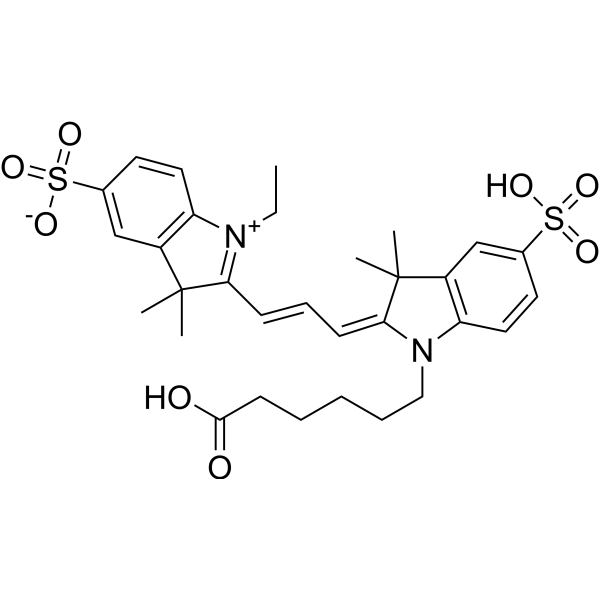
Cy3 (Sulfo-Cyanine3) is an orange-fluorescent label for protein and nucleic acid (λex=554, λem=568).
|
-
- HY-W247614
-
|
|
Fluorescent Dye
|
Others
|
|
D 131 is an orange organic indoline dye. The absorption maxima of D131 in solution is λ=425 nm .
|
-
- HY-N15683
-
|
|
Biochemical Assay Reagents
|
Others
|
|
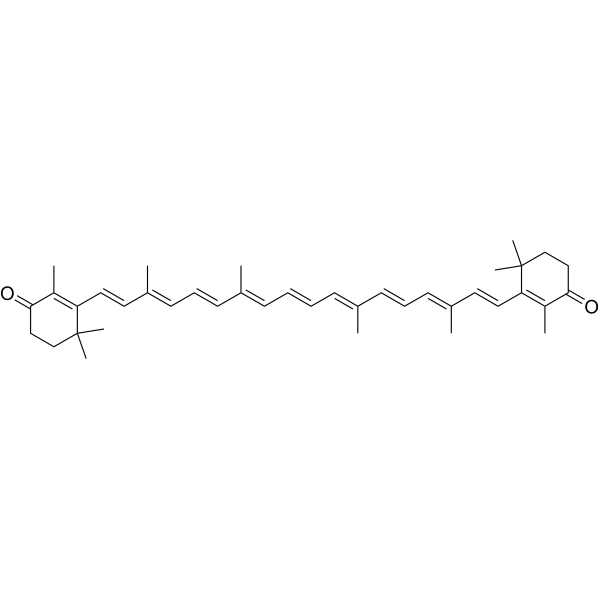
3-Hydroxyechinenone is a chromophore of the orange carotenoid protein (OCP). 3-Hydroxyechinenone is involved in the photoprotective mechanism of the photosynthetic apparatus of cyanobacteria .
|
-
- HY-D0928R
-
|
Sudan Orange RPA (Standard); Sudan red II (Standard)
|
Biochemical Assay Reagents
Reference Standards
|
Others
|
|
Sudan II (Standard) is the analytical standard of Sudan II. This product is intended for research and analytical applications. Sudan Red II is a biochemical reagent that can be used as a biological material or organic compound for life science related research.
|
-
- HY-121487
-
|
|
Herbicide
|
Others
|
|
Etobenzanid is a herbicide for control of weeds in rice. Etobenzanid can be used for the research of rice weed management .
|
-
- HY-B1960R
-
-
- HY-115708
-
|
Cer(t18:0/22:0); Ceramide (t18:0/22:0); C22 Phytosphingosine (t18:0/22:0)
|
Endogenous Metabolite
|
Metabolic Disease
|
|
C22 Phytoceramide is a sphingolipid that has been found in Moro blood orange (C. sinensis) peels. It has also been found in primary human astrocytes.
|
-
- HY-122131
-
|
|
Biochemical Assay Reagents
|
Others
|
|
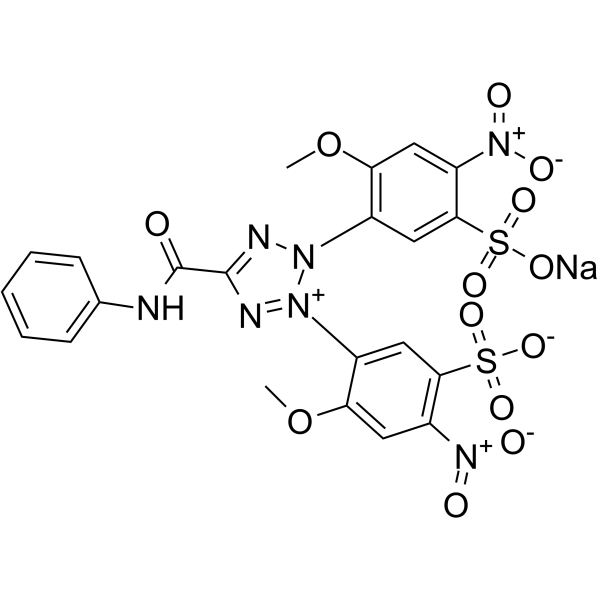
XTT (sodium) is used to assess cell viability as a function of redox potential. Actively respiring cells convert the water-soluble XTT to a water-soluble, orange colored formazan product.
|
-
- HY-N10015
-
|
|
Others
|
Others
|
|
7-Methoxy-4-methyl-coumarin-8-ol (compound 31) is a compound isolated from sour orange (Citrus aurantium) .
|
-
- HY-D0287
-
|
Fluorescent red H5B
|
Fluorescent Dye
|
|
|
Solvent red 52 is a red dye. Its series of products, such as Solvent orange 60 (HY-D1177), has been used in dyeing applications of plastic materials.
|
-
- HY-DY1066
-
|
|
Fluorescent Dye
|
Others
|
Cy3 (Sulfo-Cyanine3) (solution) is an orange-fluorescent label for protein and nucleic acid (λex=554, λem=568). Solvent and concentration: DMSO: 10 mM
|
-
- HY-D0702
-
|
|
Fluorescent Dye
|
|
|
Solvent red 195 is a red dye. Its series of products, such as Solvent orange 60 (HY-D1177), has been used in dyeing applications of plastic materials.
|
-
- HY-D0546
-
|
|
Fluorescent Dye
|
Others
|
|
Solvent yellow 124 is a yellow dye. Its series of products, such as Solvent orange 60 (HY-D1177), has been used in dyeing applications of plastic materials.
|
-
- HY-D1179
-
|
|
Fluorescent Dye
|
|
|
Solvent violet 38 is a violet dye. Its series of products, such as Solvent orange 60 (HY-D1177), has been used in dyeing applications of plastic materials.
|
-
- HY-D0297
-
|
|
Fluorescent Dye
|
|
|
Solvent blue 12 is a blue dye. Its series of products, such as Solvent orange 60 (HY-D1177), has been used in dyeing applications of plastic materials.
|
-
- HY-D1216
-
|
|
Fluorescent Dye
|
Others
|
|
Solvent Yellow 98 is a yellow dye. Its series of products, such as Solvent orange 60 (HY-D1177), has been used in dyeing applications of plastic materials.
|
-
- HY-D0327
-
|
4-(Diethylamino)azobenzene
|
Fluorescent Dye
|
|
|
Solvent Yellow 56 is a yellow dye. Its series of products, such as Solvent orange 60 (HY-D1177), has been used in dyeing applications of plastic materials.
|
-
- HY-D0605
-
|
|
Fluorescent Dye
|
|
|
Solvent Black 46 is a black dye. Its series of products, such as Solvent orange 60 (HY-D1177), has been used in dyeing applications of plastic materials.
|
-
- HY-D0212
-
|
|
Fluorescent Dye
|
|
|
Solvent blue 97 is a blue dye. Its series of products, such as Solvent orange 60 (HY-D1177), has been used in dyeing applications of plastic materials.
|
-
- HY-B1411S
-
|
myo-Inositol-d6; meso-Inositol-d6
|
Endogenous Metabolite
|
Others
|
|
i-Inositol-d6 is the deuterium labeled i-Inositol. i-Inositol is a chemical compound, associated lipids are found in many foods, in particular fruit, especially cantaloupe and oranges.
|
-
- HY-D0048
-
|
5-TAMRA-NHS ester; 5-Carboxytetramethylrhodamine succinimidyl ester
|
Fluorescent Dye
|
Others
|
|
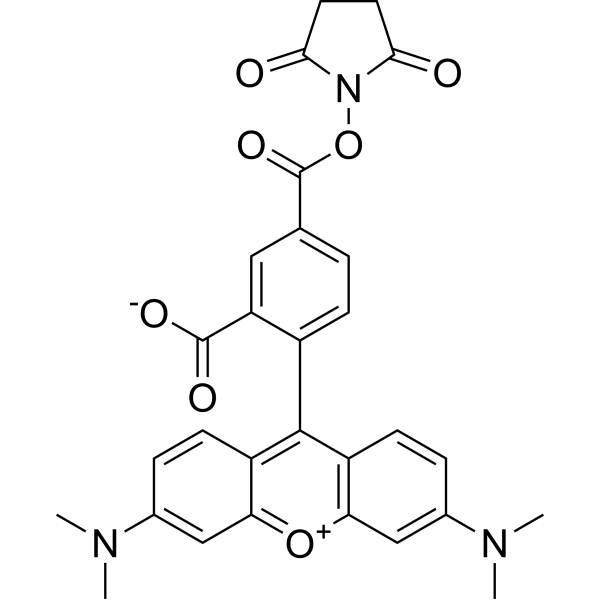
5-TAMRA-SE is an amine-reactive fluorescent agent, and its conjugate produces bright, pH-insensitive orange-red fluorescence with good photostability (Ex/Em = 565/580 nm).
|
-
- HY-W821802
-
|
|
Others
|
Others
|
|
3'-Hydroxygynuramide II (compound t18:1/C24:0) is a kind of ceramide that can be found in Moro Blood Orange (Citrus sinensis) .
|
-
- HY-D1365B
-
|
|
Fluorescent Dye
|
Others
|
|
Sulfo-Cyanine 3 free acid potassium is a sulfo-Cyanine3 derivative. Cyanine3 is an orange-fluorescent label dye for protein and nucleic acid (Ex=554 nm, Em=568 nm) .
|
-
- HY-D0314
-
|
Sudan R
|
Fluorescent Dye
|
|
|
Solvent Red 1 (C.I.) is a red dye. Its series of products, such as Solvent orange 60 (HY-D1177), has been used in dyeing applications of plastic materials.
|
-
- HY-113462
-
|
|
Others
|
Cancer
|
|
α-Carotene, a precursor of vitamin A, is used as an anti-metastatic agent or as an adjuvant for anti-cancer agents. α-Carotene is isolated from yellow-orange and dark-green vegetables .
|
-
- HY-D0934
-
|
|
Fluorescent Dye
|
Others
|
|
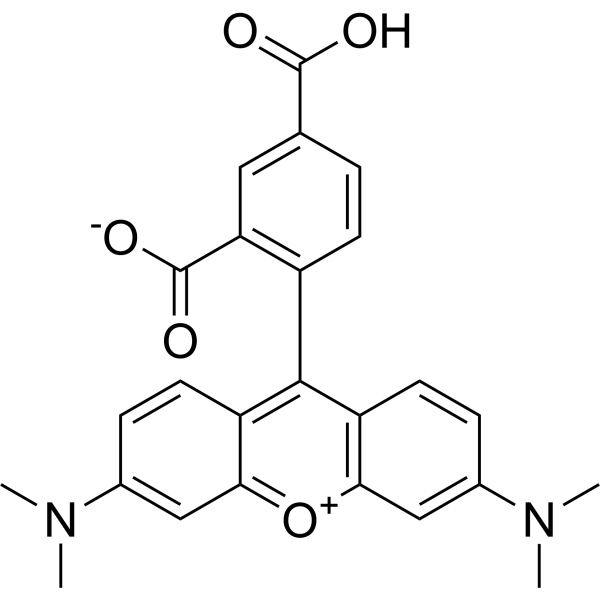
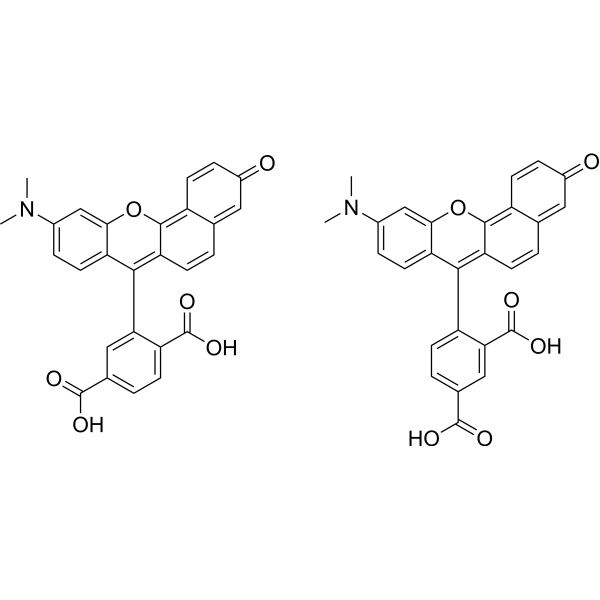
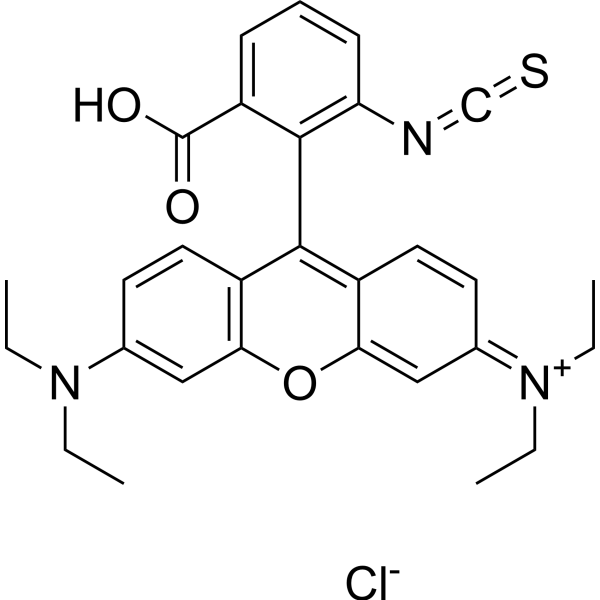
(5)6-Carboxytetramethylrhodamine contains a carboxylic acid that can be used to react with primary amines via carbodiimide activation of the carboxylic acid; bright, orange-fluorescent dye produces conjugates with absorption/emission maxima of ~555/580 nm .
|
-
- HY-D1365
-
|
|
Fluorescent Dye
|
Others
|
|
Sulfo-Cy3(Me)COOH is a sulfo-Cyanine3 derivative. Cyanine3 is an orange-fluorescent label dye for protein and nucleic acid (Ex=554 nm, Em=568 nm) .
|
-
- HY-Z0478R
-
|
(S)-(-)-Limonene (Standard)
|
Reference Standards
Others
|
Cardiovascular Disease
|
|
(-)-Limonene (Standard) is the analytical standard of (-)-Limonene. This product is intended for research and analytical applications. (-)-Limonene ((S)-(-)-Limonene) is a monoterpene found in citrus plants like lemon, orange, and grape. (-)-Limonene can induce a mild bronchoconstrictive effect .
|
-
- HY-D1365A
-
|
|
Fluorescent Dye
|
Others
|
|
Sulfo-Cy3(Me)COOH TEA is a sulfo-Cyanine3 derivative. Cyanine3 is an orange-fluorescent label dye for protein and nucleic acid (Ex=554 nm, Em=568 nm) .
|
-
- HY-D1593
-
|
|
Fluorescent Dye
|
Others
|
|
BODIPY TMR-X alkyne, an orange-fluorescent dye, is an alkyne modified BODIPY TMR-X. BODIPY TMR-X alkyne can react with azides by the copper-catalyzed click reaction. BODIPY TMR-X alkyne is not sensitive to pH.
|
-
- HY-136248
-
|
Tyramide-Cy3
|
DNA Stain
Fluorescent Dye
|
Others
|
|
Cyanine 3 Tyramide (Tyramide-Cy3) is an orange fluorescent dye used as a reporter fluorescent substrate for horseradish peroxidase (HRP)-catalyzed deposition, which serves as a signal amplification technique in immunoassays and in situ nucleic acid hybridization .
|
-
- HY-D1845
-
|
|
Fluorescent Dye
|
Others
|
|
Cy3B is an improved variant of the Cy3 (Cyanine3) (HY-D0822) dye. Cy3 is a fluorescent dye, and its fluorescence spectrum generally falls within the green to orange wavelength range .
|
-
- HY-160276
-
|
|
Liposome
|
Others
|
|
DOPE-PEG5000-Fluor 555 is consist of a DOPE phospholipid which is an unsaturated phospholipid and a Fluor 555 dye which is a bright orange cyanine dye that can be used in fluorescence microscopy, FRET and other in vivo imaging techniques.
|
-
- HY-W747992
-
|
|
Endogenous Metabolite
|
Cardiovascular Disease
Metabolic Disease
|
|
Indicaxanthin is a natural water-soluble betalain, presenting a yellow-orange color. Indicaxanthin possesses free radical scavenging ability and can inhibit lipid peroxidation, reducing the formation of malondialdehyde (MDA). Indicaxanthin can be used in the research of cardiovascular diseases and diabetes .
|
-
- HY-D2770
-
|
|
Fluorescent Dye
|
Others
|
|
Cyanine3.5 dimethyl is a non-sulfonated cyanine dye with good solubility in organic solvents and bright fluorescence in the yellow-orange spectrum range. The dye can be used as a non-reactive fluorophore for control experiments, calibration, and other technical applications.
|
-
- HY-D1111
-
|
AFDye 568 NHS Ester
|
Fluorescent Dye
|
Others
|
|
TFAX 568, SE is an orange fluorescent dye and exhibits pH-insensitivity over a very broad range (pH in the 4-10). TFAX 568, SE yields exceptionally bright, photostable conjugates with proteins or antibodies (such as goat anti-mouse IgG) .
|
-
- HY-15942
-
5-TAMRA
3 Publications Verification
|
Fluorescent Dye
|
Others
|
|
5-TAMRA can produce bright, pH-insensitive orange-red fluorescence (excitation and emission extremes of 546/579) and has good photostability. 5-TAMRA is mainly used as a fluorescent marker for the synthesis and study of specific oligonucleotide probes .
|
-
- HY-D0257R
-
|
Acid Yellow 23 (Standard); FD&C Yellow No. 5 (Standard)
|
Fluorescent Dye
Reference Standards
|
Others
|
|
Tartrazine (Standard) is the analytical standard of Tartrazine. This product is intended for research and analytical applications. Tartrazine is an azo acid dye, orange-yellow powder, soluble in water and turns yellow. It is mainly used as a synthetic lemon yellow azo dye for food coloring. It is the most stable colorant.
|
-
- HY-W749072
-
|
|
Fluorescent Dye
|
Others
|
|
BP Fluor 568 NHS ester is an amine-reactive, orange fluorescent dye routinely used to label proteins or antibodies through the primary amines (Lys), amine-modified oligonucleotides, and other amine-containing biomolecules (Ex/Em: 578 nm/602 nm) .
|
-
- HY-N7660
-
|
|
Endogenous Metabolite
|
Others
|
|
Mutatoxanthin is a xanthophyll carotenoid. Mutatoxanthin forms a photoprotective barrier for chloroplasts in the thalli of Xanthoria lichens by shielding chloroplasts from excessive light irradiation, while also contributing to the golden to brownish-orange coloration of the thalli. Mutatoxanthin can serve as a taxonomic characteristic for lichen species .
|
-
- HY-D2175
-
|
|
Fluorescent Dye
|
Others
|
|
AF 555 NHS ester is a bright, orange-red fluorescence probe. AF 555 NHS ester can be used to label primary amines (R-NH2) of proteins, amine-modified oligonucleotides, and other amine-containing molecules (Ex/Em = 552/566 nm) .
|
-
- HY-136248A
-
|
|
Fluorescent Dye
DNA Stain
|
Others
|
|
Cyanine 3 Tyramide methyl indole is a derivative of Cyanine 3 Tyramide (HY-136248). Cyanine 3 Tyramide is an orange fluorescent dye, and is utilized as reporter fluorescent substrate for horseradish peroxidase (HRP)-catalyzed deposition that is signal amplification technique in immunoassay and in situ hybridization of nucleic acids .
|
-
- HY-D2737
-
|
BHQ-2 DMT amidite
|
Fluorescent Dye
|
Others
|
|
DMT-BH2 amidite (BHQ-2 DMT amidite) is a black quencher dye for the synthesis of dual-labeled oligonucleotide probes for qPCR bearing 5'-quencher. This quencher is ideal for HEX, JOE, ROX, Cyanine5, and other dyes with emissions in the orange and red parts of the spectrum.
|
-
- HY-D3416
-
|
TAMRA-2,4-dinitroaniline
|
Fluorescent Dye
|
Others
|
|
TMR-DN (TAMRA-2,4-dinitroaniline) is a bright orange fluorescent probe that binds to the SRB-2 aptamer, with a Kd value of 35 nM for the SRB-2 aptamer. TMR-DN exhibits low background fluorescence, enabling wash-free live-cell RNA imaging .
|
-
- HY-D0988
-
|
R-PE
|
Fluorescent Dye
Apoptosis
|
Cancer
|
|
R-Phycoerythrin is found in Heterosiphonia japonica. R-Phycoerythrin is an orange-red fluorescent probe with α, β, and γ subunits. R-Phycoerythrin can be used in photodynamic therapy (PDT) to induce apoptosis in tumor cells. R-Phycoerythrin can be used in fluorescence microscopy, flow cytometry, and immunofluorescence analysis (Ex: 495 nm).
|
-
- HY-P1954
-
|
Piscidin-1 (22-42)
|
Bacterial
|
Infection
Cancer
|
|
Epinecidin-1 (Piscidin-1 (22-42)) is a highly potent, multi-functional Antimicrobial Peptide (AMP) produced by Orange-spotted grouper (Epinephelus coioides). Epinecidin-1 has many functional usages including antibacterial, antifungal, antiviral, antiprotozoal, anticancer, immunomodulatory, and wound healing properties .
|
-
- HY-N8502
-
|
|
Fluorescent Dye
|
Cancer
|
|
Urdamycin A (Compound 3b) is an angucycline antibiotic that can be isolated from Streptomyces fradiae. Urdamycin A is an orange indicator with a change of the color to ultramarine blue at pH 7.7. Urdamycin A has anticancer activity with IC50s of 2.4 and 0.55 μg/mL in proliferation and stem cell assays, respectively .
|
-
- HY-D2579
-
|
|
Biochemical Assay Reagents
|
Others
|
|
Sulfo DBCO-UBQ-2 is a click chemistry reagent combining a dark quencher, UBQ-2, with a polyaromatic-azo backbone, offering no native emission. UBQ-2 effectively quenches fluorescence in the 560-670 nm range, ideal for qPCR probes and FRET applications with orange to far-red dyes .
|
-
- HY-D2754
-
|
|
Fluorescent Dye
|
Others
|
|
BP Light 550 acid is a vibrant orange-to-red fluorochrome with better performance t han other rhodamine derivatives, including BP Fluor 555, TRITC, and Cy3 dye for fluorescent applications. The high water solubility of BP Light Fluors means that a high dye-to-protein ratio can be attained without causing precipitation of the conjugates.
|
-
- HY-D2766
-
|
|
Fluorescent Dye
|
Others
|
|
BP Light 550 NHS ester is a vibrant orange-to-red fluorochrome with better performance than other rhodamine derivatives, including BP Fluor 555, TRITC, and Cy3 dye for fluorescent applications. The high water solubility of BP Light 550 means that a high dye-to-protein ratio can be attained without causing precipitation of the conjugates.
|
-
- HY-P1954A
-
|
Piscidin-1 (22-42) TFA
|
Bacterial
|
Infection
Cancer
|
|
Epinecidin-1 (Piscidin-1 (22-42)) TFA is a highly potent, multi-functional Antimicrobial Peptide (AMP) produced by Orange-spotted grouper (Epinephelus coioides). Epinecidin-1 TFA has many functional usages including antibacterial, antifungal, antiviral, antiprotozoal, anticancer, immunomodulatory, and wound healing properties .
|
-
- HY-133876
-
|
DiA
|
Fluorescent Dye
|
Others
|
|
4-Di-16-ASP is a green fluorescent membrane dye. 4-Di-16-ASP is a lipophilic aminostyryl probe with a broad emission spectrum (can be detected with green, orange or even red filters). It is commonly used for neuronal membrane tracing (it diffuses faster than DiO) .
|
-
- HY-153847
-
|
|
Biochemical Assay Reagents
|
Others
|
|
RNA Aptamer Mango Ⅱ (sodium) has an exceptionally high affinity to TO1-biotin (a thiazole orange derivative fluorophore), and can be used to visualize RNA expression or localization in live cells. Compared to the original Mango I aptamer, RNA Aptamer Mango Ⅱ (sodium) has markedly improved fluorescent properties, binding affinities, and salt dependencies.
|
-
- HY-D2291
-
|
|
Fluorescent Dye
|
Others
|
|
BODIPY TMR NHS ester is bright, orange fluorescent dye with Ex/Em of 544/570 nm. The NHS ester (or succinimidyl ester) of BODIPY TMR NHS ester is a popular tool for conjugating the dye to a protein or antibody. NHS esters can be used to label the primary amines (R-NH2) of proteins, amine-modified oligonucleotides, and other amine-containing molecules .
|
-
- HY-D0314R
-
|
Sudan R (Standard)
|
Fluorescent Dye
Reference Standards
|
Others
|
|
Solvent Red 1 (C.I.) (Standard) is the analytical standard of Solvent Red 1 (C.I.). This product is intended for research and analytical applications. Solvent Red 1 (C.I.) is a red dye. Its series of products, such as Solvent orange 60 (HY-D1177), has been used in dyeing applications of plastic materials.
|
-
- HY-115708S
-
-
- HY-D0996
-
|
|
DNA Stain
|
Others
|
|
Lds-751 is a nucleic acid stain that mainly detects DNA. Lds-751 is a nucleic acid stain that mainly detects DNA. Lds-751 has a high affinity for DNA and fluorescence is enhanced after binding, but the maximum emission wavelength is 670nm. Lds-751 and Thiazole orange can be used for the differentiation of red blood cells, platelets, reticulocytes, and nucleated cells and can be stimulated at 488nm. Studies have shown that LDS-751 binds almost exclusively to mitochondria when incubated with nucleated living cells. After nucleated Acridine Orange (HY-101879) staining and LDS-751 treatment of cells, confocal microscopy revealed almost no co-location of the cells. Staining with Rhodamine 123 (HY-D0816), a dye known to bind polarized mitochondria, was almost identical to the pattern observed with LDS-751 .
|
-
- HY-D2167
-
|
|
Fluorescent Dye
|
Others
|
|
AF 568 alkyne is a derivative of the orange fluorescent dye AF 568. AF 568 has an absorption wavelength of 590-720 nm (FRET) and an emission wavelength of 515-720 nm. AF 568 alkyne can undergo copper-catalyzed azide-alkyne cycloaddition (CuAAc) via the Alkyne group and molecules containing Azide groups. To achieve specific coupling of dye labels and biomolecules .
|
-
- HY-W800770
-
|
|
Fluorescent Dye
|
Others
|
|
MB 543 DBCO is a fluroescent agent with a terminal DBCO group. The DBCO group is commonly used for copper-free Click Chemistry reactions due to its strain promoted high energy. MB 543 Alkyne is a very hydrophilic, water-soluble, orange fluorescent dye that has a maximal absorption of 543 nm and emission at 566 nm. The compound is also pH insensitive from pH 3 to pH 10.
|
-
- HY-D1533
-
RhoNox-1
Maximum Cited Publications
39 Publications Verification
|
Fluorescent Dye
|
Others
|
|
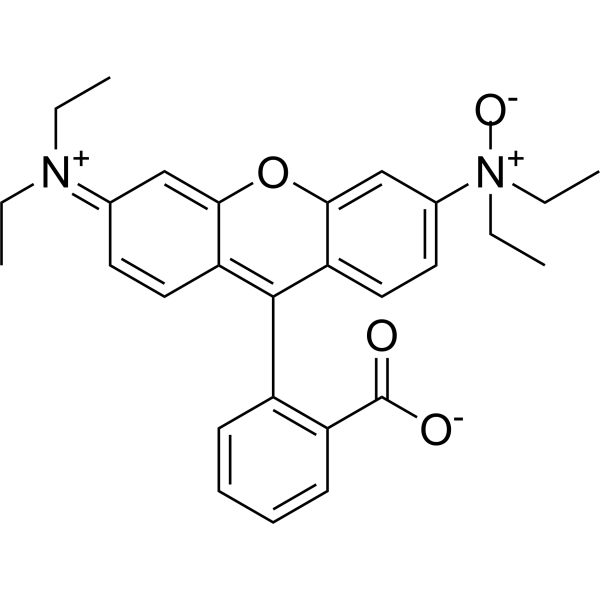
RhoNox-1 is a fluorescent probe for the specific detection of divalent iron ions, and when RhoNox-1 reacts with Fe 2+. RhoNox-1 can generate an irreversible orange (red) fluorescent product (Ex/Em:540/575 nm) . FeRhoNox-1 can enter the cell well, suitable for the detection of Fe 2+ in living cells, and tends to be localized in the Golgi apparatus .
|
-
- HY-D3375
-
|
|
Fluorescent Dye
|
Neurological Disease
|
|
RAPID DiI is a cyanine dye with orange-red fluorescenc (EX≈550 nm; Em≈565 nm). RAPID DiI is a lipophilic dye that labels cell membranes by inserting its two long hydrocarbon (C18 carbon) chains into the lipid bilayer. RAPID DiI is weakly fluorescent until incorporated into membranes. RAPID DiI diffuses laterally to stain the entire cell, allowing it to be used as an anterograde and retrograde tracer of neurons.
|
-
- HY-D3377
-
|
LysoRhoNox
|
Fluorescent Dye
|
Others
|
|
HMRhoNox-M (LysoRhoNox) is a selective fluorescent probe for labile Fe 2+ with an orange fluorescence, and its excitation/emission wavelength is λₑₓ/λₑₘ = 555/575 nm. HMRhoNox-M undergoes N-oxide deoxygenation mediated by Fe 2+, converting from a non-fluorescent spirocyclic closed form to a fluorescent quinone open form. HMRhoNox-M is used to detect labile Fe 2+ in living cells .
|
-
- HY-B1290S1
-
|
Phenylethyl alcohol-d9; Phenethyl alcohol-d9; Benzyl carbinol-d9
|
Bacterial
Virus Protease
Antibiotic
|
Infection
|
|
2-Phenylethanol-d9 is the deuterium labeled 2-Phenylethanol . 2-Phenylethanol (Phenethyl alcohol), extracted from rose, carnation, hyacinth, Aleppo pine, orange blossom and other organisms, is a colourless liquid. It has a pleasant floral odor and also an autoantibiotic produced by the fungus Candida albicans . It is used as an additive in cigarettes and also used as a preservative in soaps due to its stability in basic conditions.
|
-
- HY-B1290S2
-
|
Phenylethyl alcohol-d5; Phenethyl alcohol-d5; Benzyl carbinol-d5
|
Bacterial
Virus Protease
Antibiotic
|
Infection
|
|
2-Phenylethanol-d5 is the deuterium labeled 2-Phenylethanol . 2-Phenylethanol (Phenethyl alcohol), extracted from rose, carnation, hyacinth, Aleppo pine, orange blossom and other organisms, is a colourless liquid. It has a pleasant floral odor and also an autoantibiotic produced by the fungus Candida albicans . It is used as an additive in cigarettes and also used as a preservative in soaps due to its stability in basic conditions.
|
-
- HY-B1290S
-
|
Phenylethyl alcohol-d4; Phenethyl alcohol-d4; Benzyl carbinol-d4
|
Bacterial
Virus Protease
Antibiotic
|
Infection
|
|
2-Phenylethanol-d4 is the deuterium labeled 2-Phenylethanol . 2-Phenylethanol (Phenethyl alcohol), extracted from rose, carnation, hyacinth, Aleppo pine, orange blossom and other organisms, is a colourless liquid. It has a pleasant floral odor and also an autoantibiotic produced by the fungus Candida albicans . It is used as an additive in cigarettes and also used as a preservative in soaps due to its stability in basic conditions.
|
-
- HY-D0988A
-
|
R-PE (concentrated solution)
|
Fluorescent Dye
Apoptosis
|
Others
|
|
R-Phycoerythrin (R-PE) (concentrated solution) is found in Heterosiphonia japonica. R-Phycoerythrin (concentrated solution) is an orange-red fluorescent probe with α, β, and γ subunits. R-Phycoerythrin (concentrated solution) can be used in photodynamic therapy (PDT) to induce apoptosis in tumor cells. R-Phycoerythrin (concentrated solution) can be used in fluorescence microscopy, flow cytometry, and immunofluorescence analysis (Ex/Em = 496/578 nm) .
|
-
- HY-D0988B
-
|
R-PE ammonium sulfate precipitate
|
Fluorescent Dye
Apoptosis
|
Others
|
|
R-Phycoerythrin (R-PE) (ammonium sulfate precipitate) is found in Heterosiphonia japonica. R-Phycoerythrin (ammonium sulfate precipitate) is an orange-red fluorescent probe with α, β, and γ subunits. R-Phycoerythrin (concentrated solution) can be used in photodynamic therapy (PDT) to induce apoptosis in tumor cells. R-Phycoerythrin (ammonium sulfate precipitate) can be used in fluorescence microscopy, flow cytometry, and immunofluorescence analysis (Ex/Em = 496/578 nm) .
|
-
- HY-DY1030
-
|
|
Fluorescent Dye
|
Others
|
RhoNox-1 (solution) is a fluorescent probe for the specific detection of divalent iron ions, and when RhoNox-1 reacts with Fe 2+. RhoNox-1 can generate an irreversible orange (red) fluorescent product (Ex/Em:540/575 nm). FeRhoNox-1 can enter the cell well, suitable for the detection of Fe 2+ in living cells, and tends to be localized in the Golgi apparatus . Solvent and concentration: DMSO: 5 mM
|
-
- HY-D0257
-
|
Acid Yellow 23; FD&C Yellow No. 5
|
Environmental Pollutants
Fluorescent Dye
|
Cardiovascular Disease
Neurological Disease
|
|
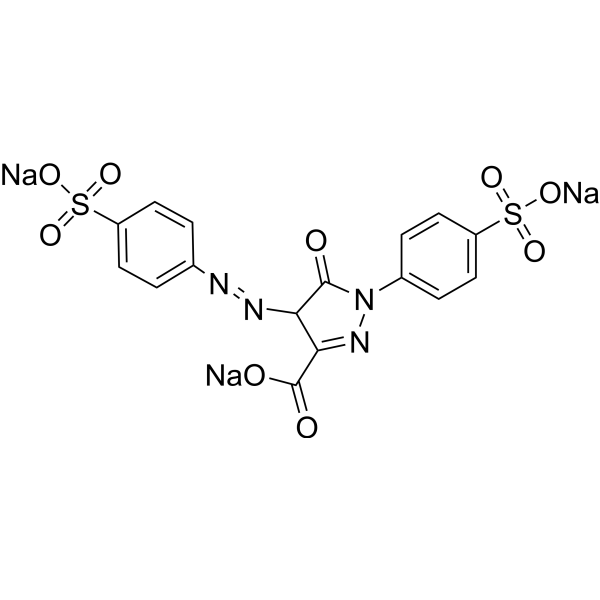
Tartrazine (Acid Yellow 23; FD&C Yellow No. 5) is an orally active azo acid dye, orange-yellow powder, soluble in water and turns yellow. Tartrazine is mainly used as a synthetic lemon yellow azo dye for food coloring. Tartrazine is the most stable colorant.Tartrazine induces mitochondria-mediated Apoptosis. Tartrazine can cause neurodevelopmental toxicity, cytotoxicity, and genotoxicity .
|
-
- HY-120601A
-
|
ARS
|
Fluorescent Dye
|
Others
|
|
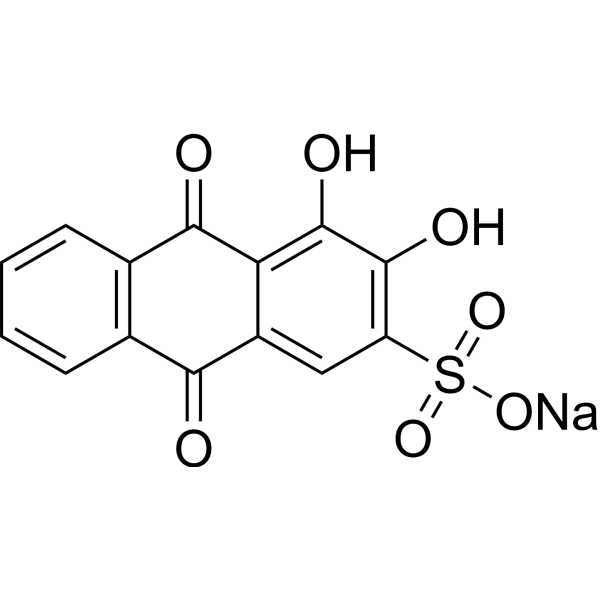
Alizarin Red S (ARS) is an anthraquinone derivative dye. When combined with cations such as calcium ions, the functional group of Alizarin Red S can form a coordination bond with the cation through the oxygen atom to show orange-red fluorescence. Alizarin Red S can be used for screening of calcium compounds in synovial fluid and detecting osteoblast differentiation, and can also be used for bone staining in mice. Excitation/emission wavelength: 500/570 nm .
|
-
- HY-120601
-
|
ARS sodium
|
Fluorescent Dye
|
Others
|
|
Alizarin Red S sodium is an anthraquinone derivative dye. When combined with cations such as calcium ions, the functional group of Alizarin Red S sodium can form a coordination bond with the cation through the oxygen atom to show orange-red fluorescence. Alizarin Red S sodium can be used for screening of calcium compounds in synovial fluid and detecting osteoblast differentiation, and can also be used for bone staining in mice. Excitation/emission wavelength: 500/570 nm .
|
-
- HY-D1852
-
|
|
Fluorescent Dye
|
Others
|
|
Cy3B amine chloride is a dye derivative of Cyanine 3 (Cy3) (HY-D0822) bearing an amine group. Cy3 is a fluorescent dye with a fluorescence spectrum typically in the green to orange wavelength range. The amine functionality of Sulfo-Cy3 amine can react with carboxyl groups to form covalent bonds. Sulfo-Cy3 amine can bind to biological molecules such as proteins and antibodies to track their location and dynamic changes in biological samples.
|
-
- HY-42984
-
|
|
Biochemical Assay Reagents
|
Others
|
|
BHQ-2 NHS is a dark quencher with no native emission due to the polyaromatic-azo backbone and a terminal NHS ester. UBHQ-2 NHS has a wide and intense quenching range from 560-670 nm, which makes it useful as an acceptor in fluorescence resonance energy transfer (FRET) applications in conjunction with orange to far-red emitting dyes. The NHS ester can be applied to label the primary amines (-NH2) of proteins, amine-modified oligonucleotides, and other amine-containing molecules.
|
-
- HY-W014449
-
|
|
Biochemical Assay Reagents
|
Others
|
|
4-Nitrophenyl butyrate consists of butyric acid chains esterified with 4-nitrophenol groups, thus giving it a yellow color. This compound is commonly used as a substrate in enzyme assays to measure esterase and lipase activity. When these enzymes cleave the ester bond, the nitrophenol group is released and the color changes from yellow to orange. Thus, the rate of color change can be used to determine enzyme activity. In addition, 4-Nitrophenyl butyrate can also be used as organic synthesis reagent and dye intermediate.
|
-
- HY-D1094
-
|
SNARF 1
|
Fluorescent Dye
|
Others
|
|
Carboxy-SNARF 1 (5/6-mixture) (SNARF 1) is a fluorescent probe that is sensitive to pH (Ex: 488 nm). Carboxy-SNARF 1 (5/6-mixture) can be used for measurement pH. Carboxy-SNARF 1 (5/6-mixture) exhibits a significant emission shift from yellow-orange (Em: 580 nm) to deep red fluorescence (Em: 640 nm) under acidic and basic conditions (pH=7-8), respectively .
|
-
- HY-D1860
-
|
|
Fluorescent Dye
|
Others
|
|
Cy3 alkyne chloride is a dye derivative of Cyanine 3 (Cy3) (HY-D0822) containing a sulfonate ion and an alkyne functional group. Cy3 is a fluorescent dye with a fluorescence spectrum typically in the green to orange wavelength range. The alkyne functional group of Cy3 alkyne chloride can react with molecules containing the azide functional group to form covalent bonds. Cy3 alkyne chloride can bind to biological molecules such as proteins and antibodies to track their location and dynamic changes in biological samples.
|
-
- HY-N16684
-
|
|
P-glycoprotein
|
Cancer
|
|
Clausarin is a selective inhibitor of P-glycoprotein (P-gp), inhibiting P-gp-mediated drug efflux. Clausarin significantly inhibits Daunorubicin (HY-13062A) efflux in K562/R7 human leukemia cells overexpressing P-gp (with Cyclosporin A (HY-B0579) as a positive control). Clausarin can be naturally extracted from the roots of Citrus sinensis (sweet orange) and can be used in research related to overcoming multidrug resistance (MDR) in tumors .
|
-
- HY-D2168
-
|
|
Fluorescent Dye
|
Others
|
|
AF 568 azide is an azide derivative of the orange fluorescent dye AF 568. AF 568 has an absorption wavelength of 590-720 nm (FRET) and an emission wavelength of 515-720 nm. AF 568 alkyne can undergo copper-catalyzed azide-alkyne cycloaddition (CuAAc) via the Azide group and molecules containing Alkyne groups. Strain-promoted alkyne-azide cycloaddition (SPAAC) can also occur with molecules containing DBCO or BCN groups. To achieve specific coupling of dye labels and biomolecules .
|
-
- HY-D1871
-
|
|
Fluorescent Dye
|
Others
|
|
Cy3 maleimide chloride is a dye derivative of Cyanine 3 (Cy3) (HY-D0822) containing maleimide functional groups. Cy3 is a fluorescent dye with a fluorescence spectrum typically in the green to orange wavelength range. The alkyne functional group of Cy3 maleimide chloride can undergo a "thiol-acrylamide" reaction with molecules containing sulfur-oxygen functional groups to form covalent bonds. Cy3 maleimide chloride can bind to biological molecules such as proteins and antibodies to track their location and dynamic changes in biological samples.
|
-
- HY-D1868
-
|
|
Fluorescent Dye
|
Others
|
|
Cy3 azide plus is a Cyanine 3 (Cy3) (HY-D0822) dye derivative with an azide functional group. Cy3 is a fluorescent dye with a fluorescence spectrum typically in the green to orange wavelength range. The azide group of Cy3 azide plus can react chemically with molecules containing alkyne functionality, such as alkyne or cyclooctyne, to form covalent bonds. Therefore, Cy3 azide plus can bind to biomolecules such as proteins and antibodies to track their location and dynamic changes in biological samples.
|
-
- HY-D1851
-
|
|
Fluorescent Dye
|
Others
|
|
Cy3B amine chloride is a dye derivative of Cyanine 3 (Cy3) (HY-D0822) bearing an amine group in the disodium salt form. Cy3 is a fluorescent dye with a fluorescence spectrum typically in the green to orange wavelength range. The amine functionality of Sulfo-Cy3 amine can react with carboxyl groups to form covalent bonds. Sulfo-Cy3 amine can bind to biological molecules such as proteins and antibodies to track their location and dynamic changes in biological samples.
|
-
- HY-D2169
-
|
|
Fluorescent Dye
|
Others
|
|
AF 568 carboxylic acid is the non-reactive form of the orange fluorescent dye AF 568. AF 568 has an absorption wavelength of 590-720 nm (FRET) and an emission wavelength of 515-720 nm. AF 568 alkyne forms stable covalent bonds by reacting carboxylic acid groups with molecules bearing amino groups. Copper-catalyzed azide-alkyne cycloaddition (CuAAc) can occur with molecules containing Alkyne groups. Strain-promoted alkyne-azide cycloaddition (SPAAC) can also occur with molecules containing DBCO or BCN groups .
|
-
- HY-112697
-
|
|
Biochemical Assay Reagents
|
Others
|
|
Rhodamine B isothiocyanate (RBITC) is a fluorescent dye commonly used in biological imaging and labeling applications. It has an isothiocyanate functional group that can be covalently attached to amino groups on proteins and other biomolecules, making it useful for fluorescent labeling of cells and tissues. RBITC fluoresces bright orange-red under green light excitation, which makes it easy to detect and track labeled molecules in complex samples. Due to its stability and sensitivity, RBITC has been widely used in various research fields, including cell biology, immunology, and neurobiology.
|
-
- HY-D3405
-
|
|
Fluorescent Dye
|
Others
|
|
BO-TAP-3 is an orange fluorescent carbocyanine monomer dye, and it is also a cell impermeable nucleic acid staining agent. When there is no nucleic acid present, BO-TAP-3 shows a non-fluorescent state. However, when it binds to double-stranded DNA, it exhibits multiple fluorescence enhancement effects. BO-TAP-3 can be used for cell nucleus and cytoplasm imaging, bacterial and sperm labeling, and can also be applied in nucleic acid detection and amplification research. It can also be used as a temperature sensor (Ex/Em = 564/600 nM).
|
-
- HY-D2994
-
|
SNAP-MaP555
|
Fluorescent Dye
|
Others
|
|
SPY555-BG (SNAP-MaP555) is the benzylguanine derivative of SPY555 fluorophore. SPY555-BG emits light in the orange part of the UV-ViS spectrum. SPY555-BG is fluorogenic, highly cell permeable and well suited for STED and SIM superresolution imaging. SPY555-BG can be imaged with a standard Cy3 filterset. SPY555-BG can be used for widefield, confocal, SIM or STED imaging in living or fixed cells and tissue .
|
-
- HY-117387
-
|
|
Endogenous Metabolite
|
Infection
|
|
BFE-37 is a yeast introduction with heat resistance activity. The survival rate change of BFE-37 after heating at 55 °C for 5 minutes was 6.53 log CFU/mL, showing its strong heat resistance in acidic orange juice. The dynamic behavior of BFE-37 at different temperatures showed a first-order logarithmic linear inactivation characteristic, which indicates its stability in heat treatment. The study of BFE-37 helps to understand the effect of mild heat treatment on juice and provide guidance for microbial control in the food industry .
|
-
- HY-D1272
-
|
Sulfo-Cyanine3 amine
|
Fluorescent Dye
|
Others
|
|
Sulfo-Cy3 amine is a dye derivative of Cyanine 3 (Cy3) (HY-D0822) bearing an amine group. The sulfonate ion increases the water solubility of the compound, making it suitable for use in aqueous solutions. Cy3 is a fluorescent dye with a fluorescence spectrum typically in the green to orange wavelength range. The amine functionality of Sulfo-Cy3 amine can react with carboxyl groups to form covalent bonds. Sulfo-Cy3 amine can bind to biological molecules such as proteins and antibodies to track their location and dynamic changes in biological samples.
|
-
- HY-131025
-
|
JF585, SE; JF585, NHS
|
Fluorescent Dye
|
Others
|
|
Janelia Fluor 585, SE (JF585, SE) is an orange fluorescent dye containing an NHS ester that can be conjugated with primary amine groups. Janelia Fluor 585, SE can be used immediately for structured illumination (SIM) and stimulated emission depletion (STED) imaging and could be converted to photoactivatable derivative for single-molecule localization microscopy (SMLM) experiments . Janelia Fluor products are licensed under U.S. Pat. Nos. 9,933,417, 10,018,624 and 10,161,932 and other patents from Howard Hughes Medical Institute.
|
-
- HY-D1861
-
|
|
Fluorescent Dye
|
Others
|
|
Sulfo-Cy3 hydrazide is a Cyanine 3 (Cy3) (HY-D0822) dye derivative with hydrazine functionality. The sulfonate ion increases the water solubility of the compound, making it suitable for use in aqueous solutions. Cy3 is a fluorescent dye with a fluorescence spectrum typically in the green to orange wavelength range. The hydrazide group of Sulfo-Cy3 hydrazide can form hydrazinone coupling with molecules containing aldehydes or ketones to form covalent bonds. Therefore, Cy3 azide plus can bind to biomolecules such as proteins and antibodies to track their location and dynamic changes in biological samples.
|
-
- HY-W747972A
-
|
|
Drug Intermediate
|
Infection
|
|
(Z)-3-Hexenal is an isomer of Hydrosorbaldehyde (HY-W747972). (Z)-3-Hexenal is a green leaf volatile and also the main contributor to the fresh, grassy aroma of tea leaves. (Z)-3-Hexenal undergoes irreversible conversion to (E)-2-hexenal via (Z)-3:(E)-2-hexenal isomerase (CsHI). (Z)-3-Hexenal plays a key role in protecting plants against biotic stresses (such as pathogens and insects) and acting as a signaling chemical .
|
-
- HY-D0015
-
|
|
Fluorescent Dye
|
Others
|
|
Cresol red, 97% is an acidic phenolsulfonphthalein triphenylmethane dye. Cresol red, 97% generates reactive oxygen species and singlet oxygen under ultrasonic irradiation, interacts with bovine serum albumin, alters the structure of bovine serum albumin, and oxidizes the fluorescent amino acid residues of bovine serum albumin. Cresol red, 97% can be decolorized and biodegraded by *Absidia spinosa* M15, producing phenylacetic acid and benzoic acid metabolites. Cresol red, 97% serves as a pH indicator (orange at pH 1.8-yellow at pH 2.0, yellow at pH 7.0-purple at pH 8.8). Cresol red, 97% can be used to indicate pH, temperature and salinity .
|
-
- HY-W800702
-
|
|
Fluorescent Dye
|
Others
|
|
BP Fluor 555 Azide is a water-soluble, bright orange-fluorescent dye with excitation ideally suited for the 532 nm or 555 nm laser lines and visualized with TRITC (tetramethylrhodamine) filter sets. BP Fluor 555 conjugates of antibodies, peptides, and proteins are pH insensitive from pH 4 to pH 10. AF 555 conjugates ideally suited for detection of low abundance targets.
BP Fluor 555 Azide can be reacted with terminal alkynes via a copper-catalyzed click reaction (CuAAC). It also reacts with strained cyclooctyne via a copper-free “click chemistry” reaction to form a stable triazole and does not require Cu-catalyst or elevated temperatures. The brightness and photostability of this dye are best suited to direct imaging of low-abundance targets.
|
-
- HY-W800701
-
|
|
Biochemical Assay Reagents
|
Others
|
|
BP Fluor 546 DBCO is an azide-reactive probe that can be used for imaging azide-tagged biomolecules via a copper-free click reaction. The DBCO moiety reacts with azides to form a stable triazole and does not require a Cu-catalyst or elevated temperatures. In applications where the presence of copper is a concern, BP Fluor 546 DBCO is an ideal alternative to copper-requiring fluorescent alkynes.
BP Fluor 546 is a water-soluble, pH-insensitive (from pH 4-10), orange-fluorescent dye with absorption and emission maxima at 554 and 570 nm, respectively. It can be used with the 488 nm and 532 nm laser lines. BP Fluor 546 dye conjugates to a variety of antibodies, peptides, proteins, tracers, and amplification substrates, which are often used for generating stable signals in imaging and flow cytometry.
|
-
- HY-D2772
-
|
|
Biochemical Assay Reagents
|
Others
|
|
5-TAMRA cadaverine can used to modify carboxylic acid group in the presence of activators (e.g. EDC, or DCC) or activated esters (e.g. NHS esters) through a stable amide bond. It also can be reversibly coupled to aldehydes and ketones to form a Schiff base – which can be reduced to a generate stable amine derivative by sodium borohydride (NaBH4) or sodium cyanoborohydride (NaCNH3).
Although the mixed isomers of 5(6)-TAMRA cadaverine is a preferred, routinely used orange-fluorescent dye for staining proteins, it is rearly used for labeling peptides and nucleotides. Purification of 5(6)-TAMRA labeled peptide and nucleotides might be troublesome due to significant signal broadening in HPLC purification. Peptides and nucleotides labeled with a single isomer TAMRA usually give better resolution in HPLC purification that is often required in the conjugation processes.
|
-
- HY-D1737
-
|
|
Bacterial
|
Infection
|
|
RADA is a fluorescent D-amino acid (FDAA) with high photostability and thermostability, which emits yellow-to-orange fluorescence. RADA shows low outer membrane permeability in wild-type Gram-negative Escherichia coli, but it targets penicillin-binding proteins and L,D-transpeptidases, mimics the interaction between acyl acceptors and enzyme intermediates, and integrates into peptidoglycan during biosynthesis. As a peptidoglycan labeling reagent, RADA metabolically integrates into the nascent peptidoglycan of live bacterial cells, labels the peptidoglycan at the poles and lateral walls of mycobacteria, and enables visualization of peptidoglycan synthesis and remodeling processes. RADA serves as a non-specific stain for fixed cells, is non-toxic to bacterial cells, and its red-shifted excitation/emission spectra reduce phototoxicity. RADA also supports virtual pulse-chase labeling experiments and stochastic optical reconstruction microscopy for sub-diffraction-limited imaging of bacterial cell walls .
|
-
| Cat. No. |
Product Name |
Type |
-
- HY-101879
-
|
|
Fluorescent Dyes
|
|
Acridine Orange hydrochloride is a cell-penetrable nucleic acid-selective fluorescent dye. Acridine Orange hydrochloride produces orange fluorescence when it binds to ssDNA or RNA, and green fluorescence when it binds to dsDNA (Ex: 488 nM; Em: green fluorescence at 530 nm, orange fluorescence at 640 nm) .
|
-
- HY-D1913
-
|
|
Fluorescent Dyes
|
|
Fe2Orange is a Fe 2+ selective probe with an excitation wavelength of 543 nm and an emission wavelength of 580 nm. Fe2Orange emits fluorescence after binding to intracellular Fe 2+, thereby achieving specific labeling of Fe 2+. Fe2Orange is used to detect the content and distribution of Fe 2+ in cells .
|
-
- HY-D0822
-
CY3
4 Publications Verification
Sulfo-Cyanine3
|
Fluorescent Dyes
|
|
Cy3 (Sulfo-Cyanine3) is an orange-fluorescent label for protein and nucleic acid (λex=554, λem=568).
|
-
- HY-D0150
-
|
|
Fluorescent Dyes
|
|
Thiazole Orange is an asymmetric anthocyanin dye that can be coupled with oligonucleotides (ONs) to prepare fluorescent hybridization probes. Thiazole Orange has been widely used in biomolecular detection and staining of DNA/ RNA in gels and can be used for reticulocyte analysis. Thiazole orange generates a significant fluorescence enhancement and high quantum yield when it binds with nucleic acids, especially RNA. Thiazole orange can permeate living cell membranes. Thiazole orange can use UV light for detection, but can also be detected with blue light. The excitation and emission of Thiazole orange are λex = 510 nm (488 nm and 470 nm also show strong excitation) and λem = 527 nm, respectively .
|
-
- HY-D0993
-
|
Nonylacridine Orange
|
Fluorescent Dyes
|
|
Acridine Orange 10-Nonyl Bromide is a fluorescent probe for cardiolipin (λex: 489 nm, λem: 525 nm).
|
-
- HY-D0048
-
|
5-TAMRA-NHS ester; 5-Carboxytetramethylrhodamine succinimidyl ester
|
Fluorescent Dyes
|
|
5-TAMRA-SE is an amine-reactive fluorescent agent, and its conjugate produces bright, pH-insensitive orange-red fluorescence with good photostability (Ex/Em = 565/580 nm).
|
-
- HY-D0952
-
|
|
Fluorescent Dyes
|
|
Acridine Orange base is a cell-permeable fluorescent dye that stains organisms (bacteria, parasites, viruses, etc.) bright orange and, when used under appropriate conditions (pH=3.5, Ex=460 nm), distinguishes human cells in green for detection by fluorescence microscopy. Acridine Orange base fluoresces green when bound to dsDNA (Ex=488, Em=520-524) and red when bound to ssDNA (Ex=457, Em=630-644) or ssRNA (Ex=457, Em=630-644), also can be used in cell cycle assays .
|
-
- HY-D1069
-
|
DBCO-Sulfo-Cy3
|
Fluorescent Dyes
|
|
DBCO-Cy3 (DBCO-Sulfo-Cy3) is the derivative of Cyanine3 fluorophore, a pH insensitive from pH (4-10) orange fluorescent dyewith excitation maximum 555 nm and emission maximum of 580nm. DBCO-Cy3 has fast reaction kinetics and good stability, and is productive to use in many standard fluorescent instrumentations. DBCO-Cy3 is a click chemistry reagent, it contains a DBCO group that can undergo strain-promoted alkyne-azide cycloaddition (SPAAC) with molecules containing Azide groups.
|
-
- HY-D1696
-
|
|
Fluorescent Dyes
|
|
MitoTracker Orange CMTMRos is a fluorescent dye that labels mitochondria within live cells utilizing the mitochondrial membrane potential (Ex/Em: 551/576 nm) .
|
-
- HY-103469
-
|
PO1
|
Fluorescent Dyes
|
|
Peroxy Orange 1 (PO1) is a new H2O2 specific probe that can bind to green fluorescent highly reactive oxygen species (hROS) probe APF. Peroxy Orange 1 is also a living cell dye .
|
-
- HY-N1442
-
|
Orange II; D&C Orange NO. 4
|
Fluorescent Dyes
|
|
Acid Orange 7 (Orange II; D&C Orange NO. 4) is an azo dye widely used in the textile, food and cosmetic industries. Acid Orange 7 is mainly used as a colorant by combining with fibers and other substances through azo bonds. Acid Orange 7 has a maximum absorption wavelength at 484-485 nm, and the concentration is measured using a UV-visible spectrophotometer. Acid Orange 7 is difficult to degrade and has a certain degree of toxicity. It is often used to study various sewage treatment technologies and photocatalytic degradation reactions, and to evaluate the removal effects of different treatment methods on organic pollutants .
|
-
- HY-D0249
-
|
Orange Yellow S; Food Yellow 3; CI 15985
|
Fluorescent Dyes
|
|
Sunset Yellow FCF (Orange Yellow S) is an orange azo dye with a maximum absorption wavelength of 480 nm. Sunset Yellow FCF can be used in food, cosmetics and pharmaceuticals .
|
-
- HY-135712
-
|
Acid Orange GG
|
Fluorescent Dyes
|
|
Orange G is an azo dye commonly found in textile wastewater and is mainly used for textile dyeing. Orange G has a coloring function and can give textiles a specific color. The stability and potential hazards of Orange G in the environment are often used to study the removal effects of various wastewater treatment technologies on difficult-to-degrade organic pollutants, especially the degradation of azo dyes. Related research focuses on how to destroy the azo bond of Orange G through chemical, physical or biological methods to achieve harmless treatment to solve the problem of textile wastewater pollution .
|
-
- HY-D0942
-
|
Euchrysine 3RX
|
Fluorescent Dyes
|
|
Acridine Orange (Euchrysine 3RX) zinc chloride salt is a cell-penetrable nucleic acid-selective fluorescent dye. Acridine Orange zinc chloride salt produces orange fluorescence when it binds to ssDNA or RNA, and green fluorescence when it binds to dsDNA (Ex: 488 nM; Em: green fluorescence at 530 nm, orange fluorescence at 640 nm) .
|
-
- HY-D1569
-
|
|
Fluorescent Dyes
|
|
CellTracker Orange CMRA Dye is a fluorescent dye. CellTracker Orange CMRA Dye can be used for cell imaging and monitoring the movement and location of cells .
|
-
- HY-D2264
-
|
|
Fluorescent Dyes
|
|
Caffeine orange (Compound 1) is an aqueous-phase fluorescence turn-on sensor for caffeine that is highly selective to caffeine. Caffeine orange makes caffeinated coffee appear orange when exposed to 532 nM of green excitation light. Caffeine orange has excellent photophysical properties such as high extinction coefficient, high light stability and narrow emission bandwidth, which can be used in the research of caffeine detection devices .
|
-
- HY-DY1038
-
|
|
Fluorescent Dyes
|
Acridine Orange hydrochloride (solution) is a cell-penetrable nucleic acid-selective fluorescent dye. Acridine Orange hydrochloride produces orange fluorescence when it binds to ssDNA or RNA, and green fluorescence when it binds to dsDNA (Ex: 488 nM; Em: green fluorescence at 530 nm, orange fluorescence at 640 nm) . Solvent and Concentration: Sterile water: 10 mg/mL The 1 mL volume is defined as the base specification. All larger sizes correspond to incremental volumes of this base.
|
-
- HY-W110883
-
|
|
Fluorescent Dyes
|
|
Xylenol Orange (tetrasodium), metal indicator, AR is a biochemical reagent that can be used as a biological material or organic compound for life science related research.
|
-
- HY-D0303A
-
|
Solvent Orange 3 hydrochloride
|
Fluorescent Dyes
|
|
Chrysoidine G (Solvent Orange 3 hydrochloride) is an industrial azoic dye (cationic dye). Chrysoidine G (Solvent Orange 3 hydrochloride) is used for the construction of most textile dyestuffs and also in synthetic industrial compounds. Chrysoidine G (Solvent Orange 3 hydrochloride) concentration can be determined by UV-Vis spectroscopy .
|
-
- HY-D1629
-
|
|
Fluorescent Dyes
|
|
Calcium Orange AM is an intracellular calcium reporter. Specific fluorescence can be detected when free calcium binds to Calcium Orange AM (Ex/Em=549/576 nm). Calcium Orange AM does not enter the vacuoles and does not compartmentalize into acidic vesicles .
|
-
- HY-D0916
-
|
YOYO 1; YOYO1
|
Fluorescent Dyes
|
|
Thiazole orange dimer YOYO 1 (YOYO 1) is a cell-impermeable cyanine dimer with no inherent fluorescence, and its fluorescence intensity increases significantly upon binding to double-stranded DNA (dsDNA) . Thiazole orange dimer YOYO 1 can serve as a nuclear counterstain or a dead cell indicator (Ex/Em = 505/512 nm).
|
-
- HY-DY1078
-
|
|
Fluorescent Dyes
|
Acridine Orange 10-Nonyl Bromide (solution) is a fluorescent probe for cardiolipin (λex: 489 nm, λem: 525 nm). Solvent and concentration: DMSO: 10 mM
|
-
- HY-D2178
-
|
|
Fluorescent Dyes
|
|
AF 568 NHS ester is a derivative of the orange fluorescent dye AF 568. AF 568 NHS ester is widely used in cell dyes, biological dyes, biomolecules and particle fluorescent labeling. AF 568 exhibits maximum absorption wavelength of 579 nm and the maximum emission wavelength of 603 nm .
|
-
- HY-110211
-
|
|
Fluorescent Dyes
|
|
BODIPY TMR-X SE is a potent fluorescent dye. BODIPY TMR-X SE can be used to label the primary amines (R-NH2) of proteins, amine-modified oligonucleotides, and other amine-containing molecules. BODIPY TR-X binds to protein or antibody and has bright, orange fluorescent light. (λex=544 nm, λem=570 nm) .
|
-
- HY-D0332
-
|
|
Fluorescent Dyes
|
|
Disperse Orange 1 is an orange-orange dye commonly used for fiber dyeing.
|
-
- HY-D0279
-
|
|
Fluorescent Dyes
|
|
Pigment orange 13 is a pyrazolone dye commonly used in industry.
|
-
- HY-118320
-
|
Mordant Orange 1
|
Fluorescent Dyes
|
|
Alizarine Yellow R (Mordant orange 1), Salicylic acid derivative (HY-B0167), is an azo dye. Alizarine Yellow R is used as a pH indicator and a biological stain in chemical examinations and dyeing industries .
|
-
- HY-D1216
-
|
|
Fluorescent Dyes
|
|
Solvent Yellow 98 is a yellow dye. Its series of products, such as Solvent orange 60 (HY-D1177), has been used in dyeing applications of plastic materials.
|
-
- HY-D0702
-
|
|
Fluorescent Dyes
|
|
Solvent red 195 is a red dye. Its series of products, such as Solvent orange 60 (HY-D1177), has been used in dyeing applications of plastic materials.
|
-
- HY-D0690
-
|
|
Fluorescent Dyes
|
|
Pigment orange 64 is a pyrazolone dye commonly used in industry.
|
-
- HY-D1177
-
|
|
Fluorescent Dyes
|
|
Solvent orange 60 is a cyclic ketone dye commonly used in plastic materials such as eyeglass frames and has been shown to cause contact allergies.
|
-
- HY-DY1066
-
|
|
Fluorescent Dyes
|
Cy3 (Sulfo-Cyanine3) (solution) is an orange-fluorescent label for protein and nucleic acid (λex=554, λem=568). Solvent and concentration: DMSO: 10 mM
|
-
- HY-D0521
-
|
|
Fluorescent Dyes
|
|
Disperse orange 29 is an orange-orange dye commonly used for fiber dyeing.
|
-
- HY-D0382
-
|
|
Fluorescent Dyes
|
|
Disperse Orange 30 is an orange-orange dye commonly used for fiber dyeing.
|
-
- HY-D0497
-
|
|
Fluorescent Dyes
|
|
C.I. Disperse orange 37 is an orange-orange dye commonly used for fiber dyeing.
|
-
- HY-D0481
-
|
|
Fluorescent Dyes
|
|
C.I. Acid orange 67 is an acidic orange-yellow dye that can be adsorbed and removed by bentone.
|
-
- HY-D1207
-
-
- HY-D0640
-
|
|
Fluorescent Dyes
|
|
Acid Orange 116 is an azo dye that can be removed from aqueous solutions by metal ions.
|
-
- HY-D0488
-
|
|
Fluorescent Dyes
|
|
C.I. Pigment orange 36 is the most important colorant used to add color or change the color of something and is chemically essentially unaffected by the carrier or medium into which it is incorporated. It can be widely used in textile, medicine, food, cosmetics, plastics, paint, ink, photography and paper industries.
|
-
- HY-D0510
-
|
|
Fluorescent Dyes
|
|
C.I. Pigment orange 34 is the most important colorant used to add color or change the color of something and is chemically essentially unaffected by the carrier or medium into which it is incorporated. It can be widely used in textile, medicine, food, cosmetics, plastics, paint, ink, photography and paper industries.
|
-
- HY-D0445
-
|
|
Fluorescent Dyes
|
|
C.I. Pigment orange 16 is the most important colorant used to add color or change the color of something and is chemically essentially unaffected by the carrier or medium into which it is incorporated. It can be widely used in textile, medicine, food, cosmetics, plastics, paint, ink, photography and paper industries.
|
-
- HY-D0489
-
|
|
Fluorescent Dyes
|
|
C.I. Pigment orange 38 is the most important colorant used to add color or change the color of something and is chemically essentially unaffected by the carrier or medium into which it is incorporated. It can be widely used in textile, medicine, food, cosmetics, plastics, paint, ink, photography and paper industries.
|
-
- HY-D0249R
-
|
Orange Yellow S (Standard); Food Yellow 3 (Standard); CI 15985 (Standard)
|
Fluorescent Dyes
|
|
Sunset Yellow FCF (Standard) is the analytical standard of Sunset Yellow FCF. This product is intended for research and analytical applications. Sunset Yellow FCF (Orange Yellow S) is an orange azo dye with a maximum absorption wavelength of 480 nm. Sunset Yellow FCF can be used in food, cosmetics and pharmaceuticals .
|
-
- HY-D2176
-
|
|
Fluorescent Dyes
|
|
AF 555 carboxylic acid is a derivative of the orange fluorescent dye AF 555. AF 555 carboxylic acid is widely used in cell dyes, biological dyes, biomolecules and particle fluorescent labeling. AF 555 exhibits average excitation wavelengths under green laser and red laser of 510 nm and 610 nm, respectively .
|
-
- HY-D1335
-
|
|
Fluorescent Dyes
|
|
TAMRA amine, 5-isomer is an isomer of TAMRA, a xanthene dye with orange emission.
|
-
- HY-D0303AR
-
|
Solvent Orange 3 hydrochloride (Standard)
|
Fluorescent Dyes
|
|
Chrysoidine G (Standard) is the analytical standard of Chrysoidine G. This product is intended for research and analytical applications. Chrysoidine G (Solvent Orange 3 hydrochloride) is an industrial azoic dye (cationic dye). Chrysoidine G (Solvent Orange 3 hydrochloride) is used for the construction of most textile dyestuffs and also in synthetic industrial compounds. Chrysoidine G (Solvent Orange 3 hydrochloride) concentration can be determined by UV-Vis spectroscopy .
|
-
- HY-D0287
-
|
Fluorescent red H5B
|
Fluorescent Dyes
|
|
Solvent red 52 is a red dye. Its series of products, such as Solvent orange 60 (HY-D1177), has been used in dyeing applications of plastic materials.
|
-
- HY-D0327
-
|
4-(Diethylamino)azobenzene
|
Fluorescent Dyes
|
|
Solvent Yellow 56 is a yellow dye. Its series of products, such as Solvent orange 60 (HY-D1177), has been used in dyeing applications of plastic materials.
|
-
- HY-D0605
-
|
|
Fluorescent Dyes
|
|
Solvent Black 46 is a black dye. Its series of products, such as Solvent orange 60 (HY-D1177), has been used in dyeing applications of plastic materials.
|
-
- HY-D0212
-
|
|
Fluorescent Dyes
|
|
Solvent blue 97 is a blue dye. Its series of products, such as Solvent orange 60 (HY-D1177), has been used in dyeing applications of plastic materials.
|
- HY-D0552
-
|
|
Fluorescent Dyes
|
|
Disperse orange 62 is an orange-orange dye commonly used for fiber dyeing.
|
- HY-D1038
-
|
|
Fluorescent Dyes
|
|
Disperse orange 31 is an orange-orange dye commonly used for fiber dyeing.
|
- HY-D0542
-
|
|
Fluorescent Dyes
|
|
Disperse orange 25 is an orange-orange dye commonly used for fiber dyeing.
|
- HY-D0364
-
|
|
Fluorescent Dyes
|
|
Disperse Orange 44 is an orange-orange dye commonly used for fiber dyeing.
|
- HY-D0303
-
|
Solvent Orange 3; Chrysoidine Y base
|
Fluorescent Dyes
|
|
Chrysoidine G (free base) (Solvent Orange 3; Chrysoidine Y base) is a multifunctional dye. Dyes are important tools in biological experiments. They can help researchers observe and analyze cell structures, track biomolecules, evaluate cell functions, distinguish cell types, detect biomolecules, study tissue pathology and monitor microorganisms. Their applications range from basic scientific research to clinical A wide range of diagnostics. Dyes are also widely used in traditional fields such as textile dyeing, as well as in emerging fields such as functional textile processing, food pigments and dye-sensitized solar cells.
|
- HY-D0643
-
|
|
Fluorescent Dyes
|
|
C.I. Disperse orange 33 is an orange-orange dye commonly used for fiber dyeing.
|
- HY-D0555
-
|
|
Fluorescent Dyes
|
|
C.I. Disperse orange 73 is an orange-orange dye commonly used for fiber dyeing.
|
- HY-N1442R
-
|
Orange II (Standard); D&C Orange NO. 4 (Standard)
|
Fluorescent Dyes
|
|
Acid orange 7 (Standard) is the analytical standard of Acid orange 7 (HY-1442). This product is intended for research and analytical applications. Acid Orange 7 (Orange II; D&C Orange NO. 4) is an azo dye widely used in the textile, food and cosmetic industries. Acid Orange 7 is mainly used as a colorant by combining with fibers and other substances through azo bonds. Acid Orange 7 has a maximum absorption wavelength at 484-485 nm, and the concentration is measured using a UV-visible spectrophotometer. Acid Orange 7 is difficult to degrade and has a certain degree of toxicity. Acid Orange 7 is often used to study various sewage treatment technologies and photocatalytic degradation reactions, and to evaluate the removal effects of different treatment methods on organic pollutants .
|
- HY-D1210
-
|
|
Fluorescent Dyes
|
|
Solvent Orange 14 is an orange dye. Its series of products, such as Solvent orange 60 (HY-D1177), has been used in dyeing applications of plastic materials.
|
- HY-D0497R
-
|
|
Fluorescent Dyes
|
|
C.I. Disperse orange 37 (Standard) is the analytical standard of C.I. Disperse orange 37. This product is intended for research and analytical applications. C.I. Disperse orange 37 is an orange-orange dye commonly used for fiber dyeing.
|
- HY-D0446
-
|
|
Fluorescent Dyes
|
|
C.I. Acid orange 33 is an acidic orange-yellow dye that can be adsorbed and removed by bentone.
|
- HY-D0417
-
|
|
Fluorescent Dyes
|
|
C.I. Acid orange 3 is an acidic orange-yellow dye that can be adsorbed and removed by bentone.
|
- HY-D0352
-
|
Pigment Orange 5
|
Fluorescent Dyes
|
|
Permanent Orange is a synthetic pigment commonly used in the manufacture of paints and coatings. It belongs to the class of organic pigments and consists of carbon and other elements. Permanent Orange produces a bright orange color that is fade and weather resistant, making it ideal for outdoor applications. It can be mixed with other pigments to produce a range of colors and is compatible with a wide range of binders and solvents.
|
- HY-D0391
-
|
|
Fluorescent Dyes
|
|
C.I Acid orange 8 is an acidic orange dye that photochemically decolorizes during a UV/hydrogen peroxide process.
|
- HY-D0466
-
- HY-D0470
-
- HY-D0540
-
- HY-D1142
-
|
|
Fluorescent Dyes
|
|
Acid orange 156 is an azo dye that can be removed from aqueous solutions by metal ions.
|
- HY-D0354
-
|
|
Fluorescent Dyes
|
|
Mordant Orange 6 is a mordant acid dye commonly used for dyeing wool fibers and other textiles.
|
- HY-D0150A
-
|
|
Fluorescent Dyes
|
|
(Z)-Thiazole Orange iodide is an asymmetric cyanine dye whose fluorescence highly depends on the local environment.(Z)-Thiazole Orange iodide is essentially dark in solution; however, its fluorescence increases a thousandfold when (Z)-Thiazole Orange iodide is introduced into double-stranded DNA and RNA (dsDNA or dsRNA). The maximum absorption of Thiazole Orange in complex with DNA is 509 nm, and the maximum emission is 532 nm. Thiazole Orange solution is widely used for determining the percentage of reticulocytes in human peripheral blood with microscopy and flow cytometry.
|
- HY-D0451
-
|
|
Fluorescent Dyes
|
|
C.I. Direct orange 102 is a good dyeing agent for cotton fabrics.
|
- HY-W134020
-
|
Semixylenol Orange
|
Fluorescent Dyes
|
|
Semixylenol orange is a metallochromic indicator that can complex with various metal ions and is used for the testing and analysis of metal ions such as zinc and zirconium .
|
- HY-119987R
-
|
SOG (Standard)
|
Fluorescent Dyes
|
|
Sudan orange G (Standard) is the analytical standard of Sudan orange G. This product is intended for research and analytical applications. Sudan orange G is an azo dye. Sudan orange G, after enzymatic oxidation, generates oligomers and even polymers through free radical coupling reactions .
|
- HY-119987
-
|
SOG
|
Fluorescent Dyes
|
|
Sudan orange G is an azo dye. Sudan orange G, after enzymatic oxidation, generates oligomers and even polymers through free radical coupling reactions .
|
- HY-D0668
-
|
|
Fluorescent Dyes
|
|
Reactive orange 13 is common textile dyes that can be adsorbed onto single-walled carbon nanotubes (SWCNTs) through electrostatic interactions, allowing the separation of residual dyes.
|
- HY-D0653
-
|
|
Fluorescent Dyes
|
|
Reactive orange 35 is common textile dyes that can be adsorbed onto single-walled carbon nanotubes (SWCNTs) through electrostatic interactions, allowing the separation of residual dyes.
|
- HY-D0522
-
|
|
Fluorescent Dyes
|
|
Reactive orange 16 is common textile dyes that can be adsorbed onto single-walled carbon nanotubes (SWCNTs) through electrostatic interactions, allowing the separation of residual dyes.
|
- HY-D0669
-
|
|
Fluorescent Dyes
|
|
Reactive orange 4 is common textile dyes that can be adsorbed onto single-walled carbon nanotubes (SWCNTs) through electrostatic interactions, allowing the separation of residual dyes.
|
- HY-D0584
-
|
|
Fluorescent Dyes
|
|
Reactive orange 86 is common textile dyes that can be adsorbed onto single-walled carbon nanotubes (SWCNTs) through electrostatic interactions, allowing the separation of residual dyes.
|
- HY-D1162
-
|
|
Fluorescent Dyes
|
|
Solvent orange 62 is a multifunctional dye. Dyes are important tools in biological experiments. They can help researchers observe and analyze cell structures, track biomolecules, evaluate cell functions, distinguish cell types, detect biomolecules, study tissue pathology and monitor microorganisms. Their applications range from basic scientific research to clinical A wide range of diagnostics. Dyes are also widely used in traditional fields such as textile dyeing, as well as in emerging fields such as functional textile processing, food pigments and dye-sensitized solar cells.
|
- HY-D0652
-
|
|
Fluorescent Dyes
|
|
Disperse orange 80 is a multifunctional dye. Dyes are important tools in biological experiments. They can help researchers observe and analyze cell structures, track biomolecules, evaluate cell functions, distinguish cell types, detect biomolecules, study tissue pathology and monitor microorganisms. Their applications range from basic scientific research to clinical A wide range of diagnostics. Dyes are also widely used in traditional fields such as textile dyeing, as well as in emerging fields such as functional textile processing, food pigments and dye-sensitized solar cells.
|
- HY-D0576
-
|
|
Fluorescent Dyes
|
|
Pigment orange 62 is a multifunctional dye. Dyes are important tools in biological experiments. They can help researchers observe and analyze cell structures, track biomolecules, evaluate cell functions, distinguish cell types, detect biomolecules, study tissue pathology and monitor microorganisms. Their applications range from basic scientific research to clinical A wide range of diagnostics. Dyes are also widely used in traditional fields such as textile dyeing, as well as in emerging fields such as functional textile processing, food pigments and dye-sensitized solar cells.
|
- HY-D0395
-
|
|
Fluorescent Dyes
|
|
C.I. Mordant Orange 29 is a multifunctional dye. Dyes are important tools in biological experiments. They can help researchers observe and analyze cell structures, track biomolecules, evaluate cell functions, distinguish cell types, detect biomolecules, study tissue pathology and monitor microorganisms. Their applications range from basic scientific research to clinical A wide range of diagnostics. Dyes are also widely used in traditional fields such as textile dyeing, as well as in emerging fields such as functional textile processing, food pigments and dye-sensitized solar cells.
|
- HY-D0355
-
|
|
Fluorescent Dyes
|
|
Flazo Orange is a multifunctional dye. Dyes are important tools in biological experiments. They can help researchers observe and analyze cell structures, track biomolecules, evaluate cell functions, distinguish cell types, detect biomolecules, study tissue pathology and monitor microorganisms. Their applications range from basic scientific research to clinical A wide range of diagnostics. Dyes are also widely used in traditional fields such as textile dyeing, as well as in emerging fields such as functional textile processing, food pigments and dye-sensitized solar cells.
|
- HY-D0453
-
|
|
Fluorescent Dyes
|
|
Disperse orange A is a multifunctional dye. Dyes are important tools in biological experiments. They can help researchers observe and analyze cell structures, track biomolecules, evaluate cell functions, distinguish cell types, detect biomolecules, study tissue pathology and monitor microorganisms. Their applications range from basic scientific research to clinical A wide range of diagnostics. Dyes are also widely used in traditional fields such as textile dyeing, as well as in emerging fields such as functional textile processing, food pigments and dye-sensitized solar cells.
|
- HY-D0790
-
|
|
Fluorescent Dyes
|
|
10-Octadecylacridine orange (bromide) is a multifunctional dye. Dyes are important tools in biological experiments. They can help researchers observe and analyze cell structures, track biomolecules, evaluate cell functions, distinguish cell types, detect biomolecules, study tissue pathology and monitor microorganisms. Their applications range from basic scientific research to clinical A wide range of diagnostics. Dyes are also widely used in traditional fields such as textile dyeing, as well as in emerging fields such as functional textile processing, food pigments and dye-sensitized solar cells.
|
- HY-D1211
-
|
|
Fluorescent Dyes
|
|
10-Dodecylacridine Orange Bromide is a multifunctional dye. Dyes are important tools in biological experiments. They can help researchers observe and analyze cell structures, track biomolecules, evaluate cell functions, distinguish cell types, detect biomolecules, study tissue pathology and monitor microorganisms. Their applications range from basic scientific research to clinical A wide range of diagnostics. Dyes are also widely used in traditional fields such as textile dyeing, as well as in emerging fields such as functional textile processing, food pigments and dye-sensitized solar cells.
|
- HY-116157
-
|
Pyranthrenedione; Vat Orange 9
|
Fluorescent Dyes
|
|
Pyranthrone (Pyranthrenedione) is a vat dye .
|
- HY-D1748
-
|
|
Fluorescent Dyes
|
|
Rhodamine B hexyl ester perchlorate is a cell-permeant, orange-fluorescent dye for mitochondria.
|
- HY-D0366
-
|
Violet bnp
|
Fluorescent Dyes
|
|
Acid Violet 17 is an acidic dye that can be adsorbed from aqueous solution by orange peel.
|
- HY-D1227
-
|
|
Fluorescent Dyes
|
|
Acid violet 1 is an acidic dye that can be adsorbed from aqueous solution by orange peel.
|
- HY-W247614
-
|
|
Fluorescent Dyes
|
|
D 131 is an orange organic indoline dye. The absorption maxima of D131 in solution is λ=425 nm .
|
- HY-D0546
-
|
|
Fluorescent Dyes
|
|
Solvent yellow 124 is a yellow dye. Its series of products, such as Solvent orange 60 (HY-D1177), has been used in dyeing applications of plastic materials.
|
- HY-D1179
-
|
|
Fluorescent Dyes
|
|
Solvent violet 38 is a violet dye. Its series of products, such as Solvent orange 60 (HY-D1177), has been used in dyeing applications of plastic materials.
|
- HY-D0297
-
|
|
Fluorescent Dyes
|
|
Solvent blue 12 is a blue dye. Its series of products, such as Solvent orange 60 (HY-D1177), has been used in dyeing applications of plastic materials.
|
- HY-D0352R
-
|
Pigment Orange 5 (Standard)
|
Fluorescent Dyes
|
|
Permanent Orange (Standard) is the analytical standard of Permanent Orange. This product is intended for research and analytical applications. Permanent Orange is a synthetic pigment commonly used in the manufacture of paints and coatings. It belongs to the class of organic pigments and consists of carbon and other elements. Permanent Orange produces a bright orange color that is fade and weather resistant, making it ideal for outdoor applications. It can be mixed with other pigments to produce a range of colors and is compatible with a wide range of binders and solvents.
|
- HY-101879R
-
|
|
Fluorescent Dyes
|
|
Acridine Orange hydrochloride (Standard) is the analytical standard of Acridine Orange hydrochloride (HY-101879). This product is intended for research and analytical applications. Acridine Orange hydrochloride is a cell-penetrable nucleic acid-selective fluorescent dye. Acridine Orange hydrochloride produces orange fluorescence when it binds to ssDNA or RNA, and green fluorescence when it binds to dsDNA (Ex: 488 nM; Em: green fluorescence at 530 nm, orange fluorescence at 640 nm) .
|
- HY-DY1097
-
|
|
Fluorescent Dyes
|
Thiazole Orange (solution) is an asymmetric anthocyanin dye that can be coupled with oligonucleotides (ONs) to prepare fluorescent hybridization probes. Thiazole Orange has been widely used in biomolecular detection and staining of DNA/ RNA in gels and can be used for reticulocyte analysis. Thiazole orange generates a significant fluorescence enhancement and high quantum yield when it binds with nucleic acids, especially RNA. Thiazole orange can permeate living cell membranes. Thiazole orange can use UV light for detection, but can also be detected with blue light. The excitation and emission of Thiazole orange are λex = 510 nm (488 nm and 470 nm also show strong excitation) and λem = 527 nm, respectively . Solvent and concentration: DMSO: 10 mM The 1 mL volume is defined as the base specification. All larger sizes correspond to incremental volumes of this base.
|
- HY-D3137
-
- HY-D3015
-
|
|
Fluorescent Dyes
|
|
Cy3.5 DBCO is a bright and photostable orange-red fluorophore with a terminal DBCO group .
|
- HY-D0314
-
|
Sudan R
|
Fluorescent Dyes
|
|
Solvent Red 1 (C.I.) is a red dye. Its series of products, such as Solvent orange 60 (HY-D1177), has been used in dyeing applications of plastic materials.
|
- HY-D0934
-
|
|
Fluorescent Dyes
|
|
(5)6-Carboxytetramethylrhodamine contains a carboxylic acid that can be used to react with primary amines via carbodiimide activation of the carboxylic acid; bright, orange-fluorescent dye produces conjugates with absorption/emission maxima of ~555/580 nm .
|
- HY-D1365
-
|
|
Fluorescent Dyes
|
|
Sulfo-Cy3(Me)COOH is a sulfo-Cyanine3 derivative. Cyanine3 is an orange-fluorescent label dye for protein and nucleic acid (Ex=554 nm, Em=568 nm) .
|
- HY-D1365A
-
|
|
Fluorescent Dyes
|
|
Sulfo-Cy3(Me)COOH TEA is a sulfo-Cyanine3 derivative. Cyanine3 is an orange-fluorescent label dye for protein and nucleic acid (Ex=554 nm, Em=568 nm) .
|
- HY-D1593
-
|
|
Fluorescent Dyes
|
|
BODIPY TMR-X alkyne, an orange-fluorescent dye, is an alkyne modified BODIPY TMR-X. BODIPY TMR-X alkyne can react with azides by the copper-catalyzed click reaction. BODIPY TMR-X alkyne is not sensitive to pH.
|
- HY-136248
-
|
Tyramide-Cy3
|
Fluorescent Dyes
|
|
Cyanine 3 Tyramide (Tyramide-Cy3) is an orange fluorescent dye used as a reporter fluorescent substrate for horseradish peroxidase (HRP)-catalyzed deposition, which serves as a signal amplification technique in immunoassays and in situ nucleic acid hybridization .
|
- HY-D1845
-
|
|
Fluorescent Dyes
|
|
Cy3B is an improved variant of the Cy3 (Cyanine3) (HY-D0822) dye. Cy3 is a fluorescent dye, and its fluorescence spectrum generally falls within the green to orange wavelength range .
|
- HY-D2770
-
|
|
Fluorescent Dyes
|
|
Cyanine3.5 dimethyl is a non-sulfonated cyanine dye with good solubility in organic solvents and bright fluorescence in the yellow-orange spectrum range. The dye can be used as a non-reactive fluorophore for control experiments, calibration, and other technical applications.
|
- HY-D1111
-
|
AFDye 568 NHS Ester
|
Fluorescent Dyes
|
|
TFAX 568, SE is an orange fluorescent dye and exhibits pH-insensitivity over a very broad range (pH in the 4-10). TFAX 568, SE yields exceptionally bright, photostable conjugates with proteins or antibodies (such as goat anti-mouse IgG) .
|
- HY-15942
-
5-TAMRA
3 Publications Verification
|
Fluorescent Dyes
|
|
5-TAMRA can produce bright, pH-insensitive orange-red fluorescence (excitation and emission extremes of 546/579) and has good photostability. 5-TAMRA is mainly used as a fluorescent marker for the synthesis and study of specific oligonucleotide probes .
|
- HY-D0257R
-
|
Acid Yellow 23 (Standard); FD&C Yellow No. 5 (Standard)
|
Fluorescent Dyes
|
|
Tartrazine (Standard) is the analytical standard of Tartrazine. This product is intended for research and analytical applications. Tartrazine is an azo acid dye, orange-yellow powder, soluble in water and turns yellow. It is mainly used as a synthetic lemon yellow azo dye for food coloring. It is the most stable colorant.
|
- HY-D2175
-
|
|
Fluorescent Dyes
|
|
AF 555 NHS ester is a bright, orange-red fluorescence probe. AF 555 NHS ester can be used to label primary amines (R-NH2) of proteins, amine-modified oligonucleotides, and other amine-containing molecules (Ex/Em = 552/566 nm) .
|
- HY-136248A
-
|
|
Fluorescent Dyes
|
|
Cyanine 3 Tyramide methyl indole is a derivative of Cyanine 3 Tyramide (HY-136248). Cyanine 3 Tyramide is an orange fluorescent dye, and is utilized as reporter fluorescent substrate for horseradish peroxidase (HRP)-catalyzed deposition that is signal amplification technique in immunoassay and in situ hybridization of nucleic acids .
|
- HY-D2737
-
|
BHQ-2 DMT amidite
|
Fluorescent Dyes
|
|
DMT-BH2 amidite (BHQ-2 DMT amidite) is a black quencher dye for the synthesis of dual-labeled oligonucleotide probes for qPCR bearing 5'-quencher. This quencher is ideal for HEX, JOE, ROX, Cyanine5, and other dyes with emissions in the orange and red parts of the spectrum.
|
- HY-D3416
-
|
TAMRA-2,4-dinitroaniline
|
Fluorescent Dyes
|
|
TMR-DN (TAMRA-2,4-dinitroaniline) is a bright orange fluorescent probe that binds to the SRB-2 aptamer, with a Kd value of 35 nM for the SRB-2 aptamer. TMR-DN exhibits low background fluorescence, enabling wash-free live-cell RNA imaging .
|
- HY-D0988
-
|
R-PE
|
Fluorescent Dyes
|
|
R-Phycoerythrin is found in Heterosiphonia japonica. R-Phycoerythrin is an orange-red fluorescent probe with α, β, and γ subunits. R-Phycoerythrin can be used in photodynamic therapy (PDT) to induce apoptosis in tumor cells. R-Phycoerythrin can be used in fluorescence microscopy, flow cytometry, and immunofluorescence analysis (Ex: 495 nm).
|
- HY-D2579
-
|
|
Fluorescent Dyes
|
|
Sulfo DBCO-UBQ-2 is a click chemistry reagent combining a dark quencher, UBQ-2, with a polyaromatic-azo backbone, offering no native emission. UBQ-2 effectively quenches fluorescence in the 560-670 nm range, ideal for qPCR probes and FRET applications with orange to far-red dyes .
|
- HY-D2754
-
|
|
Fluorescent Dyes
|
|
BP Light 550 acid is a vibrant orange-to-red fluorochrome with better performance t han other rhodamine derivatives, including BP Fluor 555, TRITC, and Cy3 dye for fluorescent applications. The high water solubility of BP Light Fluors means that a high dye-to-protein ratio can be attained without causing precipitation of the conjugates.
|
- HY-D2766
-
|
|
Fluorescent Dyes
|
|
BP Light 550 NHS ester is a vibrant orange-to-red fluorochrome with better performance than other rhodamine derivatives, including BP Fluor 555, TRITC, and Cy3 dye for fluorescent applications. The high water solubility of BP Light 550 means that a high dye-to-protein ratio can be attained without causing precipitation of the conjugates.
|
- HY-133876
-
|
DiA
|
Fluorescent Dyes
|
|
4-Di-16-ASP is a green fluorescent membrane dye. 4-Di-16-ASP is a lipophilic aminostyryl probe with a broad emission spectrum (can be detected with green, orange or even red filters). It is commonly used for neuronal membrane tracing (it diffuses faster than DiO) .
|
- HY-D2291
-
|
|
Fluorescent Dyes
|
|
BODIPY TMR NHS ester is bright, orange fluorescent dye with Ex/Em of 544/570 nm. The NHS ester (or succinimidyl ester) of BODIPY TMR NHS ester is a popular tool for conjugating the dye to a protein or antibody. NHS esters can be used to label the primary amines (R-NH2) of proteins, amine-modified oligonucleotides, and other amine-containing molecules .
|
- HY-D0314R
-
|
Sudan R (Standard)
|
Fluorescent Dyes
|
|
Solvent Red 1 (C.I.) (Standard) is the analytical standard of Solvent Red 1 (C.I.). This product is intended for research and analytical applications. Solvent Red 1 (C.I.) is a red dye. Its series of products, such as Solvent orange 60 (HY-D1177), has been used in dyeing applications of plastic materials.
|
- HY-D0996
-
|
|
Fluorescent Dyes
|
|
Lds-751 is a nucleic acid stain that mainly detects DNA. Lds-751 is a nucleic acid stain that mainly detects DNA. Lds-751 has a high affinity for DNA and fluorescence is enhanced after binding, but the maximum emission wavelength is 670nm. Lds-751 and Thiazole orange can be used for the differentiation of red blood cells, platelets, reticulocytes, and nucleated cells and can be stimulated at 488nm. Studies have shown that LDS-751 binds almost exclusively to mitochondria when incubated with nucleated living cells. After nucleated Acridine Orange (HY-101879) staining and LDS-751 treatment of cells, confocal microscopy revealed almost no co-location of the cells. Staining with Rhodamine 123 (HY-D0816), a dye known to bind polarized mitochondria, was almost identical to the pattern observed with LDS-751 .
|
- HY-D2167
-
|
|
Fluorescent Dyes
|
|
AF 568 alkyne is a derivative of the orange fluorescent dye AF 568. AF 568 has an absorption wavelength of 590-720 nm (FRET) and an emission wavelength of 515-720 nm. AF 568 alkyne can undergo copper-catalyzed azide-alkyne cycloaddition (CuAAc) via the Alkyne group and molecules containing Azide groups. To achieve specific coupling of dye labels and biomolecules .
|
- HY-D1533
-
RhoNox-1
Maximum Cited Publications
39 Publications Verification
|
Fluorescent Dyes
|
|
RhoNox-1 is a fluorescent probe for the specific detection of divalent iron ions, and when RhoNox-1 reacts with Fe 2+. RhoNox-1 can generate an irreversible orange (red) fluorescent product (Ex/Em:540/575 nm) . FeRhoNox-1 can enter the cell well, suitable for the detection of Fe 2+ in living cells, and tends to be localized in the Golgi apparatus .
|
- HY-D3375
-
|
|
Fluorescent Dyes
|
|
RAPID DiI is a cyanine dye with orange-red fluorescenc (EX≈550 nm; Em≈565 nm). RAPID DiI is a lipophilic dye that labels cell membranes by inserting its two long hydrocarbon (C18 carbon) chains into the lipid bilayer. RAPID DiI is weakly fluorescent until incorporated into membranes. RAPID DiI diffuses laterally to stain the entire cell, allowing it to be used as an anterograde and retrograde tracer of neurons.
|
- HY-D3377
-
|
LysoRhoNox
|
Fluorescent Dyes
|
|
HMRhoNox-M (LysoRhoNox) is a selective fluorescent probe for labile Fe 2+ with an orange fluorescence, and its excitation/emission wavelength is λₑₓ/λₑₘ = 555/575 nm. HMRhoNox-M undergoes N-oxide deoxygenation mediated by Fe 2+, converting from a non-fluorescent spirocyclic closed form to a fluorescent quinone open form. HMRhoNox-M is used to detect labile Fe 2+ in living cells .
|
- HY-D0988A
-
|
R-PE (concentrated solution)
|
Fluorescent Dyes
|
|
R-Phycoerythrin (R-PE) (concentrated solution) is found in Heterosiphonia japonica. R-Phycoerythrin (concentrated solution) is an orange-red fluorescent probe with α, β, and γ subunits. R-Phycoerythrin (concentrated solution) can be used in photodynamic therapy (PDT) to induce apoptosis in tumor cells. R-Phycoerythrin (concentrated solution) can be used in fluorescence microscopy, flow cytometry, and immunofluorescence analysis (Ex/Em = 496/578 nm) .
|
- HY-D0988B
-
|
R-PE ammonium sulfate precipitate
|
Fluorescent Dyes
|
|
R-Phycoerythrin (R-PE) (ammonium sulfate precipitate) is found in Heterosiphonia japonica. R-Phycoerythrin (ammonium sulfate precipitate) is an orange-red fluorescent probe with α, β, and γ subunits. R-Phycoerythrin (concentrated solution) can be used in photodynamic therapy (PDT) to induce apoptosis in tumor cells. R-Phycoerythrin (ammonium sulfate precipitate) can be used in fluorescence microscopy, flow cytometry, and immunofluorescence analysis (Ex/Em = 496/578 nm) .
|
- HY-DY1030
-
|
|
Fluorescent Dyes
|
RhoNox-1 (solution) is a fluorescent probe for the specific detection of divalent iron ions, and when RhoNox-1 reacts with Fe 2+. RhoNox-1 can generate an irreversible orange (red) fluorescent product (Ex/Em:540/575 nm). FeRhoNox-1 can enter the cell well, suitable for the detection of Fe 2+ in living cells, and tends to be localized in the Golgi apparatus . Solvent and concentration: DMSO: 5 mM
|
- HY-D0257
-
|
Acid Yellow 23; FD&C Yellow No. 5
|
Fluorescent Dyes
|
|
Tartrazine (Acid Yellow 23; FD&C Yellow No. 5) is an orally active azo acid dye, orange-yellow powder, soluble in water and turns yellow. Tartrazine is mainly used as a synthetic lemon yellow azo dye for food coloring. Tartrazine is the most stable colorant.Tartrazine induces mitochondria-mediated Apoptosis. Tartrazine can cause neurodevelopmental toxicity, cytotoxicity, and genotoxicity .
|
- HY-D1852
-
|
|
Fluorescent Dyes
|
|
Cy3B amine chloride is a dye derivative of Cyanine 3 (Cy3) (HY-D0822) bearing an amine group. Cy3 is a fluorescent dye with a fluorescence spectrum typically in the green to orange wavelength range. The amine functionality of Sulfo-Cy3 amine can react with carboxyl groups to form covalent bonds. Sulfo-Cy3 amine can bind to biological molecules such as proteins and antibodies to track their location and dynamic changes in biological samples.
|
- HY-42984
-
|
|
Fluorescent Dyes
|
|
BHQ-2 NHS is a dark quencher with no native emission due to the polyaromatic-azo backbone and a terminal NHS ester. UBHQ-2 NHS has a wide and intense quenching range from 560-670 nm, which makes it useful as an acceptor in fluorescence resonance energy transfer (FRET) applications in conjunction with orange to far-red emitting dyes. The NHS ester can be applied to label the primary amines (-NH2) of proteins, amine-modified oligonucleotides, and other amine-containing molecules.
|
- HY-D1094
-
|
SNARF 1
|
Fluorescent Dyes
|
|
Carboxy-SNARF 1 (5/6-mixture) (SNARF 1) is a fluorescent probe that is sensitive to pH (Ex: 488 nm). Carboxy-SNARF 1 (5/6-mixture) can be used for measurement pH. Carboxy-SNARF 1 (5/6-mixture) exhibits a significant emission shift from yellow-orange (Em: 580 nm) to deep red fluorescence (Em: 640 nm) under acidic and basic conditions (pH=7-8), respectively .
|
- HY-D1860
-
|
|
Fluorescent Dyes
|
|
Cy3 alkyne chloride is a dye derivative of Cyanine 3 (Cy3) (HY-D0822) containing a sulfonate ion and an alkyne functional group. Cy3 is a fluorescent dye with a fluorescence spectrum typically in the green to orange wavelength range. The alkyne functional group of Cy3 alkyne chloride can react with molecules containing the azide functional group to form covalent bonds. Cy3 alkyne chloride can bind to biological molecules such as proteins and antibodies to track their location and dynamic changes in biological samples.
|
- HY-D2168
-
|
|
Fluorescent Dyes
|
|
AF 568 azide is an azide derivative of the orange fluorescent dye AF 568. AF 568 has an absorption wavelength of 590-720 nm (FRET) and an emission wavelength of 515-720 nm. AF 568 alkyne can undergo copper-catalyzed azide-alkyne cycloaddition (CuAAc) via the Azide group and molecules containing Alkyne groups. Strain-promoted alkyne-azide cycloaddition (SPAAC) can also occur with molecules containing DBCO or BCN groups. To achieve specific coupling of dye labels and biomolecules .
|
- HY-D1871
-
|
|
Fluorescent Dyes
|
|
Cy3 maleimide chloride is a dye derivative of Cyanine 3 (Cy3) (HY-D0822) containing maleimide functional groups. Cy3 is a fluorescent dye with a fluorescence spectrum typically in the green to orange wavelength range. The alkyne functional group of Cy3 maleimide chloride can undergo a "thiol-acrylamide" reaction with molecules containing sulfur-oxygen functional groups to form covalent bonds. Cy3 maleimide chloride can bind to biological molecules such as proteins and antibodies to track their location and dynamic changes in biological samples.
|
- HY-D1868
-
|
|
Fluorescent Dyes
|
|
Cy3 azide plus is a Cyanine 3 (Cy3) (HY-D0822) dye derivative with an azide functional group. Cy3 is a fluorescent dye with a fluorescence spectrum typically in the green to orange wavelength range. The azide group of Cy3 azide plus can react chemically with molecules containing alkyne functionality, such as alkyne or cyclooctyne, to form covalent bonds. Therefore, Cy3 azide plus can bind to biomolecules such as proteins and antibodies to track their location and dynamic changes in biological samples.
|
- HY-D1851
-
|
|
Fluorescent Dyes
|
|
Cy3B amine chloride is a dye derivative of Cyanine 3 (Cy3) (HY-D0822) bearing an amine group in the disodium salt form. Cy3 is a fluorescent dye with a fluorescence spectrum typically in the green to orange wavelength range. The amine functionality of Sulfo-Cy3 amine can react with carboxyl groups to form covalent bonds. Sulfo-Cy3 amine can bind to biological molecules such as proteins and antibodies to track their location and dynamic changes in biological samples.
|
- HY-D2169
-
|
|
Fluorescent Dyes
|
|
AF 568 carboxylic acid is the non-reactive form of the orange fluorescent dye AF 568. AF 568 has an absorption wavelength of 590-720 nm (FRET) and an emission wavelength of 515-720 nm. AF 568 alkyne forms stable covalent bonds by reacting carboxylic acid groups with molecules bearing amino groups. Copper-catalyzed azide-alkyne cycloaddition (CuAAc) can occur with molecules containing Alkyne groups. Strain-promoted alkyne-azide cycloaddition (SPAAC) can also occur with molecules containing DBCO or BCN groups .
|
- HY-112697
-
|
|
Fluorescent Dyes
|
|
Rhodamine B isothiocyanate (RBITC) is a fluorescent dye commonly used in biological imaging and labeling applications. It has an isothiocyanate functional group that can be covalently attached to amino groups on proteins and other biomolecules, making it useful for fluorescent labeling of cells and tissues. RBITC fluoresces bright orange-red under green light excitation, which makes it easy to detect and track labeled molecules in complex samples. Due to its stability and sensitivity, RBITC has been widely used in various research fields, including cell biology, immunology, and neurobiology.
|
- HY-D3405
-
|
|
Fluorescent Dyes
|
|
BO-TAP-3 is an orange fluorescent carbocyanine monomer dye, and it is also a cell impermeable nucleic acid staining agent. When there is no nucleic acid present, BO-TAP-3 shows a non-fluorescent state. However, when it binds to double-stranded DNA, it exhibits multiple fluorescence enhancement effects. BO-TAP-3 can be used for cell nucleus and cytoplasm imaging, bacterial and sperm labeling, and can also be applied in nucleic acid detection and amplification research. It can also be used as a temperature sensor (Ex/Em = 564/600 nM).
|
- HY-D2994
-
|
SNAP-MaP555
|
Fluorescent Dyes
|
|
SPY555-BG (SNAP-MaP555) is the benzylguanine derivative of SPY555 fluorophore. SPY555-BG emits light in the orange part of the UV-ViS spectrum. SPY555-BG is fluorogenic, highly cell permeable and well suited for STED and SIM superresolution imaging. SPY555-BG can be imaged with a standard Cy3 filterset. SPY555-BG can be used for widefield, confocal, SIM or STED imaging in living or fixed cells and tissue .
|
- HY-D1272
-
|
Sulfo-Cyanine3 amine
|
Fluorescent Dyes
|
|
Sulfo-Cy3 amine is a dye derivative of Cyanine 3 (Cy3) (HY-D0822) bearing an amine group. The sulfonate ion increases the water solubility of the compound, making it suitable for use in aqueous solutions. Cy3 is a fluorescent dye with a fluorescence spectrum typically in the green to orange wavelength range. The amine functionality of Sulfo-Cy3 amine can react with carboxyl groups to form covalent bonds. Sulfo-Cy3 amine can bind to biological molecules such as proteins and antibodies to track their location and dynamic changes in biological samples.
|
- HY-131025
-
|
JF585, SE; JF585, NHS
|
Fluorescent Dyes
|
|
Janelia Fluor 585, SE (JF585, SE) is an orange fluorescent dye containing an NHS ester that can be conjugated with primary amine groups. Janelia Fluor 585, SE can be used immediately for structured illumination (SIM) and stimulated emission depletion (STED) imaging and could be converted to photoactivatable derivative for single-molecule localization microscopy (SMLM) experiments . Janelia Fluor products are licensed under U.S. Pat. Nos. 9,933,417, 10,018,624 and 10,161,932 and other patents from Howard Hughes Medical Institute.
|
- HY-D1861
-
|
|
Fluorescent Dyes
|
|
Sulfo-Cy3 hydrazide is a Cyanine 3 (Cy3) (HY-D0822) dye derivative with hydrazine functionality. The sulfonate ion increases the water solubility of the compound, making it suitable for use in aqueous solutions. Cy3 is a fluorescent dye with a fluorescence spectrum typically in the green to orange wavelength range. The hydrazide group of Sulfo-Cy3 hydrazide can form hydrazinone coupling with molecules containing aldehydes or ketones to form covalent bonds. Therefore, Cy3 azide plus can bind to biomolecules such as proteins and antibodies to track their location and dynamic changes in biological samples.
|
- HY-D0015
-
|
|
Fluorescent Dyes
|
|
Cresol red, 97% is an acidic phenolsulfonphthalein triphenylmethane dye. Cresol red, 97% generates reactive oxygen species and singlet oxygen under ultrasonic irradiation, interacts with bovine serum albumin, alters the structure of bovine serum albumin, and oxidizes the fluorescent amino acid residues of bovine serum albumin. Cresol red, 97% can be decolorized and biodegraded by *Absidia spinosa* M15, producing phenylacetic acid and benzoic acid metabolites. Cresol red, 97% serves as a pH indicator (orange at pH 1.8-yellow at pH 2.0, yellow at pH 7.0-purple at pH 8.8). Cresol red, 97% can be used to indicate pH, temperature and salinity .
|
- HY-W800702
-
|
|
Fluorescent Dyes
|
|
BP Fluor 555 Azide is a water-soluble, bright orange-fluorescent dye with excitation ideally suited for the 532 nm or 555 nm laser lines and visualized with TRITC (tetramethylrhodamine) filter sets. BP Fluor 555 conjugates of antibodies, peptides, and proteins are pH insensitive from pH 4 to pH 10. AF 555 conjugates ideally suited for detection of low abundance targets.
BP Fluor 555 Azide can be reacted with terminal alkynes via a copper-catalyzed click reaction (CuAAC). It also reacts with strained cyclooctyne via a copper-free “click chemistry” reaction to form a stable triazole and does not require Cu-catalyst or elevated temperatures. The brightness and photostability of this dye are best suited to direct imaging of low-abundance targets.
|
- HY-W800701
-
|
|
Fluorescent Dyes
|
|
BP Fluor 546 DBCO is an azide-reactive probe that can be used for imaging azide-tagged biomolecules via a copper-free click reaction. The DBCO moiety reacts with azides to form a stable triazole and does not require a Cu-catalyst or elevated temperatures. In applications where the presence of copper is a concern, BP Fluor 546 DBCO is an ideal alternative to copper-requiring fluorescent alkynes.
BP Fluor 546 is a water-soluble, pH-insensitive (from pH 4-10), orange-fluorescent dye with absorption and emission maxima at 554 and 570 nm, respectively. It can be used with the 488 nm and 532 nm laser lines. BP Fluor 546 dye conjugates to a variety of antibodies, peptides, proteins, tracers, and amplification substrates, which are often used for generating stable signals in imaging and flow cytometry.
|
- HY-D2772
-
|
|
Fluorescent Dyes
|
|
5-TAMRA cadaverine can used to modify carboxylic acid group in the presence of activators (e.g. EDC, or DCC) or activated esters (e.g. NHS esters) through a stable amide bond. It also can be reversibly coupled to aldehydes and ketones to form a Schiff base – which can be reduced to a generate stable amine derivative by sodium borohydride (NaBH4) or sodium cyanoborohydride (NaCNH3).
Although the mixed isomers of 5(6)-TAMRA cadaverine is a preferred, routinely used orange-fluorescent dye for staining proteins, it is rearly used for labeling peptides and nucleotides. Purification of 5(6)-TAMRA labeled peptide and nucleotides might be troublesome due to significant signal broadening in HPLC purification. Peptides and nucleotides labeled with a single isomer TAMRA usually give better resolution in HPLC purification that is often required in the conjugation processes.
|
- HY-D1737
-
|
|
Fluorescent Dyes
|
|
RADA is a fluorescent D-amino acid (FDAA) with high photostability and thermostability, which emits yellow-to-orange fluorescence. RADA shows low outer membrane permeability in wild-type Gram-negative Escherichia coli, but it targets penicillin-binding proteins and L,D-transpeptidases, mimics the interaction between acyl acceptors and enzyme intermediates, and integrates into peptidoglycan during biosynthesis. As a peptidoglycan labeling reagent, RADA metabolically integrates into the nascent peptidoglycan of live bacterial cells, labels the peptidoglycan at the poles and lateral walls of mycobacteria, and enables visualization of peptidoglycan synthesis and remodeling processes. RADA serves as a non-specific stain for fixed cells, is non-toxic to bacterial cells, and its red-shifted excitation/emission spectra reduce phototoxicity. RADA also supports virtual pulse-chase labeling experiments and stochastic optical reconstruction microscopy for sub-diffraction-limited imaging of bacterial cell walls .
|
| Cat. No. |
Product Name |
Type |
-
- HY-W014449
-
|
|
Biochemical Assay Reagents
|
|
4-Nitrophenyl butyrate consists of butyric acid chains esterified with 4-nitrophenol groups, thus giving it a yellow color. This compound is commonly used as a substrate in enzyme assays to measure esterase and lipase activity. When these enzymes cleave the ester bond, the nitrophenol group is released and the color changes from yellow to orange. Thus, the rate of color change can be used to determine enzyme activity. In addition, 4-Nitrophenyl butyrate can also be used as organic synthesis reagent and dye intermediate.
|
-
- HY-D0942
-
|
Euchrysine 3RX
|
Biochemical Assay Reagents
|
|
Acridine Orange (Euchrysine 3RX) zinc chloride salt is a cell-penetrable nucleic acid-selective fluorescent dye. Acridine Orange zinc chloride salt produces orange fluorescence when it binds to ssDNA or RNA, and green fluorescence when it binds to dsDNA (Ex: 488 nM; Em: green fluorescence at 530 nm, orange fluorescence at 640 nm) .
|
-
- HY-159051
-
|
|
Biochemical Assay Reagents
|
|
Dragendorff reagent is used for detecting alkaloids and other nitrogen-containing compounds. Dragendorff reagent is a solution of potassium bismuth iodide composing of Basic bismuth nitrate (Bi(NO3)3), Tartaric acid (HY-N2436), and Potassium iodide (KI). When contact with alkaloids, Dragendorff reagent produces an orange or orange red precipitate .
|
-
- HY-D0928
-
|
Sudan Orange RPA; Sudan red II
|
Biochemical Assay Reagents
|
|
Sudan Red II is a biochemical reagent that can be used as a biological material or organic compound for life science related research.
|
-
- HY-W127718
-
|
Calcozine Orange RS
|
Biochemical Assay Reagents
|
|
Chrysoidine R is a biochemical reagent that can be used as a biological material or organic compound for life science related research.
|
-
- HY-D0015
-
|
|
Biochemical Assay Reagents
|
|
Cresol red, 97% is an acidic phenolsulfonphthalein triphenylmethane dye. Cresol red, 97% generates reactive oxygen species and singlet oxygen under ultrasonic irradiation, interacts with bovine serum albumin, alters the structure of bovine serum albumin, and oxidizes the fluorescent amino acid residues of bovine serum albumin. Cresol red, 97% can be decolorized and biodegraded by *Absidia spinosa* M15, producing phenylacetic acid and benzoic acid metabolites. Cresol red, 97% serves as a pH indicator (orange at pH 1.8-yellow at pH 2.0, yellow at pH 7.0-purple at pH 8.8). Cresol red, 97% can be used to indicate pH, temperature and salinity .
|
-
- HY-W110789
-
|
|
Biochemical Assay Reagents
|
|
Ethyl Orange (sodium), indicator grade is an organic azo compound that can be used as a pH indicator from pH 3.0 to pH 4.8, changing color from red to orange.
|
-
- HY-W145129
-
|
|
Biochemical Assay Reagents
|
|
Crocein orange G is a biological material or organic compound that can be used in life science research .
|
-
- HY-W134020
-
|
Semixylenol Orange
|
Biochemical Assay Reagents
|
|
Semixylenol orange is a metallochromic indicator that can complex with various metal ions and is used for the testing and analysis of metal ions such as zinc and zirconium .
|
-
- HY-172168A
-
|
|
Biochemical Assay Reagents
|
|
Orange Fluorescent PLGA nanoparticles, 200nm a nanoparticle made from the polymer PLGA and labeled with an orange fluorescent dye. Orange Fluorescent PLGA nanoparticles, 200nm can be used for drug delivery and for tracing .
|
-
- HY-172168
-
|
|
Biochemical Assay Reagents
|
|
Orange Fluorescent PLGA nanoparticles, 100nm a nanoparticle made from the polymer PLGA and labeled with an orange fluorescent dye. Orange Fluorescent PLGA nanoparticles, 100nm can be used for drug delivery and for tracing .
|
-
- HY-172168B
-
|
|
Biochemical Assay Reagents
|
|
Orange Fluorescent PLGA nanoparticles, 500nm a nanoparticle made from the polymer PLGA and labeled with an orange fluorescent dye. Orange Fluorescent PLGA nanoparticles, 500nm can be used for drug delivery and for tracing .
|
-
- HY-W110914A
-
-
- HY-D0930
-
-
- HY-D0928R
-
|
Sudan Orange RPA (Standard); Sudan red II (Standard)
|
Biochemical Assay Reagents
|
|
Sudan II (Standard) is the analytical standard of Sudan II. This product is intended for research and analytical applications. Sudan Red II is a biochemical reagent that can be used as a biological material or organic compound for life science related research.
|
-
- HY-160276
-
|
|
Biochemical Assay Reagents
|
|
DOPE-PEG5000-Fluor 555 is consist of a DOPE phospholipid which is an unsaturated phospholipid and a Fluor 555 dye which is a bright orange cyanine dye that can be used in fluorescence microscopy, FRET and other in vivo imaging techniques.
|
| Cat. No. |
Product Name |
Target |
Research Area |
-
- HY-P1954
-
|
Piscidin-1 (22-42)
|
Bacterial
|
Infection
Cancer
|
|
Epinecidin-1 (Piscidin-1 (22-42)) is a highly potent, multi-functional Antimicrobial Peptide (AMP) produced by Orange-spotted grouper (Epinephelus coioides). Epinecidin-1 has many functional usages including antibacterial, antifungal, antiviral, antiprotozoal, anticancer, immunomodulatory, and wound healing properties .
|
-
- HY-P1954A
-
|
Piscidin-1 (22-42) TFA
|
Bacterial
|
Infection
Cancer
|
|
Epinecidin-1 (Piscidin-1 (22-42)) TFA is a highly potent, multi-functional Antimicrobial Peptide (AMP) produced by Orange-spotted grouper (Epinephelus coioides). Epinecidin-1 TFA has many functional usages including antibacterial, antifungal, antiviral, antiprotozoal, anticancer, immunomodulatory, and wound healing properties .
|
-
- HY-K0903
-
|
|
|
MCE Rhodamine Phalloidin is Phalloidin conjugated to the fluorescent dye Tetramethylrhodamine. Phalloidin binds F-actins with high selectivity while Rhodamine provides stable and bright orange fluorescence.
|
-
- HY-K1032
-
|
|
|
MCE 6× DNA Loading Buffer with SDS is a modified 6-fold buffer and mainly consists of glycerin, EDTA, SDS, Orange G and Xylene Cyanol FF. The 1 mL is defined as the base specification. All larger sizes correspond to incremental volumes of this base.
|
-
- HY-K0613
-
|
|
|
MCE Oil Red O Staining Kit for Cultured Cells consists of Oil Red O staining solution and hematoxylin. It is used to demonstrate fat degeneration and abnormal lipid deposition in cultured cells, particularly when multiple neutral fat droplets are present within the cells. This kit helps in identifying lipid changes and their nature in cultured cells. It is important to note that samples should not be fixed with ethanol-containing fixatives, as ethanol may interfere with lipid staining. The positive staining result for fat typically appears orange-yellow to red, with the exact color depending on the lipid concentration.
|
-
- HY-K0614
-
|
|
|
MCE Oil Red O Staining Kit for Cell Smears effectively stains lipid droplets of various sizes, including smaller lipid droplets, and preferentially adsorbs dye from the solvent. It is suitable for staining oil red O in cell smears, bone marrow smears, fluid smears, blood smears, and other samples. When using the kit, specimens should not be fixed with fixatives containing ethanol. If fixation is required, 10% formalin can be used. The positive staining result for fat typically appears orange-yellow to red, with the exact color varying depending on the lipid concentration.
|
| Cat. No. |
Product Name |
Category |
Target |
Chemical Structure |
| Cat. No. |
Product Name |
Chemical Structure |
-
- HY-B1411S
-
|
|
|
i-Inositol-d6 is the deuterium labeled i-Inositol. i-Inositol is a chemical compound, associated lipids are found in many foods, in particular fruit, especially cantaloupe and oranges.
|
-
-
- HY-B1290S2
-
|
|
|
2-Phenylethanol-d5 is the deuterium labeled 2-Phenylethanol . 2-Phenylethanol (Phenethyl alcohol), extracted from rose, carnation, hyacinth, Aleppo pine, orange blossom and other organisms, is a colourless liquid. It has a pleasant floral odor and also an autoantibiotic produced by the fungus Candida albicans . It is used as an additive in cigarettes and also used as a preservative in soaps due to its stability in basic conditions.
|
-
-
- HY-152041S
-
|
|
|
Sudan II-d6 (Sudan orange RPA-d6) is the deuterium labeled Sudan II (HY-D0928).
|
-
-
- HY-115708S
-
|
|
|
C22 Phytoceramide-d3 (t18:0/22:0) is a deuterated labeled C22 Phytoceramide (t18:0/22:0) . C22 Phytoceramide is a sphingolipid that has been found in Moro blood orange (C. sinensis) peels. It has also been found in primary human astrocytes.
|
-
-
- HY-B1290S1
-
|
|
|
2-Phenylethanol-d9 is the deuterium labeled 2-Phenylethanol . 2-Phenylethanol (Phenethyl alcohol), extracted from rose, carnation, hyacinth, Aleppo pine, orange blossom and other organisms, is a colourless liquid. It has a pleasant floral odor and also an autoantibiotic produced by the fungus Candida albicans . It is used as an additive in cigarettes and also used as a preservative in soaps due to its stability in basic conditions.
|
-
-
- HY-B1290S
-
|
|
|
2-Phenylethanol-d4 is the deuterium labeled 2-Phenylethanol . 2-Phenylethanol (Phenethyl alcohol), extracted from rose, carnation, hyacinth, Aleppo pine, orange blossom and other organisms, is a colourless liquid. It has a pleasant floral odor and also an autoantibiotic produced by the fungus Candida albicans . It is used as an additive in cigarettes and also used as a preservative in soaps due to its stability in basic conditions.
|
-
-
- HY-W415090S
-
|
|
|
Orange OT-d6 is a deuterated labeled Orange OT .
|
-
-
- HY-W750212
-
|
|
|
Acid Orange 7- 13C6 (Orange II- 13C6) is the 13C-labeled Acid orange 7 (HY-N1442). Acid Orange 7 (Orange II; D&C Orange NO. 4) is an azo dye widely used in the textile, food and cosmetic industries. Acid Orange 7 is mainly used as a colorant by combining with fibers and other substances through azo bonds. Acid Orange 7 has a maximum absorption wavelength at 484-485 nm, and the concentration is measured using a UV-visible spectrophotometer. Acid Orange 7 is difficult to degrade and has a certain degree of toxicity. It is often used to study various sewage treatment technologies and photocatalytic degradation reactions, and to evaluate the removal effects of different treatment methods on organic pollutants .
|
-
-
- HY-119987S
-
|
|
|
Sudan Orange G-d5 (SOG-d5) is the deuterated labeled Sudan Orange G (HY-119987) .
|
-
-
- HY-D0303AS
-
|
|
|
Chrysoidine G-d5 hydrochloride (Solvent Orange 3-d5 hydrochloride) is the deuterium labeled Chrysoidine G (HY-D0303A). Chrysoidine G (Solvent Orange 3 hydrochloride) is an industrial azoic dye (cationic dye). Chrysoidine G (Solvent Orange 3 hydrochloride) is used for the construction of most textile dyestuffs and also in synthetic industrial compounds. Chrysoidine G (Solvent Orange 3 hydrochloride) concentration can be determined by UV-Vis spectroscopy .
|
-
| Cat. No. |
Product Name |
|
Classification |
-
- HY-D1069
-
|
DBCO-Sulfo-Cy3
|
|
Labeling and Fluorescence Imaging
DBCO
|
|
DBCO-Cy3 (DBCO-Sulfo-Cy3) is the derivative of Cyanine3 fluorophore, a pH insensitive from pH (4-10) orange fluorescent dyewith excitation maximum 555 nm and emission maximum of 580nm. DBCO-Cy3 has fast reaction kinetics and good stability, and is productive to use in many standard fluorescent instrumentations. DBCO-Cy3 is a click chemistry reagent, it contains a DBCO group that can undergo strain-promoted alkyne-azide cycloaddition (SPAAC) with molecules containing Azide groups.
|
-
- HY-D2167
-
|
|
|
Alkynes
|
|
AF 568 alkyne is a derivative of the orange fluorescent dye AF 568. AF 568 has an absorption wavelength of 590-720 nm (FRET) and an emission wavelength of 515-720 nm. AF 568 alkyne can undergo copper-catalyzed azide-alkyne cycloaddition (CuAAc) via the Alkyne group and molecules containing Azide groups. To achieve specific coupling of dye labels and biomolecules .
|
-
- HY-D1860
-
|
|
|
Alkynes
|
|
Cy3 alkyne chloride is a dye derivative of Cyanine 3 (Cy3) (HY-D0822) containing a sulfonate ion and an alkyne functional group. Cy3 is a fluorescent dye with a fluorescence spectrum typically in the green to orange wavelength range. The alkyne functional group of Cy3 alkyne chloride can react with molecules containing the azide functional group to form covalent bonds. Cy3 alkyne chloride can bind to biological molecules such as proteins and antibodies to track their location and dynamic changes in biological samples.
|
-
- HY-D1593
-
|
|
|
Alkynes
Labeling and Fluorescence Imaging
|
|
BODIPY TMR-X alkyne, an orange-fluorescent dye, is an alkyne modified BODIPY TMR-X. BODIPY TMR-X alkyne can react with azides by the copper-catalyzed click reaction. BODIPY TMR-X alkyne is not sensitive to pH.
|
-
- HY-D2579
-
|
|
|
DBCO
|
|
Sulfo DBCO-UBQ-2 is a click chemistry reagent combining a dark quencher, UBQ-2, with a polyaromatic-azo backbone, offering no native emission. UBQ-2 effectively quenches fluorescence in the 560-670 nm range, ideal for qPCR probes and FRET applications with orange to far-red dyes .
|
| Cat. No. |
Product Name |
|
Classification |
-
- HY-153847
-
|
|
|
Aptamers
|
|
RNA Aptamer Mango Ⅱ (sodium) has an exceptionally high affinity to TO1-biotin (a thiazole orange derivative fluorophore), and can be used to visualize RNA expression or localization in live cells. Compared to the original Mango I aptamer, RNA Aptamer Mango Ⅱ (sodium) has markedly improved fluorescent properties, binding affinities, and salt dependencies.
|
-
- HY-153846
-
|
|
|
Aptamers
|
|
RNA Aptamer Mango Ⅰ (sodium) consists of 39 nucleotides and has an exceptionally high affinity to TO1-biotin (a thiazole orange derivative fluorophore). RNA Aptamer Mango Ⅰ (sodium) can be used to visualize RNA expression or localization in live cells.
|
-
- HY-160276
-
|
|
|
Pegylated Lipids
Fluorescent Lipids
|
|
DOPE-PEG5000-Fluor 555 is consist of a DOPE phospholipid which is an unsaturated phospholipid and a Fluor 555 dye which is a bright orange cyanine dye that can be used in fluorescence microscopy, FRET and other in vivo imaging techniques.
|
-
- HY-153848
-
|
|
|
Aptamers
|
|
RNA Aptamer Mango Ⅳ (sodium) has an exceptionally high affinity to TO1-biotin (a thiazole orange derivative fluorophore), and can be used to visualize RNA expression or localization in live cells. Compared to the original Mango I aptamer, RNA Aptamer Mango Ⅳ has markedly improved fluorescent properties, binding affinities, and salt dependencies.
|
-
- HY-153849
-
|
|
|
Aptamers
|
|
RNA Aptamer Mango Ⅲ (sodium) has an exceptionally high affinity to TO1-biotin (a thiazole orange derivative fluorophore), and can be used to visualize RNA expression or localization in live cells. Compared to the original Mango I aptamer, RNA Aptamer Mango Ⅲ has markedly improved fluorescent properties, binding affinities, and salt dependencies.
|
Your information is safe with us. * Required Fields.
Inquiry Information
- Product Name:
- Cat. No.:
- Quantity:
- MCE Japan Authorized Agent:

