53 Results for "

P2X7 receptor

" in MedChemExpress (MCE) Product Catalog:
Products (53)

53 Results for "P2X7 receptor" in MCE Product Catalog:

27
27 Publications Verification
Cat. No.: HY-15488
CAS No.: 899507-36-9
Purity:  99.88%
Target:  

P2X Receptor

Research Areas:  

Neurological Disease

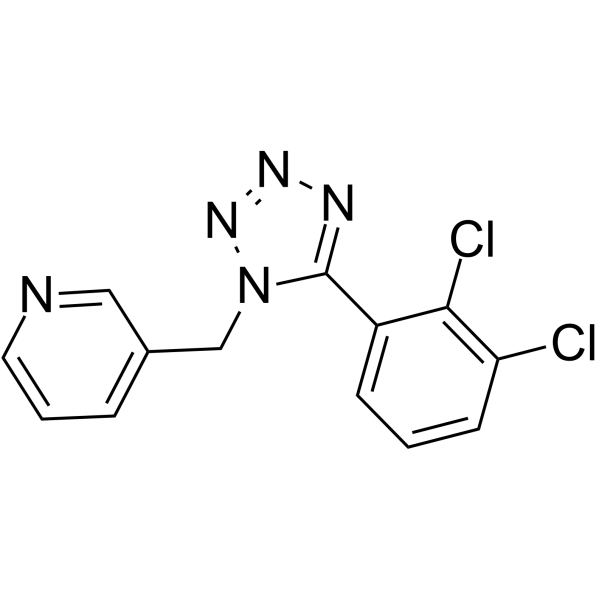
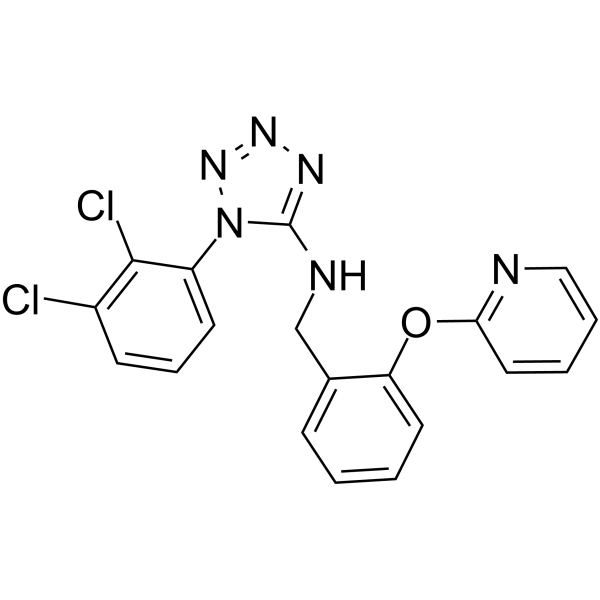
A 438079 is a potent, and selective P2X7 receptor antagonist with pIC50 of 6.9.
loading...
    loading...
27
27 Publications Verification
Cat. No.: HY-15488A
CAS No.: 899431-18-6
Purity:  99.99%
Target:  

P2X Receptor

Research Areas:  

Neurological Disease

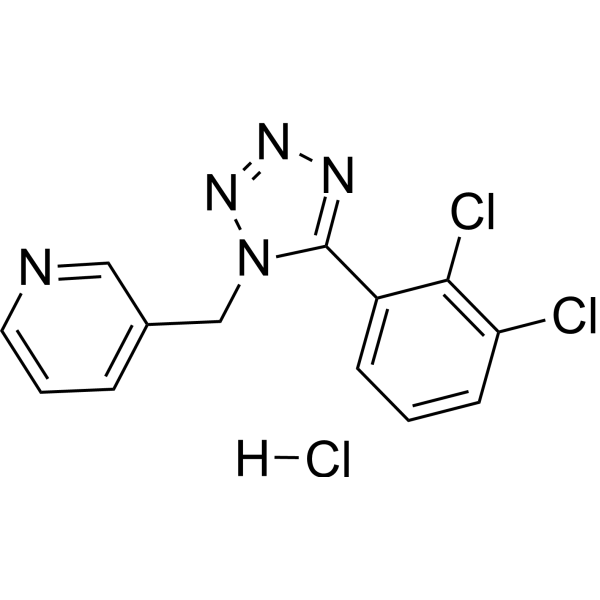
A 438079 (hydrochloride) is a potent, and selective P2X7 receptor antagonist with pIC50 of 6.9.
loading...
    loading...
17
17 Cited Publications
Cat. No.: HY-50697
CAS No.: 861393-28-4
Target:  

P2X Receptor

Research Areas:  

Neurological Disease

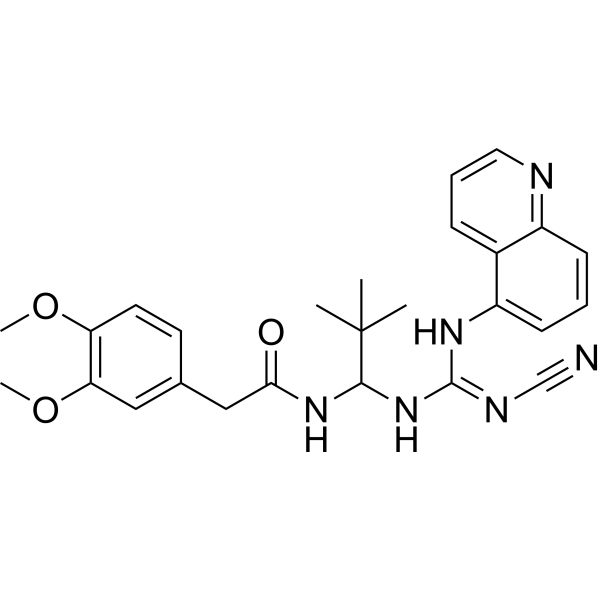
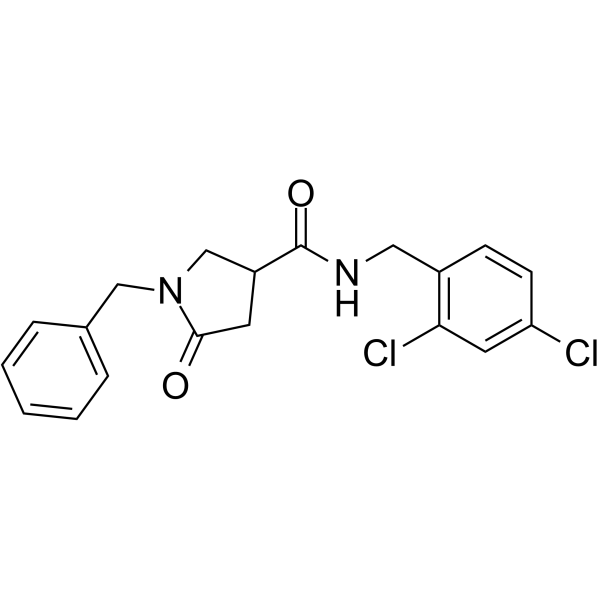
A-740003 is a potent, selective and competitive P2X7 receptor antagonist with IC50 values are 18 and 40 nM for rat and human P2X7 receptors, respectively.
loading...
    loading...
15
15 Cited Publications
Cat. No.: HY-136254
Purity:  98.58%
Target:  

P2X Receptor

Research Areas:  

Inflammation/Immunology Cancer

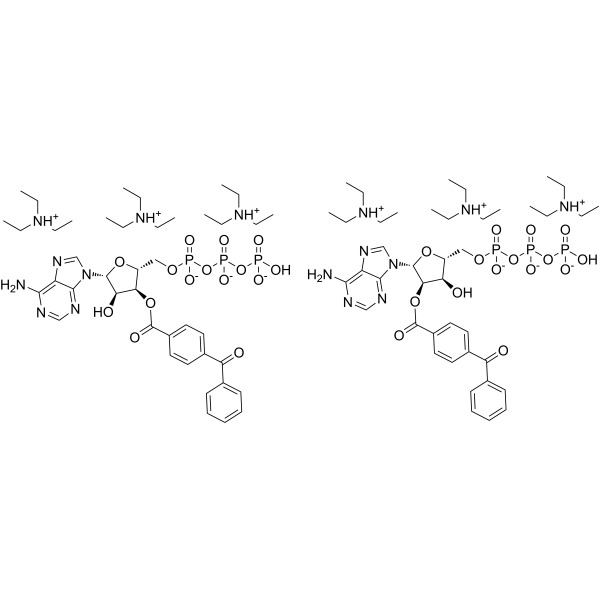
BzATP triethylammonium salt acts as a P2X receptor agonist with pEC50s of 8.74, 5.26, 7.10, 7.50, 6.19, 6.31, 5.33 for P2X1, P2X2, P2X3, P2X2/3, P2X4 and P2X7, respectively . BzATP triethylammonium salt is potent at P2X7 receptors with EC50s of 3.6 μM and 285 μM for rat P2X7 and mouse P2X7, respectively .
loading...
    loading...
13
13 Cited Publications
Cat. No.: HY-13290
CAS No.: 127191-97-3
Purity:  99.45%
Target:  

CaMK P2X Receptor

Research Areas:  

Metabolic Disease Cancer

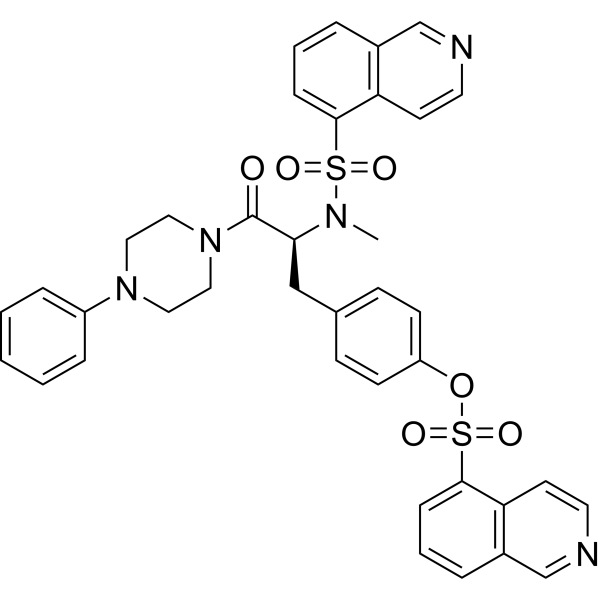
KN-62 is a selective and reversible inhibitor of calmodulin-dependent protein kinase II (CaMK-II) with a Ki of 0.9 μM for rat brain CaMK-II. KN-62 directly binds to the calmodulin binding site of CaMK-II. KN-62 displays noncompetitive antagonism at P2X7 receptors in HEK293 cells, with an IC50 value of approximately 15 nM.
loading...
    loading...
3
3 Cited Publications
Cat. No.: HY-100483
CAS No.: 1125758-85-1
Purity:  98.68%
Target:  

P2X Receptor

Research Areas:  

Neurological Disease Cancer

A-804598 is a BBB penetrant, competitive and selective P2X7 receptor antagonist with IC50s of 9 nM, 10 nM and 11 nM for mouse, rat and human P2X7 receptors, respectively .
loading...
    loading...
2
2 Cited Publications
Cat. No.: HY-108669
CAS No.: 607378-18-7
Purity:  99.93%
Target:  

P2X Receptor

Research Areas:  

Neurological Disease Cancer

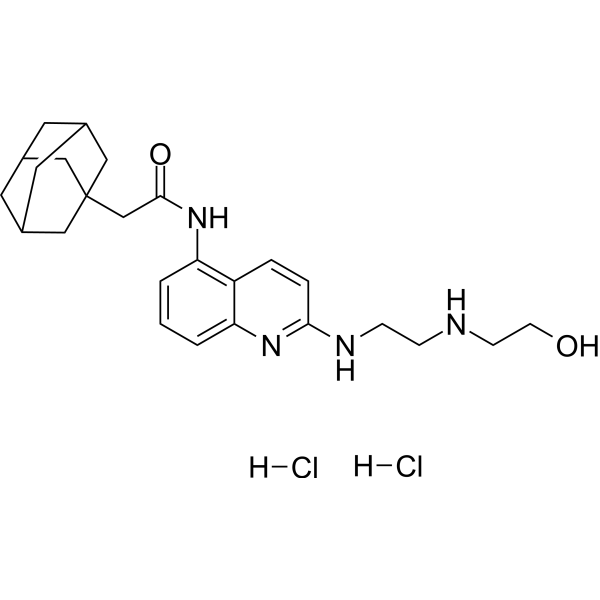
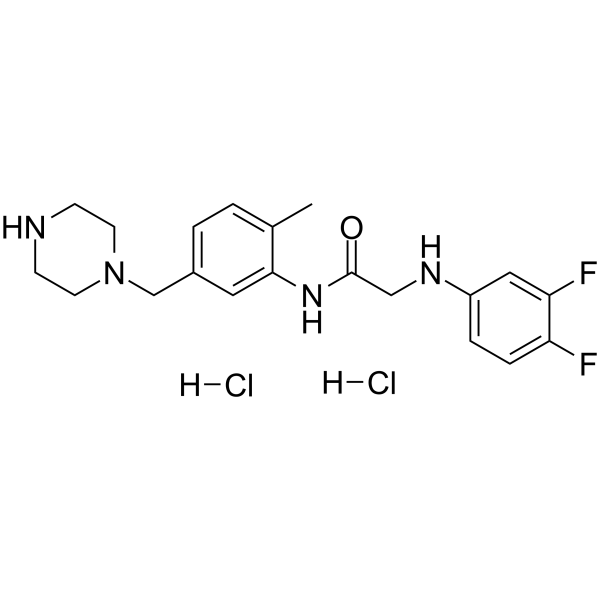
AZ10606120 dihydrochloride is a selective, high affinity antagonist for P2X7 receptor (P2X7R) at human and rat with an IC50 of about 10 nM. AZ10606120 dihydrochloride is little or no effect at other P2XR subtypes. AZ10606120 dihydrochloride has anti-depressant effects and reduces tumour growth .
loading...
    loading...
2
2 Cited Publications
Cat. No.: HY-N1478
CAS No.: 24512-62-7
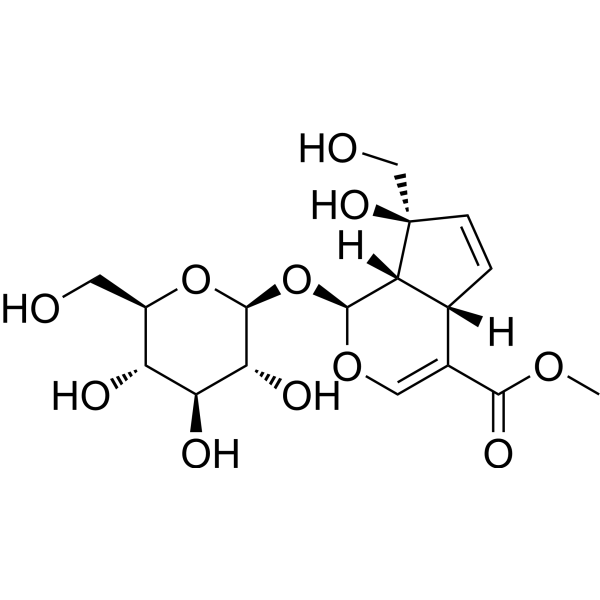
Gardenoside is an orally active natural compound found in Gardenia fruits. Gardenoside reliefs chronic constriction injury (CCI)-induced neuropathic pain by regulating the P2X3 and P2X7 receptors. Gardenoside has an inhibitory effect on free fatty acids (FFA)-induced cellular steatosis. Gardenoside reduces reactive oxygen species (ROS). Gardenoside can be used for anti-inflammatory, antinociceptive and hepatoprotective study .
loading...
    loading...
2
2 Cited Publications
Cat. No.: HY-13954
CAS No.: 870061-27-1
Purity:  98.08%
A 839977 is a P2X7 selective antagonist; it blocks BzATP-evoked calcium influx at recombinant human, rat and mouse P2X7 receptors (IC50 values are 20 nM, 42 nM and 150 nM respectively) and reduces inflammatory and neuropathic pain in animal models; the antihyperalgesic effects of P2X7 receptor blockade are mediated by blocking the release of IL-1beta .
loading...
    loading...
1
1 Cited Publications
Cat. No.: HY-150059
CAS No.: 851269-75-5
Purity:  99.21%
P2X7 receptor antagonist-2 is a potent P2X7 receptor antagonist with a pIC50 value of 6.5-7.5. P2X7 receptor antagonist-2 has efficacy of combating neuroinflammation .
loading...
    loading...
1
1 Cited Publications
Cat. No.: HY-P1137
CAS No.: 955091-53-9
Target:  

Gap Junction Protein

Research Areas:  

Others

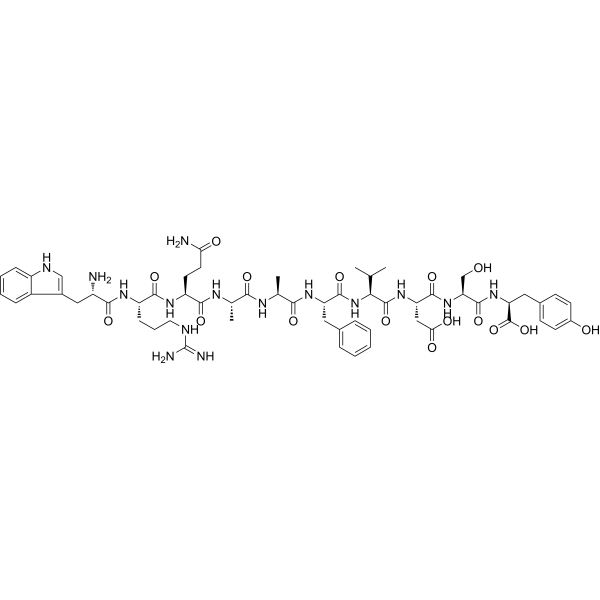
10Panx is a competitive inhibitor of selective Pannexin 1 (PANX1) channels. 10Panx blocks the opening of PANX1 channels, inhibits ATP release and downstream P2X7 receptor-mediated signaling pathways, thereby reducing cell death and inflammatory responses. 10Panx can be used in the study of diseases such as neuropathic pain, inflammatory bowel disease, and Clostridioides difficile infection. 10Panx can effectively reduce mechanical hyperalgesia and enhanced C-reflexes, and inhibit the expression of pro-inflammatory factors such as IL-6[1][2][3].
loading...
    loading...
1
1 Cited Publications
Cat. No.: HY-15469
CAS No.: 1019779-04-4
Target:  

P2X Receptor

Research Areas:  

Neurological Disease

GW791343 dihydrochloride is a potent human P2X7 receptor negative allosteric modulator (exhibits species-specific activity), produces a non-competitive antagonist effect on human P2X7 receptor, with a pIC50 of 6.9-7.2. GW791343 dihydrochloride can enhance ATP rhythm. GW791343 dihydrochloride can be used in study of neurological disease .
loading...
    loading...
1
1 Cited Publications
Cat. No.: HY-18725A
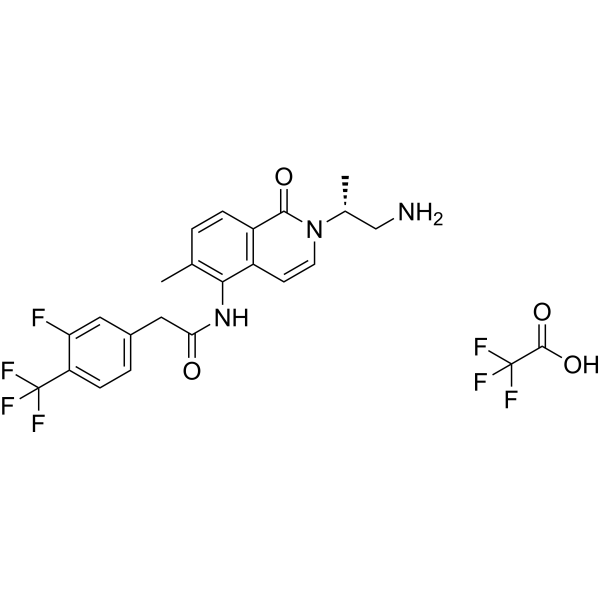
P2X7-IN-2 TFA (compound 58) is a P2X7 receptor inhibitor. P2X7-IN-2 TFA inhibits IL-Iβ release with an IC50 value of 0.01 nM. P2X7-IN-2 TFA can be used for the research of autoimmunity, inflammation and cardiovascular disease .
loading...
    loading...
Cat. No.: HY-B1901
CAS No.: 56839-43-1
Synonyms: (±)-Eperisone hydrochloride
Target:  

P2X Receptor

Research Areas:  

Neurological Disease

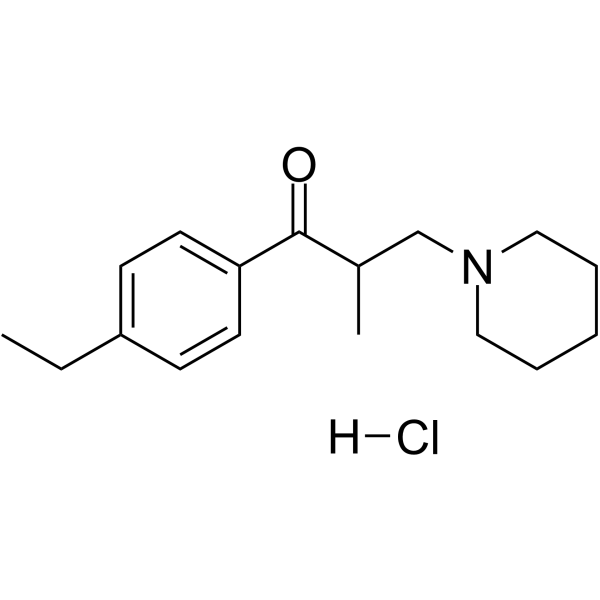
Eperisone Hydrochloride ((±)-Eperisone hydrochloride) is an orally active antispastic agent with a vasodilator effect, used for the research of muscle stiffness and pain. Eperisone Hydrochloride is a potent and selectively P2X7 receptor antagonist, also shows antagonism for human P2X3. Eperisone Hydrochloride works by relaxing both skeletal muscles and vascularsmooth muscles, demonstrating a variety of effects such as reduction ofmyotonia, improvement of circulationand and suppression of the pain reflex .
loading...
    loading...
Cat. No.: HY-117508
CAS No.: 1627902-21-9
Purity:  99.30%
Target:  

P2X Receptor

Research Areas:  

Neurological Disease

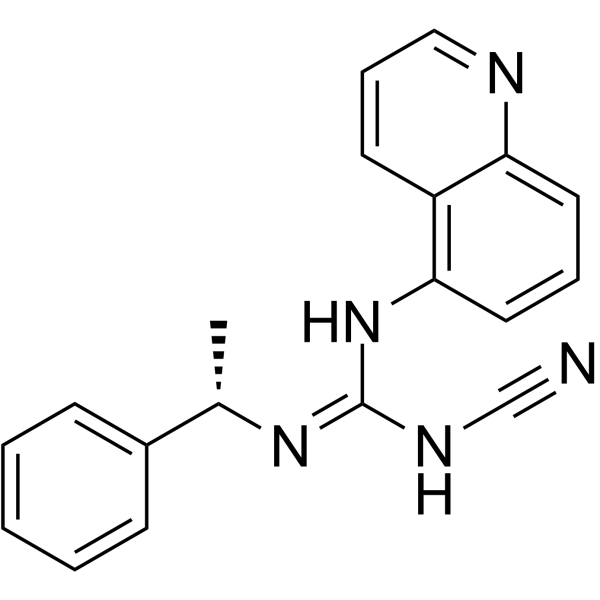
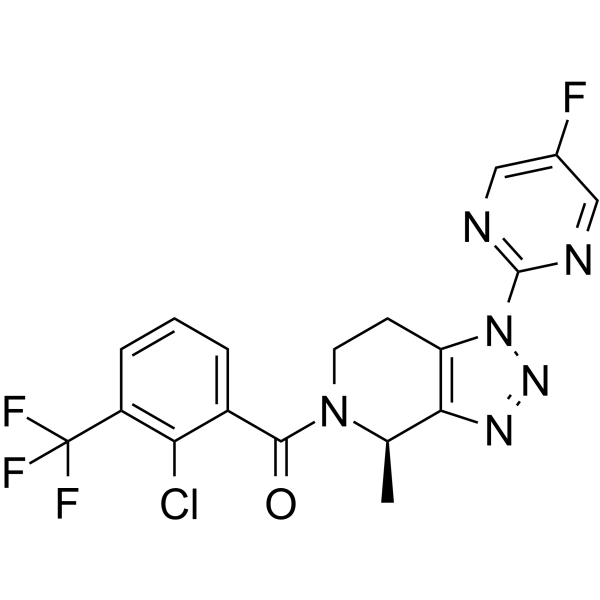
JNJ-54175446 is a potent and selective brain penetrant P2X7 receptor antagonist, with pIC50s of 8.46 and 8.81 for hP2X7 receptor and rP2X7 receptor, respectively.
loading...
    loading...
Cat. No.: HY-123205
CAS No.: 60607-34-3
Purity:  99.56%
Synonyms: KW-4354
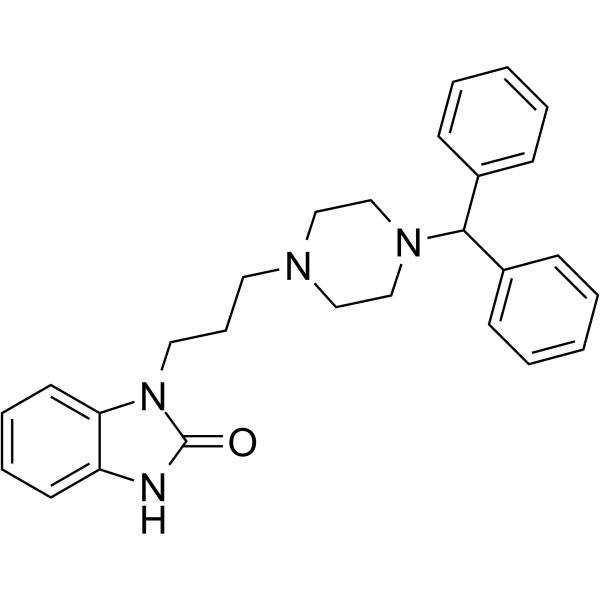
Oxatomide (KW-4354) is an orally active dual antagonist of the H1-histamine receptor and the P2X7 receptor, as well as an inhibitor of serotonin. Oxatomide possesses antihistaminic, antiallergic and anti-inflammatory activities. Oxatomide can be used in the research of allergic diseases .
loading...
    loading...
Cat. No.: HY-N9182
CAS No.: 144-67-2
Synonyms: Physalien
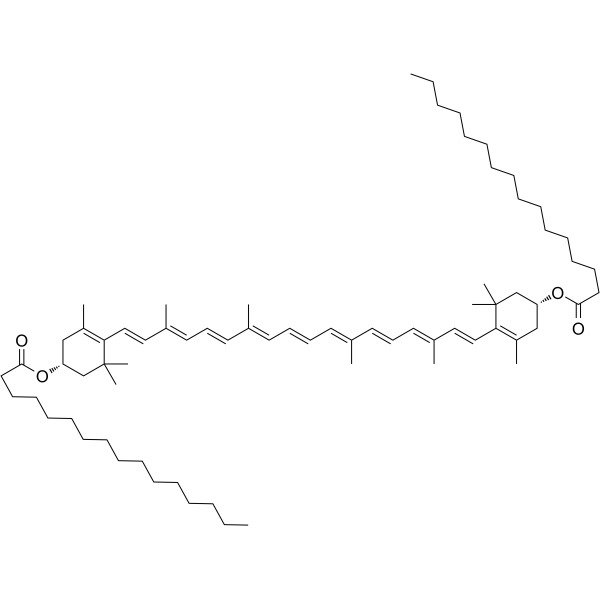
Zeaxanthin dipalmitate (Physalien) is a wolfberry-derived carotenoid, has anti-inflammatory and anti-oxidative stress effects. Zeaxanthin dipalmitate directly interact with p2X7 receptor (Kd=81.2 nM) and adiponectin receptor 1 (AdipoR1; Kd=533 nM) in a positive dose-dependent manner. Zeaxanthin dipalmitate restores mitochondrial autophagy functions suppressed by ethanol intoxication. Zeaxanthin dipalmitate can be used in the research of alcoholic fatty liver disease (AFLD) and retinitis pigmentosa (RP) .
loading...
    loading...
Cat. No.: HY-137888A
CAS No.: 71997-40-5
Purity:  ≥98.0%
Synonyms: oATP trisodium salt
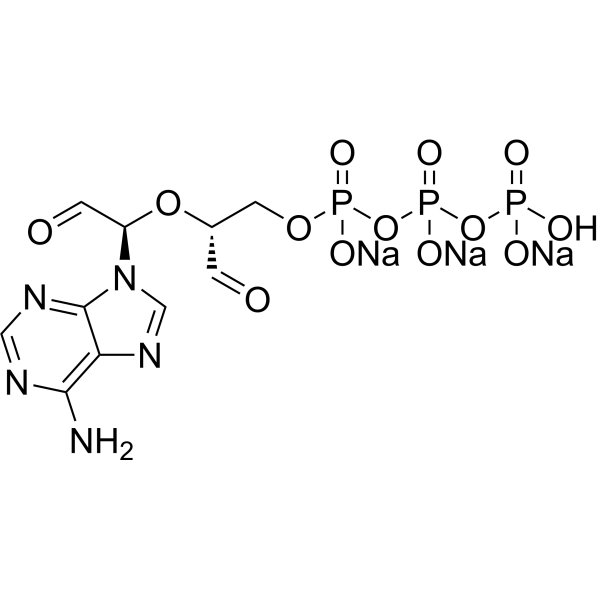
Oxidized ATP (oATP) trisodium salt is a broad-spectrum P2 receptor inhibitor. Oxidized ATP trisodium salt irreversibly antagonizes P2X7R activation. Oxidized ATP trisodium salt inhibits c-reactive protein (CRP)-induced NLRP3 inflammasome activation. Oxidized ATP trisodium salt can be used for research of atherosclerosis .
loading...
    loading...
Cat. No.: HY-N5025
CAS No.: 1354-84-3
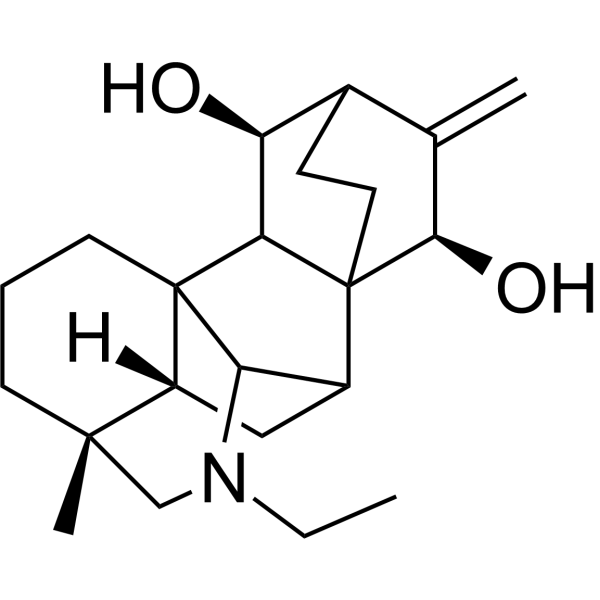
Bullatine A, a diterpenoid alkaloid, is a potent P2X7 antagonist. Bullatine A possesses anti-rheumatic, anti-inflammatory and anti-nociceptive effects. Bullatine A inhibits ATP-induced BV-2 cell death/apoptosis and P2X receptor-mediated inflammatory responses. Bullatine A suppresses glioma cell growth by targeting SIRT6. Bullatine A specifically attenuates pain hypersensitivity in rats. Bullatine A attenuates LPS (HY-D1056)-induced systemic inflammatory response by inhibiting the ROS/JNK/NF-κB pathway in mice. Bullatine A improves despair behavior in Chronic chronic social defeat stress (CSDS) mice. Bullatine A can be used for the study of inflammation, glioblastoma (GBM) and depression .
loading...
    loading...
Cat. No.: HY-15487
CAS No.: 724424-43-5
Purity:  98.91%
Synonyms: PF-04905428
Target:  

P2X Receptor

Research Areas:  

Neurological Disease

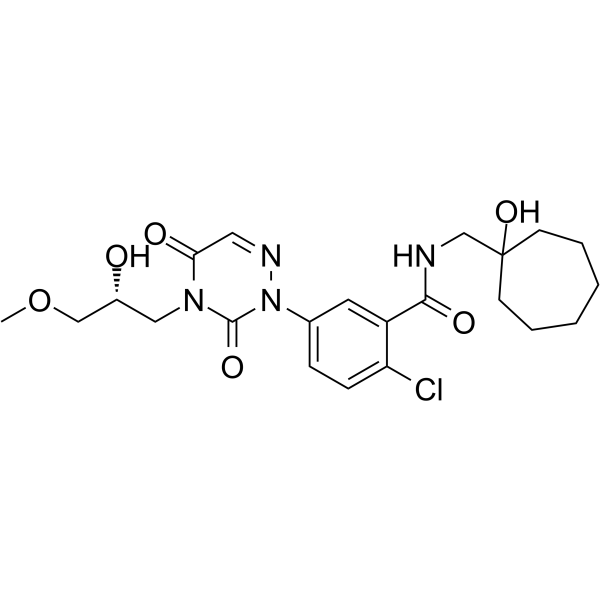
CE-224535 is a selective P2X7 receptor antagonist.
loading...
    loading...

