Search Result
Results for "
P388 cells
" in MedChemExpress (MCE) Product Catalog:
| Cat. No. |
Product Name |
Target |
Research Areas |
Chemical Structure |
-
- HY-B0220
-
Erythromycin
Maximum Cited Publications
24 Publications Verification
|
Bacterial
Antibiotic
DNA/RNA Synthesis
|
Infection
Cancer
|
|
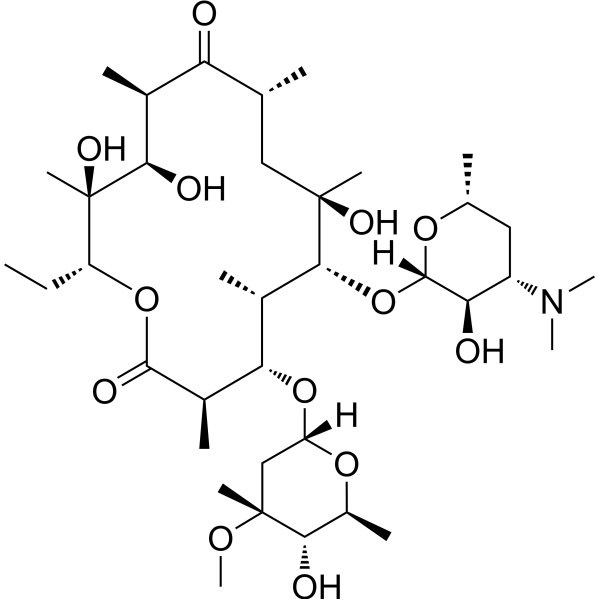
Erythromycin is a macrolide antibiotic produced by actinomycete?Streptomyces erythreus?with a broad spectrum of antimicrobial activity. Erythromycin binds to bacterial 50S ribosomal subunits and inhibits?RNA-dependent protein synthesis?by blockage of transpeptidation and/or translocation reactions, without affecting synthesis of nucleic acid [1][2]. Erythromycin also exhibits antitumor and neuroprotective effect in different fields of research [3][4].
|
-
-
- HY-N3308
-
|
|
Apoptosis
|
Cancer
|
|
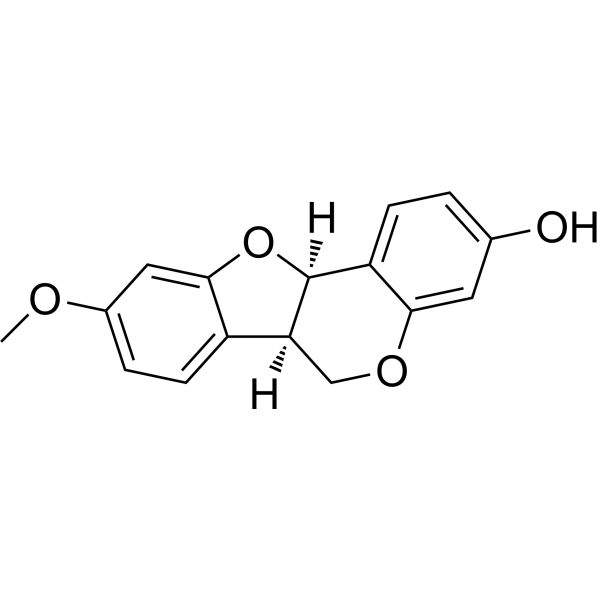
Medicarpin is a flavonoid isolated from Medicago sativa. Medicarpin induces apoptosis and overcome multidrug resistance in leukemia P388 cells by modulating P-gp-mediated efflux of agents .
|
-
-
- HY-N0128
-
|
|
Environmental Pollutants
Apoptosis
|
Cancer
|
|
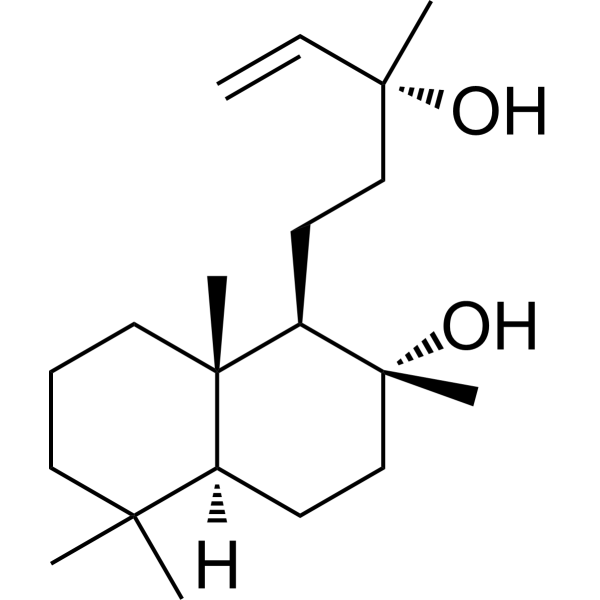
Sclareol is isolated from Salvia sclarea with anticarcinogenic activity. Sclareol shows strong cytotoxic activity against mouse leukemia (P-388), human epidermal carcinoma (KB) cells and human leukemia cell lines. Sclareol induces cell apoptosis .
|
-
-
- HY-18351
-
|
LMP-400; NSC-724998
|
Topoisomerase
|
Infection
Cancer
|
|
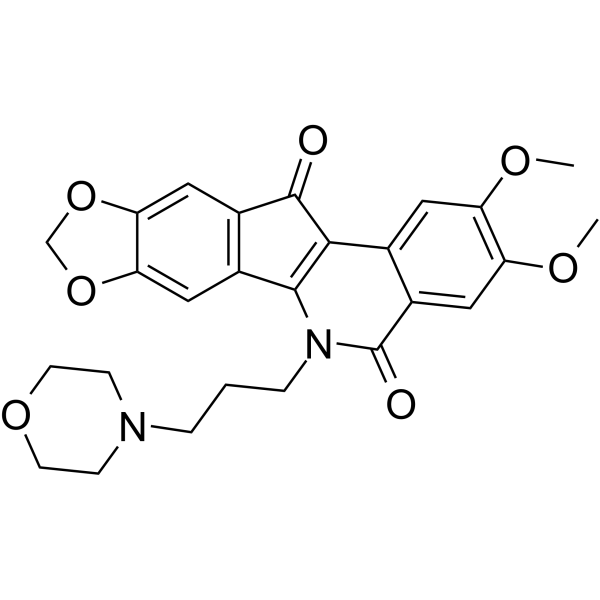
Indotecan (LMP-400), an indenoisoquinoline derivative, is a potent Topoisomerase I inhibitor, with IC50s of 300, 1200, 560 nM for P388, HCT116, MCF-7 cell lines, respectively. Indotecan prevents the relaxation of supercoiled DNA and can be used for the research of visceral leishmaniasis .
|
-
-
- HY-120504
-
|
|
Bacterial
|
Infection
Cancer
|
|
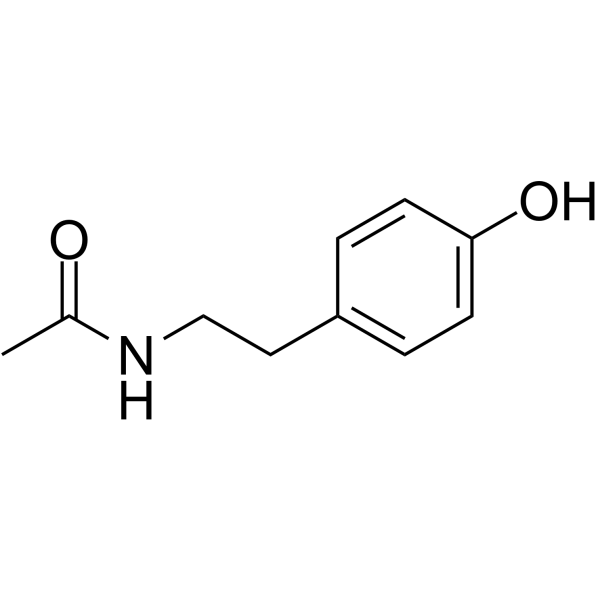
N-Acetyltyramine is a quorum-sensing inhibitor (QSI) compound produced by V. alginolyticus M3-10. N-Acetyltyramine is capable of inhibiting the QS of C. violaceum ATCC 12472. N-acetyltyramine reverses resistance in Doxorubicin-resistant leukemia P388 cells .
|
-
-
- HY-100875A
-
|
CL-216942 dihydrochloride
|
Topoisomerase
|
Cancer
|
|
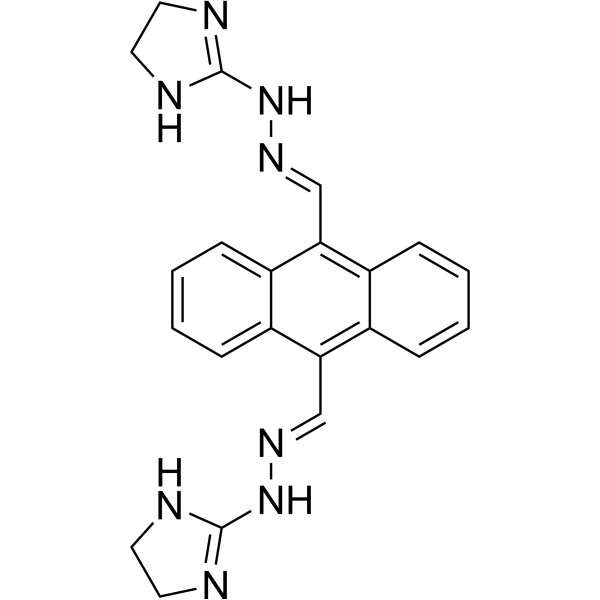
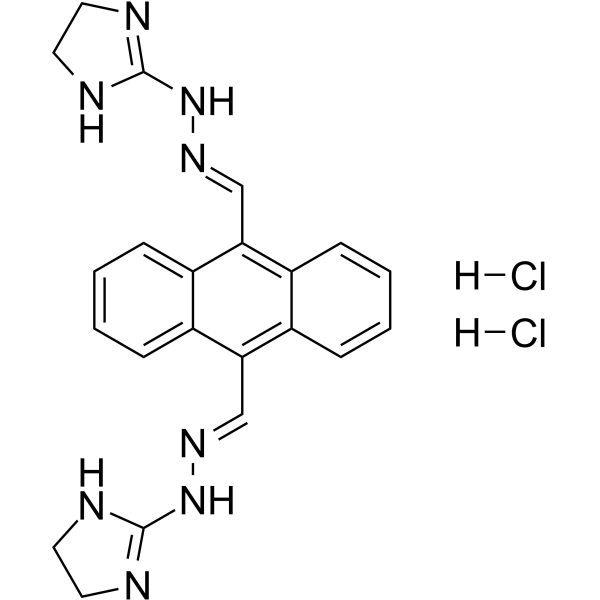
Bisantrene dihydrochloride is a highly effective antitumor agent, it exerts its cytotoxicity by affecting DNA intercalation. Bisantrene dihydrochloride targets eukaryotic type II topoisomerases. Bisantrene dihydrochloride is a substrate of MDR1 .
|
-
-
- HY-18351A
-
|
LMP-400 hydrochloride; NSC-724998 hydrochloride
|
Topoisomerase
|
Infection
Cancer
|
|
Indotecan hydrochloride, an indenoisoquinoline derivative, is a potent Topoisomerase I inhibitor, with IC50s of 300, 1200, 560 nM for P388, HCT116, MCF-7 cell lines, respectively. Indotecan hydrochloride prevents the relaxation of supercoiled DNA and can be used for the research of visceral leishmaniasis .
|
-
-
- HY-N6689
-
|
|
Insecticide
Bacterial
|
Infection
Inflammation/Immunology
Cancer
|
|
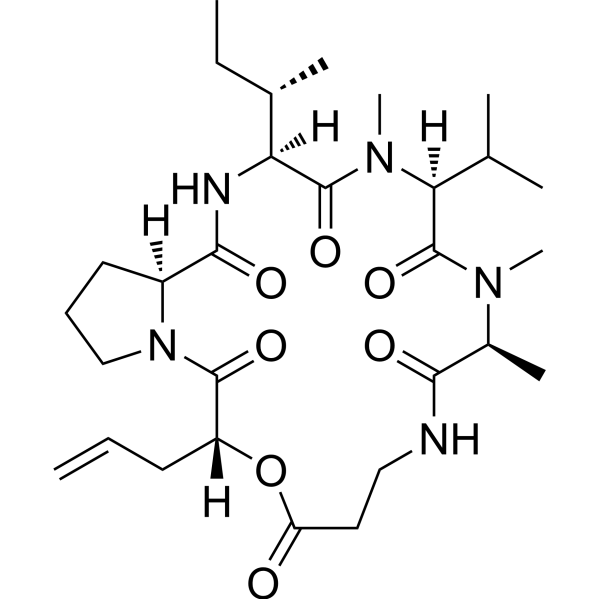
Destruxin A is a fungal cyclopeptide with insecticidal and antiviral activities. Destruxin A has a certain inhibitory effect on leukemia cells in vitro. Destruxin A can also specifically inhibit the innate immune response of Drosophila melanogaster, making the flies more susceptible to bacterial infections .
|
-
-
- HY-P3116
-
|
|
Bacterial
|
Cancer
|
|
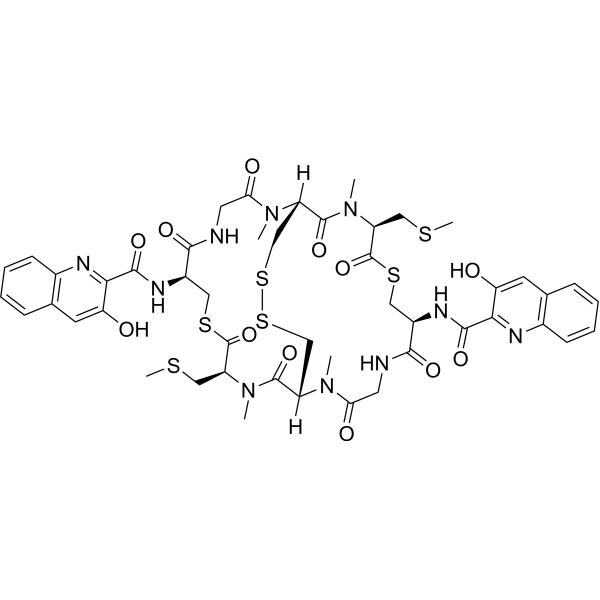
Thiocoraline is a depsipeptide that can be isolated by marine Micromonospora. Thiocoraline has antitumor activity with IC50s of 0.002, 0.002, 0.01 and 0.002 μg/mL in P388, A549, HT-29 and MEL-28 cells, respectively. Thiocoraline also a strong antimicrobial activity against Gram-positive microorganisms .
|
-
-
- HY-N6955
-
|
|
Others
|
Cancer
|
|
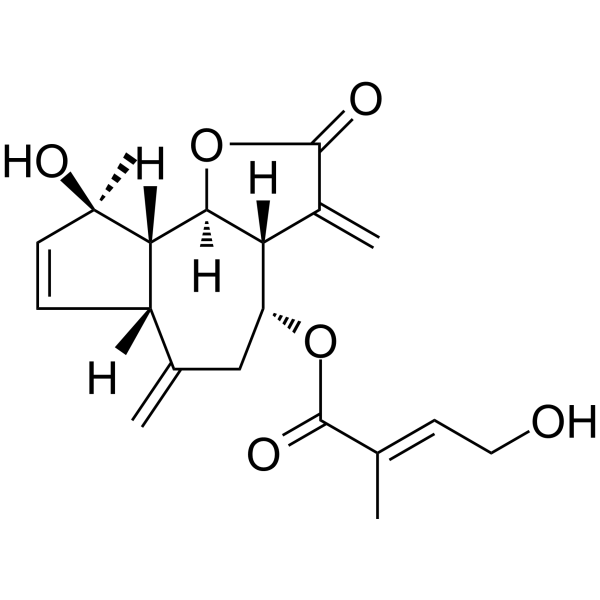
Eupalinilide B is a guaiane type sesquiterpene lactone that can be found in Eupatorium lindleyanum. Eupalinilide B shows potent cytotoxicity against P-388 and A-549 tumor cell lines .
|
-
-
- HY-N10208
-
|
|
Endogenous Metabolite
|
Cancer
|
|
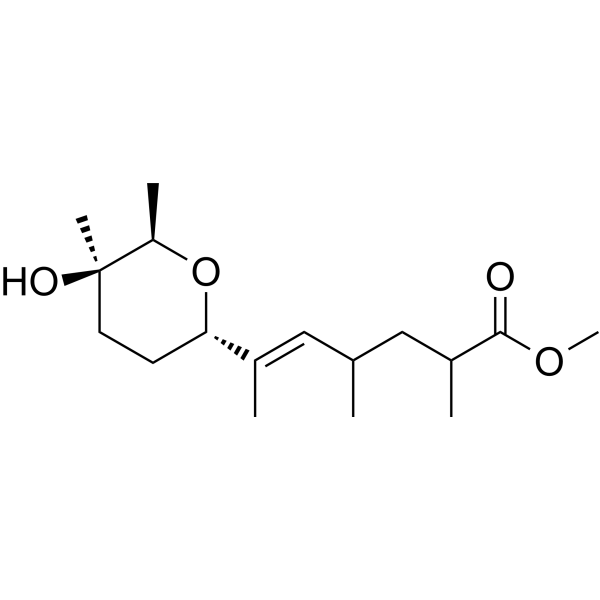
Aspericin C is a pyran derivative found in the marine-derived fungus Rhizopus sp. 2-PDA-61. Aspericin C shows cytotoxic activities against P388, A549, HL-60, and BEL-7420 cell lines (IC50=14.6, 7.1, 61.4, and 24.2 μM, respectively) .
|
-
-
- HY-103653
-
|
|
MetAP
|
Cardiovascular Disease
Cancer
|
|
CKD-731 is a Fumagillin (HY-B0751) analogue. CKD-731 inhibits the proliferation of calf pulmonary artery endothelial cells (CPAE), lymphoma EL-4 cells and murine leukemia P388D1 cells. CKD-731 exerts the effect of inhibiting MetAP-2 activity and blocking angiogenesis. CKD-731 can be used for the research of anti-angiogenesis-related cancer .
|
-
-
- HY-12458
-
|
|
DNA/RNA Synthesis
|
Infection
Cancer
|
|
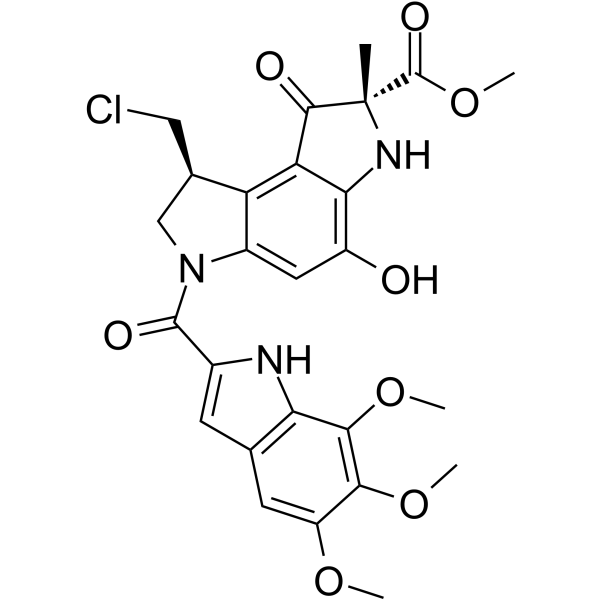
Pyrindamycin A is an antibiotic that inhibits DNA synthesis. Pyrindamycin A shows antitumor activities against murine leukemia, exhibits stronger cytotoxic activities towards murine and human tumor cell lines and especially towards doxorubicin-resistant cells, inhibits P388 and P388/ADR cells with the same IC50 of 3.9 μg/ml .
|
-
-
- HY-N1631
-
|
1-Hydroxyrutaecarpine
|
Drug Derivative
|
Others
|
|
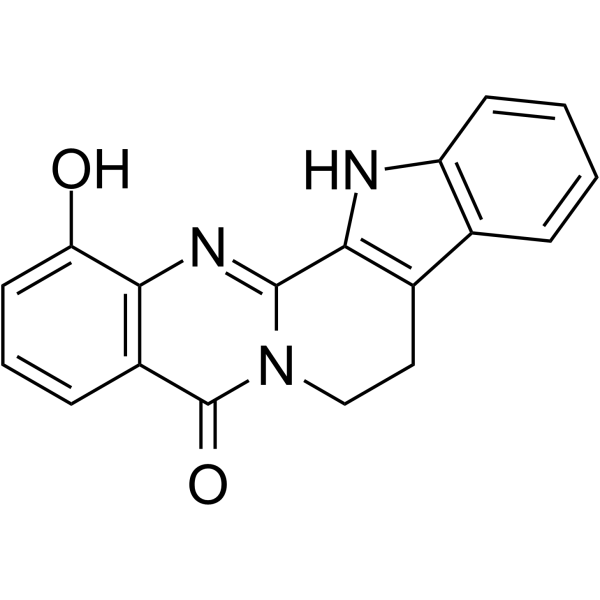
1-Hydroxyrutaecarpine (compound 1a) is a hydroxy-derivative of rutaecarpine. 1-Hydroxyrutaecarpine shows cytotoxicities with ED50s of 3.72, 7.44 µg/mL for P-388 and HT-29 cells, respectively. 1-Hydroxyrutaecarpine shows antiplatelet activity .
|
-
-
- HY-23120
-
|
|
Antibiotic
Virus Protease
|
Infection
Cancer
|
|
1-Hydroxyguanidine sulfate is an antitumor agent that inhibits mast cell P815, leukaemia P388, leukaemia L1210 and carcinosarcoma Walker 256 cells growth. 1-Hydroxyguanidine sulfate also has antiviral activity .
|
-
-
- HY-125037
-
|
|
Estrogen Receptor/ERR
HSP
|
Cancer
|
|
Diptoindonesin G is a 2-arylbenzofuran derivative and a modulator of estrogen receptor and HSP90 middle domain. Diptoindonesin G exhibits strong cytotoxicity against mouse leukemia P-388 cells with an IC50 of 13.2 μM. Diptoindonesin G has antitumor activity and can be used in the research of tumors such as breast cancer .
|
-
-
- HY-N1655
-
|
|
Others
|
Cancer
|
|
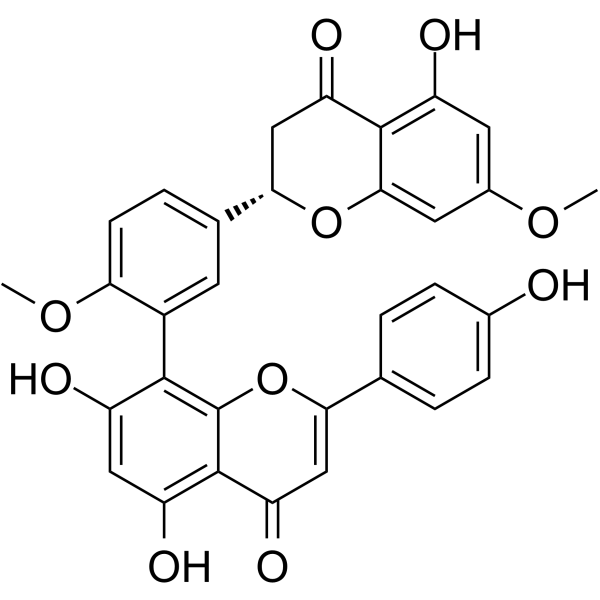
2,3-Dihydroamentoflavone 7,4'-dimethyl ether is a biflavonoid, which can be isolated from the aerial parts of Selaginella delicatula. 2,3-Dihydroamentoflavone 7,4'-dimethyl ether exhibits cytotoxicities against P-388 and HT-29 cell lines, with ED50 (median effective dose) values of 3.50 and 5.25 µg/mL, respectively .
|
-
-
- HY-121123
-
|
2-Aminoadamantane-2-carboxylic acid
|
Aminopeptidase
|
Cancer
|
|
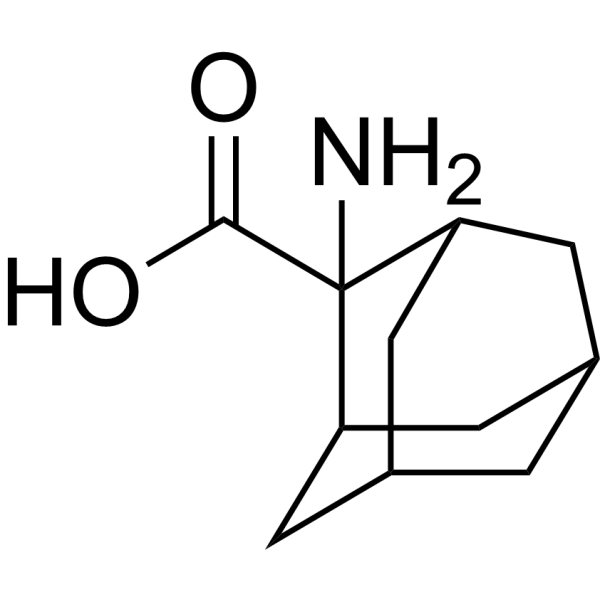
Adamantanine (2-Aminoadamantane-2-carboxylic acid) inhibits the transport of methionine (Ki is 0.76 mM) and leucine into Ehrlich ascites carcinoma cells. Adamantanine inhibits proliferation of P388 lymphocytic leukemia cells with an IC50 of >1 mM. Adamantanine inhibits the leucine aminopeptidase with an I/S0.5 of 10.5 .
|
-
-
- HY-114648
-
|
|
Bacterial
|
Infection
Cancer
|
|
AJI-9561 is a benzoxazole derivative produced by Streptomyces sp. AJI-9561 exhibits cytotoxicity and antibacterial activity. AJI-9561 inhibits the proliferation of Jurkat T cells and mouse P388 leukemia cells, with its IC50 being 0.88 and 1.63 μM respectively. AJI-9561 can be used for research on anti-cancer and antibacterial properties .
|
-
-
- HY-N15640
-
|
(-)-Filiformin
|
Bacterial
|
Infection
Inflammation/Immunology
Cancer
|
|
Filiformin ((-)-Filiformin) is a sesquiterpene compound that can be isolated from Laurencia filiformis forma heteroclada. Filiformin exhibits certain cytotoxicity against P388 and BSC-1 cells. Filiformin has antimicrobial activity against Bacillus subtilis, Trichophyton mentagrophytes and Candida albicans. In addition, Filiformin can inhibit oxygen uptake in isolated rat liver mitochondria at a concentration of 150 μM .
|
-
-
- HY-N8979
-
|
|
Others
|
Inflammation/Immunology
|
|
Kanshone A is a sesquiterpene isolated from the roots of Nardostachys chinensis (Valerianaceae). Kanshone A shows cytotoxic with an IC50 value of 7.0 µg/ml in P388 cells .
|
-
-
- HY-136514
-
|
|
Serotonin Transporter
|
Cancer
|
|
Tampramine (47), a phenothiazine, could reverse multidrug resistance, with ED50 values of 60 μM (P388 cells) and 60 μM (P388/ADR cells), respectively .
|
-
-
- HY-113771
-
|
|
Bacterial
|
Infection
Cancer
|
|
Saquayamycin C has antimicrobial effect, but it has weaker effect against Gram-negative bacteria. Saquayamycin C has inhibitory effect on leukemia P388 cells and Adriamycin-resistant P388 cells .
|
-
-
- HY-N13870
-
|
|
Bacterial
|
Infection
Cancer
|
|
Saquayamycin A1 has antimicrobial effect, but it has weaker effect against Gram-negative bacteria. Saquayamycin A1 has inhibitory effect on leukemia P388 cells and Adriamycin-resistant P388 cells .
|
-
-
- HY-N13868
-
|
|
Bacterial
|
Infection
Cancer
|
|
Saquayamycin C1 has antimicrobial effect, but it has weaker effect against Gram-negative bacteria. Saquayamycin C1 has inhibitory effect on leukemia P388 cells and Adriamycin-resistant P388 cells .
|
-
-
- HY-N2835
-
|
|
Others
|
Others
|
|
Alboctalol can be isolated from Morus australis. Alboctalol has weak cytotoxicity against P-388 cells .
|
-
-
- HY-N7011
-
-
-
- HY-167671
-
|
|
Topoisomerase
|
Cancer
|
|
BE-10988 is a DNA topoisomerase inhibitor. BE-10988 inhibits the growth of Doxorubicin (HY-15142A)-resistant and vincristine-resistant P388 mouse leukemia cell lines by increasing the formation of DNA topoisomerase complexes .
|
-
-
- HY-N13941
-
|
|
Bacterial
|
Infection
Cancer
|
|
Baciphelacin is mainly resistant to gram-positive bacteria and has the activity of inhibiting Newcastle disease virus and leukemia P-388 cells .
|
-
-
- HY-N10206
-
|
|
Endogenous Metabolite
|
Cancer
|
|
11-epi-Chaetomugilin I is a metabolite found in Chaetomium globosum. 11-epi-Chaetomugilin I exhibits significant cytotoxic activity against the murine P388 leukemia cell line, the human HL-60 leukemia cell line, the murine L1210 leukemia cell line, and the human KB epidermoid carcinoma cell line .
|
-
-
- HY-N1649
-
|
|
Others
|
Cancer
|
|
2,3,2'',3''-Tetrahydroochnaflavone is a biflavonoid, which can be isolated from the leaves of Quintinia acutifolia. 2,3,2'',3''-Tetrahydroochnaflavone shows some cytotoxicity against P388 murine lymphocytic leukemia cells, with an IC50 of 8.2 µg/mL .
|
-
-
- HY-N7321A
-
|
|
Bacterial
|
Infection
Cancer
|
|
(R)-Eucomol, a flavonoid derivative, displays marginal antibacterial activity. (R)-Eucomol shows cytotoxic activity against KB and P-388 cells .
|
-
-
- HY-N14621
-
|
|
Others
|
Cancer
|
|
Harzialacton A has weak cytotoxicity to P388 leukemia cells with ED50 of > 100 μg/mL .
|
-
-
- HY-N13878
-
-
-
- HY-129752
-
|
|
Antibiotic
|
Cancer
|
|
Piperafizine B exhibits slightly cytotoxicity in moser cells, P388 cells and Vincristine (VCR) (HY-N0488)-resistant P388 cells (IC50s is 23.8, 22.6 and 23.7 μg/mL, respectively). Piperafizine B exhibits synergistic effects with Vincristine, enhances the VCR-induced cytotoxicity and ameliorates the leukemia in mouse model .
|
-
-
- HY-N14522
-
|
|
Bacterial
|
Infection
Cancer
|
|
Gilvocarcin E has anti-Gram-positive bacterial activity and can inhibit sarcoma 180 and P388 leukemia cells .
|
-
-
- HY-118726
-
|
|
Topoisomerase
|
Cancer
|
|
Luotonin F is an alkaloid found in the aerial parts of the P. nigellastrum Bunge. Luotonin F shows cytotoxic activity against mouse leukemia P-388 cells by inhibiting human topoisomerase II .
|
-
-
- HY-N12151
-
|
|
Parasite
|
Infection
|
|
Chaparrinone is a quassinoid that can be isolated from the root of Eurycoma harmandiana. Chaparrinone has antimalarial and cytotoxic activities against Plasmodium falciparum and P-388 cells (IC50: 0.037 and 0.34 μg/mL respectively) .
|
-
-
- HY-N3123
-
|
Dihydrooxochelerythrine
|
Others
|
Cancer
|
|
Oxychelerythrine is an alkaloid that can be isolated from Zanthoxylum integrifoliolum. Oxychelerythrine exhibits cytotoxicity against P-388 and HT-29 cell lines with ED50s of 3.25 and 5.48 μg/mL, respectively .
|
-
-
- HY-106843
-
|
|
Antibiotic
Bacterial
|
Infection
|
|
Phospholine is an antibiotic. The IC50 (μg/mL) of Ll 210, P388 and EL-4 cells are 3.37, 2.20 and 1.99, respectively .
|
-
-
- HY-N15058
-
|
|
Phospholipase
|
Cancer
|
|
Chlorogentisylquinone is found in the strain of FOM-8108. The IC50 of inhibitory rat meningeal nSMase is 1.2 μM, and the IC50 of P388 cells is 7.6 μM .
|
-
-
- HY-126954
-
|
|
Antibiotic
Bacterial
|
Infection
Cancer
|
|
13-Deoxycarminomycin is an antibiotic with antibacterial activity. 13-Deoxycarminomycin also exhibits cytotoxicity against tumor cells such as HeLa and P388, and can play an anti-tumor role .
|
-
-
- HY-N14303
-
|
|
Antibiotic
Bacterial
|
Infection
Cancer
|
|
16-Methyloxazolomycin is an antibiotic. 16-Methyloxazolomycin has the effect of resisting bacteria and algae. 16-Methyloxazolomycin against leukemia P388 and human lung adenocarcinoma cells .
|
-
-
- HY-12459
-
|
|
Bacterial
|
Infection
|
|
Pyrindamycin B is an antibiotic, actives against gram-positive and gram-negative bacterias, and exhibits strong therapeutic effects against both agent-sensitive and resistant cells of P388 leukemia in mice .
|
-
-
- HY-N14019
-
|
|
Antibiotic
Bacterial
|
Infection
Cancer
|
|
Glidobactin B is an anti-tumor antibiotic. Glidobactin B has the activity against pathogenic fungi and yeast. Glidobactin B also extends the survival of mice inoculated with leukemia P388 cells .
|
-
-
- HY-N3041
-
|
Agoniadin; NSC 609065
|
Fungal
|
Infection
Cancer
|
|
Plumieride is an antifungal agent. Plumieride has strong fungitoxicity against some dermatophytes. Plumieride has little cytotoxic activity against the P388 leukaemia cell line with an IC50 of 85 μg/mL .
|
-
-
- HY-N14023
-
|
|
Antibiotic
Fungal
|
Infection
Cancer
|
|
Glidobactin G is an anti-tumor antibiotic. Glidobactin G has the activity against pathogenic fungi and yeast. Glidobactin G also extends the survival of mice inoculated with leukemia P388 cells .
|
-
-
- HY-N14022
-
|
|
Antibiotic
Fungal
|
Infection
Cancer
|
|
Glidobactin F is an anti-tumor antibiotic. Glidobactin F has the activity against pathogenic fungi and yeast. Glidobactin F also extends the survival of mice inoculated with leukemia P388 cells .
|
-
-
- HY-N0128R
-
|
|
Reference Standards
Apoptosis
|
Cancer
|
|
Sclareol (Standard) is the analytical standard of Sclareol. This product is intended for research and analytical applications. Sclareol is isolated from Salvia sclarea with anticarcinogenic activity. Sclareol shows strong cytotoxic activity against mouse leukemia (P-388), human epidermal carcinoma (KB) cells and human leukemia cell lines. Sclareol induces cell apoptosis .
|
-
-
- HY-N10350
-
|
|
Others
|
Cancer
|
|
2,3-Dihydro-3-methoxywithaferin A is an analogue of 2,3-dihydrowithaferin-A. 2,3-Dihydro-3-methoxywithaferin A inhibits proiiferation of P388 cells[1].
|
-
- HY-126617
-
|
NSC 258308
|
Others
|
Cancer
|
|
Duclauxin decreases proliferation of tumor cells in vitro and increases the lifespan of mice innoculated with Ehrlich ascitic tumor cells. Duclauxin (10-30 μg/mL) inhibits mitochondrial respiration of P-388 tumor cells and nucleic acid synthesis in cell culture of Ehrlich cancer, the lymphadenomas NK/LI and L 5178, and sarcoma 37. Duclauxin also inhibits growth of wheat coleoptile.
|
-
- HY-N14095
-
|
|
Bacterial
HIV
|
Infection
Cancer
|
|
Curromycin A has antibacterial activity against Gram-positive bacteria such as Bacillus subtilis. Curromycin A can inhibit the replication of human immunodeficiency virus (HIV), inhibit mouse melanoma B16 and leukemia P388 cells .
|
-
- HY-W747504
-
|
Dihydroherbimycin A
|
Antibiotic
Reactive Oxygen Species (ROS)
|
Infection
Cancer
|
|
TAN-420E (Dihydroherbimycin A) is an antibiotic, that can be isolated from the fermentation product of Streptomyces hygroscopicus. TAN-420E exhibits cytotoxicity in cancer cells P-388 and KB. TAN-420E scavenges DPPH free radicals with an IC50 of 1.3 μM .
|
-
- HY-N14496
-
|
|
Bacterial
|
Infection
Cancer
|
|
Nisamycin has stronger anti-Gram-positive bacteria and weaker anti-fungal and individual Gram-negative bacteria activities. Nisamycin has weak cytotoxic effect. The IC50 of mouse leukemia P388 cells is 4.8 μg/mL .
|
-
- HY-N14110
-
|
|
Bacterial
HIV
|
Infection
|
|
Curromycin B has antibacterial activity against Gram-positive bacteria such as Bacillus subtilis. Curromycin B can inhibit the replication of human immunodeficiency virus (HIV), inhibit mouse melanoma B16 and leukemia P388 cells .
|
-
- HY-N14747
-
|
|
Bacterial
|
Infection
|
|
Elloramycin has weak activity against Gram-positive bacteria, streptomycete and L-1210 leukemic cells, but has no effect on mouse leukemic P388 cells in vivo, and also has a strong inhibition of Streptomyces (including the production of bacteria themselves) activity .
|
-
- HY-N5186
-
|
|
Antibiotic
Bacterial
|
Infection
Cancer
|
|
Cypemycin is a linaridin antibiotic that can inhibit cancer cell activity, inhibits P388 leukemia cells with IC50 of 1.3 μg/mL. Cypemycin can inhibit human tumor cells such as HeLa S3, HHCC-1, HCCS-M and Slex with IC50 of >25 μg/mL .
|
-
- HY-N14523
-
|
|
Antibiotic
Bacterial
|
Infection
|
|
Gilvusmycin is an antibiotic with strong anti-tumor activity. Gilvusmycin can inhibit P388, K562, A431 and MKN28 cells with IC50s (ng/mL) of 0.08, 0.86, 0.72 and 0.75, respectively .
|
-
- HY-N14277
-
|
|
Antibiotic
Bacterial
|
Infection
Cancer
|
|
Miyakamide B2 is an antibiotic with insecticidal effect. Miyakamide B2 inhibits the growth of Artemia salina. Miyakamide B2 has a weak antixanthomonas activity. Miyakamide B2 inhibits P388 cells with an IC50 of 7.6 μg/mL .
|
-
- HY-N14276
-
|
|
Antibiotic
Bacterial
|
Infection
Cancer
|
|
Miyakamide B1 is an antibiotic with insecticidal effect. Miyakamide B1 inhibits the growth of Artemia salina. Miyakamide B1 has a weak antixanthomonas activity. Miyakamide B1 inhibits P388 cells with an IC50 of 8.8 μg/mL .
|
-
- HY-N14274
-
|
|
Antibiotic
Bacterial
|
Infection
Cancer
|
|
Miyakamide A1 is an antibiotic with insecticidal effect. Miyakamide A1 inhibits the growth of Artemia salina. Miyakamide A1 has a weak antixanthomonas activity. Miyakamide A1 inhibits P388 cells with an IC50 of 10.5 μg/mL .
|
-
- HY-N14275
-
|
|
Antibiotic
Bacterial
|
Infection
Cancer
|
|
Miyakamide A2 is an antibiotic with insecticidal effect. Miyakamide A2 inhibits the growth of Artemia salina. Miyakamide A2 has a weak antixanthomonas activity. Miyakamide A2 inhibits P388 cells with an IC50 of 12.2 μg/mL .
|
-
- HY-123325
-
|
|
Antibiotic
Bacterial
|
Infection
Cancer
|
|
Kapurimycin A1 is an anbitiotic that can be isolated from Streptomyces. Kapurimycin A1 has a significant inhibitory effect on Gram-positive bacteria, exhibits cytotoxicity to cultured mammalian cells, and shows strong antitumor activity against the mouse leukemia P388 cell line .
|
-
- HY-N10155A
-
|
|
Bacterial
|
Cancer
|
|
BE-18591 shows antimicrobial activity against gram-positive and some gram-negative bacteria. BE-18591 inhibited the growth of the MKN-45 cell line (IC50= 0.285 μg/mL) and the P388 cell line (IC50= 0.52 μg/mL) .
|
-
- HY-N15112
-
|
|
Others
|
Cancer
|
|
Pintulin can inhibit P388, L 1210, HL-60, KB and other tumor cell lines with IC50s (μg/mL) of 0.8, 0.8, 0.8, 0.25, respectively. Pintulin has only very weak antibacterial activity against the microorganisms tested .
|
-
- HY-N14415
-
|
|
Bacterial
|
Infection
Cancer
|
|
Cochleamycin A showed strong inhibitory activity against tumor cells, with IC50s (μg/mL) of P388, HL60, K562, COL0205 and HT29 cells of 1.6, 14.0, 6.2, 16.5 and 19.1, respectively. Cochleamycin A also has anti-Gram-positive bacteria activity .
|
-
- HY-N14144
-
|
|
Bacterial
|
Infection
Cancer
|
|
Cremimycin has anti-Gram-positive bacteria activity including methicillin-resistant Staphylococcus aureus (MRSA), MIC is 0.2-0.39 μg/mL. Cremimycin shows cytotoxicity to mouse tumor cell lines P388, L1210, IMC, S180, B16 and SS3 in vitro .
|
-
- HY-N14020
-
|
GlbC
|
Antibiotic
Fungal
|
Infection
Cancer
|
|
Glidobactin C (GlbC) is an anti-tumor antibiotic. Glidobactin C (GlbC) has the activity against pathogenic fungi and yeast. Glidobactin C has anti-Candida albicans and Aspergillus fumigatus activity with a MIC of 0.8 μg/mL. Glidobactin C also extends the survival of mice inoculated with leukemia P388 cells .
|
-
- HY-23909
-
|
DEDA
|
Phospholipase
|
Inflammation/Immunology
|
|
7,7-Dimethyl-(5Z,8Z)-eicosadienoic acid (DEDA), a phospholipase inhibitor, is a non-metabolizable analog of arachidonic or eicosadienoic acid. 7,7-Dimethyl-(5Z,8Z)-eicosadienoic acid (DEDA) inhibits P388D1 cell phospholipase A2 (PLA2) (IC50 = 16 µM) and snake venom PLA2 (IC50 = 14 µM) .
|
-
- HY-N14139
-
|
|
Bacterial
|
Infection
Cancer
|
|
Dioxamycin has anti-Gram-positive bacterial activity. Dioxamycin can inhibit Staphylococcus aureus 209P with a MIC of 3.12 μg/mL. Dioxamycin inhibits the growth of L1210, P388, IMC, LX-1 and SC-6 cells with IC50s (μg/mL) of 2.7, 1.4, 6.0, 2.0 and 2.5, respectively .
|
-
- HY-113578
-
|
|
Antibiotic
Bacterial
|
Infection
Cancer
|
|
PD 116152 is a phenazine Antibiotic with antimicrobial and antitumor activity. PD 116152 possesses cytotoxic activity against L1210 lymphocytic leukemia and human colon adenocarcinoma (HCT-8) cells with IC50 values of 5.2 x 10 -7 M and 7.1 x 10 -7 M, respectively. PD 116152 is promising for research of P388 lymphocytic leukemia .
|
-
- HY-N14221
-
|
|
Antibiotic
DNA/RNA Synthesis
|
Infection
Cancer
|
|
Eponemycin is an antibiotic that exhibits antitumor activity. Eponemycin exhibits cytotoxicity in cancer cells B16-F10, L1210, P388 and HCT-116 with IC50 of 0.0017, 0.01, 0.031 and 0.0097 µg/mL, respectively. Eponemycin inhibits the DNA synthesis in B16-F10 and Mitomycin C with IC50 of 0.1 µg/mL and 0.41 µg/mL .
|
-
- HY-B0220R
-
|
|
Reference Standards
Bacterial
Antibiotic
DNA/RNA Synthesis
|
Infection
Cancer
|
|
Erythromycin (Standard) is the analytical standard of Erythromycin. This product is intended for research and analytical applications. Erythromycin is a macrolide antibiotic produced by actinomycete?Streptomyces erythreus?with a broad spectrum of antimicrobial activity. Erythromycin binds to bacterial 50S ribosomal subunits and inhibits?RNA-dependent protein synthesis?by blockage of transpeptidation and/or translocation reactions, without affecting synthesis of nucleic acid . Erythromycin also exhibits antitumor and neuroprotective effect in different fields of research .
|
-
- HY-N14722
-
|
|
Bacterial
|
Infection
Cancer
|
|
Lactonamycin had strong activity against Gram-positive bacteria including Staphylococcus, Streptococcus, Enterococcus, MRSA (MIC of 0.39-0.78 μg/mL) and VRE (MIC of 0.39-0.78 μg/mL). Lactonamycin also has inhibitory effect on L-1210, P388, S180, FS-3, Ehrlich, B16-BL5 and other tumor cell lines (IC50s of 0.06-3.3 μg/mL) .
|
-
- HY-137936
-
|
|
Antibiotic
|
Infection
|
|
Terrecyclic acid is a sesquiterpene originally isolated from A. terreus with antibiotic and anticancer activity. It is active against S. aureus, B. subtilis, and M. roseus (MICs=25, 50, and 25 μg/mL, respectively). Terrecyclic acid induces a heat shock response, increases levels of reactive oxygen species (ROS), and inhibits NF-κB activity and cell growth in 3T3-Y9-B12 cells.2 In vivo, terrecyclic acid (0.1, 1, and 10 mg/ml) reduces the number of ascitic fluid tumor cells in a mouse model of P388 murine leukemia.
|
-
- HY-126802
-
|
|
Bacterial
|
Infection
Cancer
|
|
Saquayamycin B1 has antimicrobial effect, but it has weaker effect against Gram-negative bacteria. Saquayamycin B1 has inhibitory effect on leukemia P388 cells and Adriamycin-resistant P388 cells .
|
-
- HY-N18086
-
|
|
Others
|
Cancer
|
|
Bruceanic acid D is a quassinoid compound and cytotoxic agent that can be isolated from the xylem powder of Brucea antidysenterica. Bruceanic acid D specifically inhibits P-388 lymphocytic leukemia cells but shows no activity against human lung cancer cells and human colon cancer cells. Bruceanic acid D can be used in studies related to P-388 lymphocytic leukemia .
|
-
- HY-P11338
-
|
|
Endogenous Metabolite
|
Cancer
|
|
Microcyclamide (Compound 1), a cytotoxic cyclic hexapeptide, is a microbial secondary metabolite. Microcyclamide can be isolated from the cyanobacterium Microcystis aeruginosa. Microcyclamide has moderate cytotoxicity against P388 murine leukemia cells with an IC50 of 1.2 μg/mL. Microcyclamide can be used for cancers research .
|
-
- HY-139090
-
|
28-O-Acetyl-3-Oxobetulin; 3-oxo-28-O-Acetylbetulin
|
Bacterial
HIV
Drug Derivative
|
Cancer
|
|
3-Oxobetulin acetate (28-O-Acetyl-3-Oxobetulin; 3-oxo-28-O-Acetylbetulin) is a derivative of betulin (HY-N0083), a cholesterol biosynthesis inhibitor. 3-Oxobetulin acetate inhibits the growth of P388 murine lymphocytic leukemia cells (EC50=0.12 μg/mL) and human MCF-7 breast cancer, SF-268 CNS cancer, H460 lung cancer, and KM20L2 colon cancer cells (GI50s=8, 10.6, 5.2, and 12.7 μg/mL), but not BxPC-3 pancreatic cancer cells or DU145 prostate cancer cells (GI50s=>10 μg/mL for both). 3-Oxobetulin acetate inhibits the replication of X4-tropic recombinant HIV (NL4.3-Ren) in MT-2 lymphoblastoid cells (IC50=13.4 μM). 3-Oxobetulin acetate is also effective against Listeria donovani amastigotes.
|
-
- HY-125321
-
|
|
Others
|
Cancer
|
|
Lychnostatin 2 exhibits cytotoxicity in cell P-388 with an ED50 of 0.19 µg/ml. Lychnostatin 2 can be used in research abour leukemia .
|
-
- HY-N15047
-
|
|
Others
|
Cancer
|
|
Barminomycin II shows a strong inhibition of P388 leukemia cells with IC50 of about 0.00002 g/mL .
|
-
- HY-N15046
-
|
|
Others
|
Cancer
|
|
Barminomycin I shows a strong inhibition of P388 leukemia cells with IC50 of about 0.00001 g/mL .
|
-
- HY-N17875
-
|
(+)-Demethylsalvicanol
|
Drug Derivative
|
Cancer
|
|
Demethylsalvicanol ((+)-Demethylsalvicanol), a diterpene, is a anticancer agent with an IC50 of 0.71 μg/mL against P388 murine leukemia cells. Demethylsalvicanol induces cytotoxic activity against leukemia cells and insect Sf9 cells. Demethylsalvicanol acts as an antifeedant against Leptinotarsa decemlineata. Demethylsalvicanol can be used for the research of leukemia .
|
-
- HY-N9210
-
|
|
Others
|
Cancer
|
|
1,2,3-Tri-O-methyl-7,8-methyleneflavellagic acid, a ellagic acid derivative of Agrostistachys hookeri, exhibits activity against cultured P-388 lymphocytic leukemia cells .
|
-
- HY-N8025
-
|
|
Others
|
Cancer
|
|
Nephthenol is a terpenoid that can be isolated from Nephthea brassica. Nephthenol exhibits cytotoxicity in cells A549, HT-29, KB and P-388 with IC50s of 2.72, 3.01, 1.84, and 0.42 µg/mL, respectively .
|
-
- HY-182734
-
|
|
CDK
|
Cancer
|
|
BMS-357075 is a pan-CDK inhibitor with CDK1 IC50 18 nM, CDK2 IC50 3 nM, CDK4 IC50 26 nM. BMS-357075 induces cytotoxicity in human ovarian cancer A2780 cells. BMS-357075 exhibits anticancer activity in mice against P388 murine leukemia. BMS-357075 can be used for the research of leukemia .
|
-
- HY-W436478
-
|
|
Drug Derivative
|
Others
|
|
(+)-2,5-epi-Goniothalesdiol is an analogue of Goniothalesdiol, which exhibits significant cytotoxicity against P388 mouse leukemia cells and has insecticidal activity. (+)-2,5-epi-Goniothalesdiol can be synthesized starting from D-mannitol (HY-N0378) .
|
-
- HY-N14530
-
|
|
Bacterial
|
Infection
Cancer
|
|
Cremeomycin has anti-Gram-positive bacteria activity including methicillin-resistant Staphylococcus aureus (MRSA), MIC is 0.2-0.39 μg/mL. Cremeomycin shows cytotoxicity to mouse tumor cell lines P388, L1210, IMC, S180, B16 and SS3 in vitro .
|
-
- HY-129339
-
|
|
Fungal
|
Infection
Cancer
|
|
Akrobomycin is an anthracycline antibiotic. Akrobomycin shows antimicrobial and antitumor activities .
|
-
- HY-117285
-
|
Lactoquinomycin A; LQM-A
|
Antibiotic
Bacterial
|
Infection
Cancer
|
|
Lactoquinomycin A is a quinone antibiotic. Lactoquinomycin A has the activity of anti-Gram-positive bacteria and some Gram-negative bacteria, but the effect of anti-Gram-negative bacteria is weak and has no effect on fungi. Lactoquinomycin A inhibits a variety of cell lines including lymphoma L5178Y progenitor, Adriamycin resistant, Bleomycin-resistant, human leukemia K562, mouse leukemia L-1210 and mouse leukemia P 388 with ID50 (μg/mL) of 0.02, 0.006, 0.008, 0.033, 0.013 and 0.03, respectively .
|
-
- HY-N14774
-
|
|
Antibiotic
Bacterial
|
Infection
|
|
Lactoquinomycin B is a quinone antibiotic. Lactoquinomycin B has the activity of anti-Gram-positive bacteria and some Gram-negative bacteria, but the effect of anti-Gram-negative bacteria is weak and has no effect on fungi. Lactoquinomycin B inhibits a variety of cell lines including lymphoma L5178Y progenitor, Adriamycin resistant, Bleomycin-resistant, human leukemia K562, mouse leukemia L-1210 and mouse leukemia P 388 with ID50 (μg/mL) of 0.43, 0.21, 0.19, 0.16, 0.2 and 0.12, respectively .
|
-
- HY-N14410
-
|
|
Antibiotic
Bacterial
|
Infection
Cancer
|
|
Clecarmycin C is an antitumor antibiotic. Clecarmycin C shows cytotoxicity and antitumor activity. Clecarmycin C shows antimicrobial activity .
|
-
- HY-159803
-
|
6-O-(3-Ethoxypropionyl)-3',4'-O-exo-benzylidenechartreusin
|
Endogenous Metabolite
|
Cancer
|
|
IST-622 (6-O-(3-Ethoxypropionyl)-3',4'-O-exo-benzylidenechartreusin) is an anti-tumor agent with significant growth inhibitory activity. IST-622 exhibits significant anti-tumor effects against a variety of mouse tumors such as P388 and L1210 leukemias, B16 melanoma, Lewis lung carcinoma, Colon 26 and Colon 38 adenocarcinomas, and M5076 reticulum cell sarcoma. IST-622 was orally administered and the results showed efficacy in different tumor types. In addition, IST-622 provided significant inhibitory effects against two human tumor xenograft models: large cell lung carcinoma (Lu-116) and gastric adenocarcinoma (St-4). IST-622 also exhibited significant growth inhibitory activity against P388 leukemia in vitro, with a half inhibitory concentration (IC50) more than 20 times lower than CT .
|
-
- HY-B0220F
-
|
|
Bacterial
Antibiotic
DNA/RNA Synthesis
|
Infection
Cancer
|
|
Erythromycin glutamate is a macrolide antibiotic produced by actinomycete Streptomyces erythreus with a broad spectrum of antimicrobial activity. Erythromycin glutamate binds to bacterial 50S ribosomal subunits and inhibits RNA-dependent protein synthesis by blockage of transpeptidation and/or translocation reactions, without affecting synthesis of nucleic acid [1][2]. Erythromycin glutamate also exhibits antitumor and neuroprotective effect in different fields of research [3][4].
|
-
- HY-B0220H
-
|
|
DNA/RNA Synthesis
Bacterial
Antibiotic
|
Infection
|
|
Erythromycin hydrochloride is a protein synthesis inhibitor with activity against the growth of both Gram-negative and Gram-positive bacteria. Erythromycin hydrochloride is commonly used in biomedicine to inhibit diseases caused by bacterial infections. Erythromycin hydrochloride is also involved in the inhibition of mammalian mRNA splicing. The application range of erythromycin hydrochloride includes respiratory tract infections, skin infections, and other infections caused by sensitive bacteria .
|
-
- HY-N9784
-
|
|
Others
|
Cancer
|
|
2′′,3′′-Dihydroochnaflavone is a flavonoid/flavanone-type ether-linked biflavonoid anti-leukemic compound. 2′′,3′′-Dihydroochnaflavone exhibits significant cytotoxicity against P388 murine lymphocytic leukemia cells (IC50 = 3.1 μg/mL). It can be naturally extracted from the dried leaves of Quintinia acutifolia and has also been previously isolated and identified from Ochna interrima and Luxemburgia nobilis (both Ochnaceae plants). 2′′,3′′-Dihydroochnaflavone can be used in research related to anti-tumor (especially leukemia) applications .
|
-
- HY-N17754
-
|
|
Others
|
Others
|
|
Astin J is an acyclic peptide present in the roots of Aster tataricus. Astin J exhibits no antitumor activity .
|
-
- HY-N18156
-
|
|
Others
|
Cancer
|
|
29β-Toosendanin is a toosendanin-type limonoid that is found in the root bark of Melia azedarach. 29β-Toosendanin exerts cytotoxic effects on lymphocytic leukemia cells in vitro. 29β-Toosendanin can be used for the research of leukemia .
|
-
- HY-105136A
-
|
|
Drug Derivative
|
Infection
Cancer
|
|
Dezaguanine is a purine analog. Dezaguanine exhibits antitumor activity in leukemia and breast cancer cells. Dezaguanine can be used in cancer-related research .
|
-
- HY-100875AR
-
|
CL-216942 dihydrochloride (Standard)
|
Topoisomerase
Reference Standards
|
Cancer
|
|
Bisantrene (dihydrochloride) (Standard) is the analytical standard of Bisantrene (dihydrochloride) (HY-100875A). This product is intended for research and analytical applications. Bisantrene dihydrochloride is a highly effective antitumor agent, it exerts its cytotoxicity by affecting DNA intercalation. Bisantrene dihydrochloride targets eukaryotic type II topoisomerases. Bisantrene dihydrochloride is a substrate of MDR1 .
|
-
- HY-100875
-
|
CL216942
|
Topoisomerase
|
Cancer
|
|
Bisantrene is a highly effective antitumor agent, it exerts its cytotoxicity by affecting DNA intercalation. Bisantrene targets eukaryotic type II topoisomerases. Bisantrene is a substrate of MDR1 .
|
-
- HY-100875R
-
|
CL216942 (Standard)
|
Reference Standards
Topoisomerase
|
Cancer
|
|
Bisantrene (Standard) is the analytical standard of Bisantrene. This product is intended for research and analytical applications. Bisantrene is a highly effective antitumor agent, it exerts its cytotoxicity by affecting DNA intercalation. Bisantrene targets eukaryotic type II topoisomerases. Bisantrene is a substrate of MDR1 .
|
-
- HY-N11719
-
|
|
Bacterial
|
Infection
|
|
Clusin is a lignan that can be found in Hernandia nymphaeifolia. Clusin inhibits growth of the Gram-negative pathogen Neisseria gonorrhoeae. Clusin is inactive against murine lymphocytic leukemia cells and human cancer cells .
|
-
- HY-N19224
-
|
|
Drug Derivative
Bacterial
|
Infection
Neurological Disease
Cancer
|
|
Pulvinic acid dilactone (Compound 1) is a pulvinic acid derivative and Antibacterial agent. Pulvinic acid dilactone can be isolated from the lichen Candelaria concolor. Pulvinic acid dilactone moderately inhibits the growth of Bacillus subtilis. Pulvinic acid dilactone exerts positive inotropic effects. Pulvinic acid dilactone can be used in studies related to Bacillus subtilis infections and leukemia .
|
-
- HY-N8255
-
|
|
Fungal
|
Infection
Cancer
|
|
Puupehenone is a cytotoxic and antifungal agent present in various marine sponge species. Puupehenone exerts cytotoxic activity against leukemia, lung cancer, colon cancer and breast cancer cells, and inhibits the growth of Candida albicans. Puupehenone can be used in research related to cancers such as leukemia, lung cancer, colon cancer and breast cancer .
|
-
- HY-182682
-
|
NSC-146171
|
DNA Alkylator/Crosslinker
|
Cancer
|
|
IOB-82 is a bifunctional alkylating agent. IOB‑82 induces marked nuclear and cytoplasmic alterations, elicits severe chromatid and chromosome aberrations, and remodels chromosome ploidy. IOB-82 exerts dose-dependent radiomimetic effects and preferentially cytotoxic to large A-type rat ascites cells. IOB-82 can be applied in the research of melanoma‑derived tumors and leukemia .
|
-
- HY-N2571
-
|
|
Reverse Transcriptase
HIV
Opioid Receptor
|
Infection
Neurological Disease
Cancer
|
|
Corydine is a HIV-1 reverse transcriptase inhibitor and μ-opioid receptor (MOR) agonist, with an IC50 of 356.7 μg/mL against HIV-1 reverse transcriptase, an EC50 of 0.51 μM for MOR, and a Ki of 2.82 μM for MOR. Corydine produces antinociceptive effects by inhibiting acetic acid-induced writhing behavior in a MOR-dependent manner. Corydine inhibits the proliferation of cancer cells, mitogen-stimulated lymphocytes and IL-2-dependent cells. Corydine can be used in studies related to human immunodeficiency virus infection, visceral pain, leukemia, melanoma, bladder cancer and colon adenocarcinoma .
|
-
| Cat. No. |
Product Name |
Target |
Research Area |
-
- HY-N6689
-
|
|
Insecticide
Bacterial
|
Infection
Inflammation/Immunology
Cancer
|
|
Destruxin A is a fungal cyclopeptide with insecticidal and antiviral activities. Destruxin A has a certain inhibitory effect on leukemia cells in vitro. Destruxin A can also specifically inhibit the innate immune response of Drosophila melanogaster, making the flies more susceptible to bacterial infections .
|
-
- HY-P3116
-
|
|
Bacterial
|
Cancer
|
|
Thiocoraline is a depsipeptide that can be isolated by marine Micromonospora. Thiocoraline has antitumor activity with IC50s of 0.002, 0.002, 0.01 and 0.002 μg/mL in P388, A549, HT-29 and MEL-28 cells, respectively. Thiocoraline also a strong antimicrobial activity against Gram-positive microorganisms .
|
-
- HY-P11338
-
|
|
Endogenous Metabolite
|
Cancer
|
|
Microcyclamide (Compound 1), a cytotoxic cyclic hexapeptide, is a microbial secondary metabolite. Microcyclamide can be isolated from the cyanobacterium Microcystis aeruginosa. Microcyclamide has moderate cytotoxicity against P388 murine leukemia cells with an IC50 of 1.2 μg/mL. Microcyclamide can be used for cancers research .
|
-
- HY-182259
-
|
|
Peptides
|
Cancer
|
|
Montanastatin is an antitumor agent that can be isolated from the terrestrial actinomycete Streptomyces anulatus. Montanastatin inhibits the growth of various cancer cells. Montanastatin can be used in research related to lymphocytic leukemia, ovarian cancer, brain cancer, renal cancer, lung cancer, colon cancer and melanoma .
|
| Cat. No. |
Product Name |
Category |
Target |
Chemical Structure |
- HY-N10155A
-
-
- HY-N15112
-
-
- HY-N14415
-
-
- HY-N14144
-
-
- HY-N14020
-
|
GlbC
|
Microorganisms
Antibiotics
Other Antibiotics
Source Classification
|
Antibiotic
Fungal
|
|
Glidobactin C (GlbC) is an anti-tumor antibiotic. Glidobactin C (GlbC) has the activity against pathogenic fungi and yeast. Glidobactin C has anti-Candida albicans and Aspergillus fumigatus activity with a MIC of 0.8 μg/mL. Glidobactin C also extends the survival of mice inoculated with leukemia P388 cells .
|
-
- HY-N14139
-
-
- HY-N14221
-
-
- HY-B0220R
-
-
- HY-N14722
-
|
|
Microorganisms
Antibiotics
Other Antibiotics
Source Classification
|
Bacterial
|
|
Lactonamycin had strong activity against Gram-positive bacteria including Staphylococcus, Streptococcus, Enterococcus, MRSA (MIC of 0.39-0.78 μg/mL) and VRE (MIC of 0.39-0.78 μg/mL). Lactonamycin also has inhibitory effect on L-1210, P388, S180, FS-3, Ehrlich, B16-BL5 and other tumor cell lines (IC50s of 0.06-3.3 μg/mL) .
|
-
- HY-126802
-
-
- HY-N18086
-
|
|
Structural Classification
Microorganisms
Terpenoids
Diterpenoids
Source Classification
|
Others
|
|
Bruceanic acid D is a quassinoid compound and cytotoxic agent that can be isolated from the xylem powder of Brucea antidysenterica. Bruceanic acid D specifically inhibits P-388 lymphocytic leukemia cells but shows no activity against human lung cancer cells and human colon cancer cells. Bruceanic acid D can be used in studies related to P-388 lymphocytic leukemia .
|
-
- HY-125321
-
-
- HY-N15047
-
-
- HY-N15046
-
-
- HY-N17875
-
-
- HY-N9210
-
-
- HY-N8025
-
-
- HY-N14530
-
|
|
Natural Products
Microorganisms
Source Classification
|
Bacterial
|
|
Cremeomycin has anti-Gram-positive bacteria activity including methicillin-resistant Staphylococcus aureus (MRSA), MIC is 0.2-0.39 μg/mL. Cremeomycin shows cytotoxicity to mouse tumor cell lines P388, L1210, IMC, S180, B16 and SS3 in vitro .
|
-
- HY-129339
-
-
- HY-117285
-
|
Lactoquinomycin A; LQM-A
|
Microorganisms
Antibiotics
Other Antibiotics
Source Classification
|
Antibiotic
Bacterial
|
|
Lactoquinomycin A is a quinone antibiotic. Lactoquinomycin A has the activity of anti-Gram-positive bacteria and some Gram-negative bacteria, but the effect of anti-Gram-negative bacteria is weak and has no effect on fungi. Lactoquinomycin A inhibits a variety of cell lines including lymphoma L5178Y progenitor, Adriamycin resistant, Bleomycin-resistant, human leukemia K562, mouse leukemia L-1210 and mouse leukemia P 388 with ID50 (μg/mL) of 0.02, 0.006, 0.008, 0.033, 0.013 and 0.03, respectively .
|
-
- HY-N14774
-
|
|
Microorganisms
Antibiotics
Other Antibiotics
Source Classification
|
Antibiotic
Bacterial
|
|
Lactoquinomycin B is a quinone antibiotic. Lactoquinomycin B has the activity of anti-Gram-positive bacteria and some Gram-negative bacteria, but the effect of anti-Gram-negative bacteria is weak and has no effect on fungi. Lactoquinomycin B inhibits a variety of cell lines including lymphoma L5178Y progenitor, Adriamycin resistant, Bleomycin-resistant, human leukemia K562, mouse leukemia L-1210 and mouse leukemia P 388 with ID50 (μg/mL) of 0.43, 0.21, 0.19, 0.16, 0.2 and 0.12, respectively .
|
-
- HY-N14410
-
-
- HY-N9784
-
-
- HY-N17754
-
-
- HY-N18156
-
-
- HY-N11719
-
-
- HY-N19224
-
|
|
Structural Classification
Natural Products
Microorganisms
Source Classification
|
Drug Derivative
Bacterial
|
|
Pulvinic acid dilactone (Compound 1) is a pulvinic acid derivative and Antibacterial agent. Pulvinic acid dilactone can be isolated from the lichen Candelaria concolor. Pulvinic acid dilactone moderately inhibits the growth of Bacillus subtilis. Pulvinic acid dilactone exerts positive inotropic effects. Pulvinic acid dilactone can be used in studies related to Bacillus subtilis infections and leukemia .
|
-
- HY-N8255
-
-
Your information is safe with us. * Required Fields.
Inquiry Information
- Product Name:
- Cat. No.:
- Quantity:
- MCE Japan Authorized Agent:

