Search Result
Results for "
Psychiatric
" in MedChemExpress (MCE) Product Catalog:
2
Biochemical Assay Reagents
11
Isotope-Labeled Compounds
| Cat. No. |
Product Name |
Target |
Research Areas |
Chemical Structure |
-
- HY-B0339
-
-
-
- HY-B0463
-
|
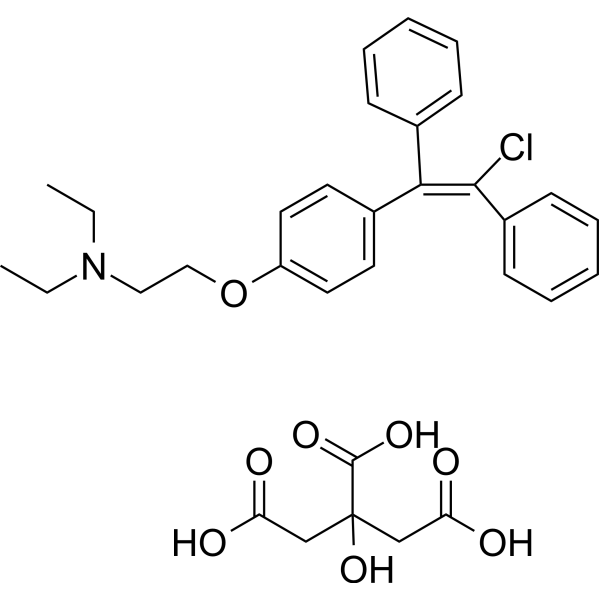
Clomifene citrate
|
Estrogen Receptor/ERR
|
Neurological Disease
Endocrinology
Cancer
|
|
Clomiphene citrate (Clomifene citrate) is an orally active estrogen-receptor modulator. Clomiphene citrate has anti-cancer actixity, induces perturbations during meiotic maturation and cytogenetic abnormalities and ameliorates in managing psychiatric and cognitive impairment .
|
-
-
- HY-103023
-
CLP290
2 Publications Verification
|
Potassium Channel
|
Neurological Disease
|
|
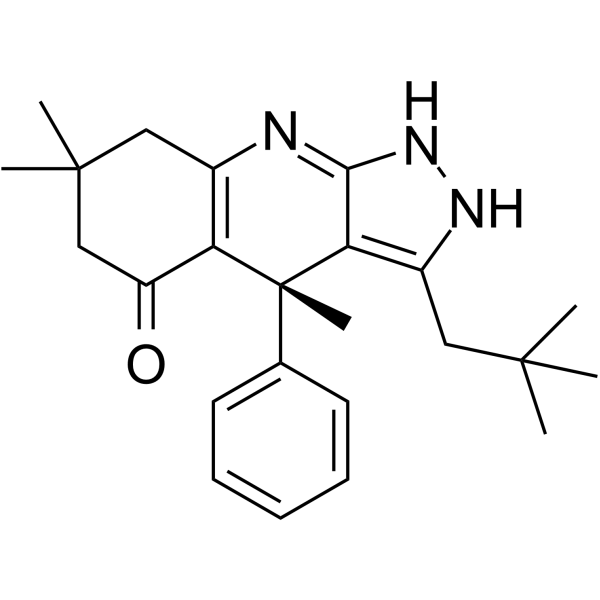
CLP290 is an orally available activator of the neuron-specific K +-Cl - cotransporter KCC2, displays potential for treatment of a wide range of neurological and psychiatric indications. CLP290 can significantly lower blood arginine-vasopressin (AVP) and glucose levels in STZ (HY-13753) rats .
|
-
-
- HY-P6292A
-
|
|
PACAP Receptor
|
Neurological Disease
Inflammation/Immunology
Cancer
|
|
KS-133 TFA is a highly selective and potent antagonist of the vascular active enteropeptide receptor 2 (VIPR2) with IC50 values for Ca influx measurement and cAMP measurement of 24.8 nM and 500 nM, respectively. KS-133 TFA reverses the tumor-promoting M2 phenotype of tumor-associated macrophages to the anti-tumor M1 phenotype, alters the tumor immune microenvironment, and inhibits tumor growth. KS-133 TFA can be used for research on schizophrenia and cancer immune regulation .
|
-
-
- HY-13204A
-
|
KL 373
|
mAChR
|
Neurological Disease
|
|
Biperiden (KL 373) is a non-selective muscarinic receptor antagonist that competitively binds to M1 muscarinic receptors, thereby inhibiting acetylcholine and enhancing dopamine signaling in the central nervous system. Biperiden has the potential for the research of Parkinson's disease and other related psychiatric disorders .
|
-
-
- HY-156601
-
|
LP352
|
5-HT Receptor
|
Neurological Disease
|
|
Bexicaserin (LP352) is a 5-HT2C receptor agonist with potential for studying obesity and psychiatric-related disorders (such as epilepsy) .
|
-
-
- HY-16716
-
|
RG1662; RO5186582
|
GABA Receptor
|
Neurological Disease
|
|
Basmisanil (RG1662) is a highly selective orally active α subunit-containing GABAA receptors (GABAAα5) negative allosteric modulator (NAMs). Basmisanil can inhibit GABAA-α5 with a Ki value of 5 nM and IC50 value of 8 nM, respectively. Basmisanil can be used for the research of multiple cognitive and psychiatric disorders .
|
-
-
- HY-B1487
-
|
Tricyclamol hydrochloride; (±)-Procyclidine hydrochloride
|
iGluR
mAChR
|
Neurological Disease
|
|
Procyclidine (Tricyclamol, (±)-Procyclidine) hydrochloride , an anticholinergic agent, is a muscarinic receptor antagonist that also has the properties of an N-methyl-D-aspartate (NMDA) antagonist. Procyclidine hydrochloride can be used in studies of Parkinson's disease and related psychiatric disorders such as Soman-induced epilepsy .
|
-
-
- HY-13204
-
|
KL 373 hydrochloride
|
mAChR
|
Neurological Disease
|
|
Biperiden (KL 373) hydrochloride is a non-selective muscarinic receptor antagonist that competitively binds to M1 muscarinic receptors, thereby inhibiting acetylcholine and enhancing dopamine signaling in the central nervous system. Biperiden hydrochloride has the potential for the research of Parkinson's disease and other related psychiatric disorders .
|
-
-
- HY-19733
-
|
ITI-007 tosylate
|
5-HT Receptor
Dopamine Receptor
|
Neurological Disease
Cancer
|
|
Lumateperone (ITI-007) tosylate is a 5-HT2A receptor antagonist (Ki = 0.54 nM), a partial agonist of presynaptic D2 receptors and an antagonist of postsynaptic D2 receptors (Ki = 32 nM), and a dopamine D1 receptor modulator. Lumateperone tosylate has anticancer activity and can also be used in studies of psychiatric disorders such as schizophrenia .
|
-
-
- HY-110175
-
CX614
1 Publications Verification
|
iGluR
|
Neurological Disease
|
|
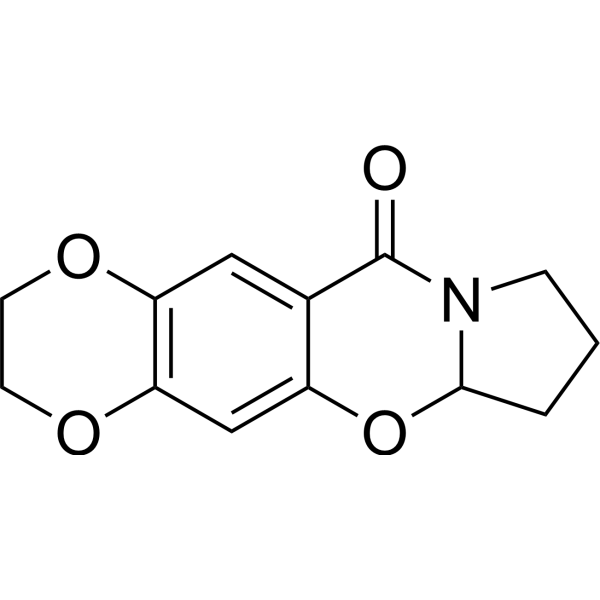
CX614 is a positive variant modulator of AMPA receptors that enhances excitatory postsynaptic potentials (amplitude and duration) by blocking and slowing the inactivation of responses to glutamate and automatically evokes excitatory postsynaptic currents in neuronal cultures. CX614 can be used in the study of psychiatric disorders such as depression .
|
-
-
- HY-15522
-
|
|
Oxytocin Receptor
|
Neurological Disease
|
|
WAY-267464 is a non-peptide oxytocin receptor (OTR) agonist. WAY-267464 can impair social recognition memory in rats through a vasopressin 1A receptor antagonist action. WAY-267464 can be used for the research of psychiatric disorders, such disorders include autism spectrum disorder, schizophrenia, and social anxiety disorder .
|
-
-
- HY-109164
-
|
AGN-241751; GATE-251
|
iGluR
|
Neurological Disease
|
|
Zelquistinel (AGN-241751) is the orally active N-methyl-D-aspartate (NMDA) receptor partial agonist used for the research of depression, anxiety and other related psychiatric disorders .
|
-
-
- HY-W250174
-
|
3,5-Diiodosalicylic acid lithium salt
|
Biochemical Assay Reagents
|
Others
|
|
Lithium 3,5-diiodosalicylate is a compound used in the study of bipolar disorder and other psychiatric disorders. It contains lithium and a salicylate. Lithium 3,5-diiodosalicylate works by affecting the levels of certain neurotransmitters in the brain, including dopamine and serotonin.
|
-
-
- HY-13999
-
|
NSI-189
|
Trk Receptor
|
Neurological Disease
|
|
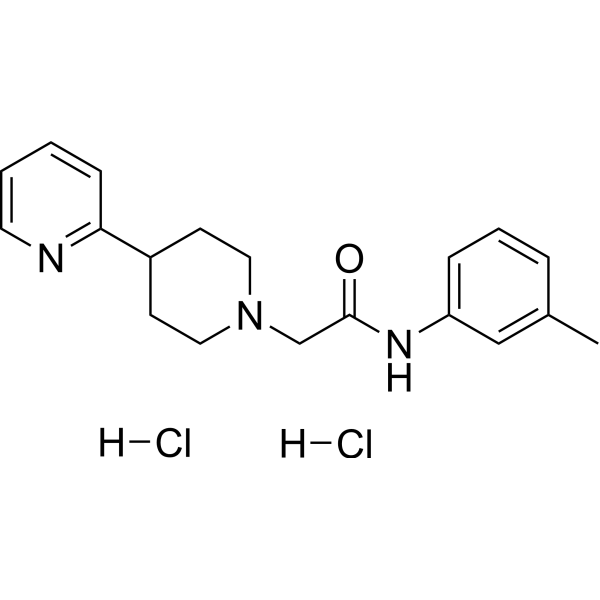
Amdiglurax (NSI-189) is an orally active chemical entity with enhanced neurogenic activity. Amdiglurax up-regulates neurogenic factors such as BDNF (brain derived-neurotrophic factor) and SCF. Amdiglurax exhibits anti-depressant effect. Amdiglurax enhances synaptic plasticity and reduces cognitive dysfunction. Amdiglurax holds potential for psychiatric disorder research .
|
-
-
- HY-124607B
-
BRD3731
2 Publications Verification
|
GSK-3
|
Neurological Disease
Metabolic Disease
|
|
BRD3731 is a selective GSK3β inhibitor, with IC50s of 15 nM and 215 nM for GSK3β and GSK3α, respectively. BRD3731 is potentail for the research of post-traumatic stress disorder (PTSD), psychiatric disorder, diabetes, and neurodegenerative disorders .
|
-
-
- HY-137790
-
|
(-)-Bicuculline methochloride
|
GABA Receptor
|
Neurological Disease
|
|
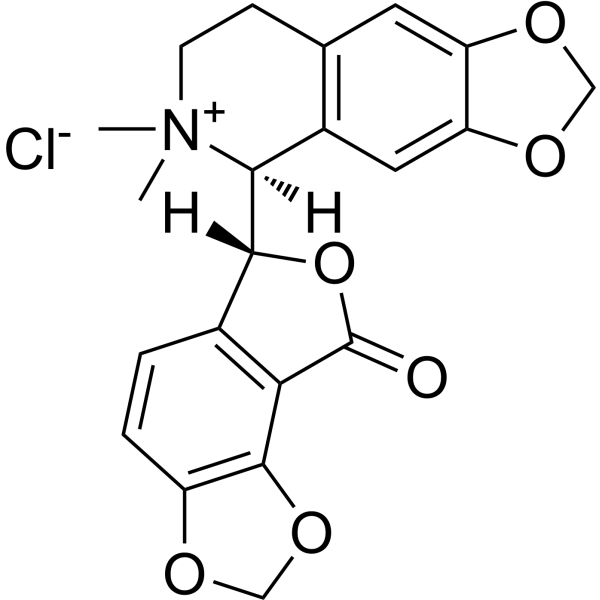
Bicuculline ((+)-Bicuculline; d-Bicuculline) methochloride is a selective GABAA receptor antagonist with an IC50 value of 3 μM. Bicuculline methochloride induces clonic tonic convulsions in mammals and can also be used to block Ca 2+ activated potassium channels. Bicuculline methochloride can be used in studies of epilepsy and other related psychiatric disorders .
|
-
-
- HY-90002
-
|
|
Sigma Receptor
|
Neurological Disease
|
|
4-Phenylpiperidine is a σ receptor ligand with a Ki value of 1980 nM for guinea pig σ receptors. 4-Phenylpiperidine binds to σ receptors. 4-Phenylpiperidine is used in psychiatric disease research .
|
-
-
- HY-156601A
-
|
(S)-LP352
|
5-HT Receptor
|
Neurological Disease
|
|
(S)-Bexicaserin ((S)-LP352) is a 5-HT2C agonist with the potential to be used in the study of obesity and psychiatric-related diseases .
|
-
-
- HY-130125
-
|
|
EAAT
|
Neurological Disease
|
|
SLC1A1/EAAT3-IN-1 (Compound 3e) is a selective EAAT3 inhibitor with an IC50 of 7.2 μM for hEAAT3 over EAAT1,2,4 (IC50: ∼ 250 μM). SLC1A1/EAAT3-IN-1 can be used for psychiatric disorders such as obsessive compulsive disorder and schizophrenia research .
|
-
-
- HY-153530
-
|
|
IPK Superfamily
|
Neurological Disease
Metabolic Disease
|
LI-2242 is an inositol hexakisphosphate kinase (IP6K) inhibitor. LI-2242 has inhibition effect for IP6K1, IP6K2, IP6K3 and IPMK with IC50 values of 31 nM, 42 nM, 8.7 nM and 1944 nM, respectively. LI-2242 can be used for thew research of type II diabetes, obesity, metabolic complications, venous thrombosis, and psychiatric disorders .
|
-
-
- HY-108679
-
|
|
Oxytocin Receptor
|
Neurological Disease
|
|
WAY-267464 (hydrochloride) is a non-peptide oxytocin receptor (OTR) agonist. WAY-267464 (hydrochloride) can impair social recognition memory in rats through a vasopressin 1A receptor antagonist action. WAY-267464 (hydrochloride) can be used for the research of psychiatric disorders, such disorders include autism spectrum disorder, schizophrenia, and social anxiety disorder .
|
-
-
- HY-122805
-
|
|
Ser/Thr Protease
|
Neurological Disease
|
|
PF-794 is a potent, selective and ATP-competitive Traf2- and Nck-interacting kinase (TNIK) inhibitor with an IC50 of 39 nM. PF-794 shows selective for the TNIK family. PF-794 reduces endogenous p120-catenin phosphorylation in cells. PF-794 can be used for teh study of psychiatric disorders .
|
-
-
- HY-175442
-
|
|
iGluR
|
Neurological Disease
|
|
GluN1/3A-IN-2 (Compound DD-1) is a selective GluN1/GluN3A NMDA receptor inhibitor with an IC50 of 1.26 μM for GluN1/GluN3A NMDA receptor. GluN1/3A-IN-2 can be used for neurological and psychiatric disorders research .
|
-
-
- HY-13456
-
|
|
iGluR
|
Neurological Disease
|
|
LY-404187 is a potent, selective and centrally active positive allosteric modulator of AMPA receptors, with the EC50s of 5.65, 0.15, 1.44, 1.66 and 0.21 µM for GluR1i, GluR2i, GluR2o, GluR3i and GluR4i, respectively. LY-404187 has therapeutic potential in a number of psychiatric disorders and neurodegenerative diseases .
|
-
-
- HY-103429
-
|
LY163502
|
Dopamine Receptor
|
Neurological Disease
|
|
Quinelorane dihydrochloride (LY163502) is a potent dopamine D3/D2 receptor agonist. Quinelorane has the potential for neurological and psychiatric disorders research .
|
-
-
- HY-175511
-
|
|
5-HT Receptor
|
Neurological Disease
|
|
5-HT2A agonist 7 (Compound 45) is an orally active and highly selective serotonin receptor 2A (5-HT2A) agonist (EC50=12 nM). 5-HT2A agonist 7 is promising for research of psychiatric disorders such as depression .
|
-
-
- HY-18078
-
|
|
Phosphodiesterase (PDE)
|
Neurological Disease
|
|
PQ-10 is a potent inhibitor of Phosphodiesterase 10A (PDE10A) with IC50 andED50 of 4.6 nM and 13 mg/kg, respectively. PQ-10 induces patterns of brain glucose metabolism which can be a potential translational biomarker. PQ-10 has the potential for researching psychiatric disorders like schizophrenia .
|
-
-
- HY-13999A1
-
|
NSI-189 phosphate
|
Trk Receptor
|
Neurological Disease
|
|
Amdiglurax (NSI-189) phosphate is an orally active chemical entity with enhanced neurogenic activity. Amdiglurax phosphate up-regulates neurogenic factors such as BDNF (brain derived-neurotrophic factor) and SCF. Amdiglurax phosphate exhibits anti-depressant effect. Amdiglurax enhances synaptic plasticity and reduces cognitive dysfunction. Amdiglurax phosphate holds potential for psychiatric disorder research .
|
-
-
- HY-148325
-
|
|
nAChR
|
Neurological Disease
|
|
α7 Nicotinic receptor agonist-1 (Preparation 5) is an α7 nAChR agonist. α7 Nicotinic receptor agonist-1 can be used in studies of psychiatric disorders (such as schizophrenia, manic or hypomanic depression and anxiety disorders) and intellectual disorders (such as alzheimer's disease, learning deficits, cognitive deficits, attention deficits, memory loss, lewy body dementia and attention deficit hyperactivity disorder) .
|
-
-
- HY-101490
-
|
|
Phosphodiesterase (PDE)
|
Neurological Disease
|
|
PDE1-IN-2 is a PDE1 inhibitor extracted from patent WO2016/55618 A1, example 31. PDE1-IN-2 has IC50 values of 6 nM, 140 nM and 164 nM for PDE1C, PDE1B and PDE1A, respectvely. PDE1-IN-2 is developed for the research of neurodegenerative disorders and psychiatric disorders .
|
-
-
- HY-134661
-
|
|
GPR6
|
Neurological Disease
|
|
(S)-CVN424 is a potent G-Protein-Coupled Receptor 6 (GPR6) modulator. (S)-CVN424 has the potential for a variety of neurological and psychiatric disorders research, including Parkinson's disease .
|
-
-
- HY-117292
-
|
|
Amino Acid Oxidase
|
Neurological Disease
|
|
DAO-IN-2 is a d-amino acid oxidase (DAO) inhibitor (h-DAO IC50 = 245 nM). DAO-IN-2 is a moderate inhibitor of DAAO in vitro and in vivo. DAO-IN-2 can be used to study DAAO-related psychiatric disorders .
|
-
-
- HY-100783B
-
|
(+)-Bicuculline methobromide
|
GABA Receptor
|
Neurological Disease
|
|
Bicuculline methobromide is a selective GABAA Receptor antagonist with an IC50 value of 3 μM. Bicuculline methobromide induces clonic tonic convulsions in mammals and can also be used to block Ca 2+ activated potassium channels. Bicuculline methobromide can be used in studies of epilepsy and other related psychiatric disorders .
|
-
-
- HY-B0463R
-
|
Clomifene citrate (Standard)
|
Reference Standards
Estrogen Receptor/ERR
|
Neurological Disease
Endocrinology
Cancer
|
|
Clomiphene (citrate) (Standard) is the analytical standard of Clomiphene (citrate). This product is intended for research and analytical applications. Clomiphene citrate (Clomifene citrate) is an orally active estrogen-receptor modulator. Clomiphene citrate has anti-cancer actixity, induces perturbations during meiotic maturation and cytogenetic abnormalities and ameliorates in managing psychiatric and cognitive impairment .
|
-
-
- HY-A0243
-
|
1664CB; Acepromethazine
|
Histamine Receptor
|
Neurological Disease
|
|
Aceprometazine (1664CB) is an orally active antipsychotic. Aceprometazine can be used in the study of psychiatric disorders, such as depression .
|
-
-
- HY-103424
-
|
|
Dopamine Receptor
|
Neurological Disease
|
|
A-412997 dihydrochloride is a selective dopamine D4 receptor agonist. A-412997 dihydrochloride improves cognitive performance in rats and can be used in the research of psychiatric diseases .
|
-
-
- HY-116076
-
|
|
5-HT Receptor
|
Neurological Disease
|
|
S-15535 is a highly selective 5-HT1A receptor ligand. S-15535 is an antagonist of postsynaptic 5-HT1A receptors and an agonist of presynaptic 5-HT1A receptors. S-15535 can be used in research on psychiatric disorders, such as anti-anxiety .
|
-
-
- HY-161511
-
|
|
5-HT Receptor
|
Neurological Disease
|
|
LPH-5 is a selective 5-HT2A receptor agonist (EC50=190 nM). LPH-5 works by selectively activating the 5-HT2A receptor, which may be involved in regulating mood, perception, and other central nervous system functions associated with the 5-HT2A receptor. LPH-5 can be used to further explore the 5-HT2A receptor in psychiatric disorders, including depression, anxiety, and substance abuse disorders .
|
-
-
- HY-107664A
-
|
|
Neurotensin Receptor
|
Neurological Disease
|
|
SR 142948 dihydrochloride is an orally active and selective non-peptide neurotensin receptor (NT) antagonist with IC50s of 1.19 nM, 0.32 nM, 3.96 nM in h-NTR1-CHO cells, HT-29 cells, and adult rat brain, respectively. SR 142948 dihydrochloride antagonizes NT-induced inositol monophosphate formation in HT-29 cells with an IC50 of 3.9 nM. SR 142948 dihydrochloride blocks hypothermia, analgesia and steering behavior induced by NT in vivo. SR 142948 dihydrochloride shows blood-brain permeability and can be used in study of psychiatric disorders .
|
-
-
- HY-101841
-
|
|
mAChR
|
Neurological Disease
|
|
LY 2033298 is a selective positive allosteric modulator of the muscarinic M4 receptor. LY 2033298 can be used in the study of psychiatric disorders .
|
-
-
- HY-145841
-
|
|
5-HT Receptor
|
Cardiovascular Disease
|
|
5-HT2A receptor agonist-2 is a highly potent serotonin 5-HT2 receptor agonists. 5-HT2A receptor agonist-2 inspires 5-HT2A, 5-HT2B, and 5-HT2C with EC50 values of 1.7, 0.58, and 0.50 nM, respectively .
|
-
-
- HY-156817
-
|
|
TNF Receptor
|
Neurological Disease
|
|
TNIK-IN-6 (Compound 9) is an inhibitor of Traf2 and Nck-interacting kinase (TNIK) and , with IC50 of 0.93 μM, that plays important roles in neurological and psychiatric disorders .
|
-
-
- HY-107505A
-
|
|
mGluR
|
Neurological Disease
|
|
CBiPES is a potent mGlu2 positive allosteric modulator with an EC50 value of 92.8 nM. CBiPES attenuates stress-induced hyperthermia and Phencyclidine-induced hyperlocomotor activity. CBiPES can be used for research of neurological diseases, such as Parkinson's disease (PD) .
|
-
-
- HY-14827
-
|
Lu 31-130
|
Dopamine Receptor
5-HT Receptor
|
Neurological Disease
|
|
Zicronapine is an antipsychotic agent with a strong pro-cognitive effect in animal models and the potential to treat a number of neurological and psychiatric diseases. Zicronapine has potent antagonistic effects at dopamine D1/D2, and serotonin 5-HT2A receptors .
|
-
-
- HY-W773779
-
|
|
GSK-3
|
Neurological Disease
Metabolic Disease
Cancer
|
|
GSK3-IN-9 (Compound 0713) is a selective glycogen synthase kinase 3 (GSK3) inhibitor. GSK3-IN-9 Fragile X syndrome, attention deficit hyperactivity disorder (ADHD), childhood seizure, intellectual disability, diabetes, acute myeloid leukemia (AML), autism, and psychiatric disorder .
|
-
-
- HY-B1487R
-
|
Tricyclamol hydrochloride (Standard); (±)-Procyclidine hydrochloride (Standard)
|
Reference Standards
iGluR
mAChR
|
Neurological Disease
|
|
Procyclidine (hydrochloride) (Standard) is the analytical standard of Procyclidine (hydrochloride). This product is intended for research and analytical applications. Procyclidine (Tricyclamol, (±)-Procyclidine) hydrochloride , an anticholinergic agent, is a muscarinic receptor antagonist that also has the properties of an N-methyl-D-aspartate (NMDA) antagonist. Procyclidine hydrochloride can be used in studies of Parkinson's disease and related psychiatric disorders such as Soman-induced epilepsy .
|
-
-
- HY-14827A
-
|
Lu 31-130 fumarate
|
Dopamine Receptor
5-HT Receptor
|
Neurological Disease
|
|
Zicronapine (Lu 31-130) fumarate is an antipsychotic agent with a strong pro-cognitive effect in animal models and the potential to treat a number of neurological and psychiatric diseases. Zicronapine (Lu 31-130) fumarate has potent antagonistic effects at dopamine D1/D2, and serotonin 5-HT2A receptors .
|
-
-
- HY-179108
-
|
|
iGluR
|
Neurological Disease
|
|
NMDAR modulator 1 (Compound 12) is a positive, allosteric GluN1/GluN2B receptor modulator. NMDAR modulator 1 enhances NMDAR current. NMDAR modulator 1 can be used in the research of psychiatric disorders .
|
-
-
- HY-119114
-
|
|
CRFR
|
Neurological Disease
|
|
E-2508 free base is an orally active and highly selective corticotropin-releasing factor type 1 receptor (CRF1) antagonist with anxiolytic effects (Ki=11 nM). E-2508 free base blocks CRF-induced cAMP accumulation via CRF1 receptor inhibition. E-2508 free base is promising for research of stress-related psychiatric disorders, such as anxiety and depression .
|
-
- HY-118635
-
-
- HY-137161
-
|
DU24565
|
Serotonin Transporter
|
Neurological Disease
|
|
6-Nitroquipazine (DU24565) is a potent and selective 5-HT transporter inhibitor, with a Ki of 0.17 nM. 6-Nitroquipazine can be used in the research of psychiatric disorders such as depression .
|
-
- HY-168537
-
-
- HY-107505
-
|
|
mGluR
|
Neurological Disease
|
|
CBiPES hydrochloride is a mGlu2 receptor positive allosteric modulator (EC50: 92.8 nM). CBiPES hydrochloride attenuates stress-induced hyperthermia and PCP-induced hyperlocomotor activity. CBiPES hydrochloride can be used for research of neurological disease, such as Parkinson's disease (PD) .
|
-
- HY-B1487A
-
|
Tricyclamol; (±)-Procyclidine
|
mAChR
iGluR
|
Neurological Disease
|
|
Procyclidine (Tricyclamol; (±)-Procyclidine), an anticholinergic agent, is a muscarinic receptor antagonist that also has the properties of an N-methyl-D-aspartate (NMDA) antagonist. Procyclidine can be used in studies of Parkinson's disease and related psychiatric disorders such as Soman-induced epilepsy .
|
-
- HY-W012735
-
|
(+)-β-Homoproline; (+)-Hexahydronicotinic acid; (+)-3-Carboxypiperidine
|
GABA Receptor
|
Neurological Disease
|
|
(+)-Nipecotic acid ((+)-β-Homoproline) is a GABA transport inhibitor with potential antidepressant and anxiolytic activities. (+)-Nipecotic acid can increase the concentration of GABA in the synaptic cleft, thereby enhancing inhibitory neurotransmission. The research on (+)-Nipecotic acid provides a possible direction for the development of new inhibitory compounds for psychiatric diseases .
|
-
- HY-109150
-
|
IRL790
|
Dopamine Receptor
|
Neurological Disease
|
|
Mesdopetam (IRL790) is a dopamine D3 receptor antagonist (Ki=90 nM; IC50=9.8 μM for human recombinant D3 receptor) with psychomotor stabilizing properties. Mesdopetam is used for the research of motor and psychiatric complications in Parkinson disease .
|
-
- HY-177282
-
-
- HY-13204R
-
|
KL 373 hydrochloride (Standard)
|
Reference Standards
mAChR
|
Neurological Disease
|
|
Biperiden (hydrochloride) (Standard) is the analytical standard of Biperiden (hydrochloride). This product is intended for research and analytical applications. Biperiden (KL 373) hydrochloride is a non-selective muscarinic receptor antagonist that competitively binds to M1 muscarinic receptors, thereby inhibiting acetylcholine and enhancing dopamine signaling in the central nervous system. Biperiden hydrochloride has the potential for the research of Parkinson's disease and other related psychiatric disorders .
|
-
- HY-131287
-
|
|
mGluR
|
Neurological Disease
|
|
MGS0028 is a selective metabotropic glutamate 2/3 (mGlu2/3) receptor agonist. MGS0028 can be used for psychiatric disorders research .
|
-
- HY-175514
-
|
|
5-HT Receptor
|
Neurological Disease
|
|
5-HT2C agonist-10 (Compound 21) is a 5-HT2C activator with an EC50 of <10 nM. 5-HT2C agonist-10 is used in the research of psychiatric disorders .
|
-
- HY-161433
-
|
|
Monoamine Transporter
|
Neurological Disease
|
|
VMAT2-IN-3 (compound 10) is a potent vesicular monoamine transporter-2 (VMAT2) inhibitor with a Ki of 0.71 nM. VMAT2-IN-3 has the potential for neurological or psychiatric disease research .
|
-
- HY-149859
-
|
|
HDAC
|
Neurological Disease
|
|
HDAC-IN-58 is a HDAC inhibitor. HDAC-IN-58 has HDAC6-specific inhibition activity with an IC50 value of 2.06 nM. HDAC-IN-58 can be used for the research of chronic diseases, including neurodegenerative and psychiatric conditions .
|
-
- HY-146076
-
|
|
5-HT Receptor
|
Neurological Disease
|
|
5-HT6/5-HT2A receptor ligand-1 (compound 33) is a dual 5-HT6/5-HT2A receptor antagonist, with a Ki of 2 nM and 11 nM, respectively. 5-HT6/5-HT2A receptor ligand-1 has the potential for neurological and psychiatric disorders research .
|
-
- HY-120727
-
|
|
mGluR
|
Neurological Disease
|
|
VU0364289 is a highly selective mGlu5 positive allosteric modulator (PAM) (binds to the MPEP (HY-14609A) site), with an EC50 of 1.6 μM. VU0364289 shows excellent central nervous system penetration. VU0364289 can reverse amphetamine-induced hyperlocomotion in a dose-dependent manner, which can be used for schizophrenia and other psychiatric research .
|
-
- HY-171794
-
|
|
5-HT Receptor
|
Neurological Disease
|
|
AZD1134 is an orally active, brain-penetrant and highly selective 5-HT1B receptor antagonist with IC50 values of 2.9 nM (human) and 0.108 nM (guinea pig), respectively. AZD1134 increases synaptic serotonin levels in guinea pigs. AZD1134 is promising for research of psychiatric disorders, such as depression and anxiety .
|
-
- HY-109167A
-
|
(R)-Amisulpride hydrochloride; (R)-Esamisulpride hydrochloride; (R)-DAN 2163 hydrochloride
|
Dopamine Receptor
5-HT Receptor
|
Neurological Disease
|
|
Aramisulpride hydrochloride is a 5-HT7 receptor antagonist with a Ki value of 22 nM. Aramisulpride hydrochloride is a D2/D3 receptor antagonist with a Ki value of 140 nM for D2R and a Ki value of 13.9 nM for D3R. Aramisulpride hydrochloride can be used in psychiatric research .
|
-
- HY-118538
-
-
- HY-U00021
-
|
Clotixamide
|
Dopamine Receptor
|
Neurological Disease
|
|
Clothixamide (Clotixamide) is an orally active and brain-penetrant dopamine antagonist. Clothixamide can be used for the research of psychiatric disorders .
|
-
- HY-U00077
-
-
- HY-159689
-
|
|
5-HT Receptor
|
Neurological Disease
|
|
Cloroperone is a 5-HT2 receptor inhibitor with a Ki value of 4.5 nM. Cloroperone can be used in research on psychiatric disorders .
|
-
- HY-117847
-
-
- HY-107693
-
-
- HY-10814
-
|
|
nAChR
|
Neurological Disease
|
|
CP-810123 is a brain-permeable agonist of α7 nAChR for the research of cognitive impairment associated with psychiatric or neurological disorders such as schizophrenia and Alzheimer's disease .
|
-
- HY-155989
-
|
|
GSK-3
|
Neurological Disease
|
|
GSK3-IN-4 (compound 0715) is a potent GSK3 inhibitor. GSK3-IN-4 can be used for psychiatric disorder research .
|
-
- HY-163096
-
|
|
GPR88
|
Neurological Disease
|
|
GPR88 agonist 3 (compound 20) is a GPR88 agonist 3, with an EC50 of 204 nM. GPR88 agonist 3 can be used for psychiatric and neurodegenerative disorders research .
|
-
- HY-172121
-
|
|
iGluR
|
Neurological Disease
|
|
NMDA agonist 2 (compound 8d) is a potent agonist of NMDA receptor, with the EC50 of 0.034 μM for GluN1/2C. NMDA agonist 2 plays an important role in neurological and psychiatric disorders .
|
-
- HY-169162
-
|
|
Carbonic Anhydrase
Cholinesterase (ChE)
|
Neurological Disease
|
|
hBChE-IN-3 (compound 30) is a combination of carbonic anhydrase (CA) activator and cholinesterase (ChE) inhibitor with IC50 values of 7.4 and 1.9 nM for AchE and BchE, respectively. hBChE-IN-3 can be used in the study of neurodegeneration and psychiatric disorders .
|
-
- HY-103217
-
-
- HY-109150A
-
|
IRL790 hemitartrate
|
Dopamine Receptor
|
Neurological Disease
|
|
Mesdopetam (IRL790) hemitartrate is a dopamine D3 receptor antagonist (Ki=90 nM; IC50=9.8 μM for human recombinant D3 receptor) with psychomotor stabilizing properties. Mesdopetam hemitartrate is used for the research of motor and psychiatric complications in Parkinson disease .
|
-
- HY-U00427
-
|
|
Phosphodiesterase (PDE)
|
Neurological Disease
Cancer
|
|
PDE2A-IN-3 (Example Ic1) is a selective phosphodiesterase 2A (PDE2A) inhibitor with IC50s of 69 nM and 1762 nM for PDE2A and PDE10, respectively. PDE2A-IN-3 can be used for the study of neurological and psychiatric disorders .
|
-
- HY-106153B
-
|
|
Sigma Receptor
|
Neurological Disease
|
|
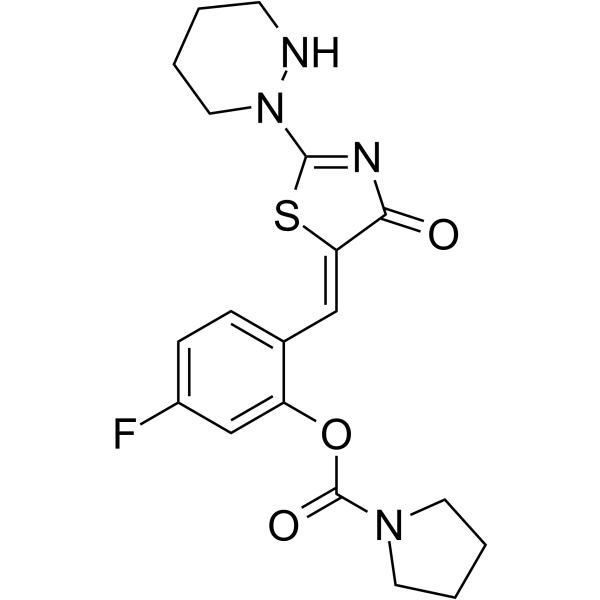
E-5842 citrate is a σ receptor ligand (Ki: 4 nM for σ1 receptor). E-5842 citrate increases levels of Fos in the medial prefrontal cortex and the nucleus accumbens, without affecting the levels of the protein in the striatum. E-5842 citrate can be used in the research of psychiatric disorders .
|
-
- HY-B1487S1
-
|
Tricyclamol-d5; (±)-Procyclidine-d5
|
Isotope-Labeled Compounds
iGluR
mAChR
|
Neurological Disease
|
|
Procyclidine-d5 (Tricyclamol-d5) is deuterium labeled Procyclidine (hydrochloride). Procyclidine (Tricyclamol, (±)-Procyclidine) hydrochloride , an anticholinergic agent, is a muscarinic receptor antagonist that also has the properties of an N-methyl-D-aspartate (NMDA) antagonist. Procyclidine hydrochloride can be used in studies of Parkinson's disease and related psychiatric disorders such as Soman-induced epilepsy .
|
-
- HY-W882667
-
|
|
iGluR
|
Neurological Disease
|
|
Pregn-5-en-3β-ol, a steroid compound, when formulated as the biscarboxylic acid hemiesters along with androst-5-en-3β-ol, serves as a potent positive allosteric modulator of NMDA (N-methyl-D-aspartate) receptors, making it applicable for research into psychiatric disorders .
|
-
- HY-186065
-
|
|
HCN Channel
|
Neurological Disease
|
|
HCN2-IN-1 (compound 32) is a HCN2 inhibitor with the IC50 of 98 nM. HCN2-IN-1 can be used for the research of central nervous system (CNS) and psychiatric disorders .
|
-
- HY-183948
-
|
|
iGluR
|
Neurological Disease
|
|
CNS0042 is an allosteric modulator of NMDA receptor. CNS0042 can be used for the research of NMDA receptor-mediated neurological or psychiatric disease .
|
-
- HY-186061A
-
|
|
Potassium Channel
|
Neurological Disease
|
|
HCN2 modulator-8 is a pyrazolopyridine derivative and selective HCN2 inhibitor. HCN2 modulator-8 can be used for the research of pain, tinnitus, central nervous system disorders, psychiatric disorders, mood disorders .
|
-
- HY-180423
-
|
|
Adenosine Receptor
|
Neurological Disease
|
|
IRFI-165 is a potent and selective A1 adenosine receptor antagonist with a Ki of 7.9 nM for rat A1 AR. IRFI-165 exhibies high selectivity versus A2A and A3 receptors. IRFI-165 induces antidepressant activity in vivo. IRFI-165 can be used for the research of psychiatric and neurological disorders .
|
-
- HY-186059
-
|
|
Potassium Channel
|
Neurological Disease
|
|
HCN2 modulator-4 is a HCN2 ion channel inhibitor. HCN2 modulator-4 inhibits HCN2 ion channel activity. HCN2 modulator-4 can be used for the research of pain, inflammatory pain, neuropathic pain, tinnitus, central nervous system disorders, psychiatric disorders, mood disorders .
|
-
- HY-186059A
-
|
|
Potassium Channel
|
Neurological Disease
|
|
HCN2 modulator-5 (S-configuration 39) is a HCN2 ion channel inhibitor. HCN2 modulator-5 inhibits HCN2 ion channel activity. HCN2 modulator-5 can be used for the research of pain, inflammatory pain, neuropathic pain, tinnitus, central nervous system disorders, psychiatric disorders, mood disorders .
|
-
- HY-186060
-
|
|
HCN Channel
|
Neurological Disease
|
|
HCN2 modulator-6 is a HCN2 ion channel inhibitor has an IC50 of 7 nM. HCN2 modulator-6 inhibits HCN2 ion channel activity. HCN2 modulator-6 can be used for the research of pain, inflammatory pain, neuropathic pain, tinnitus, central nervous system disorders, psychiatric disorders, mood disorders .
|
-
- HY-167665
-
-
- HY-179319
-
-
- HY-138060
-
-
- HY-W707780
-
-
- HY-107505AR
-
|
|
Reference Standards
mGluR
|
Neurological Disease
|
|
CBiPES (Standard) is the analytical standard of CBiPES (HY-107505A). This product is intended for research and analytical applications. CBiPES is a potent mGlu2 positive allosteric modulator with an EC50 value of 92.8 nM. CBiPES attenuates stress-induced hyperthermia and Phencyclidine-induced hyperlocomotor activity. CBiPES can be used for research of neurological diseases, such as ParKinson's disease (PD) .
|
-
- HY-177410
-
|
|
mAChR
|
Neurological Disease
|
|
Muscarinic M1 receptor agonist-1 (Ex.1-21) is a Muscarinic M1 receptor agonist. Muscarinic M1 receptor agonist-1 can be used in the research of psychiatric disorders such as schizophrenia .
|
-
- HY-204630
-
|
|
iGluR
|
Neurological Disease
|
|
NMDAR modulator 2 (comound 9062) is a NMDA receptor modulator that is modulator of NMDA receptor function. NMDAR modulator 2 can be used for the study of psychiatric disorders in which glutamatergic transmission is pathologically increased (e.g., treatment resistant depression) .
|
-
- HY-101841R
-
|
|
mAChR
Reference Standards
|
Neurological Disease
|
|
LY 2033298 (Standard) is the analytical standard of LY 2033298 (HY-101841). This product is intended for research and analytical applications. LY 2033298 is a selective positive allosteric modulator of the muscarinic M4 receptor. LY 2033298 can be used in the study of psychiatric disorders .
|
-
- HY-181047
-
|
|
Dopamine Receptor
|
Neurological Disease
|
|
FMJ-01-042 is a blood-brain barrier-permeable, low-efficacy partial agonist with high affinity (Kᵢ = 4.33 nM) and exceptional subtype selectivity for the dopamine D4 receptor. FMJ-01-042 exhibits good metabolic stability and is suitable for research on neurological and psychiatric disorders .
|
-
- HY-13204B
-
|
KL 373 lactate
|
mAChR
|
Neurological Disease
|
|
Biperiden (KL 373) lactate is an orally active non-selective muscarinic receptor antagonist that competitively binds to M1 muscarinic receptors. Biperiden (KL 373) lactate inhibits acetylcholine and enhances dopamine signaling in the central nervous system. Biperiden (KL 373) lactate has the potential for the research of Parkinson's disease and other related psychiatric disorders .
|
-
- HY-13204AR
-
|
KL 373 (Standard)
|
Reference Standards
mAChR
|
Neurological Disease
|
|
Biperiden (Standard) is the analytical standard of Biperiden. This product is intended for research and analytical applications. Biperiden (KL 373) is a non-selective muscarinic receptor antagonist that competitively binds to M1 muscarinic receptors, thereby inhibiting acetylcholine and enhancing dopamine signaling in the central nervous system. Biperiden has the potential for the research of Parkinson's disease and other related psychiatric disorders .
|
-
- HY-109167
-
|
(R)-Amisulpride; (R)-Esamisulpride; (R)-DAN 2163
|
Dopamine Receptor
5-HT Receptor
|
Neurological Disease
|
|
Aramisulpride (R-(+)-Amisulpride) is the R-isomer of Amisulpride (HY-14545). Aramisulpride is a 5-HT7 receptor antagonist with a Ki value of 22 nM. Aramisulpride is a D2/D3 receptor antagonist with a Ki value of 140 nM for D2R and a Ki value of 13.9 nM for D3R. Aramisulpride can be used in psychiatric research .
|
-
- HY-W424918
-
|
|
Dopamine Receptor
|
Neurological Disease
|
|
Opromazine hydrochloride is an antipsychotic medication that exhibits sedative and antiemetic pharmacological effects, making it effective for treating psychiatric disorders such as schizophrenia and psychosis. Opromazine hydrochloride functions by reducing dopaminergic activity through the blockade of dopamine receptors in the brain. Opromazine hydrochloride has been analyzed for its metabolites in various microsomal enzymes, revealing differences in formation rates that underscore the variability of drug-metabolizing enzymes in human liver and placenta microsomes.
|
-
- HY-145487A
-
|
|
5-HT Receptor
Adrenergic Receptor
|
Neurological Disease
|
|
5-Hydroxy-6-methoxy (S)-duloxetine maleate is an orally active and brain-penetrant serotonin (5-HT) and norepinephrine (NE) reuptake inhibitor with antidepressant and analgesic activities. 5-Hydroxy-6-methoxy (S)-duloxetine maleate is promising for research of psychiatric and neurological disorders such as depression, diabetic neuropathic pain, generalized anxiety disorder, and fibromyalgia .
|
-
- HY-113967
-
|
|
Aminotransferases (Transaminases)
|
Neurological Disease
|
|
PF-04859989 is a brain-penetrant, irreversible kynurenine aminotransferase (KAT) II inhibitor with IC50s of 23 and 263 nM for hKAT II and rKAT II. PF-04859989 is selective for KAT II over human KAT I, KAT III, and KAT IV (IC50s of 22, 11, and >50 μM, respectively) .
|
-
- HY-116451
-
|
|
Aminotransferases (Transaminases)
|
Neurological Disease
|
|
PF-04859989 hydrochloride is a brain-penetrant, irreversible kynurenine aminotransferase (KAT) II inhibitor with IC50s of 23 and 263 nM for hKAT II and rKAT II. PF-04859989 hydrochloride is selective for KAT II over human KAT I, KAT III, and KAT IV (IC50s of 22, 11, and >50 μM, respectively) .
|
-
- HY-141495A
-
-
- HY-59201A
-
|
|
ERK
5-HT Receptor
Epigenetic Reader Domain
nAChR
|
Neurological Disease
Metabolic Disease
|
|
A-582941 dihydrochloride is a selective, orally active, blood-brain barrier-permeable α7 nAChR agonist, with Ki values of 10.8 nM and 17 nM in rat brain and human frontal cortex, respectively. A-582941 dihydrochloride exhibits agonistic activity at 5-HT3 receptors, with a Ki of 150 nM. A-582941 dihydrochloride triggers phosphorylation of ERK1/2 and CREB, inhibits GSK-3β via Ser-9 phosphorylation, increases acetylcholine release, induces the expression of Arc and c-Fos, activates brain regions associated with working memory and attention, and reduces cell death caused by nerve growth factor (NGF) deprivation. A-582941 dihydrochloride is applicable for the research of Alzheimer's disease and schizophrenia .
|
-
- HY-108015R
-
|
|
Reference Standards
Trace Amine-associated Receptor (TAAR)
|
Neurological Disease
|
|
RO5263397 (Standard) is the analytical standard of RO5263397 (HY-108015). This product is intended for research and analytical applications. RO5263397 is a potent, selective, and orally available TAAR1 agonist, with EC50s of 17 and 35 nM for human TAAR1 and rat TAAR1, respectively. RO5263397 regulates wakefulness and EEG spectral composition. Antidepressant-like effect .
|
-
- HY-108015
-
|
|
Trace Amine-associated Receptor (TAAR)
|
Neurological Disease
|
|
RO5263397 is a potent, selective, and orally available TAAR1 agonist, with EC50s of 17 and 35 nM for human TAAR1 and rat TAAR1, respectively. RO5263397 regulates wakefulness and EEG spectral composition. Antidepressant-like effect .
|
-
- HY-113969
-
|
|
Endogenous Metabolite
|
Neurological Disease
|
|
7,8-Dichloro-1,2,3,4-tetrahydroisoquinoline (compound 11), a tetrahydroisoquinoline (THIQ) derivative, is a selective phenylethanolamine N-methyltransferase (PNMT) inhibitor with a Ki value of 0.3 μM. 7,8-Dichloro-1,2,3,4-tetrahydroisoquinoline can be used in research on psychiatric disorders related to Alzheimer's disease and Parkinson's disease .
|
-
- HY-13204AS
-
|
KL 373-d5
|
Isotope-Labeled Compounds
mAChR
|
Neurological Disease
|
|
Biperiden-d5 (KL 373-d5) is deuterium labeled Biperiden. Biperiden (KL 373) is a non-selective muscarinic receptor antagonist that competitively binds to M1 muscarinic receptors, thereby inhibiting acetylcholine and enhancing dopamine signaling in the central nervous system. Biperiden has the potential for the research of Parkinson's disease and other related psychiatric disorders .
|
-
- HY-12152
-
|
NSC 216666
|
nAChR
|
Neurological Disease
Inflammation/Immunology
|
|
PNU-120596 (NSC 216666) is a potent and selective α7 nAChR positive allosteric modulator (PMA) that can cross the blood-brain barrier, with an EC50 of 216 nM. PNU-120596 is inactive against α4β2, α3β4, and α9α10 nAChRs. PNU-120596 has the potential for psychiatric and neurological disorders research .
|
-
- HY-103023R
-
|
|
Reference Standards
Potassium Channel
|
Neurological Disease
|
|
CLP290 (Standard) is the analytical standard of CLP290 (HY-103023). This product is intended for research and analytical applications. CLP290 is an orally available activator of the neuron-specific K+-Cl- cotransporter KCC2, displays potential for treatment of a wide range of neurological and psychiatric indications. CLP290 can significantly lower blood arginine-vasopressin (AVP) and glucose levels in STZ (HY-13753) rats .
|
-
- HY-W648166
-
|
|
Dopamine Receptor
|
Neurological Disease
|
|
Dopamine D2 receptor antagonist-3 (Example 17) is an orally active and selective dopamine D2 receptor antagonist with a pIC50 of 5.52. Dopamine D2 receptor antagonist-3 exhibits antipsychotic activity in the Apomorphine (HY-12723) induced agitation in rats. Dopamine D2 receptor antagonist-3 can be used for psychiatric and neurological disorders research .
|
-
- HY-B0527A
-
|
|
Serotonin Transporter
5-HT Receptor
mAChR
Histamine Receptor
Adrenergic Receptor
Trk Receptor
Sodium Channel
Potassium Channel
Dopamine Transporter
Apoptosis
|
Neurological Disease
Inflammation/Immunology
Endocrinology
|
|
Amitriptyline hydrochloride is an orally active tricyclic antidepressant (TCA). Amitriptyline hydrochloride mainly exerts its antidepressant effect by blocking SERT (Ki = 3.45 nM) and NET (Ki = 13.3 nM), thereby increasing the concentrations of 5-hydroxytryptamine (5-HT) and norepinephrine (NE) in the synaptic cleft. Amitriptyline hydrochloride is also an agonist at α2A and TrkA/TrkB receptors, thereby exerting analgesic and neurotrophic activities (inhibiting cell apoptosis). Amitriptyline hydrochloride can reduce inflammation, angiogenesis and fibrosis. Amitriptyline hydrochloride binds to DAT (with Ki = 2.58 μM). Amitriptyline hydrochloride has high affinity for a series of receptors and can antagonize muscarinic cholinergic receptors (M1/M2/M3/M4/M5 receptors) (Ki = 11-24 nM), H1 receptors (Ki = 0.5-1.1 nM), adrenergic α1 receptors (Ki = 4.4 nM), etc., resulting in a series of side effects. Amitriptyline hydrochloride can block sodium channels and hERG potassium channel (IC50 = 4.78 μM) and it has cardiotoxicity .
|
-
- HY-B0527
-
|
|
Serotonin Transporter
Trk Receptor
Sodium Channel
5-HT Receptor
Histamine Receptor
Adrenergic Receptor
mAChR
Potassium Channel
Dopamine Transporter
Apoptosis
|
Neurological Disease
Inflammation/Immunology
Endocrinology
|
|
Amitriptyline is an orally active tricyclic antidepressant (TCA). Amitriptyline mainly exerts its antidepressant effect by blocking SERT (Ki = 3.45 nM) and NET (Ki = 13.3 nM), thereby increasing the concentrations of 5-hydroxytryptamine (5-HT) and norepinephrine (NE) in the synaptic cleft. Amitriptyline is also an agonist at α2A and TrkA/TrkB receptors, thereby exerting analgesic and neurotrophic activities (inhibiting cell apoptosis). Amitriptyline can reduce inflammation, angiogenesis and fibrosis. Amitriptyline binds to DAT (with Ki = 2.58 μM). Amitriptyline has high affinity for a series of receptors and can antagonize muscarinic cholinergic receptors (M1/M2/M3/M4/M5 receptors) (Ki = 11-24 nM), H1 receptors (Ki = 0.5-1.1 nM), adrenergic α1 receptors (Ki = 4.4 nM), etc., resulting in a series of side effects. Amitriptyline can block sodium channels and hERG potassium channel (IC50 = 4.78 μM) and it has cardiotoxicity .
|
-
- HY-158264
-
-
- HY-174259
-
|
|
mAChR
|
Neurological Disease
|
|
Muscarinic M4 modulator-1 is a Muscarinic M4 receptor positive allosteric modulator. Muscarinic M4 modulator-1 activates the muscarinic M4 receptor with allosteric potency EC50 s of 14 and 3 Nm in CHO-K1 cells and HEK293 cells. Muscarinic M4 modulator-1 has an antipsychotic-like activity, promising for psychiatric and/or neurological disorders research .
|
-
- HY-179240
-
|
|
Dopamine Receptor
|
Neurological Disease
|
|
UNC9815 is a D1 dopamine receptor (D1R) orthosteric allosteric modulator (PAM). UNC9815 can dose-dependently enhance the functional efficacy of dopamine in β-inhibitory protein recruitment experiments and cAMP accumulation experiments. When used in combination with other PAMs, UNC9815 exhibits a significant synergistic enhancement effect. UNC9815 can be used to study neurological and psychiatric diseases such as Parkinson's disease and schizophrenia .
|
-
- HY-118317
-
|
|
5-HT Receptor
|
Cardiovascular Disease
Neurological Disease
|
|
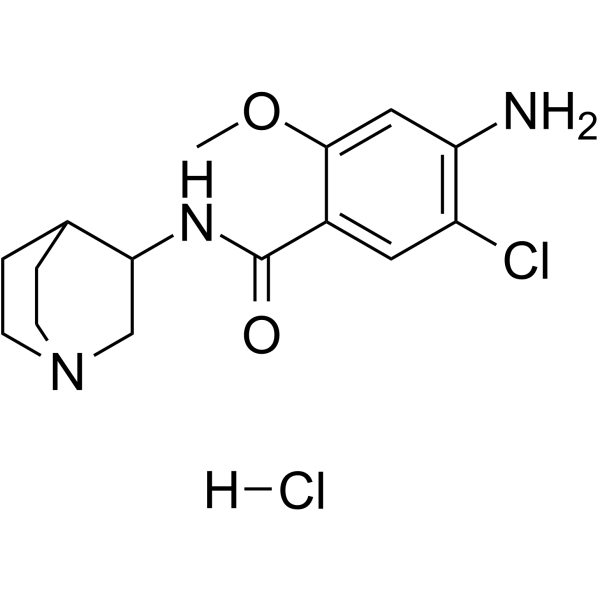
Zacopride is an orally active 5-HT3 receptor (Ki of 0.38 nM) antagonist and 5-HT4 receptor (Ki of 373 nM) agonist. Zacopride exhibits multiple activities, such as regulating gastrointestinal motility, affecting cardiac function, and exerting anxiolytic and antiemetic effects. Zacopride is currently mainly used in the research of gastrointestinal diseases, cardiovascular diseases, and psychiatric diseases such as anxiety .
|
-
- HY-103137
-
|
|
5-HT Receptor
|
Cardiovascular Disease
Neurological Disease
|
|
Zacopride hydrochloride is an orally active 5-HT3 receptor (Ki of 0.38 nM) antagonist and 5-HT4 receptor (Ki of 373 nM) agonist. Zacopride hydrochloride exhibits multiple activities, such as regulating gastrointestinal motility, affecting cardiac function, and exerting anxiolytic and antiemetic effects. Zacopride hydrochloride is currently mainly used in the research of gastrointestinal diseases, cardiovascular diseases, and psychiatric diseases such as anxiety .
|
-
- HY-B1482A
-
|
TPS-23
|
Potassium Channel
|
Neurological Disease
|
|
Mesoridazine (TPS-23) , a metabolite of Thioridazine (HY-B0965A), acts as an orally active phenothiazine antipsychotic agent. Mesoridazine is a potent and rapid open-channel blocker of human ether-a-go-go related gene (hERG) channels and blocks hERG currents with an IC50 of 550 nM (at 0 mV) in human embryonic kidney 293 cells .Mesoridazine can be used for the research of schizophrenia, as well as certain other psychiatric disorders .
|
-
- HY-182440
-
|
|
5-HT Receptor
|
Neurological Disease
|
|
AZD3783 is an orally active, blood-brain barrier-penetrant 5-HT1B receptor antagonist. AZD3783 reverses agonist-induced hypothermia, inhibits separation-induced vocalizations in guinea pig pups, and acts as a moderately permeable glycoprotein substrate with moderate clearance. AZD3783 inhibits hERG channel activity. AZD3783 is applicable for research on depression, anxiety disorders, and other psychiatric diseases associated with serotonergic neurotransmission .
|
-
- HY-B1482
-
|
TPS-23 benzenesulfonate
|
Potassium Channel
|
Neurological Disease
|
|
Mesoridazine (TPS-23) benzenesulfonate, a metabolite of Thioridazine (HY-B0965A), acts as an orally active phenothiazine antipsychotic agent. Mesoridazine benzenesulfonate is a potent and rapid open-channel blocker of human ether-a-go-go related gene (hERG) channels and blocks hERG currents with an IC50 of 550 nM (at 0 mV) in human embryonic kidney 293 cells .Mesoridazine benzenesulfonate can be used for the research of schizophrenia, as well as certain other psychiatric disorders .
|
-
- HY-180832
-
|
|
COX
|
Neurological Disease
|
|
COX-1 ligand 1 (Compound 44) is a selective COX-1 ligand (Kds or Kis: 22 nM for rhesus monkey COX-1; 43 nM for hCOX-1). COX-1 ligand 1 inhibits [ 3H]PS13 binding to human COX-1. COX-1 ligand 1, when radiolabeled with 11C or 18F, can be used in studies of COX-1 imaging and psychiatric disorders .
|
-
- HY-14545
-
|
(Rac)-Aramisulpride; (Rac)-Esamisulpride; DAN 2163
|
Dopamine Receptor
5-HT Receptor
|
Neurological Disease
|
|
Amisulpride ((Rac)-Aramisulpride) is a racemic (50:50) mixture of the R-Amisulpride (HY-109167) and S-Amisulpride (HY-126068). Amisulpride is a dopamine D2/D3 receptor antagonist with Ki values of 2.8 and 3.2 nM for human dopamine b>D2 and b>D3, respectively. Amisulpride is a 5-HT7 receptor antagonist with a Ki of 44 nM. Amisulpride can be used in psychiatric research .
|
-
- HY-B1693
-
|
Methotrimeprazine
|
5-HT Receptor
Dopamine Receptor
Histamine Receptor
Autophagy
Enterovirus
Calcium Channel
|
Infection
Neurological Disease
Inflammation/Immunology
|
|
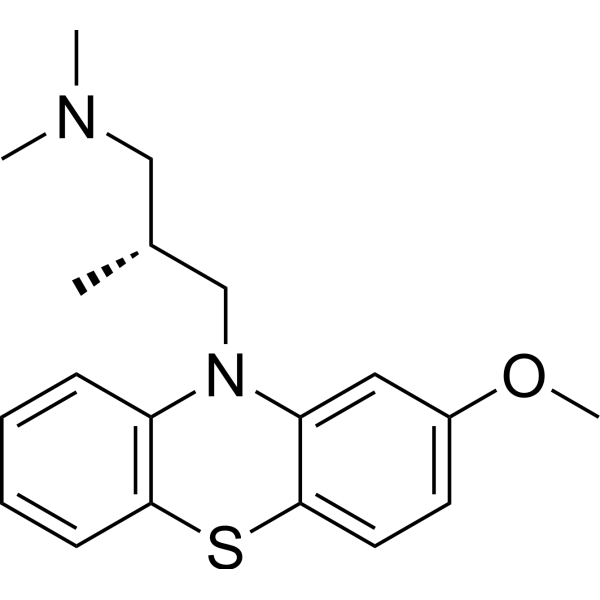
Levomepromazine (Methotrimeprazine) is an orally active antipsychotic compound and Ca 2+ release inducer. Levomepromazine inhibits SERCA pump and induces an increase in cytoplasmic Ca 2+ levels. Levomepromazine has antagonistic effects on a variety of neurotransmitter receptors, including dopamine, cholinergic, serotonin, and histamine receptors. Levomepromazine can induce adaptive ER stress and autophagy. In addition, Levomepromazine has antiviral, anti-inflammatory, neuroprotective and analgesic, sedative and anti-injurious activities. Levomepromazine can be used in the study psychiatric disorders and relieving nausea and vomiting .
|
-
- HY-B1482AS
-
|
|
Isotope-Labeled Compounds
Potassium Channel
|
Neurological Disease
|
|
Mesoridazine-d3 is the deuterium labeled Mesoridazine (HY-B1482A). Mesoridazine (TPS-23) , a metabolite of Thioridazine (HY-B0965A), acts as an orally active phenothiazine antipsychotic agent. Mesoridazine is a potent and rapid open-channel blocker of human ether-a-go-go related gene (hERG) channels and blocks hERG currents with an IC50 of 550 nM (at 0 mV) in human embryonic kidney 293 cells .Mesoridazine can be used for the research of schizophrenia, as well as certain other psychiatric disorders .
|
-
- HY-19733S
-
|
ITI-007-13C,d3 tosylate
|
Isotope-Labeled Compounds
Dopamine Receptor
5-HT Receptor
|
Neurological Disease
Cancer
|
|
Lumateperone- 13C,d3 (ITI-007- 13C,d3) tosylate is 13C and deuterium labeled Lumateperone (tosylate). Lumateperone (ITI-007) tosylate is a 5-HT2A receptor antagonist (Ki = 0.54 nM), a partial agonist of presynaptic D2 receptors and an antagonist of postsynaptic D2 receptors (Ki = 32 nM), and a dopamine D1 receptor modulator. Lumateperone tosylate has anticancer activity and can also be used in studies of psychiatric disorders such as schizophrenia .
|
-
- HY-B1693A
-
|
Methotrimeprazine hydrochloride
|
5-HT Receptor
Dopamine Receptor
Histamine Receptor
Autophagy
Enterovirus
Calcium Channel
|
Infection
Neurological Disease
Inflammation/Immunology
|
|
Levomepromazine (Methotrimeprazine) hydrochloride is an orally active antipsychotic compound and Ca 2+ release inducer. Levomepromazine inhibits SERCA pump and induces an increase in cytoplasmic Ca 2+ levels. Levomepromazine hydrochloride has antagonistic effects on a variety of neurotransmitter receptors, including dopamine, cholinergic, serotonin, and histamine receptors. Levomepromazine hydrochloride can induce adaptive ER stress and autophagy. In addition, Levomepromazine hydrochloride has antiviral, anti-inflammatory, neuroprotective and analgesic, sedative and anti-injurious activities. Levomepromazine hydrochloride can be used in the study psychiatric disorders and relieving nausea and vomiting .
|
-
- HY-122742
-
|
|
iGluR
|
Neurological Disease
|
|
HBT1 is an effective AMPA receptor AMPA-R potentiator. HBT1 specifically binds to the ligand-binding domain (LBD) of AMPAR and enhances receptor activity only when AMPA is present., HBT1 has almost no agonistic effect (i.e., reaching the optimal concentration, and then the efficacy decreases as the concentration continues to increase) compared with traditional AMPA-R potentiator, avoiding the bell-shaped reaction of brain-derived neurotrophic factor (BDNF) production in primary neurons. HBT1 can be applicable to a wider range of neurological and psychiatric diseases (such as depression, Alzheimer's disease, etc.) .
|
-
- HY-B1693R
-
|
Methotrimeprazine (Standard)
|
Reference Standards
5-HT Receptor
Dopamine Receptor
Autophagy
Histamine Receptor
Enterovirus
Calcium Channel
|
Infection
Neurological Disease
Inflammation/Immunology
|
|
Levomepromazine (Standard) is the analytical standard of Levomepromazine. This product is intended for research and analytical applications. Levomepromazine (Methotrimeprazine) is an orally active antipsychotic compound and Ca 2+ release inducer. Levomepromazine inhibits SERCA pump and induces an increase in cytoplasmic Ca 2+ levels. Levomepromazine has antagonistic effects on a variety of neurotransmitter receptors, including dopamine, cholinergic, serotonin, and histamine receptors. Levomepromazine can induce adaptive ER stress and autophagy. In addition, Levomepromazine has antiviral, anti-inflammatory, neuroprotective and analgesic, sedative and anti-injurious activities. Levomepromazine can be used in the study psychiatric disorders and relieving nausea and vomiting .
|
-
- HY-101392S
-
|
|
Imidazoline Receptor
Monoamine Oxidase
Adrenergic Receptor
|
Neurological Disease
Cancer
|
|
Harmane-d is the deuterium labeled Harmane. Harmane, a β-Carboline alkaloid (BCA), is a potent neurotoxin that causes severe action tremors and psychiatric manifestations. Harmane shows 1000-fold selectivity for I1-Imidazoline receptor (IC50=30 nM) over α2-adrenoceptor (IC50=18 μM). Harmane is also a potent and selective inhibitor of monoamine oxidase (MAO) (IC50s=0.5 and 5 μM for human MAO A/B, respectively) .
|
-
- HY-107664
-
|
|
Neurotensin Receptor
|
Neurological Disease
|
|
SR 142948 is an orally active and selective non-peptide neurotensin receptor (NT) antagonist with IC50s of 1.19 nM, 0.32 nM, 3.96 nM in h-NTR1-CHO cells, HT-29 cells, and adult rat brain, respectively. SR 142948 antagonizes NT-induced inositol monophosphate formation in HT-29 cells with an IC50 of 3.9 nM. SR 142948 blocks hypothermia, analgesia and steering behavior induced by NT in vivo. SR 142948 shows blood-brain permeability and can be used in study of psychiatric disorders .
|
-
- HY-101392
-
Harmane
1 Publications Verification
|
Imidazoline Receptor
Monoamine Oxidase
Adrenergic Receptor
nAChR
GABA Receptor
Opioid Receptor
|
Neurological Disease
Inflammation/Immunology
|
|
Harmane is a benzodiazepine receptor inhibitor (IC50=7 μM), with IC50 values for mACh, Opioid Receptor, MAO-A/B, and α2-adrenergic receptor of 24 μM, 2.8 μM, 0.5 μM, 5 μM, and 18 μM, respectively. Harmane inhibits the I1 imidazoline receptor (IC50 = 30 nM) to reduce blood pressure and has antidepressant, anti-anxiety, anticonvulsant, and analgesic effects. Harmane inhibits dopamine biosynthesis by decreasing tyrosine hydroxylase (TH) activity and enhancing L-DOPA-induced cytotoxicity in PC12 cells. Additionally, Harmane can increase the mutagenic effect induced by 2-acetylaminofluorene (AAF) .
|
-
- HY-101392A
-
|
|
Imidazoline Receptor
Monoamine Oxidase
Adrenergic Receptor
nAChR
GABA Receptor
Opioid Receptor
|
Neurological Disease
Inflammation/Immunology
|
|
Harmane hydrochloride is a benzodiazepine receptor inhibitor (IC50=7 μM), with IC50 values for mACh, Opioid Receptor, MAO-A/B, and α2-adrenergic receptor of 24 μM, 2.8 μM, 0.5 μM, 5 μM, and 18 μM, respectively. Harmane hydrochloride inhibits the I1 imidazoline receptor (IC50 = 30 nM) to reduce blood pressure and has antidepressant, anti-anxiety, anticonvulsant, and analgesic effects. Harmane hydrochloride inhibits dopamine biosynthesis by decreasing tyrosine hydroxylase (TH) activity and enhancing L-DOPA-induced cytotoxicity in PC12 cells. Additionally, Harmane hydrochloride can increase the mutagenic effect induced by 2-acetylaminofluorene (AAF) .
|
-
- HY-107664B
-
|
|
Neurotensin Receptor
|
Neurological Disease
|
|
SR 142948 TFA is an orally active and selective non-peptide neurotensin receptor (NT) antagonist with IC50s of 1.19 nM, 0.32 nM, 3.96 nM in h-NTR1-CHO cells, HT-29 cells, and adult rat brain, respectively. SR 142948 TFA antagonizes NT-induced inositol monophosphate formation in HT-29 cells with an IC50 of 3.9 nM. SR 142948 TFA blocks hypothermia, analgesia and steering behavior induced by NT in vivo. SR 142948 TFA shows blood-brain permeability and can be used in study of psychiatric disorders .
|
-
- HY-101392S1
-
-
- HY-12443
-
|
|
Casein Kinase
|
Neurological Disease
|
|
PF-5006739 is a potent and selective inhibitor of CK1δ/ε with IC50s of 3.9 nM and 17.0 nM, respectively. PF-5006739 is a potential therapeutic agent for a range of psychiatric disorders with low nanomolar in vitro potency for CK1δ/ε and high kinome selectivity. PF-5006739 attenuats opioid agent-seeking behavior in a rodent operant reinstatement model in animals in a dose-dependent manner . PF-5006739 improves glucose tolerance in both diet-induced obesity (DIO) and genetic (ob/ob) mice models of obesity .
|
-
- HY-166562S
-
|
Methotrimeprazine-d6 hydrochloride
|
Isotope-Labeled Compounds
Enterovirus
Histamine Receptor
Autophagy
5-HT Receptor
Calcium Channel
Dopamine Receptor
|
Infection
Neurological Disease
Inflammation/Immunology
|
|
Levomepromazine-d6 hydrochloride (Methotrimeprazine-d6 hydrochloride) is the deuterium labeled Levomepromazine hydrochloride. Levomepromazine (Methotrimeprazine) hydrochloride is an orally active antipsychotic compound and Ca 2+ release inducer. Levomepromazine inhibits SERCA pump and induces an increase in cytoplasmic Ca 2+ levels. Levomepromazine hydrochloride has antagonistic effects on a variety of neurotransmitter receptors, including dopamine, cholinergic, serotonin, and histamine receptors. Levomepromazine hydrochloride can induce adaptive ER stress and autophagy. In addition, Levomepromazine hydrochloride has antiviral, anti-inflammatory, neuroprotective and analgesic, sedative and anti-injurious activities. Levomepromazine hydrochloride can be used in the study psychiatric disorders and relieving nausea and vomiting .
|
-
- HY-159829
-
|
NBI-1117568; HTL-0016878
|
mAChR
|
Neurological Disease
|
|
Direclidine (NBI-1117568, HTL-0016878) is a selective orthosteric agonist targeting the muscarinic acetylcholine M4 receptor, exhibiting very low affinity for M1, M2, M3, and M5 receptors. It binds to the orthosteric site of the M4 receptor in a non-covalent, competitive manner. Direclidine specifically activates the M4 receptor, inhibiting the release of acetylcholine from striatal cholinergic interneurons, thereby regulating the balance of the dopaminergic system and reducing psychiatric symptoms associated with excessive dopamine release. Direclidine can improve symptoms associated with neuropsychiatric disorders and is used in research on schizophrenia and other neuropsychiatric disorders .
|
-
- HY-101392R
-
|
|
Reference Standards
Imidazoline Receptor
Monoamine Oxidase
Adrenergic Receptor
|
Neurological Disease
Cancer
|
|
Harmane (Standard) is the analytical standard of Harmane. This product is intended for research and analytical applications. Harmane, a β-Carboline alkaloid (BCA), is a potent neurotoxin that causes severe action tremors and psychiatric manifestations. Harmane shows 1000-fold selectivity for I1-Imidazoline receptor (IC50=30 nM) over α2-adrenoceptor (IC50=18 μM). Harmane is also a potent and selective inhibitor of monoamine oxidase (MAO) (IC50s=0.5 and 5 μM for human MAO A/B, respectively). Harmane exhibits comutagenic effect .
|
-
- HY-W725194
-
|
4-FDCK hydrochloride
|
Drug Isomer
|
Neurological Disease
|
|
4-Fluoro deschloroketamine (4-FDCK) hydrochloride (Page 145) is an amine cyclohexane compound, with its (R)-configuration being Blixeprodil (HY-172419) (an NMDA receptor antagonist). 4-Fluoro deschloroketamine hydrochloride can be used for the study of depression .
|
-
- HY-182481
-
|
|
Monoamine Oxidase
|
Neurological Disease
|
|
MD-230254 is a reversible, competitive and selective inhibitor inhibitor of MAO-B with an IC50 value of 1.8 nM. MD-230254 can be used for the study of MAO-B-related neurodegenerative diseases including Parkinson’s disease and Alzheimer’s disease .
|
-
- HY-B0504
-
Creatinine
Maximum Cited Publications
6 Publications Verification
NSC13123
|
Endogenous Metabolite
GABA Receptor
iGluR
|
Infection
Neurological Disease
Metabolic Disease
Cancer
|
|
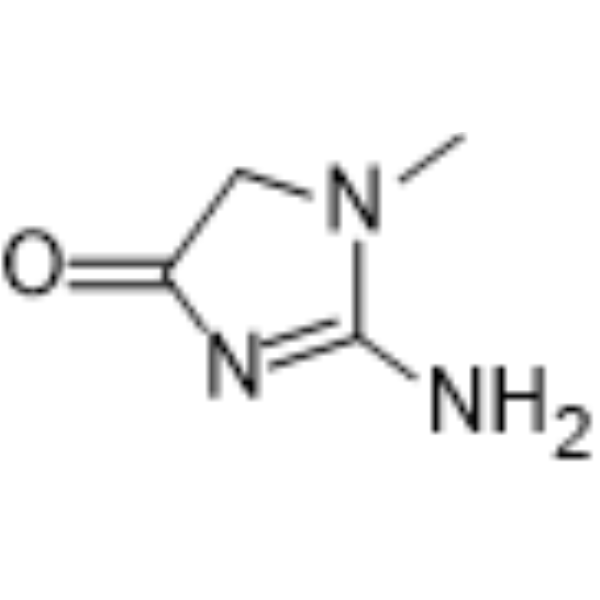
Creatinine (NSC13123) is an orally active, blood-brain barrier-permeable modulator of GABAA and NMDA receptors, with activities of antioxidation and metabolic regulation. Creatinine is generated via non-enzymatic conversion of creatine and phosphocreatine in muscle. Creatinine serum levels correlate with muscle mass, glomerular filtration rate, and extrarenal clearance, serving as an evaluation biomarker for renal function, muscle mass, and clinical outcomes, and used for perioperative renal risk assessment. In addition, Creatinine can induce specific Cryptococcus species to produce creatinine deiminase and act as their nitrogen source, while it can be secreted via renal tubules. Creatinine is widely used in research related to various diseases such as neurodegenerative diseases, psychiatric disorders, acute kidney injury, chronic kidney disease, and renal failure .
|
-
- HY-107664R
-
|
|
Reference Standards
Neurotensin Receptor
|
Neurological Disease
|
|
SR 142948 (Standard) is the analytical standard of SR 142948 (HY-107664). This product is intended for research and analytical applications. SR 142948 is an orally active and selective non-peptide neurotensin receptor (NT) antagonist with IC50s of 1.19 nM, 0.32 nM, 3.96 nM in h-NTR1-CHO cells, HT-29 cells, and adult rat brain, respectively. SR 142948 antagonizes NT-induced inositol monophosphate formation in HT-29 cells with an IC50 of 3.9 nM. SR 142948 blocks hypothermia, analgesia and steering behavior induced by NT in vivo. SR 142948 shows blood-brain permeability and can be used in study of psychiatric disorders .
|
-
- HY-B0504S2
-
|
NSC13123-d5
|
Isotope-Labeled Compounds
Endogenous Metabolite
iGluR
GABA Receptor
|
Metabolic Disease
|
|
Creatinine-d5 is the deuterium labeled Creatinine. Creatinine (NSC13123) is an orally active, blood-brain barrier-permeable modulator of GABAA and NMDA receptors, with activities of antioxidation and metabolic regulation. Creatinine is generated via non-enzymatic conversion of creatine and phosphocreatine in muscle. Creatinine serum levels correlate with muscle mass, glomerular filtration rate, and extrarenal clearance, serving as an evaluation biomarker for renal function, muscle mass, and clinical outcomes, and used for perioperative renal risk assessment. In addition, Creatinine can induce specific Cryptococcus species to produce creatinine deiminase and act as their nitrogen source, while it can be secreted via renal tubules. Creatinine is widely used in research related to various diseases such as neurodegenerative diseases, psychiatric disorders, acute kidney injury, chronic kidney disease, and renal failure .
|
-
- HY-B0504S1
-
|
NSC13123-13C
|
Isotope-Labeled Compounds
Endogenous Metabolite
iGluR
GABA Receptor
|
Metabolic Disease
|
|
Creatinine- 13C is the 13C-labeled Creatinine. Creatinine (NSC13123) is an orally active, blood-brain barrier-permeable modulator of GABAA and NMDA receptors, with activities of antioxidation and metabolic regulation. Creatinine is generated via non-enzymatic conversion of creatine and phosphocreatine in muscle. Creatinine serum levels correlate with muscle mass, glomerular filtration rate, and extrarenal clearance, serving as an evaluation biomarker for renal function, muscle mass, and clinical outcomes, and used for perioperative renal risk assessment. In addition, Creatinine can induce specific Cryptococcus species to produce creatinine deiminase and act as their nitrogen source, while it can be secreted via renal tubules. Creatinine is widely used in research related to various diseases such as neurodegenerative diseases, psychiatric disorders, acute kidney injury, chronic kidney disease, and renal failure .
|
-
- HY-B0504S
-
|
NSC13123-d3
|
Isotope-Labeled Compounds
Endogenous Metabolite
iGluR
GABA Receptor
|
Metabolic Disease
Cancer
|
|
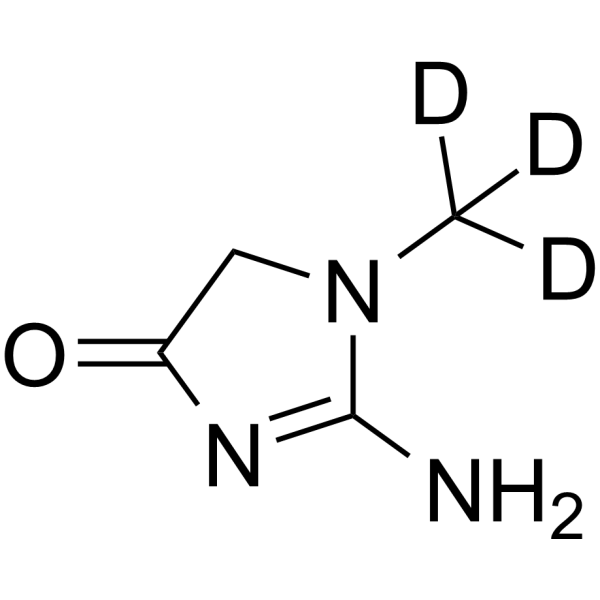
Creatinine-d3 is a deuterium labeled Creatinine. Creatinine (NSC13123) is an orally active, blood-brain barrier-permeable modulator of GABAA and NMDA receptors, with activities of antioxidation and metabolic regulation. Creatinine is generated via non-enzymatic conversion of creatine and phosphocreatine in muscle. Creatinine serum levels correlate with muscle mass, glomerular filtration rate, and extrarenal clearance, serving as an evaluation biomarker for renal function, muscle mass, and clinical outcomes, and used for perioperative renal risk assessment. In addition, Creatinine can induce specific Cryptococcus species to produce creatinine deiminase and act as their nitrogen source, while it can be secreted via renal tubules. Creatinine is widely used in research related to various diseases such as neurodegenerative diseases, psychiatric disorders, acute kidney injury, chronic kidney disease, and renal failure .
|
-
- HY-B0504R
-
|
NSC13123 (Standard)
|
Reference Standards
Endogenous Metabolite
iGluR
GABA Receptor
|
Metabolic Disease
Cancer
|
|
Creatinine (Standard) is the analytical standard of Creatinine. This product is intended for research and analytical applications. Creatinine (NSC13123) is an orally active, blood-brain barrier-permeable modulator of GABAA and NMDA receptors, with activities of antioxidation and metabolic regulation. Creatinine is generated via non-enzymatic conversion of creatine and phosphocreatine in muscle. Creatinine serum levels correlate with muscle mass, glomerular filtration rate, and extrarenal clearance, serving as an evaluation biomarker for renal function, muscle mass, and clinical outcomes, and used for perioperative renal risk assessment. In addition, Creatinine can induce specific Cryptococcus species to produce creatinine deiminase and act as their nitrogen source, while it can be secreted via renal tubules. Creatinine is widely used in research related to various diseases such as neurodegenerative diseases, psychiatric disorders, acute kidney injury, chronic kidney disease, and renal failure .
|
-
- HY-12708
-
Chlorpromazine
Maximum Cited Publications
128 Publications Verification
|
Dopamine Receptor
Cytochrome P450
Autophagy
5-HT Receptor
|
Cardiovascular Disease
Neurological Disease
Cancer
|
|
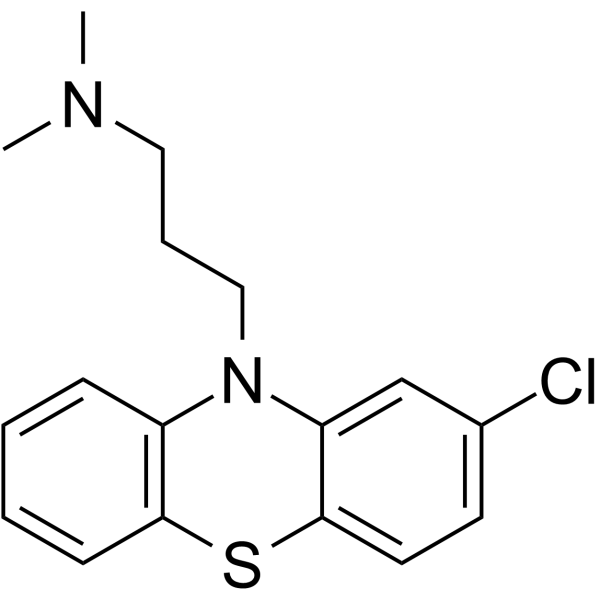
Chlorpromazine is an orally active, blood-brain barrier-transparent antipsychotic agent that effectively antagonises D2 dopamine receptors and 5-HT2A, which is widely used in schizophrenia and other psychiatric disorders. Chlorpromazine exerts anti-cancer activity through a variety of pathways, including anti-proliferation, induction of autophagy and cycle arrest (G2-M phase), inhibition of cytochrome c oxidase (CcO), inhibition of tumour growth and metastasis, and inhibition of tumour immune escape. Chlorpromazine also blocks hNav1.7 channels (IC50=25.9 μM; concentration-dependent) and HERG potassium channels (IC50=21.6 μM), which has potential for analgesic and cardiac arrhythmic studies. Chlorpromazine also can inhibit clathrin-mediated endocytosis .
|
-
- HY-B0407A
-
|
|
Dopamine Receptor
Autophagy
Cytochrome P450
5-HT Receptor
|
Cardiovascular Disease
Neurological Disease
Cancer
|
|
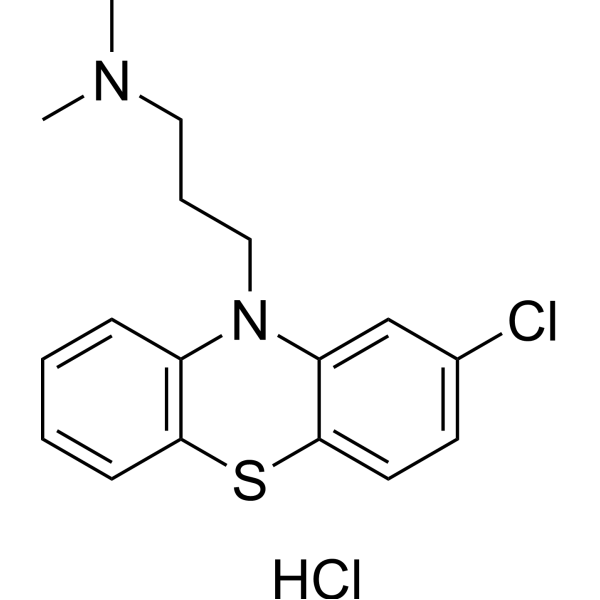
Chlorpromazine hydrochloride is an orally active, blood-brain barrier-transparent antipsychotic agent that effectively antagonises D2 dopamine receptors and 5-HT2A, which is widely used in schizophrenia and other psychiatric disorders. Chlorpromazine hydrochloride exerts anti-cancer activity through a variety of pathways, including anti-proliferation, induction of autophagy and cycle arrest (G2-M phase), inhibition of cytochrome c oxidase (CcO), inhibition of tumour growth and metastasis, and inhibition of tumour immune escape. Chlorpromazine hydrochloride also blocks hNav1.7 channels (IC50=25.9 μM; concentration-dependent) and HERG potassium channels (IC50=21.6 μM), which has potential for analgesic and cardiac arrhythmic studies. Chlorpromazine hydrochloride also can inhibit clathrin-mediated endocytosis .
|
-
- HY-B0504S5
-
|
NSC13123-15N
|
Isotope-Labeled Compounds
Endogenous Metabolite
iGluR
GABA Receptor
|
Metabolic Disease
Cancer
|
|
Creatinine- 15N (NSC13123- 15N) is the 15N-labeled Creatinine (HY-B0504). Creatinine (NSC13123) is an orally active, blood-brain barrier-permeable modulator of GABAA and NMDA receptors, with activities of antioxidation and metabolic regulation. Creatinine is generated via non-enzymatic conversion of creatine and phosphocreatine in muscle. Creatinine serum levels correlate with muscle mass, glomerular filtration rate, and extrarenal clearance, serving as an evaluation biomarker for renal function, muscle mass, and clinical outcomes, and used for perioperative renal risk assessment. In addition, Creatinine can induce specific Cryptococcus species to produce creatinine deiminase and act as their nitrogen source, while it can be secreted via renal tubules. Creatinine is widely used in research related to various diseases such as neurodegenerative diseases, psychiatric disorders, acute kidney injury, chronic kidney disease, and renal failure .
|
-
- HY-B0407AR
-
|
|
Reference Standards
Dopamine Receptor
Autophagy
Cytochrome P450
5-HT Receptor
|
Cardiovascular Disease
Neurological Disease
Cancer
|
|
Chlorpromazine (hydrochloride) (Standard) is the analytical standard of Chlorpromazine (hydrochloride). This product is intended for research and analytical applications. Chlorpromazine hydrochloride is an orally active, blood-brain barrier-transparent antipsychotic agent that effectively antagonises D2 dopamine receptors and 5-HT2A, which is widely used in schizophrenia and other psychiatric disorders. Chlorpromazine hydrochloride exerts anti-cancer activity through a variety of pathways, including anti-proliferation, induction of autophagy and cycle arrest (G2-M phase), inhibition of cytochrome c oxidase (CcO), inhibition of tumour growth and metastasis, and inhibition of tumour immune escape. Chlorpromazine hydrochloride also blocks hNav1.7 channels (IC50=25.9 μM; concentration-dependent) and HERG potassium channels (IC50=21.6 μM), which has potential for analgesic and cardiac arrhythmic studies. Chlorpromazine hydrochloride also can inhibit clathrin-mediated endocytosis .
|
-
- HY-W041470R
-
|
|
Reference Standards
Endogenous Metabolite
|
Metabolic Disease
|
|
Chlorpromazine (hydrochloride) (Standard) is the analytical standard of Chlorpromazine (hydrochloride). This product is intended for research and analytical applications. Chlorpromazine hydrochloride is an orally active, blood-brain barrier-transparent antipsychotic agent that effectively antagonises D2 dopamine receptors and 5-HT2A, which is widely used in schizophrenia and other psychiatric disorders. Chlorpromazine hydrochloride exerts anti-cancer activity through a variety of pathways, including anti-proliferation, induction of autophagy and cycle arrest (G2-M phase), inhibition of cytochrome c oxidase (CcO), inhibition of tumour growth and metastasis, and inhibition of tumour immune escape. Chlorpromazine hydrochloride also blocks hNav1.7 channels (IC50=25.9 μM; concentration-dependent) and HERG potassium channels (IC50=21.6 μM), which has potential for analgesic and cardiac arrhythmic studies. Chlorpromazine hydrochloride also can inhibit clathrin-mediated endocytosis .
|
-
- HY-P6292
-
|
|
PACAP Receptor
PKA
ERK
PI3K
Akt
GSK-3
|
Neurological Disease
Cancer
|
|
KS-133 is a bicyclic peptide with VIPR2 antagonistic activity that can cross the blood-brain barrier. KS-133 selectively blocks VIPR2-mediated Gq/Ca, Gs/cAMP, cAMP/PKA/ERK and PI3K/AKT/GSK3β signaling pathways. KS-133 inhibits VIPR2 agonist-induced CREB phosphorylation in the prefrontal cortex of mice. KS-133 shifts the polarization direction of macrophages toward M1. KS-133 attenuates cancer cell proliferation and reduces the cell cycle distribution level at the S-M phase. KS-133 exerts antitumor effects in a mouse model of colorectal cancer. KS-133 reverses cognitive decline in mouse models of psychiatric disorders. KS-133 can be used for research related to schizophrenia, colorectal cancer and breast cancer .
|
-
- HY-186057
-
|
|
HCN Channel
|
|
|
HCN2-IN-5 is a HCN2 ion channel inhibitor with an IC50 of 9 nM. HCN2-IN-5 shows weak inhibitory activity for HCN4. HCN2-IN-5 can be used for the research of inflammatory disease and neurological disorders .
|
-
| Cat. No. |
Product Name |
Type |
-
- HY-W250174
-
|
3,5-Diiodosalicylic acid lithium salt
|
Biochemical Assay Reagents
|
|
Lithium 3,5-diiodosalicylate is a compound used in the study of bipolar disorder and other psychiatric disorders. It contains lithium and a salicylate. Lithium 3,5-diiodosalicylate works by affecting the levels of certain neurotransmitters in the brain, including dopamine and serotonin.
|
-
- HY-90002
-
|
|
Biochemical Assay Reagents
|
|
4-Phenylpiperidine is a σ receptor ligand with a Ki value of 1980 nM for guinea pig σ receptors. 4-Phenylpiperidine binds to σ receptors. 4-Phenylpiperidine is used in psychiatric disease research .
|
| Cat. No. |
Product Name |
Target |
Research Area |
-
- HY-P6292A
-
|
|
PACAP Receptor
|
Neurological Disease
Inflammation/Immunology
Cancer
|
|
KS-133 TFA is a highly selective and potent antagonist of the vascular active enteropeptide receptor 2 (VIPR2) with IC50 values for Ca influx measurement and cAMP measurement of 24.8 nM and 500 nM, respectively. KS-133 TFA reverses the tumor-promoting M2 phenotype of tumor-associated macrophages to the anti-tumor M1 phenotype, alters the tumor immune microenvironment, and inhibits tumor growth. KS-133 TFA can be used for research on schizophrenia and cancer immune regulation .
|
-
- HY-P6292
-
|
|
PACAP Receptor
PKA
ERK
PI3K
Akt
GSK-3
|
Neurological Disease
Cancer
|
|
KS-133 is a bicyclic peptide with VIPR2 antagonistic activity that can cross the blood-brain barrier. KS-133 selectively blocks VIPR2-mediated Gq/Ca, Gs/cAMP, cAMP/PKA/ERK and PI3K/AKT/GSK3β signaling pathways. KS-133 inhibits VIPR2 agonist-induced CREB phosphorylation in the prefrontal cortex of mice. KS-133 shifts the polarization direction of macrophages toward M1. KS-133 attenuates cancer cell proliferation and reduces the cell cycle distribution level at the S-M phase. KS-133 exerts antitumor effects in a mouse model of colorectal cancer. KS-133 reverses cognitive decline in mouse models of psychiatric disorders. KS-133 can be used for research related to schizophrenia, colorectal cancer and breast cancer .
|
| Cat. No. |
Product Name |
Category |
Target |
Chemical Structure |
-
- HY-101392
-
Harmane
1 Publications Verification
|
Alkaloids
other families
Pyridine Alkaloids
Plants
Indole Alkaloids
Source Classification
|
Imidazoline Receptor
Monoamine Oxidase
Adrenergic Receptor
nAChR
GABA Receptor
Opioid Receptor
|
|
Harmane is a benzodiazepine receptor inhibitor (IC50=7 μM), with IC50 values for mACh, Opioid Receptor, MAO-A/B, and α2-adrenergic receptor of 24 μM, 2.8 μM, 0.5 μM, 5 μM, and 18 μM, respectively. Harmane inhibits the I1 imidazoline receptor (IC50 = 30 nM) to reduce blood pressure and has antidepressant, anti-anxiety, anticonvulsant, and analgesic effects. Harmane inhibits dopamine biosynthesis by decreasing tyrosine hydroxylase (TH) activity and enhancing L-DOPA-induced cytotoxicity in PC12 cells. Additionally, Harmane can increase the mutagenic effect induced by 2-acetylaminofluorene (AAF) .
|
-
-
- HY-B0504
-
Creatinine
Maximum Cited Publications
6 Publications Verification
NSC13123
|
Infection
Structural Classification
Natural Products
Classification of Application Fields
Disease markers
Endocrine diseases
Metabolic Disease
Nervous System Disorder
Endogenous metabolite
Disease Research Fields
Source Classification
|
Endogenous Metabolite
GABA Receptor
iGluR
|
|
Creatinine (NSC13123) is an orally active, blood-brain barrier-permeable modulator of GABAA and NMDA receptors, with activities of antioxidation and metabolic regulation. Creatinine is generated via non-enzymatic conversion of creatine and phosphocreatine in muscle. Creatinine serum levels correlate with muscle mass, glomerular filtration rate, and extrarenal clearance, serving as an evaluation biomarker for renal function, muscle mass, and clinical outcomes, and used for perioperative renal risk assessment. In addition, Creatinine can induce specific Cryptococcus species to produce creatinine deiminase and act as their nitrogen source, while it can be secreted via renal tubules. Creatinine is widely used in research related to various diseases such as neurodegenerative diseases, psychiatric disorders, acute kidney injury, chronic kidney disease, and renal failure .
|
-
-
- HY-B0504R
-
|
NSC13123 (Standard)
|
Infection
Structural Classification
Natural Products
Microorganisms
Disease markers
Endocrine diseases
Nervous System Disorder
Endogenous metabolite
Source Classification
|
Reference Standards
Endogenous Metabolite
iGluR
GABA Receptor
|
|
Creatinine (Standard) is the analytical standard of Creatinine. This product is intended for research and analytical applications. Creatinine (NSC13123) is an orally active, blood-brain barrier-permeable modulator of GABAA and NMDA receptors, with activities of antioxidation and metabolic regulation. Creatinine is generated via non-enzymatic conversion of creatine and phosphocreatine in muscle. Creatinine serum levels correlate with muscle mass, glomerular filtration rate, and extrarenal clearance, serving as an evaluation biomarker for renal function, muscle mass, and clinical outcomes, and used for perioperative renal risk assessment. In addition, Creatinine can induce specific Cryptococcus species to produce creatinine deiminase and act as their nitrogen source, while it can be secreted via renal tubules. Creatinine is widely used in research related to various diseases such as neurodegenerative diseases, psychiatric disorders, acute kidney injury, chronic kidney disease, and renal failure .
|
-
-
- HY-101392A
-
|
|
Apocynaceae
Alkaloids
Other Alkaloids
Plants
Rauwolfia canescens
Source Classification
|
Imidazoline Receptor
Monoamine Oxidase
Adrenergic Receptor
nAChR
GABA Receptor
Opioid Receptor
|
|
Harmane hydrochloride is a benzodiazepine receptor inhibitor (IC50=7 μM), with IC50 values for mACh, Opioid Receptor, MAO-A/B, and α2-adrenergic receptor of 24 μM, 2.8 μM, 0.5 μM, 5 μM, and 18 μM, respectively. Harmane hydrochloride inhibits the I1 imidazoline receptor (IC50 = 30 nM) to reduce blood pressure and has antidepressant, anti-anxiety, anticonvulsant, and analgesic effects. Harmane hydrochloride inhibits dopamine biosynthesis by decreasing tyrosine hydroxylase (TH) activity and enhancing L-DOPA-induced cytotoxicity in PC12 cells. Additionally, Harmane hydrochloride can increase the mutagenic effect induced by 2-acetylaminofluorene (AAF) .
|
-
-
- HY-101392R
-
|
|
Alkaloids
other families
Plants
Source Classification
|
Reference Standards
Imidazoline Receptor
Monoamine Oxidase
Adrenergic Receptor
|
|
Harmane (Standard) is the analytical standard of Harmane. This product is intended for research and analytical applications. Harmane, a β-Carboline alkaloid (BCA), is a potent neurotoxin that causes severe action tremors and psychiatric manifestations. Harmane shows 1000-fold selectivity for I1-Imidazoline receptor (IC50=30 nM) over α2-adrenoceptor (IC50=18 μM). Harmane is also a potent and selective inhibitor of monoamine oxidase (MAO) (IC50s=0.5 and 5 μM for human MAO A/B, respectively). Harmane exhibits comutagenic effect .
|
-
-
- HY-113969
-
|
|
Alkaloids
Neurological Disease
Classification of Application Fields
Endogenous metabolite
Isoquinoline Alkaloids
Disease Research Fields
Source Classification
|
Endogenous Metabolite
|
|
7,8-Dichloro-1,2,3,4-tetrahydroisoquinoline (compound 11), a tetrahydroisoquinoline (THIQ) derivative, is a selective phenylethanolamine N-methyltransferase (PNMT) inhibitor with a Ki value of 0.3 μM. 7,8-Dichloro-1,2,3,4-tetrahydroisoquinoline can be used in research on psychiatric disorders related to Alzheimer's disease and Parkinson's disease .
|
-
-
- HY-W041470R
-
|
|
Ketones, Aldehydes, Acids
Endogenous metabolite
Source Classification
|
Reference Standards
Endogenous Metabolite
|
|
Chlorpromazine (hydrochloride) (Standard) is the analytical standard of Chlorpromazine (hydrochloride). This product is intended for research and analytical applications. Chlorpromazine hydrochloride is an orally active, blood-brain barrier-transparent antipsychotic agent that effectively antagonises D2 dopamine receptors and 5-HT2A, which is widely used in schizophrenia and other psychiatric disorders. Chlorpromazine hydrochloride exerts anti-cancer activity through a variety of pathways, including anti-proliferation, induction of autophagy and cycle arrest (G2-M phase), inhibition of cytochrome c oxidase (CcO), inhibition of tumour growth and metastasis, and inhibition of tumour immune escape. Chlorpromazine hydrochloride also blocks hNav1.7 channels (IC50=25.9 μM; concentration-dependent) and HERG potassium channels (IC50=21.6 μM), which has potential for analgesic and cardiac arrhythmic studies. Chlorpromazine hydrochloride also can inhibit clathrin-mediated endocytosis .
|
-
| Cat. No. |
Product Name |
Chemical Structure |
-
- HY-B0504S
-
5 Publications Verification
|
|
Creatinine-d3 is a deuterium labeled Creatinine. Creatinine (NSC13123) is an orally active, blood-brain barrier-permeable modulator of GABAA and NMDA receptors, with activities of antioxidation and metabolic regulation. Creatinine is generated via non-enzymatic conversion of creatine and phosphocreatine in muscle. Creatinine serum levels correlate with muscle mass, glomerular filtration rate, and extrarenal clearance, serving as an evaluation biomarker for renal function, muscle mass, and clinical outcomes, and used for perioperative renal risk assessment. In addition, Creatinine can induce specific Cryptococcus species to produce creatinine deiminase and act as their nitrogen source, while it can be secreted via renal tubules. Creatinine is widely used in research related to various diseases such as neurodegenerative diseases, psychiatric disorders, acute kidney injury, chronic kidney disease, and renal failure .
|
-
-
- HY-B0504S2
-
|
|
|
Creatinine-d5 is the deuterium labeled Creatinine. Creatinine (NSC13123) is an orally active, blood-brain barrier-permeable modulator of GABAA and NMDA receptors, with activities of antioxidation and metabolic regulation. Creatinine is generated via non-enzymatic conversion of creatine and phosphocreatine in muscle. Creatinine serum levels correlate with muscle mass, glomerular filtration rate, and extrarenal clearance, serving as an evaluation biomarker for renal function, muscle mass, and clinical outcomes, and used for perioperative renal risk assessment. In addition, Creatinine can induce specific Cryptococcus species to produce creatinine deiminase and act as their nitrogen source, while it can be secreted via renal tubules. Creatinine is widely used in research related to various diseases such as neurodegenerative diseases, psychiatric disorders, acute kidney injury, chronic kidney disease, and renal failure .
|
-
-
- HY-B0504S1
-
|
|
|
Creatinine- 13C is the 13C-labeled Creatinine. Creatinine (NSC13123) is an orally active, blood-brain barrier-permeable modulator of GABAA and NMDA receptors, with activities of antioxidation and metabolic regulation. Creatinine is generated via non-enzymatic conversion of creatine and phosphocreatine in muscle. Creatinine serum levels correlate with muscle mass, glomerular filtration rate, and extrarenal clearance, serving as an evaluation biomarker for renal function, muscle mass, and clinical outcomes, and used for perioperative renal risk assessment. In addition, Creatinine can induce specific Cryptococcus species to produce creatinine deiminase and act as their nitrogen source, while it can be secreted via renal tubules. Creatinine is widely used in research related to various diseases such as neurodegenerative diseases, psychiatric disorders, acute kidney injury, chronic kidney disease, and renal failure .
|
-
-
- HY-B0504S5
-
|
|
|
Creatinine- 15N (NSC13123- 15N) is the 15N-labeled Creatinine (HY-B0504). Creatinine (NSC13123) is an orally active, blood-brain barrier-permeable modulator of GABAA and NMDA receptors, with activities of antioxidation and metabolic regulation. Creatinine is generated via non-enzymatic conversion of creatine and phosphocreatine in muscle. Creatinine serum levels correlate with muscle mass, glomerular filtration rate, and extrarenal clearance, serving as an evaluation biomarker for renal function, muscle mass, and clinical outcomes, and used for perioperative renal risk assessment. In addition, Creatinine can induce specific Cryptococcus species to produce creatinine deiminase and act as their nitrogen source, while it can be secreted via renal tubules. Creatinine is widely used in research related to various diseases such as neurodegenerative diseases, psychiatric disorders, acute kidney injury, chronic kidney disease, and renal failure .
|
-
-
- HY-B1487S1
-
|
|
|
Procyclidine-d5 (Tricyclamol-d5) is deuterium labeled Procyclidine (hydrochloride). Procyclidine (Tricyclamol, (±)-Procyclidine) hydrochloride , an anticholinergic agent, is a muscarinic receptor antagonist that also has the properties of an N-methyl-D-aspartate (NMDA) antagonist. Procyclidine hydrochloride can be used in studies of Parkinson's disease and related psychiatric disorders such as Soman-induced epilepsy .
|
-
-
- HY-13204AS
-
|
|
|
Biperiden-d5 (KL 373-d5) is deuterium labeled Biperiden. Biperiden (KL 373) is a non-selective muscarinic receptor antagonist that competitively binds to M1 muscarinic receptors, thereby inhibiting acetylcholine and enhancing dopamine signaling in the central nervous system. Biperiden has the potential for the research of Parkinson's disease and other related psychiatric disorders .
|
-
-
- HY-B1482AS
-
|
|
|
Mesoridazine-d3 is the deuterium labeled Mesoridazine (HY-B1482A). Mesoridazine (TPS-23) , a metabolite of Thioridazine (HY-B0965A), acts as an orally active phenothiazine antipsychotic agent. Mesoridazine is a potent and rapid open-channel blocker of human ether-a-go-go related gene (hERG) channels and blocks hERG currents with an IC50 of 550 nM (at 0 mV) in human embryonic kidney 293 cells .Mesoridazine can be used for the research of schizophrenia, as well as certain other psychiatric disorders .
|
-
-
- HY-19733S
-
|
|
|
Lumateperone- 13C,d3 (ITI-007- 13C,d3) tosylate is 13C and deuterium labeled Lumateperone (tosylate). Lumateperone (ITI-007) tosylate is a 5-HT2A receptor antagonist (Ki = 0.54 nM), a partial agonist of presynaptic D2 receptors and an antagonist of postsynaptic D2 receptors (Ki = 32 nM), and a dopamine D1 receptor modulator. Lumateperone tosylate has anticancer activity and can also be used in studies of psychiatric disorders such as schizophrenia .
|
-
-
- HY-101392S
-
|
|
|
Harmane-d is the deuterium labeled Harmane. Harmane, a β-Carboline alkaloid (BCA), is a potent neurotoxin that causes severe action tremors and psychiatric manifestations. Harmane shows 1000-fold selectivity for I1-Imidazoline receptor (IC50=30 nM) over α2-adrenoceptor (IC50=18 μM). Harmane is also a potent and selective inhibitor of monoamine oxidase (MAO) (IC50s=0.5 and 5 μM for human MAO A/B, respectively) .
|
-
-
- HY-101392S1
-
|
|
|
Harmane-d2 is the deuterium labeled Harmane. Harmane, a β-Carboline alkaloid (BCA), is a potent neurotoxin that causes severe action tremors and psychiatric manifestations. Harmane shows 1000-fold selectivity for I1-Imidazoline receptor (IC50=30 nM) over α2-adrenoceptor (IC50=18 μM). Harmane is also a potent and selective inhibitor of monoamine oxidase (MAO) (IC50s=0.5 and 5 μM for human MAO A/B, respectively) .
|
-
-
- HY-166562S
-
|
|
|
Levomepromazine-d6 hydrochloride (Methotrimeprazine-d6 hydrochloride) is the deuterium labeled Levomepromazine hydrochloride. Levomepromazine (Methotrimeprazine) hydrochloride is an orally active antipsychotic compound and Ca 2+ release inducer. Levomepromazine inhibits SERCA pump and induces an increase in cytoplasmic Ca 2+ levels. Levomepromazine hydrochloride has antagonistic effects on a variety of neurotransmitter receptors, including dopamine, cholinergic, serotonin, and histamine receptors. Levomepromazine hydrochloride can induce adaptive ER stress and autophagy. In addition, Levomepromazine hydrochloride has antiviral, anti-inflammatory, neuroprotective and analgesic, sedative and anti-injurious activities. Levomepromazine hydrochloride can be used in the study psychiatric disorders and relieving nausea and vomiting .
|
-
Your information is safe with us. * Required Fields.
Inquiry Information
- Product Name:
- Cat. No.:
- Quantity:
- MCE Japan Authorized Agent:

