Search Result
Results for "
Quinolone
" in MedChemExpress (MCE) Product Catalog:
17
Isotope-Labeled Compounds
| Cat. No. |
Product Name |
Target |
Research Areas |
Chemical Structure |
-
- HY-B0398
-
|
|
Bacterial
Antibiotic
Topoisomerase
|
Infection
|
|
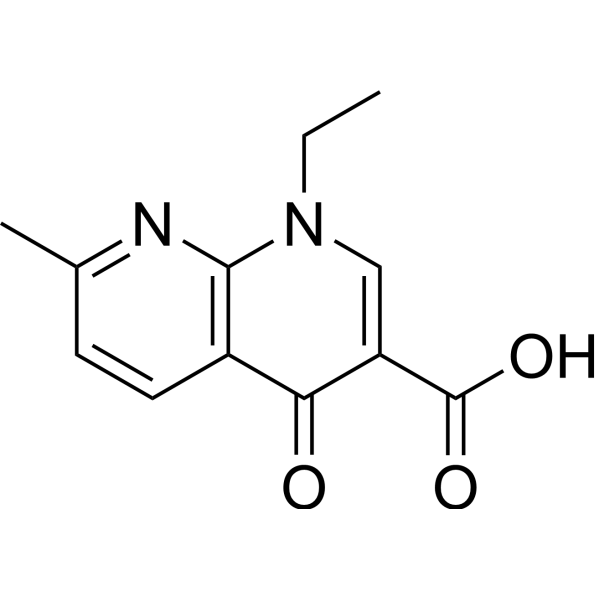
Nalidixic acid, a quinolone antibiotic, is effective against both gram-positive and gram-negative bacteria. Nalidixic acid acts in a bacteriostatic manner in lower concentrations and is bactericidal in higher concentrations. Nalidixic acid inhibits a subunit of DNA gyrase and topoisomerase IV and reversibly blocks DNA replication in susceptible bacteria .
|
-
-
- HY-177080
-
|
GS-1427
|
Integrin
|
Inflammation/Immunology
|
|
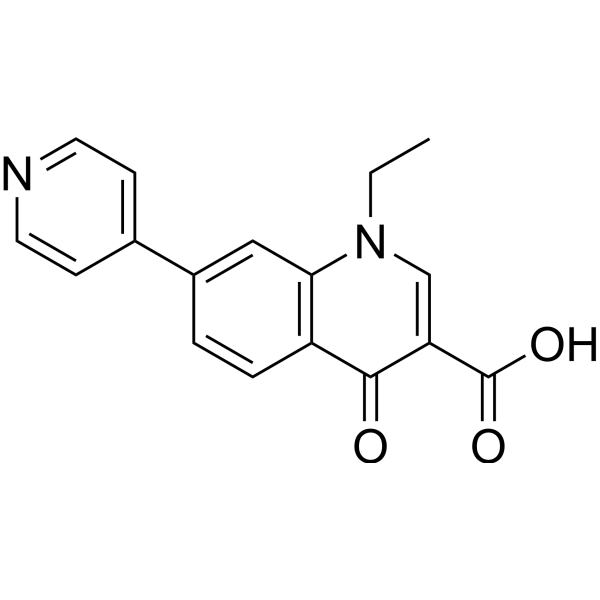
Emvistegrast (GS-1427) is a quinolone derivative. Emvistegrast is also an inhibitor of α4β7 integrin. Emvistegrast can be used to investigate diseases mediated by α4β7 integrin, such as inflammatory bowel disease .
|
-
-
- HY-B0526
-
-
-
- HY-128200
-
|
PQS
|
Bacterial
|
Infection
Inflammation/Immunology
|
|
Pseudomonas quinolone signal (PQS) is a quorum-sensing signaling molecule produced by Pseudomonas aeruginosa. The synthesis of Pseudomonas quinolone signal relies on the las quorum-sensing system, and its biological activity is associated with the rhl system. Pseudomonas quinolone signal regulates the expression of the virulence gene lasB. Additionally, Pseudomonas quinolone signal plays roles in iron acquisition, cytotoxicity, outer-membrane vesicle biogenesis, and host immune modulation .
|
-
-
- HY-B0398A
-
|
|
Bacterial
Antibiotic
Topoisomerase
|
Infection
|
|
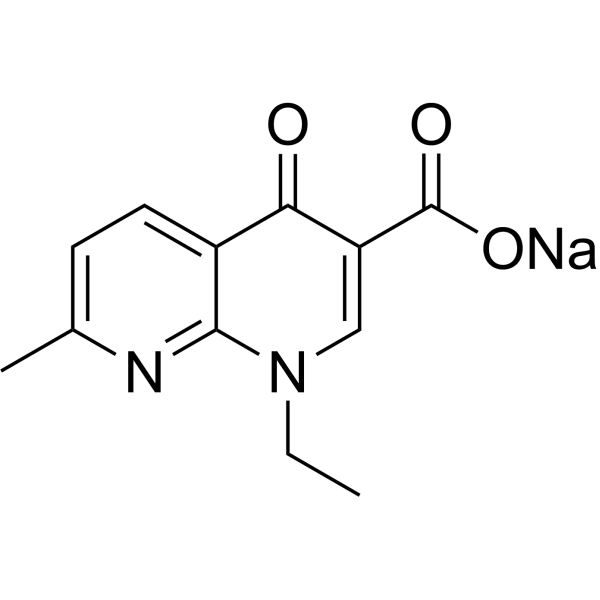
Nalidixic acid sodium salt, a quinolone antibiotic, is effective against both gram-positive and gram-negative bacteria. Nalidixic acid acts in a bacteriostatic manner in lower concentrations and is bactericidal in higher concentrations. Nalidixic acid inhibits a subunit of DNA gyrase and topoisomerase IV and reversibly blocks DNA replication in susceptible bacteria .
|
-
-
- HY-N5009
-
|
|
Bacterial
|
Infection
|
|
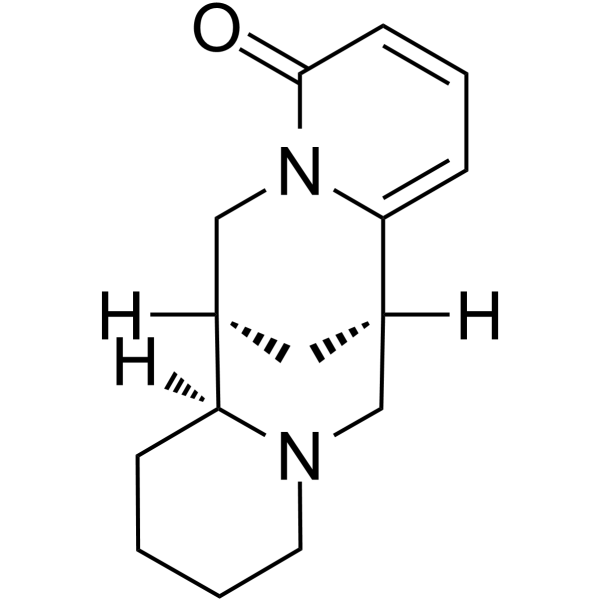
Thermopsine is a quinolone-type alkaloid. Thermopsine exhibits low to moderate anti-E. faecalis activity .
|
-
-
- HY-14957
-
|
T-3912
|
Bacterial
Antibiotic
|
Infection
|
|
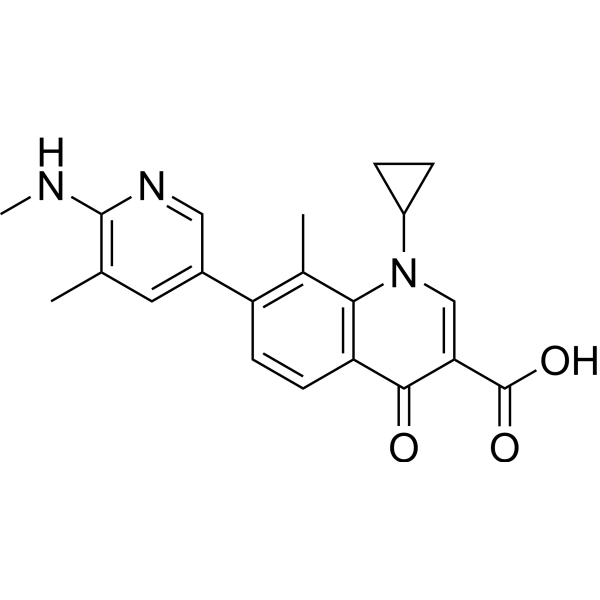
Ozenoxacin is a nonfluorinated quinolone antibacterial, which shows potent activities against the main microorganisms isolated from skin and soft tissue infections.
|
-
-
- HY-16487
-
|
TMFX; TA-167 free acid; A-62254 free acid
|
Bacterial
Antibiotic
|
Infection
|
|
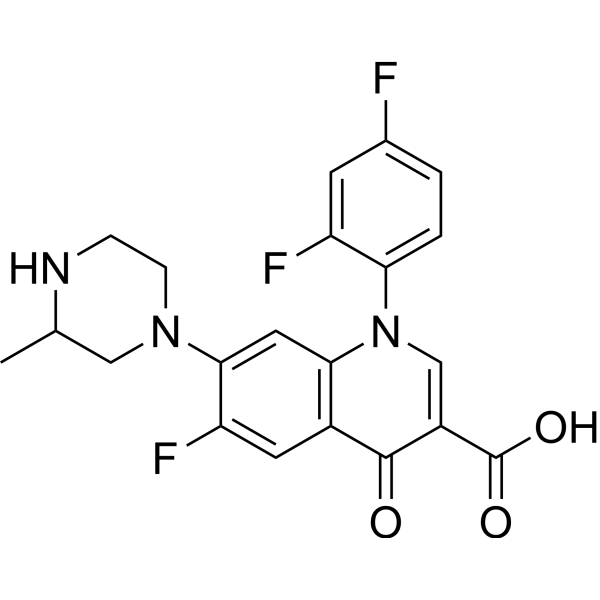
Temafloxacin (TMFX) is an orally active quinolone broad-spectrum antibacterial agent. Temafloxacin is well tolerated in lower respiratory and genitourinary tract infections .
|
-
-
- HY-17460A
-
|
BMS284756 Mesylate hydrate
|
Bacterial
Topoisomerase
DNA/RNA Synthesis
Antibiotic
|
Infection
|
|
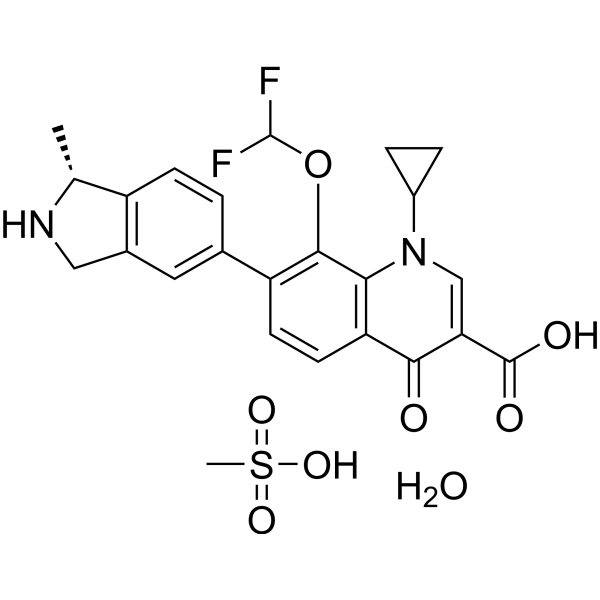
Garenoxacin (BMS284756) Mesylate hydrate is an orally active quinolone antibiotic and has a broad spectrum of activity against a wide array of gram-positive and gram-negative bacteria, anaerobes, and fastidious organisms .
|
-
-
- HY-49444
-
|
|
NF-κB
Molecular Glues
E1/E2/E3 Enzyme
|
Cancer
|
|
EN450 is a cysteine-reactive covalent molecular glue degrader targeting NF-κB. EN450 interacts with allosteric C111 in the E2 ubiquitin ligase UBE2D. EN450 induces the ternary complex formation between UBE2D and NFKB1. EN450 exerts its anti-proliferative effects through a Cullin E3 ligase and proteasome-dependent mechanism .
|
-
-
- HY-W011117
-
|
|
Bacterial
DNA/RNA Synthesis
Antibiotic
|
Infection
|
|
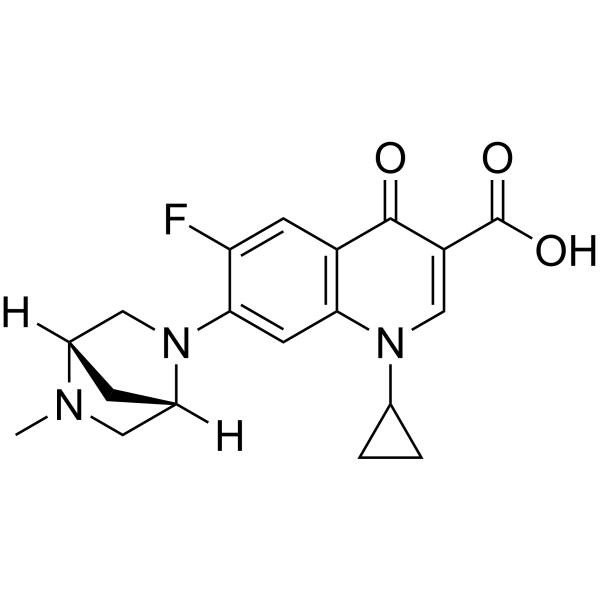
Danofloxacin is an orally active quinolone antibiotic. Danofloxacin targets bacterial DNA gyrase and inhibits bacterial DNA replication, transcription and growth. Danofloxacin can be used for various bacterial infections caused by Escherichia coli, Mycoplasma and other pathogens .
|
-
-
- HY-129503
-
|
|
Drug Intermediate
|
Others
|
|
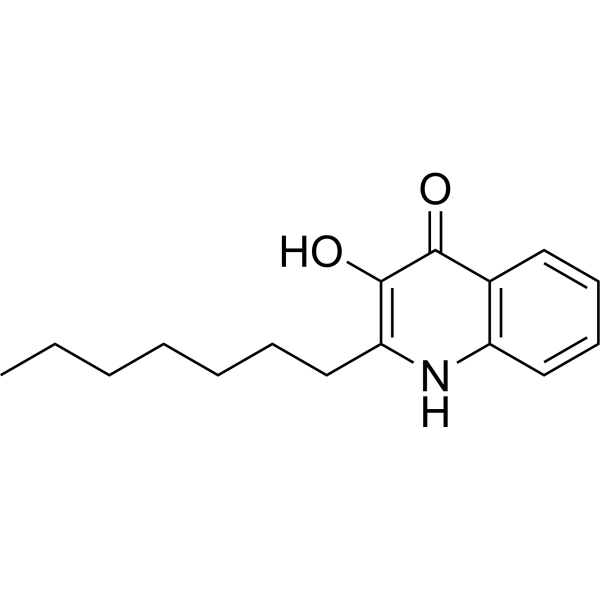
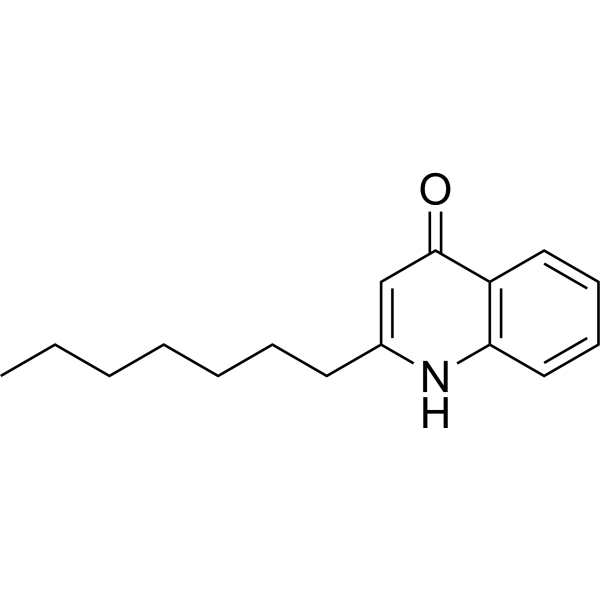
2-Heptyl-4-quinolone is an intermediate in the synthesis of the Pseudomonas quinolone signal (PQS) that controls swarming by positively regulating phenazine production. 2-Heptyl-4-quinolone induces the production of the phenazine-1-carboxylic acid (PCA) .
|
-
-
- HY-N2060
-
-
-
- HY-106410A
-
|
DW-224a
|
Bacterial
Topoisomerase
Antibiotic
|
Infection
|
|
Zabofloxacin hydrochloride (DW-224a) is a potent and seletive inhibitor of the bacterial type II and IV topoisomerases. Zabofloxacin hydrochloride has excellent activity against gram-positive pathogens including Steptococcus aureus, Streptococcus pyogenes and S.pneumonia. Zabofloxacin hydrochloride is a novel fluoronaphthyridone quinolone that is considered as an alternative antibiotic for treatment of quinolone-susceptible (QSSP) and quinolone-resistant gonorrhea (QRSP) .
|
-
-
- HY-17460
-
-
-
- HY-120338
-
-
-
- HY-W004769
-
-
-
- HY-59208
-
|
Kynurine
|
Endogenous Metabolite
|
Neurological Disease
Cancer
|
|
4-Quinolone (Kynurine) is a quinoline derivative. Kynurine pathway modulates tryptophan metabolism and involves in neuroprotective effect. Kynurine promotes tumor cell survival and motility by suppressing antitumor immune .
|
-
-
- HY-U00221
-
|
Win49375
|
Bacterial
|
Infection
|
|
Amifloxacin (Win49375) is a synthetic antibacterial agent of the quinolone class.
|
-
-
- HY-108279
-
|
|
Antibiotic
Bacterial
|
Infection
|
|
Ulifloxacin is a broad-spectrum quinolone antibiotic. Ulifloxacin is the active metabolite of Prulifloxacin (HY-B0024). Ulifloxacin has anti-bacterial activity .
|
-
-
- HY-W004782
-
|
|
Bacterial
|
Inflammation/Immunology
|
|
3-Methylthiophene-2-carboxylic acid (compound 3) is a potent Pseudomonas quinolone signal system protein E (PqsE) inhibitor with a Kd of 19.6 µM and an IC50 of 40 µM. 3-Methylthiophene-2-carboxylic acid binds to the active center of PqsE and shows inhibition of the thioesterase activity. Methylthiophene-2-carboxylic acid can permeate into P. aeruginosa and affect 2,4-dihydroxyquinoline (DHQ) levels to a similar extent as deletion of the PqsE gene. 3-Methylthiophene-2-carboxylic acid can be used for cystic fibrosis research .
|
-
-
- HY-106410
-
|
DW-224a Free base
|
Bacterial
Topoisomerase
Antibiotic
|
Infection
|
|
Zabofloxacin (DW-224a Free base) is a potent and seletive inhibitor of the bacterial type II and IV topoisomerases. Zabofloxacin has excellent activity against gram-positive pathogens including Steptococcus aureus, Streptococcus pyogenes and S.pneumonia. Zabofloxacin is a novel fluoronaphthyridone quinolone that is considered as an alternative antibiotic for treatment of quinolone-susceptible (QSSP) and quinolone-resistant gonorrhea (QRSP) .
|
-
-
- HY-W020111
-
|
|
Sirtuin
Parasite
|
Infection
|
|
7-Chloro-4-(piperazin-1-yl)quinolone is an important scaffold in medicinal chemistry. 7-Chloro-4-(piperazin-1-yl)quinolone is a potent sirtuin inhibitor and also inhibits the serotonin uptake (IC50 of 50 μM). 7-Chloro-4-(piperazin-1-yl)quinolone exhibits antimalarial activity on D10 and K1 strains of P. falciparum with IC50s of 1.18 μM and 0.97 μM, respectively .
|
-
-
- HY-123271
-
|
|
Bacterial
Antibiotic
|
Infection
|
|
Ro 23-9424 is a broad-spectrum cephalosporin composed of a cephalosporin and a quinolone moiety. Ro 23-9424 shows antimicrobial activity in vivo and in vitro .
|
-
-
- HY-116229
-
|
SB-265805; LB20304
|
Antibiotic
Bacterial
|
Infection
|
|
Gemifloxacin, a fluoroquinolone, is a potent and orally active antipneumococcal agent. Gemifloxacin shows bactericidal activity against highly quinolone-resistant pneumococci.Gemifloxacin can be used for the research of respiratory infections, such as community-acquired pneumonia (CAP) and acute exacerbation of chronic bronchitis (AECB) .
|
-
-
- HY-N9530
-
-
-
- HY-171190
-
|
|
Parasite
|
Infection
|
|
ELQ-316 is an endochinlike quinolone compound and an anti-parasite agent. ELQ-316 demonstrates a great efficacy against acute and chronic experimental toxoplasmosis .
|
-
-
- HY-B0455B
-
|
SC47111A (aspartate); NY-198 (aspartate)
|
Bacterial
Antibiotic
|
Infection
|
|
Lomefloxacin (SC47111A) aspartate is a broad-spectrum quinolone antibiotic, with antimicrobial activity. Lomefloxacin aspartate can be used for researching respiratory tract infections, genitourinary infections, gastrointestinal infections, ENT infections, etc. .
|
-
-
- HY-21509
-
|
|
NADPH Oxidase
|
Others
|
|
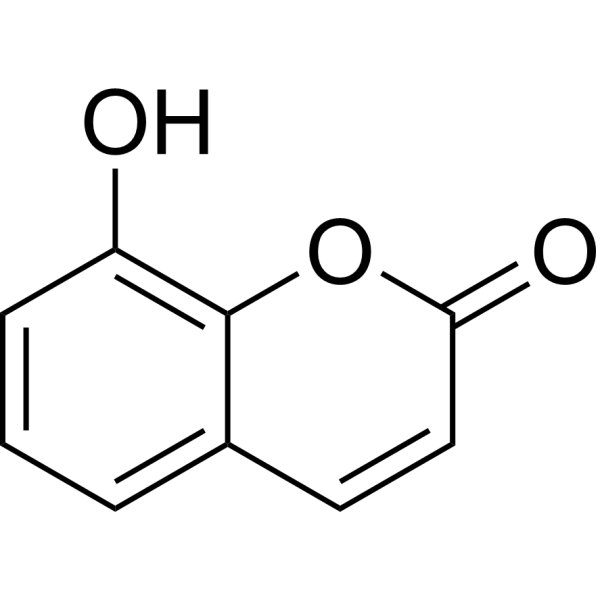
8-Hydroxycoumarin is an intermediate in the microbial transformation of quinolone .
|
-
-
- HY-16745A
-
|
KRP-AM1977 hydrochloride
|
Bacterial
|
Infection
|
|
Lascufloxacin (KRP-AM1977) hydrochloride is a potent antibacterial compound candidate with broad-spectrum activity against various clinical isolates. Lascufloxacin hydrochloride shows the most potent activity against Gram-positive bacteria compared to other tested quinolones. Lascufloxacin hydrochloride demonstrates incomplete cross-resistance against existing quinolone-resistant strains. Lascufloxacin hydrochloride has potent inhibitory activity against both wild-type and mutated target enzymes.
|
-
-
- HY-113595
-
|
TMFX hydrochloride; TA-167; A-62254
|
Antibiotic
Bacterial
|
Infection
|
|
Temafloxacin (TMFX) hydrochloride is an orally active quinolone broad-spectrum antibacterial agent. Temafloxacin hydrochloride is well tolerated in lower respiratory and genitourinary tract infections .
|
-
-
- HY-109855
-
|
|
Topoisomerase
Antibiotic
Bacterial
|
Infection
|
|
CP-67015, a quinolone antibiotic, is a potent topoisomerase II inhibitor. CP-67015 is a positive direct-acting mutagen in mammalian cells with both gene and chromosomal level effects .
|
-
-
- HY-B0526S
-
-
-
- HY-N1638
-
|
|
Monoamine Oxidase
|
Neurological Disease
|
|
1-Methyl-2-undecyl-4(1H)-quinolone is a potent, irreversible and selective inhibitor of type B monoamine oxidase (MAO-B). 1-Methyl-2-undecyl-4(1H)-quinolone shows a selective inhibition of MAO-B activity with the IC50 and Ki values of 15.3 μM and 9.91 μM, respectively, but did not inhibit type A MAO (MAO-A) activity. Methyl-2-undecyl-4(1H)-quinolone, as a quinolone alkaloid, is isolated from fresh leaves and fruits of Evodia rutaecarpa HOOK. f. et THOMS .
|
-
-
- HY-N9520
-
|
|
Angiotensin Receptor
|
Cardiovascular Disease
Endocrinology
|
|
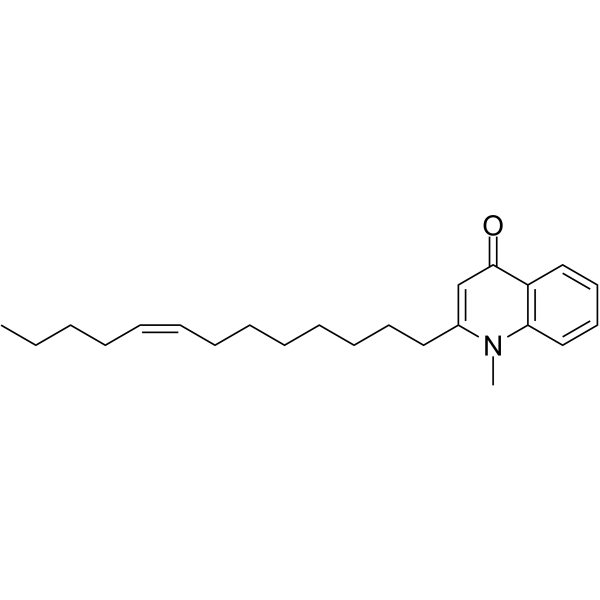
Methyl-2-[(6Z,9Z)-6,9-pentadecadienyl]-4(1H)-quinolone9 is an antagonist of angiotensin II receptor (IC50=48.2 μM). Methyl-2-[(6Z,9Z)-6,9-pentadecadienyl]-4(1H)-quinolone9 is a quinolone alkaloid from Evodia rutaecarpa .
|
-
-
- HY-N0968
-
|
|
Others
|
Others
|
|
1-Methyl-2-[(Z)-6-undecenyl]-4(1H)-quinolone, as a colorless oil, is a quinolone alkaloid isolated from the fruit of Evodia rutaecarpa BENTHAM (Rutaceae) .
|
-
-
- HY-B1036R
-
|
|
Reference Standards
Parasite
|
Infection
|
|
Decoquinate (Standard) is the analytical standard of Decoquinate. This product is intended for research and analytical applications. Decoquinate is a quinolone derivative that can be used for research of coccidiosis in domestic ruminants. Decoquinate also has potent activity against both Plasmodium hepatic development and red cell replication .
|
-
-
- HY-156332
-
|
|
PARP
|
Cancer
|
|
TNKS-2-IN-2 is a potent and selective inhibitor of TNKS2 with an IC50 of 22 nM .
|
-
-
- HY-129503S1
-
|
|
Isotope-Labeled Compounds
Drug Intermediate
|
Others
|
|
2-Heptyl-4-quinolone- 15N is the 15N-labeled 2-Heptyl-4-quinolone (HY-129503). 2-Heptyl-4-quinolone is an intermediate in the synthesis of the Pseudomonas quinolone signal (PQS) that controls swarming by positively regulating phenazine production. 2-Heptyl-4-quinolone induces the production of the phenazine-1-carboxylic acid (PCA) .
|
-
-
- HY-124352
-
|
|
Bacterial
|
Others
|
|
2-nonyl-3-hydroxy-4-Quinolone (C9-PQS) is a quinolone compound produced by P. aeruginosa and other related bacterias. 2-nonyl-3-hydroxy-4-Quinolone is a quorum sensing (QS) signal molecule that controls the expression of many virulence genes as a function of cell population density .
|
-
-
- HY-123029
-
|
NSC 99006
|
Drug Intermediate
|
Others
|
|
5,6,7,8-Tetrahydro-2-quinolone (NSC 99006) is a synthetic intermediate useful for pharmaceutical synthesis.
|
-
-
- HY-124352S
-
|
C9-PQS-d4
|
Isotope-Labeled Compounds
Bacterial
|
Others
|
|
2-Nonyl-3-hydroxy-4-quinolone-d4 (C9-PQS-d4) is deuterium labeled 2-Nonyl-3-hydroxy-4-quinolone. 2-nonyl-3-hydroxy-4-Quinolone (C9-PQS) is a quinolone compound produced by P. aeruginosa and other related bacterias. 2-nonyl-3-hydroxy-4-Quinolone is a quorum sensing (QS) signal molecule that controls the expression of many virulence genes as a function of cell population density .
|
-
-
- HY-D0113
-
|
|
Reactive Oxygen Species (ROS)
|
Others
|
|
7-Hydroxy-4-methyl-2(1H)-quinolone (compound 2b) is a fluorescent hydroxylated product. 7-Hydroxy-4-methyl-2(1H)-quinolone can be used for detecting hydroxyl radicals of DNA damage .
|
-
-
- HY-122260
-
|
|
Bacterial
|
Infection
|
|
S-25932 is a potent 4-quinolones antibacterial agent. S-25932 shows broad gram-negative antibacterial activity. S-25932 shows inhibition for Enterobacter aerogenes, Enterobacter addlomerans, Enterobacter coloacae, Escherichia coli with MIC90 values of 1.0, 2.0, 1.0, 0.25 µg/mL, respectively .
|
-
-
- HY-17460B
-
|
BMS 284756 mesylate
|
Bacterial
Topoisomerase
Antibiotic
|
Infection
|
|
Garenoxacin (BMS 284756) mesylate is an orally active quinolone antibiotic and Garenoxacin mesylate has a broad spectrum of activity against a wide array of gram-positive and gram-negative bacteria, anaerobes. Garenoxacin mesylate also inhibits Gyrase and TOPO IV .
|
-
-
- HY-113642
-
|
|
Topoisomerase
|
Cancer
|
|
CP-67804 is a quinolone derivative, is a topoisomerase II-targeted agent. CP-67804 effectively enhances DNA cleavage mediated by eukaryotic topoisomerase II. CP-67804 has potential as an antineoplastic agent .
|
-
-
- HY-105434
-
|
|
Bacterial
|
Infection
|
|
CP-74667 is a quinolone antibacterial agent. CP-74667 shows high activity against Xanthomonas maltophilia (MIC50 = 1 μg/mL), Staphylococcus spp. (MIC50 = 0.06-0.12 μg/mL) and enterococci (MIC50 = 0.5-4 μg/mL) .
|
-
-
- HY-150041
-
|
|
TAM Receptor
|
Cancer
|
|
TL4830031 (compound 8i), a quinolone antibiotic derivatives, is a potent Axl inhibitor with an IC50 value of 26 nM. TL4830031 inhibits the phosphorylation of Axl. TL4830031 inhibits cell invasion and migration. TL4830031 can be used for cancer research .
|
-
-
- HY-108021
-
|
|
Bacterial
|
Infection
|
|
HT-61 is a quinolone antibacterial agent. HT-61 exhibits bactericidal activity against gram-positive bacteria including methicillin-susceptible Staphylococcus aureus (MSSA) and methicillin-resistant Staphylococcus aureus (MRSA). HT-61 can enhance the effect of Tobramycin (HY-B0441) against Pseudomonas aeruginosa .
|
-
-
- HY-146098
-
|
|
Bacterial
Antibiotic
|
Infection
|
|
Antibacterial agent 105 (Compound 17) is a phenanthrolinic analog of quinolones show antibacterial activity against M. tuberculosis with antibacterial activity (MIC90=2.64 μM). Antibacterial agent 105 exhibits antibacterial activities against different bacterial species with MIC90s of 11.18, 11.18, 0.70, 1.40, 44.70, and 22.35 μM for M. smegmatis, M. aurum, M. marinum, BCG, E. aerogenes and S. aureus, respectively .
|
-
- HY-117657
-
|
|
Topoisomerase
Bacterial
|
Inflammation/Immunology
Cancer
|
|
(-)-BO 2367, an antimicrobial quinolone, is a strong mammalian and bacterial topoisomerase II inhibitor. (-)-BO 2367 shows IC50 values with 3.8 μM, 0.5 μM, and 1 μM against the DNA relaxation activity of L1210 topoisomerase II and the supercoiling activities of Escherichia coli gyrase and Micrococcus luteus gyrase, respectively. (-)-BO 2367 is a potent antitumor agent .
|
-
- HY-131477A
-
-
- HY-108953
-
-
- HY-103331
-
-
- HY-19081
-
-
- HY-N14512
-
-
- HY-N14511
-
-
- HY-P2073
-
|
|
Bacterial
|
Infection
|
|
Cyclo(Δ-Ala-L-Val) is a cyclic dipeptide and a putative quinolone signal (QS) molecule produced by Pseudomonas aeruginosa .
|
-
- HY-B0343BS
-
|
A-56620-d8 hydrochloride trihydrate
|
Bacterial
|
Inflammation/Immunology
|
|
Sarafloxacin-d8 (hydrochloride trihydrate) is the deuterium labeled Sarafloxacin hydrochloride trihydrate. Sarafloxacin hydrochloride trihydrate is a quinolone antibiotic compound .
|
-
- HY-B0343AR
-
|
A-56620 hydrochloride (Standard)
|
Reference Standards
Bacterial
Antibiotic
|
Infection
|
|
Sarafloxacin (hydrochloride) (Standard) is the analytical standard of Sarafloxacin (hydrochloride). This product is intended for research and analytical applications. Sarafloxacin (hydrochloride) (A-56620 (hydrochloride)) is a quinolone antibiotic agent.
|
-
- HY-123614
-
|
|
Bacterial
|
Infection
|
|
PD 140248 hydrochloride is a quinolone broad-spectrum antibacterial agent with good in vitro bacteriostatic activity, especially having a significant inhibitory effect on Gram-positive bacteria .
|
-
- HY-B0343AS
-
-
- HY-N1636
-
|
|
Monoamine Oxidase
|
Neurological Disease
|
|
1-Methyl-2-nonyl-4(1H)-quinolone, a quinolone alkaloid, is a potent and selective MAO-B (monoamine oxidase) inhibitor. 1-Methyl-2-nonyl-4(1H)-quinolone exhibites inhibitory activity on leukotriene biosynthesis, with an IC50 of 12.1 μM .
|
-
- HY-W018677S
-
|
|
Antibiotic
|
Infection
|
|
Quinoxaline-d4 is the deuterium labeled Quinoxaline . Quinoxaline is a chemical compound that acts as an intermediate for anti-tuberculosis agent Pyrazinamide. Quinoxaline presents a structure that is similar to quinolone antibiotics .
|
-
- HY-163482
-
|
|
Parasite
|
Infection
|
|
ELQ-596 is a quinolone derivative, that exhibits antimicrobial activity against several protozoan parasites, including the intraerythrocytic parasites Plasmodium and Babesia. ELQ-596 attenuates babesiosis in immunosuppressed mice .
|
-
- HY-163484
-
|
|
Parasite
|
Infection
|
|
ELQ-650 is a quinolone derivative, that exhibits antimicrobial activity against several protozoan parasites, including the intraerythrocytic parasites Plasmodium and Babesia. ELQ-650 attenuates babesiosis in immunosuppressed mice .
|
-
- HY-B0526R
-
|
R-802 (Standard)
|
Reference Standards
Bacterial
Topoisomerase
Antibiotic
|
Infection
Cancer
|
|
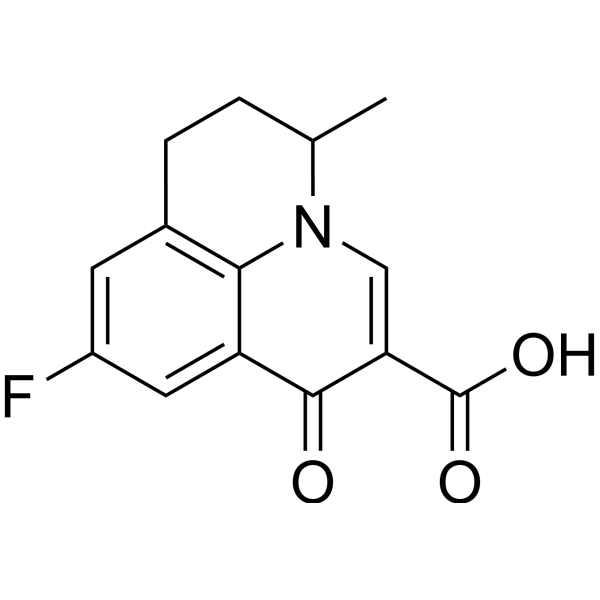
Flumequine (Standard) is the analytical standard of Flumequine. This product is intended for research and analytical applications. Flumequine (R-802) is a quinolone antibiotic, and acts as a topoisomerase II inhibitor, with an IC50 of 15 μM (3.92 μg/mL).
|
-
- HY-105033
-
|
Pirfloxacin
|
Bacterial
|
Infection
|
|
Irloxacin (Pirfloxacin) is a quinolone antibacterial agent. Irloxacin shows greater activity with an acid pH. Irloxacin has a good in vitro antimicrobial spectrum against both gram-positive and gram-negative bacteria. Orally active .
|
-
- HY-14957AS
-
|
T-3912-d3 hydrochloride
|
Antibiotic
Bacterial
|
Inflammation/Immunology
|
|
Ozenoxacin-d3 (hydrochloride) is the deuterium labeled Ozenoxacin hydrochloride. Ozenoxacin hydrochloride is a nonfluorinated quinolone antibacterial, which shows potent activities against the main microorganisms isolated from skin and soft tissue infections .
|
-
- HY-N1637
-
|
|
Bacterial
|
Infection
Cancer
|
|
1-Methyl-2-pentyl-4(1H)-quinolinone, a quinolone alkaloid isolated from the fruits of Evodia Rutaecarpa, possesses antibacterial and cytotoxic activities for cancer cells .
|
-
- HY-14957R
-
|
T-3912 (Standard)
|
Reference Standards
Bacterial
Antibiotic
|
Infection
|
|
Ozenoxacin (Standard) is the analytical standard of Ozenoxacin. This product is intended for research and analytical applications. Ozenoxacin is a nonfluorinated quinolone antibacterial, which shows potent activities against the main microorganisms isolated from skin and soft tissue infections.
|
-
- HY-124879
-
|
|
Bacterial
|
Infection
|
|
MF 961 is a quinolone biocide. The MIC50 values of MF 961 against E. coli, Klebsiella sp., Enterobacter sp., Citrobacter sp., Citrobacter sp., and Shlgella sp. are all in the range of 0-25 mg/L .
|
-
- HY-W097867
-
|
8-Methoxy Ciprofloxacin; 8-Methoxy-cipro
|
Bacterial
|
Infection
|
|
3-Desmethyl Gatifloxacin (8-Methoxy Ciprofloxacin) induces DNA cleavage mediated by wild-type gyrase and Quinolone-resistant mutants. 3-Desmethyl Gatifloxacin can be used for research of drug resistance .
|
-
- HY-113703
-
|
|
Antibiotic
|
Cancer
|
|
PD117588 is a quinolone antibacterial agent with a broad range of antibacterial activity. PD117588 exhibits excellent activity against a variety of Gram-positive and Gram-negative bacteria from cancer patients, especially against all Gram-positive strains, including methicillin-resistant Staphylococcus aureus, coagulase-negative Staphylococci, and Enterococci. PD117588 is also very effective against most Gram-negative bacilli, although ciprofloxacin shows stronger activity against Pseudomonas aeruginosa. Compared with other quinolone antibiotics, the minimum inhibitory concentration of PD117588 outperforms most of the tested microorganisms, including imipenem and ceftazidime .
|
-
- HY-133935
-
|
|
Drug Derivative
|
Others
Neurological Disease
Inflammation/Immunology
Cancer
|
|
Benaxibine is an alkaloid belonging to the quinolone family of compounds. Benaxibine has a variety of biological activities, including anti-inflammatory, antioxidant, anti-tumor and immune-enhancing effects. Benaxibine can be used for screening and research of diseases such as inflammation and tumor .
|
-
- HY-16487R
-
|
TMFX (Standard); TA-167 free acid (Standard); A-62254 free acid (Standard)
|
Reference Standards
Bacterial
Antibiotic
|
Infection
|
|
Temafloxacin (Standard) is the analytical standard of Temafloxacin. This product is intended for research and analytical applications. Temafloxacin (TMFX) is an orally active quinolone broad-spectrum antibacterial agent. Temafloxacin is well tolerated in lower respiratory and genitourinary tract infections .
|
-
- HY-108279R
-
|
|
Antibiotic
Bacterial
Reference Standards
|
Infection
|
|
Ulifloxacin (Standard) is the analytical standard of Ulifloxacin. This product is intended for research and analytical applications. Ulifloxacin is a broad-spectrum quinolone antibiotic. Ulifloxacin is the active metabolite of Prulifloxacin (HY-B0024). Ulifloxacin has anti-bacterial activity .
|
-
- HY-14957S
-
|
T-3912-d3
|
Isotope-Labeled Compounds
|
Others
|
|
Ozenoxacin-d3 is the deuterium-labeled Ozenoxacin (HY-14957). Ozenoxacin-d3 is a nonfluorinated quinolone antibacterial, which shows potent activities against the main microorganisms isolated from skin and soft tissue infections.
|
-
- HY-B0455S
-
|
SC47111A-d5 hydrochloride; NY-198-d5 hydrochloride
|
Isotope-Labeled Compounds
|
Inflammation/Immunology
|
|
Lomefloxacin-d5 (hydrochloride) is the deuterium labeled Lomefloxacin hydrochloride. Lomefloxacin (SC47111A) hydrochloride is a broad-spectrum quinolone antibiotic, with antimicrobial activity. Lomefloxacin hydrochloride is used for the research of respiratory tract infections, genitourinary infections, gastrointestinal infections, ENT infections, etc. .
|
-
- HY-17460R
-
|
BMS284756 (Standard)
|
Reference Standards
Bacterial
Topoisomerase
DNA/RNA Synthesis
Antibiotic
|
Infection
|
|
Garenoxacin (Standard) is the analytical standard of Garenoxacin. This product is intended for research and analytical applications. Garenoxacin (BMS284756) is an orally active quinolone antibiotic and has a broad spectrum of activity against a wide array of gram-positive and gram-negative bacteria, anaerobes, and fastidious organisms .
|
-
- HY-B0455AR
-
|
SC47111A (Standard); NY-198 (Standard)
|
Reference Standards
Bacterial
Antibiotic
|
Infection
|
|
Lomefloxacin (Standard) is the analytical standard of Lomefloxacin. This product is intended for research and analytical applications. Lomefloxacin (SC47111A) is a broad-spectrum quinolone antibiotic, with antimicrobial activity. Lomefloxacin is used for the research of respiratory tract infections, genitourinary infections, gastrointestinal infections, ENT infections, etc. .
|
-
- HY-B1908R
-
|
SF-837 (Standard); Antibiotic SF-837 (Standard)
|
Reference Standards
Bacterial
Antibiotic
|
Infection
|
|
Lomefloxacin (Standard) is the analytical standard of Lomefloxacin. This product is intended for research and analytical applications. Lomefloxacin (SC47111A) is a broad-spectrum quinolone antibiotic, with antimicrobial activity. Lomefloxacin is used for the research of respiratory tract infections, genitourinary infections, gastrointestinal infections, ENT infections, etc. .
|
-
- HY-162130
-
|
|
Bacterial
|
Infection
|
|
Antibacterial agent 176 (Compound 6f) is a potent PqsR antagonist. Antibacterial agent 176 has a good inhibitory effect on P. aeruginosa CF, and a significant inhibitory effect on the production of pyocyanin, 2-alkyl-4 (1H) -quinolones .
|
-
- HY-N1750R
-
|
|
Reference Standards
Tyrosinase
Endogenous Metabolite
|
Others
|
|
Garenoxacin (Standard) is the analytical standard of Garenoxacin. This product is intended for research and analytical applications. Garenoxacin (BMS284756) is an orally active quinolone antibiotic and has a broad spectrum of activity against a wide array of gram-positive and gram-negative bacteria, anaerobes, and fastidious organisms .
|
-
- HY-116943
-
|
|
Bacterial
|
Infection
|
|
MTC420 (compound 42a) is a heterocyclic quinolone compound that targets the respiratory chain of Mycobacterium tuberculosis and exhibits antituberculosis activity (Rep Mtb: IC50=525 nM, Wayne Mtb: IC50=76 nM, MDR Mtb: IC50=140 nM) .
|
-
- HY-W011117S
-
|
|
Isotope-Labeled Compounds
Bacterial
DNA/RNA Synthesis
Antibiotic
|
Infection
|
|
Danofloxacin-d3 is deuterium labeled Danofloxacin. Danofloxacin is an orally active quinolone antibiotic. Danofloxacin targets bacterial DNA gyrase and inhibits bacterial DNA replication, transcription and growth. Danofloxacin can be used for various bacterial infections caused by Escherichia coli, Mycoplasma and other pathogens.
|
-
- HY-179070
-
|
|
Apoptosis
|
Cancer
|
Anticancer agent 280 TFA (Compound 65) is an anti-cancer agent targeting triple-negative breast cancer (TNBC). Anticancer agent 280 TFA exhibits IC50 values of Anticancer agent 280 TFA for MDA-MB-231, MDA-MB-231/LM2-4, Jurkat, and MCF-7 of 7.1, 11.65, 6.99, and 21.51 μM respectively. Anticancer agent 280 TFA can cause significant arrest of cells in the S phase and induce cell apoptosis. Anticancer agent 280 TFA can be used for the study of TNBC .
|
-
- HY-179062
-
|
|
Apoptosis
|
Cancer
|
Anticancer agent 280 (Compound 65) is an anti-cancer agent targeting triple-negative breast cancer (TNBC). Anticancer agent 280 exhibits IC50 values of Anticancer agent 280 for MDA-MB-231, MDA-MB-231/LM2-4, Jurkat, and MCF-7 of 7.1, 11.65, 6.99, and 21.51 μM respectively. Anticancer agent 280 can cause significant arrest of cells in the S phase and induce cell apoptosis. Anticancer agent 280 can be used for the study of TNBC .
|
-
- HY-W011117S1
-
|
|
Isotope-Labeled Compounds
Bacterial
DNA/RNA Synthesis
Antibiotic
|
Infection
|
|
Danofloxacin-d3-1 is deuterium labeled Danofloxacin. Danofloxacin is an orally active quinolone antibiotic. Danofloxacin targets bacterial DNA gyrase and inhibits bacterial DNA replication, transcription and growth. Danofloxacin can be used for various bacterial infections caused by Escherichia coli, Mycoplasma and other pathogens.
|
-
- HY-129503S
-
|
|
Isotope-Labeled Compounds
Drug Intermediate
|
Others
|
|
2-Heptyl-4-quinolone- 13C6 is the 13C-labeled 2-Heptyl-4-quinolone (HY-129503). 2-Heptyl-4-quinolone is an intermediate in the synthesis of the Pseudomonas quinolone signal (PQS) that controls swarming by positively regulating phenazine production. 2-Heptyl-4-quinolone induces the production of the phenazine-1-carboxylic acid (PCA) .
|
-
- HY-402321
-
|
|
Others
|
Others
|
|
2-Octyl-4(1H)-quinolone (Compound 14) is a quinolinone alkaloid that can be isolated from Ruta graveolens .
|
-
- HY-106655
-
|
|
Bacterial
|
Infection
|
|
PGE 9262932 is a quinolone antibacterial agent. PGE 9262932 can be used for the research of infection .
|
-
- HY-N16462
-
|
|
Bacterial
|
Infection
|
|
2-(2-Heptenyl)-3-methyl-4(1H)-quinolone is a quinoline alkaloid found in Burkholderia sp. VY81. 2-(2-Heptenyl)-3-methyl-4(1H)-quinolone is promising for research of bacterial diseases in rice (e.g., soft rot) and other plant pathogens (e.g., Pythium ultimum, Fusarium oxysporum) .
|
-
- HY-106410AR
-
|
DW-224a (Standard)
|
Reference Standards
Bacterial
Topoisomerase
Antibiotic
|
Infection
|
|
Zabofloxacin hydrochloride (Standard) is the analytical standard of Zabofloxacin hydrochloride (HY-106410A). This product is intended for research and analytical applications. Zabofloxacin hydrochloride (DW-224a) is a potent and seletive inhibitor of the bacterial type II and IV topoisomerases. Zabofloxacin hydrochloride has excellent activity against gram-positive pathogens including Steptococcus aureus, Streptococcus pyogenes and S.pneumonia. Zabofloxacin hydrochloride is a novel fluoronaphthyridone quinolone that is considered as an alternative antibiotic for treatment of quinolone-susceptible (QSSP) and quinolone-resistant gonorrhea (QRSP) .
|
-
- HY-105608
-
|
Narcein
|
Others
|
Metabolic Disease
|
|
Narceine (Narcein), a quinolone derivative, is an opium alkaloid with anti-diabetic property .
|
-
- HY-59208R
-
|
Kynurine (Standard)
|
Endogenous Metabolite
Reference Standards
|
Neurological Disease
Cancer
|
|
4-Quinolinol (Standard) is the analytical standard of 4-Quinolinol. This product is intended for research and analytical applications. 4-Quinolone (Kynurine) is a quinoline derivative. Kynurine pathway modulates tryptophan metabolism and involves in neuroprotective effect. Kynurine promotes tumor cell survival and motility by suppressing antitumor immune .
|
-
- HY-106773
-
|
|
Bacterial
|
Infection
|
|
Norfloxacin succinil is a quinolone antibacterial agent. Norfloxacin succinil can be used in the research of infectious diseases such as urinary tract infections .
|
-
- HY-19659A
-
|
DW-116 hydrochloride
|
Antibiotic
Bacterial
|
Infection
|
|
Fandofloxacin (DW-116) hydrochloride is an orally active quinolone antibiotic. Fandofloxacin hydrochloride is embryotoxic and teratogenic. Fandofloxacin hydrochloride can be used for the research of bacterial infection .
|
-
- HY-108279S
-
|
|
Isotope-Labeled Compounds
Antibiotic
Bacterial
|
Infection
|
|
Ulifloxacin-d8 is the deuterium labeled Ulifloxacin (HY-108279) . Ulifloxacin is a broad-spectrum quinolone antibiotic. Ulifloxacin is the active metabolite of Prulifloxacin (HY-B0024). Ulifloxacin has anti-bacterial activity.
|
-
- HY-106849
-
|
|
Drug Derivative
|
Inflammation/Immunology
|
|
Y-26611 is an orally active new type of quinolone derivative. Y-26611 exhibits strong phototoxicity under UV irradiation and can significantly induce lipid peroxidation of human red blood cell membrane .
|
-
- HY-B1085
-
|
Compound 64716
|
Bacterial
Antibiotic
DNA/RNA Synthesis
|
Infection
|
|
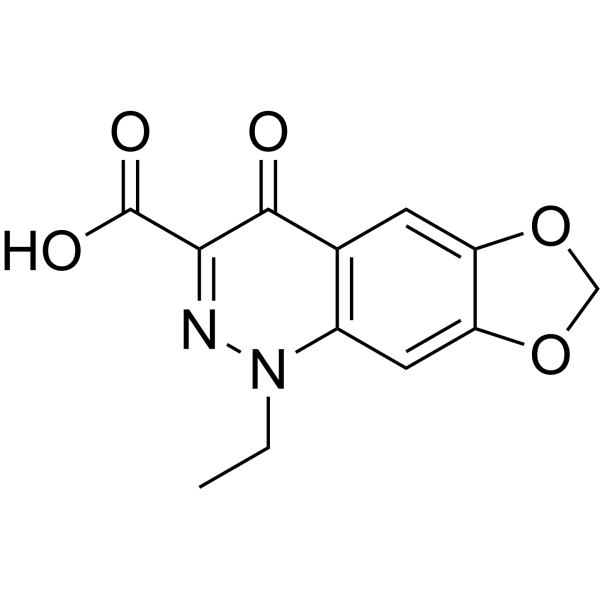
Cinoxacin (Compound 64716), a synthetic antimicrobial related to the quinolone class of orally active antibacterial agent. Cinoxacin has antibacterial activity against many gram-negative aerobic bacteria and inhibits bacterial DNA synthesis. Cinoxacin can be used for the research of urinary tract infections and bacterial prostatitis .
|
-
- HY-A0208
-
|
Acrosoxacin
|
Bacterial
Antibiotic
|
Infection
|
|
Rosoxacin (Acrosoxacin) is an orally active and broad-spectrum antibacterial quinolone antibiotic. Rosoxacin inhibits Gram-negative bacteria, including N. gonorrhoeae (MIC range=0.03-0.125 µg/mL).Rosoxacin can be used in studies of urinary tract infections and certain sexually transmitted diseases .
|
-
- HY-16745
-
|
KRP-AM1977
|
Beta-lactamase
Bacterial
Antibiotic
|
Infection
|
|
Lascufloxacin (KRP-AM1977X) is a potent and orally active fluoroquinolone antibacterial agent. Lascufloxacin potently inhibits infections caused by various pathogens, including quinolone-resistant strains. Lascufloxacin has the potential for various infectious diseases treatment, including lower respiratory tract infections .
|
-
- HY-W011117R
-
|
|
Reference Standards
Bacterial
DNA/RNA Synthesis
Antibiotic
|
Infection
|
|
Danofloxacin (Standard) is the analytical standard of Danofloxacin. This product is intended for research and analytical applications. Danofloxacin is an orally active quinolone antibiotic. Danofloxacin targets bacterial DNA gyrase and inhibits bacterial DNA replication, transcription and growth. Danofloxacin can be used for various bacterial infections caused by Escherichia coli, Mycoplasma and other pathogens.
|
-
- HY-W683763
-
|
HSR-903 free base
|
Bacterial
|
Infection
|
|
Olamufloxacin (HSR-903) is an orally active fluoroquinolone antibacterial agent. Olamufloxacin inhibits DNA supercoiling activity. Olamufloxacin exhibits activity against Gram-positive, Gram-negative, chlamydial, and quinolone-resistant bacterial strains. Olamufloxacin can be used for the research of bacterial infections .
|
-
- HY-105033R
-
|
Pirfloxacin (Standard)
|
Reference Standards
Bacterial
|
Infection
|
|
Irloxacin (Standard) is the analytical standard of Irloxacin (HY-105033). This product is intended for research and analytical applications. Irloxacin (Pirfloxacin) is a quinolone antibacterial agent. Irloxacin shows greater activity with an acid pH. Irloxacin has a good in vitro antimicrobial spectrum against both gram-positive and gram-negative bacteria. Orally active .
|
-
- HY-124199
-
|
|
Antibiotic
Bacterial
|
Infection
|
|
Cephalochromin is an antibiotic and an inhibitor for bacterial fatty acid synthase (FabI). Cephalochromin inhibits FabI of Staphylococcus aureus and Escherichia coli with IC50 of 1.9 and 1.8 μM. Cephalochromin inhibits gram-positive methicillin-resistant S. aureus (MRSA) and quinolone-resistant S. aureus (QRSA), with MIC of 2-8 µg/mL .
|
-
- HY-135184
-
|
CBR-2092; TNP-2092
|
Antibiotic
Bacterial
DNA/RNA Synthesis
|
Infection
|
|
Rifaquizinone (CBR-2092) is a Rifamycin-Quinolone Hybrid Antibiotic. Rifaquizinone inhibits wild-type S. aureus RNA polymerase with an IC50 of 34 nM. Rifaquizinone is effective against S. aureus infections, with MICs ranged from 0.008 to 0.5 μg/mL for 300 clinical isolates of staphylococci and streptococci .
|
-
- HY-161258
-
|
|
Bacterial
|
Infection
|
|
Antibacterial agent 181 (Compound 3f) is a potent ciprofloxacin cationic antibacterial agent with low cytotoxicity. The MIC values of Antibacterial agent 181 against Staphylococcus aureus and Escherichia coli are both 2 μg/mL .
|
-
- HY-111023
-
|
TG-873870 malate
|
Antibiotic
Bacterial
|
Infection
|
|
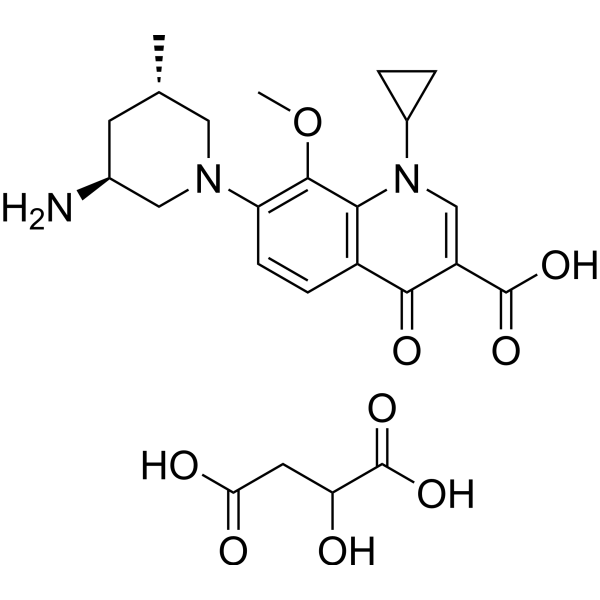
Nemonoxacin (TG-873870) malate is a nonfluorinated quinolone antibiotic. Nemonoxacin malate has broad-spectrum activity against Gram-positive, Gram-negative and atypical pathogens. Nemonoxacin malate can inhibit drug-resistant Streptococcus pneumoniae and Methicillin-resistant Staphylococcus aureus. Nemonoxacin malate can be used for the research of community-acquired pneumonia .
|
-
- HY-W683763A
-
|
HSR-903
|
Bacterial
|
Infection
|
|
Olamufloxacin (HSR-903) methanesulfonate is an orally active fluoroquinolone antibacterial agent. Olamufloxacin methanesulfonate inhibits DNA supercoiling activity. Olamufloxacin methanesulfonate exhibits activity against Gram-positive, Gram-negative, chlamydial, and quinolone-resistant bacterial strains. Olamufloxacin methanesulfonate can be used for the research of bacterial infections .
|
-
- HY-B0398S
-
|
|
Isotope-Labeled Compounds
Bacterial
Antibiotic
Topoisomerase
|
Infection
|
|
Nalidixic Acid-d5 is the deuterium labeled Nalidixic acid. Nalidixic acid, a quinolone antibiotic, is effective against both gram-positive and gram-negative bacteria. Nalidixic acid acts in a bacteriostatic manner in lower concentrations and is bactericidal in higher concentrations. Nalidixic acid inhibits a subunit of DNA gyrase and topoisomerase IV and reversibly blocks DNA replication in susceptible bacteria .
|
-
- HY-135981
-
CMS-121
2 Publications Verification
|
Acetyl-CoA Carboxylase
|
Neurological Disease
Inflammation/Immunology
|
|
CMS-121 is a quinolone derivative and an orally active acetyl-CoA carboxylase 1 (ACC1) inhibitor. CMS-121 protects HT22 cells against ischemia and oxidative damage with EC50 values of 7 nM and 200 nM, respectively. CMS-121 has strong neuroprotective, anti-inflammatory, antioxidative and renoprotective activities .
|
-
- HY-U00092A
-
|
|
Bacterial
|
Infection
|
|
BAY-Y 3118 hydrochloride is a quinolone antibacterial agent. BAY-Y 3118 hydrochloride has a broad antibacterial spectrum in vitro. BAY-Y 3118 hydrochloride exhibits high activity against gram-positive cocci and anaerobes. BAY-Y 3118 hydrochloride shows moderate activity against Enterobacteriaceae and Pseudomonas aeruginosa. BAY-Y 3118 hydrochloride can be used in the research of infectious diseases .
|
-
- HY-115159
-
|
|
Bacterial
|
Infection
|
|
Ro 14-9578 is a tricyclic quinolone analog with antibacterial activity. Ro 14-9578 inhibits DNA biosynthesis (IC50=117 μM) and DNA supercoiling (IC50=66.8 μM) in Escherichia coli. Furthermore, Ro 14-9578 exhibits inhibitory effects against various Gram-negative bacteria and Staphylococcus aureus .
|
-
- HY-B0398R
-
|
|
Reference Standards
Bacterial
Antibiotic
Topoisomerase
|
Infection
|
|
Nalidixic acid (Standard) is the analytical standard of Nalidixic acid. This product is intended for research and analytical applications. Nalidixic acid, a quinolone antibiotic, is effective against both gram-positive and gram-negative bacteria. Nalidixic acid acts in a bacteriostatic manner in lower concentrations and is bactericidal in higher concentrations. Nalidixic acid inhibits a subunit of DNA gyrase and topoisomerase IV and reversibly blocks DNA replication in susceptible bacteria .
|
-
- HY-A0208R
-
|
Acrosoxacin (Standard)
|
Bacterial
Antibiotic
Reference Standards
|
Infection
|
|
Rosoxacin (Standard) is the analytical standard of Rosoxacin. This product is intended for research and analytical applications. Rosoxacin (Acrosoxacin) is an orally active and broad-spectrum antibacterial quinolone antibiotic. Rosoxacin inhibits Gram-negative bacteria, including N. gonorrhoeae (MIC range=0.03-0.125 μg/mL).Rosoxacin can be used in studies of urinary tract infections and certain sexually transmitted diseases .
|
-
- HY-U00092
-
|
|
Bacterial
|
Infection
|
|
BAY-Y 3118 is a quinolone antibacterial agent. BAY-Y 3118 has a broad antibacterial spectrum in vitro. BAY-Y 3118 exhibits high activity against gram-positive cocci and anaerobes. BAY-Y 3118 shows moderate activity against Enterobacteriaceae and Pseudomonas aeruginosa. BAY-Y 3118 can be used in the research of infectious diseases .
|
-
- HY-B1085R
-
|
Compound 64716 (Standard)
|
Reference Standards
Bacterial
Antibiotic
DNA/RNA Synthesis
|
Infection
|
|
Cinoxacin (Standard) is the analytical standard of Cinoxacin. This product is intended for research and analytical applications. Cinoxacin (Compound 64716), a synthetic antimicrobial related to the quinolone class of orally active antibacterial agent. Cinoxacin has antibacterial activity against many gram-negative aerobic bacteria and inhibits bacterial DNA synthesis. Cinoxacin can be used for the research of urinary tract infections and bacterial prostatitis .
|
-
- HY-B1085S
-
|
|
Isotope-Labeled Compounds
|
Infection
|
|
Cinoxacin-d5 is the deuterium-labeled Cinoxacin (HY-B1085) . Cinoxacin (Compound 64716),a synthetic antimicrobial related to the quinolone class of orally active antibacterial agent. Cinoxacin has antibacterial activity against many gram-negative aerobic bacteria and inhibits bacterial DNA synthesis. Cinoxacin can be used for the research of urinary tract infections and bacterial prostatitis .
|
-
- HY-178447
-
|
|
PPAR
Glutathione Peroxidase
SOD
TNF Receptor
Interleukin Related
NF-κB
|
Infection
Metabolic Disease
Endocrinology
|
|
PPARγ agonist 20 is a potent, orally active PPAR-γ agonist. PPARγ agonist 20 effectively increases antioxidant defenses (SOD, GSH) and reduces lipid peroxidation. PPARγ agonist 20 can upregulate of Pparg, Glut4, and AdipoQ, suppresses of TNF-α, IL-6, and NF-κB p65. PPARγ agonist 20 significantly lowers fasting blood glucose, improving glucose tolerance, and restoring metabolic balance in Streptozotocin (HY-13753)-Nicotinamide (HY-B0150)-induced diabetic rats. PPARγ agonist 20 can be used for the study of type 2 diabetes .
|
-
- HY-B1050
-
|
SB-265805S; LB-20304a
|
Bacterial
Antibiotic
DNA/RNA Synthesis
Topoisomerase
|
Infection
|
|
Gemifloxacin mesylate (SB-265805S; LB-20304a) is an orally active broad-spectrum quinolone antibacterial antibiotic. Gemifloxacin mesylate inhibits DNA synthesis by inhibiting DNA gyrase and Topoisomerase IV activities. Gemifloxacin mesylate has potent antibacterial activities against gram-positive bacteria in vitro efficacy study, particularly Streptococci and Staphylococci. Gemifloxacin mesylate has been used in the research of respiratory tract infections .
|
-
- HY-177967
-
|
|
Drug Derivative
|
Cancer
|
|
Antitumor agent-209 (Compound 10g), a quinolone derivative, is an antitumor agent. Antitumor agent-209 can inhibit proliferation of HCT-116, RKO, DLD1, HepG2, BGC-823, NCI-H1650 and SK-OV-3 cells with IC50 values of 0.37, 0.58, 0.81, 0.79, 0.89, 0.78 and 0.89 μM .
|
-
- HY-B1050R
-
|
SB-265805S (Standard); LB-20304a (Standard)
|
Reference Standards
Bacterial
Antibiotic
DNA/RNA Synthesis
Topoisomerase
|
Infection
|
|
Gemifloxacin (mesylate) (Standard) is the analytical standard of Gemifloxacin (mesylate). This product is intended for research and analytical applications. Gemifloxacin mesylate (SB-265805S; LB-20304a) is an orally active broad-spectrum quinolone antibacterial antibiotic. Gemifloxacin mesylate inhibits DNA synthesis by inhibiting DNA gyrase and Topoisomerase IV activities. Gemifloxacin mesylate has potent antibacterial activities against gram-positive bacteria in vitro efficacy study, particularly Streptococci and Staphylococci. Gemifloxacin mesylate has been used in the research of respiratory tract infections .
|
-
- HY-A0170
-
Trovafloxacin
Maximum Cited Publications
7 Publications Verification
|
Bacterial
Topoisomerase
Antibiotic
|
Infection
|
|
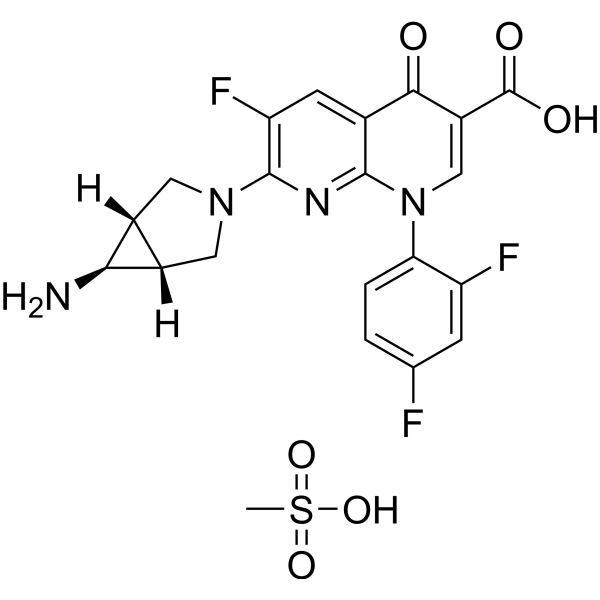
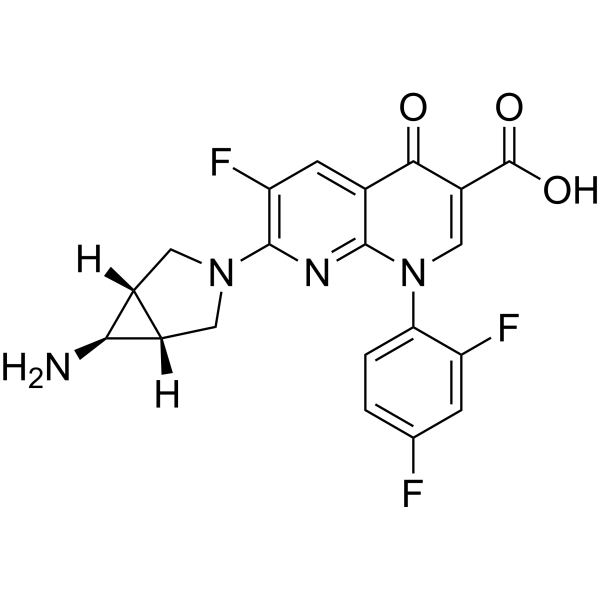
Trovafloxacin is a broad-spectrum quinolone antibiotic with potent activity against Gram-positive, Gram-negative and anaerobic organisms. Trovafloxacin blocks the DNA gyrase and topoisomerase IV activity. Trovafloxacin is also a potent, selective and orally active pannexin 1 channel (PANX1) inhibitor with an IC50 of 4 μM for PANX1 inward current. Trovafloxacin does not inhibit connexin 43 gap junction or PANX2. Trovafloxacin leads to dysregulated fragmentation of apoptotic cells by inhibiting PANX1 .
|
-
- HY-W098807
-
|
|
Drug Derivative
|
Cancer
|
|
4-Chloro-7-ethoxyquinoline (Compound 9a), a quinolone derivative, is an anticancer agent. 4-Chloro-7-ethoxyquinoline can inhibit proliferation of HCT-116, RKO, DLD1, HepG2, BGC-823, NCI-H1650 and SK-OV-3 cells with IC50 values of 3.16, 3.87, 2.75, 2.66, 3.91, 3.34 and 3.46μM .
|
-
- HY-103399
-
|
|
Bacterial
Topoisomerase
Antibiotic
|
Infection
|
|
Trovafloxacin mesylate is a broad-spectrum quinolone antibiotic with potent activity against Gram-positive, Gram-negative and anaerobic organisms. Trovafloxacin mesylate blocks the DNA gyrase and topoisomerase IV activity. Trovafloxacin mesylate is also a potent, selective and orally active pannexin 1 channel (PANX1) inhibitor with an IC50 of 4 μM for PANX1 inward current. Trovafloxacin mesylate does not inhibit connexin 43 gap junction or PANX2. Trovafloxacin mesylate leads to dysregulated fragmentation of apoptotic cells by inhibiting PANX1 .
|
-
- HY-B0506
-
|
OPC7251
|
Bacterial
Antibiotic
DNA/RNA Synthesis
Interleukin Related
|
Infection
Inflammation/Immunology
|
|
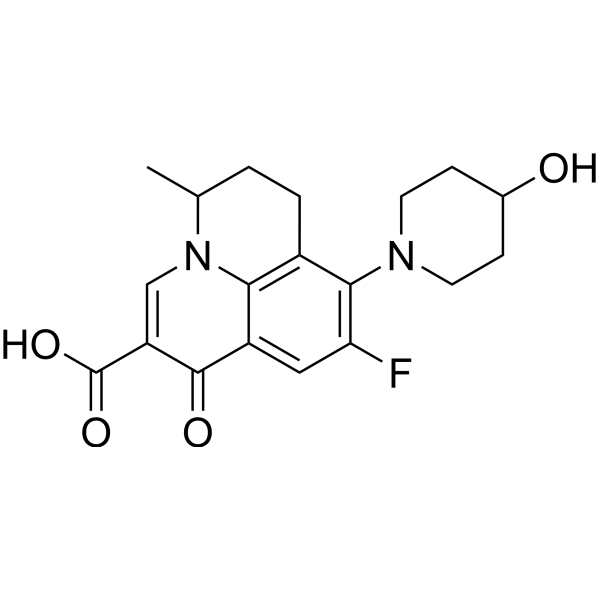
Nadifloxacin (OPC7251) is a broad-spectrum quinolone antibiotic. Nadifloxacin inhibits bacterial DNA gyrase and topoisomerase IV, interfering with DNA replication. It also suppresses the production of proinflammatory cytokines (such as IL-1α, IL-6, and IL-8). Nadifloxacin exhibits antibacterial activity against various pathogens, including Propionibacterium acnes and Staphylococcus aureus. Nadifloxacin also exhibits anti-inflammatory activity. Nadifloxacin can be used in the research of skin infections such as acne vulgaris, folliculitis, and impetigo .
|
-
- HY-N10907
-
|
|
Bacterial
|
Infection
|
|
4(1H)-Quinolinone, 1-methyl-2-(5Z)-5-undecen-1-yl- (compound 2) is a quinolone alkaloid that can be isolated from Cnidium. 4(1H)-Quinolinone, 1-methyl-2-(5Z)-5-undecen-1-yl- has methicillin-resistant Staphylococcus aureus (MRSA) activity, with MIC values of 32 μg/mL (ATCC 33591) and 16 μM/mL (ATCC 25923), respectively .
|
-
- HY-A0170R
-
|
|
Reference Standards
Bacterial
Topoisomerase
Antibiotic
|
Infection
|
|
Trovafloxacin (Standard) is the analytical standard of Trovafloxacin. This product is intended for research and analytical applications. Trovafloxacin is a broad-spectrum quinolone antibiotic with potent activity against Gram-positive, Gram-negative and anaerobic organisms. Trovafloxacin blocks the DNA gyrase and topoisomerase IV activity. Trovafloxacin is also a potent, selective and orally active pannexin 1 channel (PANX1) inhibitor with an IC50 of 4 μM for PANX1 inward current. Trovafloxacin does not inhibit connexin 43 gap junction or PANX2. Trovafloxacin leads to dysregulated fragmentation of apoptotic cells by inhibiting PANX1 .
|
-
- HY-179389
-
|
|
Bacterial
Glutathione S-transferase
Elastase
|
Infection
|
|
XDS-23 is a selective biofilm inhibitor with an IC50 of 1.26 µM against Pseudomonas aeruginosa. XDS-23 exerts a dual inhibitory effect on the LasI/LasR System (las) and Pseudomonas Quinolone Signal System (pqs). XDS-23 suppress the production of key virulence factors including elastase, pyocyanin, and extracellular polysaccharides. XDS-23 exhibits synergistic antibacterial activity and can enhance the efficacy of multiple antibiotics in both in vitro and in vivo models, while maintaining a favorable safety profile. XDS-23 can be employed for research in combating biofilm-mediated drug-resistant P. aeruginosa infections .
|
-
- HY-116474
-
|
|
ERK
JNK
MMP
p38 MAPK
STAT
Fungal
Bacterial
NO Synthase
PGE synthase
NF-κB
Wnt
β-catenin
|
Infection
Metabolic Disease
Inflammation/Immunology
|
|
Viridicatol is a quinolone alkaloid with anti-inflammatory, antibacterial, antifungal, osteogenic and chondrogenic activities. Viridicatol reduces the phosphorylation levels of ERK, JNK, p38 and STAT6; inhibits MMP-2, MMP-9, NF-κB signaling pathway and PTP1B; downregulates genes related to mast cell activation; and binds to SHN3 to activate the Wnt/SHN3 signaling pathway. Viridicatol inhibits the expression of pro-inflammatory mediators and cytokines, and promotes osteogenic/chondrogenic differentiation. Viridicatol can be used in studies related to fibrosarcoma, allergy, bacterial infection, fungal infection and osteoporosis .
|
-
- HY-B0506R
-
|
OPC7251 (Standard)
|
Reference Standards
Bacterial
Antibiotic
DNA/RNA Synthesis
Interleukin Related
|
Infection
Inflammation/Immunology
|
|
Nadifloxacin (Standard) is the analytical standard of Nadifloxacin (HY-B0506). This product is intended for research and analytical applications. Nadifloxacin (OPC7251) is a broad-spectrum quinolone antibiotic. Nadifloxacin inhibits bacterial DNA gyrase and topoisomerase IV, interfering with DNA replication. It also suppresses the production of proinflammatory cytokines (such as IL-1α, IL-6, and IL-8). Nadifloxacin exhibits antibacterial activity against various pathogens, including Propionibacterium acnes and Staphylococcus aureus. Nadifloxacin also exhibits anti-inflammatory activity. Nadifloxacin can be used in the research of skin infections such as acne vulgaris, folliculitis, and impetigo .
|
-
- HY-B0506S1
-
|
OPC7251-d5
|
Isotope-Labeled Compounds
Antibiotic
Bacterial
DNA/RNA Synthesis
Interleukin Related
|
Infection
Inflammation/Immunology
|
|
Nadifloxacin-d5 (OPC7251-d5) is deuterium labeled Nadifloxacin (HY-B0506). Nadifloxacin (OPC7251) is a broad-spectrum quinolone antibiotic. Nadifloxacin inhibits bacterial DNA gyrase and topoisomerase IV, interfering with DNA replication. It also suppresses the production of proinflammatory cytokines (such as IL-1α, IL-6, and IL-8). Nadifloxacin exhibits antibacterial activity against various pathogens, including Propionibacterium acnes and Staphylococcus aureus. Nadifloxacin also exhibits anti-inflammatory activity. Nadifloxacin can be used in the research of skin infections such as acne vulgaris, folliculitis, and impetigo .
|
-
- HY-113718
-
|
|
Bacterial
Topoisomerase
DNA/RNA Synthesis
|
Infection
|
|
DS21412020 is a fluoroquinolone antibacterial agent. DS21412020 inhibits bacterial DNA gyrase (GyrA) and topoisomerase IV, leading to DNA breaks. DS21412020 exhibits significant activity against Gram-positive bacteria such as Staphylococcus aureus (MIC = 0.006 μg/mL), Streptococcus pneumoniae (MIC = 0.05 μg/mL), and Methicillin (HY-121544)-resistant Staphylococcus aureus (MIC = 0.2 μg/mL), and Gram-negative bacteria such as Escherichia coli (MIC = 0.006 μg/mL) and Pseudomonas aeruginosa (MIC = 0.78 μg/mL). DS21412020 significantly reduces bacterial load in mouse pneumonia and MRSA infection models. DS21412020 can be used in the development of next-generation quinolone antibiotics .
|
-
- HY-116474R
-
|
|
Reference Standards
JNK
β-catenin
NO Synthase
PGE synthase
Fungal
STAT
ERK
MMP
p38 MAPK
Bacterial
NF-κB
Wnt
|
Infection
Metabolic Disease
Inflammation/Immunology
|
|
Viridicatol (Standard) is the analytical standard of Viridicatol (HY-116474). This product is intended for research and analytical applications. Viridicatol is a quinolone alkaloid with anti-inflammatory, antibacterial, antifungal, osteogenic and chondrogenic activities. Viridicatol reduces the phosphorylation levels of ERK, JNK, p38 and STAT6; inhibits MMP-2, MMP-9, NF-κB signaling pathway and PTP1B; downregulates genes related to mast cell activation; and binds to SHN3 to activate the Wnt/SHN3 signaling pathway. Viridicatol inhibits the expression of pro-inflammatory mediators and cytokines, and promotes osteogenic/chondrogenic differentiation. Viridicatol can be used in studies related to fibrosarcoma, allergy, bacterial infection, fungal infection and osteoporosis .
|
-
-
-
HY-L0107V
-
|
|
13,236 compounds
|
|
Natural products are small molecules produced naturally by any organism including primary and secondary metabolites. Nowadays, new drugs based on Natural products are successfully applied to treat tumors, viral and bacterial diseases, and nervous disorders.
In response to the current drug discovery demand, we created this natural product-like compound library with 13,236 in-stock synthetic compounds similar to natural ones. The library was designed by 2D fingerprint similarity filtering, chemical descriptor-based and natural-likeness scoring selection. These compounds are useful tools for high throughput screening (HTS) and high content screening (HCS) programs.
|
| Cat. No. |
Product Name |
Type |
-
- HY-D0113
-
|
|
Fluorescent Dyes
|
|
7-Hydroxy-4-methyl-2(1H)-quinolone (compound 2b) is a fluorescent hydroxylated product. 7-Hydroxy-4-methyl-2(1H)-quinolone can be used for detecting hydroxyl radicals of DNA damage .
|
| Cat. No. |
Product Name |
Category |
Target |
Chemical Structure |
-
- HY-B0398
-
-
-
- HY-N5009
-
-
-
- HY-116474
-
|
|
Infection
Alkaloids
Structural Classification
Monophenols
Microorganisms
Classification of Application Fields
Phenols
Quinoline Alkaloids
Disease Research Fields
Source Classification
|
ERK
JNK
MMP
p38 MAPK
STAT
Fungal
Bacterial
NO Synthase
PGE synthase
NF-κB
Wnt
β-catenin
|
|
Viridicatol is a quinolone alkaloid with anti-inflammatory, antibacterial, antifungal, osteogenic and chondrogenic activities. Viridicatol reduces the phosphorylation levels of ERK, JNK, p38 and STAT6; inhibits MMP-2, MMP-9, NF-κB signaling pathway and PTP1B; downregulates genes related to mast cell activation; and binds to SHN3 to activate the Wnt/SHN3 signaling pathway. Viridicatol inhibits the expression of pro-inflammatory mediators and cytokines, and promotes osteogenic/chondrogenic differentiation. Viridicatol can be used in studies related to fibrosarcoma, allergy, bacterial infection, fungal infection and osteoporosis .
|
-
-
- HY-129503
-
-
-
- HY-N2060
-
-
-
- HY-59208
-
-
-
- HY-N9530
-
-
-
- HY-N1638
-
|
|
Alkaloids
Evodia rutaecarpa (Juss.) Benth.
Rutaceae
Quinoline Alkaloids
Plants
Source Classification
|
Monoamine Oxidase
|
|
1-Methyl-2-undecyl-4(1H)-quinolone is a potent, irreversible and selective inhibitor of type B monoamine oxidase (MAO-B). 1-Methyl-2-undecyl-4(1H)-quinolone shows a selective inhibition of MAO-B activity with the IC50 and Ki values of 15.3 μM and 9.91 μM, respectively, but did not inhibit type A MAO (MAO-A) activity. Methyl-2-undecyl-4(1H)-quinolone, as a quinolone alkaloid, is isolated from fresh leaves and fruits of Evodia rutaecarpa HOOK. f. et THOMS .
|
-
-
- HY-N9520
-
-
-
- HY-N0968
-
-
-
- HY-124199
-
|
|
Microorganisms
Antibiotics
Other Antibiotics
Source Classification
|
Antibiotic
Bacterial
|
|
Cephalochromin is an antibiotic and an inhibitor for bacterial fatty acid synthase (FabI). Cephalochromin inhibits FabI of Staphylococcus aureus and Escherichia coli with IC50 of 1.9 and 1.8 μM. Cephalochromin inhibits gram-positive methicillin-resistant S. aureus (MRSA) and quinolone-resistant S. aureus (QRSA), with MIC of 2-8 µg/mL .
|
-
-
- HY-B0398R
-
-
-
- HY-108953
-
-
-
- HY-N14512
-
-
-
- HY-N14511
-
-
-
- HY-N1636
-
-
-
- HY-N1637
-
-
-
- HY-B1908R
-
-
-
- HY-N1750R
-
-
-
- HY-N10907
-
-
-
- HY-116474R
-
|
|
Alkaloids
Structural Classification
Monophenols
Microorganisms
Phenols
Quinoline Alkaloids
Source Classification
|
Reference Standards
JNK
β-catenin
NO Synthase
PGE synthase
Fungal
STAT
ERK
MMP
p38 MAPK
Bacterial
NF-κB
Wnt
|
|
Viridicatol (Standard) is the analytical standard of Viridicatol (HY-116474). This product is intended for research and analytical applications. Viridicatol is a quinolone alkaloid with anti-inflammatory, antibacterial, antifungal, osteogenic and chondrogenic activities. Viridicatol reduces the phosphorylation levels of ERK, JNK, p38 and STAT6; inhibits MMP-2, MMP-9, NF-κB signaling pathway and PTP1B; downregulates genes related to mast cell activation; and binds to SHN3 to activate the Wnt/SHN3 signaling pathway. Viridicatol inhibits the expression of pro-inflammatory mediators and cytokines, and promotes osteogenic/chondrogenic differentiation. Viridicatol can be used in studies related to fibrosarcoma, allergy, bacterial infection, fungal infection and osteoporosis .
|
-
-
- HY-402321
-
-
-
- HY-N16462
-
|
|
Natural Products
Microorganisms
Source Classification
|
Bacterial
|
|
2-(2-Heptenyl)-3-methyl-4(1H)-quinolone is a quinoline alkaloid found in Burkholderia sp. VY81. 2-(2-Heptenyl)-3-methyl-4(1H)-quinolone is promising for research of bacterial diseases in rice (e.g., soft rot) and other plant pathogens (e.g., Pythium ultimum, Fusarium oxysporum) .
|
-
-
- HY-105608
-
-
-
- HY-59208R
-
-
| Cat. No. |
Product Name |
Chemical Structure |
-
- HY-B0526S
-
|
|
|
Flumequine- 13C3 is the 13C3 labeled Flumequine. Flumequine (R-802) is a quinolone antibiotic, and acts as a topoisomerase II inhibitor, with an IC50 of 15 μM (3.92 μg/mL).
|
-
-
- HY-B0398S
-
|
|
|
Nalidixic Acid-d5 is the deuterium labeled Nalidixic acid. Nalidixic acid, a quinolone antibiotic, is effective against both gram-positive and gram-negative bacteria. Nalidixic acid acts in a bacteriostatic manner in lower concentrations and is bactericidal in higher concentrations. Nalidixic acid inhibits a subunit of DNA gyrase and topoisomerase IV and reversibly blocks DNA replication in susceptible bacteria .
|
-
-
- HY-129503S1
-
|
|
|
2-Heptyl-4-quinolone- 15N is the 15N-labeled 2-Heptyl-4-quinolone (HY-129503). 2-Heptyl-4-quinolone is an intermediate in the synthesis of the Pseudomonas quinolone signal (PQS) that controls swarming by positively regulating phenazine production. 2-Heptyl-4-quinolone induces the production of the phenazine-1-carboxylic acid (PCA) .
|
-
-
- HY-124352S
-
|
|
|
2-Nonyl-3-hydroxy-4-quinolone-d4 (C9-PQS-d4) is deuterium labeled 2-Nonyl-3-hydroxy-4-quinolone. 2-nonyl-3-hydroxy-4-Quinolone (C9-PQS) is a quinolone compound produced by P. aeruginosa and other related bacterias. 2-nonyl-3-hydroxy-4-Quinolone is a quorum sensing (QS) signal molecule that controls the expression of many virulence genes as a function of cell population density .
|
-
-
- HY-W717950
-
|
|
|
Pseudomonas quinolone signal-d4 is a stable isotope internal standard .
|
-
-
- HY-B0343BS
-
|
|
|
Sarafloxacin-d8 (hydrochloride trihydrate) is the deuterium labeled Sarafloxacin hydrochloride trihydrate. Sarafloxacin hydrochloride trihydrate is a quinolone antibiotic compound .
|
-
-
- HY-B0343AS
-
|
|
|
Sarafloxacin-d8 (A-56620-d8) hydrochloride is the deuterium labeled Sarafloxacin hydrochloride. Sarafloxacin hydrochloride (A-56620 hydrochloride) is a quinolone antibiotic drug.
|
-
-
- HY-W018677S
-
|
|
|
Quinoxaline-d4 is the deuterium labeled Quinoxaline . Quinoxaline is a chemical compound that acts as an intermediate for anti-tuberculosis agent Pyrazinamide. Quinoxaline presents a structure that is similar to quinolone antibiotics .
|
-
-
- HY-14957AS
-
|
|
|
Ozenoxacin-d3 (hydrochloride) is the deuterium labeled Ozenoxacin hydrochloride. Ozenoxacin hydrochloride is a nonfluorinated quinolone antibacterial, which shows potent activities against the main microorganisms isolated from skin and soft tissue infections .
|
-
-
- HY-14957S
-
|
|
|
Ozenoxacin-d3 is the deuterium-labeled Ozenoxacin (HY-14957). Ozenoxacin-d3 is a nonfluorinated quinolone antibacterial, which shows potent activities against the main microorganisms isolated from skin and soft tissue infections.
|
-
-
- HY-B0455S
-
|
|
|
Lomefloxacin-d5 (hydrochloride) is the deuterium labeled Lomefloxacin hydrochloride. Lomefloxacin (SC47111A) hydrochloride is a broad-spectrum quinolone antibiotic, with antimicrobial activity. Lomefloxacin hydrochloride is used for the research of respiratory tract infections, genitourinary infections, gastrointestinal infections, ENT infections, etc. .
|
-
-
- HY-W011117S
-
|
|
|
Danofloxacin-d3 is deuterium labeled Danofloxacin. Danofloxacin is an orally active quinolone antibiotic. Danofloxacin targets bacterial DNA gyrase and inhibits bacterial DNA replication, transcription and growth. Danofloxacin can be used for various bacterial infections caused by Escherichia coli, Mycoplasma and other pathogens.
|
-
-
- HY-W011117S1
-
|
|
|
Danofloxacin-d3-1 is deuterium labeled Danofloxacin. Danofloxacin is an orally active quinolone antibiotic. Danofloxacin targets bacterial DNA gyrase and inhibits bacterial DNA replication, transcription and growth. Danofloxacin can be used for various bacterial infections caused by Escherichia coli, Mycoplasma and other pathogens.
|
-
-
- HY-B1085S
-
|
|
|
Cinoxacin-d5 is the deuterium-labeled Cinoxacin (HY-B1085) . Cinoxacin (Compound 64716),a synthetic antimicrobial related to the quinolone class of orally active antibacterial agent. Cinoxacin has antibacterial activity against many gram-negative aerobic bacteria and inhibits bacterial DNA synthesis. Cinoxacin can be used for the research of urinary tract infections and bacterial prostatitis .
|
-
-
- HY-B0506S1
-
|
|
|
Nadifloxacin-d5 (OPC7251-d5) is deuterium labeled Nadifloxacin (HY-B0506). Nadifloxacin (OPC7251) is a broad-spectrum quinolone antibiotic. Nadifloxacin inhibits bacterial DNA gyrase and topoisomerase IV, interfering with DNA replication. It also suppresses the production of proinflammatory cytokines (such as IL-1α, IL-6, and IL-8). Nadifloxacin exhibits antibacterial activity against various pathogens, including Propionibacterium acnes and Staphylococcus aureus. Nadifloxacin also exhibits anti-inflammatory activity. Nadifloxacin can be used in the research of skin infections such as acne vulgaris, folliculitis, and impetigo .
|
-
-
- HY-129503S
-
|
|
|
2-Heptyl-4-quinolone- 13C6 is the 13C-labeled 2-Heptyl-4-quinolone (HY-129503). 2-Heptyl-4-quinolone is an intermediate in the synthesis of the Pseudomonas quinolone signal (PQS) that controls swarming by positively regulating phenazine production. 2-Heptyl-4-quinolone induces the production of the phenazine-1-carboxylic acid (PCA) .
|
-
-
- HY-108279S
-
|
|
|
Ulifloxacin-d8 is the deuterium labeled Ulifloxacin (HY-108279) . Ulifloxacin is a broad-spectrum quinolone antibiotic. Ulifloxacin is the active metabolite of Prulifloxacin (HY-B0024). Ulifloxacin has anti-bacterial activity.
|
-
Your information is safe with us. * Required Fields.
Inquiry Information
- Product Name:
- Cat. No.:
- Quantity:
- MCE Japan Authorized Agent:

