

1. Search Result
Search Result
Pathways Recommended: Metabolic Enzyme/Protease
Results for "

RNA enzyme

" in MedChemExpress (MCE) Product Catalog:

52

Inhibitors & Agonists

3

Screening Libraries

2

Biochemical Assay Reagents

13

Natural
Products

1

Recombinant Proteins

16

Isotope-Labeled Compounds

1

Antibodies

6

Oligonucleotides

Cat. No. Product Name Target Research Areas Chemical Structure
  • HY-14768
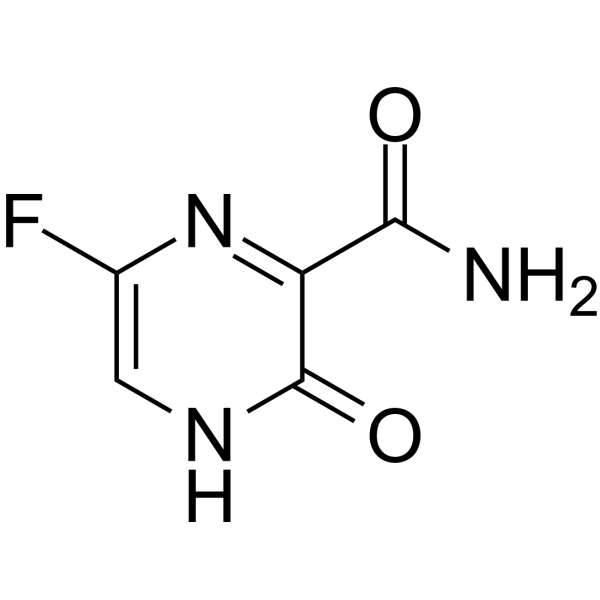
    Favipiravir
    Maximum Cited Publications
    50 Publications Verification

    T-705

    DNA/RNA Synthesis Influenza Virus SARS-CoV Bacterial Infection
    Favipiravir (T-705) is a potent viral RNA polymerase inhibitor, it is phosphoribosylated by cellular enzymes to its active form, Favipiravir-ribofuranosyl-5′-triphosphate (RTP). Favipiravir-RTP inhibits the influenza viral RNA-dependent RNA polymerase (RdRP) activity with an IC50 of 341 nM.
    Favipiravir
  • HY-P1923
    L-Asparaginase
    10+ Cited Publications

    L-​ASNase

    Apoptosis DNA/RNA Synthesis Cancer
    L-Asparaginase (L-ASNase) is a deamidating enzyme that catalyses the hydrolysis of L-asparagine and L-glutamine, and can be used for the research of acute lymphoblastic leukemia. L-Asparaginase depletes L-asparagine from plasma resulting in inhibition of RNA and DNA synthesis with the subsequent blastic cell apoptosis .
    L-Asparaginase
  • HY-N0667
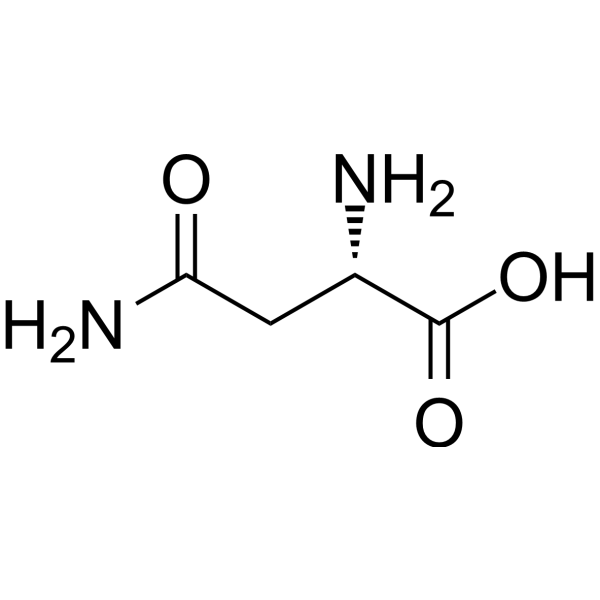
    L-Asparagine
    5 Publications Verification

    (-)-Asparagine; Asn; Asparamide

    Endogenous Metabolite Apoptosis DNA/RNA Synthesis Inflammation/Immunology
    L-Asparagine is an essential amino acid for leukemic cells and a substrate for L-Asparaginase. L-Asparaginase is a potent anti-leukemic enzyme that promotes asparagine (Asn) and glutamine (Gln) depletion and inhibits protein biosynthesis in lymphoblasts. Removal of L-asparagine from plasma by L-Asparaginase results in inhibition of RNA and DNA synthesis and subsequent apoptosis. L-Asparaginase has cell-killing ability in vitro and in vivo, and selectively inhibits the growth of cancer cells with low asparagine synthetase (AASNS) expression. L-Asparagine can be used as a biomarker and sensor for the study of childhood acute lymphoblastic leukemia .
    L-Asparagine
  • HY-N0157
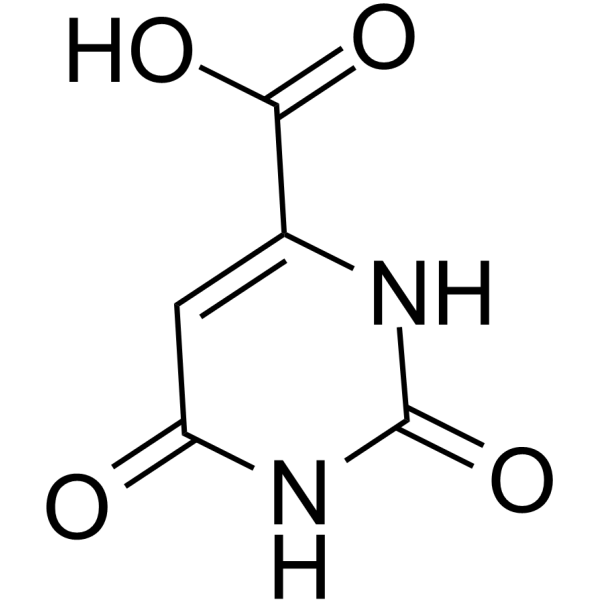
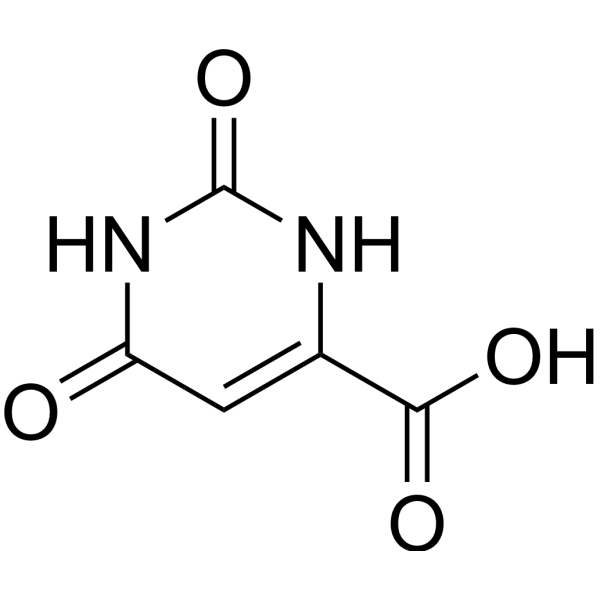
    Orotic acid
    3 Publications Verification

    6-Carboxyuracil; Vitamin B13

    Nucleoside Antimetabolite/Analog Endogenous Metabolite Metabolic Disease
    Orotic acid (6-Carboxyuracil), a precursor in biosynthesis of pyrimidine nucleotides and RNA, is released from the mitochondrial dihydroorotate dehydrogenase (DHODH) for conversion to UMP by the cytoplasmic UMP synthase enzyme. Orotic acid is a marker for measurement in routine newborn screening for urea cycle disorders. Orotic acid can induce hepatic steatosis and hepatomegaly in rats .
    Orotic acid
  • HY-128933
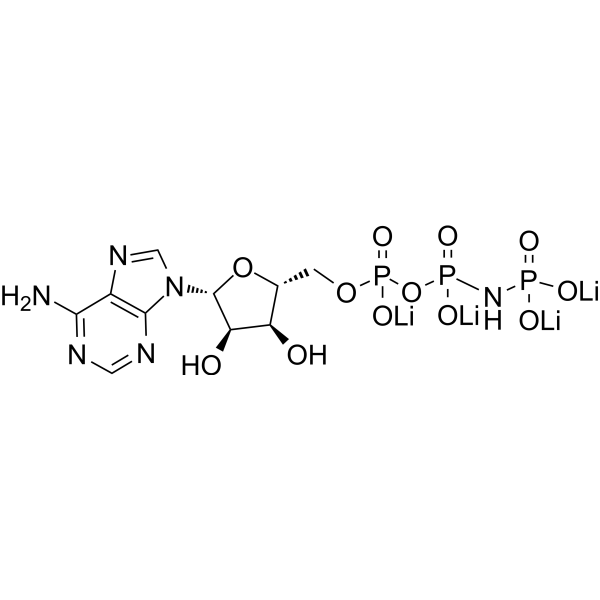
    AMP-PNP tetralithium
    3 Publications Verification

    Adenylyl-imidodiphosphate tetralithium

    Potassium Channel Metabolic Disease
    AMP-PNP (Adenylyl-imidodiphosphate) tetralithium is a non-hydrolyzable ATP analog. AMP-PNP tetralithium binds to ATP binding sites competely but is not hydrolyzed by enzymes, providing stable experimental conditions for studying ATP-dependent processes. AMP-PNP tetralithium can also be used to study enzyme activity, kinase regulation, DNA/RNA metabolism, ion channel function, and protein complex assembly .
    AMP-PNP tetralithium
  • HY-13560
    AVN-944
    5 Publications Verification

    VX-944

    Arenavirus DNA/RNA Synthesis Apoptosis Caspase Bcl-2 Family Infection Cancer
    AVN-944 (VX-944) is an orally active, potent, selective, noncompetitive and specific inhibitor of IMPDH (inosine monophosphate dehydrogenase). AVN-944 is an essential rate-limiting enzyme in de novo guanine nucleotide synthesis. AVN-944 is also an inhibitor of arenavirus RNA synthesis, and blocks arenavirus infection. AVN-944 has broad anti-cancer activities, and can be used for multiple myeloma (MM) and acute myeloid leukemia (AML) research .
    AVN-944
  • HY-130777A
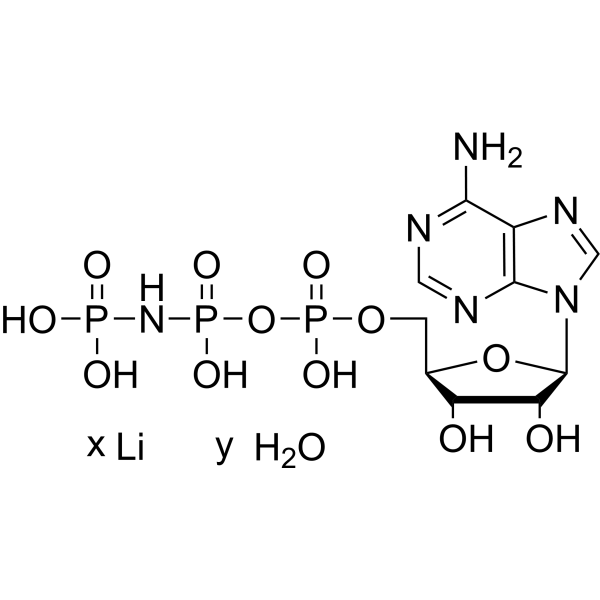
    AMP-PNP lithium hydrate
    3 Publications Verification

    Adenylyl imidodiphosphate lithium hydrate

    Drug Derivative Metabolic Disease
    AMP-PNP (Adenylyl imidodiphosphate) lithium hydrate is a non-hydrolyzable ATP analog. AMP-PNP lithium hydrate binds to ATP binding sites competely but is not hydrolyzed by enzymes, providing stable experimental conditions for studying ATP-dependent processes. AMP-PNP lithium hydrate can also be used to study enzyme activity, kinase regulation, DNA/RNA metabolism, ion channel function, and protein complex assembly .
    AMP-PNP lithium hydrate
  • HY-W019670
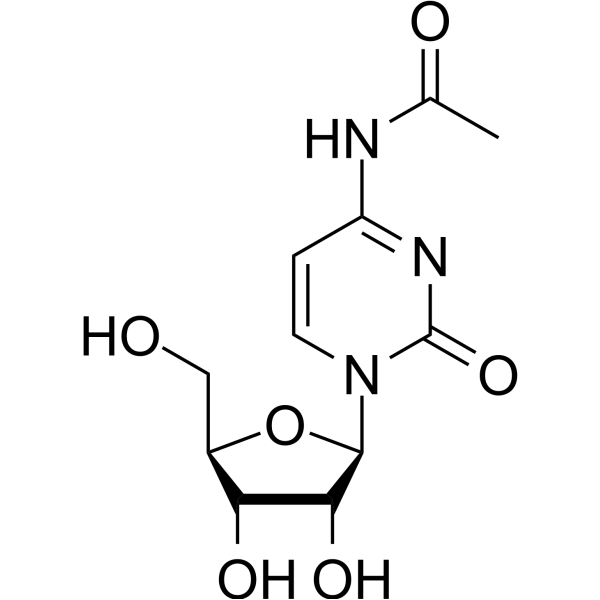
    N4-Acetylcytidine
    1 Publications Verification

    Endogenous Metabolite Histone Acetyltransferase Enterovirus NOD-like Receptor (NLR) Infection Neurological Disease Metabolic Disease Inflammation/Immunology Cancer
    N4-acetylcytidine (N4A) is an endogenous nucleoside metabolite from the degradation of tRNA. N4-Acetylcytidine is formed by N-acetyltransferase 10 and other enzymes. N4-acetylcytidine might sustain NLRP3 inflammasome activation via induction of HMGB1 expression and releasee. N4-Acetylcytidine modifies mRNA, tRNA and rRNA, affecting their stability, translation efficiency (such as enterovirus 71 RNA). N4-Acetylcytidine is used in the study of cancer, neuroinflammatory diseases, viral infections and obesity .
    N4-Acetylcytidine
  • HY-N0667S2
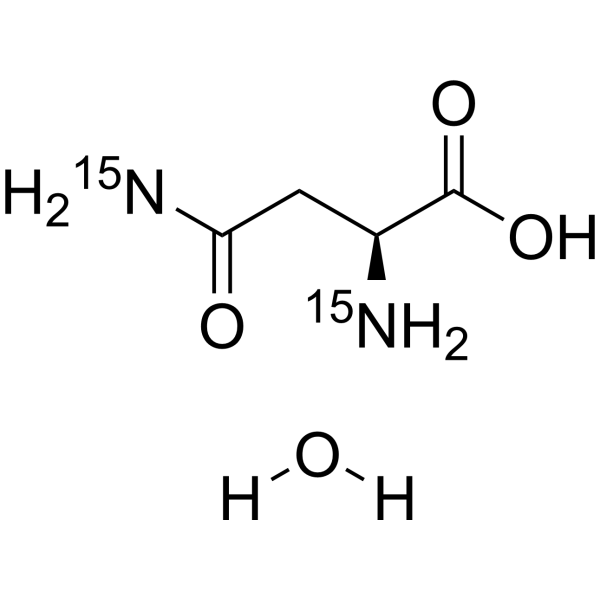
    L-Asparagine-15N2 monohydrate
    1 Publications Verification

    (-)-Asparagine-15N2 monohydrate; Asn-15N2 monohydrate; Asparamide-15N2 monohydrate

    Isotope-Labeled Compounds Endogenous Metabolite Apoptosis DNA/RNA Synthesis Inflammation/Immunology
    L-Asparagine- 15N2 monohydrate is the 15N-labeled L-Asparagine monohydrate (HY-W017443). L-Asparagine monohydrate is an essential amino acid for leukemic cells and a substrate for L-Asparaginase. L-Asparaginase is a potent anti-leukemic enzyme that promotes asparagine (Asn) and glutamine (Gln) depletion and inhibits protein biosynthesis in lymphoblasts. Removal of L-asparagine from plasma by L-Asparaginase results in inhibition of RNA and DNA synthesis and subsequent apoptosis. L-Asparaginase has cell-killing ability in vitro and in vivo, and selectively inhibits the growth of cancer cells with low asparagine synthetase (AASNS) expression. L-Asparagine monohydrate can be used as a biomarker and sensor for the study of childhood acute lymphoblastic leukemia .
    L-Asparagine-15N2 monohydrate
  • HY-W009444
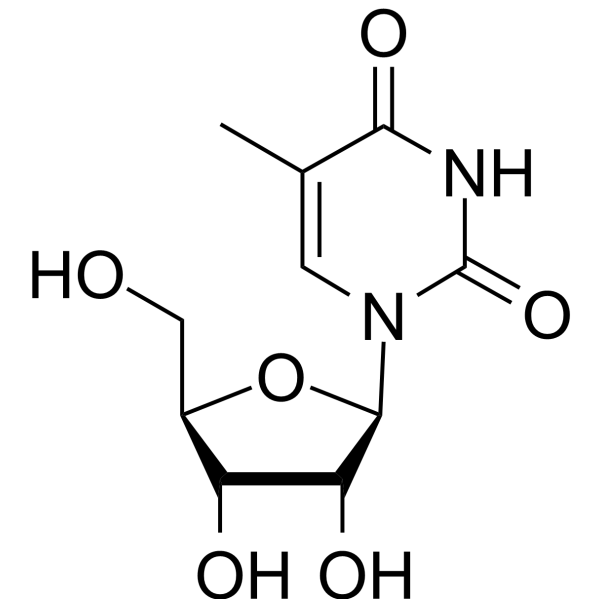
    5-Methyluridine
    1 Publications Verification

    Endogenous Metabolite Others
    5-Methyluridine (m 5U) is an RNA modified nucleotide generated by RNA methyltransferases (such as TrmA and RumA), which mainly targets specific uracil sites in RNA molecules such as the T arm of tRNA and rRNA. 5-Methyluridine relies on enzyme recognition of RNA secondary/tertiary structures (such as the T loop of tRNA or the specific stem-loop structure of rRNA) and participates in physiological processes such as translation accuracy and ribosome function by stabilizing RNA folding or regulating base pairing .
    5-Methyluridine
  • HY-W017443
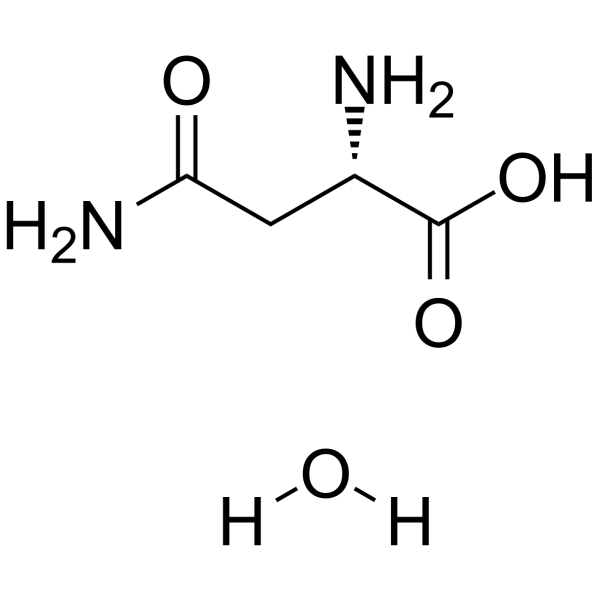
    L-Asparagine monohydrate
    5 Publications Verification

    Endogenous Metabolite Apoptosis DNA/RNA Synthesis Neurological Disease Metabolic Disease Inflammation/Immunology Cancer
    L-Asparagine monohydrate is an essential amino acid for leukemic cells and a substrate for L-Asparaginase. L-Asparaginase is a potent anti-leukemic enzyme that promotes asparagine (Asn) and glutamine (Gln) depletion and inhibits protein biosynthesis in lymphoblasts. Removal of L-asparagine from plasma by L-Asparaginase results in inhibition of RNA and DNA synthesis and subsequent apoptosis. L-Asparaginase has cell-killing ability in vitro and in vivo, and selectively inhibits the growth of cancer cells with low asparagine synthetase (AASNS) expression. L-Asparagine monohydrate can be used as a biomarker and sensor for the study of childhood acute lymphoblastic leukemia .
    L-Asparagine monohydrate
  • HY-156262

    Biochemical Assay Reagents Others
    DEPC-Treated Water is ultrapure water that has been sterilized by high temperature and high pressure and does not contain nuclease. It can avoid contamination by non-specific endonucleases and exonucleases and does not affect RNase activity .
    DEPC-Treated Water
  • HY-113137
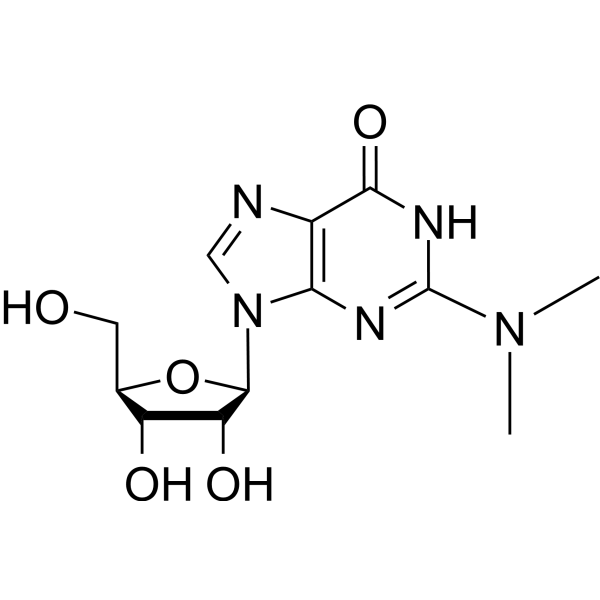
    N2,N2-Dimethylguanosine
    4 Publications Verification

    Endogenous Metabolite Cancer
    N2,N2-Dimethylguanosine is a methylated modified nucleoside present in RNA and serves as a structural modification component of tRNA. N2,N2-Dimethylguanosine inhibits reverse transcriptase-mediated cDNA synthesis and is one of the key modifications affecting sequencing efficiency in high-throughput RNA sequencing. N2,N2-Dimethylguanosine can be selectively demethylated at one methyl group by AlkB mutant enzymes (such as D135S/L118V) and converted to N2-methylguanosine, thereby reducing the inhibition of reverse transcription .
    N2,N2-Dimethylguanosine
  • HY-128788

    DNA/RNA Synthesis SARS-CoV Endogenous Metabolite Flavivirus Lactate Dehydrogenase Infection
    ddhCTP is an endogenously produced pyrimidine base analog with a Kd of 17.0 nM for LLDH and an IC50 of 55.8 μM for GAPDH. By inhibiting key metabolic enzymes such as GAPDH, ddhCTP reduces glycolytic flux and shifts metabolic flow toward the pentose phosphate pathway, thereby regulating the redox balance of cells. As a competitive CTP analog, ddhCTP terminates RNA synthesis by flavivirus RdRps and SARS-CoV-2 RdRp, and inhibits Zika virus replication in vivo. ddhCTP can be used in studies related to viral infections, COVID-19 and Zika virus infections.
    ddhCTP
  • HY-N1341

    HCV HCV Protease DNA/RNA Synthesis Bacterial Infection
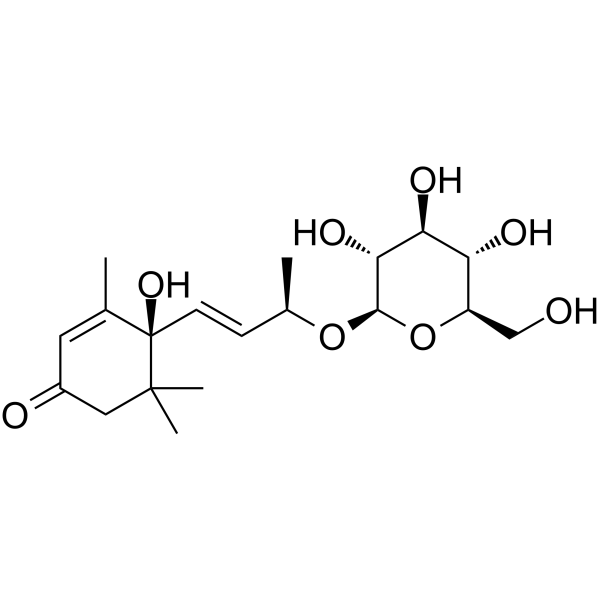
    Roseoside is an inhibitor of DNA gyrase and HAV 3C protease, and also inhibits HCV NS5A/B replicase in human systems with an IC50 of 20 μM. Roseoside binds to the active site of enzymes and stabilizes the interaction by forming hydrogen bonds with key amino acid residues. Roseoside inhibits the growth of Gram-positive bacteria, Gram-negative bacteria, and Candida albicans, and interferes with HCV RNA replication in vitro by inhibiting HCV NS5A/B replicase (IC50=20 μM). Roseoside shows no cytotoxicity and serves as a research tool for studies related to bacterial infections, candidiasis, HAV and HCV .
    Roseoside
  • HY-N0157R

    6-Carboxyuracil (Standard); Vitamin B13 (Standard)

    Reference Standards Nucleoside Antimetabolite/Analog Endogenous Metabolite Metabolic Disease
    Orotic acid (Standard) is the analytical standard of Orotic acid. This product is intended for research and analytical applications. Orotic acid (6-Carboxyuracil), a precursor in biosynthesis of pyrimidine nucleotides and RNA, is released from the mitochondrial dihydroorotate dehydrogenase (DHODH) for conversion to UMP by the cytoplasmic UMP synthase enzyme. Orotic acid is a marker for measurement in routine newborn screening for urea cycle disorders. Orotic acid can induce hepatic steatosis and hepatomegaly in rats .
    Orotic acid (Standard)
  • HY-145726

    TNF Receptor Cardiovascular Disease Inflammation/Immunology
    ISIS 104838 is an antisense oligonucleotide targeting TNF-α. ISIS 104838 specifically binds to human TNF-α mRNA via Watson-Crick base pairing to form a DNA:RNA hybrid duplex, thereby recruiting the ubiquitously expressed intracellular enzyme RNase H to degrade the target mRNA and inhibit TNF-α protein synthesis at the transcriptional level. ISIS 104838 induces moderate, self-limiting thrombocytopenia in cynomolgus monkeys. ISIS 104838 can be used for the study of inflammatory diseases .
    ISIS 104838
  • HY-N0667S5
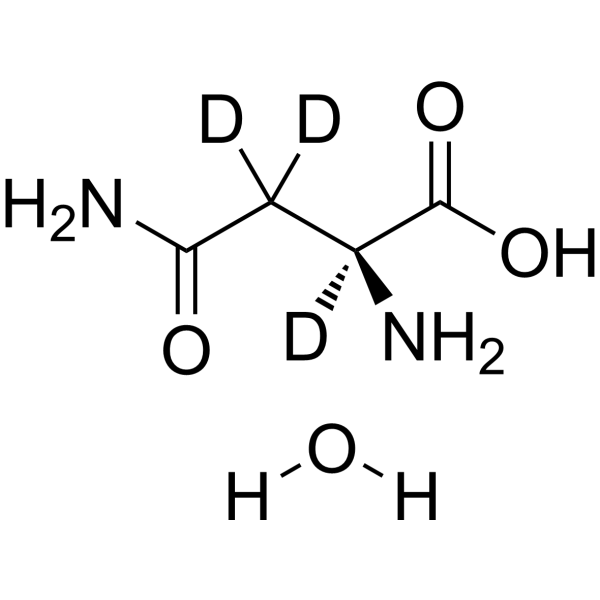
    L-Asparagine-d3 hydrate
    1 Publications Verification

    Isotope-Labeled Compounds Endogenous Metabolite Apoptosis DNA/RNA Synthesis Inflammation/Immunology
    L-Asparagine-d3 hydrate is the deuterium labeled L-Asparagine (HY-N0667). L-Asparagine is an essential amino acid for leukemic cells and a substrate for L-Asparaginase. L-Asparaginase is a potent anti-leukemic enzyme that promotes asparagine (Asn) and glutamine (Gln) depletion and inhibits protein biosynthesis in lymphoblasts. Removal of L-asparagine from plasma by L-Asparaginase results in inhibition of RNA and DNA synthesis and subsequent apoptosis. L-Asparaginase has cell-killing ability in vitro and in vivo, and selectively inhibits the growth of cancer cells with low asparagine synthetase (AASNS) expression. L-Asparagine can be used as a biomarker and sensor for the study of childhood acute lymphoblastic leukemia .
    L-Asparagine-d3 hydrate
  • HY-W753593

    Isotope-Labeled Compounds Enterovirus NOD-like Receptor (NLR) Histone Acetyltransferase Endogenous Metabolite Infection Neurological Disease Metabolic Disease Inflammation/Immunology Cancer
    N4-Acetylcytidine- 13C5 is the 13C-labeled N4-Acetylcytidine (HY-W019670). N4-acetylcytidine (N4A) is an endogenous nucleoside metabolite from the degradation of tRNA. N4-Acetylcytidine is formed by N-acetyltransferase 10 and other enzymes. N4-acetylcytidine might sustain NLRP3 inflammasome activation via induction of HMGB1 expression and releasee. N4-Acetylcytidine modifies mRNA, tRNA and rRNA, affecting their stability, translation efficiency (such as enterovirus 71 RNA). N4-Acetylcytidine is used in the study of cancer, neuroinflammatory diseases, viral infections and obesity .
    N4-Acetylcytidine-13C5
  • HY-W019670R

    Reference Standards Endogenous Metabolite Histone Acetyltransferase Enterovirus NOD-like Receptor (NLR) Infection Neurological Disease Metabolic Disease Inflammation/Immunology Cancer
    N4-acetylcytidine (N4A) is an endogenous nucleoside metabolite from the degradation of tRNA. N4-Acetylcytidine is formed by N-acetyltransferase 10 and other enzymes. N4-acetylcytidine might sustain NLRP3 inflammasome activation via induction of HMGB1 expression and releasee. N4-Acetylcytidine modifies mRNA, tRNA and rRNA, affecting their stability, translation efficiency (such as enterovirus 71 RNA). N4-Acetylcytidine is used in the study of cancer, neuroinflammatory diseases, viral infections and obesity .
    N4-Acetylcytidine (Standard)
  • HY-N0667R

    (-)-Asparagine (Standard); Asn (Standard); Asparamide (Standard)

    Reference Standards Endogenous Metabolite Apoptosis DNA/RNA Synthesis Inflammation/Immunology
    L-Asparagine (Standard) is the analytical standard of L-Asparagine (HY-N0667). This product is intended for research and analytical applications. L-Asparagine is an essential amino acid for leukemic cells and a substrate for L-Asparaginase. L-Asparaginase is a potent anti-leukemic enzyme that promotes asparagine (Asn) and glutamine (Gln) depletion and inhibits protein biosynthesis in lymphoblasts. Removal of L-asparagine from plasma by L-Asparaginase results in inhibition of RNA and DNA synthesis and subsequent apoptosis. L-Asparaginase has cell-killing ability in vitro and in vivo, and selectively inhibits the growth of cancer cells with low asparagine synthetase (AASNS) expression. L-Asparagine can be used as a biomarker and sensor for the study of childhood acute lymphoblastic leukemia .
    L-Asparagine (Standard)
  • HY-W017443S

    Isotope-Labeled Compounds Endogenous Metabolite Apoptosis DNA/RNA Synthesis Neurological Disease Metabolic Disease Inflammation/Immunology Cancer
    L-Asparagine- 13C4, 15N2 monohydrateis the 13C-labeled and 15N-labeled L-Asparagine monohydrate (HY-W017443). L-Asparagine monohydrate is an essential amino acid for leukemic cells and a substrate for L-Asparaginase. L-Asparaginase is a potent anti-leukemic enzyme that promotes asparagine (Asn) and glutamine (Gln) depletion and inhibits protein biosynthesis in lymphoblasts. Removal of L-asparagine from plasma by L-Asparaginase results in inhibition of RNA and DNA synthesis and subsequent apoptosis. L-Asparaginase has cell-killing ability in vitro and in vivo, and selectively inhibits the growth of cancer cells with low asparagine synthetase (AASNS) expression. L-Asparagine monohydrate can be used as a biomarker and sensor for the study of childhood acute lymphoblastic leukemia .
    L-Asparagine-13C4,15N2 monohydrate
  • HY-N0157A
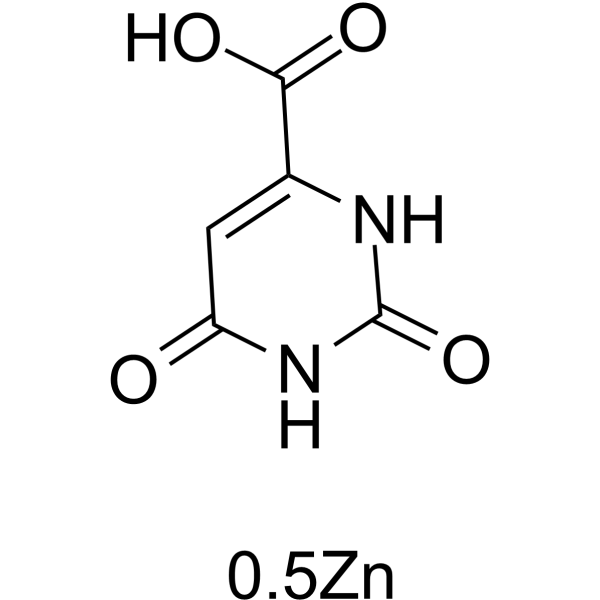
    Orotic acid zinc
    3 Publications Verification

    6-Carboxyuracil zinc; Vitamin B13 zinc

    Nucleoside Antimetabolite/Analog Endogenous Metabolite Metabolic Disease
    Orotic acid (zinc), a precursor in biosynthesis of pyrimidine nucleotides and RNA, is released from the mitochondrial dihydroorotate dehydrogenase (DHODH) for conversion to UMP by the cytoplasmic UMP synthase enzyme. Orotic acid (zinc) is a marker for measurement in routine newborn screening for urea cycle disorders. Orotic acid (zinc) can induce hepatic steatosis and hepatomegaly in rats .
    Orotic acid zinc
  • HY-145726A

    TNF Receptor Cardiovascular Disease Inflammation/Immunology
    ISIS 104838 sodium is an antisense oligonucleotide targeting TNF-α. ISIS 104838 sodium specifically binds to human TNF-α mRNA via Watson-Crick base pairing to form a DNA:RNA hybrid duplex, thereby recruiting the ubiquitously expressed intracellular enzyme RNase H to degrade the target mRNA and inhibit TNF-α protein synthesis at the transcriptional level. ISIS 104838 sodium induces moderate, self-limiting thrombocytopenia in cynomolgus monkeys. ISIS 104838 sodium can be used for the study of inflammatory diseases .
    ISIS 104838 sodium
  • HY-N0667S3

    (-)-Asparagine-13C4 monohydrate; Asn-13C4 monohydrate; Asparamide-13C4 monohydrate

    Isotope-Labeled Compounds Endogenous Metabolite Apoptosis DNA/RNA Synthesis Inflammation/Immunology
    L-Asparagine- 13C4 monohydrate is the 13C-labeled L-Asparagine monohydrate (HY-W017443). L-Asparagine monohydrate is an essential amino acid for leukemic cells and a substrate for L-Asparaginase. L-Asparaginase is a potent anti-leukemic enzyme that promotes asparagine (Asn) and glutamine (Gln) depletion and inhibits protein biosynthesis in lymphoblasts. Removal of L-asparagine from plasma by L-Asparaginase results in inhibition of RNA and DNA synthesis and subsequent apoptosis. L-Asparaginase has cell-killing ability in vitro and in vivo, and selectively inhibits the growth of cancer cells with low asparagine synthetase (AASNS) expression. L-Asparagine monohydrate can be used as a biomarker and sensor for the study of childhood acute lymphoblastic leukemia .
    L-Asparagine-13C4 monohydrate
  • HY-139798

    Bacterial Infection
    Iboxamycin is a potent antibiotic candidate bearing a fused bicyclic amino acid residue. Iboxamycin is orally bioavailable, safe and effective in researching both Gram-positive and Gram-negative bacterial infections in mice .
    Iboxamycin
  • HY-N0157S1

    6-Carboxyuracil-13C,15N2 monohydrate; Vitamin B13-13C,15N2 monohydrate

    Nucleoside Antimetabolite/Analog Endogenous Metabolite Metabolic Disease
    Orotic acid- 13C, 15N2 (monohydrate) is the 13C and 15N labeled Orotic acid . Orotic acid (6-Carboxyuracil), a precursor in biosynthesis of pyrimidine nucleotides and RNA, is released from the mitochondrial dihydroorotate dehydrogenase (DHODH) for conversion to UMP by the cytoplasmic UMP synthase enzyme. Orotic acid is a marker for measurement in routine newborn screening for urea cycle disorders. Orotic acid can induce hepatic steatosis and hepatomegaly in rats .
    Orotic acid-13C,15N2 monohydrate
  • HY-14768R

    T-705 (Standard)

    Reference Standards DNA/RNA Synthesis Influenza Virus SARS-CoV Bacterial Infection
    Favipiravir (Standard) is the analytical standard of Favipiravir. This product is intended for research and analytical applications. Favipiravir (T-705) is a potent viral RNA polymerase inhibitor, it is phosphoribosylated by cellular enzymes to its active form, Favipiravir-ribofuranosyl-5′-triphosphate (RTP). Favipiravir-RTP inhibits the influenza viral RNA-dependent RNA polymerase (RdRP) activity with an IC50 of 341 nM.
    Favipiravir (Standard)
  • HY-14768S

    T-705-13C15N

    Isotope-Labeled Compounds Bacterial DNA/RNA Synthesis SARS-CoV Influenza Virus Infection
    Favipiravir- 13C 15N (T-705- 13C 15N) is 13C and 15N labeled Favipiravir. Favipiravir (T-705) is a potent viral RNA polymerase inhibitor, it is phosphoribosylated by cellular enzymes to its active form, Favipiravir-ribofuranosyl-5′-triphosphate (RTP). Favipiravir-RTP inhibits the influenza viral RNA-dependent RNA polymerase (RdRP) activity with an IC50 of 341 nM.
    Favipiravir-13C15N
  • HY-E70619

    Biochemical Assay Reagents Inflammation/Immunology
    2'-5' Oligoadenylate Synthetase 1, Human is an enzyme induced by IFNs that is activated by the presence of double-stranded RNA and stimulates the oligomerisation of ATP into 2′,5′-linked oligoadenylates (2-5A). 2'-5' Oligoadenylate Synthetase 1, Human plays an important role in inflammatory immune reactions .
    2'-5' Oligoadenylate Synthetase 1, Human
  • HY-126877

    HSV Infection
    3-Deaza-2 '-deoxyadenosine is a nucleoside analog synthesized from 2' -deoxyadenosine. 3-Deaza-2 '-deoxyadenosine inhibits RNA synthesis by binding to ribose fragments of ribonucleotides, thereby preventing the formation of enzyme-substrate complexes, thereby preventing chain elongation, It can also inhibit DNA synthesis by binding deoxyribose fragments of DNA and preventing DNA polymerase from adding nucleotides to the growth chain. 3-Deaza-2 '-deoxyadenosine has antiviral activity .
    3-Deaza-2'-deoxyadenosine
  • HY-W017443S1

    Isotope-Labeled Compounds Endogenous Metabolite Apoptosis DNA/RNA Synthesis Neurological Disease Metabolic Disease Inflammation/Immunology Cancer
    L-Asparagine-amide- 15N monohydrate is the 15N-labeled L-Asparagine monohydrate (HY-W017443). L-Asparagine monohydrate is an essential amino acid for leukemic cells and a substrate for L-Asparaginase. L-Asparaginase is a potent anti-leukemic enzyme that promotes asparagine (Asn) and glutamine (Gln) depletion and inhibits protein biosynthesis in lymphoblasts. Removal of L-asparagine from plasma by L-Asparaginase results in inhibition of RNA and DNA synthesis and subsequent apoptosis. L-Asparaginase has cell-killing ability in vitro and in vivo, and selectively inhibits the growth of cancer cells with low asparagine synthetase (AASNS) expression. L-Asparagine monohydrate can be used as a biomarker and sensor for the study of childhood acute lymphoblastic leukemia .
    L-Asparagine-amide-15N monohydrate
  • HY-W017443R

    Reference Standards Endogenous Metabolite Apoptosis DNA/RNA Synthesis Neurological Disease Metabolic Disease Inflammation/Immunology Cancer
    L-Asparagine monohydrate (Standard) is the analytical standard of L-Asparagine monohydrate (HY-W017443). This product is intended for research and analytical applications. L-Asparagine monohydrate is an essential amino acid for leukemic cells and a substrate for L-Asparaginase. L-Asparaginase is a potent anti-leukemic enzyme that promotes asparagine (Asn) and glutamine (Gln) depletion and inhibits protein biosynthesis in lymphoblasts. Removal of L-asparagine from plasma by L-Asparaginase results in inhibition of RNA and DNA synthesis and subsequent apoptosis. L-Asparaginase has cell-killing ability in vitro and in vivo, and selectively inhibits the growth of cancer cells with low asparagine synthetase (AASNS) expression. L-Asparagine monohydrate can be used as a biomarker and sensor for the study of childhood acute lymphoblastic leukemia .
    L-Asparagine monohydrate (Standard)
  • HY-N0667S7

    (-)-Asparagine-13C4,15N2; Asn-13C4,15N2; Asparamide-13C4,15N2

    Isotope-Labeled Compounds Endogenous Metabolite Apoptosis DNA/RNA Synthesis Inflammation/Immunology
    L-Asparagine- 13C4, 15N2 ((-)-Asparagine- 13C4, 15N2) is the 13C and 15N-labeled L-Asparagine (HY-N0667). L-Asparagine is an essential amino acid for leukemic cells and a substrate for L-Asparaginase. L-Asparaginase is a potent anti-leukemic enzyme that promotes asparagine (Asn) and glutamine (Gln) depletion and inhibits protein biosynthesis in lymphoblasts. Removal of L-asparagine from plasma by L-Asparaginase results in inhibition of RNA and DNA synthesis and subsequent apoptosis. L-Asparaginase has cell-killing ability in vitro and in vivo, and selectively inhibits the growth of cancer cells with low asparagine synthetase (AASNS) expression. L-Asparagine can be used as a biomarker and sensor for the study of childhood acute lymphoblastic leukemia .
    L-Asparagine-13C4,15N2
  • HY-169746

    DNA/RNA Synthesis HCV Infection
    Antiviral agent 63 is a nucleoside analog with anti-HCV activity. Antiviral agent 63 can inhibit viral replication by inhibiting the activity of HCV RNA-dependent RNA polymerase or other virus-related enzymes .
    Antiviral agent 63
  • HY-131817

    DNA/RNA Synthesis Others
    5'-GMPS is an analogue of 5'-GMP and a substrate, competitive inhibitor or regulator of enzymes that interact with 5'-GMP. 5'-GMPS is suitable as a primer of RNA synthesis by T7 RNA polymerase .
    5'-GMPS
  • HY-E70080

    Biochemical Assay Reagents Others
    Vaccinia virus capping enzyme is a transcription initiation factor. Vaccinia virus capping enzyme is a heterodimer of D1 (844 aa) and D12 (287 aa) polypeptides that executes all three steps in m7GpppRNA synthesis. Vaccinia virus capping enzyme has been used widely as a reagent for capping and cap-labeling RNAs in vitro .
    Vaccinia virus capping enzyme
  • HY-W769714

    T-705-13C3

    Isotope-Labeled Compounds DNA/RNA Synthesis Influenza Virus Infection
    Favipiravir- 13C3 is the 13C labeled isotope of Favipiravir (HY-14768). Favipiravir (T-705) is a potent viral RNA polymerase inhibitor, it is phosphoribosylated by cellular enzymes to its active form, Favipiravir-ribofuranosyl-5′-triphosphate (RTP). Favipiravir-RTP inhibits the influenza viral RNA-dependent RNA polymerase (RdRP) activity with an IC50 of 341 nM.
    Favipiravir-13C3
  • HY-174537

    mRNA Cancer
    Human TERT mRNA encodes the human telomerase reverse transcriptase (TERT) protein, a catalytic subunit of the enzyme telomerase, which, together with the telomerase RNA component (TERC), comprises the most important unit of the telomerase complex.
    Human TERT mRNA
  • HY-149877

    DNA/RNA Synthesis Dihydroorotate Dehydrogenase Cancer
    hDHODH-IN-12 is a potent DHODH inhibitor with an IC50 value of 0.421 μM. DHODH is the rate-limiting enzyme in the de novo synthesis of pyrimidine which is essential in DNA/RNA Synthesis. hDHODH-IN-12 is present in the inner membrane of human mitochondria.hDHODH-IN-12 can be used for the research of lung cancer .
    hDHODH-IN-12
  • HY-N0667S1

    Isotope-Labeled Compounds Endogenous Metabolite Apoptosis DNA/RNA Synthesis Inflammation/Immunology
    L-Asparagine- 15N2,d8 is the 15N- and deuterium labeled L-Asparagine (HY-N0667). L-Asparagine is an essential amino acid for leukemic cells and a substrate for L-Asparaginase. L-Asparaginase is a potent anti-leukemic enzyme that promotes asparagine (Asn) and glutamine (Gln) depletion and inhibits protein biosynthesis in lymphoblasts. Removal of L-asparagine from plasma by L-Asparaginase results in inhibition of RNA and DNA synthesis and subsequent apoptosis. L-Asparaginase has cell-killing ability in vitro and in vivo, and selectively inhibits the growth of cancer cells with low asparagine synthetase (AASNS) expression. L-Asparagine can be used as a biomarker and sensor for the study of childhood acute lymphoblastic leukemia .
    L-Asparagine-15N2,d8
  • HY-N0667S4

    (-)-Asparagine-4-13C monohydrate; Asn-4-13C monohydrate; Asparamide-4-13C monohydrate

    Isotope-Labeled Compounds Endogenous Metabolite Apoptosis DNA/RNA Synthesis Inflammation/Immunology
    L-Asparagine-4- 13C monohydrate is the 13C-labeled L-Asparagine monohydrate (HY-W017443).L-Asparagine monohydrate is an essential amino acid for leukemic cells and a substrate for L-Asparaginase. L-Asparaginase is a potent anti-leukemic enzyme that promotes asparagine (Asn) and glutamine (Gln) depletion and inhibits protein biosynthesis in lymphoblasts. Removal of L-asparagine from plasma by L-Asparaginase results in inhibition of RNA and DNA synthesis and subsequent apoptosis. L-Asparaginase has cell-killing ability in vitro and in vivo, and selectively inhibits the growth of cancer cells with low asparagine synthetase (AASNS) expression. L-Asparagine monohydrate can be used as a biomarker and sensor for the study of childhood acute lymphoblastic leukemia .
    L-Asparagine-4-13C monohydrate
  • HY-W017443S4

    Isotope-Labeled Compounds Endogenous Metabolite Apoptosis DNA/RNA Synthesis Neurological Disease Metabolic Disease Inflammation/Immunology Cancer
    L-Asparagine-1,2,3,4- 13C4 monohydrate is the 13C labeled labeled L-Asparagine monohydrate (HY-W017443). L-Asparagine monohydrate is an essential amino acid for leukemic cells and a substrate for L-Asparaginase. L-Asparaginase is a potent anti-leukemic enzyme that promotes asparagine (Asn) and glutamine (Gln) depletion and inhibits protein biosynthesis in lymphoblasts. Removal of L-asparagine from plasma by L-Asparaginase results in inhibition of RNA and DNA synthesis and subsequent apoptosis. L-Asparaginase has cell-killing ability in vitro and in vivo, and selectively inhibits the growth of cancer cells with low asparagine synthetase (AASNS) expression. L-Asparagine monohydrate can be used as a biomarker and sensor for the study of childhood acute lymphoblastic leukemia .
    L-Asparagine-1,2,3,4-13C4 monohydrate
  • HY-N0667S

    Isotope-Labeled Compounds Endogenous Metabolite Apoptosis DNA/RNA Synthesis Inflammation/Immunology
    L-Asparagine- 13C4, 15N2,d8 is the 13C-labeled and 15N-labeled L-Asparagine (HY-N0667). L-Asparagine is an essential amino acid for leukemic cells and a substrate for L-Asparaginase. L-Asparaginase is a potent anti-leukemic enzyme that promotes asparagine (Asn) and glutamine (Gln) depletion and inhibits protein biosynthesis in lymphoblasts. Removal of L-asparagine from plasma by L-Asparaginase results in inhibition of RNA and DNA synthesis and subsequent apoptosis. L-Asparaginase has cell-killing ability in vitro and in vivo, and selectively inhibits the growth of cancer cells with low asparagine synthetase (AASNS) expression. L-Asparagine can be used as a biomarker and sensor for the study of childhood acute lymphoblastic leukemia .
    L-Asparagine-13C4,15N2,d8
  • HY-W017443S2

    Isotope-Labeled Compounds Endogenous Metabolite Apoptosis DNA/RNA Synthesis Neurological Disease Metabolic Disease Inflammation/Immunology Cancer
    L-Asparagine- 13C4, 15N2,d3 monohydrate is the deuterium, 13C-, and 15N-labeled L-Asparagine monohydrate (HY-W017443). L-Asparagine monohydrate is an essential amino acid for leukemic cells and a substrate for L-Asparaginase. L-Asparaginase is a potent anti-leukemic enzyme that promotes asparagine (Asn) and glutamine (Gln) depletion and inhibits protein biosynthesis in lymphoblasts. Removal of L-asparagine from plasma by L-Asparaginase results in inhibition of RNA and DNA synthesis and subsequent apoptosis. L-Asparaginase has cell-killing ability in vitro and in vivo, and selectively inhibits the growth of cancer cells with low asparagine synthetase (AASNS) expression. L-Asparagine monohydrate can be used as a biomarker and sensor for the study of childhood acute lymphoblastic leukemia .
    L-Asparagine-13C4,15N2,d3 monohydrate
  • HY-W017443S3

    Isotope-Labeled Compounds Endogenous Metabolite Apoptosis DNA/RNA Synthesis Neurological Disease Metabolic Disease Inflammation/Immunology Cancer
    L-Asparagine- 15N2,d3 monohydrate is the deuterium and 15N-labeled L-Asparagine monohydrate (HY-W017443). L-Asparagine monohydrate is an essential amino acid for leukemic cells and a substrate for L-Asparaginase. L-Asparaginase is a potent anti-leukemic enzyme that promotes asparagine (Asn) and glutamine (Gln) depletion and inhibits protein biosynthesis in lymphoblasts. Removal of L-asparagine from plasma by L-Asparaginase results in inhibition of RNA and DNA synthesis and subsequent apoptosis. L-Asparaginase has cell-killing ability in vitro and in vivo, and selectively inhibits the growth of cancer cells with low asparagine synthetase (AASNS) expression. L-Asparagine monohydrate can be used as a biomarker and sensor for the study of childhood acute lymphoblastic leukemia .
    L-Asparagine-15N2,d3 monohydrate
  • HY-128306

    HCV Protease DNA/RNA Synthesis Infection
    HCV-IN-50 (Compound 2) is a competitive and selective HCV NS5B RNA-dependent RNA polymerase inhibitor with an IC50 of 0.3  μM for NS5B △C21 enzyme over △C55 enzyme. HCV-IN-50 has an antiviral activity and efficiently blocks replication of HCV subgenomic replicons especially mutant replicons .
    HCV-IN-50
  • HY-E71200I

    Biochemical Assay Reagents Others
    16S rRNA (guanine1207-N2)-Methyltransferase (EC 2.1.1.172) reacts well with 30S subunits reconstituted from 16S RNA transcripts and 30S proteins but is almost inactive with the corresponding free RNA. The enzyme specifically methylates guanine1207 at N2 in 16S rRNA.
    16S rRNA (guanine1207-N2)-Methyltransferase
  • HY-N0157AR

    6-Carboxyuracil zinc (Standard); Vitamin B13 zinc (Standard)

    Nucleoside Antimetabolite/Analog Endogenous Metabolite Reference Standards Metabolic Disease
    Orotic acid (zinc) (Standard) is the analytical standard of Orotic acid (zinc). This product is intended for research and analytical applications. Orotic acid (zinc), a precursor in biosynthesis of pyrimidine nucleotides and RNA, is released from the mitochondrial dihydroorotate dehydrogenase (DHODH) for conversion to UMP by the cytoplasmic UMP synthase enzyme. Orotic acid (zinc) is a marker for measurement in routine newborn screening for urea cycle disorders. Orotic acid (zinc) can induce hepatic steatosis and hepatomegaly in rats .
    Orotic acid zinc (Standard)
  • HY-128788A

    DNA/RNA Synthesis SARS-CoV Endogenous Metabolite Flavivirus Lactate Dehydrogenase Infection
    ddhCTP trisodium solution (100 mM) is an endogenously produced pyrimidine base analog with a Kd of 17.0 nM for LLDH and an IC50 of 55.8 μM for GAPDH. By inhibiting key metabolic enzymes such as GAPDH, ddhCTP trisodium reduces glycolytic flux and shifts metabolic flow toward the pentose phosphate pathway, thereby regulating the redox balance of cells. As a competitive CTP analog, ddhCTP trisodium terminates RNA synthesis by flavivirus RdRps and SARS-CoV-2 RdRp, and inhibits Zika virus replication in vivo. ddhCTP trisodium can be used in studies related to viral infections, COVID-19 and Zika virus infections .
    ddhCTP trisodium solution (100 mM)

Inquiry Online

Your information is safe with us. * Required Fields.

Salutation


Country or Region *

Applicant Name *


Organization Name *

Department *


Email Address *


Product Name *

Cat. No.


Requested quantity *

Phone Number *


Remarks

Inquiry Online

Inquiry Information

Product Name:
Cat. No.:
Quantity:
MCE Japan Authorized Agent:

