From 11:00 pm to 12:00 pm EST ( 8:00 pm to 9:00 pm PST ) on January 6th, the website will be under maintenance. We are sorry for the inconvenience. Please arrange your schedule properly.
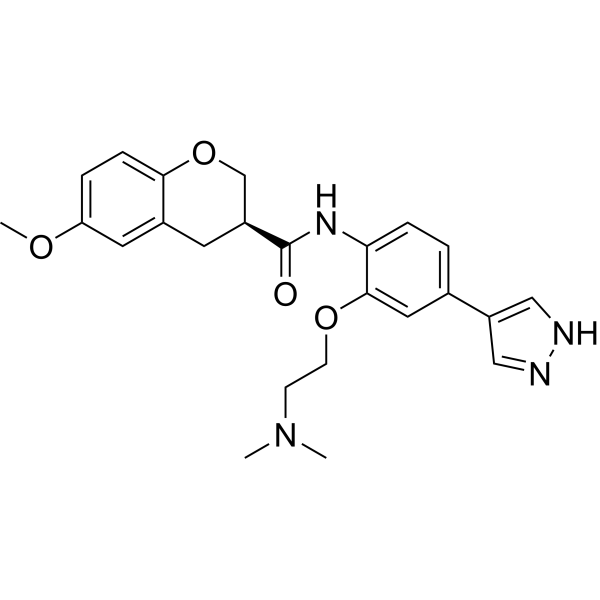
Chroman 1 is a highly potent and selective ROCK inhibitor. Chroman 1 is more potent against ROCK2 (IC50=1 pM) than ROCK1 (IC50=52 pM). Chroman 1 also has inhibitory activity against MRCK, with an IC50 of 150 nM .
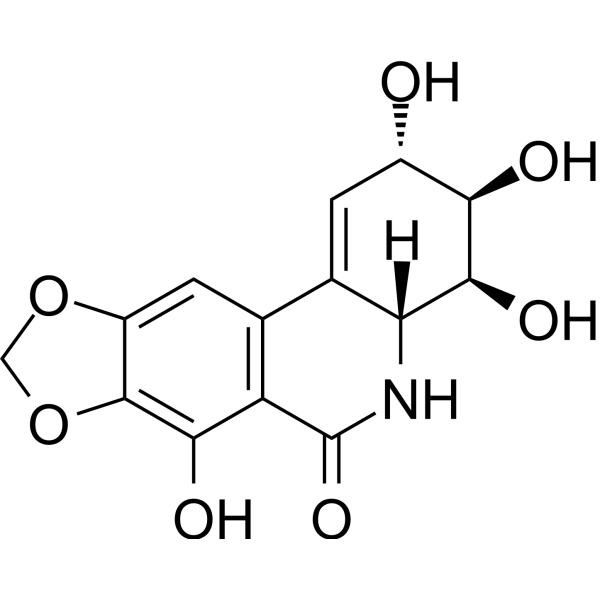
Narciclasine is a plant growth modulator. Narciclasine modulates the Rho/Rhokinase/LIM kinase/cofilin signaling pathway, greatly increasing GTPase RhoA activity as well as inducing actin stress fiber formation in a RhoA-dependent manner.
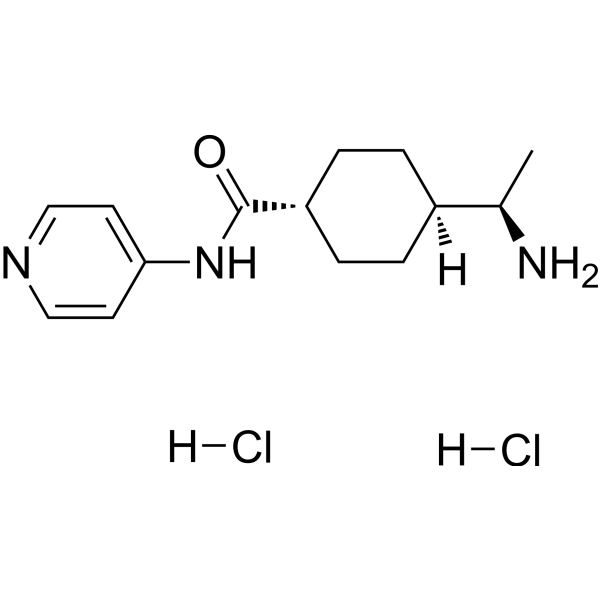
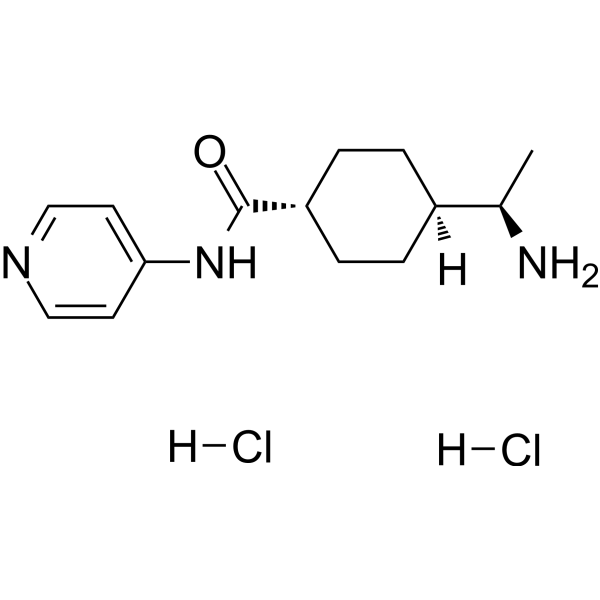
Y-27632 dihydrochloride (GMP) is the GMP level of Y-27632 dihydrochloride (HY-10583). GMP guidelines are used to produce Y-27632 dihydrochloride (GMP). GMP small molecules works appropriately as an auxiliary reagent for cell research manufacture. Y-27632 dihydrochloride is an orally active and ATP-competitive ROCK (Rho-kinase) inhibitor with antiepileptic effect .
Y-27632 dihydrochloride (Standard) is the analytical standard of Y-27632 dihydrochloride. Y-27632 dihydrochloride is an orally active and ATP-competitive ROCK(Rho-kinase) inhibitor (ROCK-I Ki=220 nM; ROCK-II Ki=300 nM). Y-27632 dihydrochloride shows antiepileptic effects .
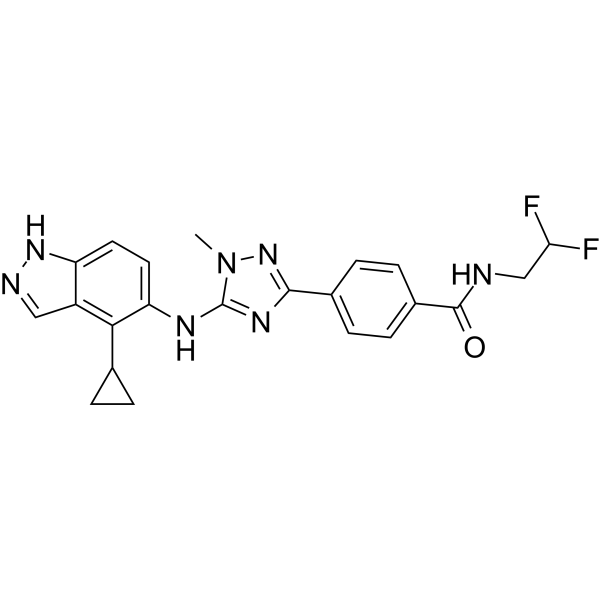
Zelasudil (RXC007) is an orally active, highly selective small molecule Rho-associated coiled-coil containing protein kinase 2 (ROCK2) inhibitor with anti-fibrotic efficacy. Zelasudil elicits positive immunomodulatory effects in metastatic pancreatic tumors with increase of CD8+ and CD4+ T cell infiltrate into the tumor cortex and reduction in immunosuppressive FOXP3+ regulatory T cells at the tumor border. Zelasudil is promising for research of pancreatic ductal adenocarcinoma .
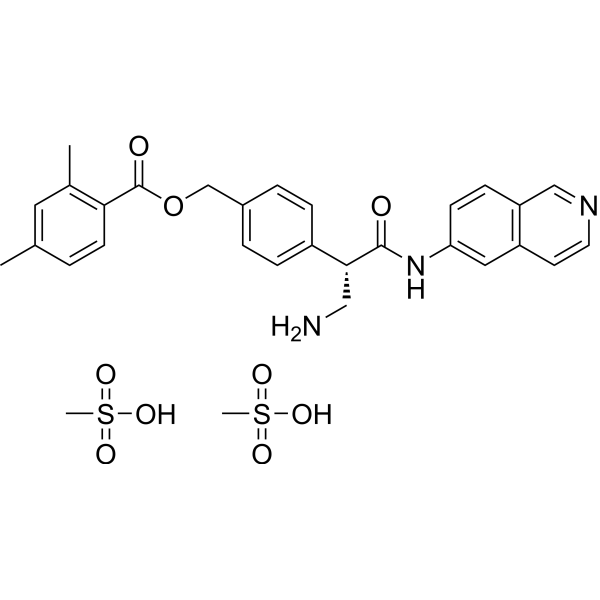
Netarsudil (AR-13324) is a competitive inhibitor of Rho-associated protein kinases (ROCK I and ROCK II) and a reversible inhibitor of the norepinephrine transporter (NET). Netarsudil reduces intraocular pressure by inhibiting ROCK, causing relaxation of trabecular meshwork cells and dilation of episcleral veins, thereby increasing the ease of aqueous humor outflow, while inhibiting NET to reduce aqueous humor production. Netarsudil is mainly used in the study of ocular hypertension and primary open-angle glaucoma .
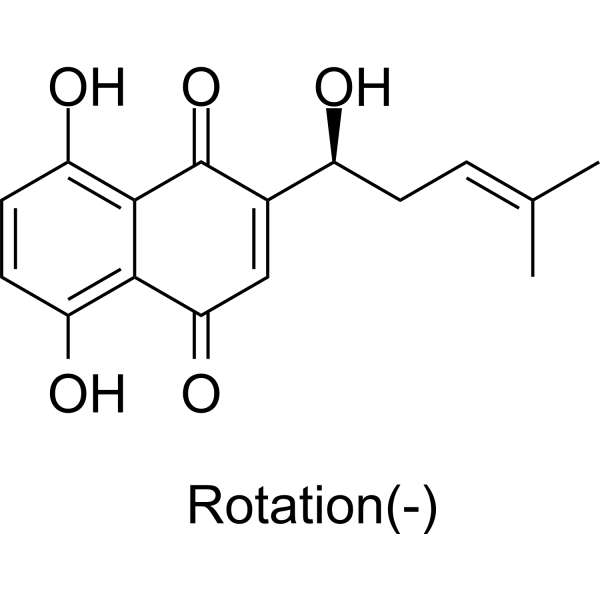
(-)-Alkannin, found in Alkanna tinctoria, is used as a food coloring. (-)-Alkannin shows anticancer activity, arrests cell cycle, and induces apoptosis. (-)-Alkannin improves hepatic inflammation in a Rho-kinase pathway .
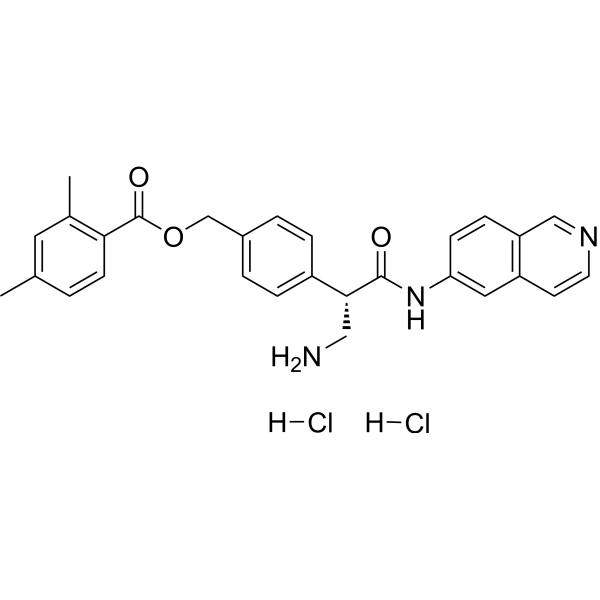
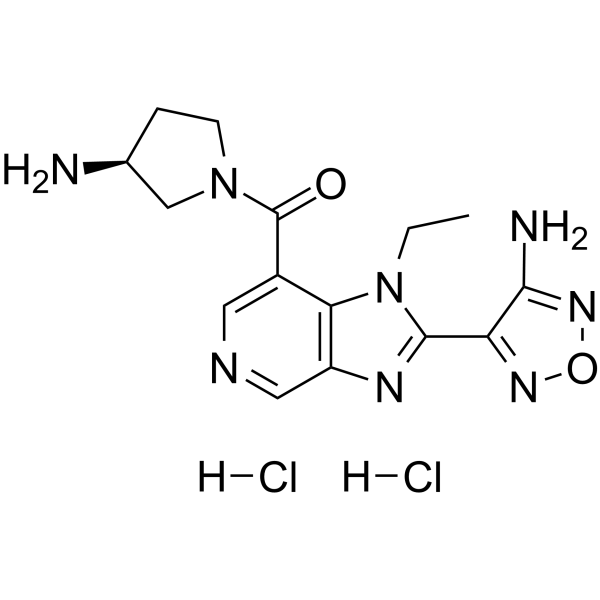
SB-772077B dihydrochloride is an orally active aminofuran-based Rhokinase ((ROCK)) inhibitor with IC50 values of 5.6 nM and 6 nM for ROCK1 and ROCK2, respectively. SB-772077B dihydrochloride reduces inflammatory cytokines (TNF-α and IL-6). SB-772077B dihydrochloride relaxes aortic rings and lowers blood pressure. SB-772077B dihydrochloride can be used in the research of inflammatory diseases .
Netarsudil (AR-13324) hydrochloride is a competitive inhibitor of Rho-associated protein kinases (ROCK I and ROCK II) and a reversible inhibitor of the norepinephrine transporter (NET). Netarsudil hydrochloride reduces intraocular pressure by inhibiting ROCK, causing relaxation of trabecular meshwork cells and dilation of episcleral veins, thereby increasing the ease of aqueous humor outflow, while inhibiting NET to reduce aqueous humor production. Netarsudil hydrochloride is mainly used in the study of ocular hypertension and primary open-angle glaucoma .
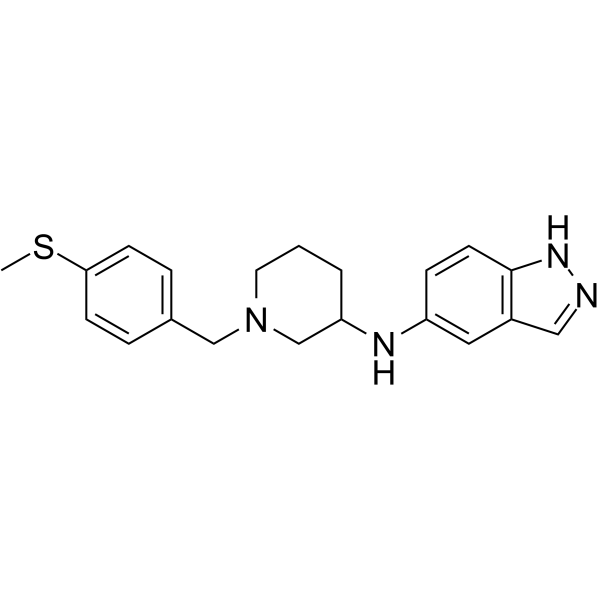
Rho-Kinase-IN-1 is a Rhokinase (ROCK) inhibitor (Ki values of 30.5 and 3.9 nM for ROCK1 and ROCK2, respectively) extracted from US20090325960A1, compound 1.008 .
Netarsudil (AR-13324) dimesylate is a competitive inhibitor of Rho-associated protein kinases (ROCK I and ROCK II) and a reversible inhibitor of the norepinephrine transporter (NET). Netarsudil dimesylate reduces intraocular pressure by inhibiting ROCK, causing relaxation of trabecular meshwork cells and dilation of episcleral veins, thereby increasing the ease of aqueous humor outflow, while inhibiting NET to reduce aqueous humor production. Netarsudil dimesylate is mainly used in the study of ocular hypertension and primary open-angle glaucoma .
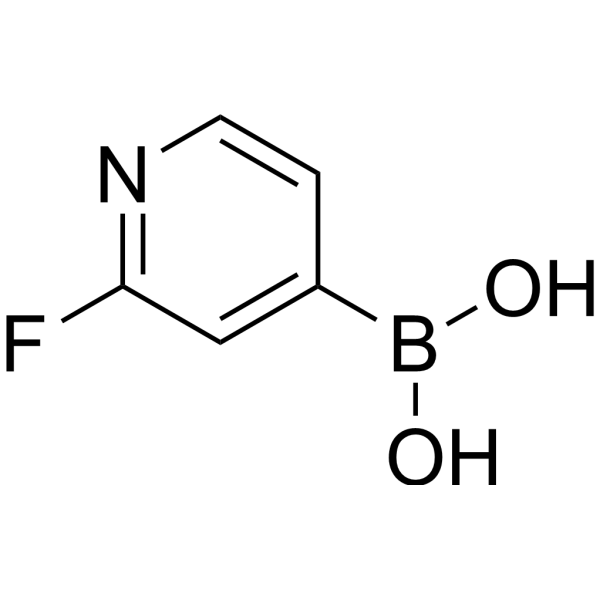
2-Fluoropyridine-4-boronic acid is a coupling reagent and chemical intermediate. 2-Fluoropyridine-4-boronic acid facilitates the synthesis of Rhokinase (ROCK) inhibitor Compound 37 .
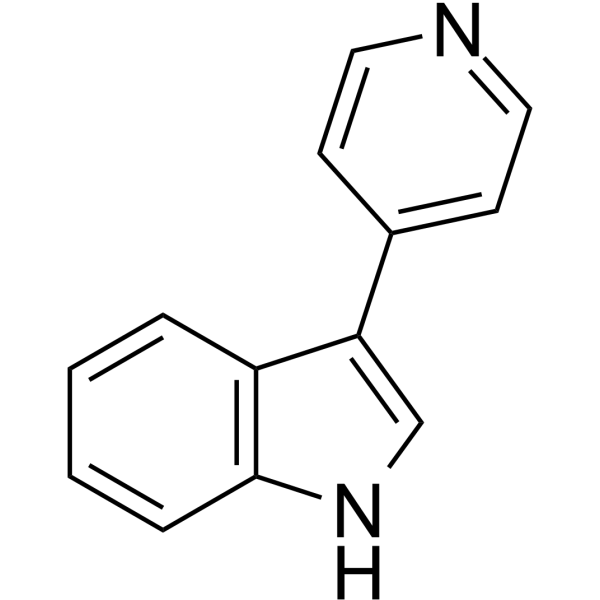
3-(4-Pyridyl)indole (Rockout) is a Rho-kinase (ROCK) inhibitor, with an IC50 of 25 μM. 3-(4-Pyridyl)indole can inhibit blebbing and cause dissolution of actin stress fibers in a wound healing assay .
CAY10746 is a selective Rhokinase (ROCK) inhibitor. CAY10746 has inhibitory activity for ROCK I, ROCK II with IC50 values of 0.014 μM and 0.003 μM, respectively. CAY10746 can be used for the research of diabetic retinopathy (DR) .
GSK180736A is potent Rho-associated coiled-coil kinase 1 (ROCK1) inhibitor with an IC50 of 100 nM. GSK180736A is also a selective and ATP-competitive G protein-coupled receptor kinase 2 (GRK2) inhibitor with an IC50 of 0.77 μM.
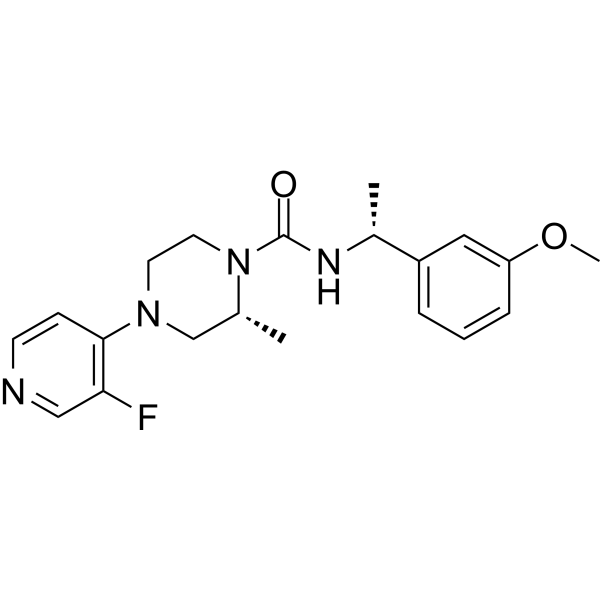
Rho-Kinase-IN-2 (Compound 23) is an orally active, selective, and CNS-penetrant RhoKinase (ROCK) inhibitor (ROCK2IC50 = 3 nM). Rho-Kinase-IN-2 can be used in Huntington’s research .
Sovesudil (PHP-201) is a potent, ATP-competitive, locally acting Rhokinase (ROCK) inhibitor with IC50s of 3.7 and 2.3 nM for ROCK-I and ROCK-II, respectively. Sovesudil lowers intraocular pressure (IOP) without inducing hyperemia .
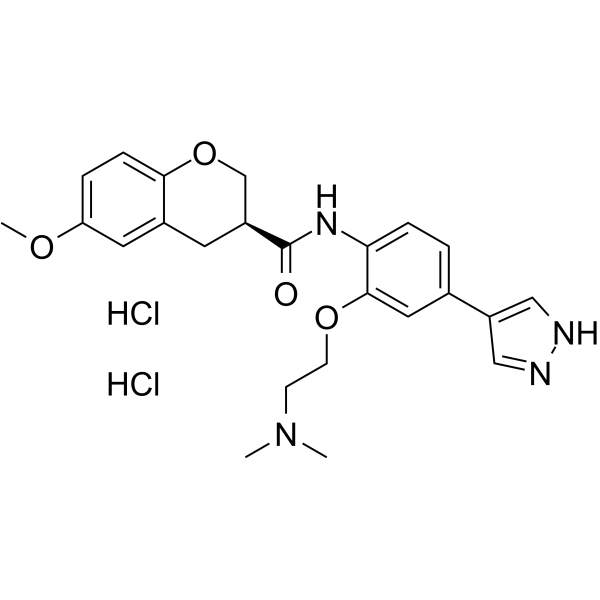
Chroman 1 dihydrochloride is a highly potent and selective ROCK inhibitor. Chroman 1 dihydrochloride is more potent against ROCK2 (IC50=1 pM) than ROCK1 (IC50=52 pM).
Chroman 1 dihydrochloride also has inhibitory activity against MRCK, with an IC50 of 150 nM .
NRL-1049 dihydrochloride (BA-1049) is a selective and orally active rho-associated protein kinase 2 (ROCK2) inhibitor with an IC50 of 0.59 μM. NRL-1049 dihydrochloride shows selectivity for ROCK2 is 44 times that of ROCK1 (IC50 = 26 μM). NRL-1049 dihydrochloride can preserve the blood-brain barrier after acute injury .
Glycyl H-1152 hydrochloride (compound 18) is a glycyl derivative of Rho-kinase inhibitors H-1152 dihydrochloride. Glycyl H-1152 hydrochloride inhibits ROCKII, Aurora A, CAMKII and PKG, with IC50s of 0.0118, 2.35, 2.57 and 3.26 μM respectively. Glycyl H-1152 hydrochloride has higher selective than H-1152 hydrochloride .
Sovesudil (PHP-201) hydrochloride is a potent, ATP-competitive, locally acting Rhokinase(ROCK) inhibitor with IC50s of 3.7 and 2.3 nM for ROCK-I and ROCK-II, respectively. Sovesudil hydrochloride lowers intraocular pressure (IOP) without inducing hyperemia .
Narciclasine (Standard) is the analytical standard of Narciclasine. This product is intended for research and analytical applications. Narciclasine is a plant growth modulator. Narciclasine modulates the Rho/Rhokinase/LIM kinase/cofilin signaling pathway, greatly increasing GTPase RhoA activity as well as inducing actin stress fiber formation in a RhoA-dependent manner.
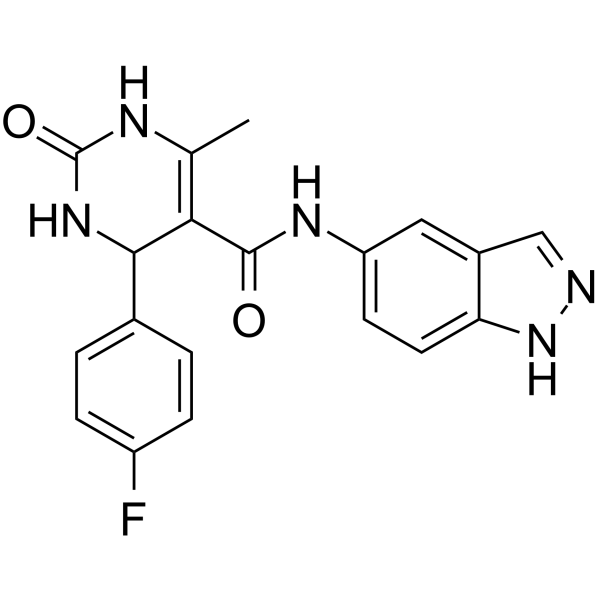
Rho-Kinase-IN-3 (compound 12) is a potent and selective Rhokinase (ROCK1) inhibitor with an IC50 value of 8 nM. Rho-Kinase-IN-3 can be used in research of hypertension .
(-)-Alkannin, found in Alkanna tinctoria, is used as a food coloring. (-)-Alkannin shows anticancer activity, arrests cell cycle, and induces apoptosis. (-)-Alkannin improves hepatic inflammation in a Rho-kinase pathway .
PF-4950834 is a potent, selective, orally bioavailable, ATP-competitive rhokinase inhibitor with IC50 values of 8.35 nM and 33.12 nM against ROCK2 and ROCK1, respectively. PF-4950834 inhibits neutrophil migration .
GSK2163632A is a selective G protein-coupled receptor kinase (GRK) inhibitor that can be used as a probe for studying heart failure and Parkinson's disease. GSK2163632A potently inhibits GRK1 and GRK5, and also inhibits Rho-associated coiled-coil kinase (ROCK) and insulin-like growth factor receptor IGF-1R. GSK2163632A binds to GRK2 in a manner similar to Paroxetine (HY-122272).
CMPD101 hydrochloride is a novel membrane-permeable, small-molecule inhibitor of both GRK2 and GRK3 with IC50s of 18 nM and 5.4 nM, respectively. CMPD101 hydrochloride also inhibits Rho-associated kinase 2 (ROCK-2) and PKCα (IC50s =1.4 μM and 8.1 μM, respectively) .
Nictide is a peptide substrate of LRRK2 (leucine-rich repeat protein kinase-2). Nictide can be phosphorylated by the activated LRRK2[G2019S] with a Km of 10 μM .
ROCK2-IN-5 (compound 1d) is a hybrid compound containing structural fragments of the Rhokinase inhibitor fasudil and the NRF2 inducers caffeic and ferulic acids. ROCK2-IN-5 has good multitarget profile and good tolerability. ROCK2-IN-5 has the potential for thr research of Amyotrophic lateral sclerosis (ALS) with a SOD1 mutation .
Rhodblock 1a is an inhibitor of the Rhokinase signaling pathway. It inhibits the normal formation of the cleavage furrow during cell division by interfering with the localization and function of Rho pathway proteins, causing some cells to fail to form a cleavage furrow or the formed cleavage furrow to break, resulting in binucleated cells. Rhodblock 1a can be used to study the mechanism of cell division and is expected to be used in the research of diseases such as cardiovascular diseases and cancer .
Rock2 Mouse Pre-designed siRNA Set A contains three designed siRNAs for Rock2 gene (Mouse), as well as a negative control, a positive control, and a FAM-labeled negative control.
Rho-Kinase-IN-1 (Standard) is the analytical standard of Rho-Kinase-IN-1 (HY-100270). This product is intended for research and analytical applications. Rho-Kinase-IN-1 is a Rhokinase (ROCK) inhibitor (Ki values of 30.5 and 3.9 nM for ROCK1 and ROCK2, respectively) extracted from US20090325960A1, compound 1.008 .
8-iso Prostaglandin F1β is an isoprostane, that exhibits vasoconstrictive effect in neonatal porcine pulmonary arteries, pulmonary veins, and mesenteric arteries. 8-iso Prostaglandin F1β targets TXA2 receptor and exhibits the blood vessel contractile efficacy under the influence of tyrosine kinase and Rhokinase .
WF-536 is an orally active inhibitor of Rho-associated coiled-coil-containing protein kinase (ROCK). WF-536 has tumor anti-metastatic activity. WF-536 can be used for the research of cancer .
Chloroxoquinoline is an anticancer agent. Chloroxoquinoline damages the DNA templates of cancer cells, inducing DNA breaks and cell death, and inhibits cell invasion via down-regulating Rho/Rhokinase signaling pathway. Chloroxoquinoline enhances the radiation sensitivity of Lewis lung cancer cells and xenograft tumors in tumor-bearing mouse models but decreases efficacy after long term exposure in rat models by auto-induction effects on CYP1A and CYP3A. Chloroxoquinoline has a broad-spectrum anticancer activity, such as non-small-cell lung carcinoma (NSCLC), breast cancer and gastric cancer .
Sp-5,6-DCl-cBIMPS is a potent and specific cAMP-dependent protein kinases (cAMP-PK) activator. Sp-5,6-DCl-cBIMPS stimulates insulin release. Sp-5,6-DCl-cBIMPS inhibits U-46619 (HY-108566)-induced activation of Rho, Gq and G12/G13 in platelets .
Sp-5,6-DCl-cBIMPS sodium is a potent and specific cAMP-dependent protein kinases (cAMP-PK) activator. Sp-5,6-DCl-cBIMPS sodium stimulates insulin release. Sp-5,6-DCl-cBIMPS sodium inhibits U-46619 (HY-108566)-induced activation of Rho, Gq and G12/G13 in platelets .
5-Nitro-1H-indazole-3-carbonitrile (DL0805) is a Rhokinase(ROCK) inhibitor with an IC50 of 6.67 μM for ROCK-I. 5-Nitro-1H-indazole-3-carbonitrile reduces Norepinephrine (HY-13715)-induced transient contraction and inhibits contraction induced by increasing external calcium in the endothelium-denuded rings of rat models. 5-Nitro-1H-indazole-3-carbonitrile has a vasorelaxant activity but high toxicity. 5-Nitro-1H-indazole-3-carbonitrile can be used for cardiovascular diseases, especially hypertension research .
5,6-Epoxyeicosatrienoic acid-d11 (5,6-EET-d11) is deuterium labeled 5,6-Epoxyeicosatrienoic acid. 5,6-Epoxyeicosatrienoic acid is one of the four major epoxyeicosatrienoic acid (EET) isomers metabolized from Arachidonic acid (HY-109590). 5,6-Epoxyeicosatrienoic acid induces peripheral vasodilation and lowers blood pressure by inhibiting T-type calcium channels (Cav3.2: IC50 = 0.54 μM). 5,6-Epoxyeicosatrienoic acid causes vasoconstriction in hypoxic pulmonary blood vessels via activating Rhokinase in a membrane depolarization-dependent manner. 5,6-Epoxyeicosatrienoic acid induces mechanical pain by activating TRPA1. 5,6-Epoxyeicosatrienoic acid can be used in studies related to hypoxic pulmonary vasoconstriction, mechanical hyperalgesia and hypertension.
JAK1/3-IN-1 is a selective, orally active JAK1/3 inhibitor with IC50 values of 1.9 nM and 0.9 nM, respectively. JAK1/3-IN-1 significantly reduces the mean arterial blood pressure and significantly increases the heart rate in rabbits. JAK1/3-IN-1 decreases the mean arterial blood pressure in conscious telemetered rats and induces lethal cardiovascular effects .
NSC-2888 is a Rhokinase II (ROCK-II) inhibitor with an IC50 of 8.4 nM against human targets. NSC-2888 inhibits enzymatic activity by binding to active site amino acids via hydrogen bonds and hydrophobic interactions. NSC-2888 induces relaxation of pre-contracted rat aortic strips. NSC-2888 can be used in research related to hypertension .
SB-772077B dihydrochloride (Standard) is the analytical standard of SB-772077B (dihydrochloride) (HY-108518). This product is intended for research and analytical applications. SB-772077B dihydrochloride is an orally active aminofuran-based RhoKinase ((ROCK)) inhibitor with IC50 values of 5.6 nM and 6 nM for ROCK1 and ROCK2, respectively. SB-772077B dihydrochloride reduces inflammatory cytoKines (TNF-α and IL-6). SB-772077B dihydrochloride relaxes aortic rings and lowers blood pressure. SB-772077B dihydrochloride can be used in the research of inflammatory diseases .
Y-27632 dihydrochloride (GMP) is the GMP level of Y-27632 dihydrochloride (HY-10583). GMP guidelines are used to produce Y-27632 dihydrochloride (GMP). GMP small molecules works appropriately as an auxiliary reagent for cell research manufacture. Y-27632 dihydrochloride is an orally active and ATP-competitive ROCK (Rho-kinase) inhibitor with antiepileptic effect .
2-Fluoropyridine-4-boronic acid is a coupling reagent and chemical intermediate. 2-Fluoropyridine-4-boronic acid facilitates the synthesis of Rhokinase (ROCK) inhibitor Compound 37 .
Nictide is a peptide substrate of LRRK2 (leucine-rich repeat protein kinase-2). Nictide can be phosphorylated by the activated LRRK2[G2019S] with a Km of 10 μM .
Narciclasine is a plant growth modulator. Narciclasine modulates the Rho/Rhokinase/LIM kinase/cofilin signaling pathway, greatly increasing GTPase RhoA activity as well as inducing actin stress fiber formation in a RhoA-dependent manner.
(-)-Alkannin, found in Alkanna tinctoria, is used as a food coloring. (-)-Alkannin shows anticancer activity, arrests cell cycle, and induces apoptosis. (-)-Alkannin improves hepatic inflammation in a Rho-kinase pathway .
Narciclasine (Standard) is the analytical standard of Narciclasine. This product is intended for research and analytical applications. Narciclasine is a plant growth modulator. Narciclasine modulates the Rho/Rhokinase/LIM kinase/cofilin signaling pathway, greatly increasing GTPase RhoA activity as well as inducing actin stress fiber formation in a RhoA-dependent manner.
(-)-Alkannin, found in Alkanna tinctoria, is used as a food coloring. (-)-Alkannin shows anticancer activity, arrests cell cycle, and induces apoptosis. (-)-Alkannin improves hepatic inflammation in a Rho-kinase pathway .
The ROCK1 protein is a key kinase that regulates the actin cytoskeleton, cell polarity, smooth muscle contraction, and multiple cellular functions. It controls stress fibers, focal adhesion formation, neurite retraction, and cell motility by phosphorylating substrates such as DAPK3, GFAP, LIMK1, LIMK2, MYL9/MLC2, TPPP, PFN1, and PPP1R12A. ROCK1 Protein, Human (sf9) is the recombinant human-derived ROCK1 protein, expressed by sf9 insect cells , with tag free.
The ROCK1 protein is a key kinase that regulates the actin cytoskeleton, cell polarity, smooth muscle contraction, and multiple cellular functions. It controls stress fibers, focal adhesion formation, neurite retraction, and cell motility by phosphorylating substrates such as DAPK3, GFAP, LIMK1, LIMK2, MYL9/MLC2, TPPP, PFN1, and PPP1R12A. ROCK1 Protein, Human (sf9, His) is the recombinant human-derived ROCK1 protein, expressed by sf9 insect cells , with N-8*His labeled tag.
The ROCK1 protein is a key kinase that regulates the actin cytoskeleton, cell polarity, smooth muscle contraction, and multiple cellular functions. It controls stress fibers, focal adhesion formation, neurite retraction, and cell motility by phosphorylating substrates such as DAPK3, GFAP, LIMK1, LIMK2, MYL9/MLC2, TPPP, PFN1, and PPP1R12A. ROCK1 Protein, Human (Active, sf9, GST) is the recombinant human-derived ROCK1 protein, expressed by sf9 insect cells , with GST-tag.
5,6-Epoxyeicosatrienoic acid-d11 (5,6-EET-d11) is deuterium labeled 5,6-Epoxyeicosatrienoic acid. 5,6-Epoxyeicosatrienoic acid is one of the four major epoxyeicosatrienoic acid (EET) isomers metabolized from Arachidonic acid (HY-109590). 5,6-Epoxyeicosatrienoic acid induces peripheral vasodilation and lowers blood pressure by inhibiting T-type calcium channels (Cav3.2: IC50 = 0.54 μM). 5,6-Epoxyeicosatrienoic acid causes vasoconstriction in hypoxic pulmonary blood vessels via activating Rhokinase in a membrane depolarization-dependent manner. 5,6-Epoxyeicosatrienoic acid induces mechanical pain by activating TRPA1. 5,6-Epoxyeicosatrienoic acid can be used in studies related to hypoxic pulmonary vasoconstriction, mechanical hyperalgesia and hypertension.
Rock2 Mouse Pre-designed siRNA Set A contains three designed siRNAs for Rock2 gene (Mouse), as well as a negative control, a positive control, and a FAM-labeled negative control.
Y-27632 dihydrochloride (GMP) is the GMP level of Y-27632 dihydrochloride (HY-10583). GMP guidelines are used to produce Y-27632 dihydrochloride (GMP). GMP small molecules works appropriately as an auxiliary reagent for cell research manufacture. Y-27632 dihydrochloride is an orally active and ATP-competitive ROCK (Rho-kinase) inhibitor with antiepileptic effect .
Inquiry Online
Your information is safe with us. * Required Fields.
Western blot analysis of extracts from THP-1(lane 2(20μg), Jurkat (lane 3(20μg) and NIH3T3(lane 4(20μg) using FOXO1A (HY-P80132) Rabbit mAb. Proteins were transferred
to a PVDF membrane and blocked with 5% non-fat milk in TBST for 2 hour at room temperature. The primary antibody (1/1000) and Loading control antibody (Beta Actin, HY-P80438, 1/10000) was
used in 5% non-fat milk in TBST at 4°C overnight. Goat Anti-Mouse/Rabbit IgG-HRP Secondary Antibody (1/10000) was used for 1 hour at room temperature.
Western blot analysis of extracts from THP-1(lane 2(20μg), Jurkat (lane 3(20μg) and NIH3T3(lane 4(20μg) using FOXO1A (HY-P80132) Rabbit mAb. Proteins were transferred
to a PVDF membrane and blocked with 5% non-fat milk in TBST for 2 hour at room temperature. The primary antibody (1/1000) and Loading control antibody (Beta Actin, HY-P80438, 1/10000) was
used in 5% non-fat milk in TBST at 4°C overnight. Goat Anti-Mouse/Rabbit IgG-HRP Secondary Antibody (1/10000) was used for 1 hour at room temperature.
Western blot analysis of extracts from THP-1(lane 2(20μg), Jurkat (lane 3(20μg) and NIH3T3(lane 4(20μg) using FOXO1A (HY-P80132) Rabbit mAb. Proteins were transferred
to a PVDF membrane and blocked with 5% non-fat milk in TBST for 2 hour at room temperature. The primary antibody (1/1000) and Loading control antibody (Beta Actin, HY-P80438, 1/10000) was
used in 5% non-fat milk in TBST at 4°C overnight. Goat Anti-Mouse/Rabbit IgG-HRP Secondary Antibody (1/10000) was used for 1 hour at room temperature.
Western blot analysis of extracts from THP-1(lane 2(20μg), Jurkat (lane 3(20μg) and NIH3T3(lane 4(20μg) using FOXO1A (HY-P80132) Rabbit mAb. Proteins were transferred
to a PVDF membrane and blocked with 5% non-fat milk in TBST for 2 hour at room temperature. The primary antibody (1/1000) and Loading control antibody (Beta Actin, HY-P80438, 1/10000) was
MedchemExpress Validation 03
Western blot analysis of extracts from THP-1(lane 2(20μg), Jurkat (lane 3(20μg) and NIH3T3(lane 4(20μg) using FOXO1A (HY-P80132) Rabbit mAb. Proteins were transferred
MedchemExpress Validation 04
Western blot analysis of extracts from THP-1(lane 2(20μg), Jurkat (lane 3(20μg) and NIH3T3(lane 4(20μg) using FOXO1A (HY-P80132) Rabbit mAb. Proteins were transferred
to a PVDF membrane and blocked with 5% non-fat milk in TBST for 2 hour at room temperature. The primary antibody (1/1000) and Loading control antibody (Beta Actin, HY-P80438, 1/10000) was
used in 5% non-fat milk in TBST at 4°C overnight. Goat Anti-Mouse/Rabbit IgG-HRP Secondary Antibody (1/10000) was used for 1 hour at room temperature.
MedchemExpress Validation
Western blot analysis of extracts from THP-1(lane 2(20μg), Jurkat (lane 3(20μg) and NIH3T3(lane 4(20μg) using FOXO1A (HY-P80132) Rabbit mAb. Proteins were transferred
to a PVDF membrane and blocked with 5% non-fat milk in TBST for 2 hour at room temperature. The primary antibody (1/1000) and Loading control antibody (Beta Actin, HY-P80438, 1/10000) was
used in 5% non-fat milk in TBST at 4°C overnight. Goat Anti-Mouse/Rabbit IgG-HRP Secondary Antibody (1/10000) was used for 1 hour at room temperature.
Western blot analysis of extracts from THP-1(lane 2(20μg), Jurkat (lane 3(20μg) and NIH3T3(lane 4(20μg) using FOXO1A (HY-P80132) Rabbit mAb. Proteins were transferred
to a PVDF membrane and blocked with 5% non-fat milk in TBST for 2 hour at room temperature. The primary antibody (1/1000) and Loading control antibody (Beta Actin, HY-P80438, 1/10000) was
used in 5% non-fat milk in TBST at 4°C overnight. Goat Anti-Mouse/Rabbit IgG-HRP Secondary Antibody (1/10000) was used for 1 hour at room temperature.
MedchemExpress Validation
Western blot analysis of extracts from THP-1(lane 2(20μg), Jurkat (lane 3(20μg) and NIH3T3(lane 4(20μg) using FOXO1A (HY-P80132) Rabbit mAb. Proteins were transferred
to a PVDF membrane and blocked with 5% non-fat milk in TBST for 2 hour at room temperature. The primary antibody (1/1000) and Loading control antibody (Beta Actin, HY-P80438, 1/10000) was
used in 5% non-fat milk in TBST at 4°C overnight. Goat Anti-Mouse/Rabbit IgG-HRP Secondary Antibody (1/10000) was used for 1 hour at room temperature.
MedchemExpress Validation
Western blot analysis of extracts from THP-1(lane 2(20μg), Jurkat (lane 3(20μg) and NIH3T3(lane 4(20μg) using FOXO1A (HY-P80132) Rabbit mAb. Proteins were transferred
to a PVDF membrane and blocked with 5% non-fat milk in TBST for 2 hour at room temperature. The primary antibody (1/1000) and Loading control antibody (Beta Actin, HY-P80438, 1/10000) was
used in 5% non-fat milk in TBST at 4°C overnight. Goat Anti-Mouse/Rabbit IgG-HRP Secondary Antibody (1/10000) was used for 1 hour at room temperature.
MedchemExpress Validation
Western blot analysis of extracts from THP-1(lane 2(20μg), Jurkat (lane 3(20μg) and NIH3T3(lane 4(20μg) using FOXO1A (HY-P80132) Rabbit mAb. Proteins were transferred
to a PVDF membrane and blocked with 5% non-fat milk in TBST for 2 hour at room temperature. The primary antibody (1/1000) and Loading control antibody (Beta Actin, HY-P80438, 1/10000) was
used in 5% non-fat milk in TBST at 4°C overnight. Goat Anti-Mouse/Rabbit IgG-HRP Secondary Antibody (1/10000) was used for 1 hour at room temperature.
MedchemExpress Validation
Western blot analysis of extracts from THP-1(lane 2(20μg), Jurkat (lane 3(20μg) and NIH3T3(lane 4(20μg) using FOXO1A (HY-P80132) Rabbit mAb. Proteins were transferred
to a PVDF membrane and blocked with 5% non-fat milk in TBST for 2 hour at room temperature. The primary antibody (1/1000) and Loading control antibody (Beta Actin, HY-P80438, 1/10000) was
used in 5% non-fat milk in TBST at 4°C overnight. Goat Anti-Mouse/Rabbit IgG-HRP Secondary Antibody (1/10000) was used for 1 hour at room temperature.
MedchemExpress Validation
Western blot analysis of extracts from THP-1(lane 2(20μg), Jurkat (lane 3(20μg) and NIH3T3(lane 4(20μg) using FOXO1A (HY-P80132) Rabbit mAb. Proteins were transferred
to a PVDF membrane and blocked with 5% non-fat milk in TBST for 2 hour at room temperature. The primary antibody (1/1000) and Loading control antibody (Beta Actin, HY-P80438, 1/10000) was
used in 5% non-fat milk in TBST at 4°C overnight. Goat Anti-Mouse/Rabbit IgG-HRP Secondary Antibody (1/10000) was used for 1 hour at room temperature.
MedchemExpress Validation
Western blot analysis of extracts from THP-1(lane 2(20μg), Jurkat (lane 3(20μg) and NIH3T3(lane 4(20μg) using FOXO1A (HY-P80132) Rabbit mAb. Proteins were transferred
to a PVDF membrane and blocked with 5% non-fat milk in TBST for 2 hour at room temperature. The primary antibody (1/1000) and Loading control antibody (Beta Actin, HY-P80438, 1/10000) was
used in 5% non-fat milk in TBST at 4°C overnight. Goat Anti-Mouse/Rabbit IgG-HRP Secondary Antibody (1/10000) was used for 1 hour at room temperature.
MedChemExpress values your privacy and your trust is important to us. We use cookies to enhance your website experience. Some cookies are necessary to run the website.
Privacy and Cookie Policy

