50 Results for "

Ruthenium

" in MedChemExpress (MCE) Product Catalog:
Products (50)

50 Results for "Ruthenium" in MCE Product Catalog:

16
16 Publications Verification
Cat. No.: HY-103311
CAS No.: 11103-72-3
Purity:  ≥97.0%
Synonyms: Ammoniated Ruthenium oxychloride
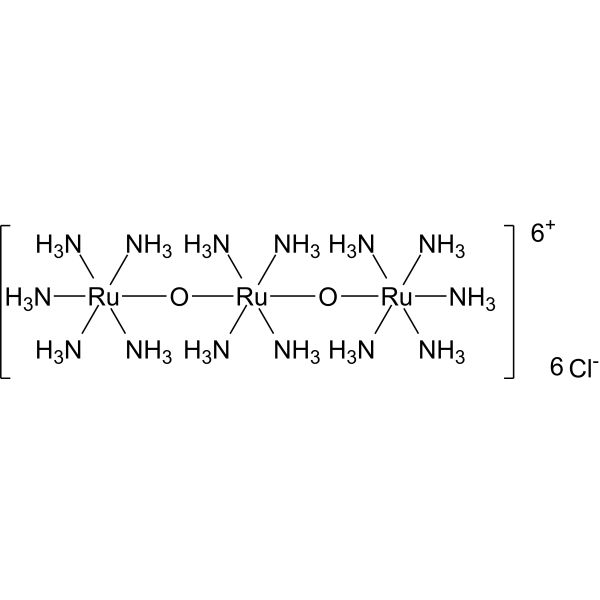
Ruthenium red (Ammoniated ruthenium oxychloride) is a polycationic dye widely used for electron microscopy (EM) of cells, tissues and vegetative bacteria. Ruthenium red strongly reacts with phospholipids and fatty acids and binds to acidic mucopolysaccharides. Ruthenium red is a L-type calcium current (ICa) blocker. When using Ruthenium Red to stain plant tissue sections affected by pathogens, the breakdown of mucilaginous substances by the pathogens prevents them from taking up the stain, whereas the cell walls of healthy tissue stain red .
loading...
    loading...
11
11 Cited Publications
Cat. No.: HY-W074143
CAS No.: 36309-88-3
Synonyms: [Ru(DPP)3]Cl2
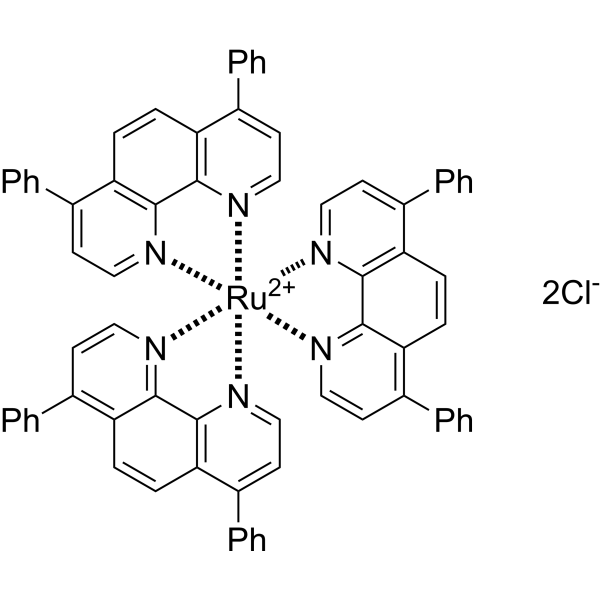
Tris(4,7-diphenyl-1,10-phenanthroline)ruthenium(II) dichloride ([Ru(dpp)3] 2+) is an electrochemiluminescent (ECL) probe and oxygen-sensitive sensor. Tris(4,7-diphenyl-1,10-phenanthroline)ruthenium(II) dichloride can be used to modify electrode surfaces for the detection of sulfates (S2O8 2-) and oxalates, based on electrochemical reactions that generate excited-state species, releasing photons through irreversible redox reactions. Tris(4,7-diphenyl-1,10-phenanthroline)ruthenium(II) dichloride utilizes the oxygen quenching of fluorescence mechanism, where fluorescence intensity reflects the metabolic rate of living microorganisms or oxygen levels within cells/tumors, allowing for real-time detection. Tris(4,7-diphenyl-1,10-phenanthroline)ruthenium(II) dichloride's main applications include microbial detection, antibacterial activity studies, and tumor microenvironment research .
loading...
    loading...
1
1 Cited Publications
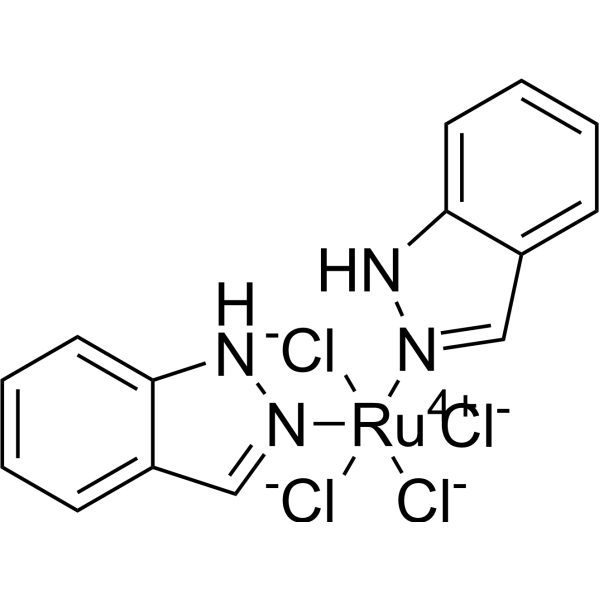
Cat. No.: HY-16350
CAS No.: 197723-00-5
Synonyms: NKP-1339; IT-139; KP-1339
Research Areas:  

Cancer

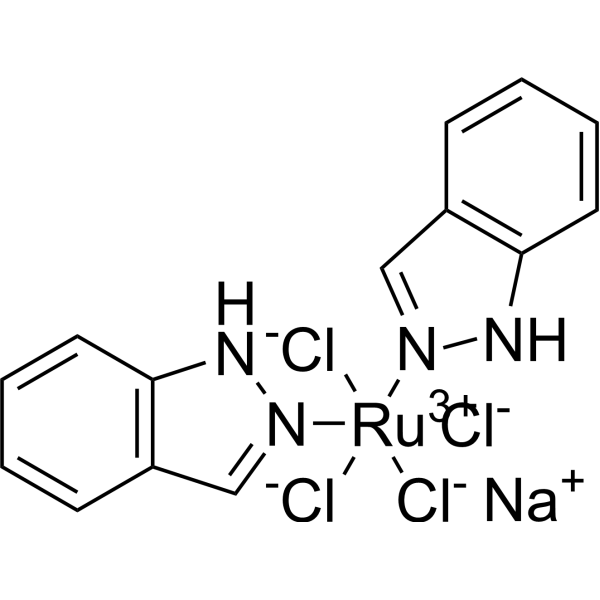
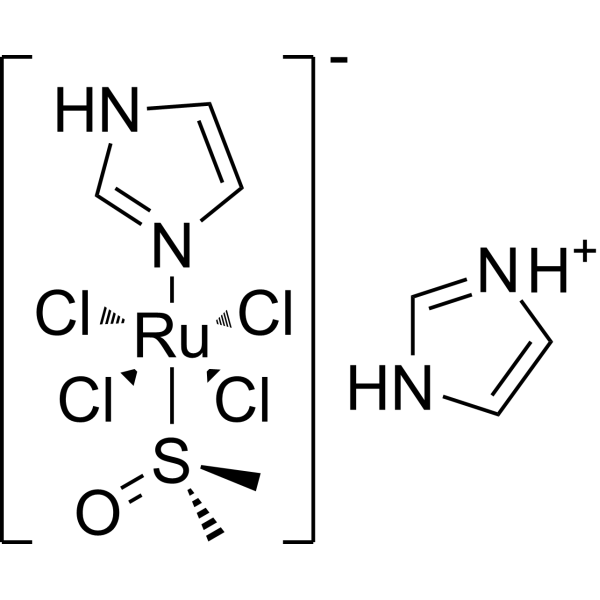
BOLD-100 (NKP-1339; IT-139) is the first-in-class ruthenium-based anticancer agent in development against solid cancer with limited side effects. BOLD-100 induces G2/M cell cycle arrest, blockage of DNA synthesis, and induction of apoptosis via the mitochondrial pathway. BOLD-100 has a high tumor targeting potential, strongly binds to serum proteins such as albumin and transferrin and activates in the reductive tumor milieu .
loading...
    loading...
1
1 Cited Publications
Cat. No.: HY-W127716
CAS No.: 136724-73-7
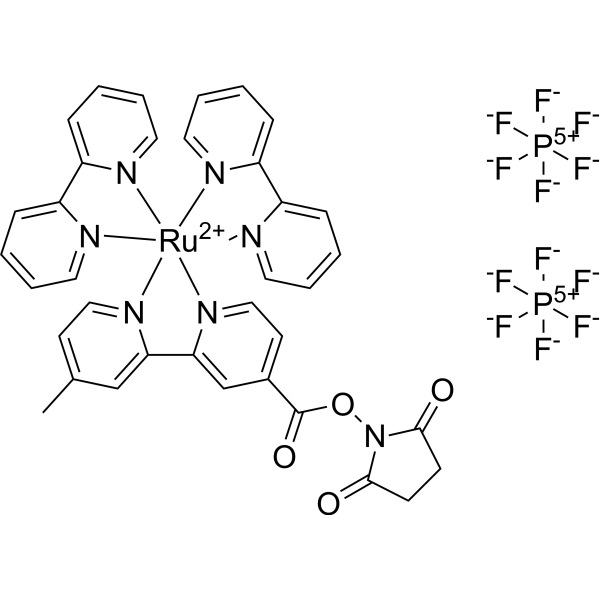
Ru(bpy)2(mcbpy-O-Su-ester)(PF6)2 is a potent ruthenium-based dye. Ru(bpy)2(mcbpy-O-Su-ester)(PF6)2 can bu used as an effective quencher of quantum dots (QDs) fluorescence and the capture probe of virus antigen EV71. Ru(bpy)2(mcbpy-O-Su-ester)(PF6)2 can be used sensitive electrogenerated chemiluminescence (ECL) labels for detection of matrix metalloproteinases (MMPs) .
loading...
    loading...
1
1 Cited Publications
Cat. No.: HY-W127832
CAS No.: 123148-15-2
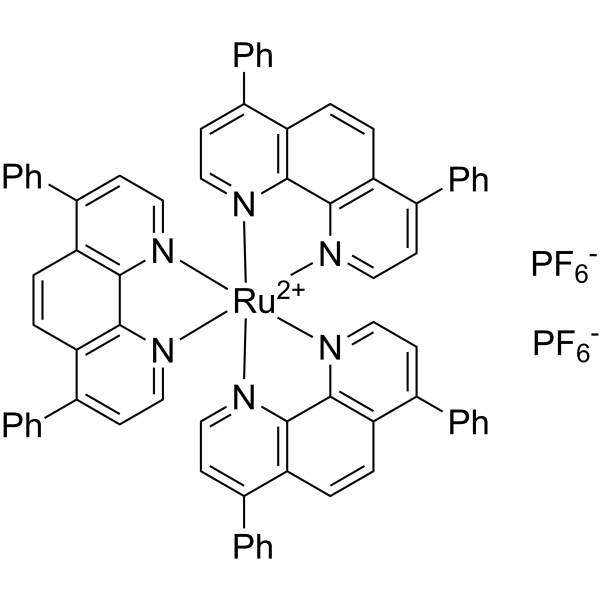
Ru(dpp)3(PF6)2 is a ruthenium (II) polypyridine complex and oxygen-sensing luminophore with excellent photostability and bright orange emission properties based on metal-to-ligand charge transfer (MLCT). Ru(dpp)3(PF6)2 undergoes oxygen-induced collisional luminescence quenching following the Stern-Volmer relationship, and can also engage in Förster-type resonance energy transfer with closed-form BTF6. Featuring excellent photophysical and electrochemical properties, Ru(dpp)3(PF6)2 is applied in studies on quenching-type oxygen sensors based on fluorinated ORMOSIL/xerogels and solid-state light-emitting devices .
loading...
    loading...
1
1 Cited Publications
Cat. No.: HY-N11077
CAS No.: 89886-30-6
Synonyms: 4,5-di-O-CQA
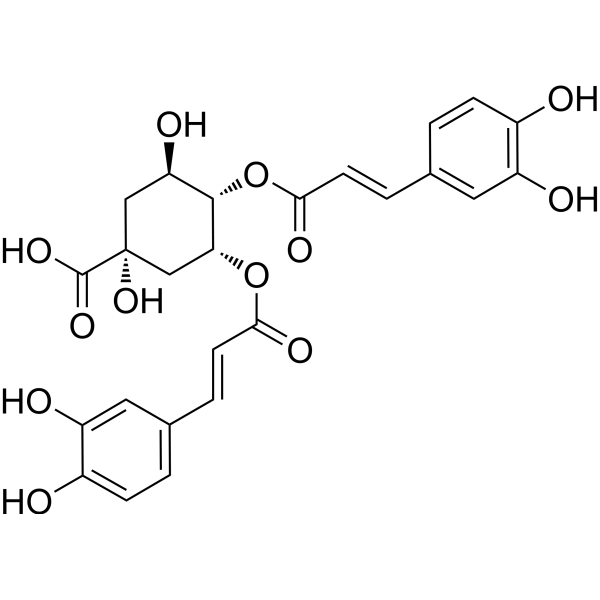
4,5-Di-O-caffeoylquinic acid (4,5-di-O-CQA) is a natural product with multiple activities including anti-inflammatory, antioxidant, and antibacterial properties. 4,5-Di-O-caffeoylquinic acid induces intracellular Ca 2+ influx, and inhibits hypoxia-induced COX-2 expression and cell migration via the TRPV1-mediated pathway. 4,5-Di-O-caffeoylquinic acid scavenges DPPH free radicals, inhibits Cu 2+-mediated LDL oxidation, and reduces the production of TBARS. 4,5-Di-O-caffeoylquinic acid promotes intracellular ATP production, inhibits Aβ42 aggregation and β-sheet conversion, and protects neuroblastoma cells. 4,5-Di-O-caffeoylquinic acid inhibits the growth of Bacillus shigae. 4,5-Di-O-caffeoylquinic acid can be used in studies related to atherosclerosis, Alzheimer's disease, and bacterial infections .
loading...
    loading...
Cat. No.: HY-59137
CAS No.: 616-47-7
Target:  

Drug Intermediate

Research Areas:  

Cancer

1-Methylimidazole acts as a membrane performance regulator that promotes the formation of reverse osmosis membranes with a dense ultra-thin polyamide layer. Such membranes exhibit higher flux and salt rejection rate, while also conferring excellent pH stability to the membrane. 1-Methylimidazole can serve as a ligand for ruthenium (II) complexes to construct metal-based anticancer agents .
loading...
    loading...
Cat. No.: HY-Y1109
CAS No.: 52462-29-0
Synonyms: Tetrachlorobis(mu-4-cymene)diRuthenium(II)
Research Areas:  

Cancer

Dichloro(p-cymene)ruthenium(II) dimer (Tetrachlorobis(mu-4-cymene)diruthenium(II)) is a ruthenium-based organometallic catalyst precursor, which is widely applied in the field of organic synthesis .
loading...
    loading...
Cat. No.: HY-W127790
CAS No.: 52746-49-3
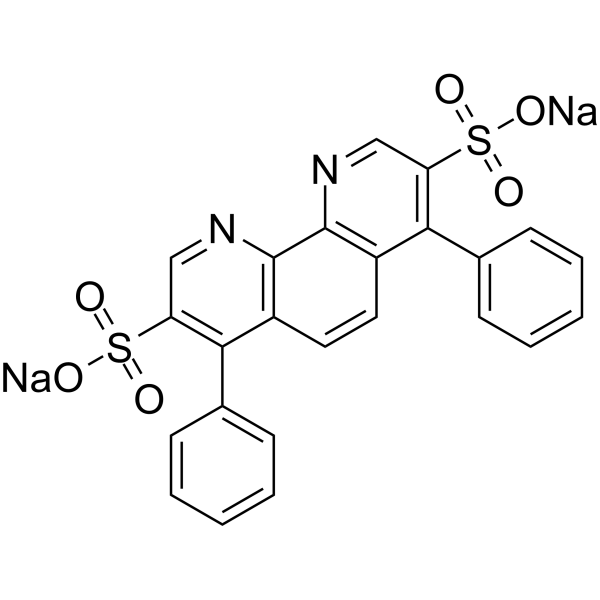
Bathophenanthrolinedisulfonic acid disodium is an iron ion chelator that serves as a colorimetric reagent for iron ion detection. Bathophenanthrolinedisulfonic acid disodium forms stable, strong complexes with Fe 2+ and Fe 3+, and each complex exhibits reversible redox behavior. Bathophenanthrolinedisulfonic acid disodium can act as a ligand to form water-soluble ruthenium catalysts, which promote the hydrogenation of the ketone group in levulinic acid to produce γ-valerolactone. When Bathophenanthrolinedisulfonic acid disodium and its iron complex are incorporated into a polymer-modified electrode, rapid color change from red to transparent occurs during potential cycling .
loading...
    loading...
Cat. No.: HY-19376
CAS No.: 201653-76-1
Target:  

FAK

Research Areas:  

Cancer

NAMI-A is a ruthenium-based drug characterised by the selective activity against tumour metastases, inhibits the adhesion and migration.
loading...
    loading...
Cat. No.: HY-W001069
CAS No.: 192139-92-7
Synonyms: RuCl[(R,R)-Tsdpen](p-cymene)
RuCl (p-cymene)[(R,R)-Ts-DPEN] (RuCl[(R,R)-Tsdpen](p-cymene)) is a Noyori-type chiral ruthenium asymmetric transfer hydrogenation catalyst. RuCl (p-cymene)[(R,R)-Ts-DPEN] is widely used in the asymmetric transfer hydrogenation and enantioselective reduction of ketones, imines and quinolines to construct specific stereoisomers with high optical purity .
loading...
    loading...
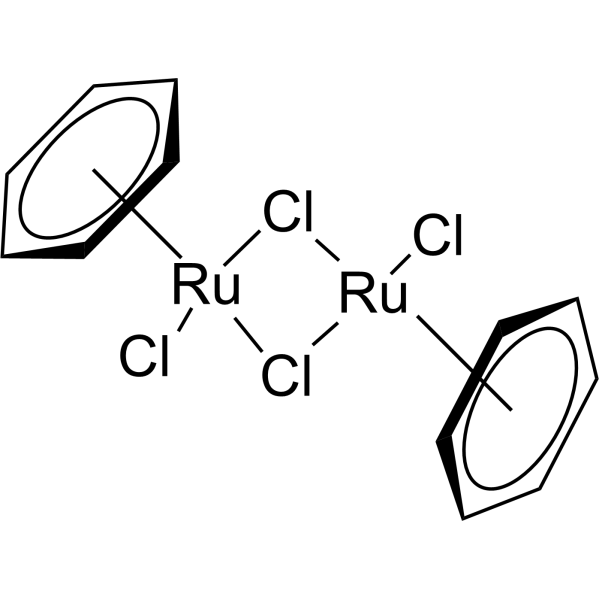
Cat. No.: HY-W033466
CAS No.: 37366-09-9
Synonyms: BenzeneRuthenium(II) chloride dimer
Benzeneruthenium(II) Chloride Dimer (Benzeneruthenium(II) chloride dimer) is a dinuclear complex. Benzeneruthenium(II) Chloride Dimer undergoes a hydrolysis reaction to generate a mixture of mononuclear ruthenium complexes in equilibrium .
loading...
    loading...
Cat. No.: HY-W020958
CAS No.: 14284-93-6
Synonyms: Tris(acetylacetonato)Ruthenium (III)
Ru (acac) 3 (Tris (acetylacetonato) ruthenium (III)) is a caspase-3 activator and Apoptosis inducer. Ru (acac) 3 exerts growth inhibitory effects on various cell lines in vitro by inhibiting DNA/RNA synthesis and inducing mild reversible S-phase cell cycle arrest. Ru (acac) 3 is commonly used in research related to ovarian cancer, osteosarcoma, cervical cancer, melanoma, and other fields .
loading...
    loading...
Cat. No.: HY-Y0139
CAS No.: 156-87-6
Synonyms: NSC 7766; Propanolamine
Research Areas:  

Others

3-Aminopropan-1-ol is both a primary amine and a primary alcohol, and it is widely used as a versatile chemical building block and molecular linker .
loading...
    loading...
Cat. No.: HY-79986
CAS No.: 90614-07-6
Target:  

Drug Intermediate

Research Areas:  

Others

Diiodo(p-cymene)ruthenium(II) dimer is a drug intermediate for synthesis of various active compounds.
loading...
    loading...
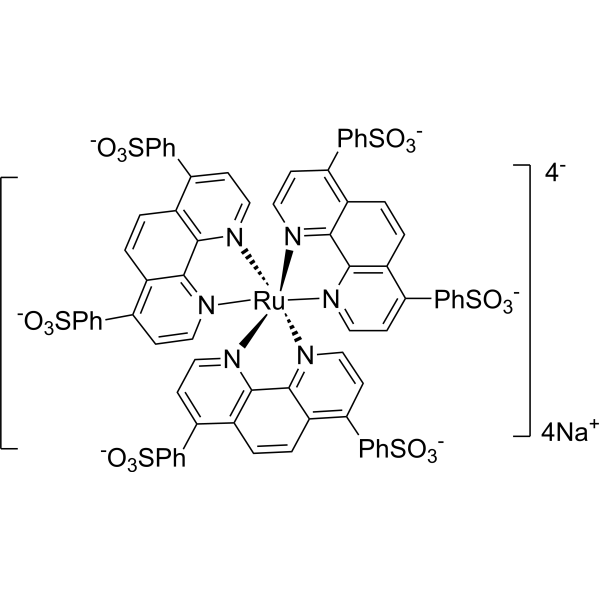
Cat. No.: HY-W140535
CAS No.: 301206-84-8
Target:  

Fluorescent Dye MOFs

Research Areas:  

Others

Tetrasodium, 4-(1,10-phenanthrolin-4-yl)benzenesulfonate,ruthenium((II)) is a luminescent ruthenium complex. Tetrasodium, 4-(1,10-phenanthrolin-4-yl)benzenesulfonate,ruthenium((II)) is used in biological and chemical fields as a fluorescent indicator dye and an electrochemiluminescent probe .
loading...
    loading...
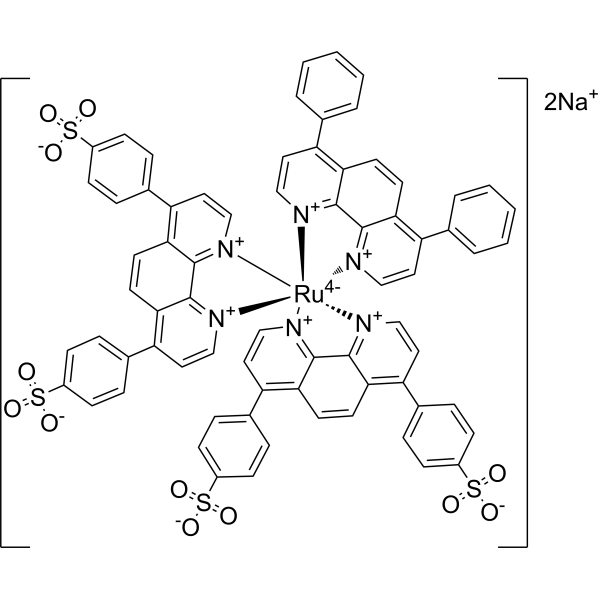
Cat. No.: HY-D1708
RuBP-4S is a luminescent ruthenium complex.
loading...
    loading...
Cat. No.: HY-147039
CAS No.: 783324-98-1
Synonyms: NKP-1339 free base; IT-139 free base; KP-1339 free base
Target:  

HSP Autophagy

Research Areas:  

Cancer

BOLD-100 (NKP-1339; IT-139) free base is a ruthenium-based anticancer agent. BOLD-100 free base also is an inhibitor of stress-induced GRP78 upregulation, disrupting endoplasmic reticulum (ER) homeostasis and inducing ER stress and unfolded protein response (UPR). BOLD-100 free base interferes with the complex interplay between ER-stress response, lysosome dynamics, and autophagy execution .
loading...
    loading...
Cat. No.: HY-Y1312
CAS No.: 670-96-2
Synonyms: PhI; 2PZ
Research Areas:  

Others

2-Phenylimidazole (PhI) is a corrosion inhibitor for brass and can be used to prepare complexes with ruthenium (III) .
loading...
    loading...
Cat. No.: HY-P4599
CAS No.: 306-14-9
Research Areas:  

Others

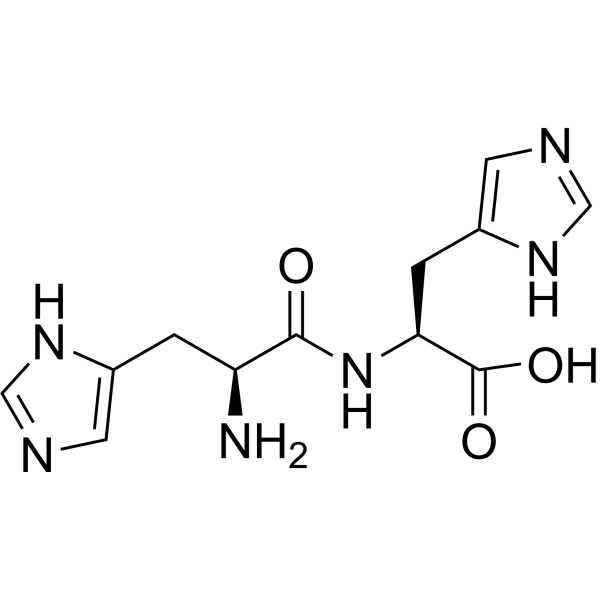
H-His-His-OH is an oligopeptide. H-His-His-OH can chelate with Ruthenium (II). H-His-His-OH inhibits the hydrolysis of metal ions at pH 7.4 .
loading...
    loading...