
1. Search Result
Search Result
Results for "

Transmembrane domain

" in MedChemExpress (MCE) Product Catalog:

40

Inhibitors & Agonists

11

Peptides

2

Inhibitory Antibodies

2

Natural
Products

42

Recombinant Proteins

4

Antibodies

1

Oligonucleotides

Cat. No. Product Name Target Research Areas Chemical Structure
  • HY-113329
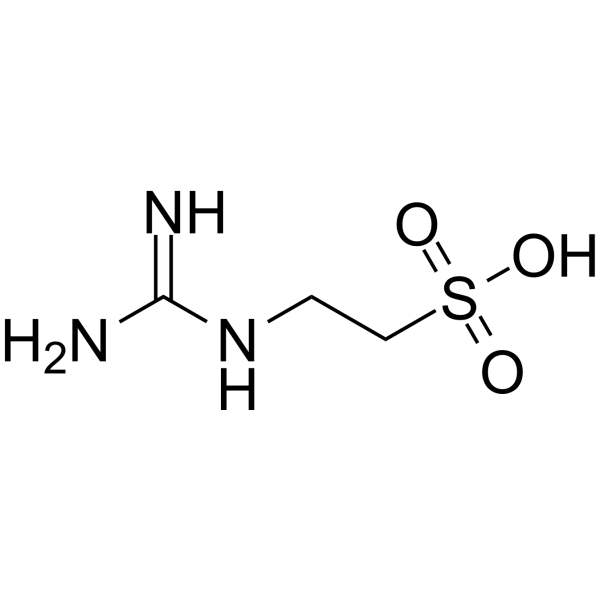
    Guanidinoethyl sulfonate
    5 Publications Verification

    Taurocyamine

    Endogenous Metabolite Metabolic Disease
    Guanidinoethyl sulfonate (Taurocyamine) is an orally available, blood-brain permeable competitive inhibitor of taurine transporters and a competitive antagonist of glycine receptors (GlyR) (IC50=565 μM). Guanidinoethyl sulfonate has both weak agonist and antagonist effects on GABAA receptors. Guanidinoethyl sulfonate inhibits taurine transmembrane transport and competitively binds to the GlyR ligand binding domain, thereby blocking glycine-mediated chloride influx, and may regulate brain pH to exert neuroprotective effects. Guanidinoethyl sulfonate can be used for neuroprotection studies of ischemic brain injury .
    Guanidinoethyl sulfonate
  • HY-P1925A
    GO-203 TFA
    2 Publications Verification

    PI3K Reactive Oxygen Species (ROS) Apoptosis Cancer
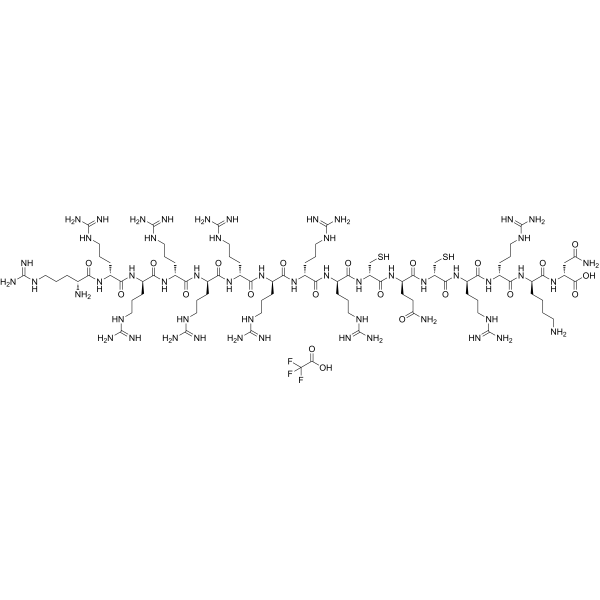
    GO-203 TFA is a potent MUC1-C oncoprotein inhibitor. GO-203 TFA is an all D-amino acid peptide that consists of a poly-R transduction domain linked to a CQCRRKN motif that binds to the MUC1-C cytoplasmic tail and blocks MUC1-C homodimerization. GO-203 TFA downregulates TIGAR (TP53-induced glycolysis and apoptosis regulator) protein synthesis by inhibiting the PI3K-AKT-S6K1 pathway. GO-203 TFA induces the production of ROS and loss of mitochondrial transmembrane potential. GO-203 TFA inhibits the growth of colon cancer cells in vitro and as xenografts in nude mice .
    GO-203 TFA
  • HY-135542
    NBI-27914
    2 Publications Verification

    CRFR Others
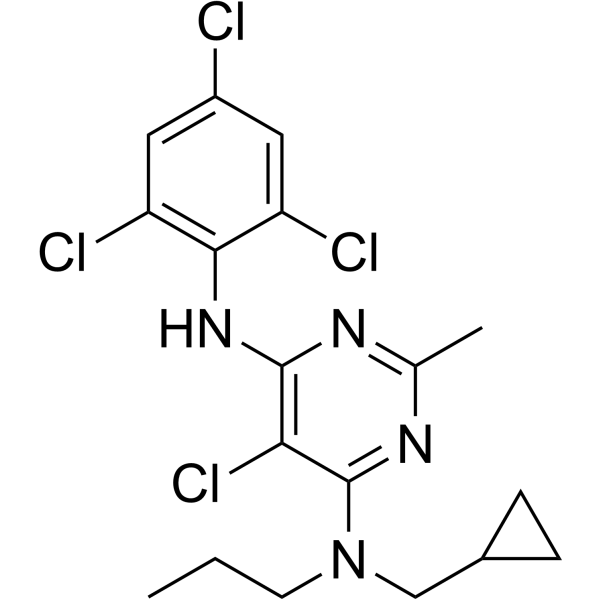
    NBI-27914 is a highly selective, high-affinity non-peptide competitive antagonist of human corticotropin-releasing factor receptor 1 (CRFR1). NBI-27914 primarily binds to the His199 and Met276 sites in the transmembrane domain of the receptor .
    NBI-27914
  • HY-157214
    NVS-STG2
    1 Publications Verification

    STING Molecular Glues Cancer
    NVS-STG2 is a molecular glue that targets STINGtransmembrane domains, effectively acting as a molecular glue. NVS-STGI enhances the activity of cGAMP by inducing the formation of more abundant and larger oligomers. NVS-STG2 produces antitumor activity in animal models .
    NVS-STG2
  • HY-111772A

    (R)-VX-445

    Drug Isomer CFTR Inflammation/Immunology
    (R)-Elexacaftor ((R)-VX-445) is the enantiomer of Elexacaftor (HY-111772). Elexacaftor is an orally active CFTR modulator that targets nucleotide-binding domain 1. Elexacaftor stabilizes misfolded F508del-CFTR protein, enhances its trafficking to the plasma membrane, and significantly improves metabolic stability, thermal stability and ion conductivity. Elexacaftor not only restores chloride transport function in nasal epithelial cells and rescues multiple CFTR mutation subtypes, but also exerts multiplicative synergistic effects with Ivacaftor (HY-13017), and is often used in a triple combination therapy with Tezacaftor (HY-15448). Elexacaftor is widely used in basic and clinical translational research on cystic fibrosis .
    (R)-Elexacaftor
  • HY-103565
    AMN082
    1 Publications Verification

    mGluR Neurological Disease
    AMN082, a selective, orally active, and brain penetrant mGluR7 agonist, directly activates receptor signaling via an allosteric site in the transmembrane domain. AMN082 potently inhibits cAMP accumulation and stimulates GTPγS binding (EC50 values, 64-290 nM) at transfected mammalian cells expressing mGluR7. AMN082 shows selectivity over other mGluR subtypes and selected ionotropic glutamate receptors. Antidepressant effects .
    AMN082
  • HY-P1985

    Notch Cardiovascular Disease Cancer
    Notch 1 (Notch homolog 1, translocation-associated) can encode a member of the NOTCH family of proteins. Members of this Type I transmembrane protein family share structural characteristics including an extracellular domain consisting of multiple epidermal growth factor-like (EGF) repeats, and an intracellular domain consisting of multiple different domain types .
    Notch 1
  • HY-119165

    γ-secretase Neurological Disease
    GSM-1 is a potent γ-secretase modulator. GSM-1 directly targets the transmembrane domain (TMD) 1 of presenilin 1 (PS1) .
    GSM-1
  • HY-P2508

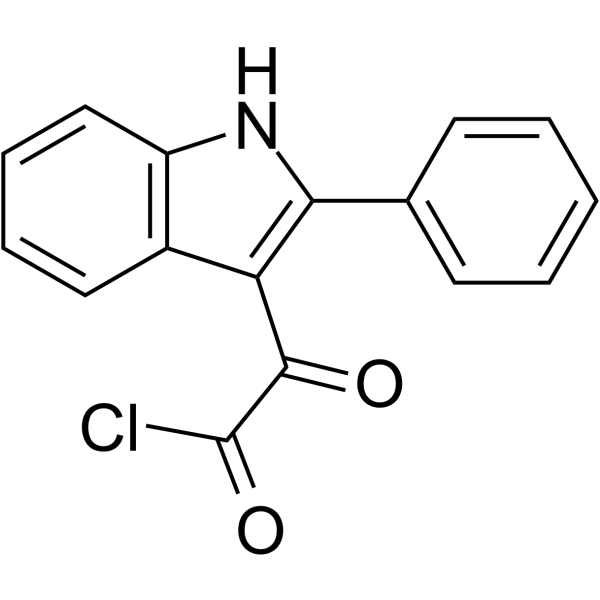
    Mucin Cancer
    MUC1, mucin core is the region of the MUC1 mucin core. MUC1 is a type I transmembrane glycoprotein, and is overexpressed and aberrantly glycosylated in carcinoma cells. MUC1, mucin core protein binds to domain 1 of ICAM-1 .
    MUC1, mucin core
  • HY-111163

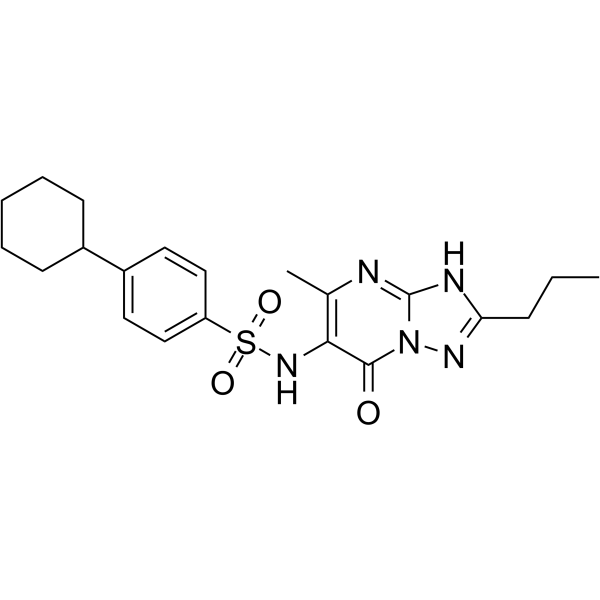
    Apoptosis Cancer
    NSC49652 is a reversible, orally active p75 neurotrophin receptor (p75 NTR, also known as NGFR, TNFRSF16, and CD271) agonist. NSC49652 targets the transmembrane domain of p75 NTR. NSC49652 induces apoptosis and affects the viability of melanoma cells .
    NSC49652
  • HY-150407

    Ligands for Target Protein for PROTAC Autophagy Others Neurological Disease Cancer
    TSPO ligand-1 is the ligand of AUTAC4 (HY-134640) that can be used in the synthesis of PROTACs. TSPO ligand-1 is a mitochondrial outer membrane transmembrane structural domain protein can bind to AUTAC4 and regulate mitochondrial autophagy to promote targeted mitochondrial renewal. TSPO ligand-1 is also involved in the transport of cholesterol from the outer to inner mitochondrial membrane and serves as a sensitive biomarker of brain injury and neurodegeneration .
    TSPO ligand-1
  • HY-119229

    CFTR Inflammation/Immunology
    VRT-325 is a CFTR modulator. VRT-325 inhibits disulfide cross-linking between cysteines in transmembrane segments 6 and 7 of CFTR and P-gp. VRT-325 promotes maturation of CFTR and P-gp processing mutants, rescues ΔF508-CFTR folding at the endoplasmic reticulum. VRT-325 binds ΔF508-CFTR nucleotide-binding domain 1, and increases mature ΔF508-CFTR cell surface expression and chloride conductance. VRT-325 can be used for the research of cystic fibrosis [1] [3].
    VRT-325
  • HY-129527

    iGluR Neurological Disease
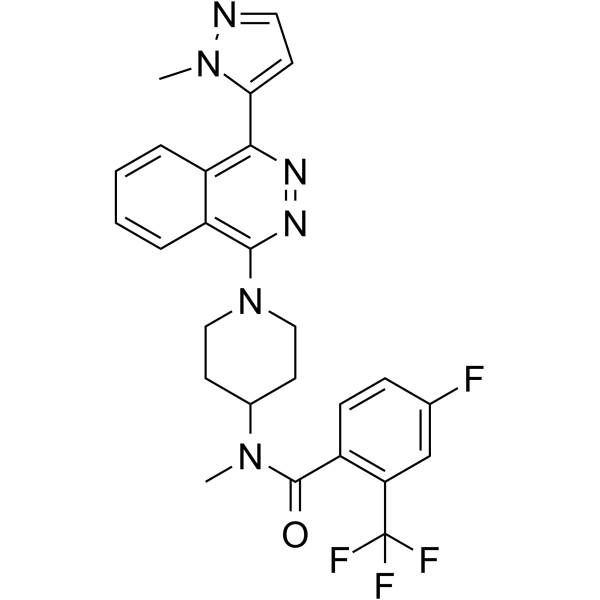
    GNE-9278 is a highly selective positive allosteric modulator of NMDAR that acts at the GluN1 transmembrane domain (TMD). GNE-9278 acts on activated NMDARs to increase peak current and agonist affinity .
    GNE-9278
  • HY-156095
    F7H
    2 Publications Verification

    Wnt Cancer
    F7H is a Frizzled receptor FZD7 antagonist (IC50: 1.25 μM). Frizzled receptors (FZDs) influence Wnt signaling, mediating embryonic development and tissue homeostasis. F7H is a potent ligand for the FZD7 transmembrane domain (TMD) .
    F7H
  • HY-P10716

    GLP Receptor Metabolic Disease
    Exendin-P5 is a selective agonist that targets the GLP-1R. Exendin-P5 promotes rapid activation of G proteins by transient interactions with the transmembrane domain of GLP-1R, enhancing its potency in G protein-mediated signaling and accelerating cAMP production. This mechanism suggests the potential application of Exendin-P5 in the study of metabolic diseases .
    Exendin-P5
  • HY-113329R

    Taurocyamine (Standard)

    Endogenous Metabolite Reference Standards Metabolic Disease
    Guanidinoethyl sulfonate (Standard) is the analytical standard of Guanidinoethyl sulfonate. This product is intended for research and analytical applications. Guanidinoethyl sulfonate is an orally available, blood-brain permeable competitive inhibitor of taurine transporters and a competitive antagonist of glycine receptors (GlyR) (IC50=565 μM). Guanidinoethyl sulfonate has both weak agonist and antagonist effects on GABAA receptors. Guanidinoethyl sulfonate inhibits taurine transmembrane transport and competitively binds to the GlyR ligand binding domain, thereby blocking glycine-mediated chloride influx, and may regulate brain pH to exert neuroprotective effects. Guanidinoethyl sulfonate can be used for neuroprotection studies of ischemic brain injury .
    Guanidinoethyl sulfonate (Standard)
  • HY-107506

    mGluR Neurological Disease
    Ro 67-4853 is a positive allosteric modulator (PAM) of mGluR1 (pEC50=7.16 for rmGlu1a receptor). Ro67-4853 exhibits activity at all group I mGlu receptors including hmGlu1, rmGlu1, and rmGlu5. Ro 67-4853 enhances the potency of L-Glu by interacting with the transmembrane domain (TMD) of the receptor. Ro 67-4853 potentiates sensory synaptic responses to repetitive vibrissa stimulation .
    Ro 67-4853
  • HY-P1985A

    Notch Cardiovascular Disease Cancer
    Notch 1 TFA (Notch homolog 1, translocation-associated) can encode a member of the NOTCH family of proteins. Members of this Type I transmembrane protein family share structural characteristics including an extracellular domain consisting of multiple epidermal growth factor-like (EGF) repeats, and an intracellular domain consisting of multiple different domain types .
    Notch 1 TFA
  • HY-P10495

    Transmembrane Glycoprotein Others Cancer
    GPR110 peptide agonist P12 is a peptide that acts as a GPR110 agonist. GPR110 peptide agonist P12 can significantly enhance the initial rate of GPR110 stimulated G protein GTPγS binding. GPR110 peptide agonist P12 mimics the action of natural ligands, causing the extracellular domain (ECD) of the GPR110 to dissociate from the seven transmembrane domains (7TM), exposing the β-strand-13/stalk region at the N-terminus of the 7TM domain, which acts as an agonist to activate G protein signaling. GPR110 peptide agonist P12 can be used in the study of developmental disorders and cancers related to GPR110 .
    GPR110 peptide agonist P12
  • HY-P11272

    FTX-101

    VEGFR Neurological Disease
    Tasronetide (FTX-101) is a highly selective inhibitor toward the NRP1/Plexin-A1 receptor system, and displays no significant activity on other targets. Tasronetide intercalates within the transmembrane domains of Plexin-A1 and NRP1 of oligodendrocytes, interferes with the heterodimerization of the co-receptor system, effectively disrupts the NRP1/Plexin-A1 receptor complex and mitigates the inhibitory influence of Sema3A on oligodendrocyte migration and differentiation, thereby facilitating increased myelin sheathing around axons. Tasronetide is designed to enhance the recruitment and maturation of oligodendrocyte precursors and can be used for Chronic Op c Neuropathy research .
    Tasronetide
  • HY-178966

    STING Infection Inflammation/Immunology
    STING agonist-48 is a potent STING agonist that exhibits STING-dependent activity in vitro (EC50 = 4.02 μM). STING agonist-48 prefers to bind with the transmembrane domain (TMD) over the cytosolic cyclic dinucleotide (CDN) domain. STING agonist-48 shows adjuvant efficacy, enhancing IgG and Th1/Th2 cytokine responses in humanized STING mice. STING agonist-48 can be used for the study of inflammation-related diseases .
    STING agonist-48
  • HY-145416

    Bacterial Infection
    G247 is a specific MsbA inhibitor. G247 acts as a transmembrane domains (TMDs) wedge, symmetrically increasing nucleotide-binding domains (NBDs) separation and preventing conformational transition of MsbA. G247 suppresses ATPase activity by increasing inter-NBD distance .
    G247
  • HY-P10416

    Q14 peptide

    Deubiquitinase Mitophagy Others Neurological Disease
    Q14 is a polypeptide derived from the USP30 (ubiquitin specific peptidase 30) transmembrane (TM) domain with the ability to inhibit the deubiquitination activity of USP30 (IC50=57.2 nM). Q14 reduces USP30 activity by inhibiting the interaction between the USP30 transmembrane domain and its catalytic domain. Q14 peptide contains the LC3 interaction region (LIR) motif, which enables it to bind to the LC3 and accelerate the formation of autophagosomes, thereby promoting mitophagy. Q14 can be used in the study of neurodegenerative diseases as well as mitochondrial quality control and cell metabolism .
    Q14
  • HY-E70869

    Trk Receptor Neurological Disease
    TRKA (also named NTRK1) is a potential new member of the tyrosine kinase gene family. TRKA is a receptor tyrosine kinase that is phosphorylated in response to NGF. A single transmembrane domain divides TRKA into an extracellular domain, important for NGF binding, and an intracellular tyrosine kinase domain, important for signal transduction. TRKA(NTRK1) Recombinant Human Active Protein Kinase is a recombinant TRKA(NTRK1) protein that can be used to study TRKA(NTRK1)-related functions .
    TRKA(NTRK1) Recombinant Human Active Protein Kinase
  • HY-117833

    VAP-1 Inflammation/Immunology
    PXS-4681A is a potent, selective, irreversible and orally active semicarbazide-sensitive amine oxidase (SSAO; VAP-1) inhibitor with a Ki of 37 nM. PXS-4681A shows highly selectivity over related amine oxidases, ion channels, and seven-transmembrane domain receptors. PXS-4681A has anti-inflammatory effects .
    PXS-4681A
  • HY-103565A
    AMN082 free base
    1 Publications Verification

    mGluR Neurological Disease
    AMN082 free base, a selective, orally active, and brain penetrant mGluR7 agonist, directly activates receptor signaling via an allosteric site in the transmembrane domain. AMN082 free base potently inhibits cAMP accumulation and stimulates GTPγS binding (EC50 values, 64-290 nM) at transfected mammalian cells expressing mGluR7. AMN082 free base shows selectivity over other mGluR subtypes and selected ionotropic glutamate receptors. Antidepressant effects .
    AMN082 free base
  • HY-117903A

    Smo Hedgehog Cancer
    MRT-92 is a Smoothened (Smo) antagonist (Ki=0.7 nM) with anticancer activity. MRT-92 inhibits Hedgehog signaling pathway and rodent cerebellar granule cell proliferation by blocking overlapping binding sites in the transmembrane domain of the Smoothened receptor (IC50=0.4 nM). MRT-92 can be used in the study of cerebellar glioma .
    MRT-92
  • HY-162040

    P-glycoprotein Cancer
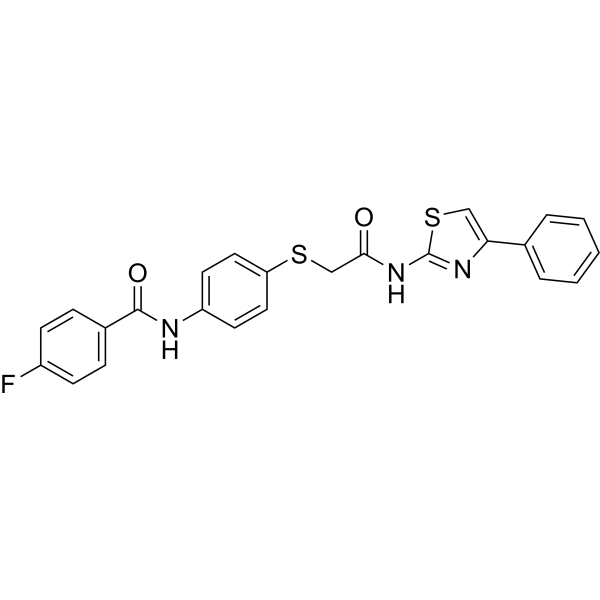
    P-gp inhibitor 17 (compound 2g) is a P-gp inhibitor directly interacted with the transmembrane domain of P-gp. P-gp inhibitor 17 can be used for P-gp-mediated multidrug-resistant in tumor cells study .
    P-gp inhibitor 17
  • HY-135542R

    CRFR Reference Standards Others
    NBI-27914 (Standard) is the analytical standard of NBI-27914 (HY-135542). This product is intended for research and analytical applications. NBI-27914 is a highly selective, high-affinity non-peptide competitive antagonist of human corticotropin-releasing factor receptor 1 (CRFR1). NBI-27914 primarily binds to the His199 and Met276 sites in the transmembrane domain of the receptor.
    NBI-27914 (Standard)
  • HY-P5472

    Transmembrane Glycoprotein Others
    Tumour-associated MUC1 epitope is a biological active peptide. (This sequence is the hallmark of MUC1 mucin. MUC1 is a highly glycosylated type I transmembrane glycoprotein with a unique extracellular domain consisting of a variable number of tandem repeats (VNTR) of this 20 amino acid peptide. It is overexpressed on the cell surface of many human adenocarcinomas and hematological malignancies, including multiple myeloma and B-cell lymphoma, making MUC1 broadly applicable target for immunotherapeutic strategies.)
    Tumour-associated MUC1 epitope
  • HY-111161

    nAChR Parasite Infection
    GSK575594A is a modulator of the nicotinic acetylcholine receptor (nAChR) in Ascaris suum. GSK575594A enhances muscle contractions induced by acetylcholine (ACh) by binding to the allosteric binding site between subunits within the transmembrane domain of nAChR. At a concentration of 3 μM, GSK575594A significantly increased the contraction induced by ACh in Ascaris suum (Emax increased from 1.19 g to 1.51 g). GSK575594A may be used in research within the field of antiparasitic studies .
    GSK575594A
  • HY-176193

    P-glycoprotein Cancer
    P-gp modulator-7 (Compound 9e) is a P-glycoprotein (P-gp) inhibitor. P-gp modulator-7 occupies the channel entrance of P-gp with a unique T-shaped configuration, hindering the peristaltic extrusion mechanism of transmembrane domains TM12 and TM9, thereby inhibiting P-gp from pumping drugs out of cells and reversing the multidrug resistance (MDR) of tumor cells. P-gp modulator-7 is promising for research of cancers .
    P-gp modulator-7
  • HY-103565R

    Reference Standards mGluR Neurological Disease
    AMN082 (Standard) is the analytical standard of AMN082. This product is intended for research and analytical applications. AMN082, a selective, orally active, and brain penetrant mGluR7 agonist, directly activates receptor signaling via an allosteric site in the transmembrane domain. AMN082 potently inhibits cAMP accumulation and stimulates GTPγS binding (EC50 values, 64-290 nM) at transfected mammalian cells expressing mGluR7. AMN082 shows selectivity over other mGluR subtypes and selected ionotropic glutamate receptors. Antidepressant effects .
    AMN082 (Standard)
  • HY-103565AR

    Reference Standards mGluR Neurological Disease
    AMN082 (free base) (Standard) is the analytical standard of AMN082 (free base). This product is intended for research and analytical applications. AMN082 free base, a selective, orally active, and brain penetrant mGluR7 agonist, directly activates receptor signaling via an allosteric site in the transmembrane domain. AMN082 free base potently inhibits cAMP accumulation and stimulates GTPγS binding (EC50 values, 64-290 nM) at transfected mammalian cells expressing mGluR7. AMN082 free base shows selectivity over other mGluR subtypes and selected ionotropic glutamate receptors. Antidepressant effects .
    AMN082 free base (Standard)
  • HY-P991780

    EGFR Cancer
    Anti-Mouse HER2 (domain I) Antibody (H2Mab-304) reacts with domain I of mouse HER2. HER2 is a 185 kDa transmembrane receptor tyrosine kinase that is part of the EGFR family. Recommend Isotype Controls: Rat IgG1 kappa, Isotype Control (HY-P99979).
    Anti-Mouse HER2 (domain I) Antibody (H2Mab-304)
  • HY-P991785

    CXCR Cancer
    Anti-Mouse ACKR4 Antibody (A4Mab-3) reacts with atypical chemokine receptor 4 (ACKR4). ACKR4 is a seven-transmembrane domain-containing protein that belongs to the atypical chemokine receptors (ACKRs) family. Recommend Isotype Controls: Rat IgG2b kappa, Isotype Control (HY-P990682) .
    Anti-Mouse ACKR4 Antibody (A4Mab-3)
  • HY-174530

    mRNA Inflammation/Immunology
    Human TGFBR2 mRNA encodes the human transforming growth factor beta receptor 2 (TGFBR2) protein, a transmembrane protein that has a protein kinase domain, forms a heterodimeric complex with TGF-beta receptor type-1, and binds TGF-beta. TGFBR2/ligand complex phosphorylates proteins, which then enter the nucleus and regulate the transcription of genes related to cell proliferation, cell cycle arrest, wound healing, immunosuppression, and tumorigenesis.
    Human TGFBR2 mRNA
  • HY-182464

    Potassium Channel Infection Others
    DABMA is a TMEM175 channel activator with a human EC50 of 17.9 μM. DABMA directly increases TMEM175 channel current via interaction with intracellular, transmembrane, or endosomal lumen-associated domains, and does not alter TMEM175 mRNA or protein levels. DABMA delays endolysosomal substrate degradation, modulates endolysosomal trafficking, increases acidic organelle accumulation, induces cholesterol accumulation and altered late endosome morphology. DABMA can be used for the research of coronavirus disease, Clostridium difficile infection, Pseudomonas aeruginosa infection, rabies, and influenza virus infection .
    DABMA
  • HY-181552

    GABA Receptor Neurological Disease
    GABAA receptor modulator-13 is an orally active, blood-brain barrier-permeable α4β1δ GABAA receptor modulator (IC50 = 9.02 μM). GABAA receptor modulator-13 reduces GABA-induced currents, impairs the stability of the transmembrane domain M2-M3 loop of α4β1δ GABAA receptors, and exhibits selectivity for γ2-containing GABAA receptor subtypes and α6β3δ GABAA receptor subtypes. GABAA receptor modulator-13 is applicable to the research of nervous system diseases with altered tonic inhibition, such as neurodevelopmental disorders and epilepsy .
    GABAA receptor modulator-13
  • HY-P11742

    Ac-GWW(LA)8LWWA-NH2

    Biochemical Assay Reagents Others
    WALP23 is a synthetic model peptide. WALP23 induces heterogeneity in lipid bilayers, forming stripe-like microdomains in DPPC bilayers. WALP23 can be used to study protein-membrane interactions. WALP23 is also used as a model peptide to determine helical orientation during the association process .
    WALP23

Inquiry Online

Your information is safe with us. * Required Fields.

Salutation


Country or Region *

Applicant Name *


Organization Name *

Department *


Email Address *


Product Name *

Cat. No.


Requested quantity *

Phone Number *


Remarks

Inquiry Online

Inquiry Information

Product Name:
Cat. No.:
Quantity:
MCE Japan Authorized Agent:

