



TSPO ligand-1

Based on 1 Customer Validation
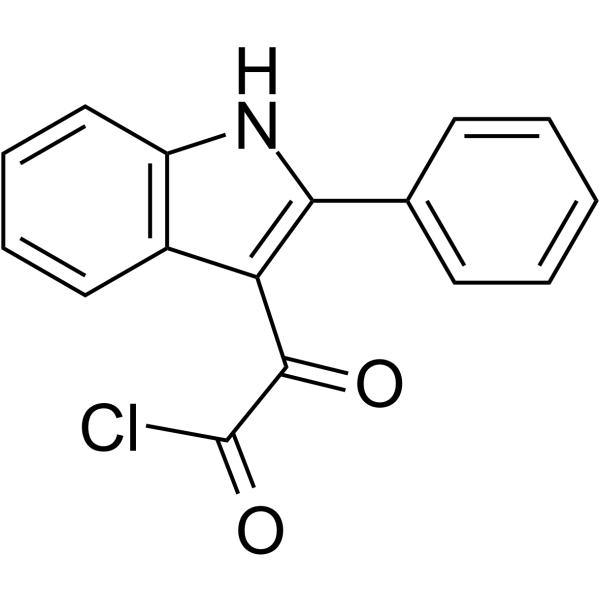
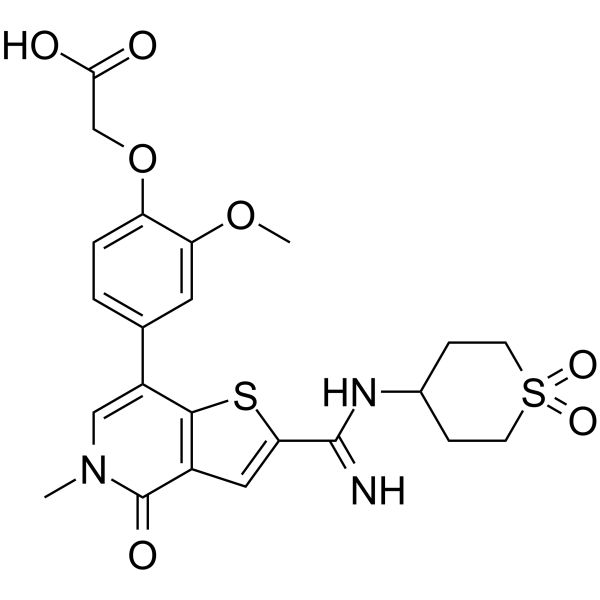
TSPO ligand-1 is the ligand of AUTAC4 (HY-134640) that can be used in the synthesis of PROTACs. TSPO ligand-1 is a mitochondrial outer membrane transmembrane structural domain protein can bind to AUTAC4 and regulate mitochondrial autophagy to promote targeted mitochondrial renewal. TSPO ligand-1 is also involved in the transport of cholesterol from the outer to inner mitochondrial membrane and serves as a sensitive biomarker of brain injury and neurodegeneration.
For research use only. We do not sell to patients.
- Purity : 98.0%
- CAS No.: 4560-08-1
- Formula: C16H10ClNO2
- Molecular Weight:283.71
-
Storage:
-20°C, protect from light, stored under nitrogen
* In solvent : -80°C, 6 months; -20°C, 1 month (protect from light, stored under nitrogen)

To place orders, for customer services and technical support, please contact: MedChemExpress USA
Tel: 609-228-6898 E-mail: [email protected] [email protected]


-
 Biological Activity
-
Chemical Information
- Protocols
- Purity & Documentation
- References
-
 Help & FAQs





Biological Activity
Description
In Vitro
TSPO ligand-1 gene is induced to increase expression in the context of selective activation of neurons in male C57Bl6/N mice. Moreover, neuronal activation under physiological and psychopharmacological conditions also results in increased TSPO levels in adult mice[2].
TSPO ligand-1 can serve as the sole marker of glial cell activity in Alzheimer’s disease thus tracking the formation of different neural cells[3].
TSPO ligand-1 can regulate mitochondrial fatty acid oxidation (FAO) and thus effects mitochondrial energy homeostasis in MA-10 Leydig cell line[4].
MedChemExpress (MCE) has not independently confirmed the accuracy of these methods. They are for reference only.


Chemical Information
-
CAS No. 4560-08-1
-
Appearance Solid
-
Molecular Weight 283.71
-
Formula C16H10ClNO2
-
Color Light yellow to green yellow
-
SMILES
O=C(C(C1=C(C2=CC=CC=C2)NC3=C1C=CC=C3)=O)Cl
-
Shipping
Room temperature in continental US; may vary elsewhere.
-
Storage
-20°C, protect from light, stored under nitrogen
* In solvent : -80°C, 6 months; -20°C, 1 month (protect from light, stored under nitrogen)


Purity & Documentation
-
Data Sheet (275 KB)
-
SDS (582 KB)
- English - EN (582 KB)
- Français - FR (582 KB)
- Deutsch - DE (582 KB)
- Norwegian - NO (582 KB)
- Español - ES (582 KB)
- Swedish - SV (582 KB)
- Italian - IT (582 KB)
- Korean - KR (582 KB)
- Portuguese - PT (582 KB)
-
Handling Instructions (2659 KB)
References
[1]. Takahashi D, et, al. AUTACs: Cargo-Specific Degraders Using Selective Autophagy. Mol Cell. 2019 Dec 5;76(5):797-810.e10. [Content Brief]
[2]. Tina Notter, et al. Neuronal activity increases translocator protein (TSPO) levels. Mol Psychiatry. 2021 Jun;26(6):2025-2037. doi: 10.1038/s41380-020-0745-1. Epub 2020 May 12. [Content Brief]
[3]. Benjamin B Tournier, et al. Astrocytic TSPO Upregulation Appears Before Microglial TSPO in Alzheimer's Disease. J Alzheimers Dis. 2020;77(3):1043-1056. doi: 10.3233/JAD-200136. [Content Brief]
[4]. Lan N Tu, et al. Translocator Protein (TSPO) Affects Mitochondrial Fatty Acid Oxidation in Steroidogenic Cells. Endocrinology. 2016 Mar;157(3):1110-21. doi: 10.1210/en.2015-1795. Epub 2016 Jan 7. [Content Brief]
Hot Topics
-
All
-
Topics
-
Most Recent
-
Oldest
-
Topics Mitophagy: A Central Target in Neurodegenerative Diseases
Mitophagy is a selective form of autophagy that eliminates damaged or dysfunctional mitochondria and thereby preserves mitochondrial quality control, cellular homeostasis, and neuronal survival.
2026-06-18
-
Topics When Mitophagy Becomes An Innate Immune Checkpoint
Mitophagy becomes an innate immune checkpoint when selective autophagic removal of damaged mitochondria regulates the availability of mitochondrial danger signals that activate innate immune pathways.
2026-06-18

Calculators
Concentration (start) × Volume (start) = Concentration (final) × Volume (final)


TSPO ligand-1 Related Classifications
HY-150407 Related Classifications
 Powered by Bioz