


1. Search Result
Search Result
Results for "

acylated

" in MedChemExpress (MCE) Product Catalog:

65

Inhibitors & Agonists

7

Biochemical Assay Reagents

13

Peptides

22

Natural
Products

1

Isotope-Labeled Compounds

1

Click Chemistry

1

Oligonucleotides

Cat. No. Product Name Target Research Areas Chemical Structure
  • HY-P3462
    Cagrilintide
    3 Publications Verification

    CGRP Receptor Metabolic Disease
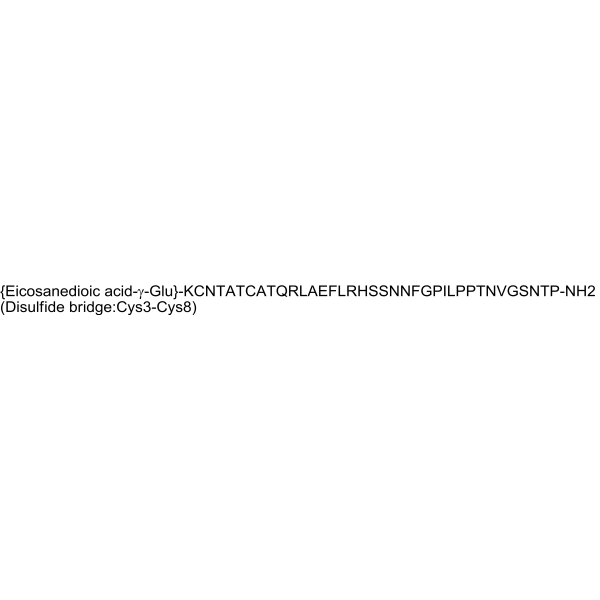
    Cagrilintide is an investigational novel long-acting acylated amylin analogue, acts as nonselective amylin receptors (AMYR) and calcitonin G protein-coupled receptor (CTR) agonist. Cagrilintide induces significant weight loss and reduces food intake. Cagrilintide has the potential for the research of obesity .
    Cagrilintide
  • HY-P4146

    BI 456906

    GLP Receptor GCGR Metabolic Disease
    Survodutide (BI 456906) is a potent, selective glucagon receptor/GLP-1 receptor (GCGR/GLP-1R) dual agonist with EC50s of 0.52 nM and 0.33 nM in CHO-K1 cells, respectively. Survodutide, a 29-amino-acid peptide, is a potent acylated peptide containing a C18 fatty acid. Survodutide has robust anti-obesity efficacy achieved by increasing energy expenditure and decreasing food intake .
    Survodutide
  • HY-P3462A
    Cagrilintide acetate
    3 Publications Verification

    CGRP Receptor Metabolic Disease
    Cagrilintide acetate is a non-selective AMYR/CTR agonist and long-acting acylated amylase analogue. Cagrilintide acetate causes a reduction in food intake and significant weight loss in a dose-dependent manner. Cagrilintide acetate can be used in obesity studies .
    Cagrilintide acetate
  • HY-N0188
    Esculin
    5 Publications Verification

    p38 MAPK Inflammation/Immunology Cancer
    Esculin is a fluorescent coumarin glucoside, the active ingredient in ash bark. Esculin has antidiabetic effects, improves cognitive impairment in experimental diabetic nephropathy (DN) via the MAPK signaling pathway, and exerts antioxidant stress and anti-inflammatory effects. Esculin also has anticancer, antibacterial, antiviral, neuroprotective, antithrombotic, and therapeutic properties for eye diseases .
    Esculin
  • HY-E70076

    Bacillopeptidaseb

    Biochemical Assay Reagents Others
    Subtilisin (Compound proteinase) (EC 3.4.21.62) is a proteolytic enzyme, isolated from Bacillus licheniformis. Subtilisin (Compound proteinase) has catalytic activity in anhydrous dimethyl formamide. Subtilisin (Compound proteinase) can be used as a catalyst for easy coupling between sugars and amino acids .
    Subtilisin, bacillus licheniformis
  • HY-79647

    N-(Fmoc-oxy)succinimide

    Biochemical Assay Reagents Others
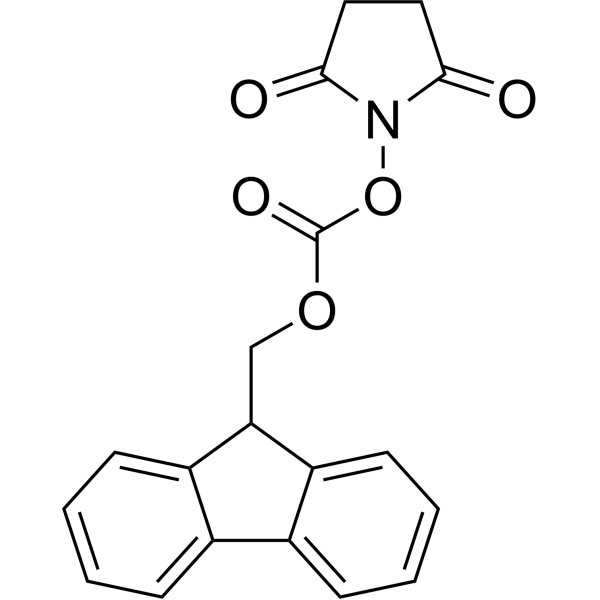
    Fmoc-OSu (N-(Fmoc-oxy)succinimide) is an acylating agent that targets amino groups (-NH2). It can selectively protect the amino groups of amino acids by covalently binding with primary or secondary amines through nucleophilic substitution reactions. Fmoc-OSu forms a stable amide bond with the amino group to avoid side reactions of the amino group in peptide synthesis. It can also be used as a fluorescent labeling reagent to react with glycosylamines for efficient labeling of N-sugar chains. Fmoc-OSu can be used as an Fmoc protection strategy in peptide synthesis, and as a fluorescent labeling and analysis method for N-sugar chains .
    Fmoc-OSu
  • HY-164899

    2-aminopyridine-3-carboxylic acid imidazolide

    Transmembrane Glycoprotein Cancer
    2A3 (2-aminopyridine-3-carboxylic acid imidazolide) is a T cell activator that specifically binds to CEACAM6 and CEACAM5. 2A3 exhibits enzymatic activity that catalyzes the glucuronidation of specific substrates (e.g., 1-naphthol), and possesses significant cytotoxic activity. When integrated into CAR T cells or used alone, 2A3 acts by inducing cytokine release, degranulation, and direct cytotoxicity. 2A3 kills pancreatic and breast cancer cells with high target antigen expression in vitro, and significantly inhibits the growth of pancreatic cancer xenografts in vivo. 2A3 broadly targets malignant tumors with overexpressed CEACAM5, CEACAM6, or co-expressed both, and shows high expression mainly in tissues such as the liver and colon. 2A3 serves as an important research tool for the immunotherapy of pancreatic and breast cancer . 2A3 is a novel SHAPE reagent, which can be used for the analysis of RNA structure both in vitro and in vivo . 2A3 is an electrophilic chemical probe that acylates the 2'-OH in the RNA backbone. 2A3 can be used for RNA SHAPE-MaP experiments and is capable of analyzing the RNA secondary structures at single nucleotide resolution.
    2A3
  • HY-N6980
    Licorice glycoside C2
    1 Publications Verification

    Others Others
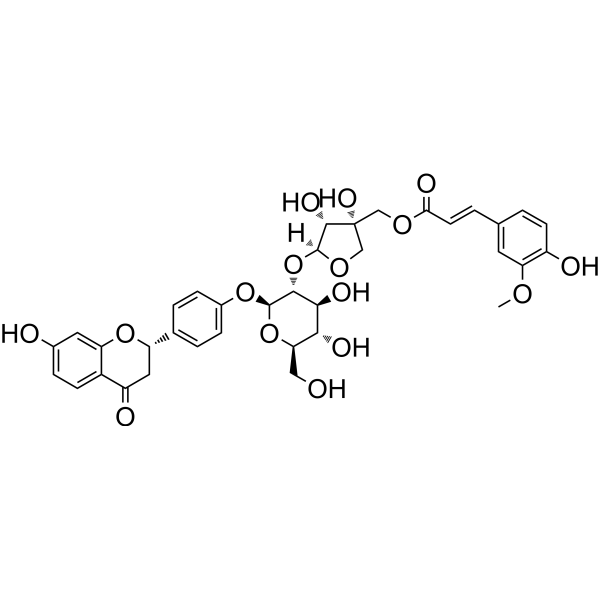
    Licorice glycoside C2 is an acylated flavonoid glycoside found in the underground part of Glycyrrhiza uralensis .
    Licorice glycoside C2
  • HY-162350

    Epigenetic Reader Domain Apoptosis Cancer
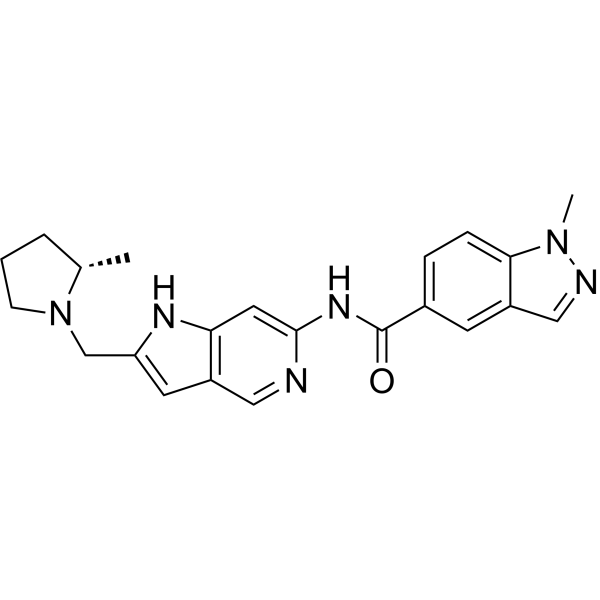
    TDI-11055 is a selective and orally active eleven-nineteen leukemia (ENL) inhibitor, which displaces ENL from chromatin by blocking its YEATS domain interaction with acylated histones. TDI-11055 inhibits ENL and AF9 YEATS domains with IC50 values of 50 nM and 70 nM, respectively, and no activity against GAS41 or YEATS2. TDI-11055 decreases chromatin occupancy of ENL-associated complexes, impairs transcription elongation, suppresses key oncogenic gene expression programs, and induces differentiation. TDI-11055 can be used for the research of acute myeloid leukemia .
    TDI-11055
  • HY-W402064

    Nucleoside Antimetabolite/Analog Others
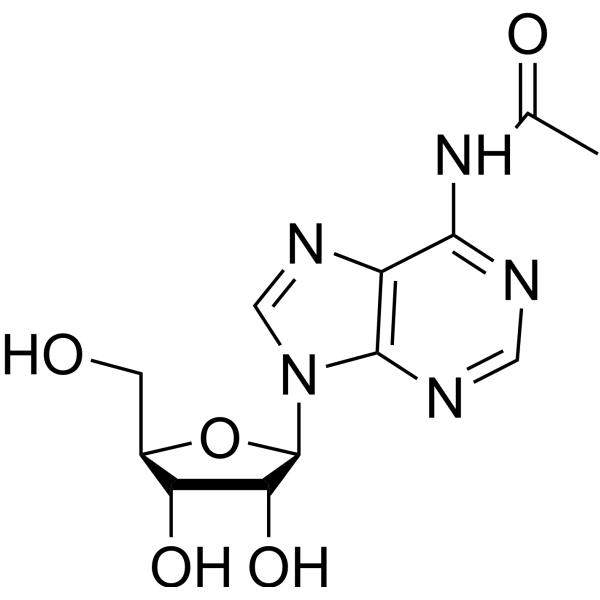
    N-Acetyladenosine is an adenosine analog and an adenosine N 6-acylated derivative. N-Acetyladenosine can be produced via the heterolytic reaction between adenosine and diacetyl peroxide .
    N-Acetyladenosine
  • HY-P10909

    MBX 2109

    Thyroid Hormone Receptor Endocrinology
    Canvuparatide (MBX 2109) is a prodrug for parathyroid hormone (PTH) peptide that releases the bioactive PTH[1-32] peptide agonist that retains a fatty acylated lysine (Lys33) at the C-terminus, thereby extending the halflife of Canvuparatide. Canvuparatide can be used for the symptoms of hypoparathyroidism such as hypocalcemia and hyperphosphatemia .
    Canvuparatide
  • HY-N2459
    Peonidin chloride
    1 Publications Verification

    YGM-6 chloride

    Interleukin Related Neurological Disease Inflammation/Immunology Cancer
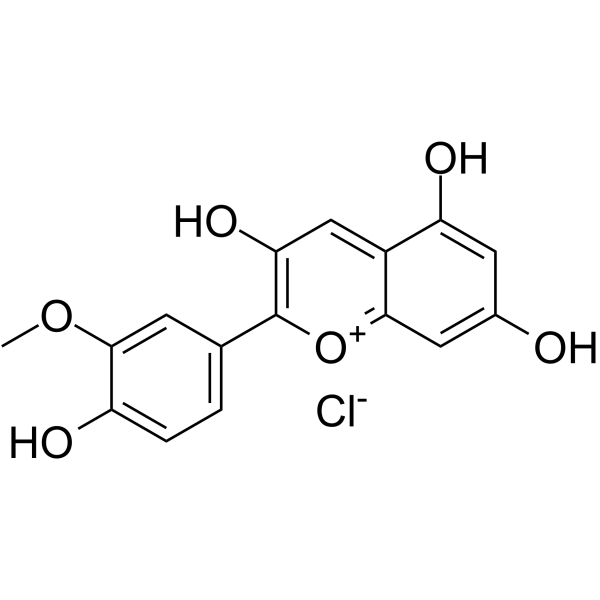
    Peonidin (YGM-6) chloride is an anthocyanin compound found in plants such as grapes and purple-fleshed sweet potatoes. Peonidin chloride alone exerts no stable inhibitory effect on LPS (HY-D1056)-mediated inflammatory gene expression. The acylated form of Peonidin chloride exhibits antimutagenic activity .
    Peonidin chloride
  • HY-W001578

    Biochemical Assay Reagents Others
    1-Adamantaneacetic acid is an aliphatic carboxylic acid that can be used as an acylating agent, commonly found in chemical synthesis .
    1-Adamantaneacetic acid
  • HY-W015800

    Drug Intermediate Others
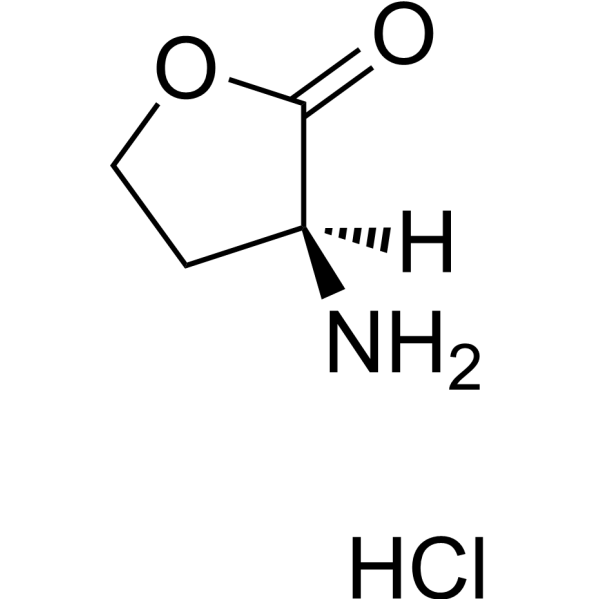
    L-Homoserine lactone hydrochloride is the core structural unit of the bacterial quorum-sensing signal molecule N-acyl-L-homoserine lactone (AHLs). As an important intermediate, L-Homoserine lactone hydrochloride acylated derivatives have potent immunosuppressive activity .
    L-Homoserine lactone hydrochloride
  • HY-W001957

    4-Acetylbutyric acid; 5-Oxohexanoic acid; NSC-5281

    Drug Intermediate HIV Infection
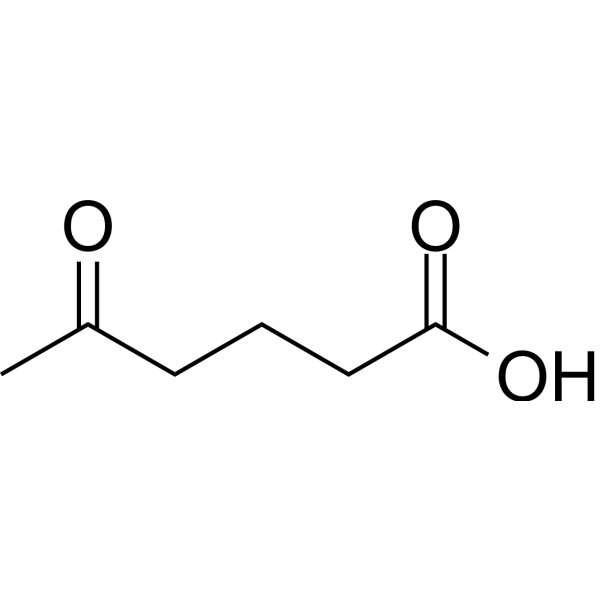
    Glurate (4-Acetylbutyric acid) is an acylating agent. Glurate can be used in the development of antiviral compounds, especially those targeting retroviruses such as herpes virus and HIV. Glurate can be used in the synthesis of acyclic nucleoside derivatives and 5-hydroxyhexanoic acid .
    Glurate
  • HY-N16520

    Others Others
    Kaempferol 3-O-β-D-glucopyranoside 6′′-(3-hydroxy-3-methylglutarate) is an acylated flavonol glycoside. Kaempferol 3-O-β-D-glucopyranoside 6′′-(3-hydroxy-3-methylglutarate) can be isolated from 10-year-old callus cultures of Mexican lime .
    Kaempferol 3-O-β-D-glucopyranoside 6′′-(3-hydroxy-3-methylglutarate)
  • HY-P11321A

    acyl-GIP hydrochloride

    Insulin Receptor Metabolic Disease
    IUB0271 (acyl-GIP) hydrochloride is a fatty acylated and long-acting glucose-dependent insulinotropic polypeptide (GIP). IUB0271 hydrochloride increases cFos neuronal activity in hypothalamic feeding centers and decreases body weight, food intake and glycemia in DIO mouse models, and these effects depend on CNS-GIPR signaling. IUB0271 hydrochloride can be used for type 2 diabetes mellitus (T2DM) and obesity research .
    IUB0271 hydrochloride
  • HY-P11321

    acyl-GIP

    Insulin Receptor Metabolic Disease
    IUB0271 (acyl-GIP) is a fatty acylated and long-acting glucose-dependent insulinotropic polypeptide (GIP). IUB0271 increases cFos neuronal activity in hypothalamic feeding centers and decreases body weight, food intake and glycemia in DIO mouse models, and these effects depend on CNS-GIPR signaling. IUB0271 can be used for type 2 diabetes mellitus (T2DM) and obesity research .
    IUB0271
  • HY-P4146A

    BI 456906 TFA

    GLP Receptor GCGR Metabolic Disease
    Survodutide (BI 456906) TFA is a potent, selective glucagon receptor/GLP-1 receptor (GCGR/GLP-1R) dual agonist with EC50s of 0.52 nM and 0.33 nM in CHO-K1 cells, respectively. Survodutide TFA, a 29-amino-acid peptide, is a potent acylated peptide containing a C18 fatty acid. Survodutide TFA has robust anti-obesity efficacy achieved by increasing energy expenditure and decreasing food intake .
    Survodutide TFA
  • HY-W243002

    Bacterial Infection
    Acetyl-L-homoserine lactone is a member of the family of N-acylated homoserine lactones (HSLs). Acetyl-L-homoserine lactone is a polar mediator of cell-cell interactions in bacterial biofilms .
    Acetyl-L-homoserine lactone
  • HY-N0188R

    Reference Standards p38 MAPK Inflammation/Immunology Cancer
    Esculin (Standard) is the analytical standard of Esculin. This product is intended for research and analytical applications. Esculin is a fluorescent coumarin glucoside, the active ingredient in ash bark. Esculin has antidiabetic effects, improves cognitive impairment in experimental diabetic nephropathy (DN) via the MAPK signaling pathway, and exerts antioxidant stress and anti-inflammatory effects. Esculin also has anticancer, antibacterial, antiviral, neuroprotective, antithrombotic, and therapeutic properties for eye diseases .
    Esculin (Standard)
  • HY-W127407

    Biochemical Assay Reagents Others
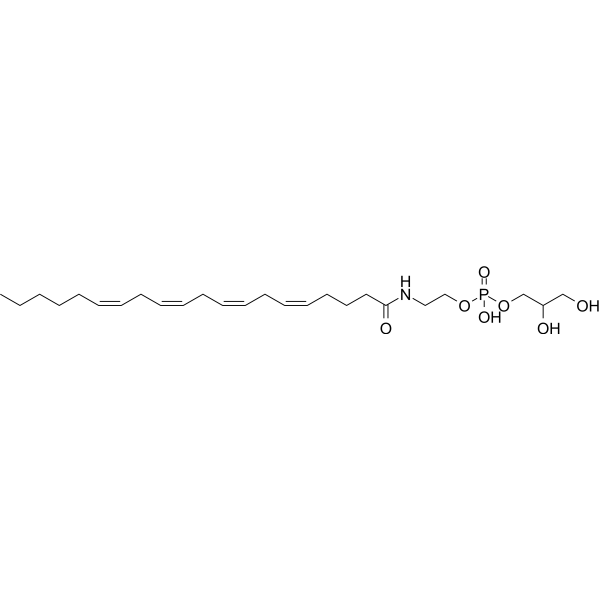
    Glycerophospho-N-Arachidonoyl Ethanolamine is a N-acylated ethanolamines (NAEs). Most NAEs are naturally occurring lipids with diverse biological activities. Different types of NAE can be derived from glycerophosphate-linked precursors through the activity of glycerophosphodiesterase 1 (GDE1). Glycerophosphate-N-Arachidonoyl Ethanolamine is the precursor of Anandamide (AEA), also known as Anandamide. AEA is an endocannabinoid neurotransmitter that binds to central cannabinoid (CB1) and peripheral cannabinoid (CB2) receptors. It inhibits the specific binding of [3H]-HU-243 to synaptosomal membranes with a Ki value of 52 nM compared to 46 nM for δ9-THC.
    Glycerophospho-N-arachidonoyl ethanolamine
  • HY-W127393

    Biochemical Assay Reagents Others
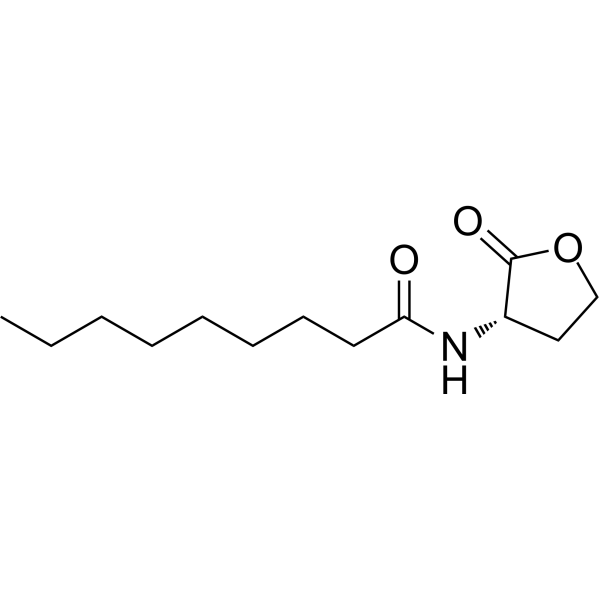
    Quorum sensing is a regulatory system used by bacteria to control gene expression in response to increased cell density. This regulatory process manifests itself in a variety of phenotypes, including biofilm formation and virulence factor production. Coordinated gene expression is achieved through the production, release and detection of small diffusible signaling molecules called autoinducers. N-acylated homoserine lactones (AHLs) comprise a class of such autoinducers, each of which generally consists of a fatty acid coupled to a homoserine lactone (HSL). Modulation of bacterial quorum-sensing signaling systems to suppress pathogenesis represents a new approach to antimicrobial research for infectious diseases. AHLs differ in acyl length (C4-C18), C3 substitution (hydrogen, hydroxyl, or oxo group), and the presence or absence of one or more carbon-carbon double bonds in the fatty acid chain. These differences confer signaling specificity through the affinity of the LuxR family of transcriptional regulators. C9-HSL is a rare odd-numbered acyl carbon chain produced by wild-type Erwinia carotovora strain SCC 3193 grown in nutrient-rich Luria-Bertani broth (LB) medium.
    N-Nonanoyl-L-homoserine lactone
  • HY-P4146B

    BI 456906 sodium

    GLP Receptor GCGR Metabolic Disease
    Survodutide (BI 456906) sodium is a potent, selective glucagon receptor/GLP-1 receptor (GCGR/GLP-1R) dual agonist with EC50s of 0.52 nM and 0.33 nM in CHO-K1 cells, respectively. Survodutide sodium, a 29-amino-acid peptide, is a potent acylated peptide containing a C18 fatty acid. Survodutide sodium has robust anti-obesity efficacy achieved by increasing energy expenditure and decreasing food intake .
    Survodutide sodium
  • HY-P11495

    Integrin Cardiovascular Disease
    myr-RGT is a nutmeg acylated RGT peptide. myr-RGT can be used to inhibit extracellular signaling of integrin β3. myr-RGT can be used in the research of atherosclerosis and other related conditions .
    myr-RGT
  • HY-N10784

    Insecticide Others
    Kaempferol-3-O-[2″,6″-di-O-E-p-coumaroyl]-β-D-glucopyranoside is a acylated keampferol glucoside. Kaempferol-3-O-[2″,6″-di-O-E-p-coumaroyl]-β-D-glucopyranoside can be isolated from the leaves of O. dentata, acts as a repellent against a fouling organism, the blue mussel M. edulis .
    Kaempferol-3-O-[2″,6″-di-O-E-p-coumaroyl]-β-D-glucopyranoside
  • HY-W250129

    Biochemical Assay Reagents Others
    2,3,4,5-Tetrafluorobenzoyl chloride is a fluorinated organic compound that belongs to the class of benzoyl chlorides. It is a colorless liquid with a pungent smell and is mainly used as an intermediate in the synthesis of various pharmaceutical and pesticide compounds. 2,3,4,5-Tetrafluorobenzoyl chloride is an acylating agent that can react with a variety of nucleophiles, including amines, alcohols, and thiols, to form amides, esters, or thioesters, respectively. Its unique fluorine-containing structure can impart desired properties to target molecules, such as increased lipophilicity or increased stability against metabolic degradation. However, due to its high reactivity and potential health hazards, proper safety measures and handling procedures must be followed when using this compound.
    2,3,4,5-Tetrafluorobenzoyl chloride
  • HY-W776820

    OXYL-1-NHS

    Biochemical Assay Reagents Others
    1-Oxyl-2,2,5,5-tetramethylpyrroline-3-carboxylate NHS ester (OXYL-1-NHS) is an active acylating agent that can be used to spin label proteins and aminoacylated RNA species .
    1-Oxyl-2,2,5,5-tetramethylpyrroline-3-carboxylate NHS ester
  • HY-N10644

    Others Others
    Complanatin is an acylated flavonol glycoside, it can be isolated from Astragalus complanatus R. Br .
    Complanatin
  • HY-P1062

    Bacterial Antibiotic Infection
    Lauryl-LF 11, N-terminally acylated analogue of LF11, is a peptide with antibacterial activity .
    Lauryl-LF 11
  • HY-N4054

    Others Endocrinology
    Henryoside, an acylated salicin bis-glucoside from Viburnum veitchii, exhibits spasmolytic and uterotonic properties .
    Henryoside
  • HY-N2275

    Others Others
    21-​O-​Tigloylgymnemagenin (Compound 7) is a acylated triterpenes isolated from Gymnema sylvestre .
    21-​O-​Tigloylgymnemagenin
  • HY-P1062A

    Bacterial Antibiotic Infection
    Lauryl-LF 11 TFA, N-terminally acylated analogue of LF11, is a peptide with antibacterial activity .
    Lauryl-LF 11 TFA
  • HY-N6590

    Others Neurological Disease
    Tenuifoliose A is a multi-acylated oligosaccharide compound derived from Polygala tenuifolia with neuroprotective activity. Tenuifoliose A holds promise for research in anti-inflammatory and antioxidant fields .
    Tenuifoliose A
  • HY-149997

    Bacterial Reactive Oxygen Species (ROS) Apoptosis Cancer
    Anticancer agent 120 (compound 21) is an N-acylated ciprofloxacin derivative, which has certain antibacterial activity and induces ROS to promote cancer cell apoptosis .
    Anticancer agent 120
  • HY-154862

    Apoptosis Infection Cancer
    Anticancer agent 119 (compound 15) is an N-acylated ciprofloxacin derivative, which has certain antibacterial activity and induces ROS production to promote cancer cell apoptosis .
    Anticancer agent 119
  • HY-N12719

    Others Others
    Isocampneoside I is an acylated phenethyl oligosaccharide that can be isolated from Cistanche deserticola (Orobanchaceae). Isocampneoside I inhibits D-galactose-induced cytotoxicity and protects primary hepatocytes in mice .
    Isocampneoside I
  • HY-164128

    Bacterial Infection
    AHL modulator-1 is a N-acylated L-homoserine lactone (AHL) modulator that modulating bacteria quorum sensing (QS). AHL modulator-1 can be used for the research of plant soft rot .
    AHL modulator-1
  • HY-100998

    iGluR Neurological Disease
    Metaphit is a specific PCPantagonist and site-directed acylating agent of the [3H]phencyclidine binding site in rat brain homogenates . Metaphit prevents PCP-induced locomotor behavior through presynaptic mechanisms .
    Metaphit
  • HY-154861

    Bacterial Apoptosis Necroptosis Cancer
    Anticancer agent 118, a N‑acylated ciprofloxacin derivative, has anti-bacterial and anticancer activities. Anticancer agent 118 shows high activity against Gram-positive strains and antiproliferative activities against prostate PC3 cells. Anticancer agent 118 can be used for antitumor research .
    Anticancer agent 118
  • HY-117798

    Thrombin Cardiovascular Disease
    LY 806303 is a potent and selective inhibitor of human α-thrombin. LY 806303 specifically acylates Ser-205 within the catalytic triad of α-thrombin on the heavy chain and a key site involved in the enzymatic activity of thrombin. The mechanism of action of LY 806303 as an enzyme inhibitor is through the specific acylation of this catalytic serine residue .
    LY 806303
  • HY-W001957R

    4-Acetylbutyric acid (Standard); 5-Oxohexanoic acid (Standard); NSC-5281 (Standard)

    Reference Standards Drug Intermediate HIV Infection
    Glurate (Standard) is the analytical standard of Glurate (HY-W001957). This product is used for research and analytical applications. Glurate (4-Acetylbutyric acid) is an acylating agent. Glurate can be used in the development of antiviral compounds, especially those targeting retroviruses such as herpes virus and HIV. Glurate can be used in the synthesis of acyclic nucleoside derivatives and 5-hydroxyhexanoic acid .
    Glurate (Standard)
  • HY-N10757

    Others Others
    Petunidin-3-O-(6-O-p-coumaryl)-5-O-diglucoside is a natural product that can be isolated from grapes .
    Petunidin-3-O-(6-O-p-coumaryl)-5-O-diglucoside
  • HY-N12005

    Others Others
    6-Hydroxykaempferol 7-O-β-glucopyranoside (compound 5) is a flavonol isolated from wild marigold (Tagetes minuta) .
    6-Hydroxykaempferol 7-O-β-glucopyranoside
  • HY-N2459R

    YGM-6 chloride (Standard)

    Reference Standards Interleukin Related Neurological Disease Inflammation/Immunology Cancer
    Peonidin (YGM-6) chloride Standard is the analytical standard of Peonidin chloride (HY-N2459). This product is intended for research and analytical applications. Peonidin chloride is an anthocyanin compound found in plants such as grapes and purple-fleshed sweet potatoes. Peonidin chloride alone exerts no stable inhibitory effect on LPS (HY-D1056)-mediated inflammatory gene expression. The acylated form of Peonidin chloride exhibits antimutagenic activity.
    Peonidin chloride (Standard)
  • HY-170649

    SARS-CoV Infection
    RdRP-IN-9 (Compound 6b) is a reversible covalent allosteric inhibitor of RdRp. RdRP-IN-9 demonstrates high anti-coronavirus activity, with an EC50 value of 0.68 μM against HCoV-OC43 RdRP-IN-9 exerts a more prolonged antiviral effect by reversibly acylating Cys12 in the NiRAN domain of non-structural protein 12 (nsp 12) and exhibits synergistic anti-coronavirus activity with Molnupiravir (HY-135853) .
    RdRP-IN-9
  • HY-W701362

    4-Acetylbutyric acid-d5; 5-Oxohexanoic acid-d5; NSC-5281-d5

    Isotope-Labeled Compounds HIV Drug Intermediate Infection
    Glurate-d5 (4-Acetylbutyric acid-d5; 5-Oxohexanoic acid-d5; NSC-5281-d5) is the deuterium labeled Glurate (HY-W001957). Glurate (4-Acetylbutyric acid) is an acylating agent. Glurate can be used in the development of antiviral compounds, especially those targeting retroviruses such as herpes virus and HIV. Glurate can be used in the synthesis of acyclic nucleoside derivatives and 5-hydroxyhexanoic acid .
    Glurate-d5
  • HY-114773

    Biochemical Assay Reagents Others
    Quorum sensing is a regulatory system used by bacteria to control gene expression in response to increased cell density. This regulatory process manifests itself in a variety of phenotypes, including biofilm formation and virulence factor production. Coordinated gene expression is achieved through the production, release and detection of small diffusible signaling molecules called autoinducers. N-acylated homoserine lactones (AHLs) comprise a class of such autoinducers, each of which generally consists of a fatty acid coupled to a homoserine lactone (HSL). Modulation of bacterial quorum-sensing signaling systems to suppress pathogenesis represents a new approach to antimicrobial research for infectious diseases. AHLs differ in acyl length (C4-C18), C3 substitution (hydrogen, hydroxyl, or oxo group), and the presence or absence of one or more carbon-carbon double bonds in the fatty acid chain. These differences confer signaling specificity through the affinity of the LuxR family of transcriptional regulators. C11-HSL has a rare odd-numbered acyl carbon chain and may be a minor quorum-sensing signaling molecule in Pseudomonas aeruginosa strains.
    N-Undecanoyl-L-homoserine lactone
  • HY-W127487

    Biochemical Assay Reagents Others
    Quorum sensing is a regulatory system used by bacteria to control gene expression in response to increased cell density. This regulatory process manifests itself in a variety of phenotypes, including biofilm formation and virulence factor production. Coordinated gene expression is achieved through the production, release and detection of small diffusible signaling molecules called autoinducers. N-acylated homoserine lactones (AHLs) comprise a class of such autoinducers, each of which generally consists of a fatty acid coupled to a homoserine lactone (HSL). Modulation of bacterial quorum-sensing signaling systems to suppress pathogenesis represents a new approach to antimicrobial research for infectious diseases. AHLs differ in acyl length (C4-C18), C3 substitution (hydrogen, hydroxyl, or oxo group), and the presence or absence of one or more carbon-carbon double bonds in the fatty acid chain. These differences confer signaling specificity through the affinity of the LuxR family of transcriptional regulators. C18-HSL, one of four lipophilic long acyl side chain AHLs produced by the LuxI AHL synthase homolog SinI, is involved in quorum-sensing signaling in strains of Rhizobium meliloti (a nitrogen-fixing bacterial symbiont of the legume M. sativa) . C18-HSL and other hydrophobic AHLs tend to localize in the relatively lipophilic environment of bacterial cells and cannot diffuse freely across the cell membrane. Long-chain N-acyl homoserine lactones can be exported from cells by efflux pumps, or can be transported between communicating cells by extracellular outer membrane vesicles.
    N-Octadecanoyl-L-homoserine lactone
  • HY-N17243

    Others Others
    Aesculinoside C is an acylated polyhydroxy oleanane-type triterpene saponin that is found in the seeds of Aesculus chinensis .
    Aesculinoside C

Inquiry Online

Your information is safe with us. * Required Fields.

Salutation


Country or Region *

Applicant Name *


Organization Name *

Department *


Email Address *


Product Name *

Cat. No.


Requested quantity *

Phone Number *


Remarks

Inquiry Online

Inquiry Information

Product Name:
Cat. No.:
Quantity:
MCE Japan Authorized Agent:

