1. Search Result
Search Result
Results for "

and epilepsy

" in MedChemExpress (MCE) Product Catalog:

291

Inhibitors & Agonists

5

Screening Libraries

2

Fluorescent Dyes

7

Biochemical Assay Reagents

12

Peptides

2

Inhibitory Antibodies

32

Natural
Products

33

Isotope-Labeled Compounds

1

Click Chemistry

1

GMP Molecules

Cat. No. Product Name Target Research Areas Chemical Structure
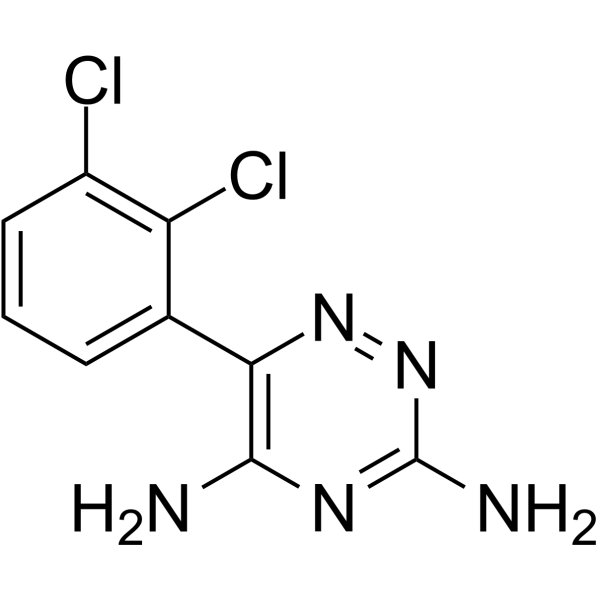
  • HY-B0495
    Lamotrigine
    5+ Cited Publications

    LTG; BW430C

    Sodium Channel Autophagy Neurological Disease Cancer
    Lamotrigine (BW430C) is a potent and orally active anticonvulsant or antiepileptic agent. Lamotrigine selectively blocks voltage-gated Na + channels, stabilizing presynaptic neuronal membranes and inhibiting glutamate release. Lamotrigine can be used for the research of epilepsy, focal seizure, et al .
    Lamotrigine
  • HY-156601

    LP352

    5-HT Receptor Neurological Disease
    Bexicaserin (LP352) is a 5-HT2C receptor agonist with potential for studying obesity and psychiatric-related disorders (such as epilepsy) .
    Bexicaserin
  • HY-109123

    TAK-935; OV935

    Cytochrome P450 Neurological Disease
    Soticlestat (TAK-935; OV935) is a first-in-class, potent, selective, and orally active cholesterol 24-hydroxylase (CH24H) inhibitor. Soticlestat has the potential for epilepsy syndromes research .
    Soticlestat
  • HY-112723

    ACT-709478

    Calcium Channel Neurological Disease
    Apinocaltamide (ACT-709478) is a potent, selective, orally active, and brain penetrating T-type calcium channel blocker. ACT-709478 is used in the research of generalized epilepsies .
    Apinocaltamide
  • HY-B1487

    Tricyclamol hydrochloride; (±)-Procyclidine hydrochloride

    iGluR mAChR Neurological Disease
    Procyclidine (Tricyclamol, (±)-Procyclidine) hydrochloride , an anticholinergic agent, is a muscarinic receptor antagonist that also has the properties of an N-methyl-D-aspartate (NMDA) antagonist. Procyclidine hydrochloride can be used in studies of Parkinson's disease and related psychiatric disorders such as Soman-induced epilepsy .
    Procyclidine hydrochloride
  • HY-120546
    Ulixacaltamide
    1 Publications Verification

    Z944; PRAX-944

    Calcium Channel Neurological Disease Inflammation/Immunology
    Ulixacaltamide (Z944) is an orally available T-type calcium channel antagonist that can slow the progression of epilepsy. Ulixacaltamide effectively reduces tremor in a normal alkaline tremor animal model. Ulixacaltamide reverses thermal hyperalgesia and mediates pain relief .
    Ulixacaltamide
  • HY-111751
    JNJ-61432059
    1 Publications Verification

    iGluR Neurological Disease
    JNJ-61432059 is a blood-brain barrier-permeable, orally active TARP γ-8-associated AMPAR modulator with anticonvulsant activity. JNJ-61432059 negatively regulates GluA1 and positively modulates GluA2-containing AMPARs. JNJ-61432059 exerts potent protective effects in rodent epilepsy models. JNJ-61432059 is applicable for epilepsy-related research .
    JNJ-61432059
  • HY-10035
    TTA-P2
    2 Publications Verification

    T-Type calcium channel inhibitor

    Calcium Channel Neurological Disease
    TTA-P2 (T-Type calcium channel inhibitor) is a selective, orally active, and BBB-penetrant T-type calcium channel blocker (IC50 = 22 nM). TTA-P2 reduces mechanical hypersensitivity and alleviates acute as well as chronic pain. TTA-P2 significantly reduces firing rates in temporal lobe epilepsy (TLE) neurons to control levels and suppresses synaptically evoked burst firing. TTA-P2 can be studied in research for neurological diseases such as tremor and absence epilepsy < sup>[4] .
    TTA-P2
  • HY-B0989

    4-Sulfamoylbenzoic acid

    Drug Metabolite Carbonic Anhydrase Neurological Disease Cancer
    Carzenide (4-Sulfamoylbenzoic acid) is the major circulating metabolite of Mafenide (HY-B0614) in plasma. Carzenide is a strong CAII competitive inhibitor. Carzenide can be used in the research of epilepsy and cervical cancer .
    Carzenide
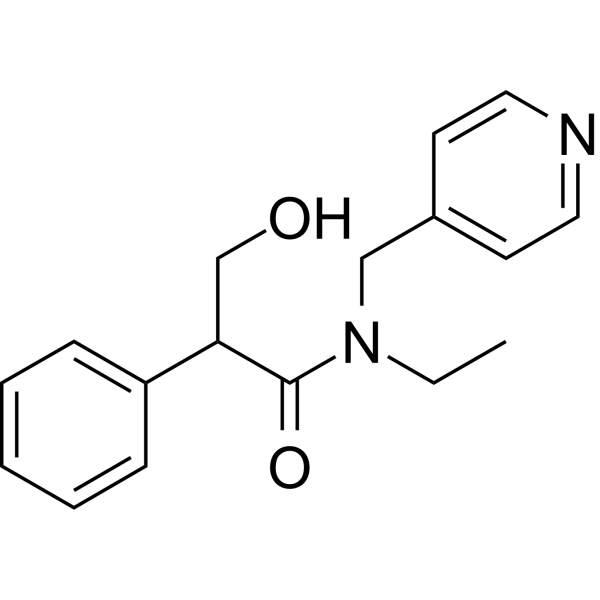
  • HY-B0321
    Tropicamide
    5 Publications Verification

    Ro 1-7683

    mAChR Neurological Disease
    Tropicamide (Ro 1-7683) is a selective M4 muscarinic acetylcholine receptor antagonist. When used as an eye drop, Tropicamide causes short-term mydriasis (pupil dilation) and cycloplegia. Tropicamide can be used in the research of neurological diseases, such as epilepsy .
    Tropicamide
  • HY-172318

    NKCC Neurological Disease
    IAMA-6 is a selective NKCC1 inhibitor with neuroprotective effects. IAMA-6 can be used for the study of brain conditions, including drug-resistant epilepsy (e.g. temporal lobe epilepsy (TLE) and Dravet syndrome (DrS)), autism spectrum disorders (ASD) and Down syndrome (DoS) .
    IAMA-6
  • HY-113468

    3-Methoxytyrosine

    Endogenous Metabolite Neurological Disease
    3-O-Methyl-DL-DOPA is an endogenous metabolite present in Cerebrospinal_Fluid that can be used for the research of Epilepsy, Purine Nucleoside Phosphorylase Deficiency and Aromatic L Amino Acid Decarboxylase Deficiency .
    3-O-Methyl-DL-DOPA
  • HY-132189

    P-glycoprotein Neurological Disease
    Laniquidar is a non-competitive P-gp inhibitor with an IC50 of 0.51 μM. Laniquidar binds to the P-gp transporter with high affinity and exhibits low activity as a substrate. Laniquidar is applicable to epilepsy-related research .
    Laniquidar
  • HY-103505

    GABA Receptor Neurological Disease
    CL 218872 is an orally active and selective ligand for the benzodiazepine receptor subtype BZ1. CL 218872 exhibits anxiolytic, sedative and anticonvulsant activities. CL 218872 can be used in researches of anxiety related disorders and epilepsy .
    CL 218872
  • HY-110192
    ML 297
    1 Publications Verification

    VU 0456810; CID 56642816

    Potassium Channel Neurological Disease
    ML 297 (VU 0456810) is a potent and selective GIRK1/2 activator, with an EC50 of 0.16 μM. ML 297 can cross the blood-brain barrier with brain-to-plasma ratio of 0.2 in mice model (i.p.). ML 297 is potential for the treatment of epilepsy .
    ML 297
  • HY-B1642
    Ethotoin
    2 Publications Verification

    Peganone

    Sodium Channel Neurological Disease
    Ethotoin (Peganone) is an orally active anticonvulsant agent used in epilepsy research, Ethotoin is a hydantoin, similar to phenytoin .
    Ethotoin
  • HY-159819

    Sodium Channel Neurological Disease
    Vormatrigine is an orally active sodium channel inhibitor with anti-epileptic activity. Vormatrigine can be used to study human focal and generalized epilepsy .
    Vormatrigine
  • HY-137840

    Carboxypeptidase Cancer
    Hippuryl-L-phenylalanine is a substrate of carboxypeptidase. Carboxypeptidase is a protease enzyme that related with obesity, epilepsy and neurodegeneration. Hippuryl-L-phenylalanine can be used for the determination of carboxypeptidase activity .
    Hippuryl-L-phenylalanine
  • HY-B1427

    Gamma-amino-beta-hydroxybutyric acid

    Drug Derivative Neurological Disease
    Gamibetal (Gamma-amino-beta-hydroxybutyric acid) is γ-amino-β-hydroxybutyric acid (GABOB), a hydroxylated derivative of GABA (γ-aminobutyric acid). Gamibetal exhibits central inhibitory and anticonvulsant activities. Gamibetal can be used in research on epilepsy, neuralgia, and other conditions .
    Gamibetal
  • HY-107482

    Nicotinoyl-GABA; Nicotinoyl-γ-aminobutyric acid

    GABA Receptor Neurological Disease
    Picamilon is an orally active derivative of γ-aminobutyric acid that has nootropic effect. Picamilon improves the epilepsy model in rats and promotes correction of functional disorders of the pancreas during Alloxan (HY-W017227)-induced diabetes mellitus in rats .
    Picamilon
  • HY-123193

    Pro-diazepam

    Drug Intermediate Neurological Disease
    Avizafone (Pro-diazepam), a pro-drug of Diazepam, is an anticonvulsant agent. Avizafone can be used as an antidote of nerve agent poisoning. In vivo, Avizafone is rapidly hydrolyzed by aminopeptidase to produce lysine and diazepam. Avizafone has research areas including neurological disease, such as epilepsy .
    Avizafone
  • HY-119810
    Seletracetam
    1 Publications Verification

    Ucb 44212

    Synaptic Vesicle Proteins Neurological Disease
    Seletracetam (Ucb 44212), as an analog of the antiepileptic agent Levetiracetam, is a SV2A modulator for the research of epilepsy .
    Seletracetam
  • HY-14948
    Carisbamate
    1 Publications Verification

    RWJ-333369

    Sodium Channel Neurological Disease
    Carisbamate (RWJ-333369) is an orally active neuromodulator. Carisbamate prevents the development and production of epilep-like discharges and has a neuroprotective effect after in vitro epilepticus-like injury. Carisbamate has good antiepileptic activity in genetic models of generalized and nonconvulsive epilepsy .
    Carisbamate
  • HY-175668

    Potassium Channel Neurological Disease
    IDOR-1104-0086 is an orally active Kv7 potassium channel opener with an EC50 of 210 nM that can cross blood-brain barrier. IDOR-1104-0086 displays strong selectivity against the hERG channel with an IC20 of 25 μM. IDOR-1104-0086 exhibits efficacy in two rodent models of epilepsy and a favorable tolerability profile. IDOR-1104-0086 can used for the study of epilepsy .
    IDOR-1104-0086
  • HY-20362

    Biochemical Assay Reagents Drug Intermediate Neurological Disease Cancer
    4-Azaindole is a scaffold. 4-Azaindole can be used in the synthesis of Nav1.2 inhibitors. 4-Azaindole can be used in epilepsy and breast cancer research .
    4-Azaindole
  • HY-N9502

    Endogenous Metabolite Neurological Disease
    Linalool oxide is a monoterpene and found in aromatic plant essential oils and is a secondary metabolite in elongating wheat plants. Linalool oxide has antinociceptive, anticonvulsant, and anxiolytic activity. Linalool oxide can be used for the research of pain, epilepsy, anxiety disorders .
    Linalool oxide
  • HY-P2912

    Glutamate Dehydrogenase (GLDH) Biochemical Assay Reagents Neurological Disease
    Glutamate dehydrogenase (NADP) is the catalytic enzyme for glutamate production. Dysfunction of Glutamate dehydrogenase (NADP) may induce various neurodegenerative diseases, such as Parkinson's disease, epilepsy, Alzheimer's disease, schizophrenia, and frontotemporal dementia. Glutamate dehydrogenase (NADP) can be used in research on neurological diseases such as Parkinson's disease, epilepsy, and Alzheimer's disease .
    Glutamate dehydrogenase (NADP)
  • HY-14836

    JZP 4

    Calcium Channel Sodium Channel Neurological Disease
    Elpetrigine (JZP 4) is a potent calcium and sodium channel blocker. Elpetrigine has anticonvulsant, antidepressant, antimania and anxiolytic effects. Elpetrigine can be used in the research of epilepsy and bipolar disorder .
    Elpetrigine
  • HY-W048995

    Endogenous Metabolite Neurological Disease
    D-6-Oxo-pipecolinic acid is the D-enantiomer of 6-Oxo-pipecolinic acid. 6-Oxo-pipecolinic acid is the biomarkers associated with pyridoxine-dependent epilepsy (PDE-ALDH7A1) .
    D-6-Oxo-pipecolinic acid
  • HY-40269

    Biochemical Assay Reagents Drug Intermediate Neurological Disease
    L-Pyroglutamic acid ethyl ester (Compound 2c) is an intermediate. L-Pyroglutamic acid ethyl ester is involved in the synthesis of γ-aminobutyrate transaminase inactivators. L-Pyroglutamic acid ethyl ester can be used in epilepsy and Huntington's disease research .
    L-Pyroglutamic acid ethyl ester
  • HY-W012481

    Ethylphenylhydantoin; Phenylethyihydantoin; Desmethylmephenytoin

    Drug Metabolite Neurological Disease
    Nirvanol (Ethylphenylhydantoin) is a metabolite of Mephenytoin (HY-B1184) that exerts anticonvulsant effects in the maximal electroshock (M.E.S.) seizure model in mice. Nirvanol shows potential for research in epilepsy-related neurological disorders .
    Nirvanol
  • HY-162549

    Potassium Channel Neurological Disease
    CPK20 is a potent and highly selective KCNT1 channel blocker, and CPK20 can be used in the study of epilepsy .
    CPK20
  • HY-109156

    GABA Receptor Metabolic Disease
    Pregabalin arenacarbil is a proagent of Pregabalin.Pregabalin is an analog of gamma-aminobutyric acid (GABA) for the research of post herpetic neuralgia, peripheral diabetic neuropathy,fibromyalgia and epilepsy .
    Pregabalin arenacarbil
  • HY-103232

    mGluR Neurological Disease
    IEM-1925 bromide is an orally active glutamate receptor antagonist, increases the latent period and decreases the duration of status epilepticus in rats in a lithium-pilocarpine model of epilepsy .
    IEM-1925 bromide
  • HY-A0057S

    Calcium Channel Neurological Disease
    Gabapentin-d4 is the deuterium labeled Gabapentin. Gabapentin (Neurontin) is a pharmaceutical agent, specifically a GABA analog. It was originally developed to treat epilepsy, and currently is also used to relieve neuropathic pain.
    Gabapentin-d4
  • HY-105860

    BGG 492

    iGluR Neurological Disease
    Selurampanel (BGG 492) is an orally active and competitive AMPA receptor antagonist with an IC50 of 190 nM. Selurampanel has reasonable blood-brain barrier penetration. Selurampanel can be used for epilepsy research .
    Selurampanel
  • HY-W103317

    Indoxazene

    Drug Intermediate Neurological Disease
    1,2-Benzisoxazole (Indoxazene) is a potential substrate of rabbit liver aldehyde oxidase. 1,2-Benzisoxazole was used in the discovery and development of zonisamide (HY-B0124) for the study of epilepsy and Parkinson's disease .
    1,2-Benzisoxazole
  • HY-107482A

    Nicotinoyl-GABA sodium; Nicotinoyl-γ-aminobutyric acid sodium; Sodium 4-(nicotinamido)butanoate

    GABA Receptor Neurological Disease
    Picamilon sodium is an orally active derivative of γ-aminobutyric acid that has nootropic effect. Picamilon sodium improves the epilepsy model in rats and promotes correction of functional disorders of the pancreas during Alloxan (HY-W017227)-induced diabetes mellitus in rats .
    Picamilon sodium
  • HY-106822

    AO-33; (±)-Losigamone; LSG

    Sodium Channel Chloride Channel Neurological Disease
    Losigamone (AO-33) is an orally active antiepileptic compound. Losigamone blocks sodium channel. Losigamone stimulates the neuronal chloride channel and enhance chloride influx. Losigamone potentiates GABA-mediated responses and reduces epileptiform activity induced by chloride channel antagonists. Losigamone can be used for epilepsy research .
    Losigamone
  • HY-130155

    AMPK Neurological Disease
    AMPK activator C2 is a potent allosteric AMPK activator that is promising for research of epilepsy and convulsions .
    AMPK activator C2
  • HY-150541

    Calcium Channel Neurological Disease
    IAA65 is a potent T-type calcium channel inhibitor with a IC50 value of 18.9 µM. IAA65 can be used for epilepsy research .
    IAA65
  • HY-180468

    Potassium Channel Neurological Disease
    Kv7 activator-2 (A14a) is a Kv7 potassium channel activator. Kv7 activator-2 can be used for the research of neurological disease, such as epilepsy .
    Kv7 activator-2
  • HY-123272

    5-HT Receptor Neurological Disease
    E6801 is a 5-HT6 receptor agonist that improves recognition memory by jointly modulating cholinergic and glutamatergic neurotransmission. E6801 can be used in studies of dementia, depression, obesity, epilepsy, etc .
    E6801
  • HY-160083

    Potassium Channel Neurological Disease
    KCC2 Modulator-3 (Example 54) is a KCC2 modulator with an EC50 of 0.253  μM. KCC2 Modulator-3 can be used for neurological disorders research, such as epilepsy, neuropathic pain and Rett's syndrme .
    KCC2 Modulator-3
  • HY-B1487A

    Tricyclamol; (±)-Procyclidine

    mAChR iGluR Neurological Disease
    Procyclidine (Tricyclamol; (±)-Procyclidine), an anticholinergic agent, is a muscarinic receptor antagonist that also has the properties of an N-methyl-D-aspartate (NMDA) antagonist. Procyclidine can be used in studies of Parkinson's disease and related psychiatric disorders such as Soman-induced epilepsy .
    Procyclidine
  • HY-111038

    Coniferyl (E)-8-methyl-6-nonenoate

    TRP Channel Neurological Disease Inflammation/Immunology
    Capsiconiate (Coniferyl (E)-8-methyl-6-nonenoate) is a TRPV1 agonist (EC50= 3.2 μM). Capsiconiate can be used to study TRPV1-mediated diseases such as pain, inflammation, and epilepsy(EC50= 3.2 μM) .
    Capsiconiate
  • HY-172604

    TNF Receptor Reactive Oxygen Species (ROS) Neurological Disease Inflammation/Immunology
    Neuroprotective agent 10 (Compound 11c) is a brain-penetrant neuroprotective agent. Neuroprotective agent 10 scavenges ABTS radicals (scavenging IC50: 9.20 μM), DPPH radicals (scavenging IC50: 7.09 μM) and superoxide anion radicals (inhibition percentage: 48.4%). Neuroprotective agent 10 also alleviates H2O2-induced oxidative damage and LPS-induced neuroinflammation with antiepileptic activity. Neuroprotective agent 10 is promising for research of epilepsy and neuroprotection .
    Neuroprotective agent 10
  • HY-149422

    Fluorescent Dye Neurological Disease
    NIR-FP is a near-infrared fluorescent probe with high sensitivity and selectivity for superoxide anion O 2-. O 2- is the main precursor of ROS, and ferroptosis-mediated epilepsy models can be dynamically tracked by detecting O 2-. Ferroptosis-mediated epilepsy models include: kainic acid (HY-N2309)-induced chronic epilepsy model, Pentylenetetrazole-induced acute epilepsy model, and pilocarpine (HY-B0726A)-induced epilepsy model .
    NIR-FP
  • HY-106670

    F1933

    GABA Receptor Neurological Disease
    Dulozafone (F1933) shows anticonvulsant activity and can be used for epilepsy research .
    Dulozafone
  • HY-W264038

    p-Fluorohippuric acid; YM-385461

    Biochemical Assay Reagents Neurological Disease
    4-Fluorohippuric acid is a major metabolite of flupirtine with research potential against pain and epilepsy .
    4-Fluorohippuric acid

Inquiry Online

Your information is safe with us. * Required Fields.

Salutation


Country or Region *

Applicant Name *


Organization Name *

Department *


Email Address *


Product Name *

Cat. No.


Requested quantity *

Phone Number *


Remarks

Inquiry Online

Inquiry Information

Product Name:
Cat. No.:
Quantity:
MCE Japan Authorized Agent:

