



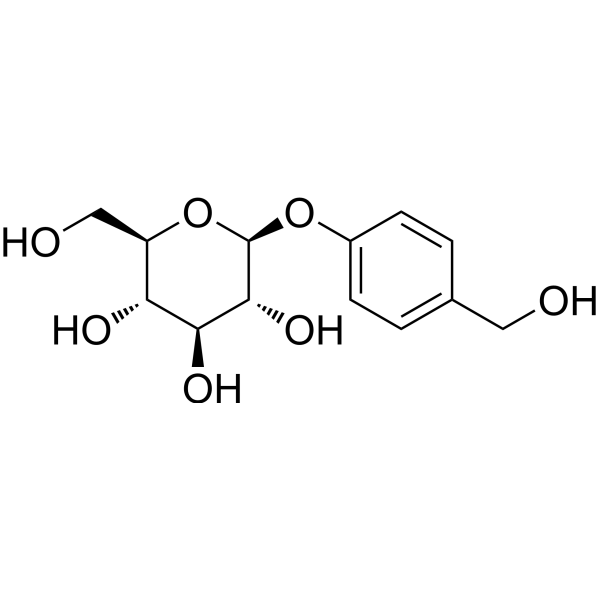
Gastrodin
Based on 20 publication(s) in Google Scholar
Gastrodin, a main constituent of a Chinese herbal medicine Tianma, has been known to display anti-inflammatory effects. Gastrodin inhibits ethanol-induced hepatocellular apoptosis. Gastrodin inhibits H2O2-induced ferroptosis through its antioxidative effect. Gastrodin can be used for study of dizziness, epilepsy, stroke and dementia.
For research use only. We do not sell to patients.
- Purity : 99.94%
- CAS No.: 62499-27-8
- Formula: C13H18O7
- Molecular Weight:286.28
-
Storage:Powder -20°C, 3 years , 4°C, 2 years ; In solvent -80°C, 2 years , -20°C, 1 year

To place orders, for customer services and technical support, please contact: MedChemExpress USA
Tel: 609-228-6898 E-mail: [email protected] [email protected]


-
 Biological Activity
-
Chemical Information
-
Solvent & Solubility
- Protocols
- Purity & Documentation
- References
-
 Help & FAQs


-
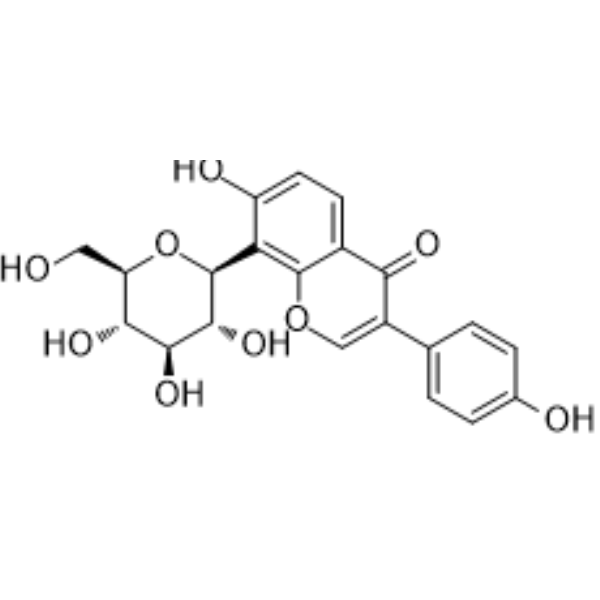
HY-N0145
Puerarin5-HT Receptor Antagonist -
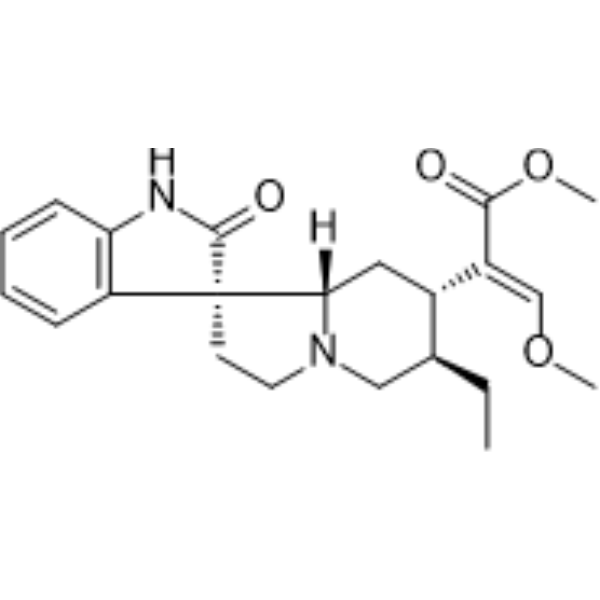
HY-N0387
RhynchophyllineNF-κB Inhibitor -
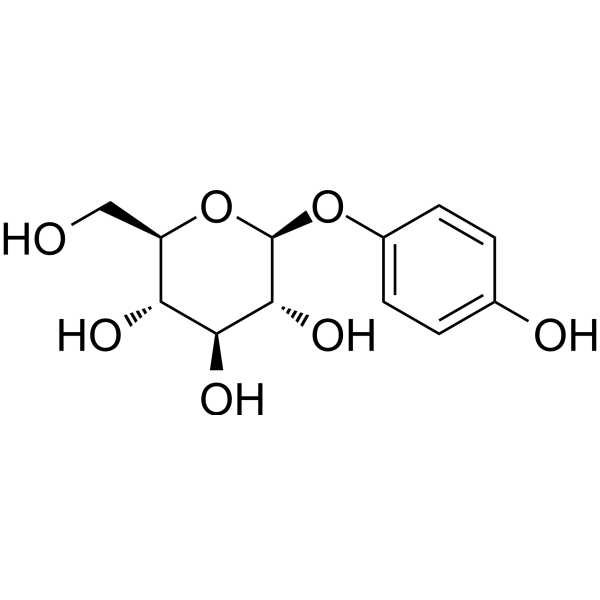
HY-N0192
ArbutinEndogenous Metabolite -
HY-13259
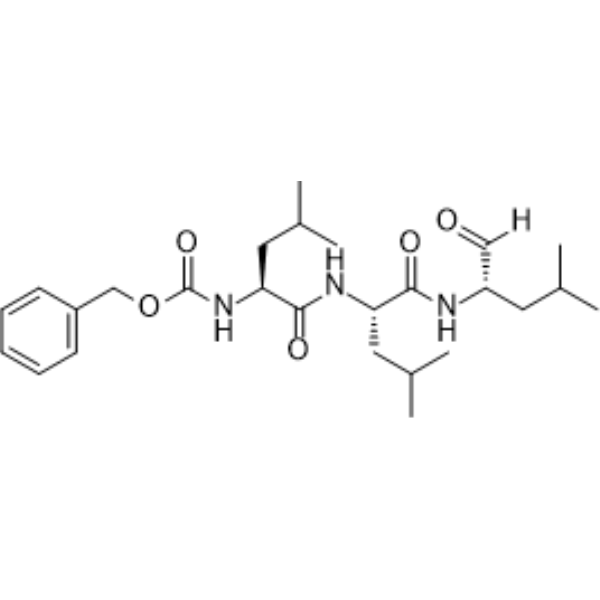
MG-132Proteasome Inhibitor -
HY-N0109
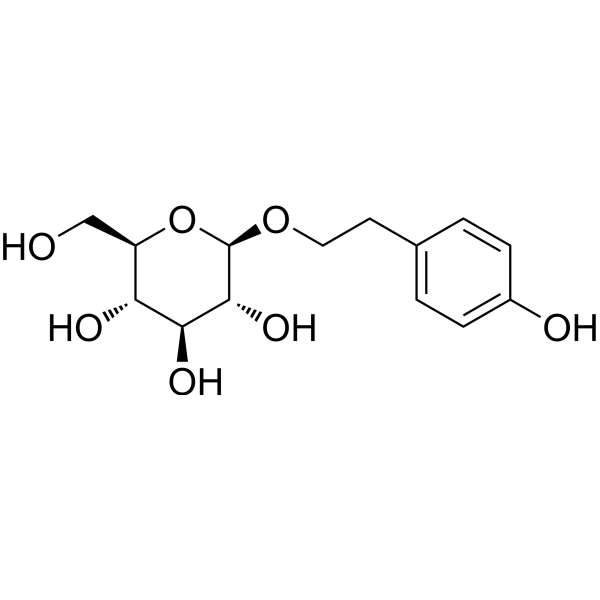
SalidrosideProlyl Endopeptidase Inhibitor -
HY-N0149
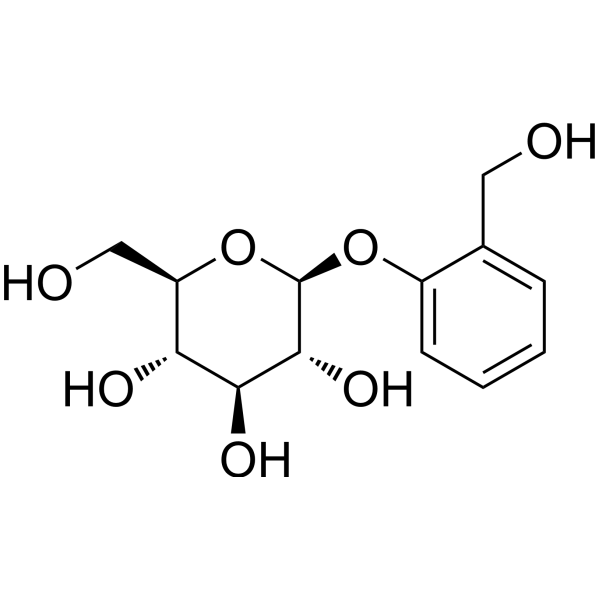
SalicinAlcoholic β-glucoside -
HY-B1625
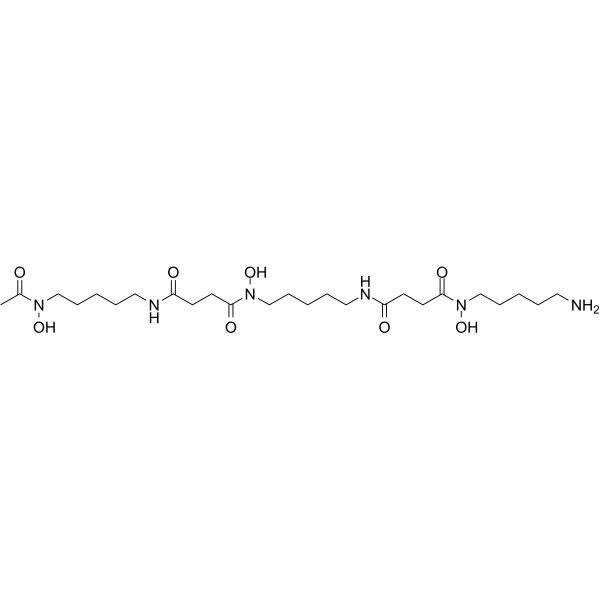
DeferoxamineIron Chelator -
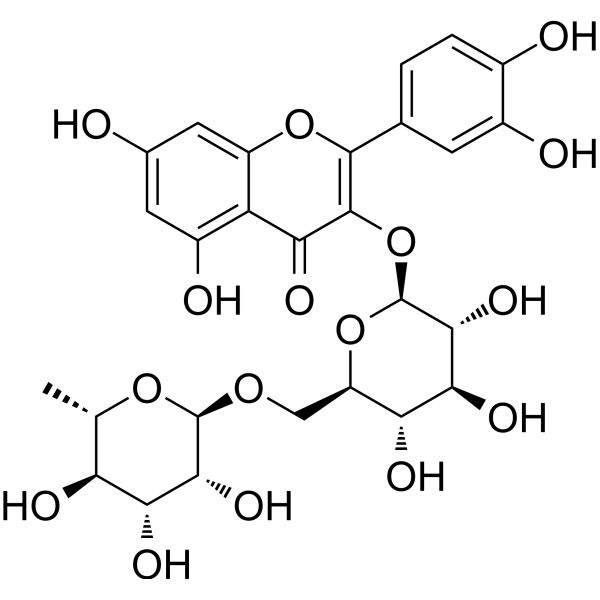
HY-N0148
RutinCBR1 Inhibitor -
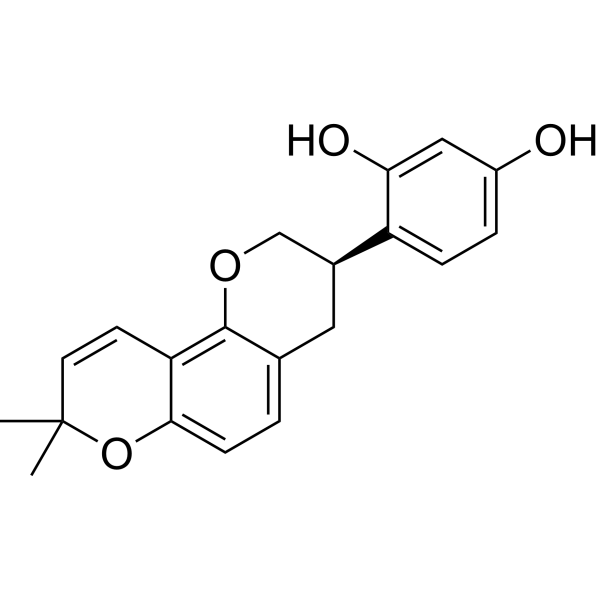
HY-N0393
GlabridinPPARγ Activator -
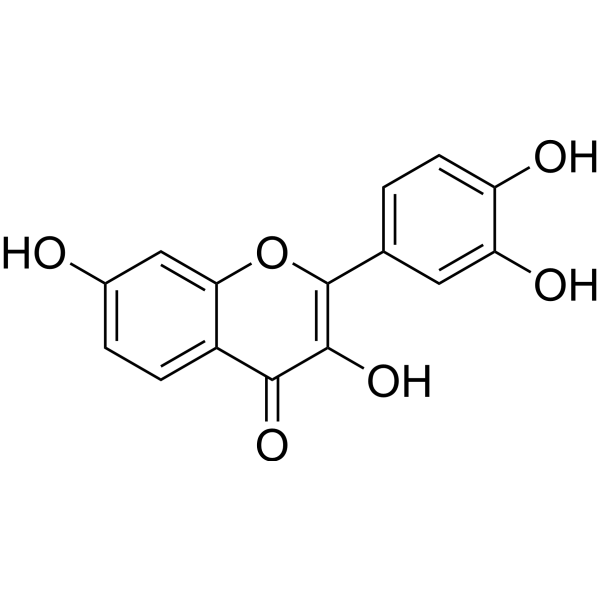
HY-N0182
FisetinTNF Receptor Inhibitor -
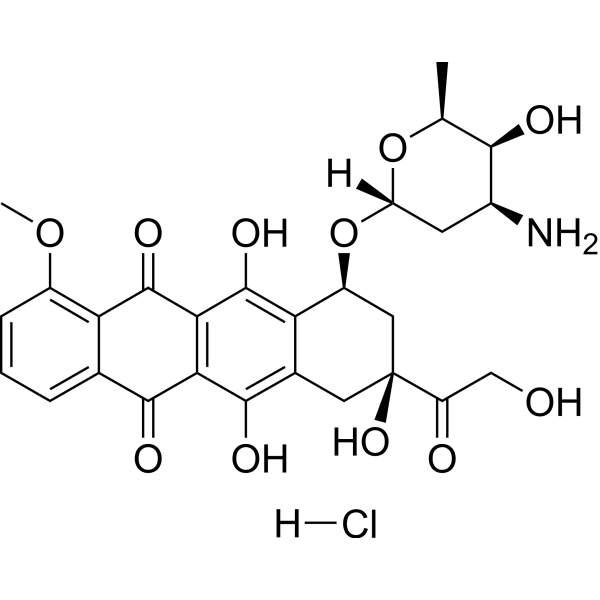
HY-15142
Doxorubicin hydrochlorideTopoisomerase Inhibitor -
HY-N0751
ScutellarinSTAT Inhibitor
Publications Citing Use of MedChemExpress (MCE) Gastrodin
More- Nat Commun. 2025 Jan 8;16(1):496. [Abstract]
- J Adv Res. 2025 Aug:74:429-442. [Abstract]
- Acta Pharm Sin B. 2023 Oct;13(10):4318-4336. [Abstract]
- Phytomedicine. 2026 Jan:150:157705. [Abstract]
- Acta Pharmacol Sin. 2025 Jun;46(6):1610-1623. [Abstract]
- Phytother Res. 2025 May;39(5):1996-2016. [Abstract]
- Foods. 2024 Aug 3;13(15):2460. [Abstract]
- Eur J Pharmacol. 2021 Feb 5:892:173734. [Abstract]
- Molecules. 2023 Dec 13;28(24):8062. [Abstract]
- Sci Rep. 2025 May 27;15(1):18470. [Abstract]
- Toxicol Appl Pharmacol. 2026 Jun 24:514:117922. [Abstract]
- Biochem Biophys Rep. 2025 Apr 18:42:102014. [Abstract]
- Brain Res. 2026 Aug 27:1891:150516.
- Brain Res. 2024 Jan 1:1822:148607. [Abstract]
- Tissue Cell. 2025 Aug:95:102793. [Abstract]
- Immunopharmacol Immunotoxicol. 2022 Dec;44(6):925-934. [Abstract]
- J Mol Histol. 2024 Dec;55(6):1327-1339. [Abstract]
- Exp Ther Med. 2021 May;21(5):471. [Abstract]
- Otol Neurotol. 2024 Oct 1;45(9):1059-1067. [Abstract]
- Urol Int. 2022;106(6):630-637. [Abstract]
 Customer Validation & Images

-
Microbiological Assay
-
RT-PCR
-
WB
-
In Vivo Efficacy Study
-
Cell Imaging/Staining


Biological Activity
Description
In Vitro
Gastrodin treatment reduces the mRNA expression levels of TNF-α and iNOS in the retinas of acute ocular hypertension[1].
MedChemExpress (MCE) has not independently confirmed the accuracy of these methods. They are for reference only.
In Vivo
MedChemExpress (MCE) has not independently confirmed the accuracy of these methods. They are for reference only.
Clinical Trial
| NCT Number | Sponsor | Condition | Start Date |
Phase

|
|---|---|---|---|---|
| NCT01329991 | 2011-05 | PHASE1 |


Chemical Information
-
CAS No. 62499-27-8
-
Appearance Solid
-
Molecular Weight 286.28
-
Formula C13H18O7
-
Color White to off-white
-
SMILES
O[C@H]([C@H]([C@@H]([C@@H](CO)O1)O)O)[C@@H]1OC2=CC=C(CO)C=C2
-
Synonyms
Gastrodine
-
Initial Source
-
Shipping
Room temperature in continental US; may vary elsewhere.
-
Storage
Powder -20°C 3 years 4°C 2 years In solvent -80°C 2 years -20°C 1 year


Publications (20)
-
Journal Impact Factor
-
Most Recent
-
Nat Commun
Phenazine biosynthesis-like domain-containing protein (PBLD) and Cedrelone promote antiviral immune response by activating NF-ĸB. [Abstract]2025 Jan 8;16(1):496. PMID: 39779683
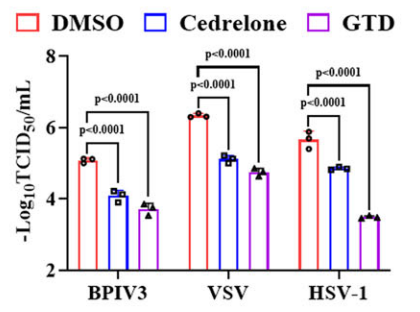
Gastrodin purchased from MedChemExpress. Usage Cited in: Nat Commun. 2025 Jan 8;16(1):496. [Abstract]
Virus titer detection of BPIV3, VSV, and HSV-1 determined by TCID50 after challenge with DMSO (vehicle control) and Cedrelone (1 μM), and Gastrodin (GTD, 50 μM) serves as a positive control.
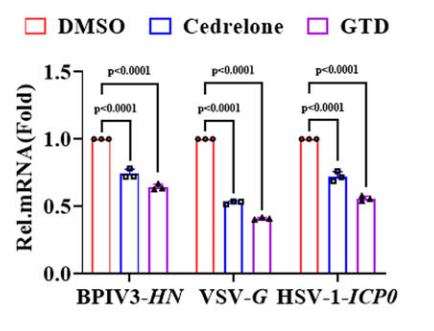
Gastrodin purchased from MedChemExpress. Usage Cited in: Nat Commun. 2025 Jan 8;16(1):496. [Abstract]
Real-time PCR analysis of the viral gene expression in BPIV3 infected MDBK cells and VSV or HSV-1 infected HeLa cells after challenge with DMSO, Cedrelone (1 μM) and Gastrodin (50 μM).
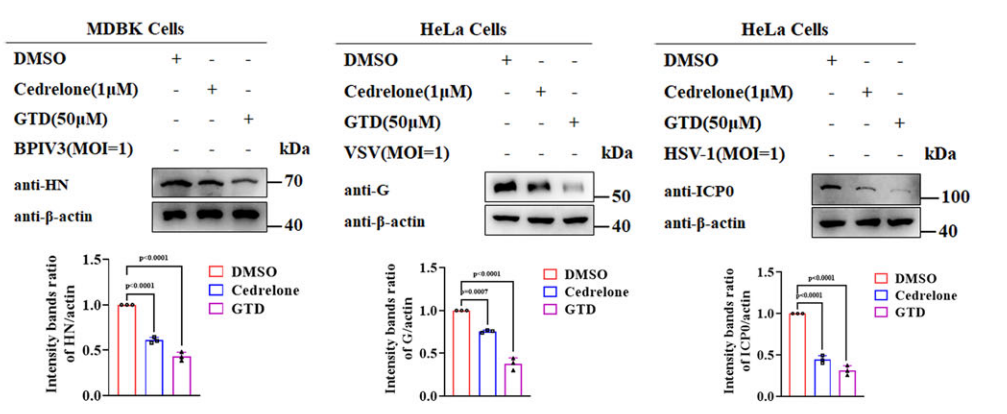
Gastrodin purchased from MedChemExpress. Usage Cited in: Nat Commun. 2025 Jan 8;16(1):496. [Abstract]
Western blotting analysis of the viral protein expression in BPIV3 infected MDBK cells and VSV or HSV-1 infected HeLa cells after challenge with DMSO, Cedrelone (1 μM) and Gastrodin (50 μM).
-
J Adv Res
Gastrodin attenuates high fructose-induced sweet taste preference decrease by inhibiting hippocampal neural stem cell ferroptosis. [Abstract]2025 Aug:74:429-442. PMID: 39353531
Gastrodin purchased from MedChemExpress. Usage Cited in: J Adv Res. 2025 Aug:74:429-442. [Abstract]
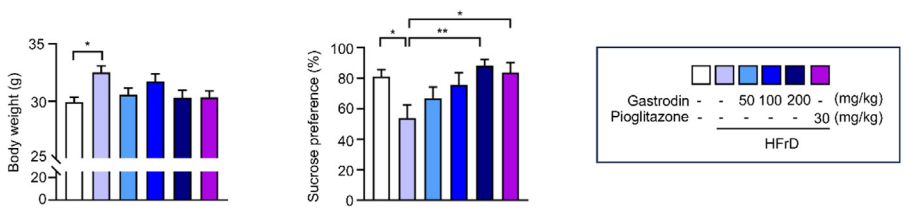
Gastrodin mitigates high fructose-induced sweet taste preference decline and hippocampal NSC reduction in mice. Mice were divided into groups receiving either a standard diet or a diet containing 60 % fructose for 12 weeks. Within the fructose groups, five subgroups were formed: Gastrodin treatment (50, 100, and 200 mg/kg) and Pioglitazone treatment (30 mg/kg) for 8 weeks, 60 % fructose diet without additional treatment. Body weight of mice was shown in the final week (age: 18-week-old) after fructose feeding and/or gastrodin treatment.SPT was performed to detect sweet taste preference in mice.
Gastrodin purchased from MedChemExpress. Usage Cited in: J Adv Res. 2025 Aug:74:429-442. [Abstract]
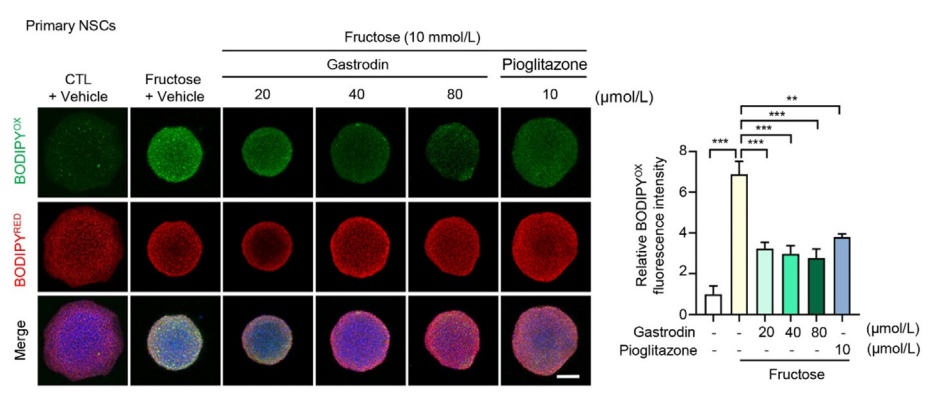
Representative confocal image labeled with BODIPY was shown in primary NSCs treated with or without Gastrodin (20, 40, and 80 μmol/L) and Pioglitazone (10 μmol/L). The relative BODIPYOX fluorescence intensity was shown on the right.

Gastrodin purchased from MedChemExpress. Usage Cited in: J Adv Res. 2025 Aug:74:429-442. [Abstract]
Western blotting was used to detect ZIC2 and CISD1 protein levels in primary NSCs stimulated with or without Gastrodin (20, 40, and 80 μmol/L) and Pioglitazone (10 μmol/L), and densitometry analysis of bands was quantized as shown.
-
Acta Pharm Sin B
An injectable bioactive dressing based on platelet-rich plasma and nanoclay: Sustained release of deferoxamine to accelerate chronic wound healing. [Abstract]2023 Oct;13(10):4318-4336. PMID: 37799395 -
Phytomedicine
Unraveling the neuroprotective mechanism of gastrodin against CRS-induced depression in adult male mice via Notch3: Integration of proteomics, transcriptomics, molecular docking, and cellular validation. [Abstract]2026 Jan:150:157705. PMID: 41421276 -
Acta Pharmacol Sin
Gastrodin promotes CNS myelinogenesis and alleviates demyelinating injury by activating the PI3K/AKT/mTOR signaling. [Abstract]2025 Jun;46(6):1610-1623. PMID: 40011630 -
Phytother Res
Gastrodin Ameliorates Tau Pathology and BBB Dysfunction in 3xTg-AD Transgenic Mice by Regulating the ADRA1/NF-κB/NLRP3 Pathway to Reduce Neuroinflammation. [Abstract]2025 May;39(5):1996-2016. PMID: 39963073 -
Foods
Gastrodin Alleviates DSS-Induced Colitis in Mice through Strengthening Intestinal Barrier and Modulating Gut Microbiota. [Abstract]2024 Aug 3;13(15):2460. PMID: 39123651 -
Eur J Pharmacol
Gastrodin alleviates perioperative neurocognitive dysfunction of aged mice by suppressing neuroinflammation. [Abstract]2021 Feb 5:892:173734. PMID: 33220272 -
Molecules
2023 Dec 13;28(24):8062. PMID: 38138552 -
Sci Rep
Gastrodia protects HT22 cells from damage caused by oxygen glucose deprivation and reperfusion through inhibiting ferroptosis. [Abstract]2025 May 27;15(1):18470. PMID: 40425648 -
Toxicol Appl Pharmacol
Gastrodin inhibits the dephosphorylation of EGFR by DUSP3 to suppress oxidative stress-induced ferroptosis in astrocytes and alleviate cerebral ischemia-reperfusion injury. [Abstract]2026 Jun 24:514:117922. PMID: 42341951 -
Biochem Biophys Rep
Gastrodin alleviates myocardial infarction by inhibiting inflammation, and apoptosis and promoting endothelial cell proliferation. [Abstract]2025 Apr 18:42:102014. PMID: 40290804 -
-
Brain Res
Gastrodin ameliorates postoperative cognitive dysfunction in aged mice by promoting nuclear translocation of Nrf2 through activation of AMPK. [Abstract]2024 Jan 1:1822:148607. PMID: 37806469 -
Tissue Cell
Gastrodin promotes ferroptosis in CRC cells by inhibiting SKP2 to reduce NCOA4 ubiquitination. [Abstract]2025 Aug:95:102793. PMID: 40048831 -
Immunopharmacol Immunotoxicol
Gastrodin ameliorates Concanavalin A-induced acute hepatitis via the IL6/JAK2/STAT3 pathway. [Abstract]2022 Dec;44(6):925-934. PMID: 35881007 -
J Mol Histol
2024 Dec;55(6):1327-1339. PMID: 39520653 -
Exp Ther Med
Protective effects of gastrodin pretreatment on mouse hepatic ischemia-reperfusion occurring through antioxidant and anti-apoptotic mechanisms. [Abstract]2021 May;21(5):471. PMID: 33767766 -
Otol Neurotol
Protective Effects of Gastrodin Against Gentamicin-Induced Vestibular Damage by the Notch Signaling Pathway. [Abstract]2024 Oct 1;45(9):1059-1067. PMID: 39264922 -
Urol Int
2022;106(6):630-637. PMID: 35051947


Solvent & Solubility
In Vitro:
DMSO : ≥ 100 mg/mL (349.31 mM; Hygroscopic DMSO has a significant impact on the solubility of product, please use newly opened DMSO)
H2O : 100 mg/mL (349.31 mM; Need ultrasonic)
* "≥" means soluble, but saturation unknown.
Please refer to the solubility information to select the appropriate solvent. Once prepared, please aliquot and store the solution to prevent product inactivation from repeated freeze-thaw cycles.
Storage method and period of stock solution: -80°C, 2 years; -20°C, 1 year. When stored at -80°C, please use it within 2 years. When stored at -20°C, please use it within 1 year.
* Note: If you choose water as the stock solution, please dilute it to the working solution, then filter and sterilize it with a 0.22 μm filter before use.
Please refer to the solubility information to select the appropriate solvent. Once prepared, please aliquot and store the solution to prevent product inactivation from repeated freeze-thaw cycles.
Storage method and period of stock solution: -80°C, 2 years; -20°C, 1 year. When stored at -80°C, please use it within 2 years. When stored at -20°C, please use it within 1 year.
* Note: If you choose water as the stock solution, please dilute it to the working solution, then filter and sterilize it with a 0.22 μm filter before use.
Concentration (start) × Volume (start) = Concentration (final) × Volume (final)
In Vivo:
Select the appropriate dissolution method based on your experimental animal and administration route.
- For the following dissolution methods, please ensure to first prepare a clear stock solution using an In Vitro approach and then sequentially add co-solvents:
- To ensure reliable experimental results, the clarified stock solution can be appropriately stored based on storage conditions. As for the working solution for In Vivo experiments, it is recommended to prepare freshly and use it on the same day.
- The percentages shown for the solvents indicate their volumetric ratio in the final prepared solution. If precipitation or phase separation occurs during preparation, heat and/or sonication can be used to aid dissolution.
Add each solvent one by one: 10% DMSO 40% PEG300 5% Tween-80 45% Saline
Solubility: ≥ 2.5 mg/mL (8.73 mM); Clear solution
This protocol yields a clear solution of ≥ 2.5 mg/mL (saturation unknown).
Taking 1 mL working solution as an example, add 100 μL DMSO stock solution (25.0 mg/mL) to 400 μL PEG300, and mix evenly; then add 50 μL Tween-80 and mix evenly; then add 450 μL Saline to adjust the volume to 1 mL.
Preparation of Saline: Dissolve 0.9 g sodium chloride in ddH₂O and dilute to 100 mL to obtain a clear Saline solution.
Add each solvent one by one: 10% DMSO 90% (20% SBE-β-CD in Saline)
Solubility: ≥ 2.5 mg/mL (8.73 mM); Clear solution
This protocol yields a clear solution of ≥ 2.5 mg/mL (saturation unknown).
Taking 1 mL working solution as an example, add 100 μL DMSO stock solution (25.0 mg/mL) to 900 μL 20% SBE-β-CD in Saline, and mix evenly.
Preparation of 20% SBE-β-CD in Saline (4°C, storage for one week): 2 g SBE-β-CD powder is dissolved in 10 mL Saline, completely dissolve until clear.
For the following dissolution methods, please prepare the working solution directly:
It is recommended to prepare fresh solutions and use them promptly within a short period of time.
The percentages shown for the solvents indicate their volumetric ratio in the final prepared solution. If precipitation or phase separation occurs during preparation, heat and/or sonication can be used to aid dissolution.
Add each solvent one by one: PBS
Solubility: 100 mg/mL (349.31 mM); Clear solution; Need ultrasonic
In Vivo Dissolution Calculator
Please enter the basic information of animal experiments:
-
-
-
-
Recommended: Prepare an additional quantity of animals to account for potential losses during experiments.
Working solution concentration: 0.22 mg/mL
This product has good water solubility, please refer to the measured solubility data in water/PBS/Saline for details.


Purity & Documentation
-
Data Sheet (285 KB)
-
SDS (393 KB)
- English - EN (393 KB)
- Français - FR (393 KB)
- Deutsch - DE (393 KB)
- Norwegian - NO (393 KB)
- Español - ES (393 KB)
- Swedish - SV (393 KB)
- Italian - IT (393 KB)
- Korean - KR (393 KB)
- Portuguese - PT (393 KB)
-
Handling Instructions (2659 KB)
References
[1]. Wang JW, et al. Gastrodin protects retinal ganglion cells through inhibiting microglial-mediated neuroinflammation in an acute ocular hypertension model. Int J Ophthalmol. 2017 Oct 18;10(10):1483-1489. [Content Brief]
[2]. Jiang T, Chu J, Chen H, et al. Gastrodin Inhibits H2O2-Induced Ferroptosis through Its Antioxidative Effect in Rat Glioma Cell Line C6. Biol Pharm Bull. 2020;43(3):480-487. [Content Brief]
[3]. Zhang Y, et al. Gastrodin Protects against Ethanol-Induced Liver Injury and Apoptosis in HepG2 Cells and Animal Models of Alcoholic Liver Disease. Biol Pharm Bull. 2018;41(5):670-679. [Content Brief]


Complete Stock Solution Preparation Table
Please refer to the solubility information to select the appropriate solvent. Once prepared, please aliquot and store the solution to prevent product inactivation from repeated freeze-thaw cycles.
Storage method and period of stock solution: -80°C, 2 years; -20°C, 1 year. When stored at -80°C, please use it within 2 years. When stored at -20°C, please use it within 1 year.
| Optional Solvent | Concentration Solvent Mass | 1 mg | 5 mg | 10 mg | 25 mg |
|---|---|---|---|---|---|
| DMSO / H2O | 1 mM | 3.4931 mL | 17.4654 mL | 34.9308 mL | 87.3271 mL |
| 5 mM | 0.6986 mL | 3.4931 mL | 6.9862 mL | 17.4654 mL | |
| 10 mM | 0.3493 mL | 1.7465 mL | 3.4931 mL | 8.7327 mL | |
| 15 mM | 0.2329 mL | 1.1644 mL | 2.3287 mL | 5.8218 mL | |
| 20 mM | 0.1747 mL | 0.8733 mL | 1.7465 mL | 4.3664 mL | |
| 25 mM | 0.1397 mL | 0.6986 mL | 1.3972 mL | 3.4931 mL | |
| 30 mM | 0.1164 mL | 0.5822 mL | 1.1644 mL | 2.9109 mL | |
| 40 mM | 0.0873 mL | 0.4366 mL | 0.8733 mL | 2.1832 mL | |
| 50 mM | 0.0699 mL | 0.3493 mL | 0.6986 mL | 1.7465 mL | |
| 60 mM | 0.0582 mL | 0.2911 mL | 0.5822 mL | 1.4555 mL | |
| 80 mM | 0.0437 mL | 0.2183 mL | 0.4366 mL | 1.0916 mL | |
| 100 mM | 0.0349 mL | 0.1747 mL | 0.3493 mL | 0.8733 mL |
* Note: If you choose water as the stock solution, please dilute it to the working solution, then filter and sterilize it with a 0.22 μm filter before use.


Gastrodin Related Classifications
HY-N0115 Related Classifications
 Powered by Bioz