1. Search Result
Search Result
Results for "

antiepileptic effect

" in MedChemExpress (MCE) Product Catalog:

23

Inhibitors & Agonists

1

Fluorescent Dyes

1

Biochemical Assay Reagents

2

Natural
Products

3

Isotope-Labeled Compounds

1

GMP Molecules

Cat. No. Product Name Target Research Areas Chemical Structure
  • HY-10583
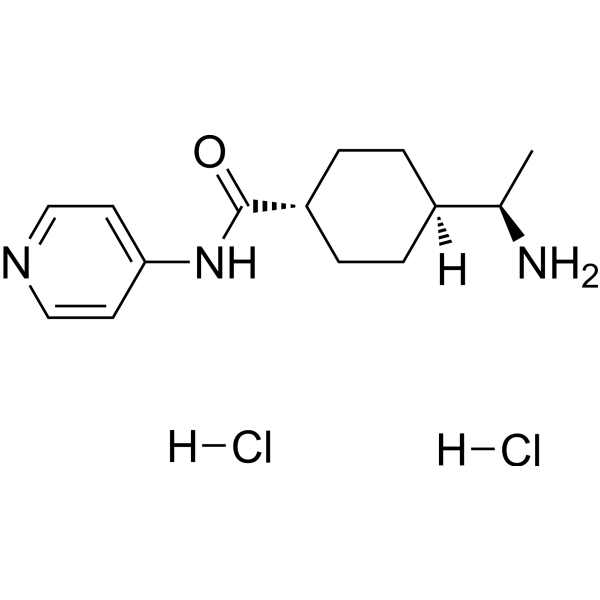
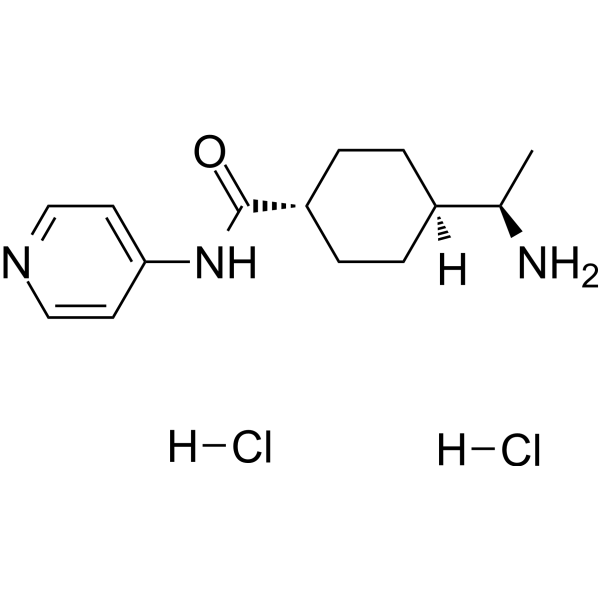
    Y-27632 dihydrochloride
    Maximum Cited Publications
    532 Publications Verification

    Organoid ROCK Neurological Disease Cancer
    Y-27632 dihydrochloride is an orally active and ATP-competitive ROCK (Rho-kinase) inhibitor (ROCK-I Ki=220 nM; ROCK-II Ki=300 nM). Y-27632 dihydrochloride shows antiepileptic effects .
    Y-27632 dihydrochloride
  • HY-B0106
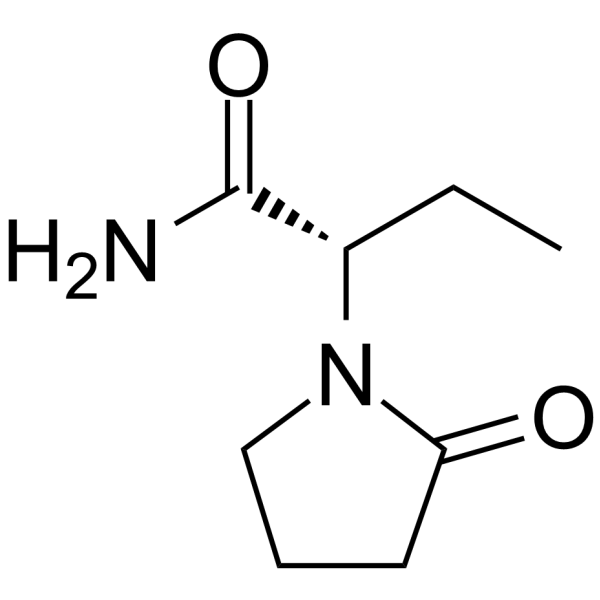
    Levetiracetam
    2 Publications Verification

    UCB L059

    DNA Methyltransferase Neurological Disease Cancer
    Levetiracetam, an antiepileptic agent, binds the synaptic vesicle protein SV2A. Levetiracetam enhances Temozolomide effect on glioblastoma stem cell proliferation and apoptosis. Levetiracetam modulates HDAC levels ultimately silencing MGMT, thus increasing Temozolomide effectiveness. A chemosensitizer agent .
    Levetiracetam
  • HY-10583G
    Y-27632 dihydrochloride
    1 Publications Verification

    ROCK Neurological Disease Cancer
    Y-27632 dihydrochloride (GMP) is the GMP level of Y-27632 dihydrochloride (HY-10583). GMP guidelines are used to produce Y-27632 dihydrochloride (GMP). GMP small molecules works appropriately as an auxiliary reagent for cell research manufacture. Y-27632 dihydrochloride is an orally active and ATP-competitive ROCK (Rho-kinase) inhibitor with antiepileptic effect .
    Y-27632 dihydrochloride
  • HY-10583R
    Y-27632 dihydrochloride (Standard)
    Maximum Cited Publications
    532 Publications Verification

    ROCK Organoid Reference Standards Cancer
    Y-27632 dihydrochloride (Standard) is the analytical standard of Y-27632 dihydrochloride. Y-27632 dihydrochloride is an orally active and ATP-competitive ROCK (Rho-kinase) inhibitor (ROCK-I Ki=220 nM; ROCK-II Ki=300 nM). Y-27632 dihydrochloride shows antiepileptic effects .
    Y-27632 dihydrochloride (Standard)
  • HY-177093

    BMS-986368; CC-97489; ABX-1772

    MAGL FAAH Neurological Disease
    Irafamdastat (BMS-986368) (Example 74) is a FAAH and MAGL inhibitor, with IC50s ≤ 100 nM (human FAAH) and 100 nM-1 μM (human MAGL) respectively. Irafamdastat has antiepileptic effect .
    Irafamdastat
  • HY-14948
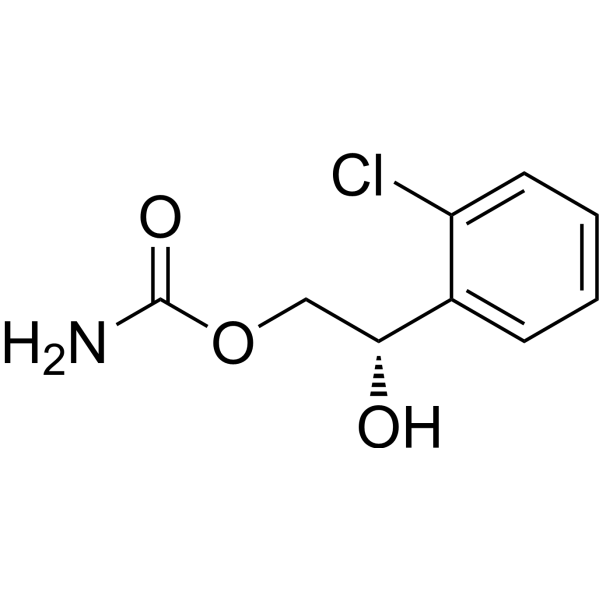
    Carisbamate
    1 Publications Verification

    RWJ-333369

    Sodium Channel Neurological Disease
    Carisbamate (RWJ-333369) is an orally active neuromodulator. Carisbamate prevents the development and production of epilep-like discharges and has a neuroprotective effect after in vitro epilepticus-like injury. Carisbamate has good antiepileptic activity in genetic models of generalized and nonconvulsive epilepsy .
    Carisbamate
  • HY-B0106R

    UCB L059 (Standard)

    Reference Standards DNA Methyltransferase Neurological Disease Cancer
    Levetiracetam (Standard) is the analytical standard of Levetiracetam. This product is intended for research and analytical applications. Levetiracetam, an antiepileptic agent, binds the synaptic vesicle protein SV2A. Levetiracetam enhances Temozolomide effect on glioblastoma stem cell proliferation and apoptosis. Levetiracetam modulates HDAC levels ultimately silencing MGMT, thus increasing Temozolomide effectiveness. A chemosensitizer agent .
    Levetiracetam (Standard)
  • HY-164964

    LPL Receptor Neurological Disease
    TRV045 is a selective Sphingosine-1-phosphate subtype 1 receptor agonist with no effect on lymphocyte transport. TRV045 has antiepileptic activity .
    TRV045
  • HY-105022

    R 58735

    Tau Protein Neurological Disease
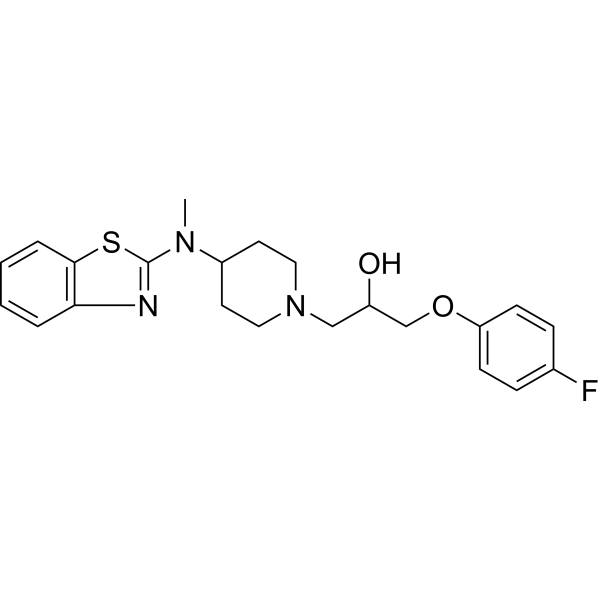
    Sabeluzole (R 58735), a benzothiazol derivative, has antiischemic, antiepileptic, and cognitive-enhancing properties. Sabeluzole protects rat hippocampal neurons against NMDA- and glutamate-induced neurotoxicity via preventing tau expression. Sabeluzole enhances memory in rats, and prevents the amnesic effect of Chlordiazepoxide. Sabeluzole can be used fro research of Alzheimer's disease .
    Sabeluzole
  • HY-B0106S

    UCB L059-d6

    Isotope-Labeled Compounds DNA Methyltransferase Neurological Disease Cancer
    Levetiracetam-d6 is the deuterium labeled Levetiracetam. Levetiracetam, an antiepileptic agent, binds the synaptic vesicle protein SV2A. Levetiracetam enhances Temozolomide effect on glioblastoma stem cell proliferation and apoptosis. Levetiracetam modulates HDAC levels ultimately silencing MGMT, thus increasing Temozolomide effectiveness. A chemosensitizer agent .
    Levetiracetam-d6
  • HY-118931

    GABA Receptor Neurological Disease
    EF-1502 is a potent and selective GABA transporter inhibitor with GAT1 and BGT1 inhibitory activity. EF-1502 produces a synergistic anti-epileptic effect when used in combination with Tiagabine (HY-B0696), a compound used to suppress epileptic seizures. The dosing combination of EF-1502 exhibited reduced anti-epileptic efficacy and dyskinesia when used with THIP (HY-10232). The mechanism of EF-1502 differs significantly from Tiagabine, suggesting a unique role in the inhibitory strategy .
    EF-1502
  • HY-176065

    Sodium Channel Neurological Disease
    Nav1.2-IN-1 (compound 5i), a 3-(1,2,3,6-tetrahydropyridine)-4-azaindole derivative, is a potent and selective Nav1.2 inhibitor. Nav1.2-IN-1 induces a reduction in the peak amplitude of Nav1.2 currents with an IC50 value of 7.79 μM. Nav1.2-IN-1 exhibits antiepileptic activity. Nav1.2-IN-1 shows high anticonvulsant effect and low neurotoxicity in subcutaneous Pentetrazole (sc-PTZ)-induced epilepsy mode .
    Nav1.2-IN-1
  • HY-W016509

    Drug Derivative Neurological Disease
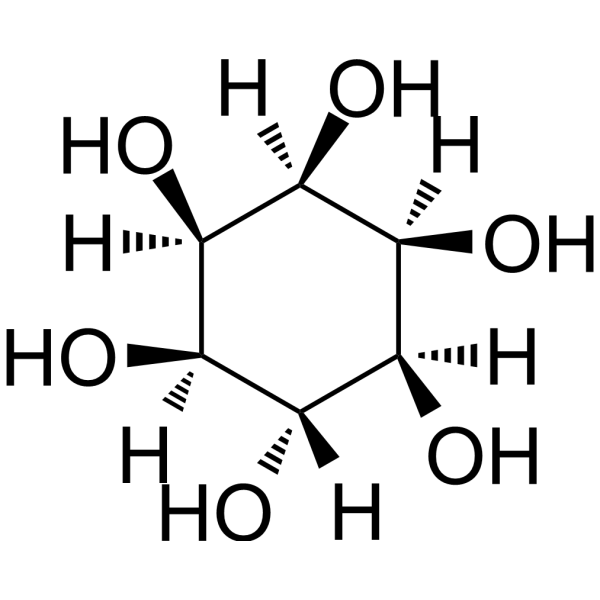
    epi-Inositol, a inositol analog, is an antidepressant agent. epi-Inositol shows regulatory effects on expression of the most highly regulated gene in the inositol biosynthetic pathway. epi-Inositol shows antiepileptic effect .
    epi-Inositol
  • HY-132246

    MAGL Neurological Disease
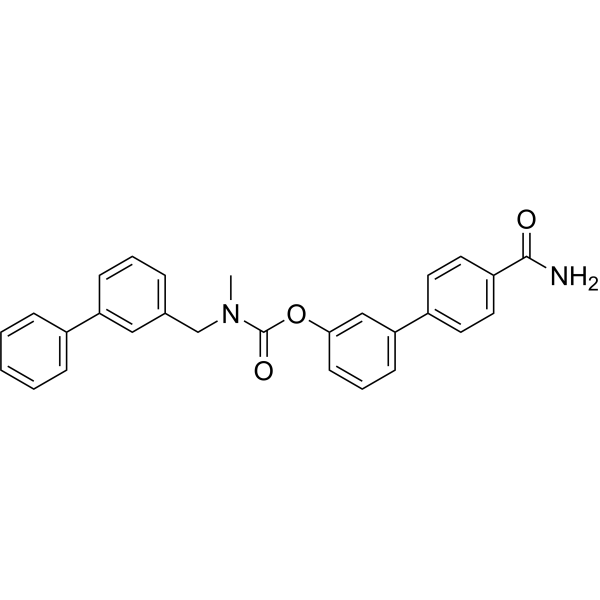
    WWL123 analogue-1 is an analogue of WWL123. WWL123 is a potent and selective ABHD6 inhibitor with an IC50 of 430 nM . WWL123 crosses the blood-brain-barrier and inhibits ABHD6 in brain parenchyma. ABHD6 blockade by WWL123 exerts an antiepileptic effect in Pentylenetetrazole (PTZ)-induced epileptiform seizures and spontaneous seizures in R6/2 mice .
    WWL123 analogue-1
  • HY-111189

    GlyT Neurological Disease
    GSK931145 is a glycine transporter 1 (GlyT1) inhibitor with anti-epileptic activity. GSK931145 exhibits a low minimum effective dose in the maximum electrical stimulation threshold test, indicating that it has a significant anti-epileptic effect. GSK931145 is also suitable as a positron emission tomography (PET) radioligand for quantifying the availability of glycine transporters in the living brain .
    GSK931145
  • HY-12155

    Sodium Channel Calcium Channel Neurological Disease
    JNJ-26990990 is a broad-spectrum antiepileptic agent with oral activity. JNJ-26990990 can inhibit voltage-gated Na + channels and N-type Ca 2+ channels, but has a very weak inhibitory effect on human carbonic anhydrase-II (IC50 = 110 μM) .
    JNJ-26990990
  • HY-B0106S1

    UCB L059-d3

    DNA Methyltransferase Neurological Disease Cancer
    Levetiracetam-d3 is the deuterium labeled Levetiracetam. Levetiracetam, an antiepileptic agent, binds the synaptic vesicle protein SV2A. Levetiracetam enhances Temozolomide effect on glioblastoma stem cell proliferation and apoptosis. Levetiracetam modulates HDAC levels ultimately silencing MGMT, thus increasing Temozolomide effectiveness. A chemosensitizer agent .
    Levetiracetam-d3
  • HY-12772R

    Itraconazole metabolite Hydroxy Itraconazole (Standard); R-63373 (Standard)

    Reference Standards Fungal Drug Metabolite Others
    Levetiracetam (Standard) is the analytical standard of Levetiracetam. This product is intended for research and analytical applications. Levetiracetam, an antiepileptic agent, binds the synaptic vesicle protein SV2A. Levetiracetam enhances Temozolomide effect on glioblastoma stem cell proliferation and apoptosis. Levetiracetam modulates HDAC levels ultimately silencing MGMT, thus increasing Temozolomide effectiveness. A chemosensitizer agent .
    Hydroxy Itraconazole (Standard)
  • HY-W016509R

    Endogenous Metabolite Drug Derivative Neurological Disease
    epi-Inositol (Standard) is the analytical standard of epi-Inositol (HY-W016509). This product is intended for research and analytical applications. epi-Inositol, a inositol analog, is an antidepressant agent. epi-Inositol shows regulatory effects on expression of the most highly regulated gene in the inositol biosynthetic pathway. epi-Inositol shows antiepileptic effect .
    epi-Inositol (Standard)
  • HY-105022R

    R 58735 (Standard)

    Reference Standards Tau Protein Neurological Disease
    Sabeluzole (Standard) is the analytical standard of Sabeluzole. This product is intended for research and analytical applications. Sabeluzole (R 58735), a benzothiazol derivative, has antiischemic, antiepileptic, and cognitive-enhancing properties. Sabeluzole protects rat hippocampal neurons against NMDA- and glutamate-induced neurotoxicity via preventing tau expression. Sabeluzole enhances memory in rats, and prevents the amnesic effect of Chlordiazepoxide. Sabeluzole can be used fro research of Alzheimer's disease .
    Sabeluzole (Standard)
  • HY-W707539

    RWJ-333369-d215N

    Isotope-Labeled Compounds Sodium Channel Neurological Disease
    Carisbamate-d2,- 15N (RWJ-333369-d2,- 15N) is the deuterium labeled Carisbamate (HY-14948). Carisbamate (RWJ-333369) is an orally active neuromodulator. Carisbamate prevents the development and production of epilep-like discharges and has a neuroprotective effect after in vitro epilepticus-like injury. Carisbamate has good antiepileptic activity in genetic models of generalized and nonconvulsive epilepsy .
    Carisbamate-d2,-15N
  • HY-116685

    Others Neurological Disease
    AF-CX 1325 has strongest antiepileptic effect .
    AF-CX 1325
  • HY-148605

    ATP Synthase Drug Derivative Cardiovascular Disease Neurological Disease Inflammation/Immunology
    Aloracetam is a γ-aminobutyric acid cyclic derivative that can pass through the blood-brain barrier and has a significant enhancing cognitive function effect. Aloracetam improves the blood perfusion of brain tissue, increases the synthesis of proteins, ATP and acetylcholine in the brain, enhances the excitatory conduction effect of cholinergic nerves, and reduces the damage to brain tissue caused by cerebral vascular diseases. Aloracetam also has certain anti-epileptic, anti-inflammatory, analgesic and anti-depressant effects .
    Aloracetam

Inquiry Online

Your information is safe with us. * Required Fields.

Salutation


Country or Region *

Applicant Name *


Organization Name *

Department *


Email Address *


Product Name *

Cat. No.


Requested quantity *

Phone Number *


Remarks

Inquiry Online

Inquiry Information

Product Name:
Cat. No.:
Quantity:
MCE Japan Authorized Agent:

