184 Results for "

biological diagnostics

" in MedChemExpress (MCE) Product Catalog:
Products (184)

184 Results for "biological diagnostics" in MCE Product Catalog:

7
7 Publications Verification
Cat. No.: HY-K0552

MCE Mycoplasma Detection Kit (PCR) is a diagnostic kit that utilizes the PCR method to detect mycoplasma contamination in biological materials such as cultured cells.

loading...
    loading...
1
1 Cited Publications
Cat. No.: HY-D0214A
CAS No.: 4159-77-7
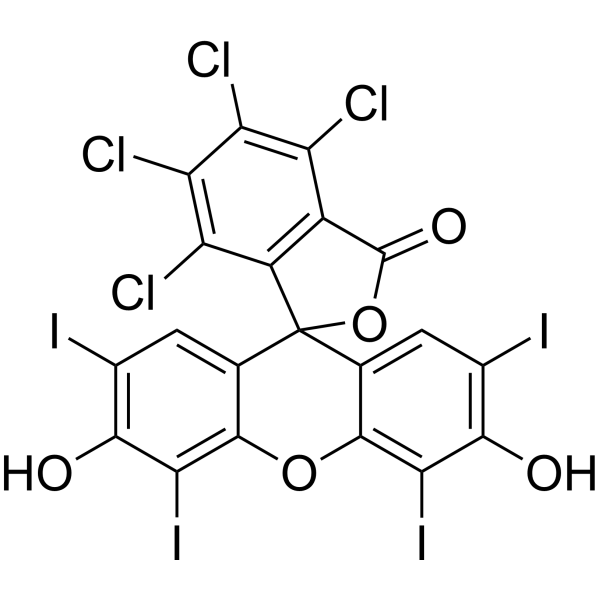
Acid Red 94 lactone is a multifunctional dye. Dyes are important tools in biological experiments. They can help researchers observe and analyze cell structures, track biomolecules, evaluate cell functions, distinguish cell types, detect biomolecules, study tissue pathology and monitor microorganisms. Their applications range from basic scientific research to clinical A wide range of diagnostics. Dyes are also widely used in traditional fields such as textile dyeing, as well as in emerging fields such as functional textile processing, food pigments and dye-sensitized solar cells.
loading...
    loading...
1
1 Cited Publications
Cat. No.: HY-D1223
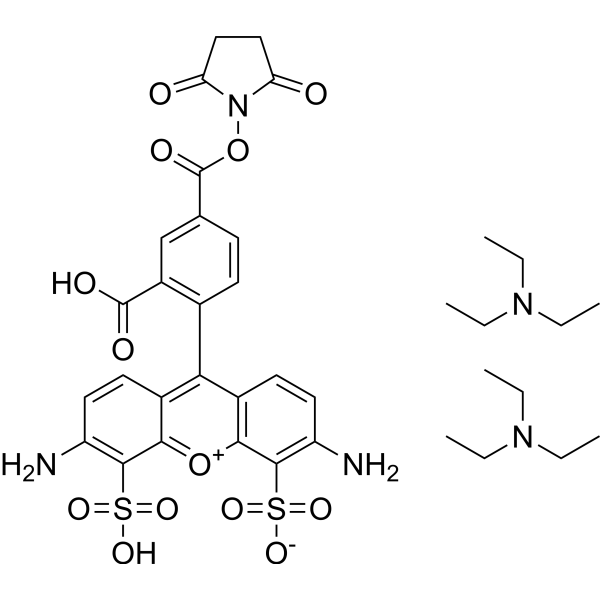
AF488 NHS ester diTEA is a multifunctional dye. Dyes are important tools in biological experiments. They can help researchers observe and analyze cell structures, track biomolecules, evaluate cell functions, distinguish cell types, detect biomolecules, study tissue pathology and monitor microorganisms. Their applications range from basic scientific research to clinical A wide range of diagnostics. Dyes are also widely used in traditional fields such as textile dyeing, as well as in emerging fields such as functional textile processing, food pigments and dye-sensitized solar cells. AF488 exhibits the λem and λex wavelength of 520 nm and 470 nm, respectively .
loading...
    loading...
1
1 Cited Publications
Cat. No.: HY-113331
CAS No.: 54397-85-2
Purity:  ≥99.0%
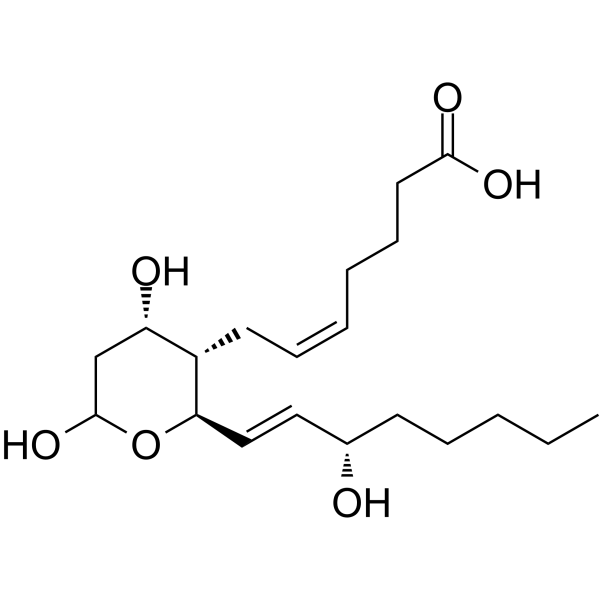
Thromboxane B2 is a prostaglandin derivative that is released during anaphylaxis. Thromboxane B2 induces arterial contraction and platelet aggregation. Thromboxane B2 is a biological inactive product and circulating catabolite of thromboxane A2. Thromboxane B2 levels in peripheral venous blood and coronary sinus blood can be used as a diagnostic marker for angina. Thromboxane B2 level in serum is also associated with inhibition of COX-1 activity inhibition in platelets. Thromboxane B2 is a major product of prostaglandin endoperoxide metabolism. Thromboxane B2 produces dose-related decreases in airflow rate, tidal volume and dynamic lung compliance, whilst simultaneously increasing pulmonary airway resistance in dog model. Thromboxane B2 appears to be a naturally occurring bronchoactive metabolite in the bioconversion of arachidonic acid .
loading...
    loading...
Cat. No.: HY-15932
CAS No.: 82692-93-1
Synonyms: TOOS sodium salt
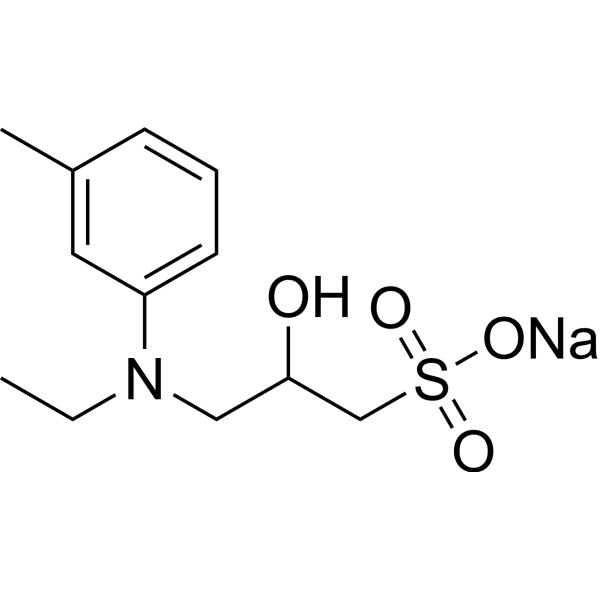
TOOS (TOOS sodium salt) is a highly water-soluble aniline derivative widely used in diagnostics and biological experiments. TOOS can be combined with 3-methyl-2-benzothiazolinone hydrazone hydrochloride (MBTH) to form a chromogenic system to measure oxidase activity. In the MBTH-TOOS chromogenic system, MBTH is catalytically oxidized to produce (-NH) free radicals, which react with TOOS to form colorless compounds. Furthermore, the colorless compound undergoes a disproportionation reaction to produce a blue-violet quinoid compound .
loading...
    loading...
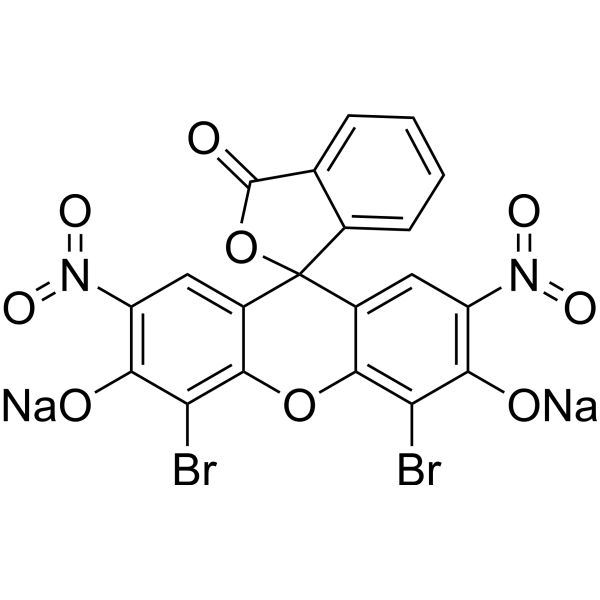
Cat. No.: HY-D1198
CAS No.: 548-24-3
Synonyms: Acid Red 91
Eosin B (Acid Red 91) is a multifunctional dye. Dyes are important tools in biological experiments. They can help researchers observe and analyze cell structures, track biomolecules, evaluate cell functions, distinguish cell types, detect biomolecules, study tissue pathology and monitor microorganisms. Their applications range from basic scientific research to clinical A wide range of diagnostics. Dyes are also widely used in traditional fields such as textile dyeing, as well as in emerging fields such as functional textile processing, food pigments and dye-sensitized solar cells.
loading...
    loading...
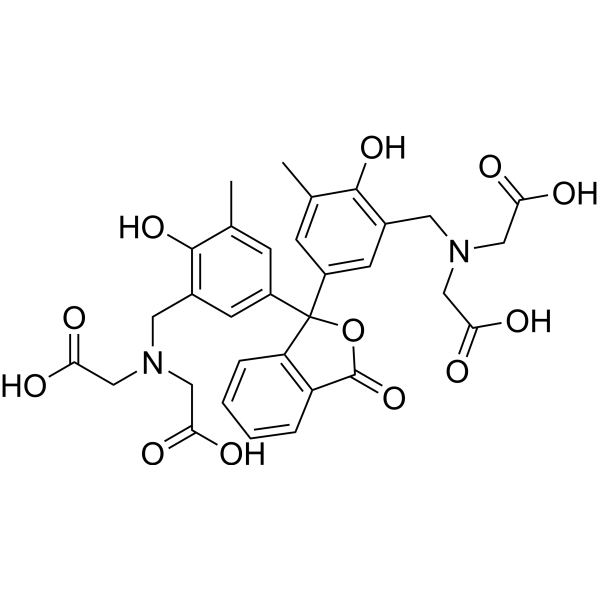
Cat. No.: HY-D0250
CAS No.: 2411-89-4
o-Cresolphthalein complexone is a multifunctional dye. Dyes are important tools in biological experiments. They can help researchers observe and analyze cell structures, track biomolecules, evaluate cell functions, distinguish cell types, detect biomolecules, study tissue pathology and monitor microorganisms. Their applications range from basic scientific research to clinical A wide range of diagnostics. Dyes are also widely used in traditional fields such as textile dyeing, as well as in emerging fields such as functional textile processing, food pigments and dye-sensitized solar cells.
loading...
    loading...
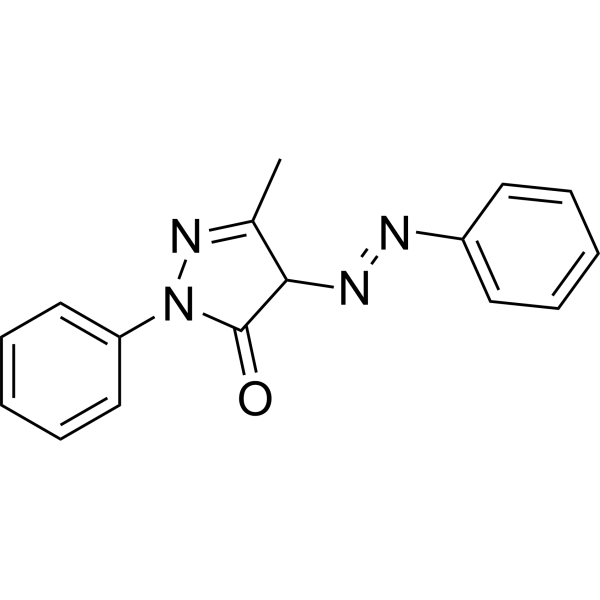
Cat. No.: HY-D0370
CAS No.: 4314-14-1
Solvent Yellow 16 is a disperse dye. Dyes are important tools in biological experiments. They can help researchers observe and analyze cell structures, track biomolecules, evaluate cell functions, distinguish cell types, detect biomolecules, study tissue pathology and monitor microorganisms. Their applications range from basic scientific research to clinical A wide range of diagnostics. Dyes are also widely used in traditional fields such as textile dyeing, as well as in emerging fields such as functional textile processing, food pigments and dye-sensitized solar cells .
loading...
    loading...
Cat. No.: HY-D0563
CAS No.: 50925-42-3
Direct yellow 86 is a multifunctional dye. Dyes are important tools in biological experiments. They can help researchers observe and analyze cell structures, track biomolecules, evaluate cell functions, distinguish cell types, detect biomolecules, study tissue pathology and monitor microorganisms. Their applications range from basic scientific research to clinical A wide range of diagnostics. Dyes are also widely used in traditional fields such as textile dyeing, as well as in emerging fields such as functional textile processing, food pigments and dye-sensitized solar cells.
loading...
    loading...
Cat. No.: HY-D2361
CAS No.: 362028-97-5
Adenosine 2'-PEG-Biotin is a biochemical reagent derived from adenosine. Adenosine 2'-PEG-Biotin regulates cell signaling pathways by mimicking the effects of endogenous adenosine and binding to its receptors. Adenosine 2'-PEG-Biotin can be used in the research of bioprobes, biosensors and diagnostic reagents .
loading...
    loading...
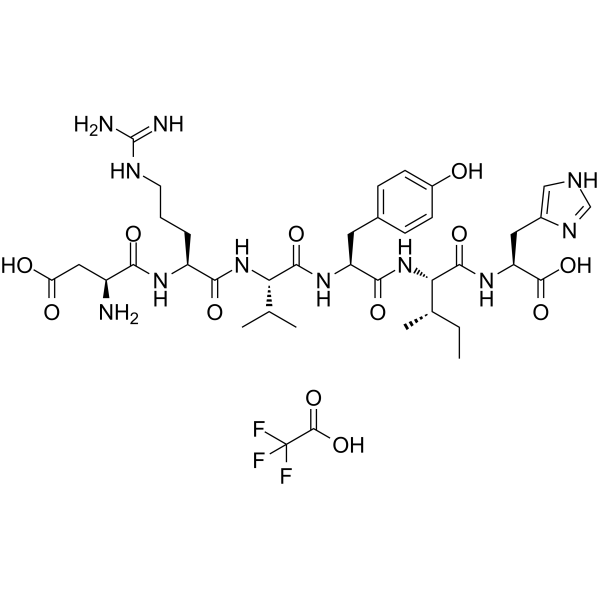
Cat. No.: HY-P1829A
Target:  

Angiotensin Receptor

Research Areas:  

Cardiovascular Disease

Angiotensin I/II (1-6) TFA contains the amino acids 1-6 and is converted from Angiotensin I/II peptide. The precursor angiotensinogen is cleaved by renin to form angiotensin I. Angiotensin I ishydrolyzed by angiotensin-converting enzyme (ACE) to form the biologically active angiotensin II. Angiotensin II has been investigated for the treatment, basic science, and diagnostic of Hypertension, Renin Angiotensin System, and Idiopathic Membranous Nephropathy .
loading...
    loading...
Cat. No.: HY-D0087
CAS No.: 156571-46-9
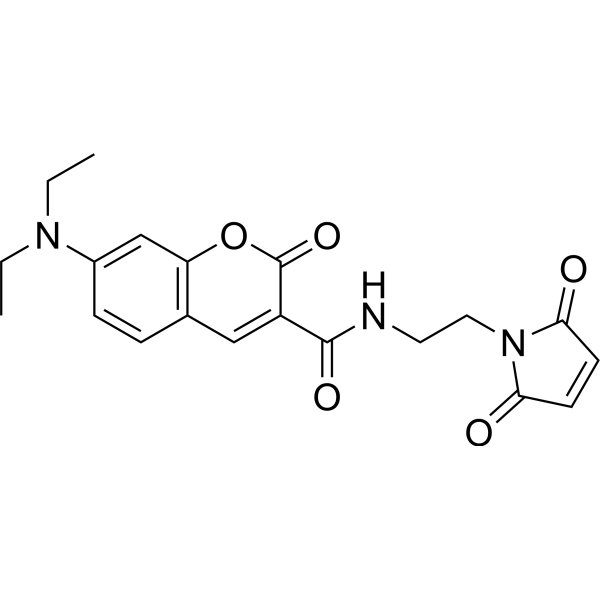
MDCC is a multifunctional dye. Dyes are important tools in biological experiments. They can help researchers observe and analyze cell structures, track biomolecules, evaluate cell functions, distinguish cell types, detect biomolecules, study tissue pathology and monitor microorganisms. Their applications range from basic scientific research to clinical A wide range of diagnostics. Dyes are also widely used in traditional fields such as textile dyeing, as well as in emerging fields such as functional textile processing, food pigments and dye-sensitized solar cells.
loading...
    loading...
Cat. No.: HY-D0783
CAS No.: 150322-02-4
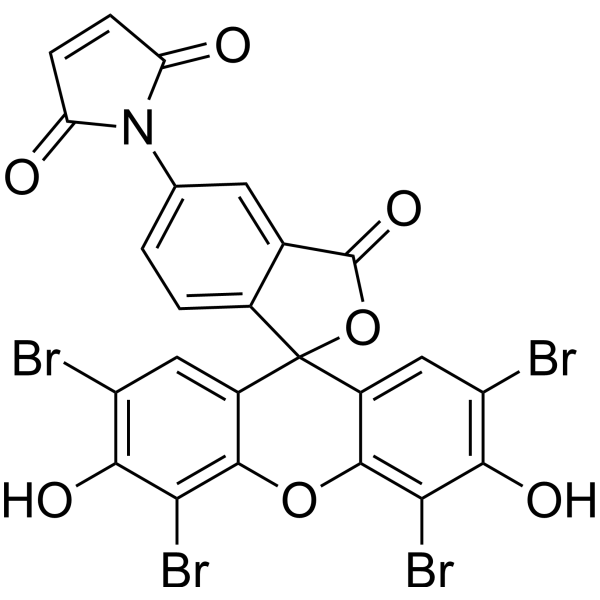
5-Maleimido-eosin is a multifunctional dye. Dyes are important tools in biological experiments. They can help researchers observe and analyze cell structures, track biomolecules, evaluate cell functions, distinguish cell types, detect biomolecules, study tissue pathology and monitor microorganisms. Their applications range from basic scientific research to clinical A wide range of diagnostics. Dyes are also widely used in traditional fields such as textile dyeing, as well as in emerging fields such as functional textile processing, food pigments and dye-sensitized solar cells.
loading...
    loading...
Cat. No.: HY-D1032
CAS No.: 2230724-46-4
DiZHSeC is a multifunctional dye. Dyes are important tools in biological experiments. They can help researchers observe and analyze cell structures, track biomolecules, evaluate cell functions, distinguish cell types, detect biomolecules, study tissue pathology and monitor microorganisms. Their applications range from basic scientific research to clinical A wide range of diagnostics. Dyes are also widely used in traditional fields such as textile dyeing, as well as in emerging fields such as functional textile processing, food pigments and dye-sensitized solar cells.
loading...
    loading...
Cat. No.: HY-D0741
CAS No.: 83524-75-8
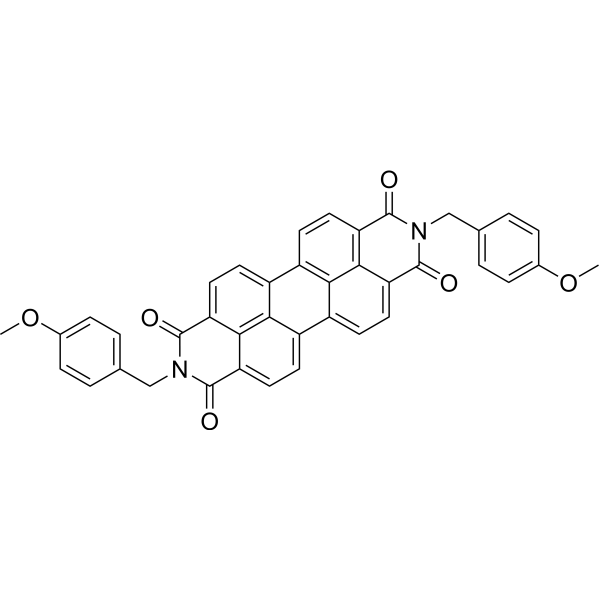
Pigment black 32 is a multifunctional dye. Dyes are important tools in biological experiments. They can help researchers observe and analyze cell structures, track biomolecules, evaluate cell functions, distinguish cell types, detect biomolecules, study tissue pathology and monitor microorganisms. Their applications range from basic scientific research to clinical A wide range of diagnostics. Dyes are also widely used in traditional fields such as textile dyeing, as well as in emerging fields such as functional textile processing, food pigments and dye-sensitized solar cells.
loading...
    loading...
Cat. No.: HY-D1465
CAS No.: 222159-92-4
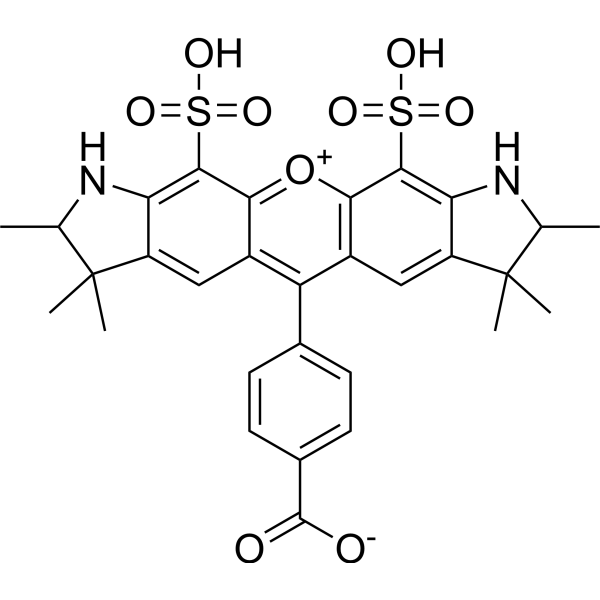
Alexa 532 is a multifunctional dye. Dyes are important tools in biological experiments. They can help researchers observe and analyze cell structures, track biomolecules, evaluate cell functions, distinguish cell types, detect biomolecules, study tissue pathology and monitor microorganisms. Their applications range from basic scientific research to clinical A wide range of diagnostics. Dyes are also widely used in traditional fields such as textile dyeing, as well as in emerging fields such as functional textile processing, food pigments and dye-sensitized solar cells.
loading...
    loading...
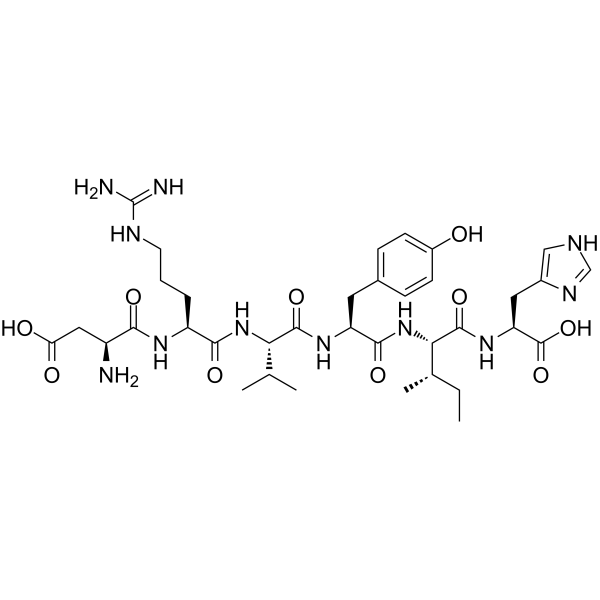
Cat. No.: HY-P1829
CAS No.: 47896-63-9
Target:  

Angiotensin Receptor

Research Areas:  

Cardiovascular Disease

Angiotensin I/II 1-6 contains the amino acids 1-6 and is converted from Angiotensin I/II peptide. The precursor angiotensinogen is cleaved by renin to form angiotensin I. Angiotensin I ishydrolyzed by angiotensin-converting enzyme (ACE) to form the biologically active angiotensin II. Angiotensin II has been investigated for the treatment, basic science, and diagnostic of Hypertension, Renin Angiotensin System, and Idiopathic Membranous Nephropathy .
loading...
    loading...
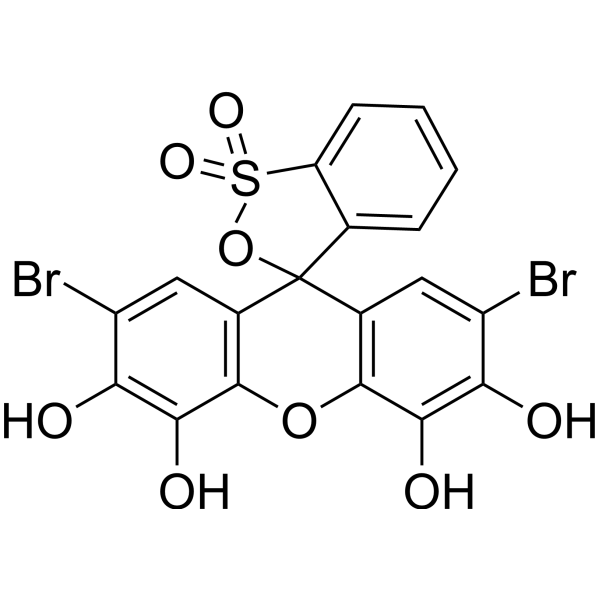
Cat. No.: HY-D0010
CAS No.: 16574-43-9
Synonyms: Dibromopyrogallolsulfonphthaleine
Bromopyrogallol red (Dibromopyrogallolsulfonphthaleine) is a multifunctional dye. Dyes are important tools in biological experiments. They can help researchers observe and analyze cell structures, track biomolecules, evaluate cell functions, distinguish cell types, detect biomolecules, study tissue pathology and monitor microorganisms. Their applications range from basic scientific research to clinical A wide range of diagnostics. Dyes are also widely used in traditional fields such as textile dyeing, as well as in emerging fields such as functional textile processing, food pigments and dye-sensitized solar cells.
loading...
    loading...
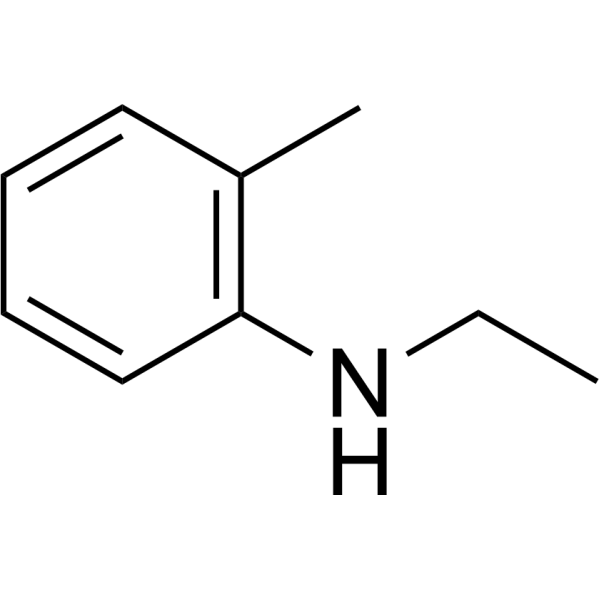
Cat. No.: HY-D0210
CAS No.: 94-68-8
N-Ethyl-o-toluidine is a multifunctional dye. Dyes are important tools in biological experiments. They can help researchers observe and analyze cell structures, track biomolecules, evaluate cell functions, distinguish cell types, detect biomolecules, study tissue pathology and monitor microorganisms. Their applications range from basic scientific research to clinical A wide range of diagnostics. Dyes are also widely used in traditional fields such as textile dyeing, as well as in emerging fields such as functional textile processing, food pigments and dye-sensitized solar cells.
loading...
    loading...
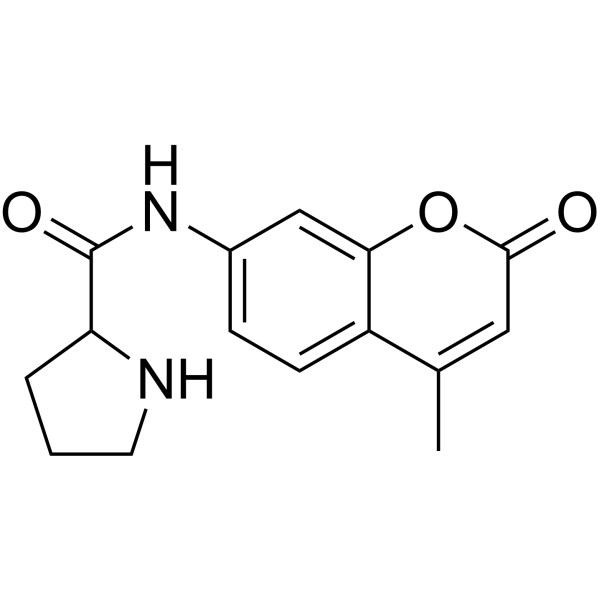
Cat. No.: HY-D0991
CAS No.: 221208-87-3
Pro-AMC is a multifunctional dye. Dyes are important tools in biological experiments. They can help researchers observe and analyze cell structures, track biomolecules, evaluate cell functions, distinguish cell types, detect biomolecules, study tissue pathology and monitor microorganisms. Their applications range from basic scientific research to clinical A wide range of diagnostics. Dyes are also widely used in traditional fields such as textile dyeing, as well as in emerging fields such as functional textile processing, food pigments and dye-sensitized solar cells.
loading...
    loading...

