4 Results for "

colonic pain

" in MedChemExpress (MCE) Product Catalog:
Products (4)

4 Results for "colonic pain" in MCE Product Catalog:

Cat. No.: HY-151450
CAS No.: 2878598-59-3
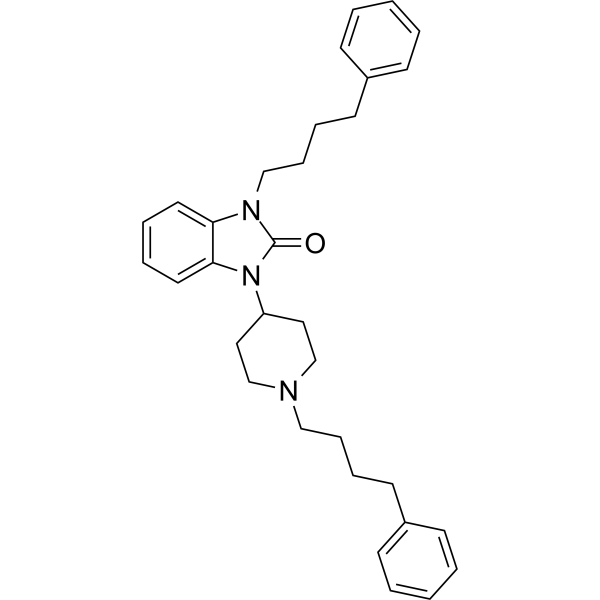
Cav 3.2 inhibitor 1 is a T-type calcium channel inhibitor with little binding affinity to dopamine D2 receptors. Cav 3.2 inhibitor 1 can be used for the research of somatic and visceral pain .
loading...
    loading...
Cat. No.: HY-118935
CAS No.: 666256-06-0
Target:  

Adrenergic Receptor

Research Areas:  

Inflammation/Immunology

NGD9002 free base is a new generation of selective corticotropin-releasing factor-1 (CRF-1) receptor antagonist with inhibitory activity on CRF-induced colonic function stimulation. NGD9002 free base can reduce CRF-induced fecal output response and show an inhibitory IC50 value of 4.3 mg/kg. NGD9002 free base can effectively block CRF-induced colonic secretory motility stimulation at the highest dose and reduce acute water avoidance-induced defecation. NGD9002 free base can also prevent the occurrence of pain hypersensitivity reactions to repeated colonic distension .
loading...
    loading...
Cat. No.: HY-B0380B
CAS No.: 1456509-46-8
Synonyms: GIC-1001
Research Areas:  

Others

Trimebutine 3-TCBS (GIC-1001) is an innovative formulation designed to release hydrogen sulfide (H2S) in vivo. This compound combines trimebutine with an H2S-releasing antagonist (phenyl 3-thiocarbamate) and exhibits enhanced anti-nociceptive effects in a mouse colonic distension model, superior to conventional trimebutine. GIC-1001 can reduce visceral pain and discomfort associated with lumen distension in a dose-dependent manner, showing potential superiority .
loading...
    loading...
Cat. No.: HY-15026
CAS No.: 915798-75-3
Target:  

Endogenous Metabolite

Research Areas:  

Inflammation/Immunology

ATB-429, a novel H2S-releasing derivative of mesalamine, demonstrates significant anti-nociceptive and anti-inflammatory effects in models of irritable bowel syndrome (IBS). By releasing hydrogen sulfide (H2S), ATB-429 modulates colorectal distension-induced hypersensitivity in both healthy and postcolitic rats. It attenuates abdominal withdrawal responses and suppresses spinal c-Fos mRNA expression, indicating its potential to alleviate pain associated with gastrointestinal inflammation. Moreover, ATB-429 down-regulates colonic cyclooxygenase-2 and interleukin-1β mRNA expression, effects not observed with mesalamine alone. The mechanism involves ATP-sensitive K+ (KATP) channels, as evidenced by reversal of ATB-429's effects with glibenclamide. These findings suggest ATB-429 could offer therapeutic benefits for managing painful intestinal disorders linked to inflammation .
loading...
    loading...

