1. Search Result
Search Result
Results for "

color

" in MedChemExpress (MCE) Product Catalog:

126

Inhibitors & Agonists

2

Screening Libraries

76

Fluorescent Dyes

23

Biochemical Assay Reagents

2

Peptides

12

MCE Kits

7

Natural
Products

1

Isotope-Labeled Compounds

1

Click Chemistry

Cat. No. Product Name Target Research Areas Chemical Structure
  • HY-108913
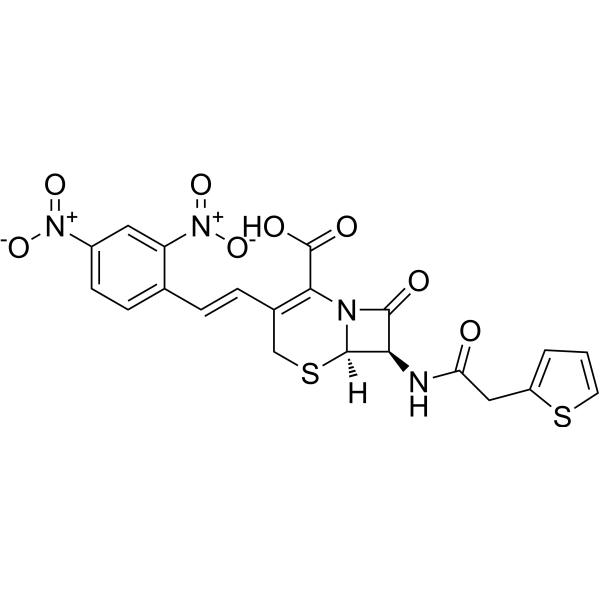
    Nitrocefin
    2 Publications Verification

    Beta-lactamase Antibiotic Bacterial Infection
    Nitrocefin is a highly activated, chromogenic cephalosporin derivative. Nitrocefin is a chromogenic β-lactamase substrate. Nitrocefin undergoes a distinctive color change from yellow to red as the amide bond in the β-lactam ring is hydrolyzed by β-lactamase. Nitrocefin is used in competitive inhibition studies in developmental work on β-lactamase-resistant antibiotics .
    Nitrocefin
  • HY-D0169
    Phenol Red
    1 Publications Verification

    Phenolsulfonephthalein

    Environmental Pollutants Fluorescent Dye Others
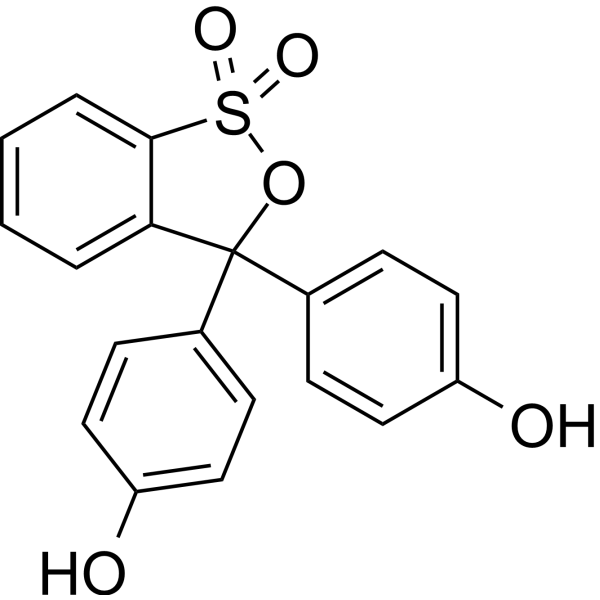
    Phenol red (Phenolsulfonephthalein) is a pH indicator dye, relying on a distinct color change from pink to yellow in case of a positive reaction .
    Phenol Red
  • HY-118462

    Coelenterazine 400a; Bisdeoxycoelenterazine

    Fluorescent Dye Others
    Coelenteramine 400a (Coelenterazine 400a), a derivative of Coelenterazine, is a Renilla luciferase (RLuc) substrate. In the presence of Coelenteramine 400a, RLuc can emit blue light at 395 nm . Coelenterazine 400a will causes color change in the bioluminescence reaction of Rluc by replacing the sulfur and oxygen heteroatoms of the methylene bridge. Coelenterazine 400a provides higher signal resolution and can be used in the research of bioluminescence resonance energy transfer (BRET) .
    Coelenteramine 400a
  • HY-D0018
    DCIP sodium
    1 Publications Verification

    Dichlorophenylindophenol sodium; DCPIP sodium; Indochlorophenol sodium

    Biochemical Assay Reagents Others
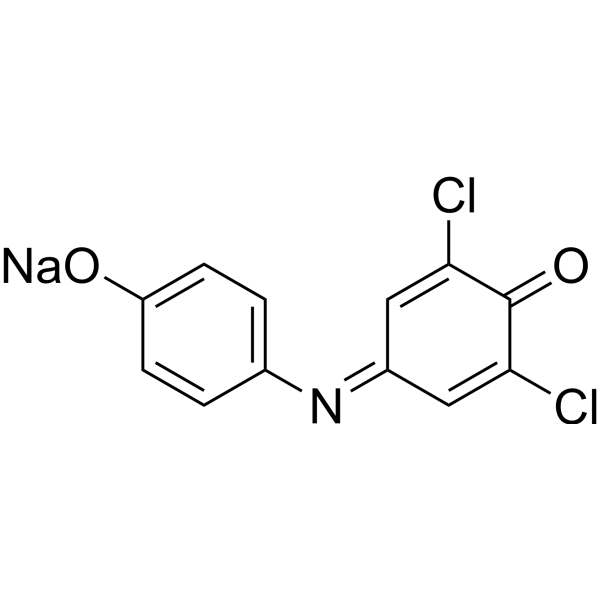
    DCIP sodium is a blue dye commonly used in various biochemical and biotechnological applications as an indicator of redox reactions. DCIP sodium has unique chemical properties that change color according to the oxidation state of the substance being tested. It is commonly used in enzyme assays, such as measuring the activity of succinate dehydrogenase, or in protein quantification methods, such as the Lowry assay.
    DCIP sodium
  • HY-W014449

    Biochemical Assay Reagents Others
    4-Nitrophenyl butyrate consists of butyric acid chains esterified with 4-nitrophenol groups, thus giving it a yellow color. This compound is commonly used as a substrate in enzyme assays to measure esterase and lipase activity. When these enzymes cleave the ester bond, the nitrophenol group is released and the color changes from yellow to orange. Thus, the rate of color change can be used to determine enzyme activity. In addition, 4-Nitrophenyl butyrate can also be used as organic synthesis reagent and dye intermediate.
    4-Nitrophenyl butyrate
  • HY-150145A

    Nucleoside Antimetabolite/Analog Fluorescent Dye Others
    Cy5-UTP sodium (10 mM in water) is a fluorescently labeled ribonucleotide triphosphate that can be used as a substrate for terminal deoxynucleotide transferase (TdT). Cy5-UTP sodium can be used to label RNA probes generated in vitro (Ex/Em: 650/665 nm). Cy5-UTP sodium can be applied in FISH, multi-color fluorescence analysis, especially in dual-color expression arrays combined with Cy5-UTP .
    Cy5-UTP sodium (10 mM in water)
  • HY-D1683
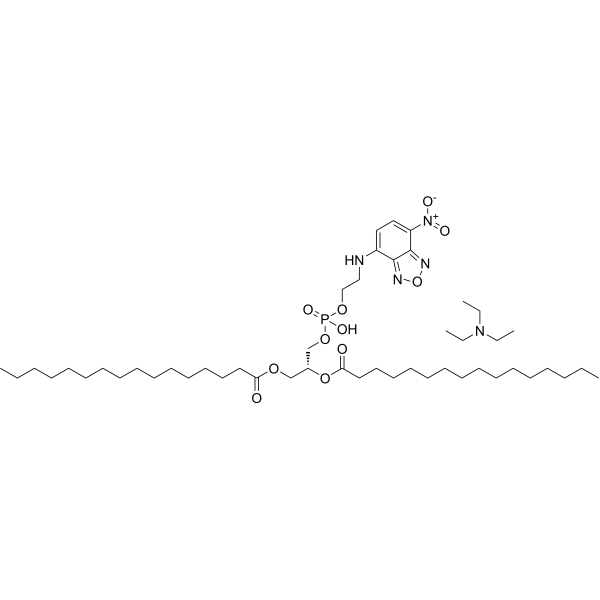
    NBD-PE
    2 Publications Verification

    Fluorescent Dye Others
    NBD-PE is an effective lipid fluorescent probe (Excitation/Emission: 465/535 nm; Color: Green). NBD-PE offers a wide array of applications in membrane and cell biology .
    NBD-PE
  • HY-N7476

    Polysialic acid sodium salt

    Antibiotic Infection Inflammation/Immunology
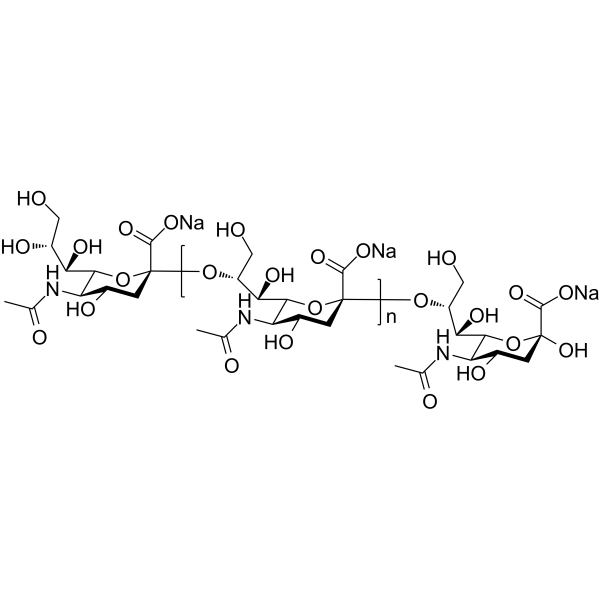
    Colominic acid sodium salt (Polysialic acid sodium salt) could be naturally isolated from the cell wall of Escherichia coli and animals, gives a red color which has an absorption maximum at 530 nm. Colominic acid sodium salt (Polysialic acid sodium salt) possesses anti-bacterial activity .
    Colominic acid sodium salt
  • HY-D1247

    Biochemical Assay Reagents Others
    Hydroxynaphthol Blue is an azo dye and serves as a metal indicator. Hydroxynaphthol Blue binds to specific metal ions to form stable complexes with distinct color and fluorescence properties. Hydroxynaphthol Blue is used for the visual monitoring of isothermal nucleic acid amplification results. A visible color difference appears between positive and negative nucleic acid amplification reactions, allowing result discrimination by the naked eye without opening the reaction tube .
    Hydroxynaphthol Blue
  • HY-N1347
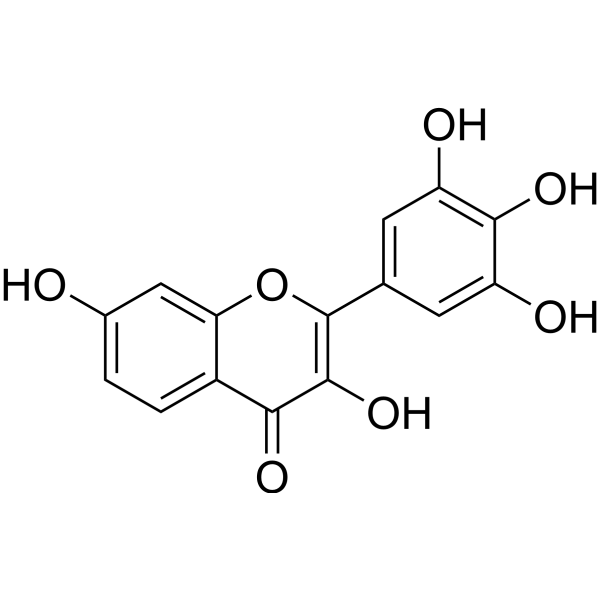
    Robinetin
    1 Publications Verification

    3,3',4',5',7-Pentahydroxyflavone

    Fungal HIV Integrase Bacterial Infection
    Robinetin (3,3',4',5',7-Pentahydroxyflavone), a naturally occurring flavonoid with remarkable ‘two color’ intrinsic fluorescence properties, has antifungal, antiviral, antibacterial, antimutagenesis, and antioxidant activity. Robinetin also can inhibit lipid peroxidation and protein glycosylation .
    Robinetin
  • HY-D2348A

    Fluorescent Dye Infection
    ACE TFA is a low-background, photostable fluorophore with nanomolar binding affinity for the Okra RNA aptamer. ACE TFA enables clear visualization of mRNA in live bacteria and mammalian cells, including tracking the trafficking of mRNA to stress granules and dual-color super-resolution imaging of RNA in live cells. (Ex=488 nm, Em=555 nm) .
    ACE TFA
  • HY-D0284

    Fluorescent Dye Others
    Pigment Yellow 139 is a biological dye and indicator. Pigment Yellow 139 is an organic pigment and an additive for color filters of liquid crystal displays. When formulated in a dye-pigment hybrid system, Pigment Yellow 139 can form color filters with specific chromaticity coordinates, brightness, contrast, and average particle size .
    Pigment Yellow 139
  • HY-D0221

    NSC 112125; 2,4,6-Tipyidyl-s-tiazie

    MOFs Fluorescent Dye Others
    2,4,6-Tri-2-pyridinyl-1,3,5-triazine (NSC 112125) is a colorimetric reagent for detecting iron. 2,4,6-Tri-2-pyridinyl-1,3,5-triazine forms a complex with Fe (II) and can be quantified as a measure of iron concentration by colorimetric detection at 594 nm .
    2,4,6-Tri-2-pyridinyl-1,3,5-triazine
  • HY-151644
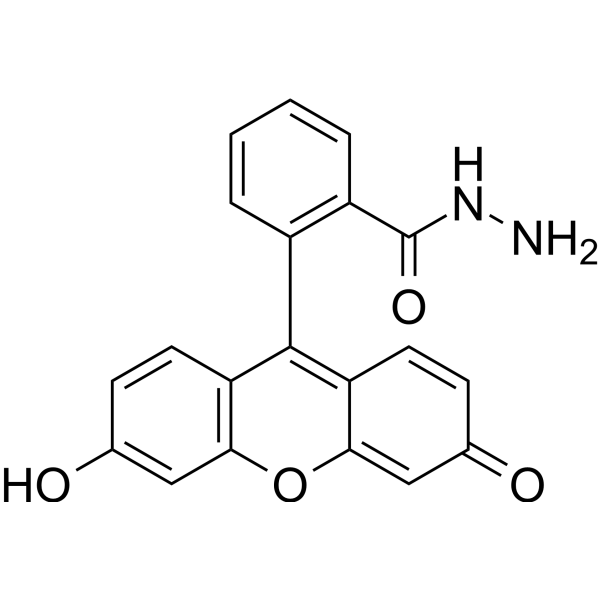
    Fluorescein hydrazide
    1 Publications Verification

    Fluorescent Dye Others
    Fluorescein hydrazide is a sensitive fluorescent probe for Hg 2+ and Co 2+ that induces obvious color changes and fluorescence changes. Fluorescein hydrazide can be prepared by the reaction of fluorescein and hydrazine. Fluorescein hydrazide exhibits an excitation wavelength of 508 nM and an emission wavelength of 531 nM [2][3].
    Fluorescein hydrazide
  • HY-D0165

    1,3-Dihydroxynaphthalene

    Fluorescent Dye Others
    Naphthoresorcinol (1,3-Dihydroxynaphthalene) is a fluorescent dye (λex=330 nm, λem=380 nm) that can react with the NPPD (a tracer) and concentrated HCl and develop a red color. Naphthoresorcinol could be used as a background electrolyte (BGE) to determine the carbohydrates .
    Naphthoresorcinol
  • HY-D0169A
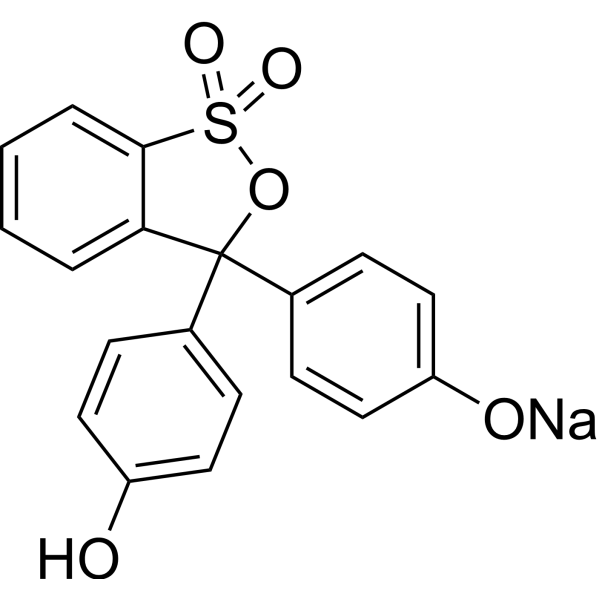
    Phenol Red sodium salt
    1 Publications Verification

    Phenolsulfonephthalein sodium salt

    Fluorescent Dye Glutathione Peroxidase Others
    Phenol red (Phenolsulfonephthalein) sodium salt is a pH indicator dye. Phenol Red sodium salt is also an antagonist of rat P2X1R. Phenol Red sodium salt enhances the halogenating activity of myeloperoxidase. Phenol Red sodium salt shows a distinct color change from pink to yellow in a positive pH reaction .
    Phenol Red sodium salt
  • HY-125809

    Biochemical Assay Reagents Others
    4-(1-Phenylethyl)resorcinol is a skin lightening agent used in cosmetics. It works by inhibiting the production of melanin, the pigment that gives skin its color. This helps reduce the appearance of dark spots, hyperpigmentation and uneven skin tone. 4-(1-Phenylethyl)resorcinol is considered safe for cosmetic use and is approved for use in several countries.
    4-(1-Phenylethyl)resorcinol
  • HY-W110910

    Biochemical Assay Reagents Infection
    Eriochrome black T, Indicator is a complexing agent for metal ions (e.g., Ca 2+, Mg 2+) and is used as an indicator in complexometric titrations. Eriochrome black T, Indicator forms colored complexes with metal ions through covalent coordination bonds, and indicates the endpoint of the titration by color change. Eriochrome black T, Indicator can be used as an anionic azo dye in photocatalytic degradation studies to evaluate the performance of photocatalysts. The reaction solution of Eriochrome black T, Indicator combined with Mg 2+ is initially purple. During loop-mediated isothermal amplification (LAMP), the color changes from purple to sky blue due to the consumption of Mg 2+ by the formation of magnesium pyrophosphate, indicating a positive reaction. The optimal concentration of Eriochrome black T, Indicator in LAMP is 60 μM, and the detection limit for Mycobacterium tuberculosis is 1 pg DNA/reaction .
    Eriochrome black T, Indicator
  • HY-W110794

    Environmental Pollutants Biochemical Assay Reagents Others
    Crystal violet, IND (0.0-2.0) is a specialized indicator suitable for strongly acidic systems, which reflects changes in pH within the range of 0.0-2.0 through color changes. Crystal violet, IND (0.0-2.0) is widely used in acid-base titration, chemical analysis, and industrial testing fields .
    Crystal violet, IND (0.0-2.0)
  • HY-W133919

    Environmental Pollutants Biochemical Assay Reagents Others
    Aniline Blue sodium is a water-soluble dye commonly used as a biological stain for the detection of nucleic acids and proteins in various laboratory procedures such as electrophoresis and microscopy. Aniline Blue sodium has unique chemical properties that allow it to bind to specific cellular components, producing a color change that facilitates their visualization and analysis.
    Aniline Blue sodium
  • HY-W087928

    Biochemical Assay Reagents Others
    Bromocresol purple is a pH indicator, whose color changes from yellow to purple when the pH increases from 5.2 to 6.8. Bromocresol purple can be used for detecting yeast cells with plasma membrane damage and measuring serum albumin concentrations .
    Bromocresol purple
  • HY-D2348

    Fluorescent Dye Infection Others
    ACE is a low-background, photostable fluorophore with nanomolar binding affinity for the Okra RNA aptamer. ACE enables clear visualization of mRNA in live bacteria and mammalian cells, including tracking the trafficking of mRNA to stress granules and dual-color super-resolution imaging of RNA in live cells. (Ex=488 nm, Em=555 nm) .
    ACE
  • HY-B1529A
    Citric acid triammonium
    Maximum Cited Publications
    8 Publications Verification

    Triammonium citrate

    Apoptosis Endogenous Metabolite Bacterial Others Cancer
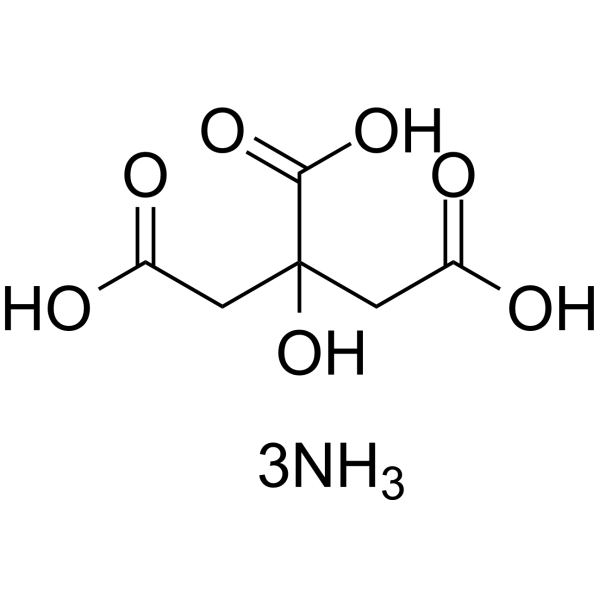
    Citric acid triammonium (Triammonium citrate) is formed by Citric acid (HY-N1428) reacting with ammonia in a molar ratio of 1:3. Citric acid triammonium can be used as the carbon source to prepare carbon quantum dots (CDs). Citric acid triammonium with higher nitrogen components might promote the nitrogen-based functional groups in CDs, leading to a more efficient emission-color tunability .
    Citric acid triammonium
  • HY-152073

    Fluorescent Dye Others
    BETA-1 is the first twisted intramolecular charge transfer (TICT)-aggregation-induced emission (AIE) integration molecule. BETA-1 emits cyan fluorescence in lipid droplets (LDs) and red fluorescence in mitochondria. BETA-1 can be used for the simultaneous and dual-color imaging of LDs and mitochondria in vivo and in vitro .
    BETA-1
  • HY-W127769

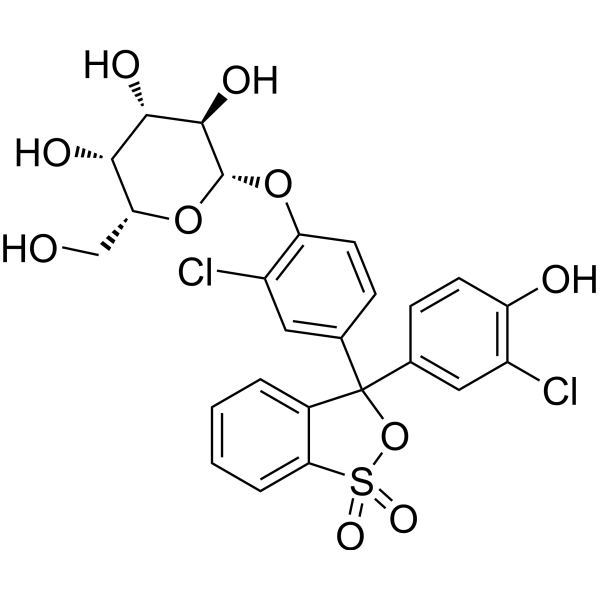
    Salmon-Gal

    Fluorescent Dye Others
    Rose-β-D-Gal is a chromogenic substrate, is also a β-galactosidase substrate. Rose-β-D-Gal creates a pink/magenta color after the reaction and has been used for detection of β-gal activity .
    Rose-β-D-Gal
  • HY-128369

    Metanil Yellow

    Environmental Pollutants Cytochrome P450 Others
    Acid Yellow 36 (Metanil Yellow) is an azo dye and a pH indicator. Acid Yellow 36 changes its color from red at pH 1.2 to yellow at pH 2.3. Acid Yellow 36 is used in the leather, paper and textile industries. Acid Yellow 36 acts as a bifunctional inducer of specific isozymes of P-450 and cytosolic enzymes .
    Acid Yellow 36
  • HY-D1137

    Fluorescent Dye
    C.I. Pigment yellow 110 is the most important colorant used to add color or change the color of something and is chemically essentially unaffected by the carrier or medium into which it is incorporated. It can be widely used in textile, medicine, food, cosmetics, plastics, paint, ink, photography and paper industries.
    C.I. Pigment yellow 110
  • HY-D1490

    Fluorescent Dye Others
    Fast red TR salt hemi (zinc chloride) is a diazonium dye with red color .
    Fast red TR salt hemizinc chloride
  • HY-150145

    Nucleoside Antimetabolite/Analog Fluorescent Dye Others
    Cy5-UTP is a fluorescently labeled ribonucleotide triphosphate that can be used as a substrate for terminal deoxynucleotidyl transferase (TdT). Cy5-UTP can be employed to label RNA probes generated in vitro (Ex/Em: 650/665 nm). Cy5-UTP can be applied in FISH, multi-color fluorescence analysis, especially in dual-color expression arrays that combine with Cy5-UTP .
    Cy5-UTP
  • HY-D0411

    Acidyellow 17; Yellow 2G

    Biochemical Assay Reagents Others
    Xylene Fast Yellow 2G is a synthetic dye belonging to the class of azo dyes. It is commonly used in the textile industry to dye natural and synthetic fibers as well as in the paper and ink industries. Xylene Fast Yellow 2G produces a bright yellow color that is fade and wash resistant and can be applied to textiles by a variety of methods including dipping, padding and printing.
    Xylene Fast Yellow 2G
  • HY-D0812

    Fluorescent Dye Biochemical Assay Reagents Others
    Xylenol Blue is a sulfonephthalein dye. It exhibits observable color changes in response to variations in pH. Xylenol Blue undergoes two distinct color transitions across two specific pH ranges: an acidic range and an alkaline range. In a neutral solution, Xylenol Blue appears yellow (at pH 8); in a strongly acidic medium, its color shifts to red (at pH 2.8); and in an alkaline medium, the yellow hue transitions to blue (at pH 9.6) .
    Xylenol blue
  • HY-D0429

    Fluorescent Dye
    C.I. Pigment red 5 is the most important colorant used to add color or change the color of something and is chemically essentially unaffected by the carrier or medium into which it is incorporated. It can be widely used in textile, medicine, food, cosmetics, plastics, paint, ink, photography and paper industries.
    C.I. Pigment red 5
  • HY-128545

    Nitrazine paper; Phenaphthazine

    Biochemical Assay Reagents Others
    Nitrazine yellow (Nitrazine paper; Phenaphthazine) is a pH indicator. The color of Nitrazine yellow changes from yellow to blue in the pH range from 6.0 to 7.0. Nitrazine yellow is a kind of biological materials or organic compounds that are widely used in life science research .
    Nitrazine yellow
  • HY-D0228

    Azo Violet; Magneson I

    Fluorescent Dye Others
    4-(4-Nitrophenylazo)resorcinol (Azo Violet) is an azo purple dye used experimentally as a pH indicator, showing yellow when the pH value is lower than 11 and purple when the pH value is higher than 13. In slightly alkaline or alkaline environments, it also turns dark blue in the presence of magnesium salts. Azo Violet can also be used to test for the presence of ammonium ions. The color of the ammonium chloride or ammonium hydroxide solution will change depending on the concentration of azo violet used .
    4-(4-Nitrophenylazo)resorcinol
  • HY-D0531

    Fluorescent Dye
    C.I. Pigment red 123 is the most important colorant used to add color or change the color of something and is chemically essentially unaffected by the carrier or medium into which it is incorporated. It can be widely used in textile, medicine, food, cosmetics, plastics, paint, ink, photography and paper industries.
    C.I. Pigment red 123
  • HY-D0960

    Fluorescent Dye
    C.I. Solvent Blue 43 is the most important colorant used to add color or change the color of something and is chemically essentially unaffected by the carrier or medium into which it is incorporated. It can be widely used in textile, medicine, food, cosmetics, plastics, paint, ink, photography and paper industries.
    C.I. Solvent Blue 43
  • HY-W775174

    C.I. Solvent red 80

    Fluorescent Dye
    Citrus red 2 (CI Solvent red 80) is a synthetic dye with coloring power and antioxidant activity. Citrus red 2 can be used in food and cosmetics to provide a bright color to the product. Citrus red 2 is also used as a reference substance for testing and analysis in certain situations.
    Citrus red 2
  • HY-N8502

    Fluorescent Dye Cancer
    Urdamycin A (Compound 3b) is an angucycline antibiotic that can be isolated from Streptomyces fradiae. Urdamycin A is an orange indicator with a change of the color to ultramarine blue at pH 7.7. Urdamycin A has anticancer activity with IC50s of 2.4 and 0.55 μg/mL in proliferation and stem cell assays, respectively .
    Urdamycin A
  • HY-W206911

    Environmental Pollutants Biochemical Assay Reagents Others
    Erythrosin B sodium salt, is a synthetic azo dye commonly used as a food colorant and textile dye. It is a water-soluble compound that produces a bright red color and is often used to improve the appearance of products. Erythrosin B sodium salt is also used in the textile industry for dyeing wool, silk and leather. However, it has been linked to potentially negative health effects, such as allergic reactions and hyperactivity in children.
    Erythrosin B sodium salt
  • HY-143618

    Biochemical Assay Reagents Cancer
    photoCORM-2 (compound 3) is a single carbon monoxide releasing molecule (CORM). photoCORM-2 exhibits good cellular uptake and real-time monitoring ability of CO uncaging by a color change approach. photoCORM-2 has anti-tumor activity .
    photoCORM-2
  • HY-D0405

    Fluorescent Dye
    C.I. Pigment yellow 74 is the most important colorant used to add color or change the color of something and is chemically essentially unaffected by the carrier or medium into which it is incorporated. It can be widely used in textile, medicine, food, cosmetics, plastics, paint, ink, photography and paper industries.
    C.I. Pigment yellow 74
  • HY-D0457

    Fluorescent Dye
    C.I. Solvent red 179 is the most important colorant used to add color or change the color of something and is chemically essentially unaffected by the carrier or medium into which it is incorporated. It can be widely used in textile, medicine, food, cosmetics, plastics, paint, ink, photography and paper industries.
    C.I. Solvent red 179
  • HY-P3836

    Endogenous Metabolite Neurological Disease
    [His7] Corazonin, a neurohormone, induces dark color in the cuticle and epidermis of Locusta migratoria .
    [His7] Corazonin
  • HY-D0008

    Bacterial Fungal Parasite Infection
    Brilliant green is a cationic dye used to color silk and wool. Brilliant green inhibits propagation of mold, intestinal parasites and fungus. Brilliant green is effective against Gram-positive bacteria .
    Brilliant green
  • HY-D2337

    Fluorescent Dye Inflammation/Immunology
    Quinophthalone is a dye with distinctive greenish yellow color. Quinophthalone is used as coloring agents for various materials. Quinophthalone is a strong sensitizer in guinea pigs, and its threshold concentration for induction and challenge is 10 ppm .
    Quinophthalone
  • HY-D0312

    Sunchromine Fast Blue MB

    Biochemical Assay Reagents Others
    Mordant Blue 13 is a synthetic dye used in the textile industry. It belongs to a class of metal complex dyes that are able to form strong bonds with fabrics and other materials. Mordant Blue 13 is commonly used for dyeing cotton, wool and silk fibres, it produces a fast blue color. It can be applied to textiles by a variety of methods including impregnation, padding and printing.
    Mordant Blue 13
  • HY-118462A

    Coelenterazine 400a hydrochloride; Bisdeoxycoelenterazine hydrochloride

    Fluorescent Dye Others
    Coelenteramine (Coelenterazine) 400a hydrochloride, a derivative of Coelenterazine, is a Renilla luciferase (RLuc) substrate. In the presence of Coelenteramine 400a hydrochloride, RLuc can emit blue light at 395 nm . Coelenteramine 400a hydrochloride will causes color change in the bioluminescence reaction of Rluc by replacing the sulfur and oxygen heteroatoms of the methylene bridge. Coelenteramine 400a hydrochloride provides higher signal resolution and can be used in the research of bioluminescence resonance energy transfer (BRET) .
    Coelenteramine 400a hydrochloride
  • HY-D0488

    Fluorescent Dye
    C.I. Pigment orange 36 is the most important colorant used to add color or change the color of something and is chemically essentially unaffected by the carrier or medium into which it is incorporated. It can be widely used in textile, medicine, food, cosmetics, plastics, paint, ink, photography and paper industries.
    C.I. Pigment orange 36
  • HY-D0686

    Fluorescent Dye
    C.I. Pigment red 221 is the most important colorant used to add color or change the color of something and is chemically essentially unaffected by the carrier or medium into which it is incorporated. It can be widely used in textile, medicine, food, cosmetics, plastics, paint, ink, photography and paper industries.
    C.I. Pigment red 221
  • HY-D0450

    Fluorescent Dye
    C.I. Pigment red 112 is the most important colorant used to add color or change the color of something and is chemically essentially unaffected by the carrier or medium into which it is incorporated. It can be widely used in textile, medicine, food, cosmetics, plastics, paint, ink, photography and paper industries.
    C.I. Pigment red 112

Inquiry Online

Your information is safe with us. * Required Fields.

Salutation


Country or Region *

Applicant Name *


Organization Name *

Department *


Email Address *


Product Name *

Cat. No.


Requested quantity *

Phone Number *


Remarks

Inquiry Online

Inquiry Information

Product Name:
Cat. No.:
Quantity:
MCE Japan Authorized Agent:

