1. Search Result
Search Result
Results for "

convulsions

" in MedChemExpress (MCE) Product Catalog:

55

Inhibitors & Agonists

1

Screening Libraries

1

Biochemical Assay Reagents

6

Natural
Products

1

Isotope-Labeled Compounds

Cat. No. Product Name Target Research Areas Chemical Structure
  • HY-W001160

    Endogenous Metabolite Calcium Channel nAChR Neurological Disease Endocrinology Cancer
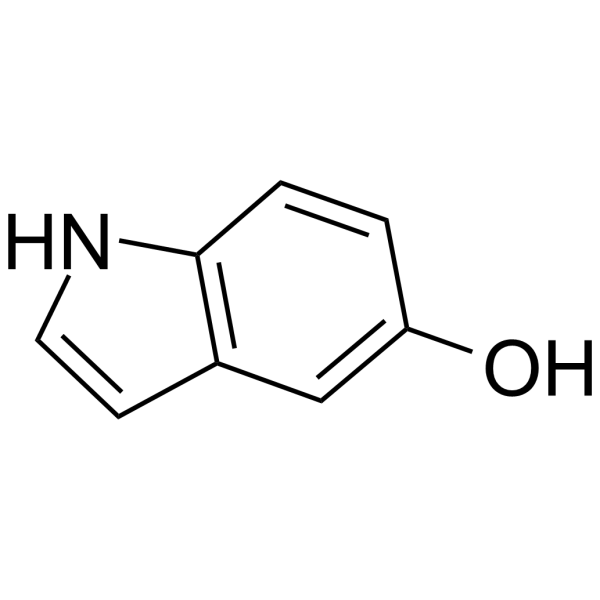
    5-Hydroxyindole is an orally active hydroxylated indole and tryptophan metabolite. 5-Hydroxyindole activates α7 nicotinic acetylcholine receptors and acts on intestinal L-type calcium channels. 5-Hydroxyindole slows down the desensitization of 5-HT3 receptor-mediated ion currents in cells. 5-Hydroxyindole causes convulsions and loss of consciousness. 5-Hydroxyindole is used in the study of neuroblastoma, schizophrenia, and diseases related to intestinal motility disorders .
    5-Hydroxyindole
  • HY-W013150

    GABA Receptor Neurological Disease
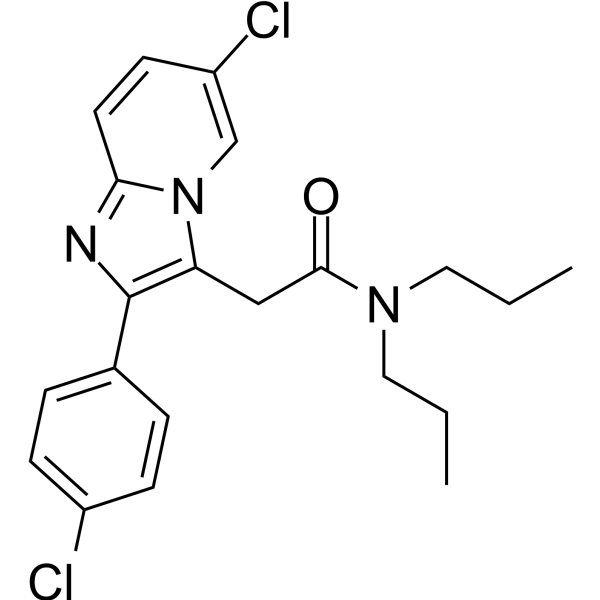
    Alpidem, an anxiolytic agent, is an orally active and brain-penetrant GABAA receptor ligand, binds to α1β2γ2 subunit-containing GABAA receptors (IC50 of 17 nM) over α5β2γ2 subunit-containing GABAA receptors (IC50 of >10 μM). Alpidem modulates calcium-induced mitochondrial permeability transition, induces glutathione depletion and hepatocyte necrosis, potentiates TNF-α toxicity, inhibits marble-burying and locomotor activity, enhances stressed rodent feeding behavior, and exerts anticonvulsant effects. Alpidem can be used for the research of anxiety, anxiety disorders, and convulsions .
    Alpidem
  • HY-W090292

    Drug Intermediate Neurological Disease
    Olivetolic acid is a biosynthetic precursor of cannabinol acid (CBGA). Olivetolic acid exhibits a modest anticonvulsant effect in a mouse model of Dravet syndrome. Olivetolic acid can be used for the study of convulsion .
    Olivetolic acid
  • HY-N8157
    4'-O-Methylpyridoxine
    1 Publications Verification

    Others Cardiovascular Disease Neurological Disease
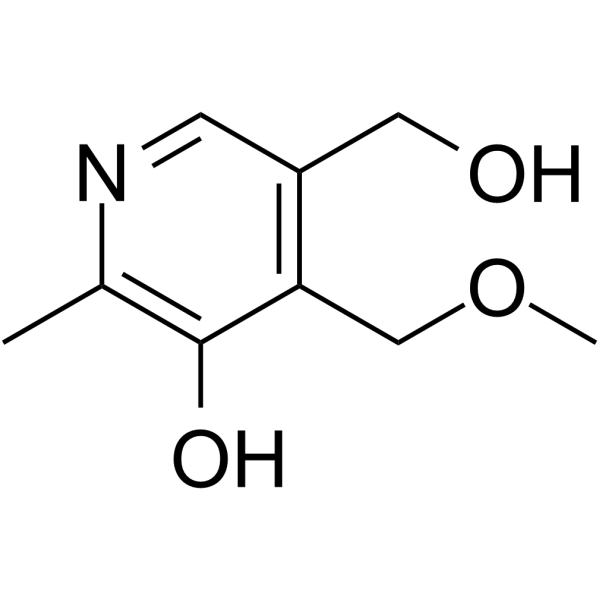
    4'-O-Methylpyridoxine is an orally active antivitamin B6 compound found in Ginkgo biloba seeds and leaves. 4'-O-Methylpyridoxine inhibits pyridoxal kinase. 4'-O-Methylpyridoxine reduces brain pyridoxal-5'-phosphate (PLP) levels, decreases gamma-aminobutyric acid/glutamate (GABA/Glu) ratio. 4'-O-Methylpyridoxine increases plasma levels of pyridoxal-5'-phosphate and pyridoxal. 4'-O-Methylpyridoxine induces hyperactivity, convulsions, pathological tissue changes, organ damage in rodent brain and heart .
    4'-O-Methylpyridoxine
  • HY-110192
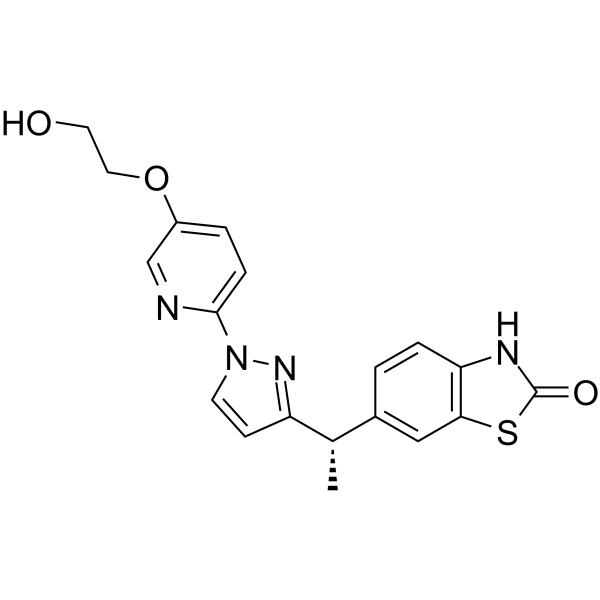
    ML 297
    1 Publications Verification

    VU 0456810; CID 56642816

    Potassium Channel Neurological Disease
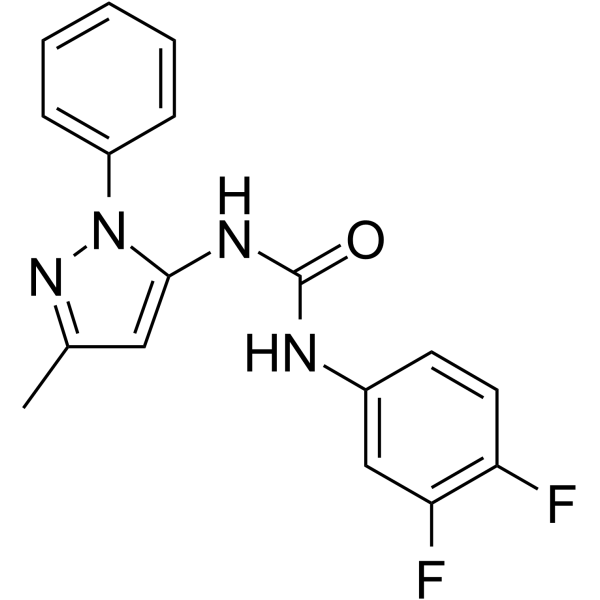
    ML 297 (VU 0456810) is a potent and selective GIRK1/2 activator, with an EC50 of 0.16 μM. ML 297 can cross the blood-brain barrier with brain-to-plasma ratio of 0.2 in mice model (i.p.). ML 297 is potential for the treatment of epilepsy .
    ML 297
  • HY-N8028
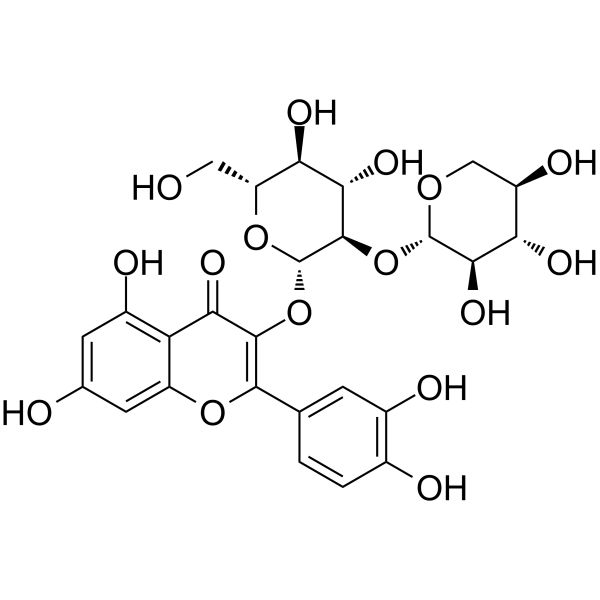
    Quercetin 3-O-sambubioside
    1 Publications Verification

    Others Cancer
    Quercetin-3-O-sambubioside is a monomeric compound found in Eucommia ulmoides male flowers. Quercetin-3-O-sambubioside promotes the stimulation of the nerve center. Antioxidant and anticancer activities .
    Quercetin 3-O-sambubioside
  • HY-137790
    Bicuculline methochloride
    Maximum Cited Publications
    39 Publications Verification

    (-)-Bicuculline methochloride

    GABA Receptor Neurological Disease
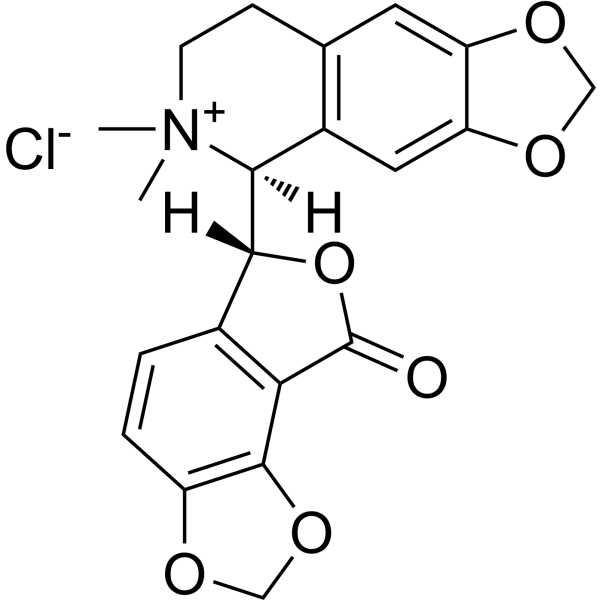
    Bicuculline ((+)-Bicuculline; d-Bicuculline) methochloride is a selective GABAA receptor antagonist with an IC50 value of 3 μM. Bicuculline methochloride induces clonic tonic convulsions in mammals and can also be used to block Ca 2+ activated potassium channels. Bicuculline methochloride can be used in studies of epilepsy and other related psychiatric disorders .
    Bicuculline methochloride
  • HY-105584

    Biochemical Assay Reagents Neurological Disease
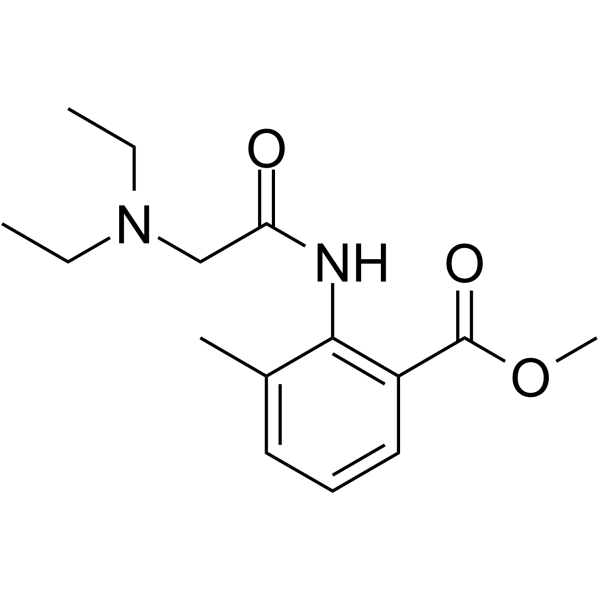
    Tolycaine is a local agent that can suppress or relieve pain. Tolycaine also induces a convulsive response in experimental animals .
    Tolycaine
  • HY-17549

    CRL 40028

    Adrenergic Receptor Neurological Disease
    Adrafinil (CRL 40028) is an orally active vigilance promoting agent. Adrafinil enhances central noradrenergic transmission, improves spontaneous activity, exploratory behavior, discriminative learning ability and response motivation, but impairs visuospatial working memory. Adrafinil antagonizes Prazosin (HY-B0193)-induced hypoactivity and hypothermia, exerts anticonvulsant effects, and induces sustained enhancement of high-frequency electrocortical activity. Adrafinil can be used for research on decreased alertness and specific cognitive deficits .
    Adrafinil
  • HY-101059

    GABA Receptor Neurological Disease
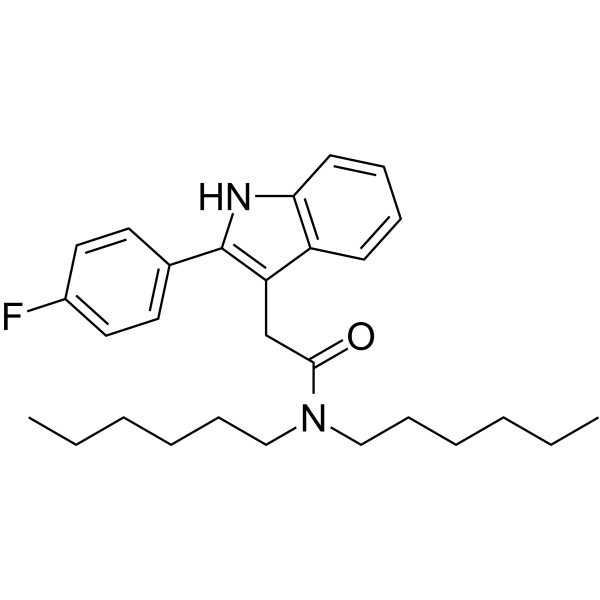
    FGIN 1-27, an indoleacetamide, is a specific peripheral benzodiazepine receptor (PBR) ligand with a Ki of 5.0 nM. FGIN 1-27 can penetrate the blood brain barrier (BBB). FGIN 1-27 inhibits the onset of Isoniazid-induced convulsions .
    FGIN 1-27
  • HY-108707
    LY3130481
    1 Publications Verification

    iGluR Neurological Disease
    LY3130481 is an orally available AMPA receptor antagonist, selectively inhibiting the IC50 value of AMPA/TARP γ-8 at 65 nM. LY3130481 has anticonvulsant, antiepileptic, and pain-relieving effects .
    LY3130481
  • HY-W127730

    Drug Derivative Others
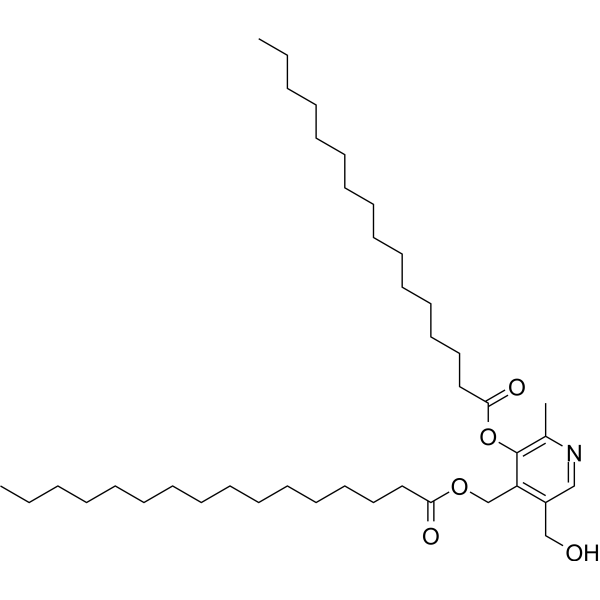
    Pyridoxine 3,4-dipalmitate is a Pyridoxine (HY-B1328) derivative. Pyridoxine exerts its antioxidant effects .
    Pyridoxine 3,4-dipalmitate
  • HY-N15001

    GABA Receptor Neurological Disease
    Gabaculine is an amino acid neurotoxin and blood-brain barrier-permeable GABA transaminase inhibitor, with an IC50 of 1 μM in beef and Pseudomonas ovalis. Gabaculine elevates endogenous synaptic and brain GABA levels and enhances GABA activity. Gabaculine induces sedation, hypothermia, loss of righting reflex, and prevents convulsions in mice. Gabaculine is applicable to research related to neurological disorders .
    Gabaculine
  • HY-101139A
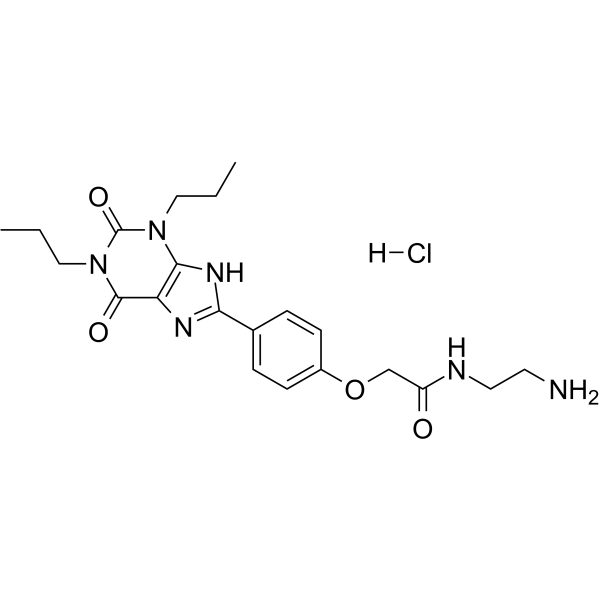
    Xanthine amine congener hydrochloride
    1 Publications Verification

    XAC hydrochloride

    Adenosine Receptor Neurological Disease
    Xanthine amine congener (XAC) hydrochloride is a non-selective adenosine receptor antagonist. Xanthine amine congener hydrochloride induces convulsions in mice .
    Xanthine amine congener hydrochloride
  • HY-W743398

    CS-386

    GABA Receptor Neurological Disease
    Mexazolam (CS-386) is an orally active benzodiazepine and anxiolytic. Benzodiazepines bind to specific BZD-type receptors on the GABA-chloride complex and potentiate the inhibitory effects of GABA .
    Mexazolam
  • HY-100783B

    (+)-Bicuculline methobromide

    GABA Receptor Neurological Disease
    Bicuculline methobromide is a selective GABAA Receptor antagonist with an IC50 value of 3 μM. Bicuculline methobromide induces clonic tonic convulsions in mammals and can also be used to block Ca 2+ activated potassium channels. Bicuculline methobromide can be used in studies of epilepsy and other related psychiatric disorders .
    Bicuculline methobromide
  • HY-N5121
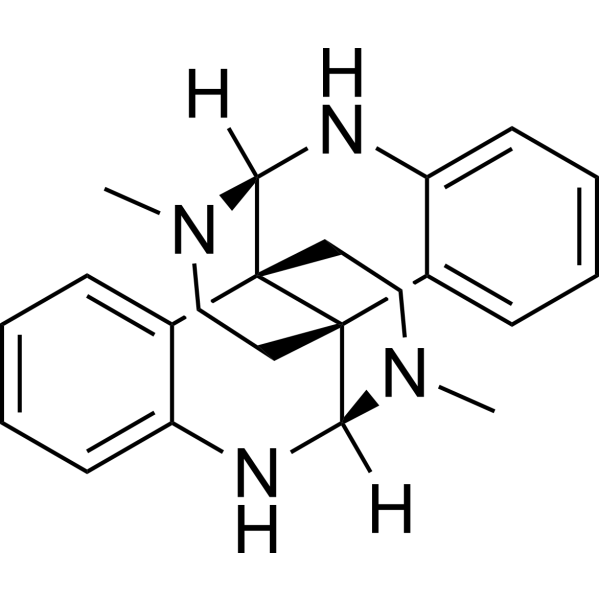
    Calycanthine
    1 Publications Verification

    Endogenous Metabolite Neurological Disease
    Calycanthine, the principal alkaloid of the order Calycanthaceae, has been isolated from a species of the genus Psychotria, and is a central nervous system toxin, causing convulsions .
    Calycanthine
  • HY-W001692

    DOV 273547

    GABA Receptor Neurological Disease
    Ocinaplon (DOV 273547) is an orally active positive allosteric modulator of GABAA receptor, with an EC50 ranging from 3.07 μM (α1β2γ2 subtype) to 10.03 μM (α1β2γ3 subtype). Ocinaplon enhances GABA-stimulated chloride currents across multiple GABAA receptor subtypes, with varying potency between different subtypes. Ocinaplon exerts anxiolytic and anticonvulsant effects, and causes motor impairment at high doses. Ocinaplon can be used for research on generalized anxiety disorder .
    Ocinaplon
  • HY-100782

    2-APH; 2-Amino-7-phosphonoheptanoic acid

    iGluR Neurological Disease
    DL-AP7 is a competitive NMDA antagonist and an anticonvulsant. DL-AP7 blocks the NMDA-induced convulsions and impairs learning performance in a passive avoidance task in mice .
    DL-AP7
  • HY-120004

    mAChR Infection
    PF-06827443 is a potent, low-clearance, orally bioavailable, and CNS-penetrant M1-selective positive allosteric modulator (PAM) with minimal agonist activity. PF-06827443 induce cholinergic AEs and convulsion .
    PF-06827443
  • HY-133486

    GABA Receptor Neurological Disease
    GABAA receptor agent 1 is a high affinity ligand for GABAA receptor, with potent anticonvulsant activity .
    GABAA receptor agent 1
  • HY-130155

    AMPK Neurological Disease
    AMPK activator C2 is a potent allosteric AMPK activator that is promising for research of epilepsy and convulsions .
    AMPK activator C2
  • HY-136844

    GYKI 53655

    iGluR Neurological Disease
    LY 300168 (GYKI 53655) is a non-competitive, blood-brain-barrier permeable AMPA receptor antagonist. LY 300168 attenuates hippocampal injury. LY 300168 blocks the sound-induced clonic and tonic convulsions .
    LY-300168
  • HY-101139

    XAC

    Adenosine Receptor Neurological Disease
    Xanthine amine congener is a non-selective adenosine receptor antagonist . Xanthine amine congener induces convulsions in mice .
    Xanthine amine congener
  • HY-W681659

    KB-509

    GABA Receptor Neurological Disease
    Flutoprazepam (KB-509), a benzodiazepine drug, possesses anticonflict effect. Flutoprazepam (KB-509) prevents maximal electroshock, pentetrazol, and strychnine-induced convulsions in mice .
    Flutoprazepam
  • HY-119105

    GABA Receptor Neurological Disease
    LY81067, a diaryltriazine, effectively protects against Pentylenetetrazole- and Picrotoxin-induced convulsions in mice. LY81067 exerts its anticonvulsant effects by binding to or near Picrotoxin (HY-101391) binding sites .
    LY81067
  • HY-115854

    GABA Receptor Neurological Disease
    Ro 15-1310 is an imidazobenzodiazepine that exhibits high affinity and selectivity for alpha 5-containing GABAA receptors. Ro 15-1310 is promising for research of convulsions .
    Ro 15-1310
  • HY-W424017A

    Endogenous Metabolite Neurological Disease
    Lophophine hydrochloride is the drug intermediate of anhalonine and Lophophorine (HY-119478), and can be found in Lophophora diffusa. Anhalonine causes slight sleepiness in frog. Lophophorine causes long-lasting convulsions, reflex excitability, muscle stiffness, and paralysis in rabbit and frog model .
    Lophophine hydrochloride
  • HY-118758

    γ-Kainic acid-glutamic acid

    Sodium Channel Neurological Disease
    γ-Kainylglutamic acid (γ-Kainic acid-glutamic acid), a dipeptide derived from kainic and L-Glutamic acids, is a selective antagonist of amino acid induced neuroexcitation with anticonvulsant properties. γ-Kainylglutamic acid inhibits the stimulation of Na + fluxes induced in brain slices by the neuroexcitant N-methyl-D-aspartic acid. γ-Kainylglutamic acid is also effective in protecting mice from picrotoxin-induced convulsions with an EC50 value of 0.17 μmol .
    γ-Kainylglutamic acid
  • HY-101059R

    GABA Receptor Reference Standards Neurological Disease
    FGIN 1-27 (Standard) is the analytical standard of FGIN 1-27. This product is intended for research and analytical applications. FGIN 1-27, an indoleacetamide, is a specific peripheral benzodiazepine receptor (PBR) ligand with a Ki of 5.0 nM. FGIN 1-27 can penetrate the blood brain barrier (BBB). FGIN 1-27 inhibits the onset of Isoniazid-induced convulsions .
    FGIN 1-27 (Standard)
  • HY-105569

    RP 6171; Amphothalide

    Parasite Neurological Disease
    Amphotalide is an anticonvulsant .
    Amphotalide
  • HY-129485

    FTC-146 hydrochloride

    Sigma Receptor Neurological Disease
    CM304 is a potent S1R inhibitor that can inhibit drug-induced convulsions in rats .
    CM304
  • HY-W097106

    Drug Isomer Neurological Disease
    (S)-3-N-Cbz-Amino-succinimide (Compound 1d) is an antiepileptic agent that can inhibit pentylenetetrazole (PTZ) and maximal electroshock (MES)-induced tonic convulsions in mice .
    (S)-3-N-Cbz-Amino-succinimide
  • HY-117162

    Cholinesterase (ChE) Neurological Disease
    S 1432 is a central nervous system depressant with anticonvulsant and muscle relaxant effects. S 1432 significantly reduces acetylcholine levels in the striatum inhibits convulsions induced by pentylenetetrazol. S 1432 can be used in the development of psychotropic drugs .
    S 1432
  • HY-101139AR

    XAC hydrochloride (Standard)

    Reference Standards Adenosine Receptor Neurological Disease
    Xanthine amine congener (hydrochloride) (Standard) is the analytical standard of Xanthine amine congener (hydrochloride). This product is intended for research and analytical applications. Xanthine amine congener (XAC) hydrochloride is a non-selective adenosine receptor antagonist. Xanthine amine congener hydrochloride induces convulsions in mice .
    Xanthine amine congener hydrochloride (Standard)
  • HY-14222

    Sigma Receptor Neurological Disease
    UMB24 is a potent antagonist of σ2 receptor, with Ki values of 170 nM anf 322 nM for σ2 receptor and σ1 receptor, respectively. UMB24 attenuats cocaine-induced convulsions and locomotor activity, but not lethality .
    UMB24
  • HY-120146

    GABA Receptor Neurological Disease
    NNC 05-2090 is aGABA uptake inhibitor and inhibitor of the β-GABA transporter (BGT-1) (IC50 sub>: 10.6 μM). NNC 05-2090 also inhibits mGAT2 with a Ki value of 1.4 μM. NNC 05-2090 has anticonvulsant activity and can be used in the study of epilepsy and neurological diseases .
    NNC 05-2090
  • HY-19434A

    iGluR mGluR Neurological Disease
    cis-ACPD is a potent agonist of NMDA receptor, with an IC50 of 3.3 μM. cis-ACPD is also a selective agonist of group II mGluR, with EC50s of 13 μM and 50 μM for mGluR2 and mGluR4, respectively .
    cis-ACPD
  • HY-W001160R

    Reference Standards Endogenous Metabolite nAChR Calcium Channel Neurological Disease Endocrinology Cancer
    5-Hydroxyindole (Standard) is the analytical standard of 5-Hydroxyindole (HY-W001160). This product is intended for research and analytical applications. 5-Hydroxyindole is an orally active hydroxylated indole and tryptophan metabolite. 5-Hydroxyindole activates α7 nicotinic acetylcholine receptors and acts on intestinal L-type calcium channels. 5-Hydroxyindole slows down the desensitization of 5-HT3 receptor-mediated ion currents in cells. 5-Hydroxyindole causes convulsions and loss of consciousness. 5-Hydroxyindole is used in the study of neuroblastoma, schizophrenia, and diseases related to intestinal motility disorders .
    5-Hydroxyindole (Standard)
  • HY-W013150R

    Reference Standards GABA Receptor Neurological Disease
    Alpidem (Standard) is the analytical standard of Alpidem (HY-W013150). This product is intended for research and analytical applications. Alpidem, an anxiolytic agent, is an orally active and brain-penetrant GABAA receptor ligand, binds to α1β2γ2 subunit-containing GABAA receptors (IC50 of 17 nM) over α5β2γ2 subunit-containing GABAA receptors (IC50 of >10 μM). Alpidem modulates calcium-induced mitochondrial permeability transition, induces glutathione depletion and hepatocyte necrosis, potentiates TNF-α toxicity, inhibits marble-burying and locomotor activity, enhances stressed rodent feeding behavior, and exerts anticonvulsant effects. Alpidem can be used for the research of anxiety, anxiety disorders, and convulsions.
    Alpidem (Standard)
  • HY-W013150S

    Isotope-Labeled Compounds GABA Receptor Neurological Disease
    Alpidem-d14 is the deuterium labeled Alpidem (HY-W013150) . Alpidem, an anxiolytic agent, is an orally active and brain-penetrant GABAA receptor ligand, binds to α1β2γ2 subunit-containing GABAA receptors (IC50 of 17 nM) over α5β2γ2 subunit-containing GABAA receptors (IC50 of >10 μM). Alpidem modulates calcium-induced mitochondrial permeability transition, induces glutathione depletion and hepatocyte necrosis, potentiates TNF-α toxicity, inhibits marble-burying and locomotor activity, enhances stressed rodent feeding behavior, and exerts anticonvulsant effects. Alpidem can be used for the research of anxiety, anxiety disorders, and convulsions.
    Alpidem-d14
  • HY-119716

    Neurological Disease
    Cyheptamide is an orally active anticonvulsant and antiepileptic agent. Cyheptamide exhibits moderate acute toxicity in animal models, with lethal doses varying by species specificity. Cyheptamide can be used in studies related to convulsions and epilepsy .
    Cyheptamide
  • HY-180554

    Synaptic Vesicle Proteins Neurological Disease
    UCB1244283 is a synaptic vesicle glycoprotein 2A (SV2A) allosteric modulator. UCB1244283 binds to a secondary ligand-binding site in SV2A and enhances orthosteric ligand engagement when the orthosteric site is occupied, by stabilizing the occluded state and slowing ligand dissociation. UCB1244283 shows a clear protective effect against both tonic and clonic convulsions in sound-sensitive mice. UCB1244283 can be used for epilepsy research .
    UCB1244283
  • HY-122400

    Spirodon

    Drug Derivative Neurological Disease
    Tetrantoin is a spirocyclic hydantoin and anticonvulsant with an approximate ED50 of 54 mg/kg.Tetrantoin inhibits and prevents convulsions induced by maximum electric shock test.Tetrantoin can be used for the research of epilepsy .
    Tetrantoin
  • HY-118807A

    Pyrilamine hydrochloride

    Histamine Receptor Potassium Channel Neurological Disease Inflammation/Immunology
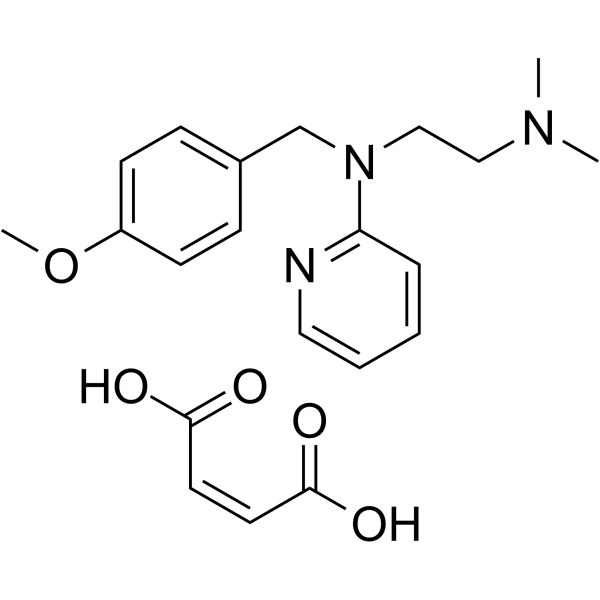
    Mepyramine hydrochloride (Pyrilamine hydrochloride) is a selective histamine H1 receptor antagonist and KCNQ channel inhibitor, with an IC50 of 12.5 μM against KCNQ2/Q3. Mepyramine hydrochloride shows no activity against allergic asthma in mice when used alone, but modulates the effect of JNJ 7777120 (HY-13508) on allergic asthma in mice; it inhibits the development of morphine physical dependence and increases histamine levels in mouse brains. Mepyramine hydrochloride can be used in studies related to seizures, convulsions, allergic asthma and morphine physical dependence .
    Mepyramine hydrochloride
  • HY-118018

    GABA Receptor Neurological Disease
    CHF-2993 is an orally active anticonvulsant. CHF-2993 antagonizes Bicuculline (HY-N0219)- and Picrotoxin (HY-101391)-induced tonic convulsions in mice, shows no activity against Pentylenetetrazole-induced clonic convulsions in mice, and partially reduces Veratridine (HY-N6691)-induced aspartate efflux in rat cortical synaptosomes. CHF-2993 can be used in the research of epilepsy .
    CHF-2993
  • HY-W550494

    Others Neurological Disease
    1-(Pyridin-4-yl)heptan-1-one (Compound R=n-C₆H₁₃) is an anticonvulsant agent. 1-(Pyridin-4-yl)heptan-1-one can protect mice from electroshock-induced convulsions. 1-(Pyridin-4-yl)heptan-1-one is promising for research of convulsion-related diseases such as epilepsy .
    1-(Pyridin-4-yl)heptan-1-one
  • HY-105584R

    Reference Standards Others Neurological Disease
    Tolycaine (Standard) is the analytical standard of Tolycaine (HY-105584). This product is intended for research and analytical applications. Tolycaine is a local agent that can suppress or relieve pain. Tolycaine also induces a convulsive response in experimental animals .
    Tolycaine (Standard)
  • HY-129485A

    FTC-146

    Sigma Receptor Cannabinoid Receptor Neurological Disease
    CM304 free base (FTC-146) is a potent S1R antagonist. CM304 free base enhances the antinociceptive effects of the cannabinoid receptor agonists. CM304 free base inhibits convulsions in rats .
    CM304 free base
  • HY-182435

    Potassium Channel Neurological Disease
    CLE-030 is a KCNQ2 agonist with non-gating-dependent current-modulating activity . CLE-030 modulates neuronal network activity. CLE-030 can be used in studies related to pain, epilepsy and benign familial neonatal convulsions .
    CLE-030

Inquiry Online

Your information is safe with us. * Required Fields.

Salutation


Country or Region *

Applicant Name *


Organization Name *

Department *


Email Address *


Product Name *

Cat. No.


Requested quantity *

Phone Number *


Remarks

Inquiry Online

Inquiry Information

Product Name:
Cat. No.:
Quantity:
MCE Japan Authorized Agent:

