7 Results for "

crosslinking degree

" in MedChemExpress (MCE) Product Catalog:
Products (7)

7 Results for "crosslinking degree" in MCE Product Catalog:

3
3 Cited Publications
Cat. No.: HY-Y0850E
CAS No.: 9002-89-5
Synonyms: PVA (Mw 30000-70000, 87-90% hydrolyzed); Poly(Ethenol) (Mw 30000-70000, 87-90% hydrolyzed)
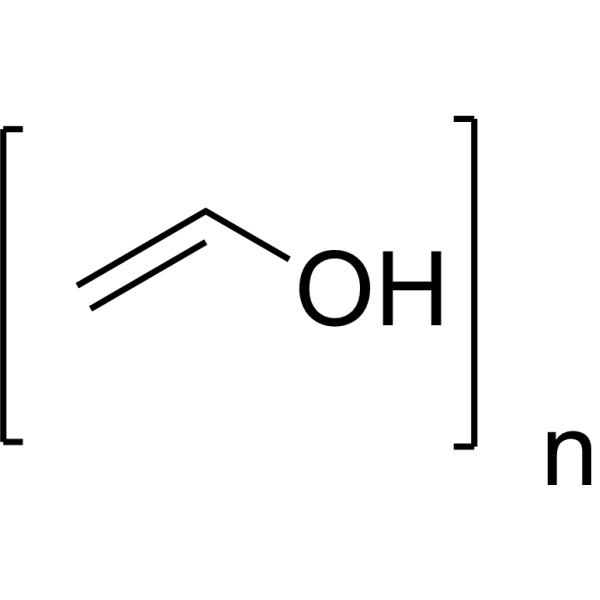
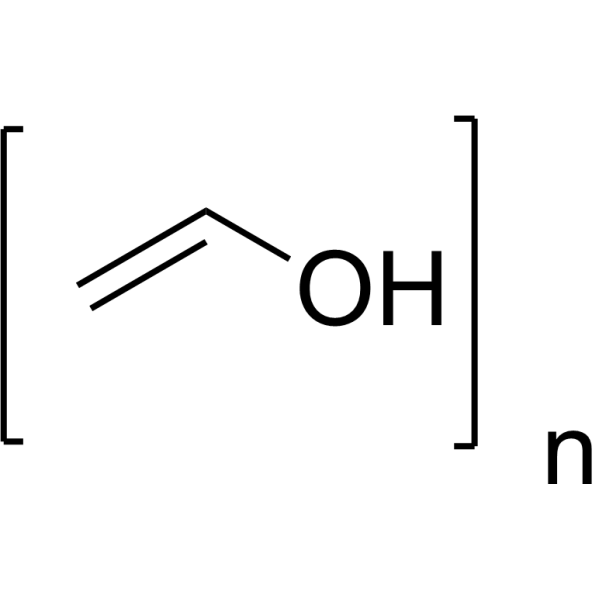
Polyvinyl alcohol (Mw 30000-70000, 87-90% hydrolyzed) is a polyvinyl alcohol with a molecular weight of 30000-70000 and hydrolytic properties. The degree of hydrolysis refers to the degree to which the acetate groups in the original polyvinyl acetate are converted into hydroxyl groups during the hydrolysis process. Polyvinyl alcohol (Mw 30000-70000, 87-90% hydrolyzed) is the hydrolysis and removal of acetate groups after the polymerization of ethylene acetate. And polyvinyl alcohol is obtained. A degree of hydrolysis of 87-90% indicates that a large part of the acetate groups have been removed, resulting in a large number of hydroxyl groups in the PVA structure. Polyvinyl alcohol with different degrees of hydrolysis can be used to self-crosslink to form cryogel, which can be used as biological excipients .
loading...
    loading...
3
3 Cited Publications
Cat. No.: HY-Y0850J
CAS No.: 9002-89-5
Synonyms: PVA (Mw 13000-23000, 87-89% hydrolyzed); Poly(Ethenol) (Mw 13000-23000, 87-89% hydrolyzed)
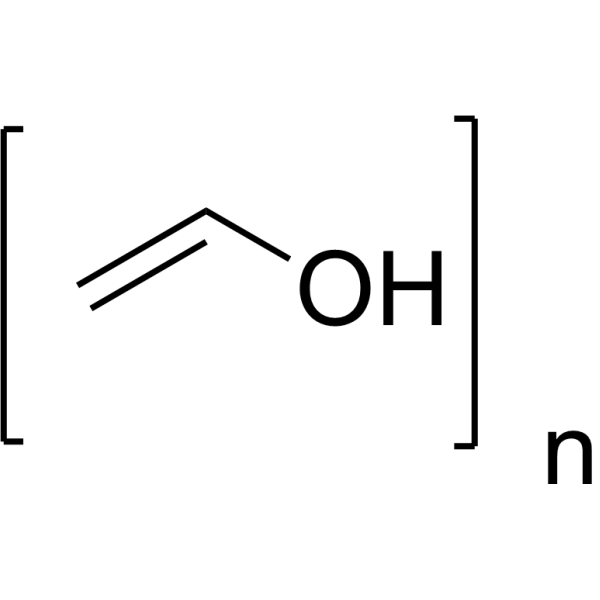
Polyvinyl alcohol (Mw 13000-23000, 87-89% hydrolyzed) is a polyvinyl alcohol with a molecular weight of 130000-23000 and hydrolytic properties. Polyvinyl alcohol (Mw 13000-23000, 87-89% hydrolyzed) is the hydrolysis and removal of acetate groups after the polymerization of ethylene acetate and polyvinyl alcohol is obtained. A degree of hydrolysis of 87-89% indicates that a large part of the acetate groups have been removed, resulting in a large number of hydroxyl groups in the PVA structure. Polyvinyl alcohol with different degrees of hydrolysis can be used to self-crosslink to form cryogel, which can be used as biological excipient. Polyvinyl alcohol can be used in tissue engineering by electrospinning. Polyvinyl alcohol can achieve high cellular density, infiltration, and uniform distribution, facilitating functional connections between cells. Polyvinyl alcohol can improve cell vitality through in vitro cultivation. Polyvinyl alcohol demonstrates promising inhibition of ostersarcoma cancer cells with Doxorubicin (HY-15142A) .
loading...
    loading...
3
3 Cited Publications
Cat. No.: HY-Y0850M
CAS No.: 9002-89-5
Synonyms: PVA (Mw 85000-124000, 87-89% hydrolyzed); Poly(Ethenol) (Mw 85000-124000, 87-89% hydrolyzed)
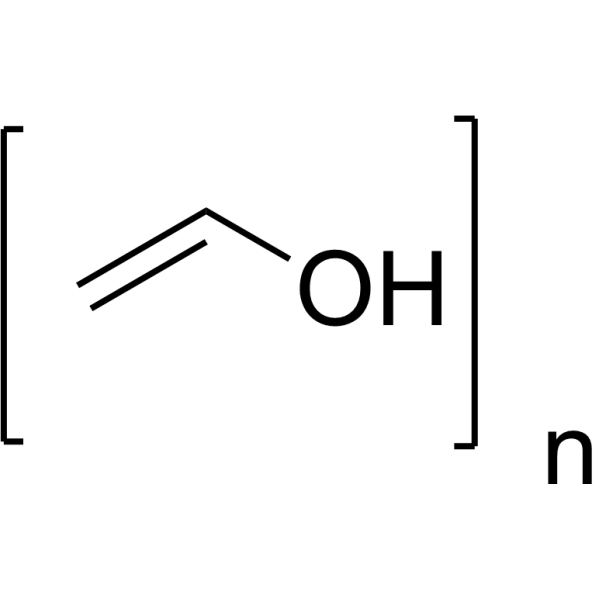
Polyvinyl alcohol (Mw 85000-124000, 87-89% hydrolyzed) is a polyvinyl alcohol with a molecular weight of 85000-124000 and hydrolytic properties. The degree of hydrolysis refers to the degree to which the acetate groups in the original polyvinyl acetate are converted into hydroxyl groups during the hydrolysis process. Polyvinyl alcohol (Mw 85000-124000, 87-89% hydrolyzed) is the hydrolysis and removal of acetate groups after the polymerization of ethylene acetate. And polyvinyl alcohol is obtained. A degree of hydrolysis of 87-89% indicates that a large part of the acetate groups have been removed, resulting in a large number of hydroxyl groups in the PVA structure. Polyvinyl alcohol with different degrees of hydrolysis can be used to self-crosslink to form cryogel, which can be used as biological excipient .
loading...
    loading...
3
3 Cited Publications
Cat. No.: HY-Y0850L
CAS No.: 9002-89-5
Synonyms: PVA (Mw 85000-124000, 99+% hydrolyzed); Poly(Ethenol) (Mw 85000-124000, 99+% hydrolyzed)
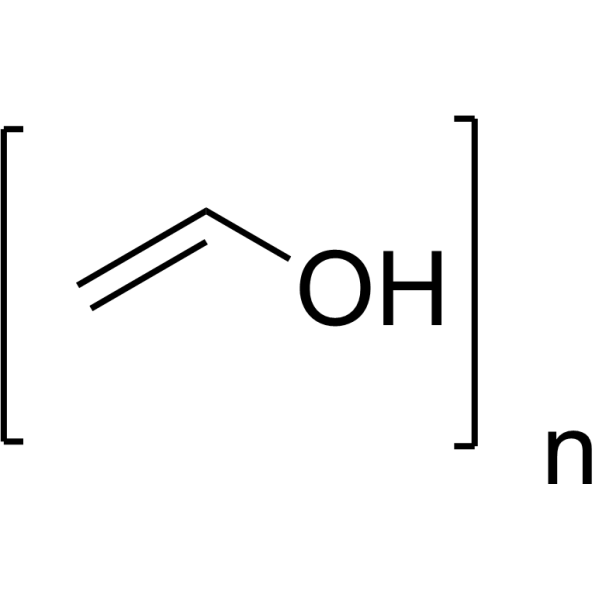
Polyvinyl alcohol (Mw 85000-124000, 99+% hydrolyzed) is a polyvinyl alcohol with a molecular weight of 85000-124000 and hydrolytic properties. Polyvinyl alcohol (Mw 85000-124000, 99+% hydrolyzed) forms hydrogels that can be used to simulate digestive organs and lesion models for the training of endoscopic ultrasound (EUS) and endoscopic ultrasound elastography (EUS-E). Polyvinyl alcohol with different degrees of hydrolysis can be used to self-crosslink to form cryogel, which can be used as biological excipients .
loading...
    loading...
3
3 Cited Publications
Cat. No.: HY-Y0850P
CAS No.: 9002-89-5
Synonyms: PVA (Mw 146000-186000, 87-89% hydrolyzed); Poly(Ethenol) (Mw 146000-186000, 87-89% hydrolyzed)
Polyvinyl alcohol (Mw 146000-186000, 87-89% hydrolyzed) is a polyvinyl alcohol with a molecular weight of 146000-186000 and hydrolytic properties. Polyvinyl alcohol (Mw 146000-186000, 87-89% hydrolyzed) is the hydrolysis and removal of acetate groups after the polymerization of ethylene acetate. And polyvinyl alcohol is obtained. Polyvinyl alcohol with different degrees of hydrolysis can be used to self-crosslink to form cryogel, which can be used as biological excipient. Polyvinyl alcohol can be used in tissue engineering by electrospinning. Polyvinyl alcohol can achieve high cellular density, infiltration, and uniform distribution, facilitating functional connections between cells. Polyvinyl alcohol can improve cell vitality through in vitro cultivation. Polyvinyl alcohol demonstrates promising inhibition of ostersarcoma cancer cells with Doxorubicin (HY-15142A) .
loading...
    loading...
Cat. No.: HY-Y0850U9
CAS No.: 9002-89-5
Synonyms: Polyvinyl alcohol (Mw 67000, 87-89% hydrolyzed, ~1400 polymerization); Poly(Ethenol) (Mw 67000, 87-89% hydrolyzed, ~1400 polymerization)
PVA (Mw 67000, 87-89% hydrolyzed, ~1400 polymerization) is a polyvinyl alcohol with a molecular weight of 67000 and hydrolytic properties. Degree of hydrolysis refers to the conversion rate of acetate groups in the original polyvinyl acetate to hydroxyl groups; PVA (Mw 67000, 87-89% hydrolyzed, ~1400 polymerization) is obtained by hydrolyzing and removing acetate groups after the polymerization of vinyl acetate. Polyvinyl alcohol with different degrees of hydrolysis can be used to form self-crosslinked cryogels and is applied as a biological adjuvant .
loading...
    loading...
Cat. No.: HY-116282P
CAS No.: 9011-18-1
Dextran sulfate, high sulfate (MW 5000) is a type of dextran sulfate with a high degree of sulfation. Dextran sulfate sodium can be used to induce ulcerative colitis models, and the greater the total number of sulfur atoms, the stronger the induced toxic effect. Dextran sulfate has certain antibacterial activity, and can form the ionic cross-linking core of nanoparticles together with chitosan, serving as a highly efficient dressing material to accelerate wound healing .
loading...
    loading...

