8 Results for "

discharge potential

" in MedChemExpress (MCE) Product Catalog:
Products (8)

8 Results for "discharge potential" in MCE Product Catalog:

Cat. No.: HY-118103
CAS No.: 360-68-9
Purity:  ≥99.0%
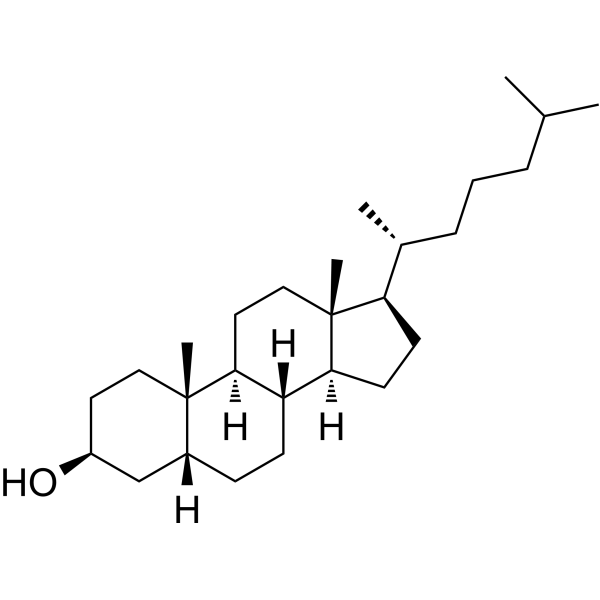
Synonyms: 5β-Cholestan-3β-ol
Coprostanol (5β-Cholestan-3β-ol) is a fecal sterol formed by microbial reduction of cholesterol in the intestines of man and higher animals. Coprostanol can be used as an indicator sterol of fecal pollution. Coprostanol has been recognized as a good indicator of pollution of water resources by sewage discharges. Coprostanol can serve as a potential biological indicator for cerebral chondrodystrophy (CTX) .
loading...
    loading...
Cat. No.: HY-N9404
CAS No.: 99759-48-5
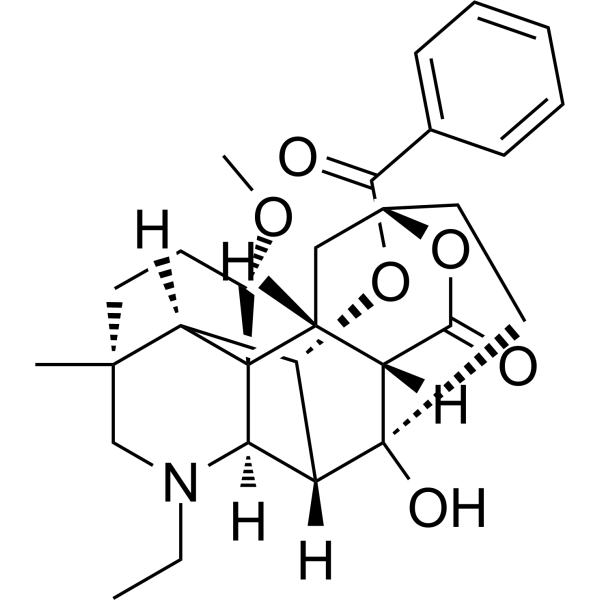
6-Benzoylheteratisine is an Aconitum alkaloid with potential neuroprotective activity. 6-Benzoylheteratisine can antagonize tetrodotoxin, inhibit the increase of [Na +]i, [Ca 2+]i and glutamate release, and block sodium channels. 6-Benzoylheteratisine has an inhibitory effect on the neuronal activity underlying epileptiform burst discharge .
loading...
    loading...
Cat. No.: HY-118103S
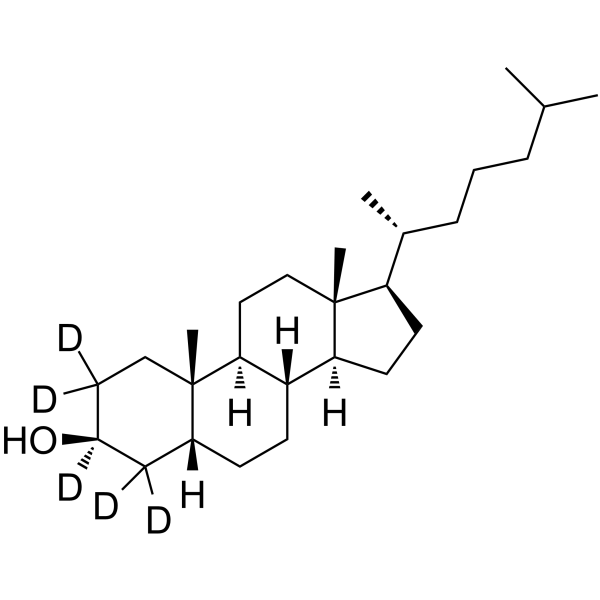
Synonyms: 5β-Cholestan-3β-ol-d5
Coprostanol-d5 (5β-Cholestan-3β-ol-d5) is the deuterium labeled Coprostanol. Coprostanol (5β-Cholestan-3β-ol) is a fecal sterol formed by microbial reduction of cholesterol in the intestines of man and higher animals. Coprostanol can be used as an indicator sterol of fecal pollution. Coprostanol has been recognized as a good indicator of pollution of water resources by sewage discharges. Coprostanol can serve as a potential biological indicator for cerebral chondrodystrophy (CTX).
loading...
    loading...
Cat. No.: HY-P5183
Target:  

Sodium Channel

Research Areas:  

Neurological Disease

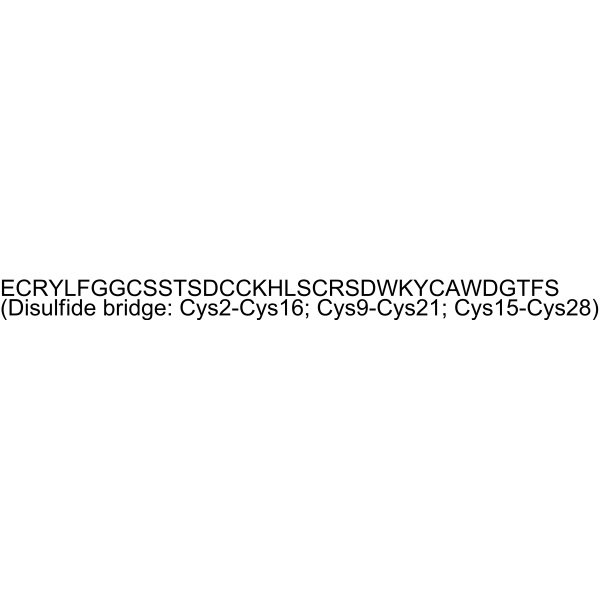
Hm1a is a venom peptide and a selective hNaV1.1 activator with an EC50 of 7.5 nM. Hm1a enhances hNaV1.1 and hNaV1.3 channel currents via delayed inactivation. Hm1a restores action potential firing in Dravet syndrome GABAergic inhibitory interneurons, reduces interictal epileptiform discharges and whole-brain hyperexcitability, lowers seizure frequency, and rescues premature death in Dravet syndrome mice. Hm1a can be used for the research of neurological disease, such as Dravet syndrome .
loading...
    loading...
Cat. No.: HY-W127839
CAS No.: 15708-48-2
Synonyms: Ethylenediaminetetraacetic acid dipotassium magnesium
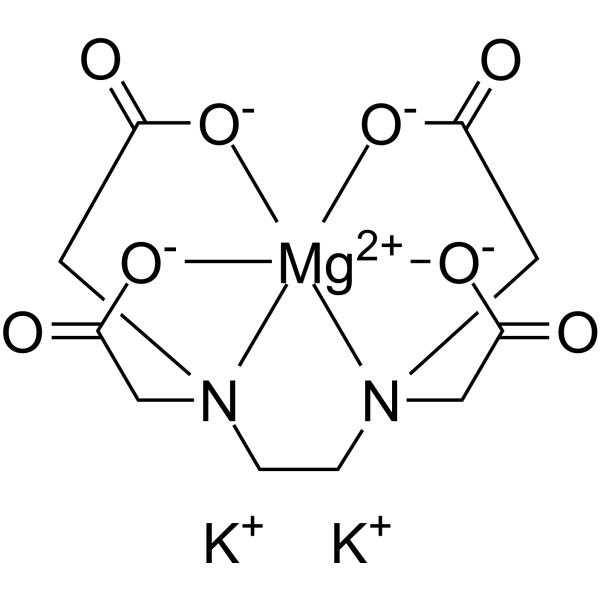
EDTA dipotassium magnesium (Ethylenediaminetetraacetic acid dipotassium magnesium) is a biochemical reagent that can be used in studies related to organic synthesis .
loading...
    loading...
Cat. No.: HY-118103R
CAS No.: 360-68-9
Synonyms: 5β-Cholestan-3β-ol (Standard)
Coprostanol (5β-Cholestan-3β-ol) (Standard) is the analytical standard of Coprostanol. This product is used for research and analytical applications. Coprostanol is a fecal sterol formed by the reduction of cholesterol by microorganisms in the human and higher animal intestines. Coprostanol can be used as an indicator sterol for fecal contamination. Coprostanol has been recognized as a good indicator of water resource pollution caused by sewage discharge. Coprostanol can serve as a potential biological indicator for cerebral chondrodystrophy (CTX).
loading...
    loading...
Cat. No.: HY-105203
CAS No.: 144576-50-1
Target:  

Others

Research Areas:  

Neurological Disease

MS-322 is an orally active centrally acting muscle relaxant. MS-322 can dose-dependently inhibit spinal reflex potentials, reduce neuronal excitability and muscle afferent discharges, and so on in rats. In addition, MS-322 has relatively weak inhibitory effects on other central nervous system pathways and no effect on the neuromuscular junction .
loading...
    loading...
Cat. No.: HY-W094110
CAS No.: 10028-22-5
Iron (III) sulfate is a stable rhombohedral NASICON compound. Iron (III) sulfate can serve as a sodium ion intercalation host, enabling sodium ion intercalation and deintercalation via a single-phase mechanism relying on the Fe 2+/Fe 3+ redox couple. Iron (III) sulfate exhibits reversible electrochemical behavior and moderate polarization in cyclic voltammetry tests, and its charge transfer resistance changes during charge-discharge cycles. Iron (III) sulfate possesses a high redox potential, excellent rate capability, and long-cycle stability .
loading...
    loading...

