

1. Search Result
Search Result
Results for "

emollient

" in MedChemExpress (MCE) Product Catalog:

39

Inhibitors & Agonists

15

Biochemical Assay Reagents

9

Natural
Products

8

Isotope-Labeled Compounds

4

Oligonucleotides

Cat. No. Product Name Target Research Areas Chemical Structure
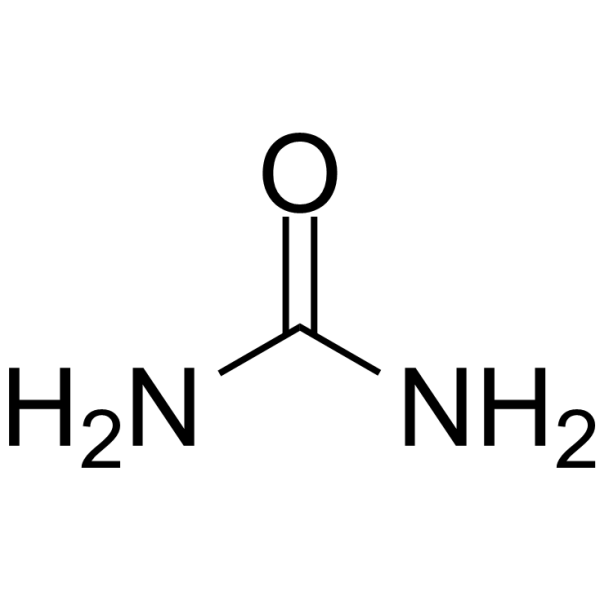
  • HY-Y0271
    Urea
    5+ Cited Publications

    Carbonyl diamide

    Environmental Pollutants Apoptosis Endogenous Metabolite Carbonic Anhydrase ERK Cardiovascular Disease Cancer
    Urea is a powerful protein denaturant via both direct and indirect mechanisms . A potent emollient and keratolytic agent . Used as a diuretic agent. Blood urea nitrogen (BUN) has been utilized to evaluate renal function . Widely used in fertilizers as a source of nitrogen and is an important raw material for the chemical industry.
    Urea
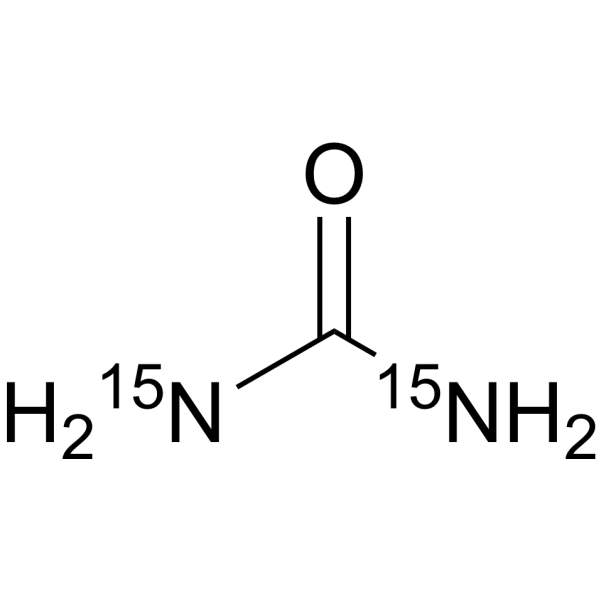
  • HY-Y0271S

    Carbonyl diamide-15N2

    Endogenous Metabolite Cardiovascular Disease Cancer
    Urea- 15N2 is the 15N-labeled Urea. Urea is a powerful protein denaturant via both direct and indirect mechanisms . A potent emollient and keratolytic agent . Used as a diuretic agent. Blood urea nitrogen (BUN) has been utilized to evaluate renal function . Widely used in fertilizers as a source of nitrogen and is an important raw material for the chemical industry.
    Urea-15N2
  • HY-Y0271S2

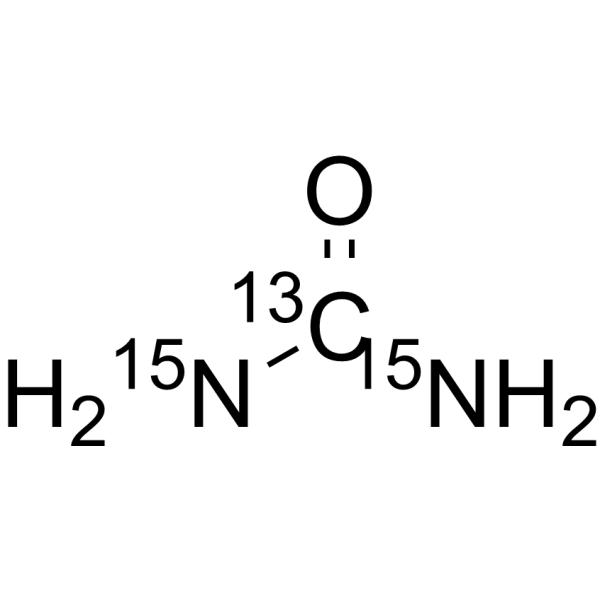
    Carbonyl diamide-13C,15N2

    Endogenous Metabolite Cardiovascular Disease
    Urea- 13C, 15N2 is the 13C and 15N labeled Urea . Urea is a powerful protein denaturant via both direct and indirect mechanisms . A potent emollient and keratolytic agent . Used as a diuretic agent. Blood urea nitrogen (BUN) has been utilized to evaluate renal function . Widely used in fertilizers as a source of nitrogen and is an important raw material for the chemical industry.
    Urea-13C,15N2
  • HY-N7113

    Environmental Pollutants Cancer
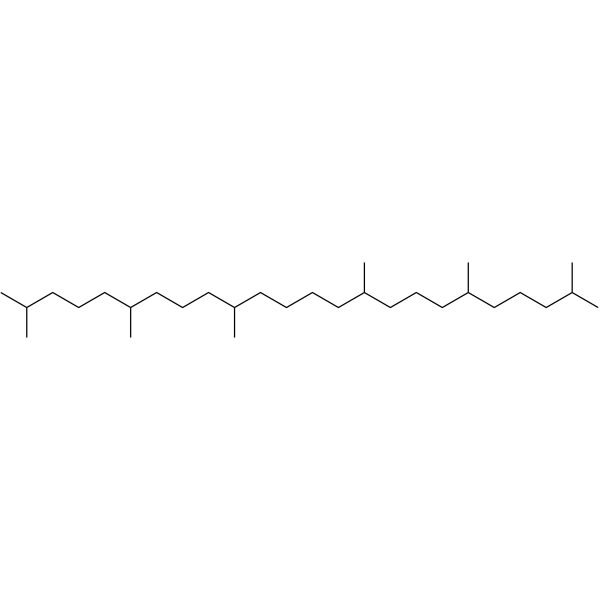
    Squalane, found in certain fish oils (especially shark liver oil), and some vegetable oils, is a saturated derivative of Squalene. Squalane shows anticancer, antioxidant, skin hydrating, and emollient activities .
    Squalane
  • HY-124190

    Environmental Pollutants Biochemical Assay Reagents Others
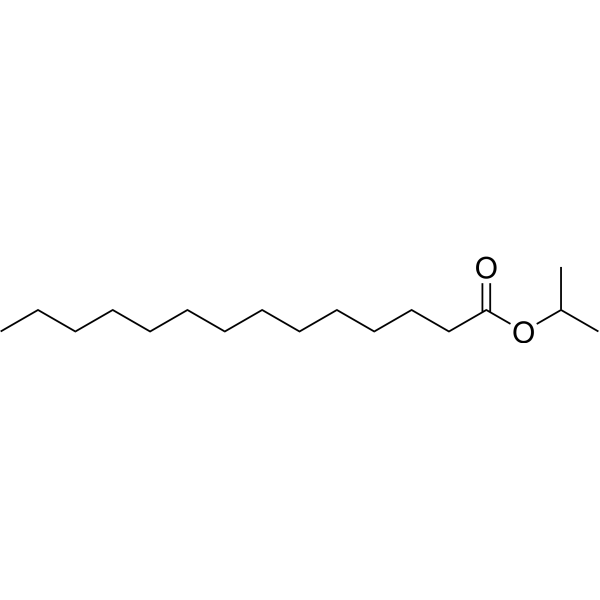
    Isopropyl myristate (IPM) is the ester of isopropyl alcohol and myristic acid. Isopropyl myristate is used for transdermal delivery of some compounds. Isopropyl myristate is a polar emollient and is used in cosmetic and topical medicinal preparations where good absorption into the skin is desired .
    Isopropyl myristate
  • HY-W127534

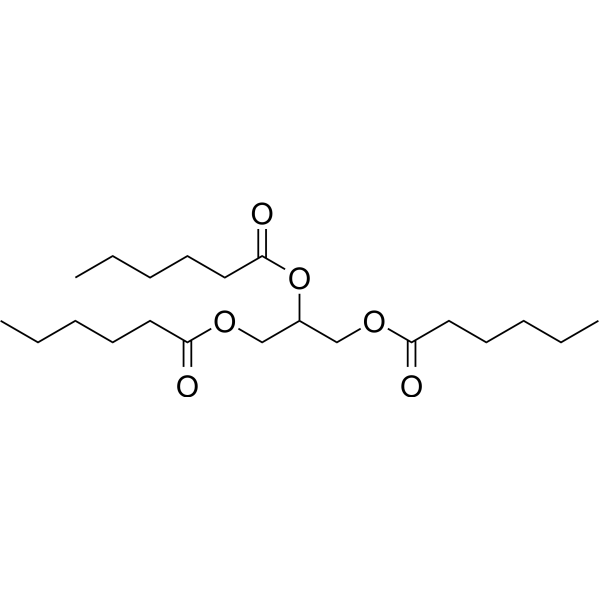
    Trihexanoin

    Biochemical Assay Reagents Others
    TricaproinIt is an organic compound belonging to the class of triacylglycerols. It consists of three molecules of caproic acid esterified to the glycerin backbone, with a mild fatty smell. TricaproinIt has a variety of applications in the cosmetic and personal care industries, especially as an emollient and conditioning agent in skin and hair care products. Additionally, it is used as a lubricant and surfactant in industrial settings.
    Tricaproin
  • HY-W127445

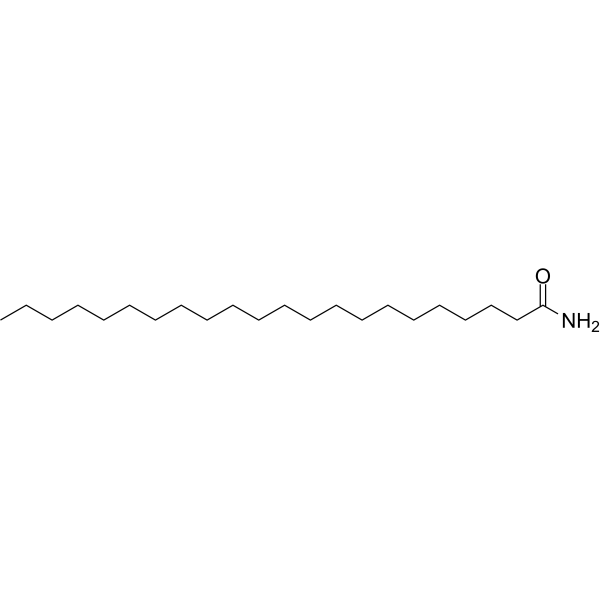
    Docosanamide

    Biochemical Assay Reagents Others
    Behenamide is a fatty acid derived from plants such as rapeseed oil and can be synthesized by a variety of processes. Behenamide has unique properties that make it useful as a slip agent, A lubricant and release agent, it is also used in personal care products, including cosmetics and hair care, as a thickener and emollient because of its ability to improve the consistency and texture of formulations.
    Behenamide
  • HY-N7113S

    Isotope-Labeled Compounds Cancer
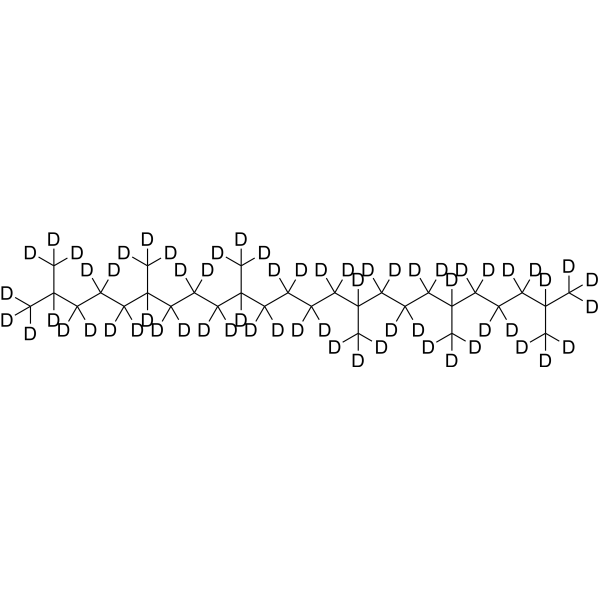
    Squalane-d62 is the deuterium labeled Squalane . Squalane, found in certain fish oils (especially shark liver oil), and some vegetable oils, is a saturated derivative of Squalene. Squalane shows anticancer, antioxidant, skin hydrating, and emollient activities .
    Squalane-d62
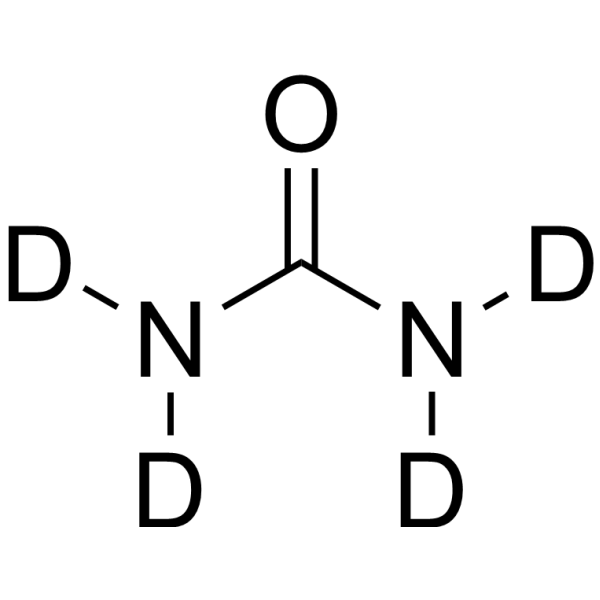
  • HY-Y0271S1

    Carbonyl diamide-d4

    Endogenous Metabolite Others
    Urea-d4 is the deuterium labeled Urea . Urea is a powerful protein denaturant via both direct and indirect mechanisms . A potent emollient and keratolytic agent . Used as a diuretic agent. Blood urea nitrogen (BUN) has been utilized to evaluate renal function . Widely used in fertilizers as a source of nitrogen and is an important raw material for the chemical industry.
    Urea-d4
  • HY-W010807

    Environmental Pollutants Biochemical Assay Reagents Others
    Hexadecyl palmitate is an organic compound commonly used in the cosmetic industry as an emollient, thickener and skin conditioning agent. Cetyl palmitate is derived from a mixture of cetyl alcohol (a fatty alcohol) and palmitic acid (a saturated fatty acid). It is often used in skin care products such as moisturizers, lotions, and creams to improve their texture and Helps them glide smoothly on the skin. In addition to its use in cosmetics, cetyl palmitate is used in other industries including pharmaceuticals, food additives and lubricants. Overall, it's considered safe for use in personal care products, but like any other ingredient, it may cause irritation or an allergic reaction in some people.
    Hexadecyl palmitate
  • HY-W010695

    Biochemical Assay Reagents Others
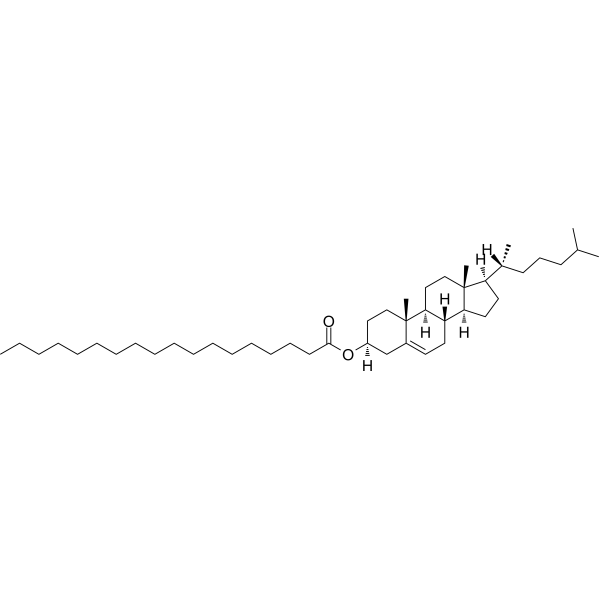
    Cholesteryl stearate is a compound belonging to the class of esters. It is a cholesterol ester commonly found in animal and plant sources. Cholesteryl stearate consists of two naturally occurring substances, cholesteryl alcohol and stearic acid. The combination of the two creates a stable compound that is commonly used in a variety of industrial and biomedical applications. Cholesteryl stearate is commonly used as a lubricant, thickener and emollient in cosmetic formulations such as lotions and creams. It is also used to produce certain types of polymers and plastics.
    Cholesteryl stearate
  • HY-134098

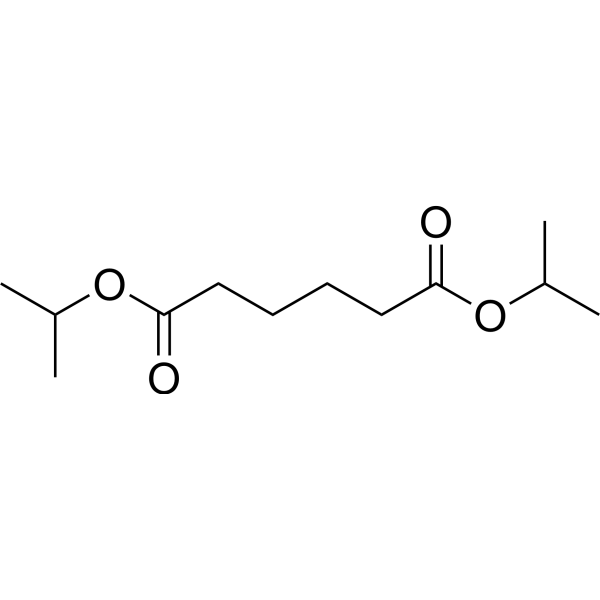
    Adipic acid diisopropyl ester

    Environmental Pollutants TRP Channel Others
    Diisopropyl adipate is an alternative plasticizer and a TRPA1 activator. Diisopropyl adipate activates TRPA1 and enhances FITC-induced contact hypersensitivity (CHS).Diisopropyl adipate also serves as an ingredient in cosmetics and drug formulations topically applied to the skin. Diisopropyl adipate can be used as an excipient, such as emollients, plasticizers. Pharmaceutical excipients, or pharmaceutical auxiliaries, refer to other chemical substances used in the pharmaceutical process other than pharmaceutical ingredients. Pharmaceutical excipients generally refer to inactive ingredients in pharmaceutical preparations, which can improve the stability, solubility and processability of pharmaceutical preparations. Pharmaceutical excipients also affect the absorption, distribution, metabolism, and elimination (ADME) processes of co-administered drugs .
    Diisopropyl adipate
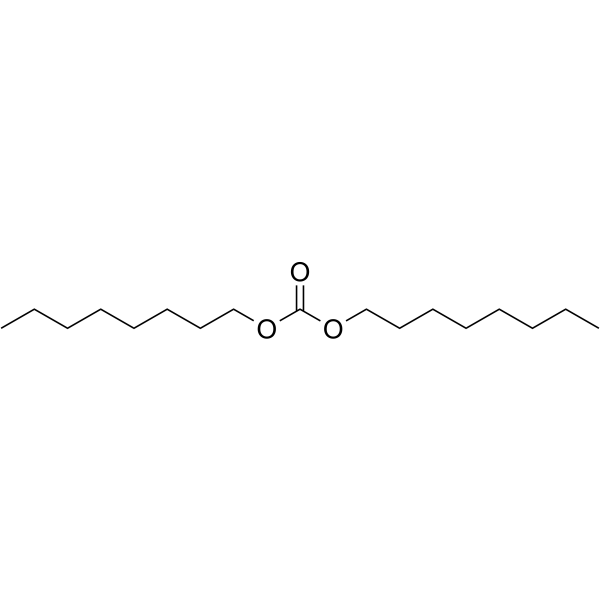
  • HY-135737
    Dicaprylyl carbonate
    1 Publications Verification

    Dioctyl carbonate

    Others Others
    Dicaprylyl carbonate, a solid, plant-derived fat, is a dry emollient. Dicaprylyl carbonate has excellent dermatological compatibility and a comprehensive performance profile, such as solubilizing and dispersing ability for sun-care filters .
    Dicaprylyl carbonate
  • HY-W127338

    Biochemical Assay Reagents Others
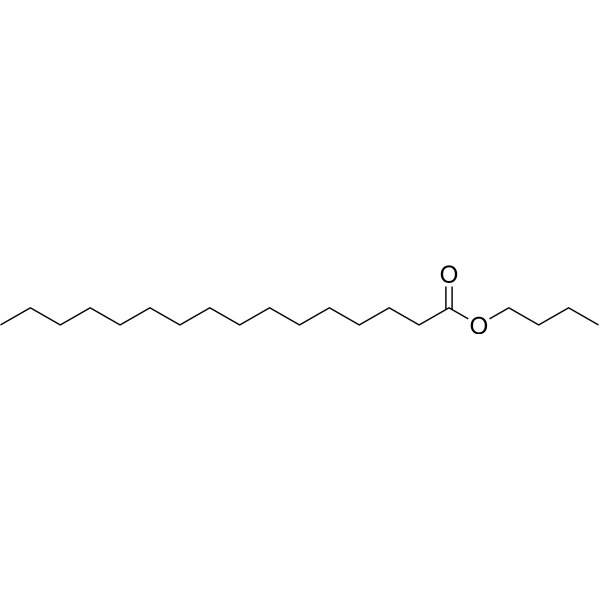
    Butyl Palmitate is an ester compound commonly used as a conditioning, emollient or fragrance in a variety of cosmetic and personal care products. In addition, it can be used as a solvent or lubricant in various industrial applications. Its unique chemical properties make it an important ingredient in a variety of commercial products, including perfumes, lotions and hair care products.
    Butyl Palmitate
  • HY-Y0271R

    Carbonyl diamide (Standard)

    Carbonic Anhydrase Reference Standards Endogenous Metabolite ERK Apoptosis Cardiovascular Disease Cancer
    Urea (Standard) is the analytical standard of Urea. This product is intended for research and analytical applications. Urea is a powerful protein denaturant via both direct and indirect mechanisms . A potent emollient and keratolytic agent . Used as a diuretic agent. Blood urea nitrogen (BUN) has been utilized to evaluate renal function . Widely used in fertilizers as a source of nitrogen and is an important raw material for the chemical industry.
    Urea (Standard)
  • HY-W009051

    Environmental Pollutants Biochemical Assay Reagents Others
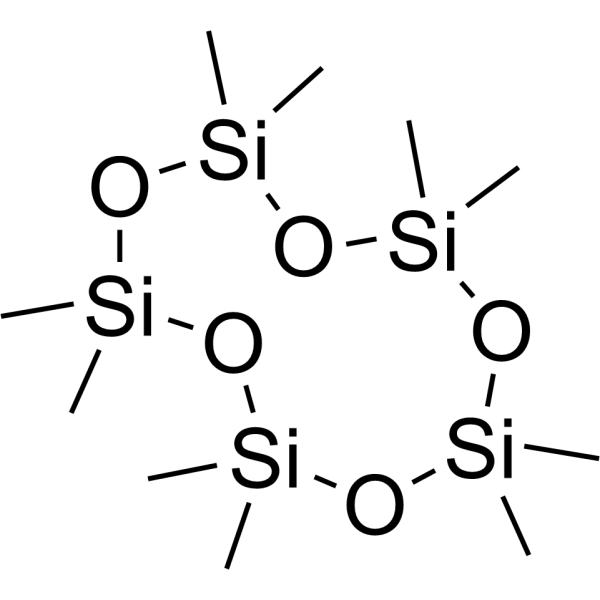
    Decamethylcyclopentasiloxane (D5), an organosilicon compound that is used as a skin emollient in cosmetics and personal products .
    Decamethylcyclopentasiloxane
  • HY-N7113R

    Reference Standards Others Cancer
    Squalane (Standard) is the analytical standard of Squalane. This product is intended for research and analytical applications. Squalane, found in certain fish oils (especially shark liver oil), and some vegetable oils, is a saturated derivative of Squalene. Squalane shows anticancer, antioxidant, skin hydrating, and emollient activities .
    Squalane (Standard)
  • HY-W127565

    Biochemical Assay Reagents Others
    HexatetracontaneIt is an organic compound belonging to hydrocarbons. It has a high melting point. HexatetracontaneIt has a variety of applications in the cosmetic and personal care industries, especially as an emollient and humectant in skin and hair care products. In addition, it is used as a lubricant and coating agent in industrial environments.
    Hexatetracontane
  • HY-W127465

    Biochemical Assay Reagents Others
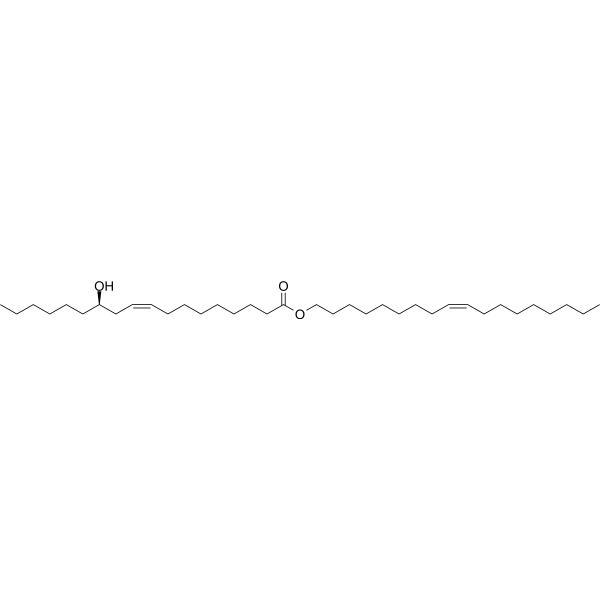
    Oleyl RicinoleateIt is an organic compound belonging to esters. It is formed from the reaction between oleyl alcohol and ricinoleic acid and has a mild fatty odor. Oleyl RicinoleateIt has a variety of applications in the cosmetic and personal care industries, especially as an emollient and conditioning agent in skin and hair care products. Additionally, it is used as a lubricant and plasticizer in industrial settings.
    Oleyl Ricinoleate
  • HY-154634

    Biochemical Assay Reagents Others
    Cyclomethicone can be used as an excipient, such as emollients, humectants, thickeners. Pharmaceutical excipients, or pharmaceutical auxiliaries, refer to other chemical substances used in the pharmaceutical process other than pharmaceutical ingredients. Pharmaceutical excipients generally refer to inactive ingredients in pharmaceutical preparations, which can improve the stability, solubility and processability of pharmaceutical preparations. Pharmaceutical excipients also affect the absorption, distribution, metabolism, and elimination (ADME) processes of co-administered drugs .
    Cyclomethicone
  • HY-B0222S

    HSV Infection
    1-Docosanol-d45 is the deuterium labeled 1-Docosanol. 1-Docosanol is a saturated fatty alcohol used traditionally as an emollient, emulsifier, and thickener in cosmetics, and nutritional supplement. 1-Docosanol is an inhibitor of lipid-enveloped viruses including herpes simplex.
    1-Docosanol-d45
  • HY-W127377

    Biochemical Assay Reagents Others
    Butyl oleateIt is an organic compound belonging to esters. It is formed from the reaction of butanol and oleic acid and has a mild fruity smell. Butyl oleateIt has a variety of applications in the cosmetic and personal care industries, especially as an emollient and conditioning agent in skin and hair care products. Additionally, it is used as a lubricant and solvent in industrial settings.
    Butyl oleate
  • HY-W127437

    Octadecanoic acid, octadecyl ester

    Biochemical Assay Reagents Others
    Stearyl StearateIt is an organic compound belonging to esters. It is formed from the reaction between stearyl alcohol and stearic acid and has a mild fatty odor. Stearyl stearate has several applications in the cosmetic and personal care industries, especially as an emollient and conditioning agent in skin and hair care products. Additionally, it is used as a lubricant and surfactant in industrial settings.
    Stearyl Stearate
  • HY-W015370R

    Reference Standards Endogenous Metabolite Others Inflammation/Immunology
    Squalane (Standard) is the analytical standard of Squalane. This product is intended for research and analytical applications. Squalane, found in certain fish oils (especially shark liver oil), and some vegetable oils, is a saturated derivative of Squalene. Squalane shows anticancer, antioxidant, skin hydrating, and emollient activities .
    L-Lysine hydrate (Standard)
  • HY-W127346

    Environmental Pollutants Biochemical Assay Reagents Others
    Pentaerythrityl tetrastearate is an ester compound commonly used as a lubricant, emollient or thickener in various cosmetic and personal care products. It is also used as a plasticizer or stabilizer in the production of plastics and resins. Pentaerythrityl tetrastearate has unique chemical properties that make it an important ingredient in a variety of industrial processes, including the manufacture of adhesives, coatings and sealants.
    Pentaerythrityl tetrastearate
  • HY-W127540

    Hexadecyl acetate

    Environmental Pollutants Biochemical Assay Reagents Others
    Palmityl acetate is an ester compound with a waxy odor commonly used as a lubricant or emollient in various cosmetic and personal care products. In addition, it can be used as a plasticizer or stabilizer in the production of plastics and resins. Its unique chemical properties make it an important ingredient in a variety of commercial products, including perfumes, lotions and hair care products.
    Palmityl acetate
  • HY-124190R

    Biochemical Assay Reagents Reference Standards Others
    Isopropyl myristate (Standard) is the analytical standard of Isopropyl myristate. This product is intended for research and analytical applications. Isopropyl myristate (IPM) is the ester of isopropyl alcohol and myristic acid. Isopropyl myristate is used for transdermal delivery of some compounds. Isopropyl myristate is a polar emollient and is used in cosmetic and topical medicinal preparations where good absorption into the skin is desired .
    Isopropyl myristate (Standard)
  • HY-W010807R

    Biochemical Assay Reagents Reference Standards Others
    Hexadecyl palmitate (Standard) is the analytical standard of Hexadecyl palmitate. This product is intended for research and analytical applications. Hexadecyl palmitate is an organic compound commonly used in the cosmetic industry as an emollient, thickener and skin conditioning agent. Cetyl palmitate is derived from a mixture of cetyl alcohol (a fatty alcohol) and palmitic acid (a saturated fatty acid). It is often used in skin care products such as moisturizers, lotions, and creams to improve their texture and Helps them glide smoothly on the skin. In addition to its use in cosmetics, cetyl palmitate is used in other industries including pharmaceuticals, food additives and lubricants. Overall, it's considered safe for use in personal care products, but like any other ingredient, it may cause irritation or an allergic reaction in some people.
    Hexadecyl palmitate (Standard)
  • HY-W127434A

    (12R)-Octadecane-1,12-diol

    Biochemical Assay Reagents Others
    (12R)-1,12-Octadecanediol ((12R)-Octadecane-1,12-diol) is a compound characterized by a linear chain of 18 carbon atoms with two hydroxyl groups (C18H38O2). This colorless substance has unique properties owing to the presence of two hydroxyl groups in its molecular structure. Whether derived from natural sources or synthesized chemically, 12-Octadecanediol finds applications in various industries. It is often utilized in the formulation of cosmetics, personal care products, and pharmaceuticals due to its emollient properties, enhancing moisturization and conditioning effects in different formulations. The compound's distinctive structure may make it suitable for specific uses in research or industrial processes. In industrial contexts, 12-Octadecanediol serves as a valuable chemical intermediate for synthesizing other compounds. Its specialized structure and adaptability in formulations make it a significant component across diverse industries, contributing to the development of products for various purposes.
    (12R)-1,12-Octadecanediol
  • HY-W009051R

    Biochemical Assay Reagents Reference Standards Others
    Decamethylcyclopentasiloxane (Standard) is the analytical standard of Decamethylcyclopentasiloxane. This product is intended for research and analytical applications. Decamethylcyclopentasiloxane (D5), an organosilicon compound that is used as a skin emollient in cosmetics and personal products .
    Decamethylcyclopentasiloxane (Standard)
  • HY-N18673

    Others Others
    Shea tree extract can be used as an emollient in cosmetics.
    Shea tree extract
  • HY-N18723

    Others Others
    Cucumis sativus extract can be used in cosmetics for its soothing and emollient properties.
    Cucumis sativus extract
  • HY-N18823

    Others Others
    Hydrogenated rapeseed oil is a vegetable oil which is hydrogenated. Hydrogenated rape oil can be ued as an emollient, thickening agent.
    Hydrogenated rape oil
  • HY-W127565R

    Biochemical Assay Reagents Reference Standards Others
    Hexatetracontane (Standard) is the analytical standard of Hexatetracontane. This product is intended for research and analytical applications. HexatetracontaneIt is an organic compound belonging to hydrocarbons. It has a high melting point. HexatetracontaneIt has a variety of applications in the cosmetic and personal care industries, especially as an emollient and humectant in skin and hair care products. In addition, it is used as a lubricant and coating agent in industrial environments.
    Hexatetracontane (Standard)
  • HY-178412S

    Isotope-Labeled Compounds Biochemical Assay Reagents Others
    Isopropyl myristate-d27 is the deuterium labeled Isopropyl myristate (HY-124190). Isopropyl myristate (IPM) is the ester of isopropyl alcohol and myristic acid. Isopropyl myristate is used for transdermal delivery of some compounds. Isopropyl myristate is a polar emollient and is used in cosmetic and topical medicinal preparations where good absorption into the skin is desired .
    Isopropyl myristate-d27
  • HY-W127534R

    Trihexanoin (Standard)

    Biochemical Assay Reagents Reference Standards Others
    Tricaproin (Standard) is the analytical standard of Tricaproin. This product is intended for research and analytical applications. TricaproinIt is an organic compound belonging to the class of triacylglycerols. It consists of three molecules of caproic acid esterified to the glycerin backbone, with a mild fatty smell. TricaproinIt has a variety of applications in the cosmetic and personal care industries, especially as an emollient and conditioning agent in skin and hair care products. Additionally, it is used as a lubricant and surfactant in industrial settings.
    Tricaproin (Standard)
  • HY-Y0271S3

    Carbonyl diamide-13C,15N

    Isotope-Labeled Compounds Carbonic Anhydrase Endogenous Metabolite ERK Apoptosis Cardiovascular Disease Cancer
    Urea- 13C, 15N is the 13C- and 15N-labeled Urea (HY-Y0271). Urea is a powerful protein denaturant via both direct and indirect mechanisms. A potent emollient and keratolytic agent. Used as a diuretic agent. Blood urea nitrogen (BUN) has been utilized to evaluate renal function. Widely used in fertilizers as a source of nitrogen and is an important raw material for the chemical industry .
    Urea-13C,15N
  • HY-W010695R

    Biochemical Assay Reagents Reference Standards Others
    Cholesteryl stearate (Standard) is the analytical standard of Cholesteryl stearate (HY-W010695). This product is intended for research and analytical applications. Cholesteryl stearate is a compound belonging to the class of esters. It is a cholesterol ester commonly found in animal and plant sources. Cholesteryl stearate consists of two naturally occurring substances, cholesteryl alcohol and stearic acid. The combination of the two creates a stable compound that is commonly used in a variety of industrial and biomedical applications. Cholesteryl stearate is commonly used as a lubricant, thickener and emollient in cosmetic formulations such as lotions and creams. It is also used to produce certain types of polymers and plastics.
    Cholesteryl stearate (Standard)
  • HY-W010695S1

    Isotope-Labeled Compounds Biochemical Assay Reagents Others
    Cholesteryl octadecanoate-d35 is the deuterium labeled Cholesteryl stearate (HY-W010695). Cholesteryl stearate is a compound belonging to the class of esters. It is a cholesterol ester commonly found in animal and plant sources. Cholesteryl stearate consists of two naturally occurring substances, cholesteryl alcohol and stearic acid. The combination of the two creates a stable compound that is commonly used in a variety of industrial and biomedical applications. Cholesteryl stearate is commonly used as a lubricant, thickener and emollient in cosmetic formulations such as lotions and creams. It is also used to produce certain types of polymers and plastics.
    Cholesteryl octadecanoate-d35

Inquiry Online

Your information is safe with us. * Required Fields.

Salutation


Country or Region *

Applicant Name *


Organization Name *

Department *


Email Address *


Product Name *

Cat. No.


Requested quantity *

Phone Number *


Remarks

Inquiry Online

Inquiry Information

Product Name:
Cat. No.:
Quantity:
MCE Japan Authorized Agent:

