7 Results for "

extracellular nucleotides

" in MedChemExpress (MCE) Product Catalog:
Products (7)

7 Results for "extracellular nucleotides" in MCE Product Catalog:

  • Targets Recommended:
9
9 Publications Verification
Cat. No.: HY-100742
CAS No.: 1802977-61-2
Purity:  99.38%
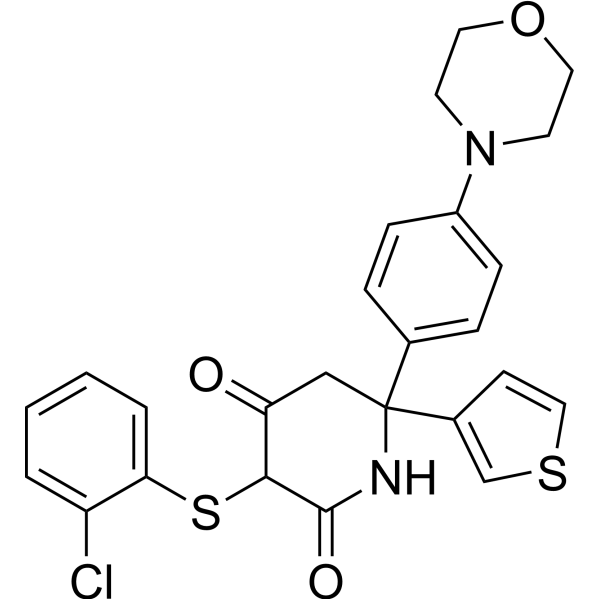
GNE-140 racemate is a racemic mixture of (R)-GNE-140 (HY-100742A) and (S)-GNE-140 (HY-100742B), and also a tautomer of GNE-140 (HY-118241). GNE-140 racemate is an orally active lactate dehydrogenase inhibitor, with an IC50 of 3 nM against human LDHA and an IC50 of 5 nM against LDHB. GNE-140 racemate reduces the phosphorylation level and total protein expression of p38 MAPK, and inhibits EGF-induced AKT phosphorylation. GNE-140 racemate decreases lactate production, regulates glycolysis, the pentose phosphate pathway and nucleotide biosynthesis, increases extracellular pH, inhibits cell proliferation, migration and invasion, and induces caspase-3 activation and ROS accumulation. GNE-140 racemate can be used in research related to breast cancer, cystic fibrosis and pancreatic cancer .
loading...
    loading...
2
2 Cited Publications
Cat. No.: HY-N11287A
CAS No.: 108320-89-4
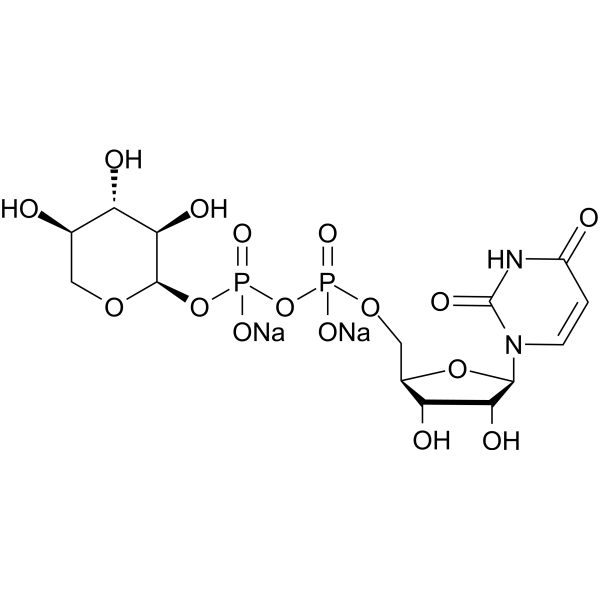
UDP-xylose disodium is an endogenous sugar nucleotide and a catalytic substrate of UDP-xylose disodium synthase (UXS). UDP-xylose disodium is a sugar donor for the synthesis of glycoproteins, polysaccharides, various metabolites and oligosaccharides in plants, vertebrates and fungi, and participates in the synthesis of proteoglycans as a glycosyl donor. UDP-xylose disodium participates in the regulation of the synthesis of extracellular matrix components and can be used to study the mechanism of proteoglycan biosynthesis in glycobiology and related diseases (such as connective tissue diseases)[1][2].
loading...
    loading...
Cat. No.: HY-N11287
CAS No.: 3616-06-6
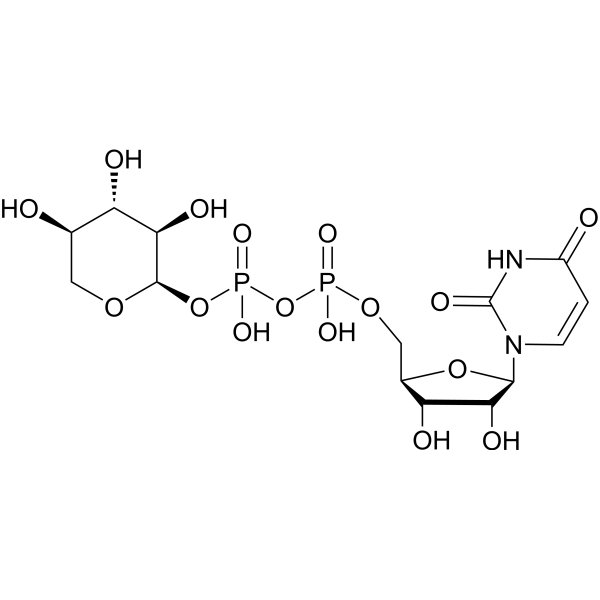
UDP-xylose is an endogenous sugar nucleotide and a catalytic substrate of UDP-xylose synthase (UXS). UDP-xylose is a sugar donor for the synthesis of glycoproteins, polysaccharides, various metabolites and oligosaccharides in plants, vertebrates and fungi, and participates in the synthesis of proteoglycans as a glycosyl donor. UDP-xylose participates in the regulation of the synthesis of extracellular matrix components and can be used to study the mechanism of proteoglycan biosynthesis in glycobiology and related diseases (such as connective tissue diseases)[1][2].
loading...
    loading...
Cat. No.: HY-143287
CAS No.: 2962812-29-7
Target:  

NTPDase

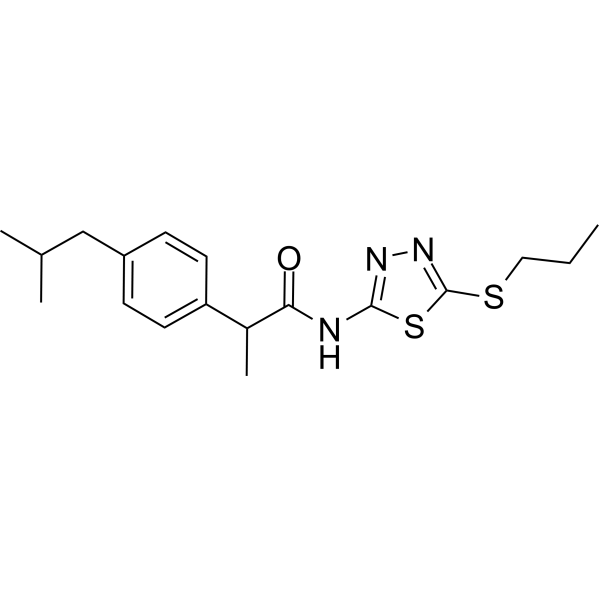
NTPDase-IN-1 (compound 5a) is a selective NTPDase inhibitor with IC50s of 0.05, 0.23 and 0.54 µM for h-NTPDase-1/-2/-8, respectively. NTPDase-IN-1 non-competitively inhibits h-NTPDase-1/-2 with a Km of 21 µM for h-NTPDase-1. NTPDase-IN-1 can be used in studies of cancer, immunologic disorders as well as bacterial infections .
loading...
    loading...
Cat. No.: HY-107372D
CAS No.: 14264-46-1
Synonyms: UTP tetrasodium; Uridine 5'-triphosphate tetrasodium
Research Areas:  

Cardiovascular Disease

Uridine triphosphate (tetrasodium) (UTP (tetrasodium)) is released during cardiac ischemia. Uridine triphosphate (tetrasodium) belongs to a family of extracellular nucleotide signaling molecules. Uridine triphosphate (tetrasodium) can stimulate vasodilation, automaticity in ventricular myocytes and release tussue-quantitative activator (t-PA). Uridine triphosphate (tetrasodium)-induced t-PA release can dissolve the thrombus in myocardial infarction .
loading...
    loading...
Cat. No.: HY-181981
CAS No.: 2326978-03-2
Research Areas:  

Cancer

NTPDase/NPP1-IN-1 is an ectonucleotidase (NTPDase) and nucleotide pyrophosphatase/phosphodiesterase 1 (NPP1) inhibitor, with IC50 values of 0.28, 0.92, 0.82 and 0.73 μM against h-NTPDase1, h-NTPDase2, h-NTPDase3 and h-NPP1, respectively. NTPDase/NPP1-IN-1 is a membrane-interacting agent that localizes to the plasma membrane and interacts with cancer cells. NTPDase/NPP1-IN-1 can be used in the research of breast cancer .
loading...
    loading...
Cat. No.: HY-100742R
CAS No.: 1802977-61-2
GNE-140 racemate (Standard) is the analytical standard of GNE-140 racemate (HY-100742). This product is intended for research and analytical applications. GNE-140 racemate is a racemic mixture of (R)-GNE-140 (HY-100742A) and (S)-GNE-140 (HY-100742B), and also a tautomer of GNE-140 (HY-118241). GNE-140 racemate is an orally active lactate dehydrogenase inhibitor, with an IC50 of 3 nM against human LDHA and an IC50 of 5 nM against LDHB. GNE-140 racemate reduces the phosphorylation level and total protein expression of p38 MAPK, and inhibits EGF-induced AKT phosphorylation. GNE-140 racemate decreases lactate production, regulates glycolysis, the pentose phosphate pathway and nucleotide biosynthesis, increases extracellular pH, inhibits cell proliferation, migration and invasion, and induces caspase-3 activation and ROS accumulation. GNE-140 racemate can be used in research related to breast cancer, cystic fibrosis and pancreatic cancer .
loading...
    loading...

