
1. Search Result
Search Result
Results for "

food packaging materials

" in MedChemExpress (MCE) Product Catalog:

12

阻害剤およびアゴニスト

3

生化学アッセイ試薬

3

天然物

2

同位体標識化合物

製品番号 製品名 Target 研究分野 構造式
  • HY-125865
    Casein
    2 Publications Verification

    Environmental Pollutants Endogenous Metabolite Casein Kinase Endocrinology Cancer
    Casein is an orally active phosphoprotein that can be separated into various electrophoretic components, such as α2-Casein, κ-Casein, β-casein, and γ-casein. Casein has also been blended and grafted with other polymers, cross-linkers, or monomers to improve its functional properties. Casein enhances calcium absorption and reduces the extent of fissure as well as smooth-surface caries. Casein promotes proliferation of prostate cancer. Casein has various applications in the paper, leather, textile, and food industries, serving as coatings, adhesives, and packaging materials .
    Casein
  • HY-Y0304
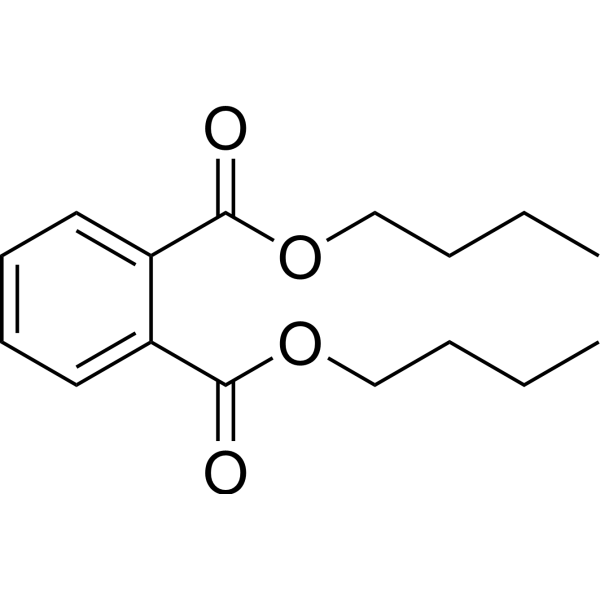
    Dibutyl phthalate
    5+ Cited Publications

    Environmental Pollutants Neurological Disease Cancer
    Dibutyl phthalate is a commonly used plasticizer commonly found in some food packaging materials, personal care products, and the coating of oral medications . May cause toxicity and adverse neurobehavioral effects .
    Dibutyl phthalate
  • HY-W011602

    Environmental Pollutants Biochemical Assay Reagents Neurological Disease
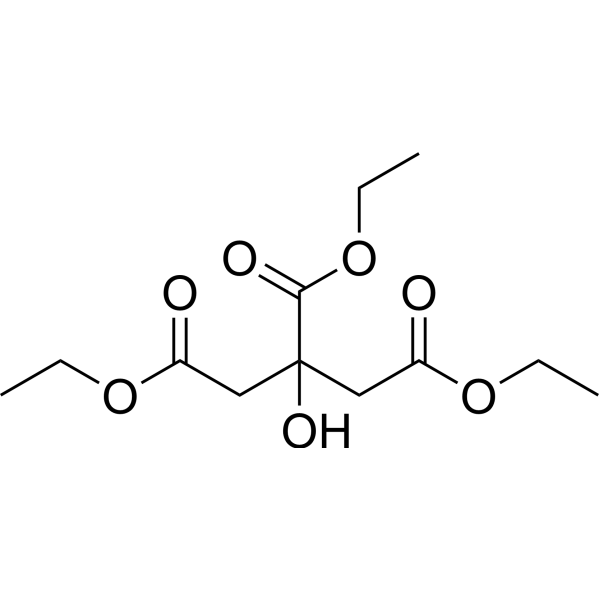
    Triethyl citrate is an orally active citrate compound. Triethyl citrate induces acute toxic effects, including weakness, depression, ataxia, hyperexcitability, restlessness, dripping urine, and irregular, labored breathing. Triethyl citrate can be used in research on plasticizers for food packaging materials .
    Triethyl citrate
  • HY-W019885A

    Sodium triphosphate pentabasic, 98%

    Environmental Pollutants Biochemical Assay Reagents Others
    Sodium tripolyphosphate (STPP), 98% is an inorganic, non-toxic polyphosphate crosslinker, inducer and enhancer. Sodium tripolyphosphate (STPP), 98% induces the formation of unique needle-like microcrystals in sodium alginate-chitosan composite films. Sodium tripolyphosphate (STPP), 98% enhances the DPPH free radical scavenging activity of sodium alginate-chitosan composite films .
    Sodium tripolyphosphate (STPP), 98%
  • HY-W093282

    Soybean oil epoxide

    Environmental Pollutants Biochemical Assay Reagents Others
    Epoxidized soya bean oil (ESBO) is a vegetable oil-derived organic compound used as a plasticizer and stabilizer in various applications. It is produced by epoxidation of soybean oil, which introduces epoxy groups into the fatty acid chains of the oil. ESBO is a viscous, pale yellow liquid that is soluble in many organic solvents, such as chloroform and ethanol, but insoluble in water. It is commonly used as a plasticizer in polyvinyl chloride (PVC) products, including toys, food packaging materials and medical devices. In addition to its plasticizing properties, ESBO acts as an antioxidant and UV stabilizer, helping to prevent degradation and discoloration of PVC products over time. ESBOs have been investigated for their potential use in biodegradable plastics and as bio-based alternatives to traditional petroleum-derived plasticizers.
    Epoxidized soya bean oil
  • HY-Y0304S1

    Isotope-Labeled Compounds Cancer
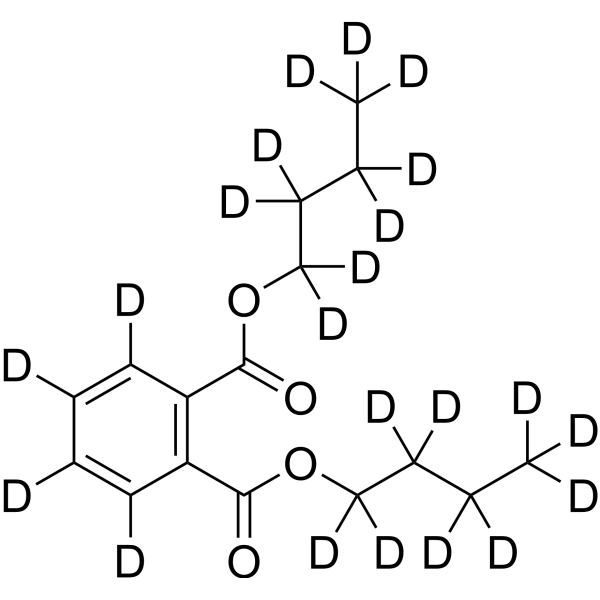
    Dibutyl phthalate-d22 is the deuterium labeled Dibutyl phthalate . Dibutyl phthalate is a commonly used plasticizer commonly found in some food packaging materials, personal care products, and the coating of oral medications. May cause toxicity and adverse neurobehavioral effects .
    Dibutyl phthalate-d22
  • HY-Y0304S
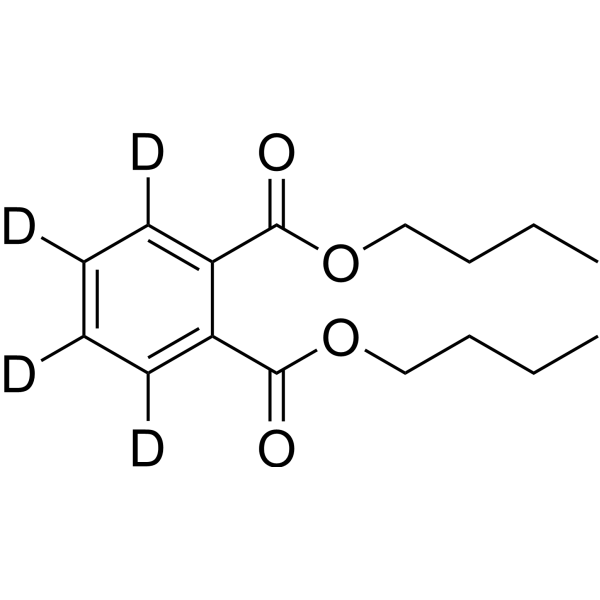
    Dibutyl phthalate-3,4,5,6-d4
    1 Publications Verification

    Isotope-Labeled Compounds Neurological Disease Cancer
    Dibutyl phthalate-3,4,5,6-d4 is the deuterium labeled Dibutyl phthalate. Dibutyl phthalate is a commonly used plasticizer commonly found in some food packaging materials, personal care products, and the coating of oral medications . May cause toxicity and adverse neurobehavioral effects .
    Dibutyl phthalate-3,4,5,6-d4
  • HY-W142663

    Endogenous Metabolite
    Bisphenol M is a synthetic organic compound with antioxidant activity. Bisphenol M is commonly used in industry to make plastics and resins, and is used as a stabilizer and preservative in cosmetics. Bisphenol M can also be used in certain food packaging materials to improve product durability and safety.
    Bisphenol M
  • HY-W114419

    Estrogen Receptor/ERR mTOR Cardiovascular Disease Metabolic Disease
    Bisphenol C is an estrogen receptor-α (ERα) agonist and an ERβ antagonist, with IC50 values of 2.65 nM for ERα and 1.94 nM for ERβ. Bisphenol C is a material of manufacturing polyester polymers like polycarbonate, is widely used in daily items like water bottles, food packaging, textile and so on .
    Bisphenol C
  • HY-Y0304R

    Biochemical Assay Reagents Reference Standards Neurological Disease Cancer
    Dibutyl phthalate (Standard) is the analytical standard of Dibutyl phthalate. This product is intended for research and analytical applications. Dibutyl phthalate is a commonly used plasticizer commonly found in some food packaging materials, personal care products, and the coating of oral medications . May cause toxicity and adverse neurobehavioral effects .
    Dibutyl phthalate (Standard)
  • HY-W123053

    Acrylated epoxidized soybean oil

    Others Others
    Soybean oil, epoxidized acrylate (acrylated epoxidized soybean oil) can be used as plasticizers and food packaging materials. Soybean oil, epoxidized acrylate can also be used to prepare novel nanocomposite biomaterials for bone tissue repair.
    Soybean oil, epoxidized acrylate
  • HY-W002105R

    Reference Standards Biochemical Assay Reagents Others
    2,5-Furandicarboxylic acid (Standard) is the analytical standard of 2,5-Furandicarboxylic acid (HY-W002105). This product is intended for research and analytical applications. 2,5-Furandicarboxylic acid can be used as the monomer for synthesis of biodegradable polymers such as polyethylene furandicarboxylate (PEF) and polybutylene furandicarboxylate (PBF). 2,5-Furandicarboxylic acid improves the polymers' rigidity, heat resistance and barrier properties, that can be used for food packaging. 2,5-Furandicarboxylic acid can be used as the raw material for various chemical intermediates to synthesize polymers, polyurethanes, thermosetting resins, plasticizers, fungicides, macrocyclic ligands and other products.
    2,5-Furandicarboxylic acid (Standard)

オンラインお問い合わせ

入力情報は安全に管理されます. 必須入力項目.

タイトル


国或いは地域 *

お名前 *


組纖名 *

デパートメント *


メールアドレス *


製品名 *

製品番号


カスタマ需要量 *

電話番号 *


必ず会社名を記載ください。個人への返信は行いません。

備考

バルクお問い合わせ

Inquiry Information

製品名:
製品番号:
数量:
MCE 日本正規代理店:

