
Search Result
Results for "
grains
" in MedChemExpress (MCE) Product Catalog:
9
Isotope-Labeled Compounds
| Cat. No. |
Product Name |
Target |
Research Areas |
Chemical Structure |
-
- HY-E70013
-
|
endo-1,3:1,4-β-D-Glucanase
|
Endogenous Metabolite
|
Metabolic Disease
|
|
Lichenase, Microorganism (endo-1,3:1,4-β-D-Glucanase) is a specific, endo-(1-3),(1-4)-β-D-glucan 4-glucanohydrolase. Lichenase, Microorganism solubilizes β-glucans from cereal grains and gives gluco-oligosaccharides (GOS). Lichenase, Microorganism can be used in the degradation of polysaccharides in the cell walls .
|
-
-
- HY-129459
-
|
|
Endogenous Metabolite
|
Cardiovascular Disease
Neurological Disease
|
|
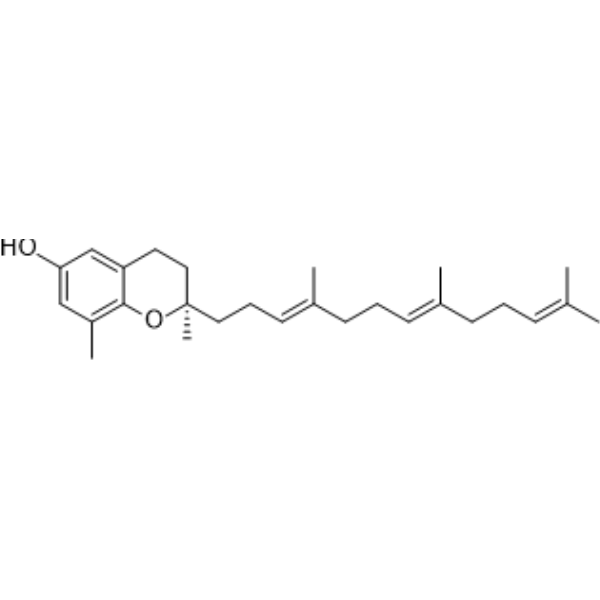
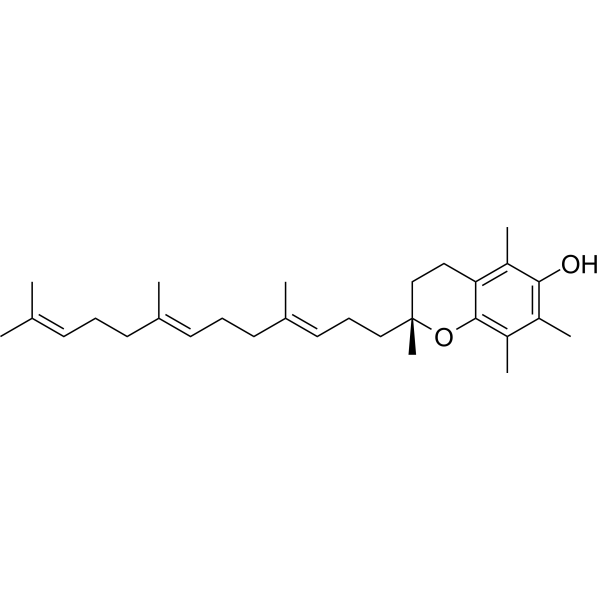
α-Tocotrienol is an isoform of vitamin E and found in vegetables, fruits, seeds, nuts, grains, and oils. Vitamin E plays a role as an antioxidant, in lowering cholesterol and other lipids, as a neuroprotective and anticancer agent, and in cardiovascular disease protection.
|
-
-
- HY-122778
-
-
-
- HY-121267
-
|
|
Environmental Pollutants
DNA/RNA Synthesis
Herbicide
|
Others
|
|
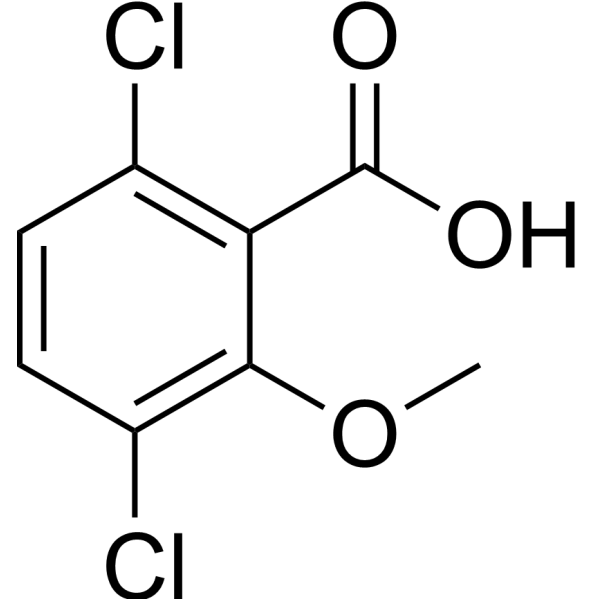
Dicamba is a herbicide. Dicamba is currently used in agriculture and gardening to control the growth of different unwanted vegetable species, mainly in cereal grain crops, but also on sugar cane and soybeans, among others. Dicambais induces significant DNA damage. Dicambais induces genotoxicity and cytotoxicity.
|
-
-
- HY-N4103A
-
|
|
Others
|
Cancer
|
|
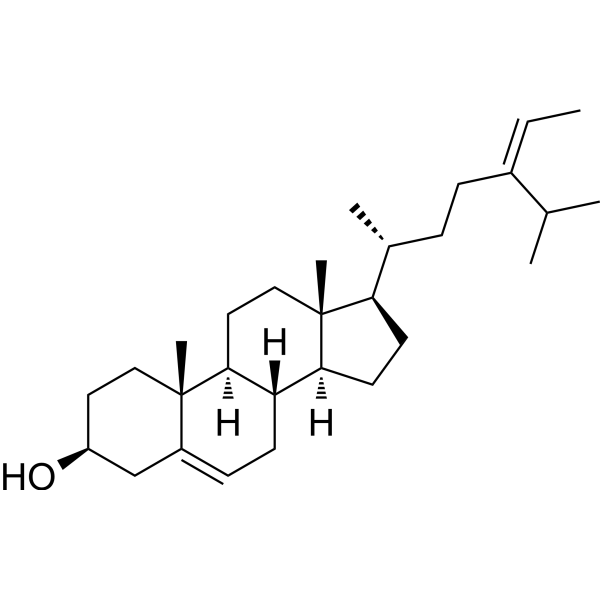
Δ5-Avenasterol, belongs to the components of oat grain , exhibits propounding antioxidant effectiveness .
|
-
-
- HY-B1881
-
-
-
- HY-N0814A
-
|
Inositol hexaphosphate dodecasodium hydrate; SNF472 dodecasodium hydrate
|
Xanthine Oxidase
Endogenous Metabolite
|
Neurological Disease
Inflammation/Immunology
|
|
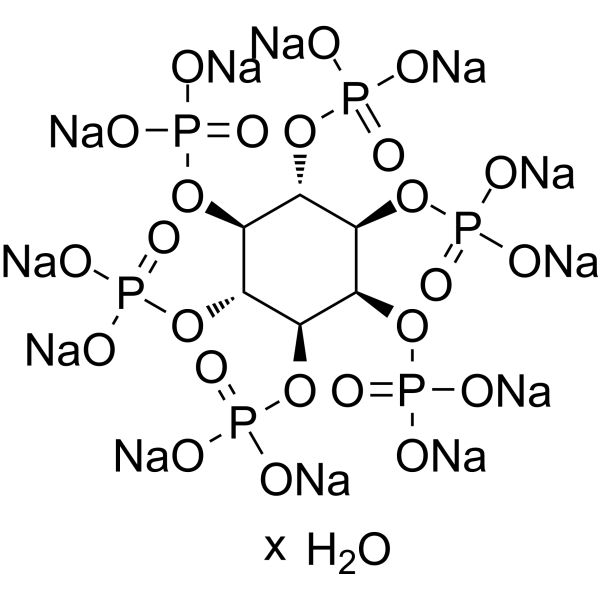
Phytic acid (Inositol hexaphosphate) dodecasodium hydrate is a phosphorus storage compound of seeds and cereal grains. Phytic acid dodecasodium hydrate is known as a food inhibitor, which has a strong ability to chelate multivalent metal ions, specially zinc, calcium, iron and as with protein residue. Phytic acid dodecasodium hydrate inhibits the enzymatic superoxide source xanthine oxidase (XO), and has antioxidative, neuroprotective, anti-inflammatory effects .
|
-
-
- HY-131640
-
|
1,2-Didecanoyl-sn-glycero-3-phosphocholine
|
Liposome
|
Others
|
|
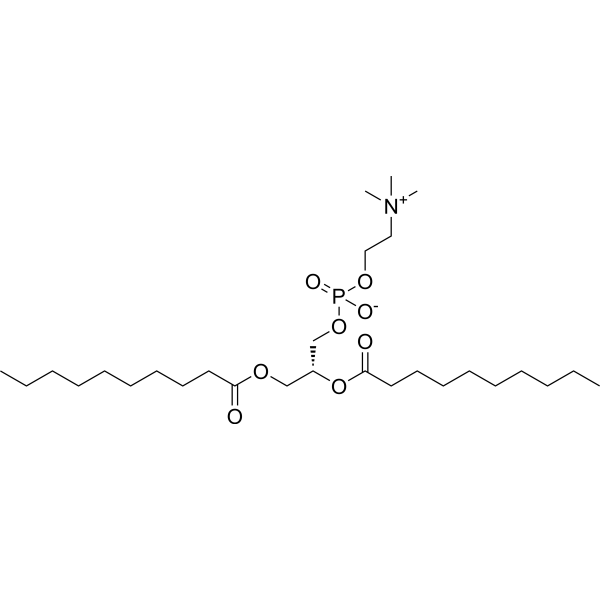
1,2-Didecanoyl PC (1,2-Didecanoyl-sn-glycero-3-phosphocholine) is a phosphocholine that can be introduced into single-chain mean field theory as a coarse-grained model of saturated phospholipids. The 1,2-Didecanoyl PC model can be used to estimate the free energy of compressive or tensile bilayers in stacks or multilayers and gives a reasonable estimate of the free energy .
|
-
-
- HY-137910
-
|
|
Environmental Pollutants
HPPD
Herbicide
|
Infection
|
|
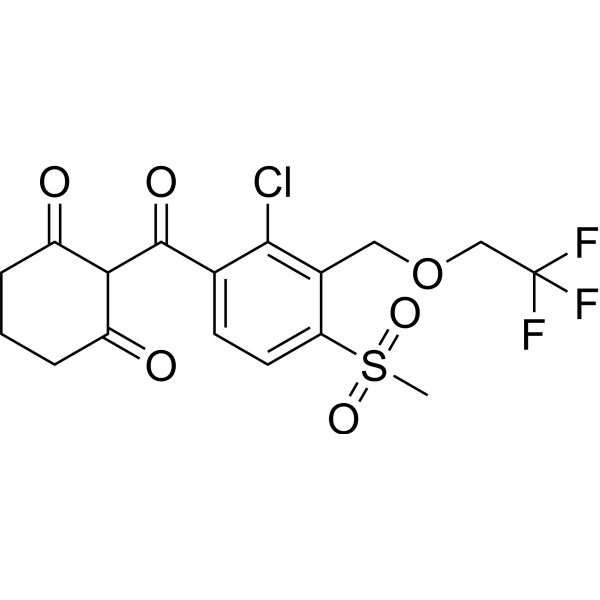
Tembotrione is a herbicide belonging to the HPPD (dioxygenase) inhibitor class with crop selectivity. Tembotrione effectively controls a variety of weeds including broadleaf and gramineous species by disrupting carotenoid synthesis, which leads to chlorophyll degradation and leaf whitening. Mixing Tembotrione with isoxaflutole or adding surfactants optimizes its efficacy and reduces phytotoxicity, with no residual impact on subsequent cruciferous crops, thus helping to increase maize grain yield. The activity of Tembotrione decreases under drought conditions, and under specific conditions (such as double-dose treatment), it may cause reversible yellowing and even yield reduction in crops such as poppy .
|
-
-
- HY-108695
-
|
|
Apoptosis
Endogenous Metabolite
|
Cancer
|
|
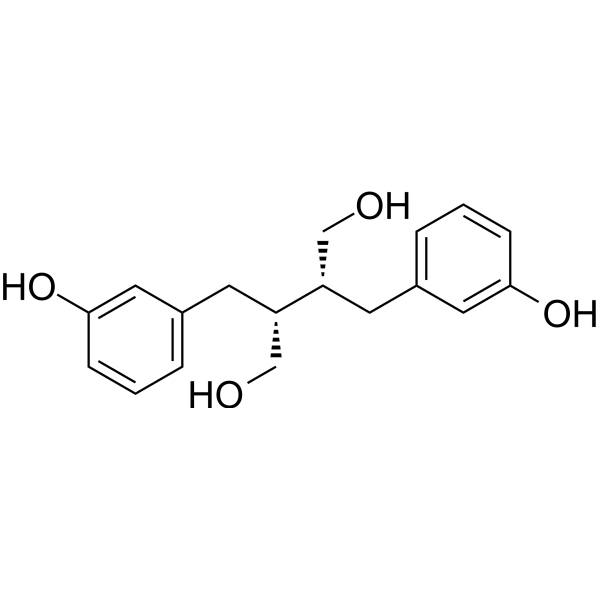
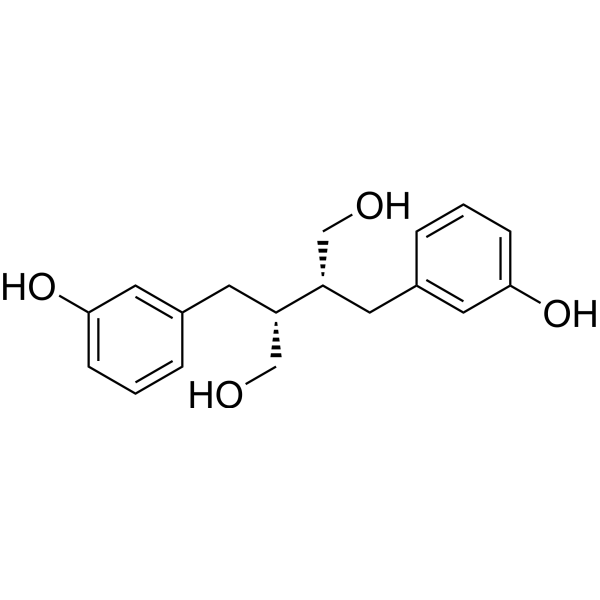
Enterodiol is transformed by human intestinal bacteria from lignans contained in various whole-grain cereals, nuts, legumes, flaxseed, and vegetables. Enterodiol has an apoptotic effect in colorectal cancer (CRC) cells. Anti-cancer activities .
|
-
-
- HY-136376
-
|
|
Environmental Pollutants
Herbicide
|
Others
|
|
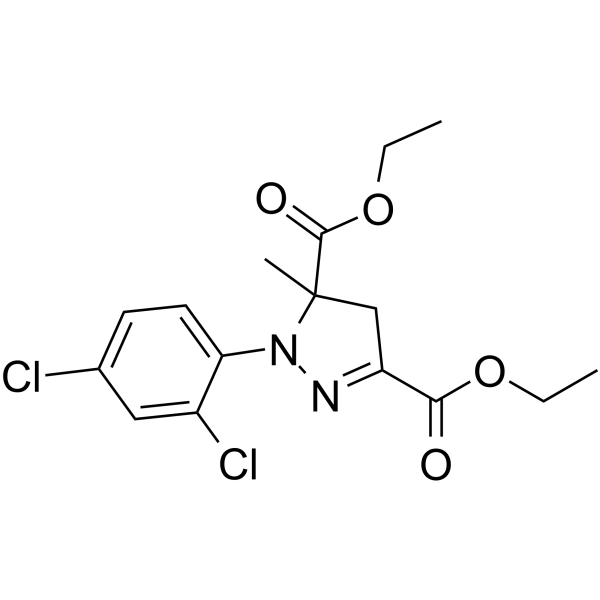
Mefenpyr-diethyl is a pyrazoline-type herbicide safener that functions to enhance lipid biosynthesis. Mefenpyr-diethyl effectively prevents herbicide-induced phytotoxic damage caused by herbicides such as fenoxaprop-p-ethyl (HY-B2013) and mesosulfuron-methyl (HY-126987) by protecting cereal crops including wheat. Mefenpyr-diethyl significantly increases lipid content in wheat either when applied alone or in combination with the herbicide fenoxaprop-p-ethyl. The mechanism of action of Mefenpyr-diethyl does not involve the induction of glutathione S-transferase (GST) activity in wheat .
|
-
-
- HY-N5141
-
|
|
Others
|
Others
|
|
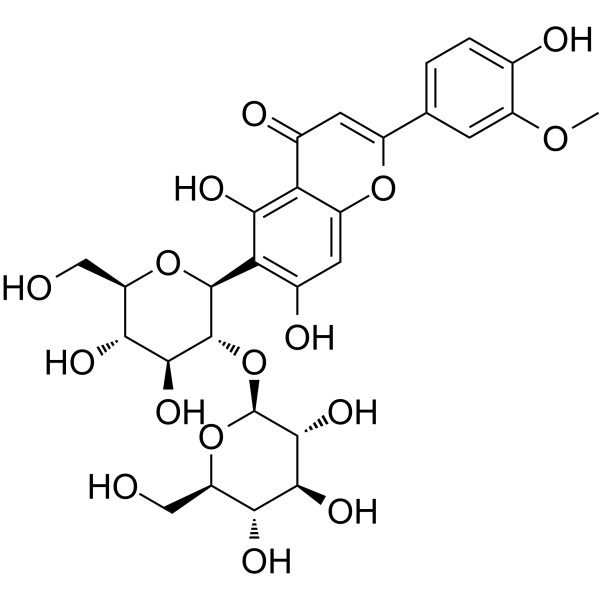
Isoscoparin-2′′O-glucoside is a flavonoid that can be found in yellow grain mutant of rice. Isoscoparin-2′′O-glucoside shows antioxidant activity .
|
-
-
- HY-129459R
-
|
|
Reference Standards
Endogenous Metabolite
|
Cardiovascular Disease
Neurological Disease
|
|
α-Tocotrienol (Standard) is the analytical standard of α-Tocotrienol. This product is intended for research and analytical applications. α-Tocotrienol is an isoform of vitamin E and found in vegetables, fruits, seeds, nuts, grains, and oils. Vitamin E plays a role as an antioxidant, in lowering cholesterol and other lipids, as a neuroprotective and anticancer agent, and in cardiovascular disease protection.
|
-
-
- HY-150356MR1
-
|
|
Reference Standards
|
Infection
Cancer
|
|
Mixture of Aflatoxins in Acetonitrile (Standard) is mainly used for the detection of aflatoxins in grain, oils, foods and traditional Chinese medicines
|
-
-
- HY-W681867
-
|
CGA-133205
|
Herbicide
Glutathione S-transferase
|
Others
|
|
Fluxofenim (CGA-133205) is a herbicide safener, with activity against Pyroxasulfone (HY-136633) and Metolachlor (HY-B1871). Fluxofenim enhances the activity of needle glutathione S-transferase (GST) towards the substrate 1-chloro-2,4-dinitrobenzene (CDNB) .
|
-
-
- HY-108695B
-
|
|
Apoptosis
Endogenous Metabolite
|
Cancer
|
|
(±)-Enterodiol is the racemate of Enterodiol (HY-108695). Enterodiol is transformed by human intestinal bacteria from lignans contained in various whole-grain cereals, nuts, legumes, flaxseed, and vegetables. Enterodiol has an apoptotic effect in colorectal cancer (CRC) cells. Enterodiol has anti-cancer activities .
|
-
-
- HY-W015850
-
|
|
Insecticide
|
Infection
|
|
2,3-Dimethylmaleic anhydride is biofumigant found in Colocasia esculenta var. esculenta (L.) Schott. 2,3-Dimethylmaleic anhydride is highly toxic to insect pests for stored grains even at very low concentration, but has no adverse effect on seed germination. 2,3-Dimethylmaleic anhydride can be used as insecticide .
|
-
-
- HY-N6723S
-
|
|
Isotope-Labeled Compounds
|
Infection
|
|
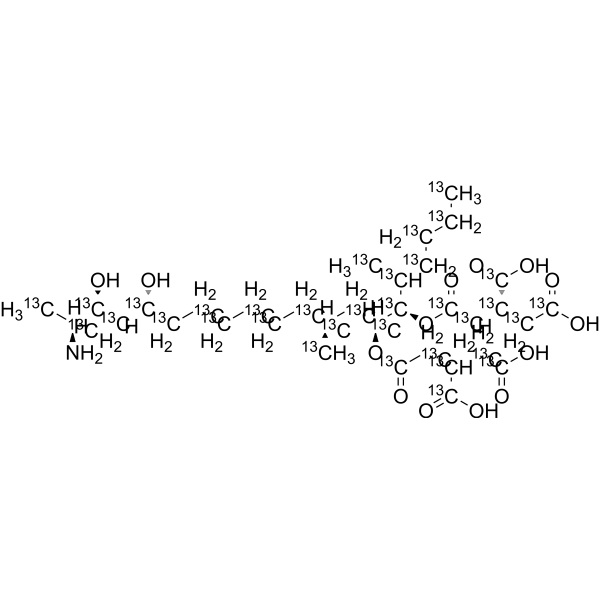
Fumonisin B2- 13C34 is the 13C labeled Fumonisin B2 (HY-N6723) . Fumonisin B2, a mycotoxin produced by Fusarium moniliforme in various grains, is a potent inhibitor of sphingosine N-acyltransferase (ceramide synthase) and disrupts de novo sphingolipid biosynthesis .
|
-
-
- HY-W706180
-
|
|
Isotope-Labeled Compounds
Fungal
|
Infection
|
|
(±)-Triadimefon-d4 is deuterium labeled Triadimefon. Triadimefon is a triazole fungicide used to control powdery mildew, rusts, and other fungal pests on grains, fruit and vegetable crops, turf, shrubs, and trees. Triadimefon inhibits lanosterol 14α-demethylase, interfering with oxidative demethylation reactions in the ergosterol biosynthesis pathway of fungi, and also blocks gibberellin biosynthesis .
|
-
-
- HY-119381
-
|
Jodfenphos
|
Insecticide
|
Others
|
|
Iodofenphos (Jodfenphos) is an insecticide, that can be used as a protectant for stored grains. Iodofenphos is effective against grain pests, such as Sitophilus oryzae, Tribolium castaneum, and larvae of Trogoderma granarium, and has a significant residual toxicity, which could provide good insect control for several months .
|
-
-
- HY-N0814B
-
|
Inositol hexaphosphate hexasodium; SNF472
|
Xanthine Oxidase
Endogenous Metabolite
|
Neurological Disease
Inflammation/Immunology
|
|
Phytic acid (Inositol hexaphosphate) hexasodium is a phosphorus storage compound of seeds and cereal grains. Phytic acid hexasodium has a strong ability to chelate multivalent metal ions, specially zinc, calcium, iron and as with protein residue. Phytic acid hexasodium inhibits the enzymatic superoxide source xanthine oxidase (XO), and has antioxidative, neuroprotective, anti-inflammatory effects.
|
-
-
- HY-122778R
-
|
|
Reference Standards
NF-κB
AP-1
Caspase
Apoptosis
|
Cardiovascular Disease
Inflammation/Immunology
Cancer
|
|
δ-Tocotrienol (Standard) is the analytical standard of δ-Tocotrienol. This product is intended for research and analytical applications. δ-Tocotrienol is a Vitamin E in vegetables, fruits, seeds, nuts, grains and oils. Vitamin E has become well known for its role as an antioxidant, in lowering cholesterol and other lipids, as a neuroprotective and anticancer agent, and in cardiovascular disease protection.
|
-
-
- HY-W705820
-
|
|
Isotope-Labeled Compounds
Apoptosis
Endogenous Metabolite
|
Cancer
|
|
(±)-Enterodiol-d6 is the deuterium labeled (±)-Enterodiol (HY-108695B). (±)-Enterodiol is the racemate of Enterodiol (HY-108695). Enterodiol is transformed by human intestinal bacteria from lignans contained in various whole-grain cereals, nuts, legumes, flaxseed, and vegetables. Enterodiol has an apoptotic effect in colorectal cancer (CRC) cells. Enterodiol has anti-cancer activities .
|
-
-
- HY-W710399
-
|
DG(16:0/0:0/18:0); 1-Palmitin-3-Stearin
|
Endogenous Metabolite
|
Metabolic Disease
|
|
1-Palmitoyl-3-stearoyl-rac-glycerol is a diacylglycerol that contains palmitic acid (HY-N0830) at the sn-1 position and stearic acid (HY-B2219) at the sn-3 position. It has been found in palm-based diacylglycerols produced from palm stearin, palm mid fraction, palm oil, and palm olein, as well as in wheat bran and brewer’s spent grain extracts.
|
-
-
- HY-W167708
-
|
|
Drug Derivative
|
Others
|
|
2-Ethyl-5-methylphenol is an aromatic compound that can be detected in breakfast cereals, cereals and grain products .
|
-
-
- HY-119381R
-
|
Jodfenphos (Standard)
|
Reference Standards
Insecticide
|
Infection
|
|
Iodofenphos (Standard) is the analytical standard of Iodofenphos. This product is intended for research and analytical applications. Iodofenphos (Jodfenphos) is an insecticide, that can be used as a protectant for stored grains. Iodofenphos is effective against grain pests, such as Sitophilus oryzae, Tribolium castaneum, and larvae of Trogoderma granarium, and has a significant residual toxicity, which could provide good insect control for several months .
|
-
-
- HY-P4611
-
|
|
Carboxylesterase (CES)
|
Others
|
|
Z-Pro-Ala is an acid carboxypeptidase. Z-Pro-Ala can be isolated from grains and leaves of wheat, Triticum aestivum L .
|
-
-
- HY-B1881R
-
|
|
Reference Standards
Insecticide
Cholinesterase (ChE)
Parasite
|
Infection
|
|
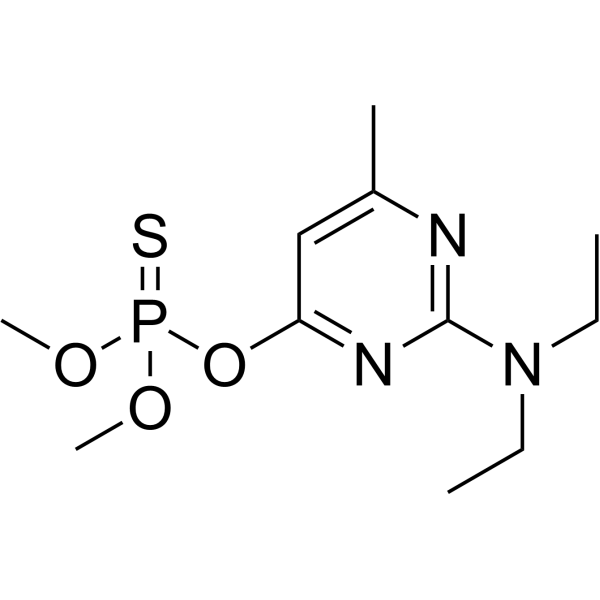
Pirimiphos-methyl (Standard) is the analytical standard of Pirimiphos-methyl (HY-B1881). This product is intended for research and analytical applications. Pirimiphos-methyl is an organophosphorus insecticide and acaricide that can inhibit AChE in target organisms. Pirimiphos-methyl is often used for prevention and control of beetles, snout beetles, moths and Ephestia cautella during storage of agricultural grains.
|
-
-
- HY-118926
-
|
|
Parasite
|
Others
|
|
Bioresmethrin is an insecticide that protects grain. Bioresmethrin against malathion-resistant and susceptible strains R. dominica .
|
-
-
- HY-N12428
-
|
Caudicifolin; Fischeriana A
|
Others
|
Others
|
|
17-Hydroxyjolkinolide A (Caudicifolin; Fischeriana A) is an insect feeding inhibitor isolated from the roots of spurge. 17-Hydroxyjolkinolide A induces grain aversion in S. zeamais and T. castaneum adults, with EC50s of 631.9 ppm and 656.5 ppm, respectively.
|
-
-
- HY-B1881S
-
|
|
Isotope-Labeled Compounds
Insecticide
Cholinesterase (ChE)
Parasite
|
Infection
|
|
Pirimiphos-methyl-d6 is the deuterium labeled Pirimiphos-methyl (HY-B1881) . Pirimiphos-methyl is an organophosphorus insecticide and acaricide that can inhibit AChE in target organisms. Pirimiphos-methyl is often used for prevention and control of beetles, snout beetles, moths and Ephestia cautella during storage of agricultural grains .
|
-
-
- HY-121267S1
-
|
|
Isotope-Labeled Compounds
Herbicide
DNA/RNA Synthesis
|
Others
|
|
Dicamba-d3 is the deuterium labeled Dicamba (HY-121267 ) . Dicamba is a herbicide. Dicamba is currently used in agriculture and gardening to control the growth of different unwanted vegetable species, mainly in cereal grain crops, but also on sugar cane and soybeans, among others. Dicambais induces significant DNA damage. Dicambais induces genotoxicity and cytotoxicity .
|
-
-
- HY-121267S
-
|
|
Isotope-Labeled Compounds
Herbicide
DNA/RNA Synthesis
|
Others
|
|
Dicamba- 13C6 is the 13C labeled Dicamba (HY-121267). Dicamba is a herbicide. Dicamba is currently used in agriculture and gardening to control the growth of different unwanted vegetable species, mainly in cereal grain crops, but also on sugar cane and soybeans, among others. Dicambais induces significant DNA damage. Dicambais induces genotoxicity and cytotoxicity .
|
-
-
- HY-N6678S
-
|
|
Isotope-Labeled Compounds
Estrogen Receptor/ERR
|
Endocrinology
|
|
(Rac)-Zearalanone-d6 is the racemate of Zearalanone. Zearalenone is a nonsteroidal estrogenic mycotoxin produced by Fusarium species, which colonizes several grains. Zearalenone has low acute toxicity and carcinogenicity. Due to its agonistic effect on the estrogen receptor, Zearalenone exhibits distinct estrogenic and anabolic properties in several animal species, resulting in severe effects on the reproductive system .
|
-
-
- HY-108695BR
-
|
|
Reference Standards
Apoptosis
Endogenous Metabolite
|
Cancer
|
|
(±)-Enterodiol (Standard) is the analytical standard of (±)-Enterodiol. This product is intended for research and analytical applications. (±)-Enterodiol is the racemate of Enterodiol (HY-108695). Enterodiol is transformed by human intestinal bacteria from lignans contained in various whole-grain cereals, nuts, legumes, flaxseed, and vegetables. Enterodiol has an apoptotic effect in colorectal cancer (CRC) cells. Enterodiol has anti-cancer activities .
|
-
-
- HY-N6678R
-
|
|
Reference Standards
Estrogen Receptor/ERR
|
Endocrinology
|
|
Zearalanone (Standard) is the analytical standard of Zearalanone. This product is intended for research and analytical applications. Zearalenone is a nonsteroidal estrogenic mycotoxin produced by Fusarium species, which colonizes several grains. Zearalenone has low acute toxicity and carcinogenicity. Due to its agonistic effect on the estrogen receptor, Zearalenone exhibits distinct estrogenic and anabolic properties in several animal species, resulting in severe effects on the reproductive system .
|
-
-
- HY-W778288
-
|
|
Isotope-Labeled Compounds
Apoptosis
Endogenous Metabolite
|
Cancer
|
|
(±)-Enterodiol- 13C3 is the 13C-labeled (±)-Enterodiol (HY-108695B). (±)-Enterodiol is the racemate of Enterodiol (HY-108695). Enterodiol is transformed by human intestinal bacteria from lignans contained in various whole-grain cereals, nuts, legumes, flaxseed, and vegetables. Enterodiol has an apoptotic effect in colorectal cancer (CRC) cells. Enterodiol has anti-cancer activities .
|
-
-
- HY-153993
-
|
|
Endogenous Metabolite
|
Others
|
|
Pyrocatechol sulfate, a phenolic metabolite present in human plasma, is associated with the consumption of specific foods such as berries and the condition of gut microbiota. It serves as a potential urinary biomarker for kidney function, dialytic clearance, whole grain consumption, and regular coffee intake. Additionally, Pyrocatechol sulfate, along with other phenolic sulfates, plays a role in modulating various biological functions, including those related to brain health and the rhythmic beating of cardiomyocytes.
|
-
-
- HY-137910R
-
|
|
Reference Standards
Herbicide
HPPD
|
Others
|
|
Tembotrione (Standard) is the analytical standard of Tembotrione. This product is intended for research and analytical applications. Tembotrione is a drug that may reduce the
productivity of carrots. Tembotrione has the activity of reducing carrot stem
mass. Tembotrione can be used to study the total productivity of carrot
. Tembotrione is a herbicide belonging to the HPPD (dioxygenase) inhibitor class with crop selectivity. Tembotrione effectively controls a variety of weeds including broadleaf and gramineous species by disrupting carotenoid synthesis, which leads to chlorophyll degradation and leaf whitening. Mixing Tembotrione with isoxaflutole or adding surfactants optimizes its efficacy and reduces phytotoxicity, with no residual impact on subsequent cruciferous crops, thus helping to increase maize grain yield. The activity of Tembotrione decreases under drought conditions, and under specific conditions (such as double-dose treatment), it may cause reversible yellowing and even yield reduction in crops such as poppy .
|
-
-
- HY-117237
-
-
-
- HY-W708945
-
|
|
Herbicide
Acetolactate Synthase (ALS)
|
Others
|
|
Metazosulfuron is an acetolactate synthase (ALS)-inhibiting herbicide. Metazosulfuron provides complete control of pondweed (Potamogeton nodosus) and prevents its regrowth in transplanted rice ecosystems. Metazosulfuron contributes to increased rough rice grain .
|
-
-
- HY-W753416
-
|
|
Phytohormone
|
Inflammation/Immunology
|
|
14-Hydroxylated brassinosteroid is a plant growth regulator. 14-Hydroxylated brassinosteroid enhances winter wheat resistance to heat stress, delays heat-induced leaf senescence, maintains leaf water content, promotes grain filling, and mitigates yield loss. 14-Hydroxylated brassinosteroid shows antioxidant activity. 14-Hydroxylated brassinosteroid can be used for the research of plant growth .
|
-
-
- HY-124741
-
|
|
Others
|
Others
|
|
Jamaicin is a natural isoflavone found in the grains of Millettia pachyloba (Leguminosae) .
|
-
-
- HY-N18794
-
|
|
Others
|
Others
|
|
Rice bran oil is extracted from the outer bran or husk of rice grains.
|
-
-
- HY-N6678S1
-
|
|
Isotope-Labeled Compounds
|
Endocrinology
|
|
Zearalanone- 13C18 is the 13C-labeled Zearalanone (HY-N6678). Zearalenone is a nonsteroidal estrogenic mycotoxin produced by Fusarium species, which colonizes several grains. Zearalenone has low acute toxicity and carcinogenicity. Due to its agonistic effect on the estrogen receptor, Zearalenone exhibits distinct estrogenic and anabolic properties in several animal species, resulting in severe effects on the reproductive system .
|
-
| Cat. No. |
Product Name |
Target |
Research Area |
| Cat. No. |
Product Name |
Category |
Target |
Chemical Structure |
-
- HY-129459
-
-
-
- HY-N4103A
-
-
-
- HY-N0814A
-
|
Inositol hexaphosphate dodecasodium hydrate; SNF472 dodecasodium hydrate
|
other families
Ketones, Aldehydes, Acids
Plants
Endogenous metabolite
Source Classification
|
Xanthine Oxidase
Endogenous Metabolite
|
|
Phytic acid (Inositol hexaphosphate) dodecasodium hydrate is a phosphorus storage compound of seeds and cereal grains. Phytic acid dodecasodium hydrate is known as a food inhibitor, which has a strong ability to chelate multivalent metal ions, specially zinc, calcium, iron and as with protein residue. Phytic acid dodecasodium hydrate inhibits the enzymatic superoxide source xanthine oxidase (XO), and has antioxidative, neuroprotective, anti-inflammatory effects .
|
-
-
- HY-108695
-
-
-
- HY-N5141
-
-
-
- HY-129459R
-
-
-
- HY-150356MR1
-
|
|
Phenylpropanoids
|
Reference Standards
|
|
Mixture of Aflatoxins in Acetonitrile (Standard) is mainly used for the detection of aflatoxins in grain, oils, foods and traditional Chinese medicines
|
-
-
- HY-108695B
-
-
-
- HY-W015850
-
-
-
- HY-N0814B
-
|
Inositol hexaphosphate hexasodium; SNF472
|
other families
Ketones, Aldehydes, Acids
Plants
Source Classification
|
Xanthine Oxidase
Endogenous Metabolite
|
|
Phytic acid (Inositol hexaphosphate) hexasodium is a phosphorus storage compound of seeds and cereal grains. Phytic acid hexasodium has a strong ability to chelate multivalent metal ions, specially zinc, calcium, iron and as with protein residue. Phytic acid hexasodium inhibits the enzymatic superoxide source xanthine oxidase (XO), and has antioxidative, neuroprotective, anti-inflammatory effects.
|
-
-
- HY-N12428
-
-
-
- HY-108695BR
-
|
|
Phenols
Polyphenols
Endogenous metabolite
Source Classification
|
Reference Standards
Apoptosis
Endogenous Metabolite
|
|
(±)-Enterodiol (Standard) is the analytical standard of (±)-Enterodiol. This product is intended for research and analytical applications. (±)-Enterodiol is the racemate of Enterodiol (HY-108695). Enterodiol is transformed by human intestinal bacteria from lignans contained in various whole-grain cereals, nuts, legumes, flaxseed, and vegetables. Enterodiol has an apoptotic effect in colorectal cancer (CRC) cells. Enterodiol has anti-cancer activities .
|
-
-
- HY-N6678R
-
-
-
- HY-124741
-
-
-
- HY-N18794
-
-
| Cat. No. |
Product Name |
Chemical Structure |
-
- HY-N6723S
-
|
|
|
Fumonisin B2- 13C34 is the 13C labeled Fumonisin B2 (HY-N6723) . Fumonisin B2, a mycotoxin produced by Fusarium moniliforme in various grains, is a potent inhibitor of sphingosine N-acyltransferase (ceramide synthase) and disrupts de novo sphingolipid biosynthesis .
|
-
-
- HY-W706180
-
|
|
|
(±)-Triadimefon-d4 is deuterium labeled Triadimefon. Triadimefon is a triazole fungicide used to control powdery mildew, rusts, and other fungal pests on grains, fruit and vegetable crops, turf, shrubs, and trees. Triadimefon inhibits lanosterol 14α-demethylase, interfering with oxidative demethylation reactions in the ergosterol biosynthesis pathway of fungi, and also blocks gibberellin biosynthesis .
|
-
-
- HY-W705820
-
|
|
|
(±)-Enterodiol-d6 is the deuterium labeled (±)-Enterodiol (HY-108695B). (±)-Enterodiol is the racemate of Enterodiol (HY-108695). Enterodiol is transformed by human intestinal bacteria from lignans contained in various whole-grain cereals, nuts, legumes, flaxseed, and vegetables. Enterodiol has an apoptotic effect in colorectal cancer (CRC) cells. Enterodiol has anti-cancer activities .
|
-
-
- HY-B1881S
-
|
|
|
Pirimiphos-methyl-d6 is the deuterium labeled Pirimiphos-methyl (HY-B1881) . Pirimiphos-methyl is an organophosphorus insecticide and acaricide that can inhibit AChE in target organisms. Pirimiphos-methyl is often used for prevention and control of beetles, snout beetles, moths and Ephestia cautella during storage of agricultural grains .
|
-
-
- HY-121267S1
-
|
|
|
Dicamba-d3 is the deuterium labeled Dicamba (HY-121267 ) . Dicamba is a herbicide. Dicamba is currently used in agriculture and gardening to control the growth of different unwanted vegetable species, mainly in cereal grain crops, but also on sugar cane and soybeans, among others. Dicambais induces significant DNA damage. Dicambais induces genotoxicity and cytotoxicity .
|
-
-
- HY-121267S
-
|
|
|
Dicamba- 13C6 is the 13C labeled Dicamba (HY-121267). Dicamba is a herbicide. Dicamba is currently used in agriculture and gardening to control the growth of different unwanted vegetable species, mainly in cereal grain crops, but also on sugar cane and soybeans, among others. Dicambais induces significant DNA damage. Dicambais induces genotoxicity and cytotoxicity .
|
-
-
- HY-N6678S
-
|
|
|
(Rac)-Zearalanone-d6 is the racemate of Zearalanone. Zearalenone is a nonsteroidal estrogenic mycotoxin produced by Fusarium species, which colonizes several grains. Zearalenone has low acute toxicity and carcinogenicity. Due to its agonistic effect on the estrogen receptor, Zearalenone exhibits distinct estrogenic and anabolic properties in several animal species, resulting in severe effects on the reproductive system .
|
-
-
- HY-W778288
-
|
|
|
(±)-Enterodiol- 13C3 is the 13C-labeled (±)-Enterodiol (HY-108695B). (±)-Enterodiol is the racemate of Enterodiol (HY-108695). Enterodiol is transformed by human intestinal bacteria from lignans contained in various whole-grain cereals, nuts, legumes, flaxseed, and vegetables. Enterodiol has an apoptotic effect in colorectal cancer (CRC) cells. Enterodiol has anti-cancer activities .
|
-
-
- HY-N6678S1
-
|
|
|
Zearalanone- 13C18 is the 13C-labeled Zearalanone (HY-N6678). Zearalenone is a nonsteroidal estrogenic mycotoxin produced by Fusarium species, which colonizes several grains. Zearalenone has low acute toxicity and carcinogenicity. Due to its agonistic effect on the estrogen receptor, Zearalenone exhibits distinct estrogenic and anabolic properties in several animal species, resulting in severe effects on the reproductive system .
|
-
| Cat. No. |
Product Name |
|
Classification |
-
- HY-131640
-
|
1,2-Didecanoyl-sn-glycero-3-phosphocholine
|
|
Phospholipids
|
|
1,2-Didecanoyl PC (1,2-Didecanoyl-sn-glycero-3-phosphocholine) is a phosphocholine that can be introduced into single-chain mean field theory as a coarse-grained model of saturated phospholipids. The 1,2-Didecanoyl PC model can be used to estimate the free energy of compressive or tensile bilayers in stacks or multilayers and gives a reasonable estimate of the free energy .
|
-
- HY-N16337
-
|
|
|
Cationic Lipids
|
|
Hydrogenated MGDG is a type of glycolipid. Monogalactosyldiacylglycerol (MGDG), a galactosylglycerolipid, is a major lipid in the thylakoid membrane of the chloroplast of leaves. It is also localized in the roots, fruits and grains. MGDG is synthesized from Monogalactosyldiacylglycerol synthase 1 (MGD1). It is a precursor for digalactosyldiacylglycerol (DGDG).
|
Your information is safe with us. * Required Fields.
Inquiry Information
- Product Name:
- Cat. No.:
- Quantity:
- MCE Japan Authorized Agent:

