1. Search Result
Search Result
Results for "

heme precursor

" in MedChemExpress (MCE) Product Catalog:

8

Inhibitors & Agonists

4

Natural
Products

3

Isotope-Labeled Compounds

Targets Recommended:
Cat. No. Product Name Target Research Areas Chemical Structure
  • HY-N0305
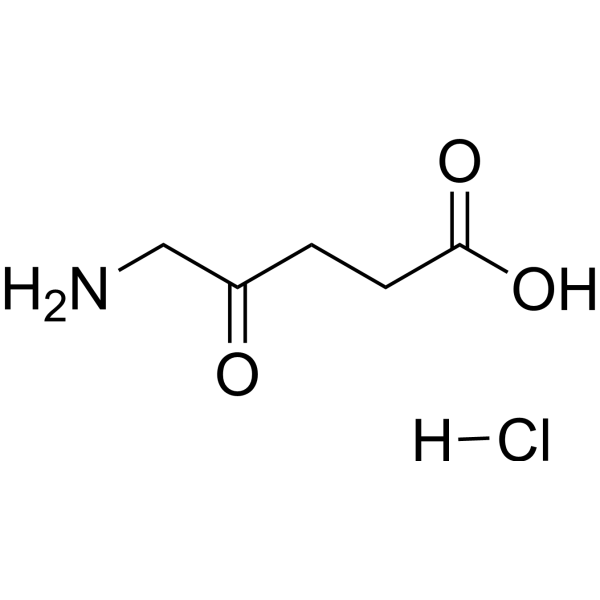
    5-Aminolevulinic acid hydrochloride
    Maximum Cited Publications
    20 Publications Verification

    5-ALA hydrochloride; δ-Aminolevulinic acid hydrochloride; 5-Amino-4-oxopentanoic acid hydrochloride

    Reactive Oxygen Species (ROS) Neurological Disease Metabolic Disease Inflammation/Immunology Cancer
    5-Aminolevulinic acid (5-ALA; δ-Aminolevulinic acid; 5-Amino-4-oxopentanoic acid) hydrochloride is an orally active heme precursor. 5-Aminolevulinic acid hydrochloride promotes aerobic energy metabolism and increases ATP levels by enhancing the activity of cytochrome c oxidase. 5-Aminolevulinic acid hydrochloride enhances LPS-induced proinflammatory cytokine production and gene activation, and restores the phagocytic activity and ROS generation capacity of neutrophils. 5-Aminolevulinic acid hydrochloride selectively accumulates protoporphyrin IX in tumor cells; as a photosensitizer and radiosensitizer, it induces ROS burst upon light or X-ray irradiation to inhibit tumor growth. 5-Aminolevulinic acid hydrochloride can be applied to the research of septic shock, melanoma, and cancer radiotherapy .
    5-Aminolevulinic acid hydrochloride
  • HY-137808
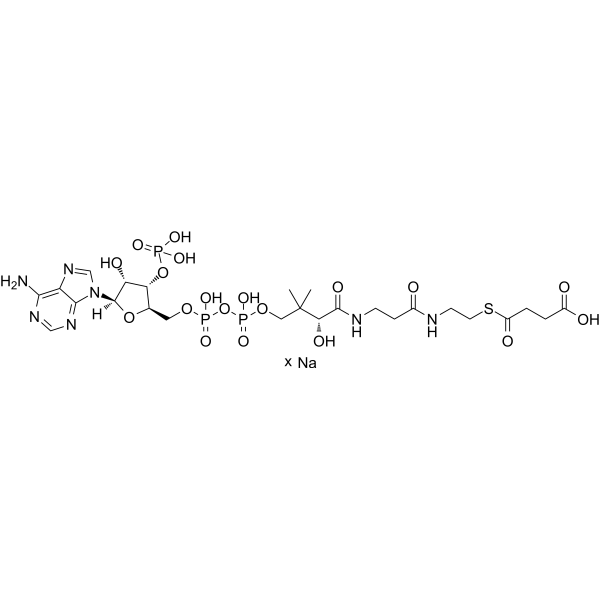
    Succinyl-Coenzyme A sodium
    3 Publications Verification

    Succinyl-CoA sodium

    Endogenous Metabolite Neurological Disease Metabolic Disease
    Succinyl CoA (Succinyl-coenzyme A) sodium is a pivotal intermediate metabolite in the tricarboxylic acid cycle and a key coenzyme A metabolite. Succinyl CoA sodium is biosynthesized from α-ketoglutarate or propionyl-CoA. Succinyl CoA sodium acts as a critical precursor and substrate for heme biosynthesis and gluconeogenesis. Succinyl CoA sodium insufficiency caused by cobalamin deficiency is directly linked to growth retardation, impaired heme synthesis, tissue glycine accumulation and neurological abnormalities. Succinyl CoA sodium can be used in research on metabolic, neurological, and hematological abnormalities (such as porphyria) caused by nutritional vitamin B12 deficiency (leading to a lack of Succinyl-Coenzyme A synthesis) .
    Succinyl-Coenzyme A sodium
  • HY-W000450
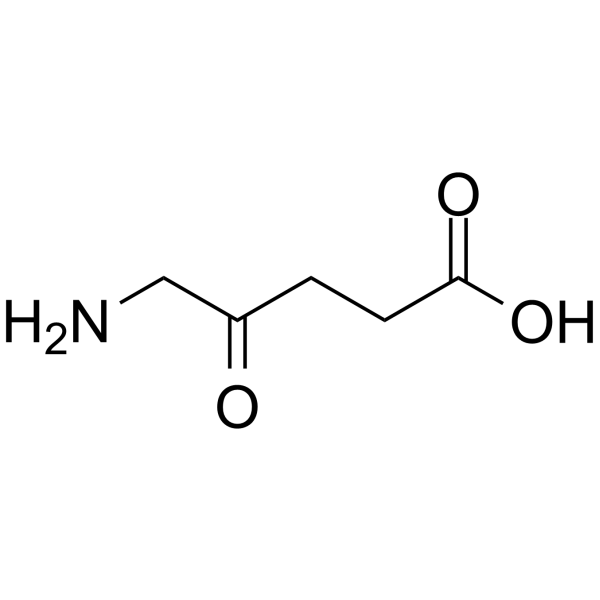
    5-Aminolevulinic acid
    Maximum Cited Publications
    20 Publications Verification

    5-ALA; δ-Aminolevulinic acid; 5-Amino-4-oxopentanoic acid

    Reactive Oxygen Species (ROS) Cardiovascular Disease Cancer
    5-Aminolevulinic acid (5-ALA; δ-Aminolevulinic acid; 5-Amino-4-oxopentanoic acid) is an orally active heme precursor. 5-Aminolevulinic acid promotes aerobic energy metabolism and increases ATP levels by enhancing the activity of cytochrome c oxidase. 5-Aminolevulinic acid enhances LPS-induced proinflammatory cytokine production and gene activation, and restores the phagocytic activity and ROS generation capacity of neutrophils. 5-Aminolevulinic acid selectively accumulates protoporphyrin IX in tumor cells; as a photosensitizer and radiosensitizer, it induces ROS burst upon light or X-ray irradiation to inhibit tumor growth. 5-Aminolevulinic acid can be applied to the research of septic shock, melanoma, and cancer radiotherapy .
    5-Aminolevulinic acid
  • HY-148285

    Succinyl-coenzyme A; S-(Hydrogen succinyl)coenzyme A

    Endogenous Metabolite Metabolic Disease
    Succinyl CoA (Succinyl-coenzyme A) is a pivotal intermediate metabolite in the tricarboxylic acid cycle and a key coenzyme A metabolite. Succinyl CoA is biosynthesized from α-ketoglutarate or propionyl-CoA. Succinyl CoA acts as a critical precursor and substrate for heme biosynthesis and gluconeogenesis. Succinyl CoA insufficiency caused by cobalamin deficiency is directly linked to growth retardation, impaired heme synthesis, tissue glycine accumulation and neurological abnormalities. Succinyl CoA can be used in research on metabolic, neurological, and hematological abnormalities (such as porphyria) caused by nutritional vitamin B12 deficiency (leading to a lack of Succinyl-Coenzyme A synthesis) .
    Succinyl CoA
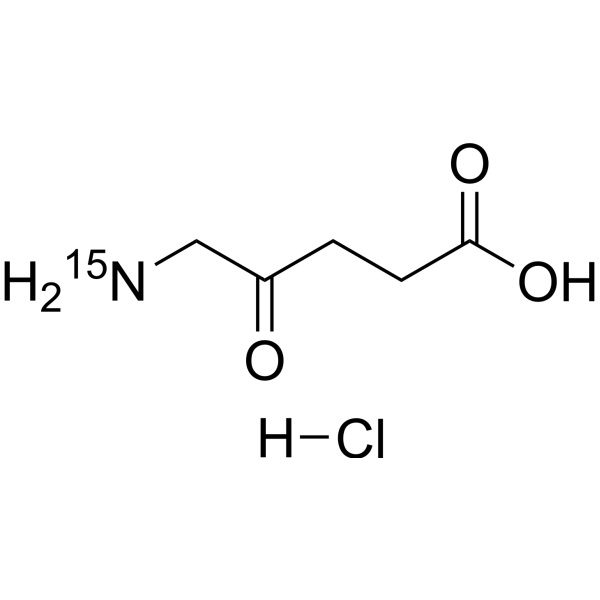
  • HY-N0305S

    5-ALA-15N hydrochloride; δ-Aminolevulinic acid-15N hydrochloride; 5-Amino-4-oxopentanoic acid-15N hydrochloride

    Isotope-Labeled Compounds Autophagy Mitophagy Endogenous Metabolite Apoptosis Metabolic Disease Cancer
    5-Aminolevulinic acid- 15N (hydrochloride) is the 15N-labeled 5-Aminolevulinic acid (hydrochloride). 5-Aminolevulinic acid hydrochloride (5-ALA hydrochloride) is an intermediate in heme biosynthesis in the body and the universal precursor of tetrapyrroles.
    5-Aminolevulinic acid-15N hydrochloride
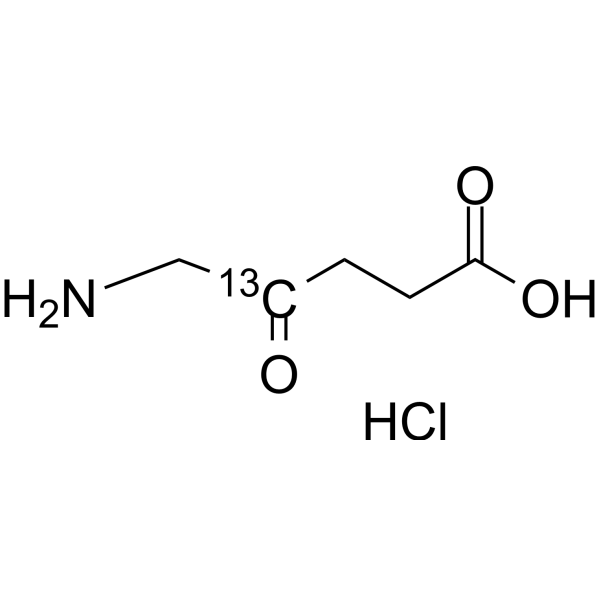
  • HY-N0305S3

    5-ALA-13C-1 hydrochloride; δ-Aminolevulinic acid-13C-1 hydrochloride; 5-Amino-4-oxopentanoic acid-13C-1 hydrochloride

    Apoptosis Autophagy Mitophagy Endogenous Metabolite Metabolic Disease
    5-Aminolevulinic acid- 13C-1 (5-ALA- 13C-1) hydrochloride is the 13C labeled 5-Aminolevulinic acid hydrochloride . 5-Aminolevulinic acid hydrochloride (5-ALA hydrochloride) is an intermediate in heme biosynthesis in the body and the universal precursor of tetrapyrroles .
    5-Aminolevulinic acid-13C-1 hydrochloride
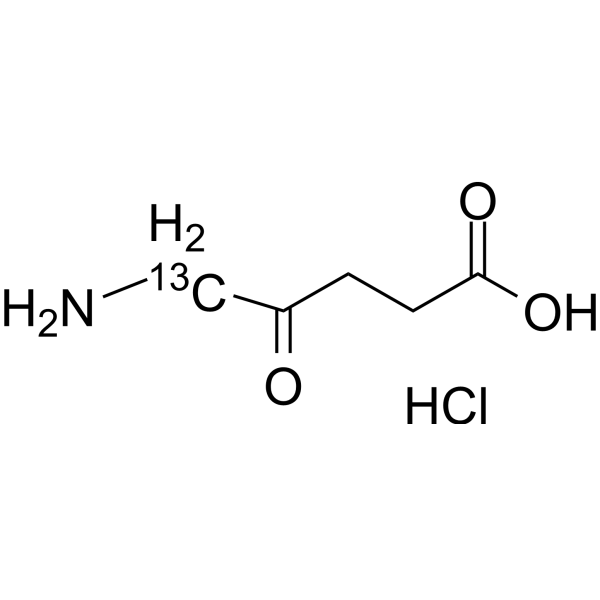
  • HY-N0305S2

    5-ALA-13C hydrochloride; δ-Aminolevulinic acid-13C hydrochloride; 5-Amino-4-oxopentanoic acid-13C hydrochloride

    Apoptosis Autophagy Mitophagy Endogenous Metabolite Metabolic Disease
    5-Aminolevulinic acid- 13C (hydrochloride) is the 13C labeled 5-Aminolevulinic acid hydrochloride . 5-Aminolevulinic acid hydrochloride (5-ALA hydrochloride) is an intermediate in heme biosynthesis in the body and the universal precursor of tetrapyrroles .
    5-Aminolevulinic acid-13C hydrochloride
  • HY-148285A

    Succinyl-coenzyme A disodium; S-(Hydrogen succinyl)coenzyme A disodium

    Endogenous Metabolite Metabolic Disease
    Succinyl CoA (Succinyl-coenzyme A) disodium is a pivotal intermediate metabolite in the tricarboxylic acid cycle and a key coenzyme A metabolite. Succinyl CoA disodium is biosynthesized from α-ketoglutarate or propionyl-CoA. Succinyl CoA disodium acts as a critical precursor and substrate for heme biosynthesis and gluconeogenesis. Succinyl CoA disodium insufficiency caused by cobalamin deficiency is directly linked to growth retardation, impaired heme synthesis, tissue glycine accumulation and neurological abnormalities. Succinyl-Coenzyme A sodium can be used in research on metabolic, neurological, and hematological abnormalities (such as porphyria) caused by nutritional vitamin B12 deficiency (leading to a lack of Succinyl-Coenzyme A synthesis) .
    Succinyl CoA disodium

Inquiry Online

Your information is safe with us. * Required Fields.

Salutation


Country or Region *

Applicant Name *


Organization Name *

Department *


Email Address *


Product Name *

Cat. No.


Requested quantity *

Phone Number *


Remarks

Inquiry Online

Inquiry Information

Product Name:
Cat. No.:
Quantity:
MCE Japan Authorized Agent:

