1. Search Result
Search Result
Pathways Recommended: Neuronal Signaling JAK/STAT Signaling
Results for "

hippo signaling

" in MedChemExpress (MCE) Product Catalog:

16

Inhibitors & Agonists

2

Natural
Products

1

Oligonucleotides

Targets Recommended:
Cat. No. Product Name Target Research Areas Chemical Structure
  • HY-150042
    TDI-011536
    3 Publications Verification

    Large Tumor Suppressor (LATS) YAP Cardiovascular Disease Others
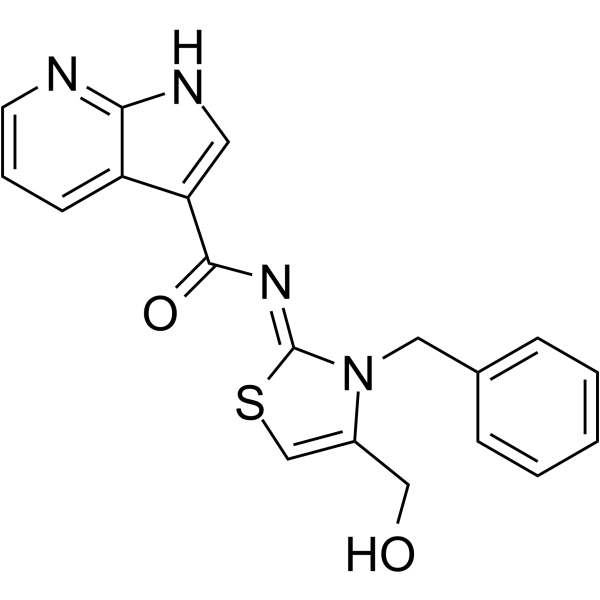
    TDI-011536 is a potent Lats kinase inhibitor, interrupts Hippo-Yap signaling and initiates the proliferation of lesioned heartmuscle cells. TDI-011536 can be used in studies of organ conservation and regeneration .
    TDI-011536
  • HY-400902

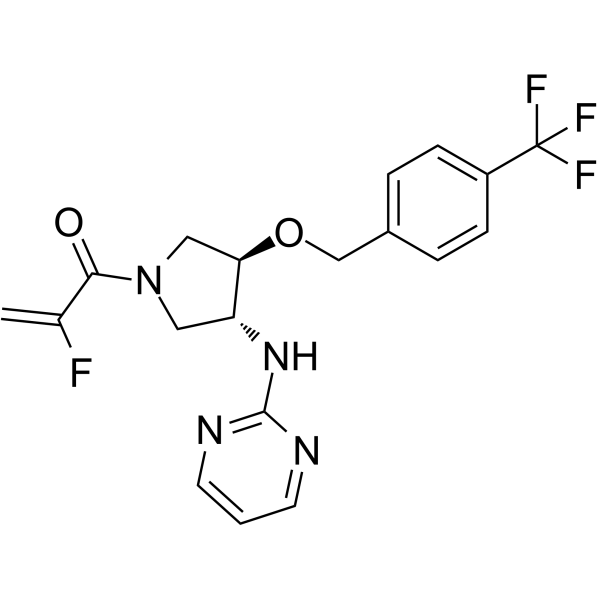
    YAP VEGFR Hippo (MST) Cancer
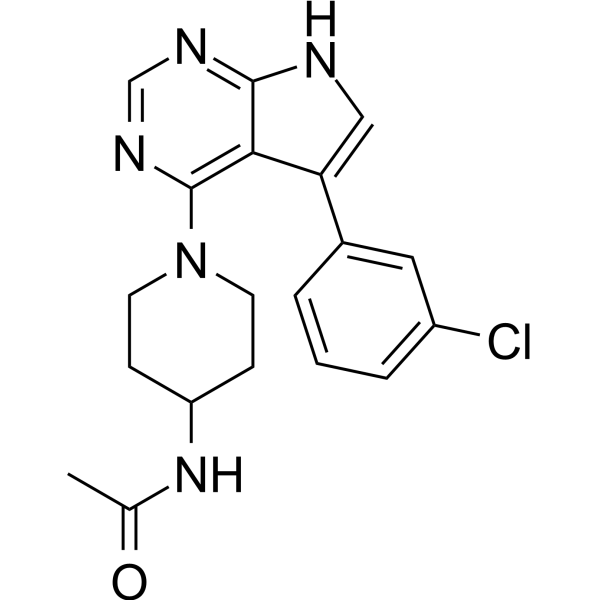
    VT3989 is an orally active pan-TEAD autopalmitoylation inhibitor that modulates the Hippo signaling pathway. VT3989 directly binds to TEAD transcription factors to block their palmitoylation modification, thereby disrupting the formation of YAP/TAZ-TEAD complexes and inhibiting downstream oncogenic transcriptional activity. VT3989 effectively inhibits the growth of NF2-deficient schwannoma and meningioma cells and reverses the Schwann cell phenotype. In addition, VT3989 exerts a synergistic effect when combined with Osimtinib (HY-15772) in EGFR-mutant non-small cell lung cancer models, significantly delaying tumor recurrence and prolonging survival. VT3989 can be used for the research of epithelioid hemangioendothelioma, malignant pleural mesothelioma, type 2 neurofibromatosis and related advanced solid tumors .
    VT3989
  • HY-147165
    VT02956
    1 Publications Verification

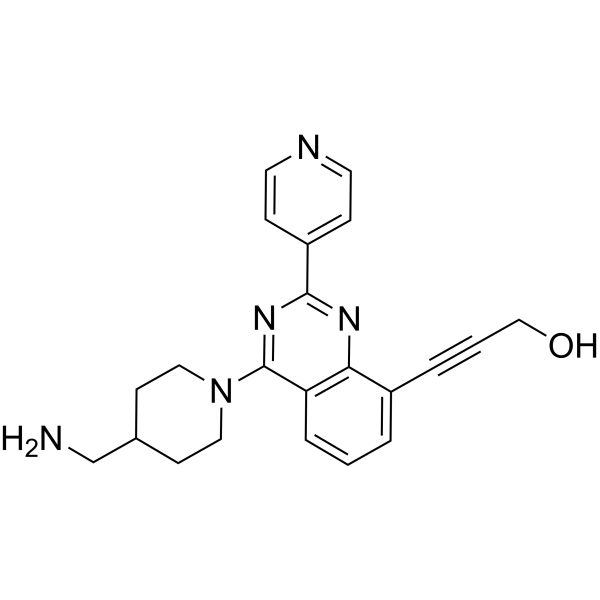
    Ser/Thr Kinase Large Tumor Suppressor (LATS) Cancer
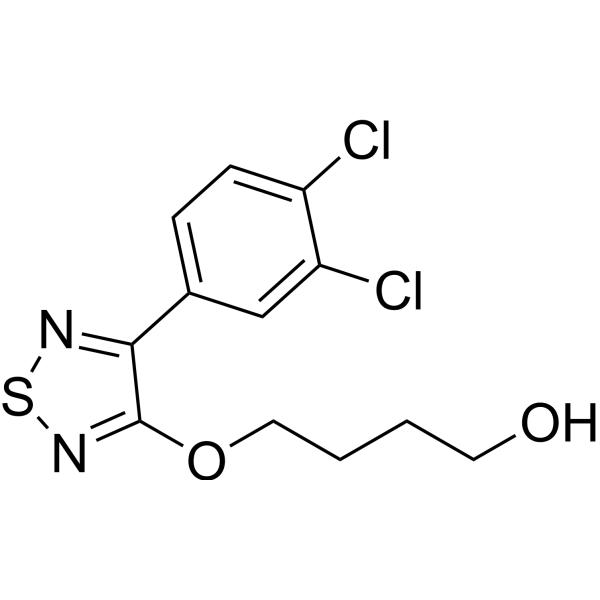
    VT02956 is a LATS inhibitor (IC50: 0.76 nM for LATS1, 0.52 nM for LATS2). VT02956 targets the Hippo pathway. VT02956 inhibits ESR1 expression and growth of ER+ breast cancer cell lines and patient-derived tumor organoids . VT02956 is a click chemistry reagent, it contains an Alkyne group and can undergo copper-catalyzed azide-alkyne cycloaddition (CuAAc) with molecules containing Azide groups.
    VT02956
  • HY-147136
    MYF-03-176
    1 Publications Verification

    YAP Cancer
    MYF-03-176 is an orally active inhibitor of TEAD, and suppresses TEAD transcriptional activity with an IC50 of 11 nM. The IC50 values of MYF-03-176 for TEAD1, TEAD3, and TEAD4 are 47, 32, and 71 nM, respectively. MYF-03-176 inhibits hippo signaling defective malignant pleural mesothelioma (MPM) cells. MYF-03-176 shows strong antitumor efficacy in MPM mouse xenograft model .
    MYF-03-176
  • HY-101275
    EMT inhibitor-1
    2 Publications Verification

    Hippo (MST) TGF-beta/Smad Wnt Cancer
    EMT inhibitor-1 is an inhibitor of of Hippo, TGF-β, and Wnt signaling pathways with antitumor activities.
    EMT inhibitor-1
  • HY-N8847

    alpha-Ionone

    Environmental Pollutants Hippo (MST) YAP Apoptosis Olfactory Receptor Large Tumor Suppressor (LATS) Cancer
    α-Ionone (alpha-Ionone) is an activator of the olfactory receptor OR10A6. α-Ionone induces apoptosis by activating OR10A6 and increasing the phosphorylation of the LATS-YAP-TAZ signaling axis in the Hippo pathway. α-Ionone can inhibit tumor formation both in vivo and in vitro .
    α-Ionone
  • HY-147135
    MYF-03-69
    1 Publications Verification

    TEAD-IN-3

    YAP Apoptosis Cancer
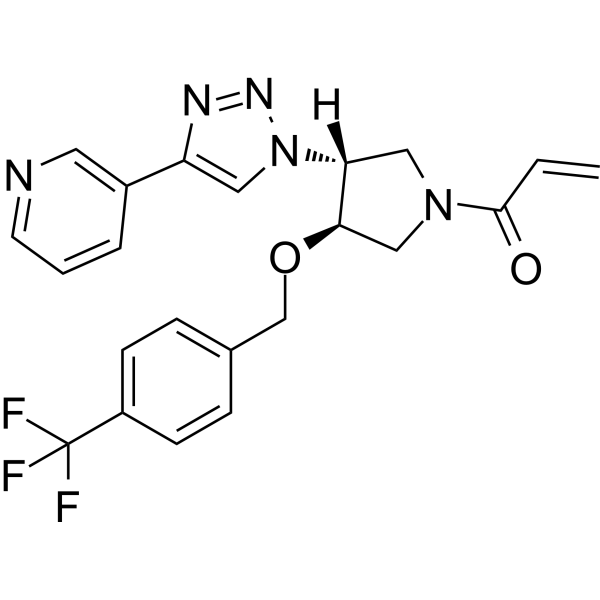
    MYF-03-69 (TEAD-IN-3) is a covalent and irreversible TEAD inhibitor with IC50s of 385, 143, 558 and 173 nM for TEAD1, TEAD2, TEAD3 and TEAD4. MYF-03-69 disrupts YAP-TEAD association, suppresses TEAD transcriptional activity (IC50 = 56 nM) and up-regulates apoptosis gene BMF. MYF-03-69 selectively inhibits mesothelioma cancer cells with defective Hippo signaling. MYF-03-69 can be used for the study of malignant pleural mesothelioma (MPM) .
    MYF-03-69
  • HY-132969
    SBP-3264
    2 Publications Verification

    Hippo (MST) YAP Cancer
    SBP-3264 is a YAP activator and STK/MST inhibitor with IC50 values of 36 nM against STK3/MST2 and 24 nM against STK4/MST1. SBP-3264 modulates the Hippo signaling pathway. SBP-3264 can be used for the research of acute myeloid leukemia .
    SBP-3264
  • HY-159912

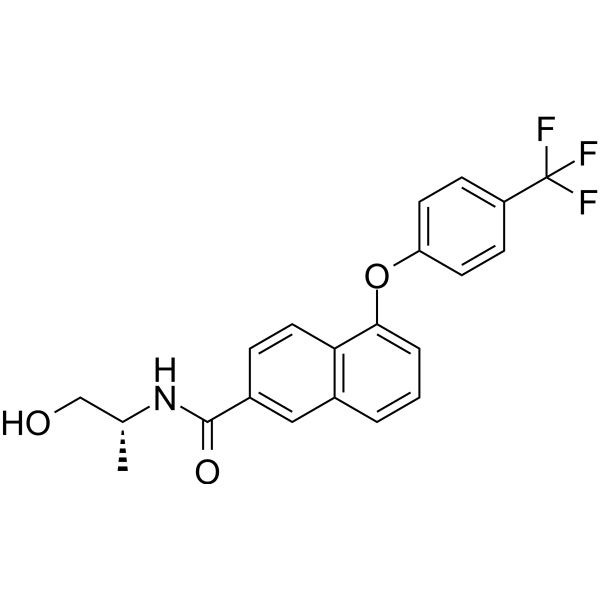
    YAP Cancer
    pan-TEAD-IN-1 (Compound 3) is an orally active pan-TEAD inhibitor targeting the palmitoylation site of TEAD, disrupting its interaction with the coactivators YAP/TAZ, thereby suppressing the transcriptional upregulation of oncogenes (e.g., Ctgf and Cyr61) in the Hippo signaling pathway. pan-TEAD-IN-1 exhibits excellent activity with a luciferase IC50 of 0.36 nM and an H226 cell IC50 of 1.52 nM. It also shows favorable pharmacokinetics (AUC0–∞ = 228.7 μg/mL·min, T1/2 = 183.9 min). In TEAD-dependent xenograft mouse models, pan-TEAD-IN-1 significantly inhibited tumor growth, showing promise for research in TEAD-dependent cancers .
    pan-TEAD-IN-1
  • HY-155570

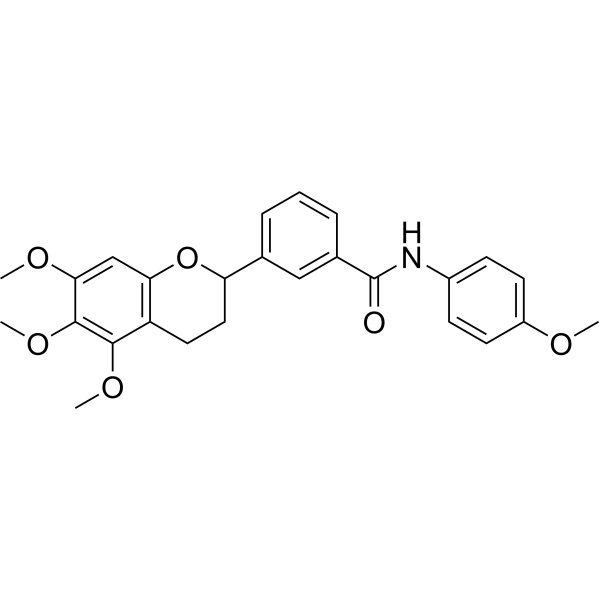
    PI3K Apoptosis Caspase PARP Cancer
    Anticancer agent 137 (8q) is a potent PI3k inhibitor. Anticancer agent 137 has broad-spectrum anticancer activity. Anticancer agent 137 induces G2/M cell cycle arrest and apoptosis. Anticancer agent 137 increases cleaved PARP, caspase 3, and 7. Anticancer agent 137 can be used in research of cancer .
    Anticancer agent 137
  • HY-174505

    mRNA Cancer
    Human YAP1 mRNA encodes the human Yes1 associated transcriptional regulator (YAP1) protein, a downstream nuclear effector of the Hippo signaling pathway which is involved in development, growth, repair, and homeostasis. YAP1 is known to play a role in the development and progression of multiple cancers as a transcriptional regulator of this signaling pathway and may function as a potential target for cancer treatment.
    Human YAP1 mRNA
  • HY-N8847R

    alpha-Ionone (Standard)

    Reference Standards Hippo (MST) YAP Cancer
    α-Ionone (Standard) is the analytical standard of α-Ionone. This product is intended for research and analytical applications. α-Ionone (alpha-Ionone) is an activator of the olfactory receptor OR10A6. α-Ionone induces apoptosis by activating OR10A6 and increasing the phosphorylation of the LATS-YAP-TAZ signaling axis in the Hippo pathway. α-Ionone can inhibit tumor formation both in vivo and in vitro .
    α-Ionone (Standard)
  • HY-176171

    Microtubule/Tubulin Hippo (MST) YAP Apoptosis Cancer
    Tubulin polymerization-IN-79 (Compound C20) is a tubulin polymerization inhibitor. Tubulin polymerization-IN-79 shows potent antiproliferative activity against esophageal cancer cells (e.g., KYSE450, IC50=0.36 μM; EC-109, IC50=0.63 μM). Tubulin polymerization-IN-79 occupies the colchicine binding site to disrupt microtubule network integrity, activating the Hippo signaling pathway, downregulating the oncogenic protein YAP expression, and inducing G2/M phase arrest and apoptosis in esophageal cancer cells. Tubulin polymerization-IN-79 is promising for research of esophageal cancers .
    Tubulin polymerization-IN-79
  • HY-101275R

    Hippo (MST) Reference Standards TGF-beta/Smad Wnt Cancer
    EMT inhibitor-1 (Standard) is the analytical standard of EMT inhibitor-1 (HY-101275). This product is intended for research and analytical applications. EMT inhibitor-1 is an inhibitor of of Hippo, TGF-β, and Wnt signaling pathways with antitumor activities.
    EMT inhibitor-1 (Standard)
  • HY-182743

    AMPK MARK YAP Cancer
    OICR19451 is an orally active dual NUAK1/NUAK2 and MARK2/MARK3 kinase inhibitor, with IC50 values of 12 nM and 10 nM against NUAK1 and NUAK2, and 101 nM and 124 nM against MARK2 and MARK3, respectively. OICR19451 modulates the Hippo signaling pathway, increases the phosphorylation level of YAP, enhances the cytoplasmic localization of YAP/TAZ, and inhibits the expression of oncogenes. OICR19451 inhibits cancer cell growth, reduces metastasis, promotes tumor capsule formation, and improves mouse survival in an orthotopic breast cancer model. OICR19451 can be used for research related to triple-negative breast cancer .
    OICR19451
  • HY-186117

    YAP PROTACs Cancer
    KG-FP-003 is a highly potent, selective, and durable TEAD PROTAC degrader (TEAD1 DC50 = 6 ± 4 nM, TEAD2 DC50 = 68 ± 15 nM, TEAD3 DC50 = 12 ± 5 nM, TEAD4 DC50 = 7 ± 5 nM). KG-FP-003 promotes ubiquitination and degradation of TEAD. KG-FP-003 exhibits anticancer activity against mesothelioma and ovarian cancer .
    KG-FP-003

Inquiry Online

Your information is safe with us. * Required Fields.

Salutation


Country or Region *

Applicant Name *


Organization Name *

Department *


Email Address *


Product Name *

Cat. No.


Requested quantity *

Phone Number *


Remarks

Inquiry Online

Inquiry Information

Product Name:
Cat. No.:
Quantity:
MCE Japan Authorized Agent:

