21 Results for "

honey bee

" in MedChemExpress (MCE) Product Catalog:
Products (21)

21 Results for "honey bee" in MCE Product Catalog:

2
2 Cited Publications
Cat. No.: HY-133968
CAS No.: 474-63-5
Purity:  99.48%
Synonyms: Ostreasterol
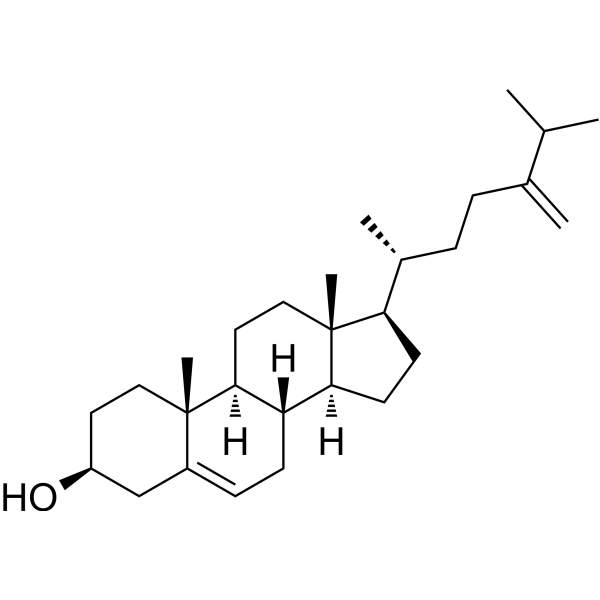
24-Methylenecholesterol (Ostreasterol) is a regulator targeting acyl-CoA cholesterol acyltransferase (ACAT) with anti-aging and neuroprotective effects. 24-Methylenecholesterol mimics the effects of nerve growth factor (NGF), can extend yeast lifespan through an anti-oxidative stress mechanism, and exhibits neuroprotective activity in PC12 cells. 24-Methylenecholesterol can reduce intracellular reactive oxygen species (ROS) and malondialdehyde (MDA) levels, activate anti-oxidative stress pathways (such as UTH1, SOD-related genes), and promote synaptic growth .
loading...
    loading...
2
2 Cited Publications
Cat. No.: HY-145295
CAS No.: 951659-40-8
Purity:  99.69%
Research Areas:  

Infection

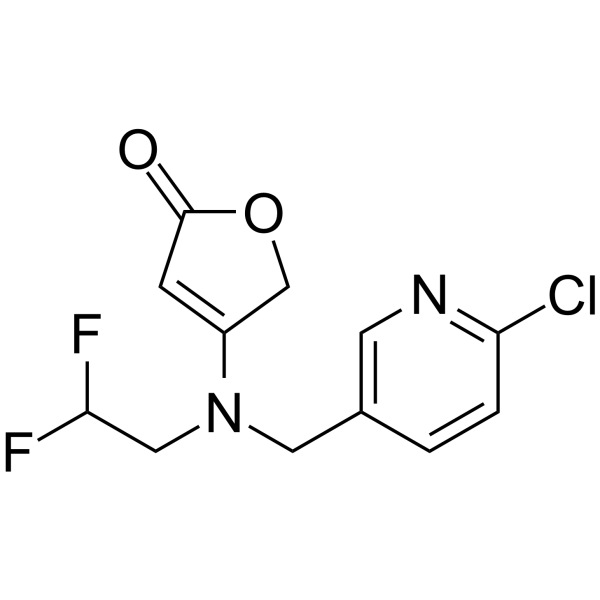
Flupyradifurone is a systemic nAChR agonist that interferes with signal transduction in the central nervous system of sucking pests. Flupyradifurone can be used as a butenolide insecticide .
loading...
    loading...
1
1 Cited Publications
Cat. No.: HY-Y0262
CAS No.: 144-62-7
Synonyms: Ethanedioic acid
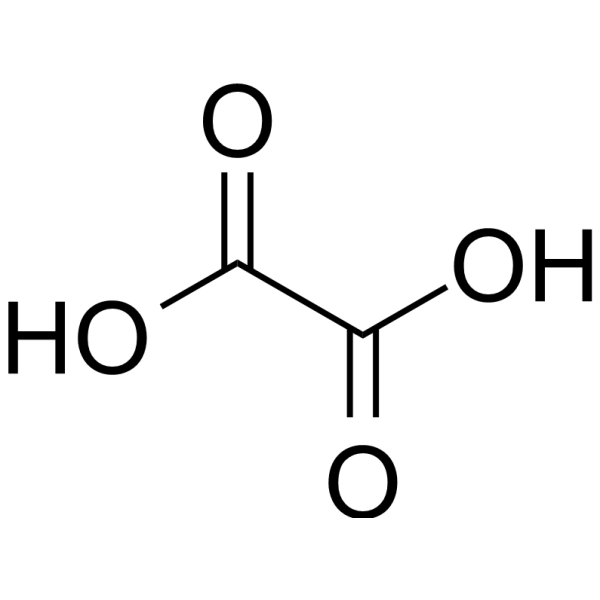
Oxalic acid, 99% (Ethanedioic acid) is a dicarboxylic acid found in a wide variety of plants. Oxalic acid, 99% shows antioxidant acyivity and suppresses lipid peroxidation. Oxalic acid, 99% is a pathogenicity factor for sclerotinia sclerotiorum, and suppresses the oxidative burst of the host plant. Oxalic acid, 99% exerts acaricidal activity. Oxalic acid can be used for the researches of sclerotinia disease, varroatosis and inflammatory diseases .
loading...
    loading...
1
1 Cited Publications
Cat. No.: HY-Y0262A
CAS No.: 6009-70-7
Synonyms: Ethanedioic acid diammonium monohydrate
Oxalic acid (Ethanedioic acid) diammonium monohydrate is a dicarboxylic acid found in a wide variety of plants.
Oxalic acid diammonium monohydrate shows antioxidant acyivity and suppresses lipid peroxidation.
Oxalic acid diammonium monohydrate is a pathogenicity factor for sclerotinia sclerotiorum, and suppresses the oxidative burst of the host plant. Oxalic acid diammonium monohydrate exerts acaricidal activity. Oxalic acid can be used for the researches of sclerotinia disease varroatosis and inflammatory diseases .
loading...
    loading...
Cat. No.: HY-13211
CAS No.: 334-49-6
Purity:  99.28%
Synonyms: trans-2-Decenoic acid
Target:  

Endogenous Metabolite

Research Areas:  

Cancer

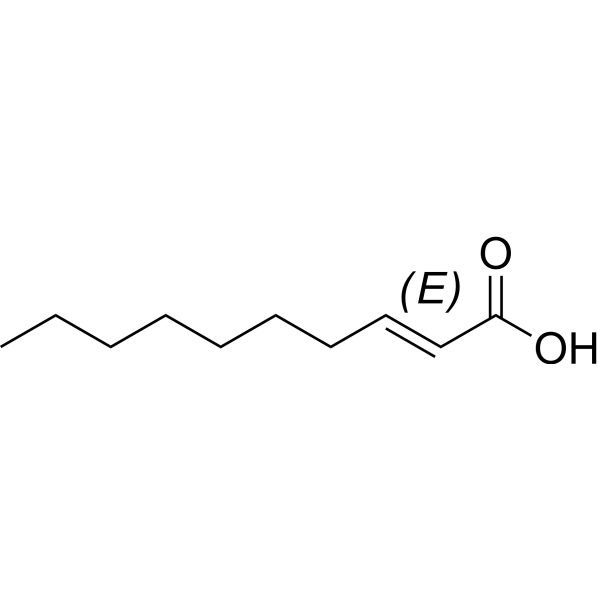
(E)-2-Decenoic acid is an interesting fatty acid isolated from royal jelly secretions of honey bees.
loading...
    loading...
Cat. No.: HY-W587960
CAS No.: 534-30-5
Synonyms: Histidine-betaine
Research Areas:  

Metabolic Disease

Hercynine (Histidine-betaine) is an intermediate (precursor) and a redox metabolite of Ergothioneine (HY-N1914), which is found in the fine leaf algae, Schizosaccharomyces cerevisiae and honey bees. Hercynine has no effect on scavenging •OH radicals .
loading...
    loading...
Cat. No.: HY-128030
CAS No.: 20137-14-8
Purity:  96.64%
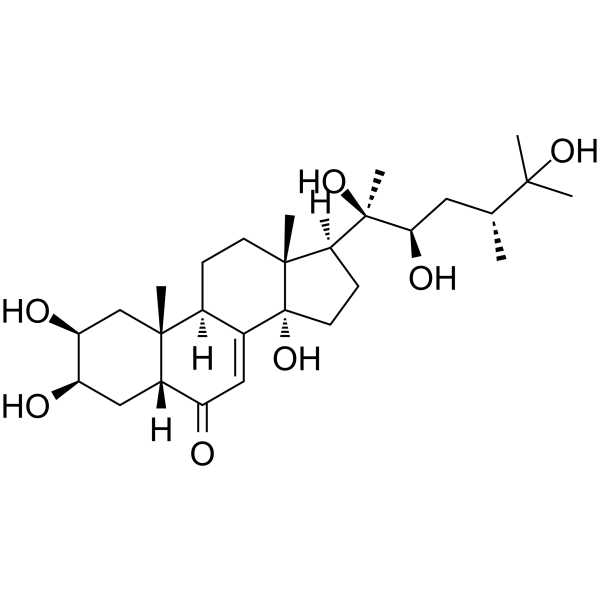
Makisterone A, a 28-carbon moulting hormone, has been identified as the major free pupal ecdysteroid in the honey bee, Apis mellifera .
loading...
    loading...
Cat. No.: HY-107835
CAS No.: 69770-45-2
Purity:  95.20%
Synonyms: FCR 2769
Flumethrin (FCR 2769) is a pyrethroid insecticide and acaricide . Flumethrin targets voltage-gated sodium channels and estrogen receptor α (ERα). Flumethrin induces cytotoxicity, apoptosis, genotoxicity and DNA damage in breast cancer cells by regulating the expression of BCL2, BAX, TP53 and P21 genes. Flumethrin is applicable to relevant studies on ectoparasite infections (tick and flea burdens) in dogs and cats, as well as breast cancer .
loading...
    loading...
Cat. No.: HY-W041831
CAS No.: 1113-38-8
Synonyms: Ethanedioic acid ammonium
Oxalic acid (Ethanedioic acid) ammonium is a dicarboxylic acid. Oxalic acid ammonium is widely found in various plants. Oxalic acid ammonium has antioxidant activity and can inhibit lipid peroxidation. Oxalic acid ammonium is a pathogenic factor of Sclerotinia sclerotiorum and can inhibit the oxidative burst of host plants. Oxalic acid ammonium has acaricidal activity. Oxalic acid ammonium can be used for related research on Sclerotinia sclerotiorum disease, Varroa mite disease and inflammatory diseases .
loading...
    loading...
Cat. No.: HY-N0073A
CAS No.: 82597-74-8
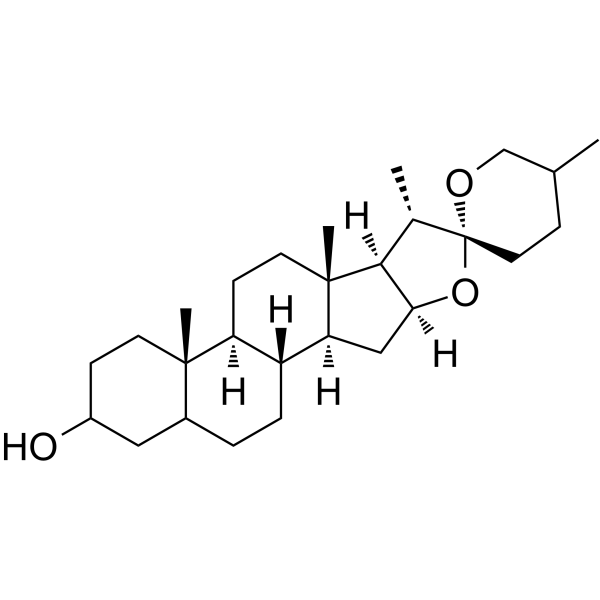
Spirostan-3-ol is a useful tool to keep bees away from areas recently treated with toxic insecticides .
loading...
    loading...
Cat. No.: HY-N2927
CAS No.: 3650-43-9
Synonyms: β-Costic acid
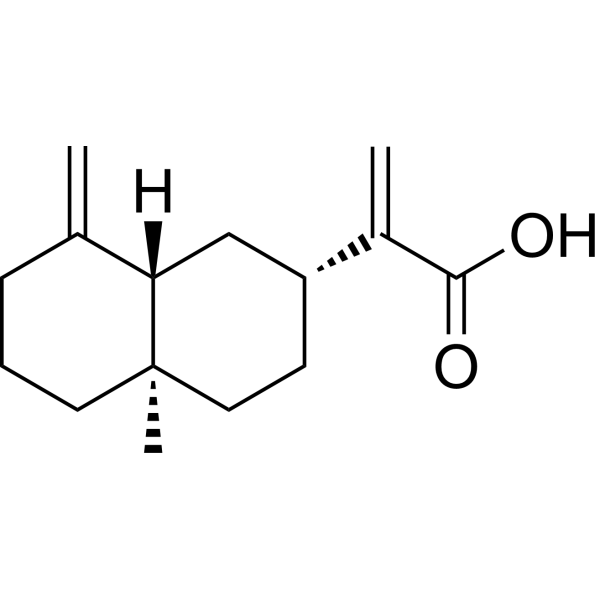
Costic acid (β-Costic acid) is a natural product, that can be isolated from Dittrichia viscosa. Costic acid exhibits potent in vivo acaricidal activity against the parasite. Costic acid is not toxic for human umbilical vein endothelial cells (HUVEC) at concentrations of up to 230 μM. Costic acid can be used for the research of varroosis in honey bee colonies .
loading...
    loading...
Cat. No.: HY-W075032
CAS No.: 101007-06-1
Target:  

Insecticide

Research Areas:  

Others

Acrinathrin is a synthetic pyrethroid active ingredient. After experimental treatment for the prevention and control of bee mites, its residues in honey and beeswax are below a certain value, which is more favorable from the perspective of food hygiene.
loading...
    loading...
Cat. No.: HY-145295R
CAS No.: 951659-40-8
Research Areas:  

Infection

Flupyradifurone (Standard) is the analytical standard of Flupyradifurone. This product is intended for research and analytical applications. Flupyradifurone is a systemic nAChR agonist that interferes with signal transduction in the central nervous system of sucking pests. Flupyradifurone can be used as a butenolide insecticide .
loading...
    loading...
Cat. No.: HY-P3029D
Research Areas:  

Metabolic Disease

Phospholipase A2, Honey bee venom (Apis mellifera) (EC 3.1.1.4) hydrolyzes the β-ester bond of zwitterionic glycerophospholipids. Preferred substrates are phosphatidylcholine, phosphatidylethanolamine, and their plasmalogen analogues.
loading...
    loading...
Cat. No.: HY-N9512
CAS No.: 95462-15-0
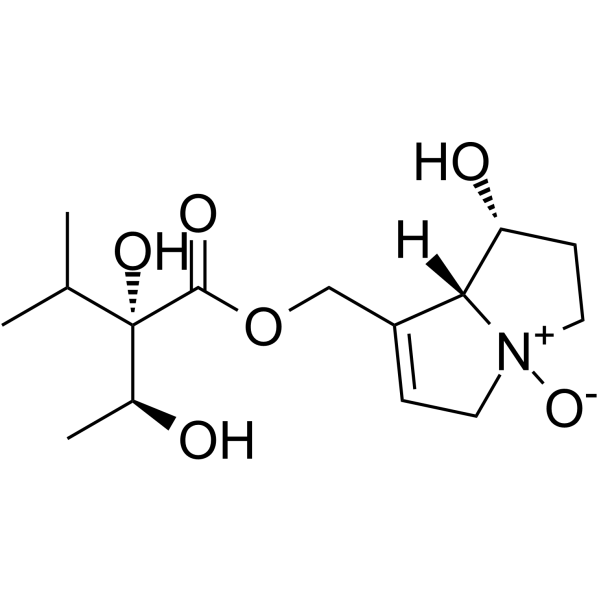
Lycopsamine N-oxide, an N-oxide of Lycopsamine which is a pyrrolizidine alkaloid, can be found in honey and bee pollen .
loading...
    loading...
Cat. No.: HY-N9512S
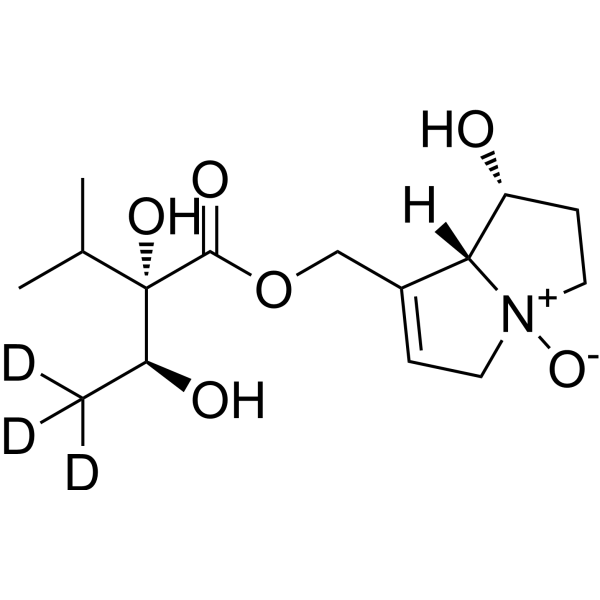
Lycopsamine N-oxide-d3 is the deuterium labeled Lycopsamine N-oxide. Lycopsamine N-oxide, an N-oxide of Lycopsamine which is a pyrrolizidine alkaloid, can be found in honey and bee pollen .
loading...
    loading...
Cat. No.: HY-13211R
CAS No.: 334-49-6
Synonyms: trans-2-Decenoic acid (Standard)
Research Areas:  

Cancer

(E)-2-Decenoic acid (Standard) is the analytical standard of (E)-2-Decenoic acid. This product is intended for research and analytical applications. (E)-2-Decenoic acid is an interesting fatty acid isolated from royal jelly secretions of honey bees.
loading...
    loading...
Cat. No.: HY-133968R
CAS No.: 474-63-5
Synonyms: Ostreasterol (Standard)
24-Methylenecholesterol (Ostreasterol) (Standard) is the analytical standard of 24-Methylenecholesterol (HY-133968). This product is intended for research and analytical applications. 24-Methylenecholesterol (Ostreasterol) is a regulator targeting acyl-CoA cholesterol acyltransferase (ACAT) with anti-aging and neuroprotective effects. 24-Methylenecholesterol mimics the effects of nerve growth factor (NGF), can extend yeast lifespan through an anti-oxidative stress mechanism, and exhibits neuroprotective activity in PC12 cells. 24-Methylenecholesterol can reduce intracellular reactive oxygen species (ROS) and malondialdehyde (MDA) levels, activate anti-oxidative stress pathways (such as UTH1, SOD-related genes), and promote synaptic growth .
loading...
    loading...
Cat. No.: HY-123320S
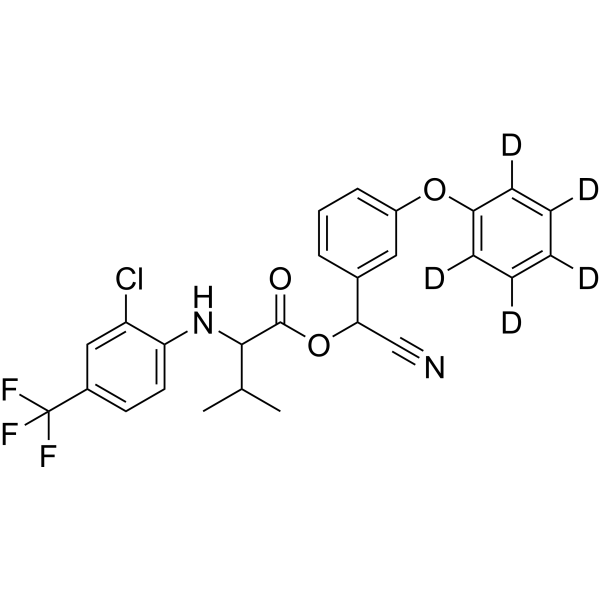
Fluvalinate-d5 is the deuterated-labeled Fluvalinate (HY-123320). Fluvalinate is an orally active acaricide classified as a sodium channel inhibitor. Fluvalinate delays sodium channel closure, prolongs cell membrane depolarization, inhibits the excitability of honeybee brain neurons, and exerts a central nervous system inhibitory effect. Fluvalinate negatively affects the learning ability, memory ability, sucrose responsiveness, and survival of honeybees. Fluvalinate potentiates pentobarbital-induced hypnosis, reduces spontaneous activity in mice, and decreases the total white blood cell count and absolute lymphocyte count in mice. Fluvalinate induces acute toxic symptoms in rats, acts as a cholinergic stimulant, and induces the production of hepatic enzymes in rats. Fluvalinate causes the death of Varroa jacobsoni sensitive to τ-Fluvalinate (HY-B2021). Fluvalinate can be used in studies related to mite pest control .
loading...
    loading...
Cat. No.: HY-187516
CAS No.: 3031223-87-4
Target:  

Fungal

Research Areas:  

Infection

Antifungal agent 174 is an amide derivative of TPs3, the major photodegradation metabolite of cyprodinil, and also acts as an antifungal agent. Antifungal agent 174 exhibits inhibitory activity against Sclerotinia sclerotiorum. Antifungal agent 174 can be used in studies related to Sclerotinia sclerotiorum infection .
loading...
    loading...

