6 Results for "

human platelet cyclo-oxygenase

" in MedChemExpress (MCE) Product Catalog:
Products (6)

6 Results for "human platelet cyclo-oxygenase" in MCE Product Catalog:

2
2 Cited Publications
Cat. No.: HY-N0353
CAS No.: 13657-68-6
Synonyms: (+)-Curdione
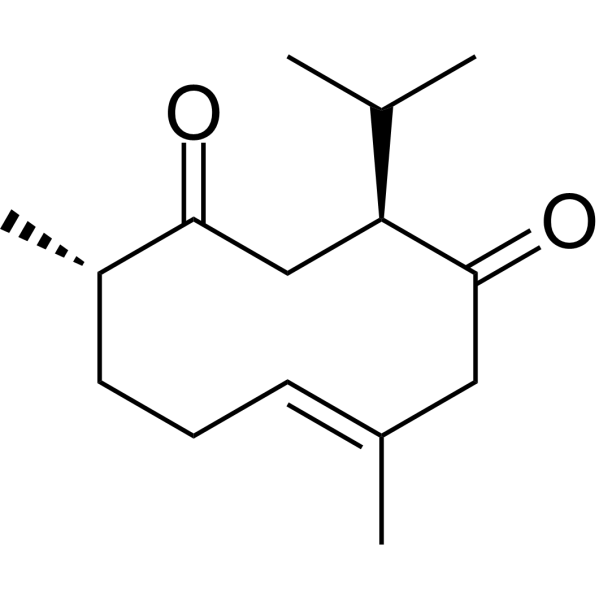
Curdione ((+)-Curdione) is an orally active sesquiterpenoid. Curdione inhibits platelet aggregation. Curdione induces ferroptosis in colorectal cancer via m6A methylation mediated by METTL14 and YTHDF2. Curdione inhibits ferroptosis in Isoproterenol (HY-B0468)-induced myocardial infarction by regulating the Keap1/Trx1/GPX4 signaling pathway, suppressing oxidative stress (ROS) and apoptosis. Curdione ameliorates Doxorubicin (HY-15142)-induced cardiotoxicity by inhibiting oxidative stress (ROS) and activating the Nrf2/HO-1 pathway. Curdione ameliorates sepsis-induced lung injury by inhibiting platelet-mediated neutrophil extracellular trap formation. Curdione ameliorates Bleomycin (HY-17565A)-induced pulmonary fibrosis by inhibiting TGF-β-induced fibroblast-to-myofibroblast differentiation. Curdione exhibits neuroprotective effects against focal cerebral ischemia-reperfusion injury in rats. Curdione exerts antiproliferative effects against human uterine leiomyosarcoma by targeting IDO1. Curdione protects vascular endothelial cells and atherosclerosis by regulating DNMT1-mediated ERBB4 promoter methylation. Curdione inhibits inducible prostaglandin E2 production (IC50 = 1.1 μM) and cyclooxygenase 2 expression .
loading...
    loading...
Cat. No.: HY-113459
CAS No.: 745-62-0
Purity:  98.10%
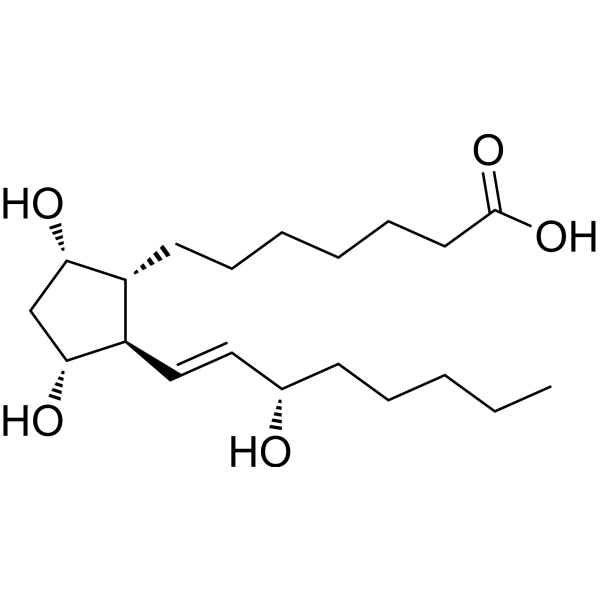
Prostaglandin F1a is an endogenous metabolite and a cyclooxygenase product with platelet activity inhibitory effects. Prostaglandin F1a can be used as a marker in coagulation-related studies .
loading...
    loading...
Cat. No.: HY-165587
CAS No.: 284464-83-1
Research Areas:  

Cardiovascular Disease

BM-573 is an orally active dual thromboxane A₂ (TXA₂) modulator with an IC50 of 1.3 nM. BM-573 possesses both thromboxane synthase (TxAS) inhibition and thromboxane receptor (TP) antagonistic effects. BM-573 can completely inhibit platelet aggregation induced by Arachidonic acid (HY-109590) or U-46619 (TXA₂ analogues). BM-573 completely blocks the generation of TXB₂ (the stable metabolite of TXA₂) in human platelets and does not inhibit cyclooxygenase (COX-1/COX-2), thus avoiding interference with other prostaglandin synthesis. BM-573 has an inhibitory effect on U-46619-induced contractions in rat gastric fundus smooth muscle (ED₅₀ = 4.2 μM), but has no effect on contractions caused by PGE₂, PGF₂α, or PGI₂. BM-573 can be used in the study of atherosclerosis, myocardial infarction, pulmonary hypertension and shock .
loading...
    loading...
Cat. No.: HY-N0353R
CAS No.: 13657-68-6
Synonyms: (+)-Curdione (Standard)
Curdione (Standard) is the analytical standard of Curdione. This product is intended for research and analytical applications. Curdione ((+)-Curdione) is an orally active sesquiterpenoid. Curdione inhibits platelet aggregation. Curdione induces ferroptosis in colorectal cancer via m6A methylation mediated by METTL14 and YTHDF2. Curdione inhibits ferroptosis in Isoproterenol (HY-B0468)-induced myocardial infarction by regulating the Keap1/Trx1/GPX4 signaling pathway, suppressing oxidative stress (ROS) and apoptosis. Curdione ameliorates Doxorubicin (HY-15142)-induced cardiotoxicity by inhibiting oxidative stress (ROS) and activating the Nrf2/HO-1 pathway. Curdione ameliorates sepsis-induced lung injury by inhibiting platelet-mediated neutrophil extracellular trap formation. Curdione ameliorates Bleomycin (HY-17565A)-induced pulmonary fibrosis by inhibiting TGF-β-induced fibroblast-to-myofibroblast differentiation. Curdione exhibits neuroprotective effects against focal cerebral ischemia-reperfusion injury in rats. Curdione exerts antiproliferative effects against human uterine leiomyosarcoma by targeting IDO1. Curdione protects vascular endothelial cells and atherosclerosis by regulating DNMT1-mediated ERBB4 promoter methylation. Curdione inhibits inducible prostaglandin E2 production (IC50 = 1.1 μM) and cyclooxygenase 2 expression .
loading...
    loading...
Cat. No.: HY-131384
CAS No.: 34262-64-1
Synonyms: 8,11,14-Icosatriynoic acid
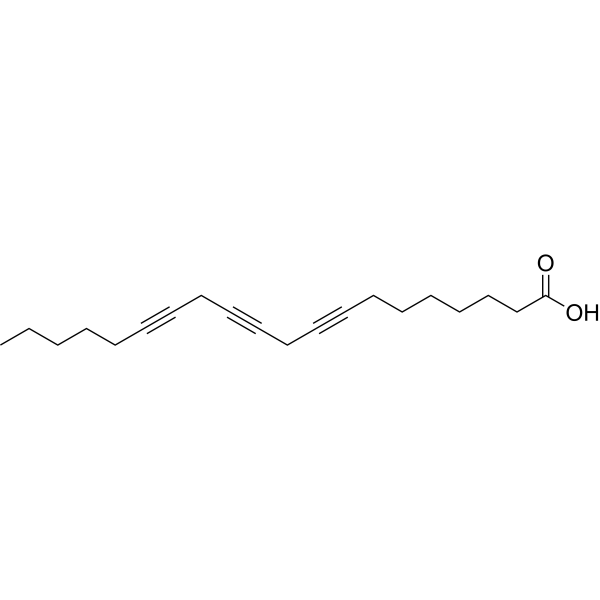
8,11,14-Eicosatriynoic Acid, as an inhibitor of prostaglandin, leukotriene biosynthesis, and arachidonic acid-induced platelet aggregation, blocks human 12-lipoxygenase (12-LO), cyclooxygenase (COX)and 5-lipoxygenase (5-LO) with IC50 values of 0.46 μM, 14 μMand 25 μM, respectively. In addition, 8,11,14-Eicosatriynoic Acid inhibits the action of slow-reacting substances of allergic reactions, with IC50 value of 10 μM. Lipoxygenase is widely found in fungi, plants and animals. 12-LO involves in many important disease states and may play a role in oxidative glutamate toxicity. COX enzymes play complex roles in human physiology and pathology involving the neuronal, immune, renal, cardiovascular, gastrointestinal and reproductive systems. COX enzymes are blocked by aspirin and a variety of other NSAIDs, which makes them clinically important. 5-LO involves in cancer pathology. It is expressed by a variety of cancer cells, including colon, lung, breast, and prostate cancers, and promotes cancer cell growth and neovascularization . 8,11,14-Eicosatriynoic acid is a click chemistry reagent, it contains an Alkyne group and can undergo copper-catalyzed azide-alkyne cycloaddition (CuAAc) with molecules containing Azide groups.
loading...
    loading...
Cat. No.: HY-W551882
CAS No.: 3736-92-3
G-25671 is a platelet cyclooxygenase (COX) inhibitor (Ki = 4.5 μM) and uricosuric agent, as well as the active metabolite of Sulfinpyrazone (HY-B1271). G-25671 reduces the production of thromboxane B2 and malondialdehyde from arachidonic acid (AA), and inhibits human platelet aggregation induced by Sodium arachidonate (HY-109590A). G-25671 can be used in gout-related research .
loading...
    loading...

