
Search Result
Results for "
hypothermia
" in MedChemExpress (MCE) Product Catalog:
1
Biochemical Assay Reagents
2
Isotope-Labeled Compounds
| Cat. No. |
Product Name |
Target |
Research Areas |
Chemical Structure |
-
- HY-D1056
-
|
LPS, from Escherichia coli (O55:B5)
|
Toll-like Receptor (TLR)
|
Infection
Neurological Disease
Inflammation/Immunology
Cancer
|
Lipopolysaccharides, from E. coli O55:B5 (LPS, from Escherichia coli (O55:B5)) are endotoxins and TLR4 activators extracted from Escherichia coli (E. coli O55:B5) and are classified as S (smooth) type LPS. Lipopolysaccharides, from E. coli O55:B5 possess the typical three-part structure: O-antigen, core oligosaccharide, and lipid A. Lipopolysaccharides, from E. coli O55:B5 activate TLR-4 in immune cells, exhibit high pyrogenicity, and demonstrate dose and serotype specificity. Lipopolysaccharides, from E. coli O55:B5 can be widely used to induce cellular inflammation and establish animal models related to inflammation .
It is recommended to prepare a solution with concentration ≥2 mg/mL. Vortex thoroughly for more than 10 minutes. Due to the adsorption characteristics of LPS, silanized container or low adsorption centrifuge tubes should be used for aliquoting and storage, and mix thoroughly before use.
|
-
-
- HY-100672
-
-
-
- HY-N0361
-
-
-
- HY-103200
-
-
-
- HY-101302
-
|
|
Opioid Receptor
TRP Channel
|
Inflammation/Immunology
|
|
Naltriben mesylate is a potent δ2-opioid receptor antagonist and a TRPM7 activator. Naltriben mesylate shows Ki values of 0.013 nM, 19 nM and 152 nM for δ, μ and κ receptors, respectively. Naltriben mesylate enhances glioblastoma cell migration and invasion. Naltriben mesylate can be used in research into neurological diseases and cancer .
|
-
-
- HY-107664
-
|
|
Neurotensin Receptor
|
Neurological Disease
|
|
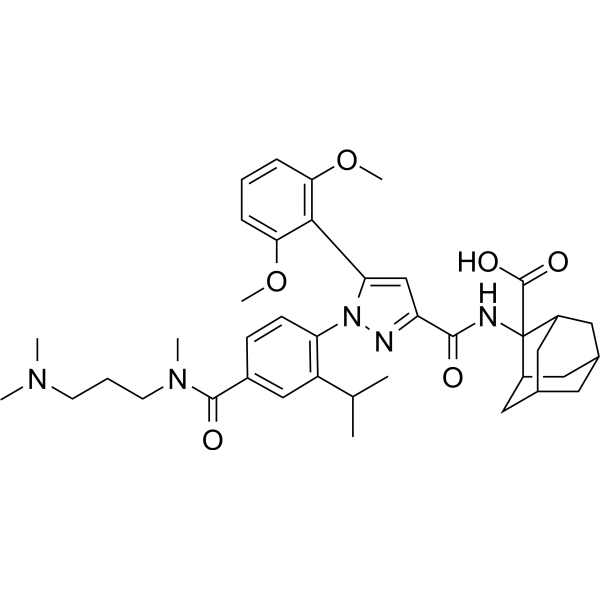
SR 142948 is an orally active and selective non-peptide neurotensin receptor (NT) antagonist with IC50s of 1.19 nM, 0.32 nM, 3.96 nM in h-NTR1-CHO cells, HT-29 cells, and adult rat brain, respectively. SR 142948 antagonizes NT-induced inositol monophosphate formation in HT-29 cells with an IC50 of 3.9 nM. SR 142948 blocks hypothermia, analgesia and steering behavior induced by NT in vivo. SR 142948 shows blood-brain permeability and can be used in study of psychiatric disorders .
|
-
-
- HY-118700
-
|
Guanidinobiotin
|
NO Synthase
|
Neurological Disease
|
|
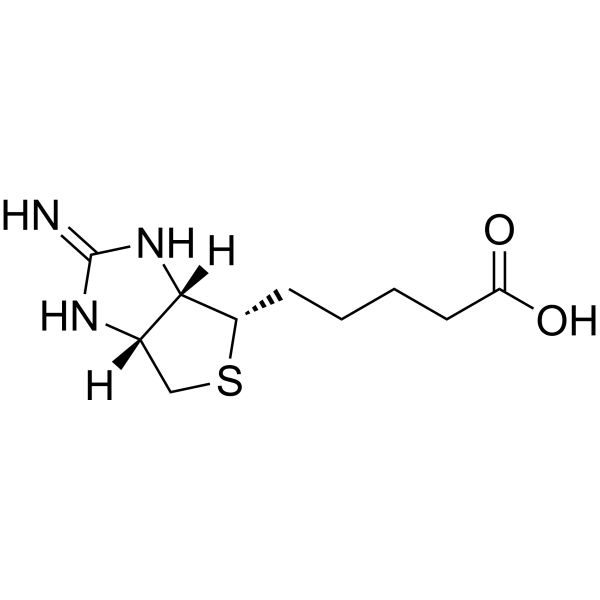
2-Iminobiotin (Guanidinobiotin) is a biotin (vitamin H or B7) analog. 2-Iminobiotin is a reversible nitric oxide synthases inhibitor with Kis of 21.8 and 37.5μM for murine iNOS and rat n-cNOS, respectively . 2-Iminobiotin superimposes on hypothermia protects human neuronal cells from hypoxia-induced cell damage .
|
-
-
- HY-17549
-
|
CRL 40028
|
Adrenergic Receptor
|
Neurological Disease
|
|
Adrafinil (CRL 40028) is an orally active vigilance promoting agent. Adrafinil enhances central noradrenergic transmission, improves spontaneous activity, exploratory behavior, discriminative learning ability and response motivation, but impairs visuospatial working memory. Adrafinil antagonizes Prazosin (HY-B0193)-induced hypoactivity and hypothermia, exerts anticonvulsant effects, and induces sustained enhancement of high-frequency electrocortical activity. Adrafinil can be used for research on decreased alertness and specific cognitive deficits .
|
-
-
- HY-135065
-
|
|
Trace Amine-associated Receptor (TAAR)
|
Metabolic Disease
|
|
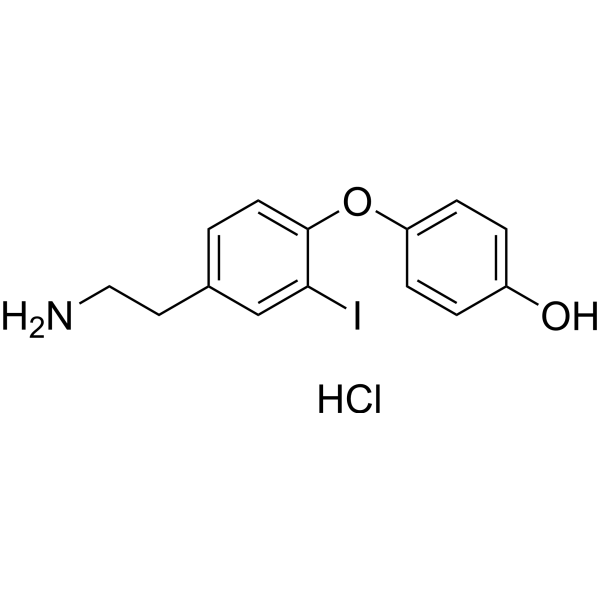
3-Iodothyronamine (hydrochloride) is an endogenous and rapid-acting derivative of thyroid hormone. 3-Iodothyronamine potently activates an orphan G protein-coupled receptor in vitro (TAAR1) and induced hypothermia in vivo on a rapid time scale. 3-Iodothyronamine can be used for the research of congestive heart failure .
|
-
-
- HY-12095
-
|
|
Cannabinoid Receptor
|
Neurological Disease
|
|
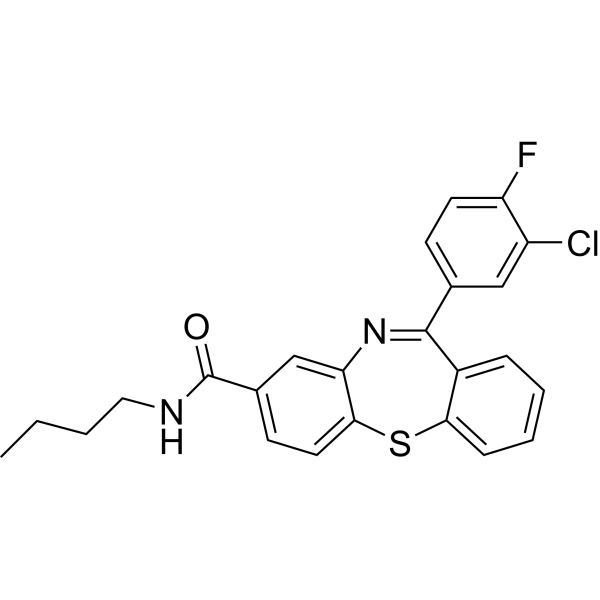
CB1 inverse agonist 2 is an orally active inverse agonist of Cannabinoid Receptor CB1. CB1 inverse agonist 2 effectively inhibits CP55940-induced hypothermia and anorexia in mice model .
|
-
-
- HY-113654
-
|
|
TRP Channel
|
Others
|
|
AMG 7905 is a hypothermia-inducing transient receptor potential vanilloid type 1 (TRPV1) antagonist. AMG 7905 potentiates TRPV1 channels activation by protons and drives the reflectory inhibition of thermogenesis and tail-skin vasoconstriction, while potently blocking channel activation by capsaicin .
|
-
-
- HY-125972
-
-
-
- HY-N15001
-
|
|
GABA Receptor
|
Neurological Disease
|
|
Gabaculine is an amino acid neurotoxin and blood-brain barrier-permeable GABA transaminase inhibitor, with an IC50 of 1 μM in beef and Pseudomonas ovalis. Gabaculine elevates endogenous synaptic and brain GABA levels and enhances GABA activity. Gabaculine induces sedation, hypothermia, loss of righting reflex, and prevents convulsions in mice. Gabaculine is applicable to research related to neurological disorders .
|
-
-
- HY-118700A
-
|
Guanidinobiotin hydrobromide
|
NO Synthase
|
Neurological Disease
|
|
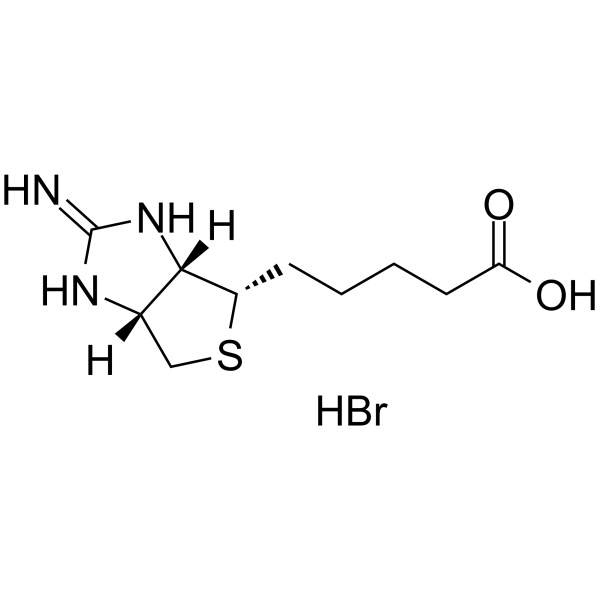
2-Iminobiotin hydrobromide (Guanidinobiotin hydrobromide) is a biotin (vitamin H or B7) analog. 2-Iminobiotin hydrobromide is a reversible nitric oxide synthases inhibitor with Kis of 21.8 and 37.5 μM for murine iNOS and rat n-cNOS, respectively . 2-Iminobiotin hydrobromide superimposes on hypothermia protects human neuronal cells from hypoxia-induced cell damage .
|
-
-
- HY-133588
-
|
|
Endogenous Metabolite
|
Metabolic Disease
|
|
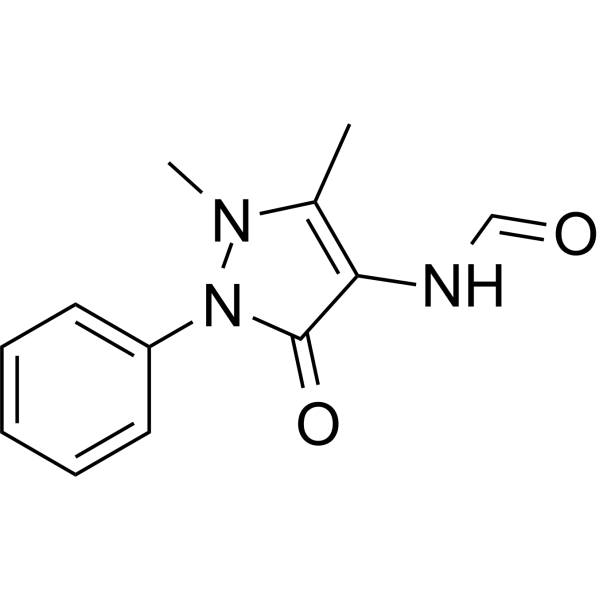
4-Formylaminoantipyrine is an excreted metabolite of aminophenazone. Aminophenazone is a pyrazolone with analgesic, anti-inflammatory, and antipyretic effects in vivo .
|
-
-
- HY-100672B
-
|
|
Adrenergic Receptor
|
Cardiovascular Disease
Metabolic Disease
|
|
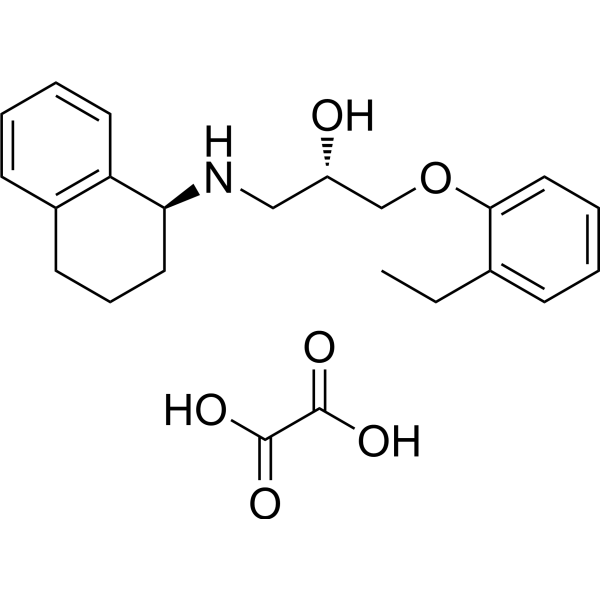
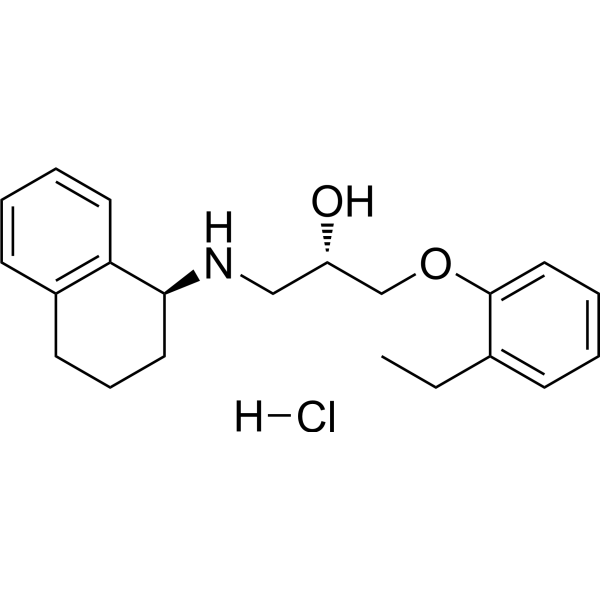
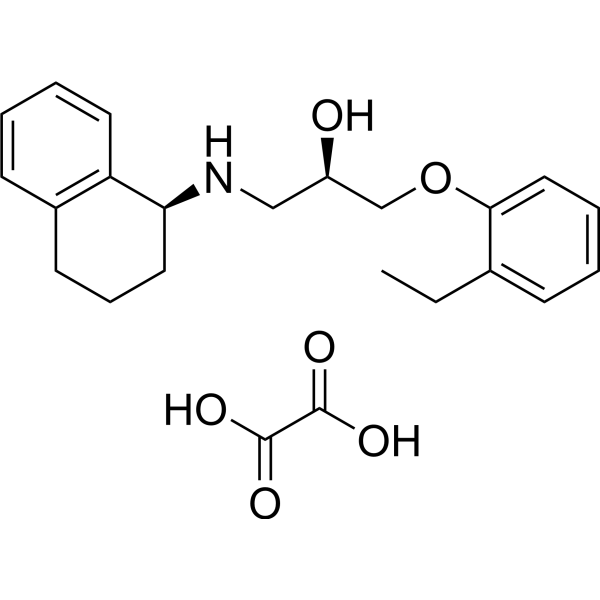
(2R)-SR59230A is the isomer of SR59230A (HY-100672), and can be used as an experimental control. SR59230A is a potent, selective, and blood-brain barrier penetrating β3-adrenergic receptor antagonist with IC50s of 40, 408, and 648 nM for β3, β1, and β2 receptors, respectively .
|
-
-
- HY-W417914
-
|
4-MA hydrochloride
|
5-HT Receptor
Monoamine Transporter
Dopamine Receptor
|
Neurological Disease
|
|
4-Methylamphetamine hydrochloride is a 5-HT1A receptor agonist that induces hypothermia in rats by binding to the 5-HT1A receptor. Additionally, 4-Methylamphetamine hydrochloride acts on norepinephrine (NE), dopamine (DA), and serotonin (5-HT) transporters to increase the extracellular levels of these neurotransmitters. 4-Methylamphetamine hydrochloride can be used in the study of neurological disorders .
|
-
-
- HY-119468
-
|
|
Dopamine Transporter
|
Neurological Disease
|
|
Medifoxamine is an orally active monoamine reuptake inhibitor and antidepressant. Medifoxamine preferentially inhibits presynaptic dopamine reuptake. Medifoxamine acts as an intraocular pressure-lowering agent to reduce intraocular pressure, and also functions as a miotic agent to decrease pupil diameter. Medifoxamine exhibits characteristic properties of antidepressant compounds, including preventing hypothermia induced by Reserpine (HY-N0480) or Apomorphine (HY-12723), potentiating the toxic effects of Yohimbine (HY-N0127) in mice, and reducing immobility behavior in mice and rats in the "behavioral despair" model. Medifoxamine has no anticholinergic activity. Medifoxamine can be used in research related to depression .
|
-
-
- HY-123207
-
-
-
- HY-110014
-
|
|
Cannabinoid Receptor
|
Neurological Disease
|
|
Noladin ether is a potent and selective agonist of cannabinoid CB1 receptor, with a Ki of 21.2 nM. Noladin ether can cause hypothermia, intestinal immobility, and mild antinociception .
|
-
-
- HY-107664A
-
|
|
Neurotensin Receptor
|
Neurological Disease
|
|
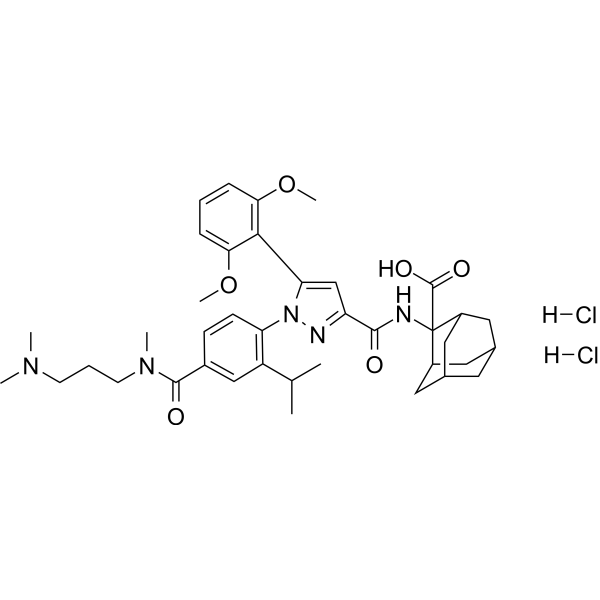
SR 142948 dihydrochloride is an orally active and selective non-peptide neurotensin receptor (NT) antagonist with IC50s of 1.19 nM, 0.32 nM, 3.96 nM in h-NTR1-CHO cells, HT-29 cells, and adult rat brain, respectively. SR 142948 dihydrochloride antagonizes NT-induced inositol monophosphate formation in HT-29 cells with an IC50 of 3.9 nM. SR 142948 dihydrochloride blocks hypothermia, analgesia and steering behavior induced by NT in vivo. SR 142948 dihydrochloride shows blood-brain permeability and can be used in study of psychiatric disorders .
|
-
-
- HY-15401
-
|
|
5-HT Receptor
|
Neurological Disease
Metabolic Disease
|
|
WAY 163909 is an orally active, blood-brain barrier permeable 5-HT2C receptor-selective agonist. WAY 163909 exhibits an EC50 of 8 nM and a Ki of 10.5 nM for h5-HT2C. Instead of triggering apoptosis, WAY 163909 induces anorectic, antipsychotic-like, antidepressant-like, anti-aggressive and anti-compulsive effects. WAY 163909 alleviates ketamine-induced hypothermia, but impairs sexual function at high doses. With rapid antidepressant-like properties, WAY 163909 can be used in research related to obesity, schizophrenia, depression, obsessive-compulsive disorder, and anesthesia-induced hypothermia .
|
-
-
- HY-131527R
-
|
N-Desmethyl Venlafaxine hydrochloride (Standard); Wy 45494 (Standard)
|
Serotonin Transporter
Reference Standards
|
Metabolic Disease
|
|
Wy-45494 (hydrochloride) (Standard) is the analytical standard of Wy-45494 (hydrochloride). This product is intended for research and analytical applications. Wy-45494 hydrochloride (N-Desmethyl Venlafaxine hydrochloride; Wy 45494) is a minor active metabolite of the selective norepinephrine and serotonin reuptake inhibitor (SNRI) venlafaxine. It is formed from venlafaxine via the cytochrome P450 (CYP) isomer CYP3A4.2. Wy-45494 hydrochloride inhibits norepinephrine and serotonin reuptake in rat synaptosomal preparations (IC50s of 4.7 and 1.6 μM, respectively). In vivo, Wy-45494 hydrochloride reversed reserpine-induced hypothermia in mice at a minimum effective dose (MED) of 10 mg/kg.
|
-
-
- HY-178163
-
|
|
Ferroptosis
Necroptosis
RIP kinase
Reactive Oxygen Species (ROS)
Mixed Lineage Kinase
|
Inflammation/Immunology
|
|
Zharp1-163 is a dual inhibitor of ferroptosis and necroptosis. Zharp1-163 effectively blocks ferroptosis by reducing reactive oxygen species (ROS) levels and inhibits necroptosis by potently and selectively targeting RIPK1 kinase activity (KD = 240 nM; IC50 = 406.1 nM). Zharp1-163 inhibits the cellular activation of RIPK1, RIPK3 and MLKL in response to necroptotic stimulation. Zharp1-163 markedly attenuates TNF-α (HY-P1875)-induced systemic inflammatory syndrome, including the prevention of TNF-α-induced mortality and hypothermia in mice. Zharp1-163 significantly alleviates acute kidney injury associated with both necroptosis and ferroptosis in models induced by Cisplatin (HY-17394) and ischemia-reperfusion. Zharp1-163 can be used for the study of diseases associated with cell death pathways, such as kidney disease .
|
-
-
- HY-168997
-
|
|
Cannabinoid Receptor
|
Neurological Disease
Inflammation/Immunology
|
|
CB1R agonist 1 is a potent, CNS-penetrant, and selective Cannabinoid-1 receptor (CB1R) agonist with a Ki of 0.95 nM, modulating Gi/o signaling. CB1R agonist 1 exhibits high selectivity over CB2R and other off-target GPCRs, including GPR55, GPR18, and GPR119. CB1R agonist 1 induces analgesia and hypothermia, and potentiates opioid analgesia in mice. CB1R agonist 1 can be used for the research of pain .
|
-
-
- HY-N11021
-
|
|
Others
|
Others
|
|
Feruloyl tyramine, an amide compound, can be isolated from ethanol extract of hemp seed. Feruloyl tyramine injected into the lateral ventricle caused hypothermia and dyskinesia in mice .
|
-
-
- HY-178437
-
|
|
Calcium Channel
|
Metabolic Disease
|
|
Bastadins-5 is a potent stabilizer for the open state of RYR1. Bastadins-5 enhances Ca 2+-induced Ca 2+ release. Bastadins-5 can be used in research on central nuclear disease and malignant hypothermia .
|
-
-
- HY-P10698
-
|
|
Peptide-Drug Conjugates (PDCs)
LDLR
|
Neurological Disease
|
|
VH-N412 is a vectorized neuropeptide (NT) with good blood-brain barrier permeability. VH-N412 binds to the low-density lipoprotein receptor (LDLR) and neuropeptide receptor 1 (NTSR-1), and acts as a pharmacological-induced hypothermia (PIH) inducer. VH-N412 exhibits anticonvulsant and neuroprotective effects, and can be used in the study of neurological diseases such as epilepsy.
|
-
-
- HY-157039
-
|
|
RIP kinase
Necroptosis
Mixed Lineage Kinase
|
Inflammation/Immunology
|
|
RIPK1-IN-17 is an orally active, selective RIPK1 inhibitor (Kd = 17 nM) and shows no significant inhibition to RIPK3. RIPK1-IN-17 specifically inhibits necroptosis rather than apoptosis by inhibiting RIPK1, RIPK3, and MLKL phosphorylation. RIPK1-IN-17 protects mice from hypothermia and death. RIPK1-IN-17 can be used for the study of necroptosis-related diseases such as inflammatory response syndrome (SIRS) .
|
-
-
- HY-N0361R
-
-
-
- HY-107664B
-
|
|
Neurotensin Receptor
|
Neurological Disease
|
|
SR 142948 TFA is an orally active and selective non-peptide neurotensin receptor (NT) antagonist with IC50s of 1.19 nM, 0.32 nM, 3.96 nM in h-NTR1-CHO cells, HT-29 cells, and adult rat brain, respectively. SR 142948 TFA antagonizes NT-induced inositol monophosphate formation in HT-29 cells with an IC50 of 3.9 nM. SR 142948 TFA blocks hypothermia, analgesia and steering behavior induced by NT in vivo. SR 142948 TFA shows blood-brain permeability and can be used in study of psychiatric disorders .
|
-
-
- HY-123398
-
-
-
- HY-105973
-
|
BRL 14342
|
Serotonin Transporter
|
Neurological Disease
|
|
Clemeprol (BRL 14342) is an orally active Noradrenaline (NA) and 5-HT uptake blocker. Clemeprol inhibits 6-
Hydroxydopamine (HY-B1081)-induced depletion of brain NA. Clemeprol exerts a dose-dependent inhibition of Reserpine (HY-N0480)-induced hypothermia. Clemeprol can be used in the research of depression .
|
-
-
- HY-103163
-
-
-
- HY-169394
-
-
-
- HY-120476
-
|
|
TRP Channel
|
Neurological Disease
Inflammation/Immunology
|
|
JNJ-39729209 is an antagonist for transient receptor potential vanilloid 1 (TRPV1) with pIC50 of 7.9, 8.5, 7.9 and 7.7 for TRPV1 from human, rat, canine and guinea pig. JNJ-39729209 inhibits Capsaicin (HY-10448)-induced hypotension and inhibit thereby hypothermia. JNJ-39729209 exhibits anti-inflammatory and analgesic activities in Carrageenan (HY-125474)- and CFA (HY-153808)-induced thermal hyperalgesia rat models. JNJ-39729209 exhibits anti-cough effects in guinea pigs .
|
-
-
- HY-123743
-
-
-
- HY-113654A
-
|
|
TRP Channel
|
Cardiovascular Disease
|
|
AMG 7905 TFA is a hypothermia-inducing transient receptor potential vanilloid type 1 (TRPV1) antagonist. AMG 7905 TFA potentiates TRPV1 channels activation by protons and drives the reflectory inhibition of thermogenesis and tail-skin vasoconstriction, while potently blocking channel activation by capsaicin .
|
-
-
- HY-W755778
-
|
|
Isotope-Labeled Compounds
Trace Amine-associated Receptor (TAAR)
|
Metabolic Disease
|
|
3-Iodothyronamine hydrochloride- 13C6 is the 13C-labeled 3-Iodothyronamine hydrochloride (HY-135065). 3-Iodothyronamine hydrochloride is an endogenous and rapid-acting derivative of thyroid hormone. 3-Iodothyronamine potently activates an orphan G protein-coupled receptor in vitro (TAAR1) and induced hypothermia in vivo on a rapid time scale. 3-Iodothyronamine can be used for the research of congestive heart failure .
|
-
-
- HY-170232
-
|
|
RIP kinase
|
Inflammation/Immunology
|
|
RIPK1-IN-29 (Compound 22) is a RIPK1 inhibitor, with an IC50 of 6.9 nM. RIPK1-IN-29 exerts anti-necroptotic (Apoptosis) activity by inhibiting RIPK1. In a TNF-α-induced in vivo inflammation model, at a dose of 10 mg/kg, RIPK1-IN-29 can protect mice from hypothermia and death. RIPK1-IN-29 can be applied to the research field of inflammatory diseases .
|
-
-
- HY-131527
-
|
N-Desmethyl Venlafaxine hydrochloride; Wy 45494
|
Serotonin Transporter
|
Metabolic Disease
|
|
Wy-45494 hydrochloride (N-Desmethyl Venlafaxine hydrochloride; Wy 45494) is a minor active metabolite of the selective norepinephrine and serotonin reuptake inhibitor (SNRI) venlafaxine. It is formed from venlafaxine via the cytochrome P450 (CYP) isomer CYP3A4.2. Wy-45494 hydrochloride inhibits norepinephrine and serotonin reuptake in rat synaptosomal preparations (IC50s of 4.7 and 1.6 μM, respectively). In vivo, Wy-45494 hydrochloride reversed reserpine-induced hypothermia in mice at a minimum effective dose (MED) of 10 mg/kg.
|
-
-
- HY-N0361S
-
|
|
Isotope-Labeled Compounds
Apoptosis
Bcl-2 Family
Reactive Oxygen Species (ROS)
TRP Channel
Caspase
PI3K
Akt
|
Others
|
|
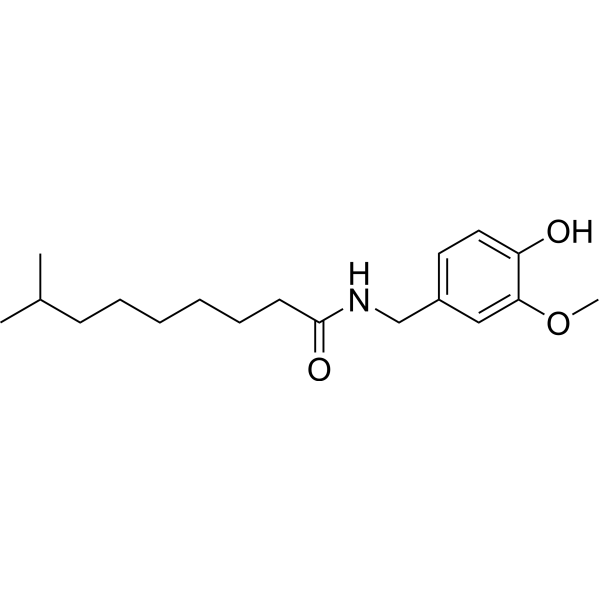
Dihydrocapsaicin-d3 is the deuterium labeled Dihydrocapsaicin (HY-N0361) . Dihydrocapsaicin, a capsaicin, is a potent and selective TRPV1 (transient receptor potential vanilloid channel 1) agonist. Dihydrocapsaicin reduces AIF, Bax, and Caspase-3 expressions, and increased Bcl-2, Bcl-xL and p-Akt levels. Dihydrocapsaicin enhances the hypothermia-induced neuroprotection following ischemic stroke via PI3K/Akt regulation in rat .
|
-
-
- HY-N0913R
-
|
|
Reference Standards
Antifolate
Thymidylate Synthase
|
Others
|
|
Wy-45494 (hydrochloride) (Standard) is the analytical standard of Wy-45494 (hydrochloride). This product is intended for research and analytical applications. Wy-45494 hydrochloride (N-Desmethyl Venlafaxine hydrochloride; Wy 45494) is a minor active metabolite of the selective norepinephrine and serotonin reuptake inhibitor (SNRI) venlafaxine. It is formed from venlafaxine via the cytochrome P450 (CYP) isomer CYP3A4.2. Wy-45494 hydrochloride inhibits norepinephrine and serotonin reuptake in rat synaptosomal preparations (IC50s of 4.7 and 1.6 μM, respectively). In vivo, Wy-45494 hydrochloride reversed reserpine-induced hypothermia in mice at a minimum effective dose (MED) of 10 mg/kg.
|
-
-
- HY-182687
-
|
|
Adenosine Receptor
|
Neurological Disease
|
|
MRS7469 is a highly selective A1 adenosine receptor (A1AR) agonist with over 2000-fold selectivity over other adenosine receptor subtypes. MRS7469 stably binds to the orthosteric binding site of A1AR, and exhibits extremely high affinity for both humans and mice (e.g., human pKi is 8.67, mouse pKi is 9.43). By activating central A1AR, MRS7469 significantly induces hypothermia, motor inhibition and psychomotor dysfunction, and can be widely used in research related to depression and other relevant fields .
|
-
-
- HY-182381
-
|
|
Dopamine Receptor
|
Neurological Disease
|
|
FLA-797 is a brain-penetrant dopamine D2 receptor blocker and very low affinity for dopamine D1 receptors. FLA-797 selectively binds to and blocks postsynaptic dopamine D2 receptors. FLA-797 induces catalepsy in male rats. FLA-797 blocks dopamine agonist-induced hypothermia in male rats. FLA-797 contributes marginally to the dopamine D2 receptor-blocking activity of Remoxipride (HY-101313) in male rats. FLA-797 does not mimic the atypical antipsychotic profile of Remoxipride. FLA-797 can be used for research on mental disorders .
|
-
-
- HY-180496
-
|
|
Drug Isomer
|
Metabolic Disease
|
|
(S)-NSC 121182 is an isomer of NSC 121182 (HY-180492). (S)-NSC 121182 does not cause statistically significant changes in CIRBP levels. (S)-NSC 121182 can be used in research on hypothermia .
|
-
-
- HY-106604
-
|
LM 1404
|
Monoamine Transporter
|
Neurological Disease
Metabolic Disease
|
|
Lortalamine (LM 1404) is a selective norepinephrine transporter inhibitor with an IC50 of <1 nM. Lortalamine is a non-tricyclic antidepressant. Lortalamine antagonises Reserpine (HY-N0480)-induced ptosis and hypothermia. Lortalamine inhibits norepinephrine uptake .
|
-
-
- HY-133588R
-
|
|
Reference Standards
Endogenous Metabolite
|
Metabolic Disease
|
|
4-Formylaminoantipyrine (Standard) is the analytical standard of 4-Formylaminoantipyrine. This product is intended for research and analytical applications. 4-Formylaminoantipyrine is an excreted metabolite of aminophenazone. Aminophenazone is a pyrazolone with analgesic, anti-inflammatory, and antipyretic effects in vivo .
|
-
-
- HY-30647
-
|
|
mAChR
|
Neurological Disease
|
|
RS-86 is a potent, central acting, and selective muscarinic acetylcholine receptor agonist. RS-86 exhibits typical cholinergic excitatory effects, such as inducing smooth muscle contraction, ganglion depolarization, central hypothermia, etc. RS-86 can be used for research on Alzheimer's disease .
|
-
-
- HY-100672R
-
|
|
Adrenergic Receptor
Reference Standards
|
Cardiovascular Disease
Metabolic Disease
|
|
SR59230A (Standard) is the analytical standard of SR59230A (HY-100672). This product is intended for research and analytical applications. SR59230A is a potent, selective, and blood-brain barrier penetrating β3-adrenergic receptor antagonist with IC50s of 40, 408, and 648 nM for β3, β1, and β2 receptors, respectively .
|
-
- HY-100672BR
-
|
|
Others
Reference Standards
|
Cardiovascular Disease
Metabolic Disease
|
|
(2R)-SR59230A (Standard) is the analytical standard of (2R)-SR59230A (HY-100672B). This product is intended for research and analytical applications. (2R)-SR59230A is the isomer of SR59230A (HY-100672), and can be used as an experimental control. SR59230A is a potent, selective, and blood-brain barrier penetrating β3-adrenergic receptor antagonist with IC50s of 40, 408, and 648 nM for β3, β1, and β2 receptors, respectively .
|
-
- HY-103200R
-
|
|
Reference Standards
Adrenergic Receptor
|
Cardiovascular Disease
Metabolic Disease
|
|
SR59230A hydrochloride (Standard) is the analytical standard of SR59230A hydrochloride (HY-103200). This product is intended for research and analytical applications. SR59230A hydrochloride is a potent, selective, and blood-brain barrier penetrating β3-adrenergic receptor antagonist with IC50s of 40, 408, and 648 nM for β3, β1, and β2 receptors, respectively .
|
-
- HY-183144
-
|
|
mAChR
|
Neurological Disease
Inflammation/Immunology
|
|
Vedaclidine is an orally active muscarinic acetylcholine receptor (mAChR) modulator with mixed receptor activity, which activates muscarinic M2 and M4 receptors and blocks muscarinic M1, M3 and M5 receptors. Vedaclidine exerts its activity through interaction with spinal M4 muscarinic receptors, and does not induce hypothermia or excessive salivation. Vedaclidine can be used in research related to pain, neuropathic pain and inflammatory pain states .
|
-
- HY-182440
-
|
|
5-HT Receptor
|
Neurological Disease
|
|
AZD3783 is an orally active, blood-brain barrier-penetrant 5-HT1B receptor antagonist. AZD3783 reverses agonist-induced hypothermia, inhibits separation-induced vocalizations in guinea pig pups, and acts as a moderately permeable glycoprotein substrate with moderate clearance. AZD3783 inhibits hERG channel activity. AZD3783 is applicable for research on depression, anxiety disorders, and other psychiatric diseases associated with serotonergic neurotransmission .
|
-
- HY-183781
-
|
|
RIP kinase
Necroptosis
|
Inflammation/Immunology
|
|
RIPK1-IN-41 is an orally active RIPK1 inhibitor with an IC50 of 92 nM and a KD of 106.8 nM. RIPK1-IN-41 reduces the phosphorylation level of RIPK1, inhibits necrosome formation, blocks the activation of RIPK3 and MLKL, maintains mitochondrial and lysosomal functions, preserves cell membrane integrity, and suppresses necroptosis. RIPK1-IN-41 alleviates hypothermia and multi-organ damage in a mouse model of systemic inflammatory response syndrome induced by mTNF-α. RIPK1-IN-41 is applicable to research related to systemic inflammatory response syndrome .
|
-
- HY-107664R
-
|
|
Reference Standards
Neurotensin Receptor
|
Neurological Disease
|
|
SR 142948 (Standard) is the analytical standard of SR 142948 (HY-107664). This product is intended for research and analytical applications. SR 142948 is an orally active and selective non-peptide neurotensin receptor (NT) antagonist with IC50s of 1.19 nM, 0.32 nM, 3.96 nM in h-NTR1-CHO cells, HT-29 cells, and adult rat brain, respectively. SR 142948 antagonizes NT-induced inositol monophosphate formation in HT-29 cells with an IC50 of 3.9 nM. SR 142948 blocks hypothermia, analgesia and steering behavior induced by NT in vivo. SR 142948 shows blood-brain permeability and can be used in study of psychiatric disorders .
|
-
- HY-182677
-
|
|
5-HT Receptor
Dopamine Receptor
|
Neurological Disease
|
|
EF-7412 is a dual antagonist of the 5-HT1A receptor and dopamine D2 receptor, with Ki values of 27 nM and 22 nM, respectively. EF-7412 acts as an antagonist at both pre- and postsynaptic 5-HT1A receptor sites, blocking 8-OH-DPAT (HY-112061)-induced hypothermia, behavioral syndrome, and corticosterone elevation in vivo. EF-7412 increases hypothalamic 5-HIAA/5-HT and DOPAC/DA ratios, alters 5-HT and DA neuronal activity, and slightly decreases spontaneous motor activity. EF-7412 can be used for research on 5-HT1A/D2 receptor regulation and related neural pathways .
|
-
- HY-W744266
-
|
|
Drug Metabolite
|
Neurological Disease
|
|
9α,10α-Epoxyhexahydrocannabinol is an active metabolite of delta 9-tetrahydrocannabinol. 9α,10α-Epoxyhexahydrocannabinol has anti-convulsant activity. 9α,10α-Epoxyhexahydrocannabinol reduces body temperature, prolongs pentobarbital-induced sleep, and exerts anticonvulsant activity against pentylenetetrazol-induced seizures in mice .
|
-
- HY-134483
-
|
|
5-HT Receptor
|
Neurological Disease
|
|
5-HT7/5-HT2A receptor antagonist 1 is a high-affinity, orally active, brain-penetrant 5-HT7 and 5-HT2A receptor ligand having a pKi = 8.1 at both receptors. 5-HT7/5-HT2A receptor antagonist 1 behaves as an antagonist in an in vitro functional assay for 5-HT2A and as an inverse agonist in an in vitro functional assay for 5-HT7. 5-HT7/5-HT2A receptor antagonist 1 blockade of 5-Carboxamidotryptamine (5-CT) (HY-135555) induced hypothermia in rats, and blockade of 2,5-dimethoxy-4-iodoamphetamine (DOI) induced head-twitches in mice. 5-HT7/5-HT2A receptor antagonist 1 occupied 5-HT2A receptor binding sites in the frontal cortex of the rat brain. 5-HT7/5-HT2A receptor antagonist 1 can be used for the study of Neurological diseases .
|
-
| Cat. No. |
Product Name |
Type |
-
- HY-D1056
-
|
LPS, from Escherichia coli (O55:B5)
|
Biochemical Assay Reagents
|
Lipopolysaccharides, from E. coli O55:B5 (LPS, from Escherichia coli (O55:B5)) are endotoxins and TLR4 activators extracted from Escherichia coli (E. coli O55:B5) and are classified as S (smooth) type LPS. Lipopolysaccharides, from E. coli O55:B5 possess the typical three-part structure: O-antigen, core oligosaccharide, and lipid A. Lipopolysaccharides, from E. coli O55:B5 activate TLR-4 in immune cells, exhibit high pyrogenicity, and demonstrate dose and serotype specificity. Lipopolysaccharides, from E. coli O55:B5 can be widely used to induce cellular inflammation and establish animal models related to inflammation .
It is recommended to prepare a solution with concentration ≥2 mg/mL. Vortex thoroughly for more than 10 minutes. Due to the adsorption characteristics of LPS, silanized container or low adsorption centrifuge tubes should be used for aliquoting and storage, and mix thoroughly before use.
|
| Cat. No. |
Product Name |
Target |
Research Area |
-
- HY-P10698
-
|
|
Peptide-Drug Conjugates (PDCs)
LDLR
|
Neurological Disease
|
|
VH-N412 is a vectorized neuropeptide (NT) with good blood-brain barrier permeability. VH-N412 binds to the low-density lipoprotein receptor (LDLR) and neuropeptide receptor 1 (NTSR-1), and acts as a pharmacological-induced hypothermia (PIH) inducer. VH-N412 exhibits anticonvulsant and neuroprotective effects, and can be used in the study of neurological diseases such as epilepsy.
|
| Cat. No. |
Product Name |
Category |
Target |
Chemical Structure |
-
- HY-D1056
-
|
LPS, from Escherichia coli (O55:B5)
|
Structural Classification
Natural Products
Microorganisms
Classification of Application Fields
Inflammation/Immunology
Disease Research Fields
Source Classification
|
Toll-like Receptor (TLR)
|
Lipopolysaccharides, from E. coli O55:B5 (LPS, from Escherichia coli (O55:B5)) are endotoxins and TLR4 activators extracted from Escherichia coli (E. coli O55:B5) and are classified as S (smooth) type LPS. Lipopolysaccharides, from E. coli O55:B5 possess the typical three-part structure: O-antigen, core oligosaccharide, and lipid A. Lipopolysaccharides, from E. coli O55:B5 activate TLR-4 in immune cells, exhibit high pyrogenicity, and demonstrate dose and serotype specificity. Lipopolysaccharides, from E. coli O55:B5 can be widely used to induce cellular inflammation and establish animal models related to inflammation .
It is recommended to prepare a solution with concentration ≥2 mg/mL. Vortex thoroughly for more than 10 minutes. Due to the adsorption characteristics of LPS, silanized container or low adsorption centrifuge tubes should be used for aliquoting and storage, and mix thoroughly before use.
|
-
-
- HY-N0361
-
-
-
- HY-N15001
-
|
|
Structural Classification
Natural Products
Microorganisms
Source Classification
|
GABA Receptor
|
|
Gabaculine is an amino acid neurotoxin and blood-brain barrier-permeable GABA transaminase inhibitor, with an IC50 of 1 μM in beef and Pseudomonas ovalis. Gabaculine elevates endogenous synaptic and brain GABA levels and enhances GABA activity. Gabaculine induces sedation, hypothermia, loss of righting reflex, and prevents convulsions in mice. Gabaculine is applicable to research related to neurological disorders .
|
-
-
- HY-133588
-
-
-
- HY-N11021
-
-
-
- HY-N0361R
-
-
-
- HY-N0913R
-
|
|
Structural Classification
Polysaccharides
Microorganisms
other families
Plants
Saccharides
Source Classification
|
Reference Standards
Antifolate
Thymidylate Synthase
|
|
Wy-45494 (hydrochloride) (Standard) is the analytical standard of Wy-45494 (hydrochloride). This product is intended for research and analytical applications. Wy-45494 hydrochloride (N-Desmethyl Venlafaxine hydrochloride; Wy 45494) is a minor active metabolite of the selective norepinephrine and serotonin reuptake inhibitor (SNRI) venlafaxine. It is formed from venlafaxine via the cytochrome P450 (CYP) isomer CYP3A4.2. Wy-45494 hydrochloride inhibits norepinephrine and serotonin reuptake in rat synaptosomal preparations (IC50s of 4.7 and 1.6 μM, respectively). In vivo, Wy-45494 hydrochloride reversed reserpine-induced hypothermia in mice at a minimum effective dose (MED) of 10 mg/kg.
|
-
-
- HY-133588R
-
-
| Cat. No. |
Product Name |
Chemical Structure |
-
- HY-W755778
-
|
|
|
3-Iodothyronamine hydrochloride- 13C6 is the 13C-labeled 3-Iodothyronamine hydrochloride (HY-135065). 3-Iodothyronamine hydrochloride is an endogenous and rapid-acting derivative of thyroid hormone. 3-Iodothyronamine potently activates an orphan G protein-coupled receptor in vitro (TAAR1) and induced hypothermia in vivo on a rapid time scale. 3-Iodothyronamine can be used for the research of congestive heart failure .
|
-
-
- HY-N0361S
-
|
|
|
Dihydrocapsaicin-d3 is the deuterium labeled Dihydrocapsaicin (HY-N0361) . Dihydrocapsaicin, a capsaicin, is a potent and selective TRPV1 (transient receptor potential vanilloid channel 1) agonist. Dihydrocapsaicin reduces AIF, Bax, and Caspase-3 expressions, and increased Bcl-2, Bcl-xL and p-Akt levels. Dihydrocapsaicin enhances the hypothermia-induced neuroprotection following ischemic stroke via PI3K/Akt regulation in rat .
|
-
Your information is safe with us. * Required Fields.
Inquiry Information
- Product Name:
- Cat. No.:
- Quantity:
- MCE Japan Authorized Agent:

