



N-Arachidonyldopamine

Based on 1 Customer Validation
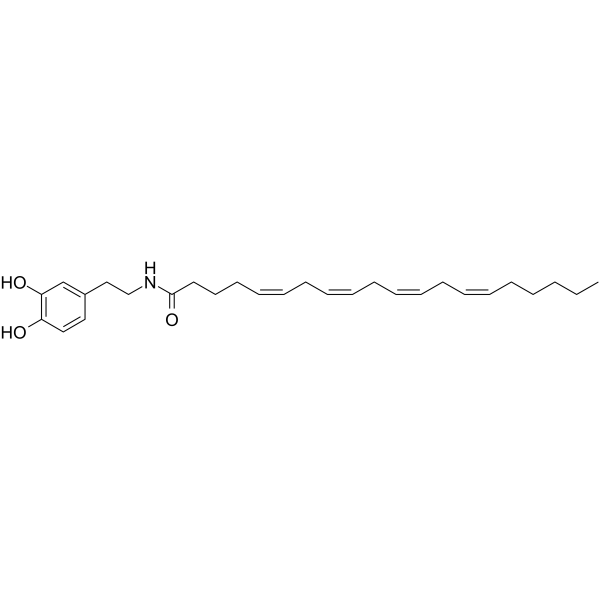
N-Arachidonyldopamine acts as an Anandamide (HY-10863) membrane transport inhibitor, a selective CB1 cannabinoid receptor agonist, and a VR1 receptor activator. It exhibits an EC50 value of 48 nM for rat VR1 and a Ki value of 0.25 μM for CB1. N-Arachidonyldopamine exists in mammalian neural tissues. It stimulates intracellular Ca2+ mobilization, mediates cannabinoid-like effects, and induces hypothermia, hypomotility, catalepsy, analgesia, and hyperalgesia to heat. N-Arachidonyldopamine possesses anticancer activity against breast cancer. It can be used in research related to breast cancer and heat hyperalgesia.
For research use only. We do not sell to patients.
- Purity : 98.36%
- CAS No.: 199875-69-9
- Formula: C28H41NO3
- Molecular Weight:439.63
-
Storage:Pure form -20°C, 3 years ; In solvent -80°C, 6 months , -20°C, 1 month

To place orders, for customer services and technical support, please contact: MedChemExpress USA
Tel: 609-228-6898 E-mail: [email protected] [email protected]


-
 Biological Activity
-
Chemical Information
-
Solvent & Solubility
- Protocols
- Purity & Documentation
- References
-
 Help & FAQs


-
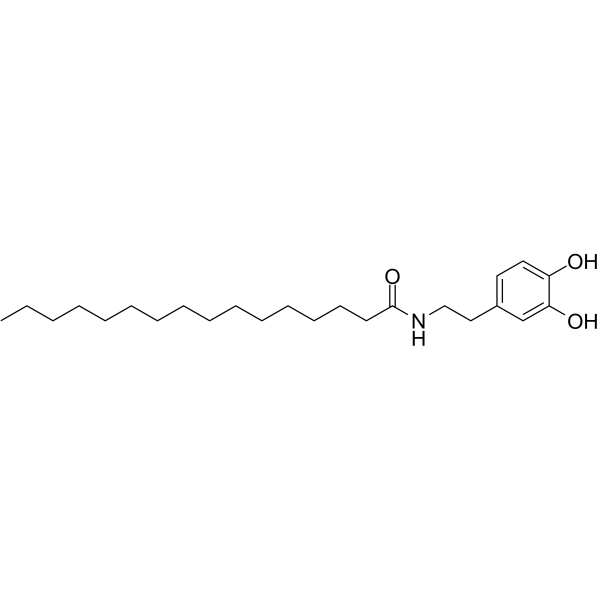
HY-108455
N-Palmitoyl dopamineFatty Acid Dopamide -
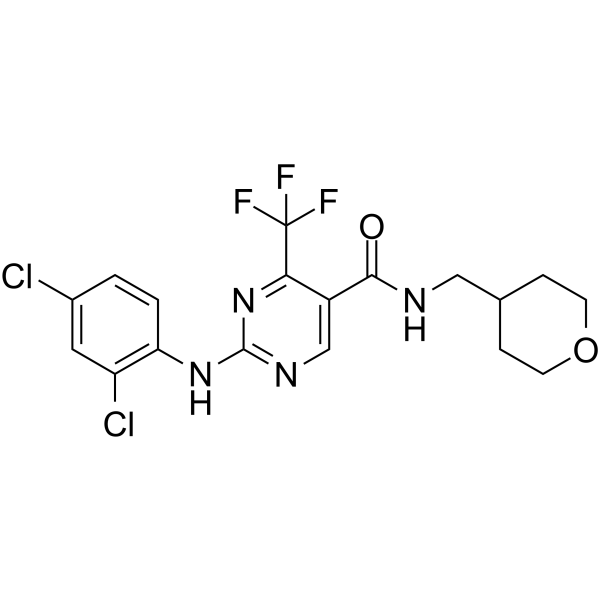
HY-14167
GW842166XCannabinoid Receptor Agonist -
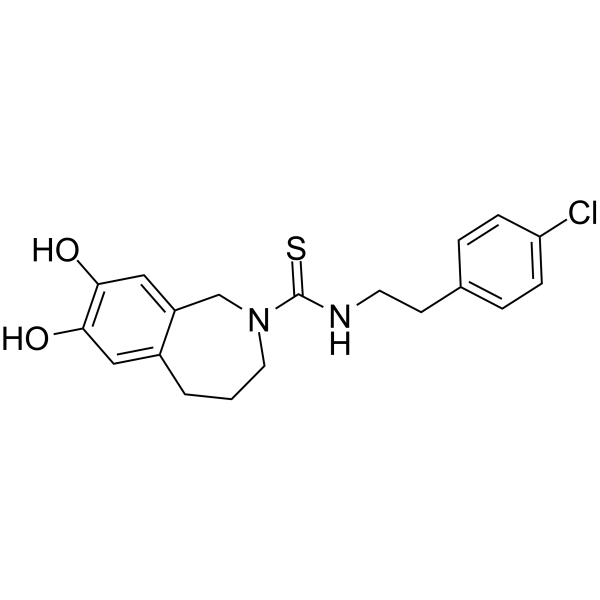
HY-15640
CapsazepineTRPV1 Antagonist -
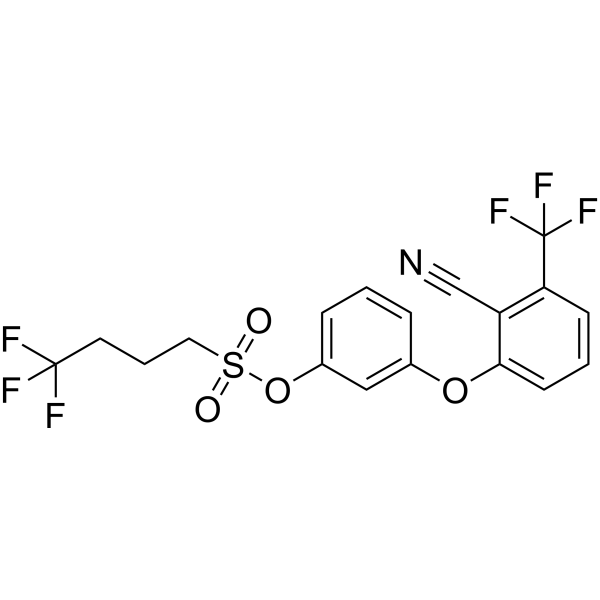
HY-100488
Bay 59-3074CB1/CB2 Receptor Agonist -
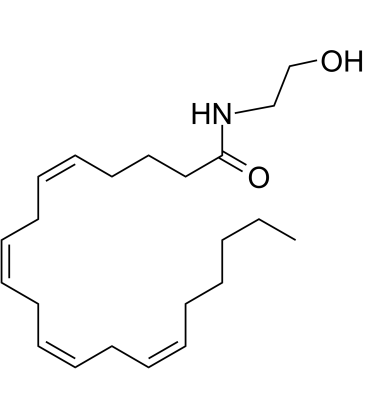
HY-10863
AnandamideCB1/2 Agonist -

HY-113015S
Stearoylethanolamide-d3Stable Isotope -

HY-120960
N-Arachidonoyl-L-serine -
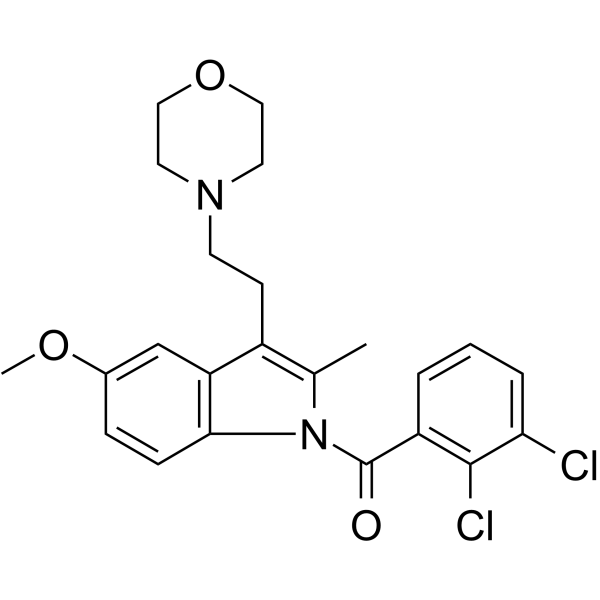
HY-110036
GW-405833CB2 Agonist -

HY-15640R
Capsazepine (Standard)TRPV1 Antagonist -
HY-13439
SR144528CB2 Receptor Antagonist -
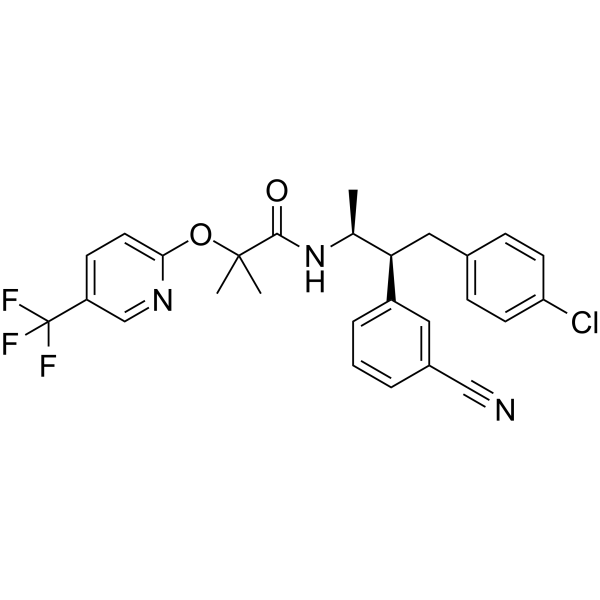
HY-10013
TaranabantCB1 Receptor Invert Agonist -
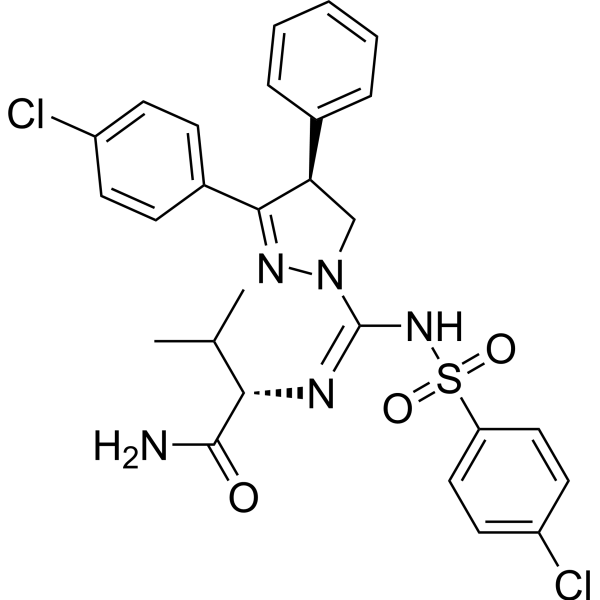
HY-18697
JD-5037CB1 Receptor Antagonist


Biological Activity
Description
|
CB1 250 nM (Ki) |
CB2 12.0 μM (Ki) |
hTRPV1 40 nM (EC50) |
rTRPV1 48 nM (EC50) |
Human Endogenous Metabolite |
Cellular Effect
|
Cell Line

|
Type | Value | Description | References |
|---|---|---|---|---|
| HEK293 | EC50 |
50 nM
Compound: 25, NADA
|
Activation of human VR1 expressed in HEK293 cells assessed as stimulation of Ca2+ influx by Fluo-3 staining-based fluorescence assay
Activation of human VR1 expressed in HEK293 cells assessed as stimulation of Ca2+ influx by Fluo-3 staining-based fluorescence assay
|
[PMID: 23865723] |
In Vitro
N-Arachidonyldopamine inhibits the hydrolysis of [14C]AEA in the cell membrane of RBL-2H3 cells, with an IC50 of 22 μM[1].
N-Arachidonyldopamine binds to CB1 cannabinoid receptors in rat brain cell membranes with a Ki value of 0.25 μM, and shows 40-fold selectivity for CB2 receptors over the former[1].
N-Arachidonyldopamine binds to CB2 cannabinoid receptors in rat splenic cell membranes, with a Ki value of 12.0 μM[1].
N-Arachidonyldopamine potently inhibits the proliferation of human breast cancer MCF-7 cells via a CB1 receptor-mediated mechanism, with an EC50 of 0.25 μM, and this process does not involve the D2 dopamine receptor[1].
N-Arachidonyldopamine potently activates overexpressed hVR1 in HEK293 cells with an EC50 of 40 nM, induces VR1 desensitization, and shows enhanced potency following protein kinase C activation[2].
N-Arachidonyldopamine (10 μM) potently activates overexpressed rat VR1 in HEK293 cells, with an EC50 of 48 nM[2].
MedChemExpress (MCE) has not independently confirmed the accuracy of these methods. They are for reference only. Further protocols information, click here.
In Vivo
N-Arachidonyldopamine (0.1-10 μg; injected into the plantar surface; single dose) induces VR1-mediated thermal hyperalgesia in male Sprague-Dawley rats, with an EC50 of 1.5 μg[2].
MedChemExpress (MCE) has not independently confirmed the accuracy of these methods. They are for reference only.
-
Animal Model:CBA mice (female, 20-25 g body weight)[1]
-
Dosage:1 mg/kg; 5 mg/kg; 10 mg/kg
-
Administration:i.p.
-
Result:Increased immobility time in the ring test to 163.7 seconds (vs. 34.75 seconds for vehicle).
Decreased rectal temperature by 1.78 °C (vs. 0 °C for vehicle).
Increased latency time on the hot plate to 38.5 seconds (vs. 17.3 seconds for vehicle).
Significantly reduced the number of crossed sectors in the open field compared to vehicle (at 5 mg/kg and 10 mg/kg).
-
Animal Model:Sprague-Dawley (male)[2]
-
Dosage:0.1 μg; 0.5 μg; 1 μg; 5 μg; 10 μg
-
Administration:i.p.l.; single dose
-
Result:Induced dose-dependent thermal hyperalgesia, with an EC50 of 1.5 μg.
Was abolished by pretreatment with the VR1 antagonists capsazepine or iodo-resiniferatoxin.


Chemical Information
-
CAS No. 199875-69-9
-
Appearance Liquid (Density: 1.023±0.06 g/cm3)
-
Molecular Weight 439.63
-
Formula C28H41NO3
-
Color Brown to reddish brown
-
SMILES
CCCCC/C=C\C/C=C\C/C=C\C/C=C\CCCC(NCCC1=CC(O)=C(O)C=C1)=O
-
Shipping
Room temperature in continental US; may vary elsewhere.
-
Storage
Pure form -20°C 3 years In solvent -80°C 6 months -20°C 1 month


Solvent & Solubility
In Vitro:
DMSO : 100 mg/mL (227.46 mM; Need ultrasonic; Hygroscopic DMSO has a significant impact on the solubility of product, please use newly opened DMSO)
Please refer to the solubility information to select the appropriate solvent. Once prepared, please aliquot and store the solution to prevent product inactivation from repeated freeze-thaw cycles.
Storage method and period of stock solution: -80°C, 6 months; -20°C, 1 month. When stored at -80°C, please use it within 6 months. When stored at -20°C, please use it within 1 month.
Please refer to the solubility information to select the appropriate solvent. Once prepared, please aliquot and store the solution to prevent product inactivation from repeated freeze-thaw cycles.
Storage method and period of stock solution: -80°C, 6 months; -20°C, 1 month. When stored at -80°C, please use it within 6 months. When stored at -20°C, please use it within 1 month.
Concentration (start) × Volume (start) = Concentration (final) × Volume (final)
In Vivo:
Select the appropriate dissolution method based on your experimental animal and administration route.
- For the following dissolution methods, please ensure to first prepare a clear stock solution using an In Vitro approach and then sequentially add co-solvents:
- To ensure reliable experimental results, the clarified stock solution can be appropriately stored based on storage conditions. As for the working solution for In Vivo experiments, it is recommended to prepare freshly and use it on the same day.
- The percentages shown for the solvents indicate their volumetric ratio in the final prepared solution. If precipitation or phase separation occurs during preparation, heat and/or sonication can be used to aid dissolution.
Add each solvent one by one: 10% DMSO 40% PEG300 5% Tween-80 45% Saline
Solubility: ≥ 2.5 mg/mL (5.69 mM); Clear solution
This protocol yields a clear solution of ≥ 2.5 mg/mL (saturation unknown).
Taking 1 mL working solution as an example, add 100 μL DMSO stock solution (25.0 mg/mL) to 400 μL PEG300, and mix evenly; then add 50 μL Tween-80 and mix evenly; then add 450 μL Saline to adjust the volume to 1 mL.
Preparation of Saline: Dissolve 0.9 g sodium chloride in ddH₂O and dilute to 100 mL to obtain a clear Saline solution.
Add each solvent one by one: 10% DMSO 90% (20% SBE-β-CD in Saline)
Solubility: ≥ 2.5 mg/mL (5.69 mM); Clear solution
This protocol yields a clear solution of ≥ 2.5 mg/mL (saturation unknown).
Taking 1 mL working solution as an example, add 100 μL DMSO stock solution (25.0 mg/mL) to 900 μL 20% SBE-β-CD in Saline, and mix evenly.
Preparation of 20% SBE-β-CD in Saline (4°C, storage for one week): 2 g SBE-β-CD powder is dissolved in 10 mL Saline, completely dissolve until clear.
In Vivo Dissolution Calculator
Please enter the basic information of animal experiments:
-
-
-
-
Recommended: Prepare an additional quantity of animals to account for potential losses during experiments.
Please enter your animal formula composition:
-
%DMSO +
Recommended: Keep the proportion of DMSO in working solution below 2% if your animal is weak.
-
%+
-
+%Tween-80 + +
-
%Saline +
The co-solvents required include: DMSO, . All of co-solvents are available by MedChemExpress (MCE). , Tween 80. All of co-solvents are available by MedChemExpress (MCE).
Working solution concentration: 0.22 mg/mL
Method for preparing stock solution: mg drug dissolved in μL DMSO. Stock solution concentration: mg/mL.
1. Take μL DMSO stock solution;
2. Add μL .
μL , mix evenly;
3. Then add μL Tween 80, mix evenly;
4. Then add μL
Please ensure that the stock solution in the first step is dissolved to a clear state, and add co-solvents in sequence. You can use ultrasonic heating (ultrasonic cleaner, recommended frequency 20-40 kHz), vortexing, etc. to assist dissolution.

Protocols
-
Ca2+ Staining Technique
Ca2+ staining is an experimental technique that utilizes specific fluorescent probes (such as Fluo-4 AM, Fura-2, etc.) to qualitatively or quantitatively detect dynamic changes in intracellular Ca2+ concentrations; this is achieved by monitoring the changes in fluorescent signals generated when these probes bind to free intracellular calcium ions. The underlying principle relies primarily on the presence of chelating groups within the probe's molecular structure that possess high affinity for calcium ions.
-
Breast Cancer Modeling
Breast cancer is a heterogeneous cancer, and it has been distinguished into four subtypes: luminal A, luminal B, HER2-positive and basal-like. Molecular mutations, epigenetic alterations, hormone exposure and immune microenvironment are related to the progression of breast cancer.


Purity & Documentation
-
Data Sheet (275 KB)
-
SDS (630 KB)
- English - EN (630 KB)
- Français - FR (630 KB)
- Deutsch - DE (630 KB)
- Norwegian - NO (630 KB)
- Español - ES (630 KB)
- Swedish - SV (630 KB)
- Italian - IT (630 KB)
- Korean - KR (630 KB)
- Portuguese - PT (630 KB)
-
Handling Instructions (2659 KB)
References
[1]. Bisogno T, et al. N-acyl-dopamines: novel synthetic CB(1) cannabinoid-receptor ligands and inhibitors of anandamide inactivation with cannabimimetic activity in vitro and in vivo. The Biochemical journal. 2000 Nov 01;351 Pt 3(Pt 3):817-24. [Content Brief]
[2]. Huang SM, et al. An endogenous capsaicin-like substance with high potency at recombinant and native vanilloid VR1 receptors. Proceedings of the National Academy of Sciences of the United States of America. 2002 Jun 11;99(12):8400-5. [Content Brief]
[3]. Fawley JA, et al. Cannabinoid 1 and transient receptor potential vanilloid 1 receptors discretely modulate evoked glutamate separately from spontaneous glutamate transmission. The Journal of neuroscience : the official journal of the Society for Neuroscience. 2014 Jun 11;34(24):8324-32. [Content Brief]


Complete Stock Solution Preparation Table
Please refer to the solubility information to select the appropriate solvent. Once prepared, please aliquot and store the solution to prevent product inactivation from repeated freeze-thaw cycles.
Storage method and period of stock solution: -80°C, 6 months; -20°C, 1 month. When stored at -80°C, please use it within 6 months. When stored at -20°C, please use it within 1 month.
| Optional Solvent | Concentration Solvent Mass | 1 mg | 5 mg | 10 mg | 25 mg |
|---|---|---|---|---|---|
| DMSO | 1 mM | 2.2746 mL | 11.3732 mL | 22.7464 mL | 56.8660 mL |
| 5 mM | 0.4549 mL | 2.2746 mL | 4.5493 mL | 11.3732 mL | |
| 10 mM | 0.2275 mL | 1.1373 mL | 2.2746 mL | 5.6866 mL | |
| 15 mM | 0.1516 mL | 0.7582 mL | 1.5164 mL | 3.7911 mL | |
| 20 mM | 0.1137 mL | 0.5687 mL | 1.1373 mL | 2.8433 mL | |
| 25 mM | 0.0910 mL | 0.4549 mL | 0.9099 mL | 2.2746 mL | |
| 30 mM | 0.0758 mL | 0.3791 mL | 0.7582 mL | 1.8955 mL | |
| 40 mM | 0.0569 mL | 0.2843 mL | 0.5687 mL | 1.4217 mL | |
| 50 mM | 0.0455 mL | 0.2275 mL | 0.4549 mL | 1.1373 mL | |
| 60 mM | 0.0379 mL | 0.1896 mL | 0.3791 mL | 0.9478 mL | |
| 80 mM | 0.0284 mL | 0.1422 mL | 0.2843 mL | 0.7108 mL | |
| 100 mM | 0.0227 mL | 0.1137 mL | 0.2275 mL | 0.5687 mL |


N-Arachidonyldopamine Related Classifications
HY-110018 Related Classifications
 Powered by Bioz
Keywords
- N-Arachidonyldopamine
- 199875-69-9
- Cannabinoid Receptor
- TRP Channel
- Calcium Channel
- Endogenous Metabolite
- C6 glioma cells
- TRPV1 receptor
- D2 dopamine receptors
- CB2 receptors
- RBL-2H3 cells
- fatty acid amide hydrolase
- N18TG2 cell membranes
- D1 dopamine receptors
- MCF-7 cancer cell
- CB1 cannabinoid receptor
- Inhibitor
- inhibitor
- inhibit