
1. Search Result
Search Result
Results for "

in vitro study

" in MedChemExpress (MCE) Product Catalog:

259

Inhibitors & Agonists

1

Screening Libraries

7

Fluorescent Dye

10

Biochemical Assay Reagents

22

Peptides

3

Inhibitory Antibodies

16

Natural
Products

21

Isotope-Labeled Compounds

7

Oligonucleotides

2

GMP Molecules

Cat. No. Product Name Target Research Areas Chemical Structure
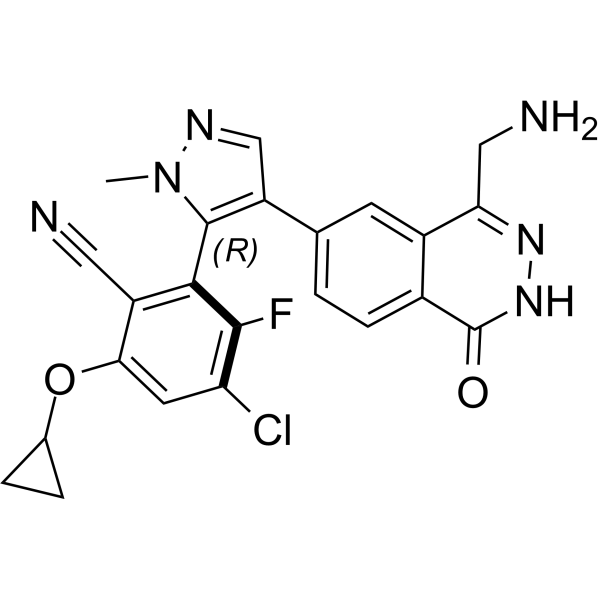
  • HY-139611
    Navlimetostat
    3 Publications Verification

    MRTX-1719; BMS-986504

    Histone Methyltransferase Cancer
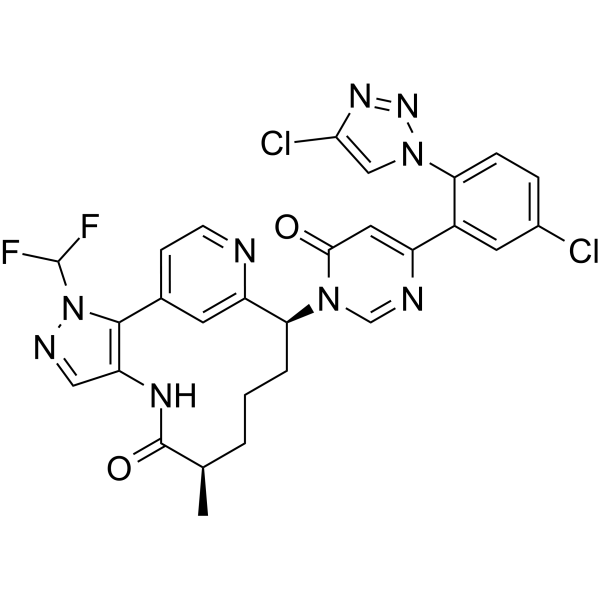
    Navlimetostat is a potent, orally active, selective PRMT5-MTA complex inhibitor, with IC50 of 3.6 and 20.5 nM for PRMT5-MTA and PRMT5. Navlimetostat binds to the PRMT5-MTA complex, with KD value of 0.14 pM. Navlimetostat shows antineoplastic activity in vitro and in vivo, and can be used for cancer study .
    Navlimetostat
  • HY-113071A
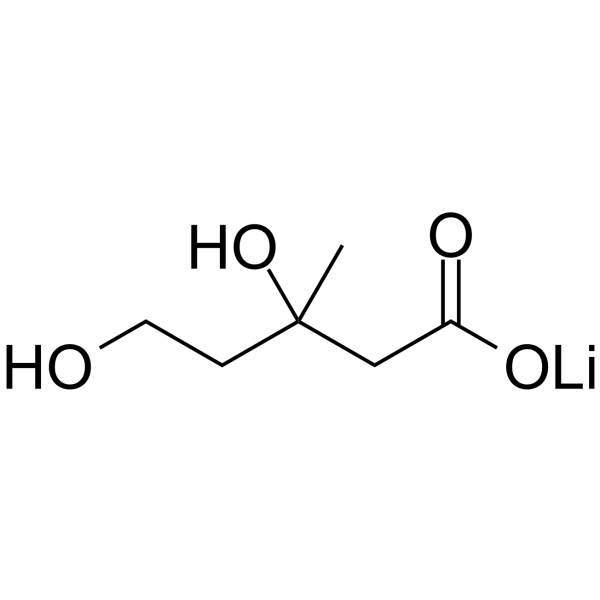
    Mevalonic acid lithium salt
    Maximum Cited Publications
    10 Publications Verification

    MVA lithium salt

    Endogenous Metabolite Cardiovascular Disease Neurological Disease Metabolic Disease Cancer
    Mevalonic acid (MVA) lithium salt is a precursor substance of the mevalonate pathway, which is essential for cell growth and proliferation. Mevalonic acid lithium salt is effective in inhibiting Simvastatin (HY-17502)-induced decrease in C2C12 cell viability in vitro. Mevalonic acid lithium salt can be used in studies of myopathy and heart failure .
    Mevalonic acid lithium salt
  • HY-D1451
    PKH 26
    35+ Cited Publications

    Fluorescent Dye Others
    PKH 26 is a red fluorescent dye, PKH 26 can stably bind to the lipid region of cell membrane and emit red fluorescence (Ex/Em=551/567 nm), which is mainly used for in vitro cell labeling, in vitro cell proliferation studies and in vivo and in vitro cell tracing studies .
    PKH 26
  • HY-125856
    Milvexian
    2 Publications Verification

    BMS-986177; JNJ-70033093

    Factor Xa Cardiovascular Disease
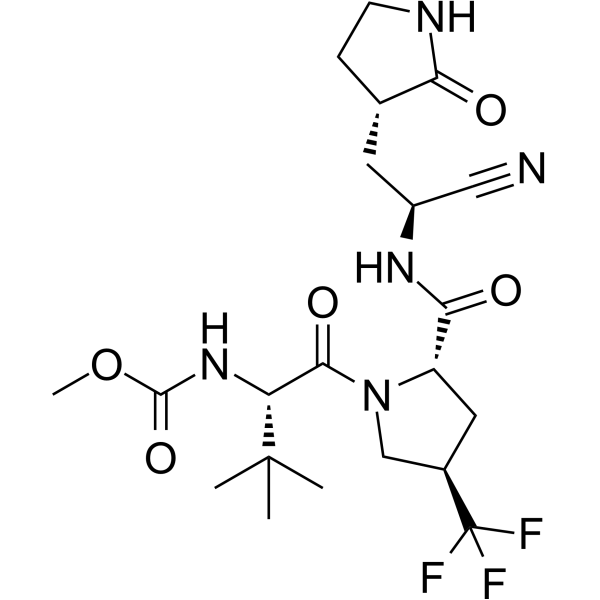
    Milvexian is an orally bioavailable, small-molecule, reversible, direct antagonists of factor Xia, with the Ki of 0.11, 0.38, 0.64, 490, 350 nM for human, rabbit, dog, rat, mouse, respectively. Milvexian shows anti-thrombosis activity in vitro and in vivo, and can be used for thrombus study .
    Milvexian
  • HY-W008491

    Phosphorylase Inflammation/Immunology Cancer
    TK-112690 is a UPP1 inhibitor. TK-112690 inhibits murine small intestinal uridine phosphorylase (UPase) with an IC50 of 12.5 μM and human small intestinal UPase with an IC50 of 20.0 μM in vitro. TK-112690 increases plasma uridine concentration in mice. TK-112690 can be used for the study of cancer and pulmonary fibrosis .
    TK-112690
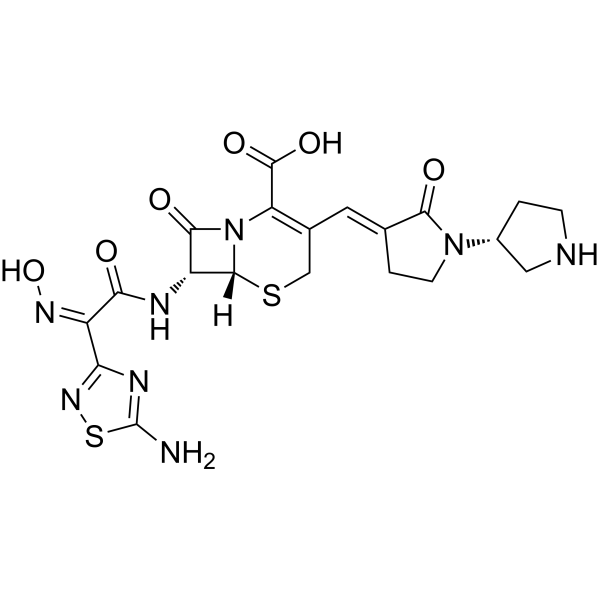
  • HY-112579
    Ceftobiprole
    3 Publications Verification

    Ro 63-9141; BAL 9141

    Bacterial Antibiotic Infection Inflammation/Immunology
    Ceftobiprole (Ro 63-9141) is a broad-spectrum cephalosporin with high levels of in vitro activity against methicillin- (MRSA) and vancomycin-resistant staphylococci (VRSA) and penicillin-resistant streptococci with a MIC90 value of 2 μg/mL for MRSA. Ceftobiprole also inhibits gram-positive and gram-negative pathogens. Ceftobiprole can be used for the study of hospital-acquired pneumonia (excluding ventilator-associated pneumonia) and community-acquired pneumonia .
    Ceftobiprole
  • HY-148530

    PROTACs CDK Cancer
    YX-2-107 is a PROTAC (IC50= 4.4 nM) that selectively degrades CDK6. YX-2-107 effectively inhibits RB phosphorylation and FOXM1 expression in vitro and inhibits the development of Ph + ALL in rats. YX-2-107 can be used in the study of Ph chromosome-positive (Ph +) acute lymphoblastic leukemia (ALL) .
    YX-2-107
  • HY-B1050

    SB-265805S; LB-20304a

    Bacterial Antibiotic DNA/RNA Synthesis Topoisomerase Infection
    Gemifloxacin mesylate (SB-265805S; LB-20304a) is an orally active broad-spectrum quinolone antibacterial antibiotic. Gemifloxacin mesylate inhibits DNA synthesis by inhibiting DNA gyrase and Topoisomerase IV activities. Gemifloxacin mesylate has potent antibacterial activities against gram-positive bacteria in vitro efficacy study, particularly Streptococci and Staphylococci. Gemifloxacin mesylate has been used in the research of respiratory tract infections .
    Gemifloxacin mesylate
  • HY-DY1011

    Fluorescent Dye Others
    PKH 26 (solution) is a red fluorescent dye, PKH 26 can stably bind to the lipid region of cell membrane and emit red fluorescence (Ex/Em=551/567 nm) , which is mainly used for in vitro cell labeling, in vitro cell proliferation studies and in vivo and in vitro cell tracing studies .
    Solvent and concentration: DMSO: 5 mM
    PKH 26 (solution)
  • HY-B0395C
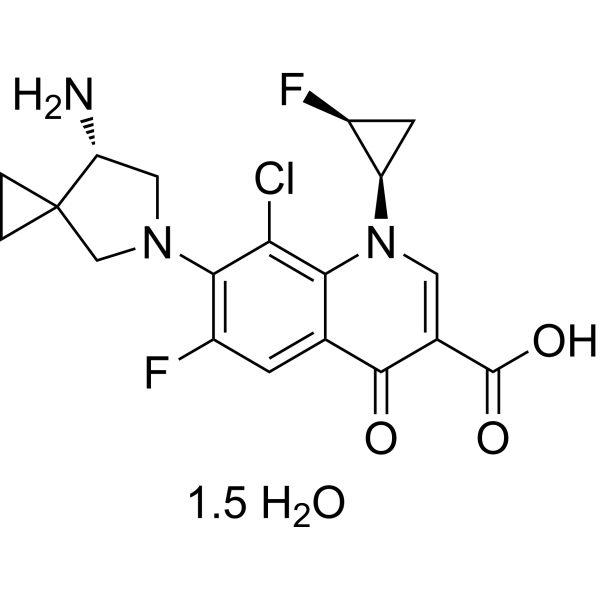
    Sitafloxacin hydrate
    5+ Cited Publications

    DU6859a hydrate

    Bacterial Antibiotic Infection
    Sitafloxacin (DU6859a) hydrate is an orally active fluoroquinolone antibiotic (antibiotic) with in vitro activity against a wide range of Gram-positive and -negative bacteria, including anaerobic bacteria, as well as atypical pathogens. Sitafloxacin is used in the study of respiratory tract infections and urinary tract infections .
    Sitafloxacin hydrate
  • HY-113071

    MVA

    Endogenous Metabolite Cardiovascular Disease Neurological Disease Metabolic Disease Cancer
    Mevalonic acid (MVA) is a precursor substance of the mevalonate pathway, which is essential for cell growth and proliferation. Mevalonic acid is effective in inhibiting Simvastatin (HY-17502)-induced decrease in C2C12 cell viability in vitro. Mevalonic acid can be used in studies of myopathy and heart failure .
    Mevalonic acid
  • HY-156038

    Biochemical Assay Reagents Others
    (S)-p-SCN-Bn-DOTA is a bifunctional chelator (BFC), a macrocyclic DOTA derivative for tumor pretargeting. (S)-p-SCN-Bn-DOTA can be used for the conjugation of peptides and radionuclides, such as as a linker for In-111 labeled radioimmunoconjugates (RICs) for single photon emission tomography (SPECT) and in vitro biodistribution studies .
    (S)-p-SCN-Bn-DOTA
  • HY-120789

    γ-secretase Neurological Disease
    PF-06648671 is a novel, brain-penetrable, and orally active γ-secretase modulator (GSM). PF-06648671 reduces Aβ42 and Aβ40, with concomitant increases in Aβ37 and Aβ38 in vitro. PF-06648671 is used for the study of Alzheimer’s disease .
    PF-06648671
  • HY-105634A

    Progesterone Receptor Endocrinology Cancer
    Nomegestrol acetate is an orally active, highly selective progestogen and a progesterone receptor complete agonist. Nomegestrol acetate inhibits ovulation. Nomegestrol acetate is also effective in inhibiting the proliferation of human endometrial cancer RL95-2 cells in vitro and in vivo. Nomegestrol acetate can be used in cancer (especially endometrial cancer) and contraceptive studies .
    Nomegestrol acetate
  • HY-N6703

    (+)-ar-Turmerone

    Apoptosis Neurological Disease Inflammation/Immunology Cancer
    ar-Turmerone ((+)-ar-Turmerone) is an orally active and major bioactive compound of the herb Curcuma longa with anti-tumorigenesis and anti-inflammatory activities. ar-Turmerone induces apoptosis in U937 cells. ar-Turmerone exerts positive modulation on murine DCs. ar-Turmerone induces NSC proliferation in vitro and in vivo, and can be used for various neurologic disorders study .
    ar-Turmerone
  • HY-153215

    Ligands for E3 Ligase Cancer
    MEL24 is an Mdm2 E3 ligase inhibitor that reduces cell survival and increases sensitivity to DNA damaging agents in a p53-dependent manner for in vitro antitumor studies .
    MEL24
  • HY-B1148
    Furaltadone hydrochloride
    1 Publications Verification

    Altafur hydrochloride

    Bacterial Infection Inflammation/Immunology
    Furaltadone hydrochloride is an orally active antibacterial agent that can be used for the study of intestinal Salmonella infections. Furaltadone has in vitro inhibitory effects on Staphylococcus. In addition, Furaltadone shows inhibitory effects on allergic reactions .
    Furaltadone hydrochloride
  • HY-P11117

    TRP Channel iGluR Calcium Channel Neurological Disease
    TAT-EE3 is a neuroprotective peptide which can uncouple TRPM2-NMDARs interaction. TAT-EE3 inhibits TRPM2-induced enhancement of NMDAR surface expression and current amplitude.TAT-EE3 protects neurons against ischemic injury in vitro and in vivo. TAT-EE3can be used for the study of ischemic stroke .
    TAT-EE3
  • HY-B0488
    Clorsulon
    1 Publications Verification

    L631529; MK401

    Parasite Infection
    Clorsulon (L631529; MK401) is an orally active flukicidal agent. Clorsulon inhibits glycolysis, the primary energy production pathway in flukes. Clorsulon is also a competitive inhibitor of 3-phosphoglycolate and ATP, inhibiting glucose utilization and acetate and propionate formation by mature Fasciola hepatica in vitro. Clorsulon can be used in studies of liver fluke (Fasciola hepatica and Fasciola gigantica) infection in calves and sheep .
    Clorsulon
  • HY-171499

    EL625

    MDM-2/p53 Cancer
    Cenersen (EL625) is an oligonucleotide targeting TP53. Cenersen can eliminate the activity of TP53 gain-of-function mutants and increase the sensitivity of lymphoma cells to cytotoxic chemotherapy in vitro. Cenersen can be used for the study of chronic lymphocytic leukemia (CLL) .
    Cenersen
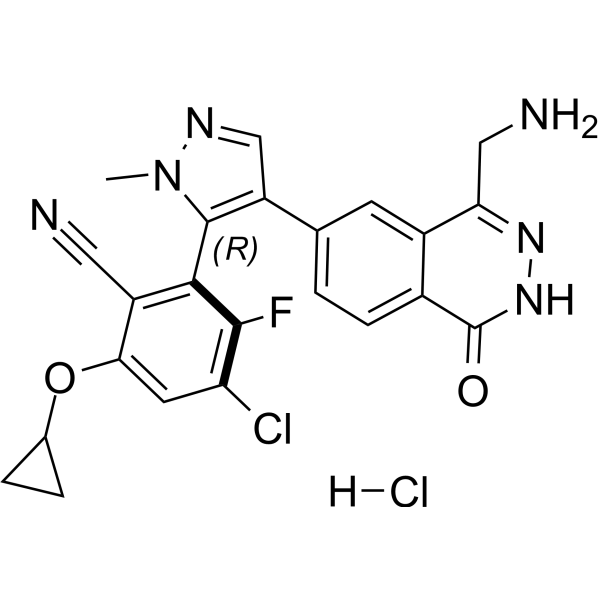
  • HY-139611C
    Navlimetostat hydrochloride
    3 Publications Verification

    MRTX-1719 hydrochloride; BMS-986504 hydrochloride

    Histone Methyltransferase Cancer
    Navlimetostat hydrochloride is a potent, orally active, selective PRMT5-MTA complex inhibitor, with IC50s of 3.6 and 20.5 nM for PRMT5-MTA and PRMT5. Navlimetostat hydrochloride binds to the PRMT5-MTA complex, with KD value of 0.14 pM. Navlimetostat shows antineoplastic activity in vitro and in vivo, and can be used for cancer study .
    Navlimetostat hydrochloride
  • HY-P3397A

    GHSR Cancer
    JV-1-36 acetate is a growth hormone-releasing hormone (GHRH) antagonist. JV-1-36 acetate inhibits the production of reactive oxygen species in A549 lung cancer cells. JV-1-36 can be used to study the effect of GHRH antagonists in vitro .
    JV-1-36 acetate
  • HY-112865

    ADVATE; BAY 81-8973; Kovaltry

    Factor VIII Cardiovascular Disease
    Octocog alfa (ADVATE; BAY 81-8973; Kovaltry) is a standard half-length recombinant coagulation factor FVIII replacement therapy that also functions as a thrombin generation modulator. Octocog alfa regulates thrombin generation-related parameters in vitro and is used in studies related to severe hemophilia A .
    Octocog alfa
  • HY-169245

    CDK BCL6 Cancer
    DK-TCIP2, linking inhibitor of CDK9 SNS-032 (HY-10008) with ligands of BCL6 BI-3812 (HY-111381), is a anticancer agent. DK-TCIP2 shows anticancer activity in vivo and in vitro and can be used for study of lymphoma cancer .
    CDK-TCIP2
  • HY-105064
    Zoniporide
    2 Publications Verification

    CP-597396

    Na+/H+ Exchanger (NHE) Cardiovascular Disease
    Zoniporide (CP-597396) is a potent and selective NHE-1 inhibitor with cardioprotective activity. Zoniporide inhibits 22Na + uptake by human NHE-1-expressing fibroblasts in a concentration-dependent manner (IC50=14 nM). Zoniporide inhibits platelet swelling in vitro with an IC50 of 0.059 μM. Zoniporide can be used in the study of cardiovascular disease .
    Zoniporide
  • HY-B1202
    Alrestatin
    1 Publications Verification

    AY-22284

    Aldose Reductase Metabolic Disease
    Alrestatin (AY-22284) is an aldose reductase inhibitor. Alrestatin reduces fructose levels in the uterine fluid of mice. Alrestatin interferes with sperm capacitation and impairs fertilization function in mice. Alrestatin decreases basal and tyramine-induced norepinephrine release in rat pancreatic specimens in vitro. Alrestatin enhances glucose- and arginine-stimulated insulin secretion in vivo. Alrestatin can be used in studies related to diabetes and reproductive diseases .
    Alrestatin
  • HY-148947

    Fluorescent Dye Phosphoramidites Others
    Cy5 Phosphoramidite is a fluorescent labeling reagent . Cy5 Phosphoramidite serves as a fluorescent tag for 3' terminal labeling of single-stranded DNA, enabling fluorescence-based nucleic acid detection, monitoring, quantification, and in vitro study .
    Cy5 Phosphoramidite
  • HY-117292
    DAO-IN-2
    1 Publications Verification

    Amino Acid Oxidase Neurological Disease
    DAO-IN-2 is a d-amino acid oxidase (DAO) inhibitor (h-DAO IC50 = 245 nM). DAO-IN-2 is a moderate inhibitor of DAAO in vitro and in vivo. DAO-IN-2 can be used to study DAAO-related psychiatric disorders .
    DAO-IN-2
  • HY-101839

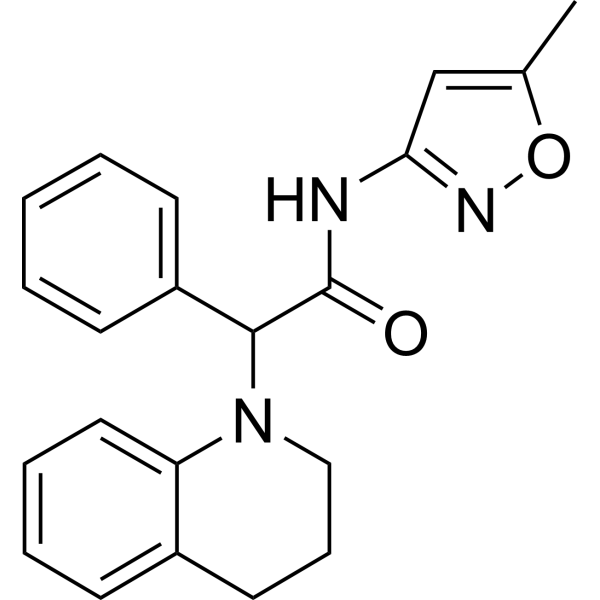
    VU0488130

    mAChR Neurological Disease
    ML381 (VU0488130) is a highly selective, central nervous system penetrant mAChR M5 orthogonal antagonist (IC50 = 450 nM; Ki = 340 nM). ML381 is unstable in rat plasma and can be mainly used as a molecular probe for in vitro and electrophysiological studies .
    ML381
  • HY-118143

    Endogenous Metabolite Others
    AG-1801, a nitrobenzopyridine derivative, is a tyrosine phosphorylation inhibitor. AG-1801 can induce the disintegration of the microtubule network in living cells, and does not inhibit microtubule polymerization in vitro. AG-1801 can be used for the study of microtubule-related signaling pathways .
    AG-1801
  • HY-P10841

    Amino Acid Derivatives Cancer
    CyPep-1 is a novel cationic lytic peptide with antitumor activity. CyPep-1 is highly cytotoxic by interacting with the negatively charged cell membrane of cancer cells. CyPep-1 has strong cytolytic activity on cancer cells both in vivo and in vitro, and can be used in the study of solid tumors .
    CyPep-1
  • HY-116211

    Win-25978

    Biochemical Assay Reagents Neurological Disease
    Amfonelic acid (WIN-25978) is a highly selective dopamine reuptake inhibitor. Amfonelic acid interferes with the in vitro neuronal uptake of norepinephrine in the iris of rats, but does not alter the concentrations of norepinephrine or dopamine in the whole mouse brain. Amfonelic acid can be used as a pharmacological tool to study the brain reward system, dopamine pathway and dopamine transporter .
    Amfonelic acid
  • HY-174366

    c-Fms PI3K Cancer
    JMC14 is a selective and orally active PI3Kδ and CSF1R inhibitor with IC50 values of 12 nM and 143 nM, respectively. JMC14 preferentially inhibits PI3Kδ-mediated signaling at the cellular level. JMC14 demonstrates potent antitumor activity against B-cell lymphomas and triple-negative breast cancer (TNBC) in both in vitro and vivo studies. JMC14 can be used for the study of antitumor immunity .
    JMC14
  • HY-156168

    Caspase Cancer
    M109S is a novel small molecule protecting cells from mitochondria-dependent apoptosis both in vitro and in vivo. M109S has the potential to become a research tool for studying cell death mechanisms and to develop therapeutics targeting mitochondria-dependent cell death pathway. M109S has orally bioactivity with excellent brain permeability .
    M190S
  • HY-B1462S

    Cytochrome P450 Inflammation/Immunology
    Chlorzoxazone-d3 is the deuterium labeled Chlorzoxazone. Chlorzoxazone is a centrally acting muscle relaxant used to treat muscle spasm and the resulting pain or discomfort. It acts on the spinal cord by depressing reflexes.Chlorzoxazone is currently being used as a marker substrate in vitro/vivo studies to quantify cytochrome P450 2E1 (CYP2E1) activity in humans.
    Chlorzoxazone-d3
  • HY-116269

    Ras Apoptosis PAK ERK Cancer
    AZA197 is a selective small molecule inhibitor of Cdc42.AZA197 suppresses colon cancer cell proliferation, cell migration, invasion and increases apoptosis by down-regulating the PAK1 and ERK signaling pathways in vitro. AZA197 reduces tumor growth and significantly increases mouse survival in SW620 tumor xenografts. AZA197 can be used for the study of colon cancer .
    AZA197
  • HY-W008629

    Biochemical Assay Reagents Others
    (E,E)-Farnesyl bromine is a synthetic substrate that is used to study the enzyme guanine nucleotide-binding protein (G protein) in vitro.
    (E, E)-Farnesyl bromide
  • HY-17517

    Fungal Biochemical Assay Reagents Infection
    Tiadinil is a systemic acquired resistance (SAR) inducer, plant elicitor and antifungal agent. Tiadinil promotes the production of herbivore-induced plant volatiles in Camellia sinensis (tea plant). Tiadinil inhibits mycelial growth, spore germination and germ tube elongation of Stagonosporopsis citrulli in vitro. Tiadinil can be used in studies related to vine blight .
    Tiadinil
  • HY-162783

    Histone Methyltransferase Cancer
    AZ-PRMT5i-1 (Compound 28) is an effective and orally active MTAP-selective PRMT5 inhibitor. AZ-PRMT5i-1 also demonstrates MTA cooperativity and exhibits both in vitro and in vivo antitumor activities, and can be used to study MTAP-deficient cancers .
    AZ-PRMT5i-1
  • HY-B0395CR

    DU6859a hydrate (Standard)

    Bacterial Antibiotic Reference Standards Infection
    Sitafloxacin (hydrate) (Standard) is the analytical standard of Sitafloxacin (hydrate). This product is intended for research and analytical applications. Sitafloxacin (DU6859a) hydrate is an orally active fluoroquinolone antibiotic (antibiotic) with in vitro activity against a wide range of Gram-positive and -negative bacteria, including anaerobic bacteria, as well as atypical pathogens. Sitafloxacin is used in the study of respiratory tract infections and urinary tract infections .
    Sitafloxacin hydrate (Standard)
  • HY-P4126

    Elastase Others
    Suc-Ala-Ala-Pro-Val-AMC is a fluorescent substrate for elastase. Suc-Ala-Ala-Pro-Val-AMC can be hydrolyzed by these elastases to release the fluorescent substance 7-amino-4-methylcoumarin. Suc-Ala-Ala-Pro-Val-AMC is used for in vitro elastase activity assays and can also be applied in studies related to chronic wounds .
    Suc-Ala-Ala-Pro-Val-AMC
  • HY-178920

    α-synuclein Neurological Disease
    α-Synuclein-IN-17 (Compound 10) is an α-Synuclein inhibitor, with an IC50 value of 9 μM. α-Synuclein-IN-17 exhibits potent inhibitory activity against both in-vitro assembled asyn fibrils and LBD brain tissue-amplified asyn fibrils. α-Synuclein-IN-17 can be used for the study of Parkinson's disease (PD) and Lewy Body Disease (LBD) .
    α-Synuclein-IN-17
  • HY-155241

    Glycosidase Amylases Metabolic Disease
    α-Amylase/α-Glucosidase-IN-4 (compound 5) is a dual inhibitor of α-glucosidase (Glucosidase) and α-amylase (Amylases) with IC50s of 0.15 μM and 1.10 μM, respectively. α-Amylase/α-Glucosidase-IN-4 has potential antidiabetic activity .
    α-Amylase/α-Glucosidase-IN-4
  • HY-107584

    NO Synthase Metabolic Disease
    BYK 191023 is a highly selective inducible nitric-oxide synthase (iNOS) inhibitor. BYK 191023 interacts with the catalytic center of the enzyme. BYK 191023 can be used to study the in vivo and in vitro effects mediated by iNOS .
    BYK 191023 dihydrochloride
  • HY-155715

    Glucosylceramide Synthase (GCS) Bacterial Infection
    G43 is a potent, selective glucosyltransferase inhibitor, with the Kd of 3.7μM and 46.9 nM for GtfB and GtfC, respectively. G43 has antibacterial to S. mutans in vitro and in vivo, and can be used for dental caries study .
    G43
  • HY-177921

    Liposome Others
    PL53 is a kind of cycloalkylamine lipid nanoparticles. PL53 exhibits outstanding transfection efficiency both in vitro and in vivo, especially showing strong protein expression ability and potential tissue targeting after intramuscular injection. PL53 can be used for the study of nucleic acid delivery .
    PL53
  • HY-P3397

    GHSR Cancer
    JV-1-36 is a growth hormone-releasing hormone (GHRH) antagonist. JV-1-36 inhibits the production of reactive oxygen species in A549 lung cancer cells. JV-1-36 can be used to study the effect of GHRH antagonists in vitro .
    JV-1-36
  • HY-124952

    Fungal Infection
    iKIX1 is an antifungal agent and resensitizes drug-resistant C. glabrata to azole antifungals in vitro. iKIX1 inhibits the interaction between the KIX domain of the mediator subunit CgGal11A and the activation domain of CgPdr1, the IC50 and Ki values are 190.2 μM and 18 μM, respectively. iKIX1 is used for the study of multidrug resistance and C. glabrata infection .
    iKIX1
  • HY-P10889

    Phosphatase Inflammation/Immunology
    CNI103 is a highly potent and metabolically stable cell-permeable peptide inhibitor of calcineurin. CNI103 selectively blocks the interaction between calcineurin and NFATc3 (KD=16 nM), thereby preventing NFATc3 activation in vitro and in vivo. CNI103 can be used to study acute respiratory distress syndrome (ARDS) and other inflammatory diseases .
    CNI103
  • HY-113071C

    (S)-MVA

    Endogenous Metabolite Cardiovascular Disease Neurological Disease Metabolic Disease
    (S)-Mevalonic acid is the isomer of Mevalonic acid (HY-113071). Mevalonic acid ((S)-DCIT) is a precursor substance of the mevalonate pathway, which is essential for cell growth and proliferation. Mevalonic acid is effective in inhibiting Simvastatin (HY-17502)-induced decrease in C2C12 cell viability in vitro. Mevalonic acid can be used in studies of myopathy and heart failure .
    (S)-Mevalonic acid

Inquiry Online

Your information is safe with us. * Required Fields.

Salutation


Country or Region *

Applicant Name *


Organization Name *

Department *


Email Address *


Product Name *

Cat. No.


Requested quantity *

Phone Number *


Remarks

Inquiry Online

Inquiry Information

Product Name:
Cat. No.:
Quantity:
MCE Japan Authorized Agent:

