
1. Search Result
Search Result
Pathways Recommended: Stem Cell/Wnt Cell Cycle/DNA Damage
Results for "

intestinal stem cell

" in MedChemExpress (MCE) Product Catalog:

10

Inhibitors & Agonists

1

Fluorescent Dyes

3

Biochemical Assay Reagents

2

Peptides

3

Natural
Products

1

GMP Molecules

Cat. No. Nombre del producto Target Áreas de investigación Chemical Structure
  • HY-W250113
    Zymosan A
    2 Publications Verification

    Zymosan A from Saccharomyces cerevisiae

    Toll-like Receptor (TLR) Inflammation/Immunology
    Zymosan A (Zymosan A from Saccharomyces cerevisiae) is a TLR2 agonist, that targeting TLRs can prevent and suppress IR-induced intestinal injury. Zymosan A exhibits a significant radioprotective effect, and protects IR-induced intestinal injury in mice. Zymosan A promotes the regeneration of intestinal stem cells (ISCs), after IR injury .
    Zymosan A
  • HY-N9933
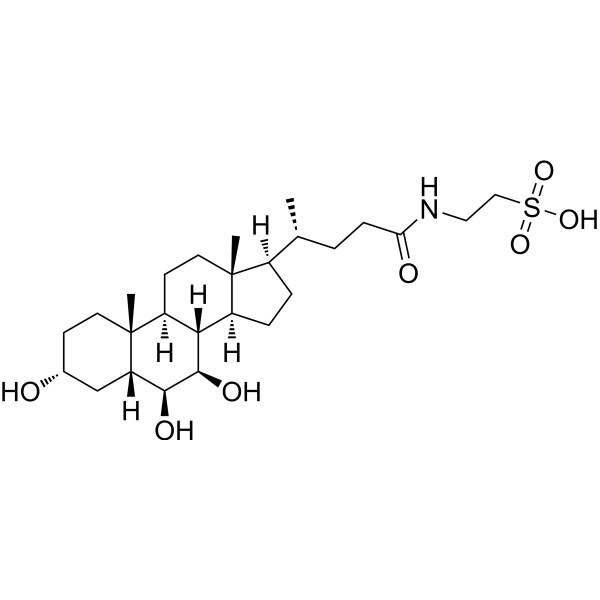
    Tauro-β-muricholic acid
    4 Publications Verification

    TβMCA

    FXR Apoptosis Neurological Disease Metabolic Disease Inflammation/Immunology Cancer
    Tauro-β-muricholic acid (TβMCA) is an orally active trihydroxylated bile acid and a competitive, reversible FXR antagonist (IC50=40 μM). Tauro-β-muricholic acid inhibits bile acid-induced hepatocyte apoptosis by maintaining mitochondrial membrane potential, while simultaneously inhibiting intestinal FXR signaling, affecting bile acid synthesis, hepatic lipid metabolism, and insulin sensitivity. Accumulation of tauro-β-muricholic acid disrupts metabolic homeostasis, promoting cancer stem cell proliferation and tumor progression. The mechanisms of tauro-β-muricholic acid involve two aspects: first, inhibiting the translocation of the pro-apoptotic protein Bax to mitochondria and maintaining mitochondrial membrane potential (MMP); and second, blocking the FXR signaling pathway to regulate bile acid metabolism, reduce serum ceramide production, and downregulate the hepatic SREBP1C/CIDEA pathway. Tauro-β-muricholic acid possesses anti-hepatocyte apoptosis, bile acid homeostasis regulation, and liver fat accumulation reduction properties, and also functions as a biomarker, making it useful in the study of diseases such as bile acid metabolism disorders, non-alcoholic fatty liver disease, colorectal cancer, and liver fibrosis .
    Tauro-β-muricholic acid
  • HY-N1916
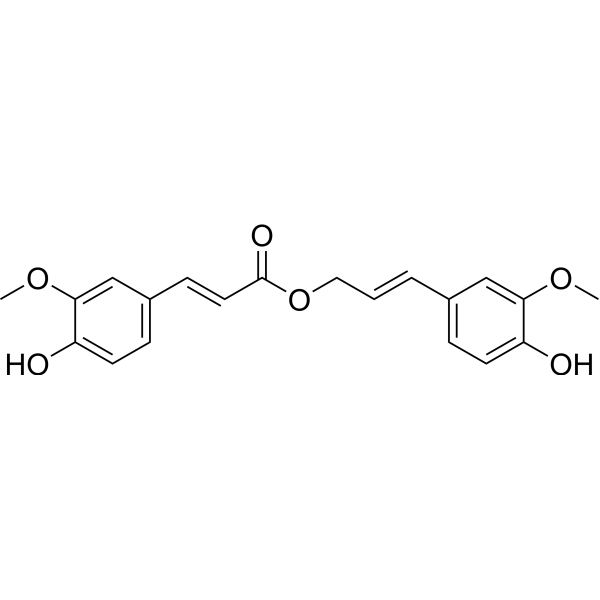
    Coniferyl ferulate
    1 Publications Verification

    Glutathione S-transferase P-glycoprotein Apoptosis iGluR CaMK p38 MAPK Reactive Oxygen Species (ROS) Bacterial Infection Cardiovascular Disease Neurological Disease Inflammation/Immunology Cancer
    Coniferyl ferulate is an orally active phenolic acid compound. Coniferyl ferulate is a potent inhibitor of glutathione S-transferase (GST) (IC50 = 0.3 μM), which downregulates P-gp expression, induces apoptosis in B-MD-C1 (ADR+/+) cells, and reverses multidrug resistance. Coniferyl ferulate blocks the NMDAR/NR2B-CaMKII-MAPKs signaling pathway, inhibits ROS production and mitochondrial apoptosis, while reshapes the intestinal microbiota and microbial metabolism, ameliorates colonic inflammation and alleviates depressive symptoms in mice. Coniferyl ferulate can alleviate the toxicity of xylene to hematopoietic stem and progenitor cells by targeting Mgst2. Coniferyl ferulate exhibits antibacterial activity against the Gram-positive Bacillus subtilis and Staphylococcus aureus .
    Coniferyl ferulate
  • HY-70005
    CPA inhibitor
    3 Publications Verification

    Carboxypeptidase inhibitor

    Carboxypeptidase Wnt β-catenin Inflammation/Immunology
    CPA inhibitor (Compound 5) (Carboxypeptidase inhibitor) is an orally active competitive carboxypeptidase A (CPA) inhibitor with a Ki value of 0.32 μM. CPA inhibitor blocks the activity of carboxypeptidase A3 (CPA3). CPA activator activates the Wnt/Lrp6/β-catenin signaling pathway. CPA inhibitor reduces epithelial damage. CPA inhibitor is applicable to research related to inflammatory bowel disease, including ulcerative colitis and Crohn's disease .
    CPA inhibitor
  • HY-N13250

    Apoptosis AMPK Elastase Bcl-2 Family Interleukin Related Caspase PI3K Akt SOD Cardiovascular Disease
    Hawthorn Extract is an orally active hawthorn extract. Hawthorn Extract decreases Bax expression and increases Bcl-2 expression in the aorta. Hawthorn Extract regulates the AMPK signaling pathway, induces apoptosis, enhances the hepatic antioxidant system, and ameliorates symptoms of liver injury, inflammation and cancer. Hawthorn Extract reduces plasma levels of pro-inflammatory factors, increases plasma levels of anti-inflammatory adiponectin, and alleviates atherosclerotic plaque lesions in the aorta. Hawthorn Extract improves symptoms associated with chronic heart failure . Hawthorn Extract inhibits FMLP-induced superoxide anion production, Elastase release, ILB4 generation and calcium signaling in neutrophils, and also reduces LPS-induced cytokine production in neutrophils. Hawthorn Extract induces autophagy and inhibits the proliferation of intestinal stem cells. Hawthorn Extract can be used in research related to atherosclerosis, hepatitis, alcoholic liver disease, non-alcoholic fatty liver disease, hepatocellular carcinoma, chronic heart failure and hypotension .
    Hawthorn Extract
  • HY-W094517

    Biochemical Assay Reagents Endocrinology
    Sodium phosphate dibasic heptahydrate is an orally active and osmotic laxative, often used as a component of over-the-counter gastrointestinal lavage drugs. Sodium phosphate dibasic heptahydrate draws water into the intestinal lumen, maintains electrical neutrality by retaining cations in the intestinal lumen, and thereby alters fecal volume, consistency and phosphate levels. Sodium phosphate dibasic heptahydrate can be used to generate self-assembled calcium phosphate tubular scaffolds, which support the adhesion, survival and elongation of mesenchymal stem cells. Sodium phosphate dibasic heptahydrate can be applied to research on factitious disorders and related fields .
    Sodium phosphate dibasic heptahydrate
  • HY-P1454
    Fz7-21
    3 Publications Verification

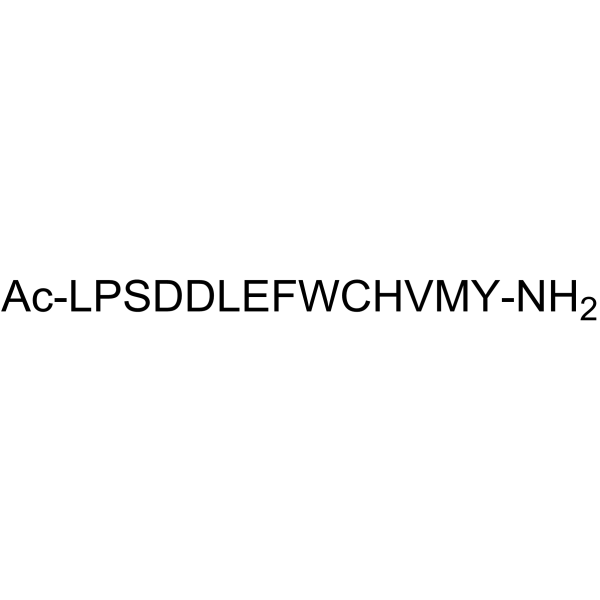
    Ac-LPSDDLEFWCHVMY-NH2

    Wnt Cancer
    Fz7-21 (Ac-LPSDDLEFWCHVMY-NH2) is a potent peptide antagonist of FZD7 receptors , selectively binds to FZD7 CRD subclass and alters the conformation of the CRD and the architecture of its lipid-binding groove. The EC50 values are 58 and 34 nM for human and mouse FZD7 CRD, respectively. Fz7-21 impairs the function of FZD7 in Wnt–β-catenin signalling and stem cell function in intestinal organoids .
    Fz7-21
  • HY-P1454A
    Fz7-21 TFA
    3 Publications Verification

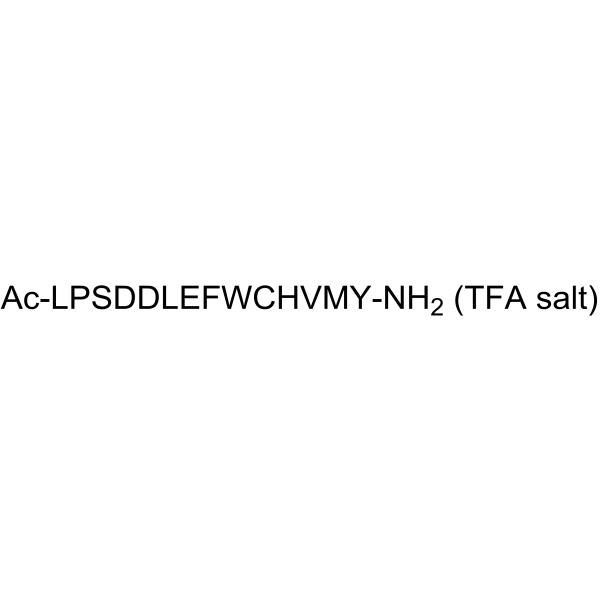
    Ac-LPSDDLEFWCHVMY-NH2 TFA

    Wnt Cancer
    Fz7-21 (Ac-LPSDDLEFWCHVMY-NH2) TFA is a potent peptide antagonist of FZD7 receptors , selectively binds to FZD7 CRD subclass and alters the conformation of the CRD and the architecture of its lipid-binding groove. The EC50 values are 58 and 34 nM for human and mouse FZD7 CRD, respectively. Fz7-21 TFA impairs the function of FZD7 in Wnt-β-catenin signalling and stem cell function in intestinal organoids .
    Fz7-21 TFA
  • HY-163324A

    Cytochrome P450 Others
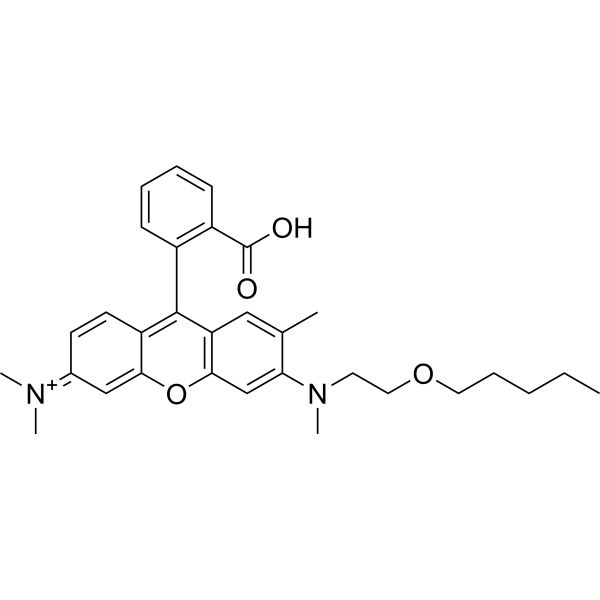
    2-Me PeER is a rhodamine dye-based fluorescent probe that detects CYP3A4 activity. In fluorescence-activated cell sorting (FACS) based on CYP3A4 activity, homogeneous and functional human induced pluripotent stem cell (hiPSC)-derived hepatocytes and intestinal epithelial cells can be obtained with the aid of 2-Me PeER .
    2-Me PeER
  • HY-112005G

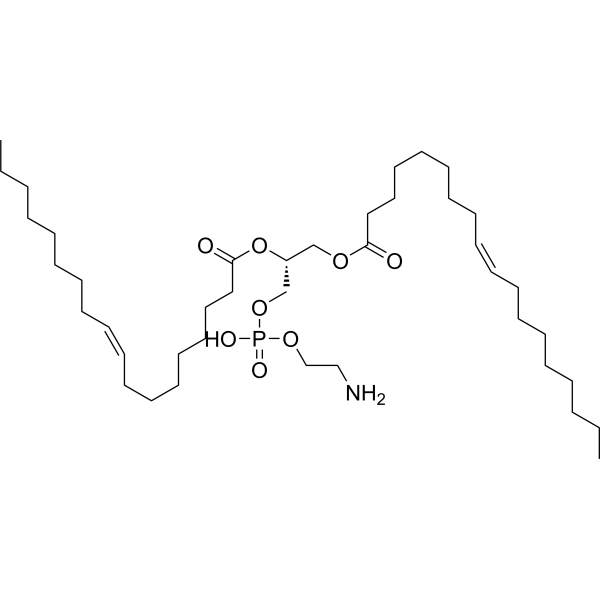
    Dioleoylphosphatidylethanolamine; 1,2-Dioleoyl-sn-glycero-3-phosphoethanolamine

    Ferroptosis Glutathione Peroxidase ACSL Family Amino acid Transporter Neurological Disease Inflammation/Immunology
    DOPE GMP is DOPE (HY-112005) produced by using GMP guidelines. GMP small molecules works appropriately as an auxiliary reagent for cell therapy manufacture. DOPE (Dioleoylphosphatidylethanolamine; 1,2-Dioleoyl-sn-glycero-3-phosphoethanolamine) is an orally active inhibitor of ferroptosis with anti-inflammatory and intestinal barrier maintenance activities. DOPE regulates the expression of ACSL4, SLC7A11 and GPX4 to restore the redox system balance, thereby reducing the levels of lipid peroxides, iron ions and intestinal inflammatory factors (IL-1β and IL-6). DOPE promotes the migration and proliferation of intestinal epithelial cells and increases the level of tight junction proteins; it also destabilizes endosomal membranes, mediates the conjugation of RVG peptides with mesenchymal stem cell-derived exosomes to enhance brain targeting. DOPE can be applied to research related to neonatal necrotizing enterocolitis and Alzheimer's disease .
    DOPE

Consulta en línea

Your information is safe with us. * Required Fields.

Saludo


Country or Region *

Nombre del solicitante *


Nombre de la Organizaciòn *

Department *


Direcciòn del E-mail *


Nombre del producto *

Cat. No.


Requested quantity *

Número de teléfono *


Observaciones

Consulta en línea

Inquiry Information

Nombre del producto:
Cat. No.:
Cantidad:
MCE Japan Authorized Agent:

