Search Result
Results for "
larvicidal
" in MedChemExpress (MCE) Product Catalog:
2
Biochemical Assay Reagents
4
Isotope-Labeled Compounds
| Cat. No. |
Product Name |
Target |
Research Areas |
Chemical Structure |
-
- HY-N0655
-
|
3-O-Methyl-D-chiro-inositol
|
Influenza Virus
|
Infection
Cardiovascular Disease
Inflammation/Immunology
|
|
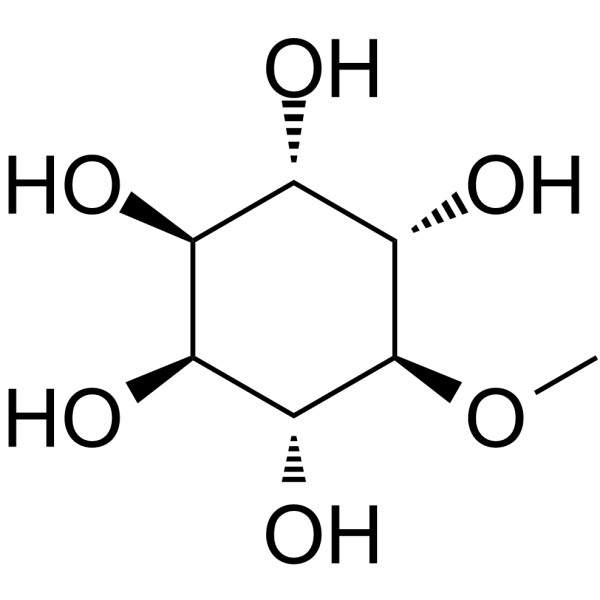
D-pinitol (3-O-Methyl-D-chiro-inositol) is a natural compound presented in several plants, like Pinaceae and Leguminosae plants. D-pinitol exerts hypoglycemic activity and protective effects in the cardiovascular system . D-pinitol has antiviral and larvicidal activities .
|
-
-
- HY-138800
-
|
|
nAChR
|
Neurological Disease
|
|
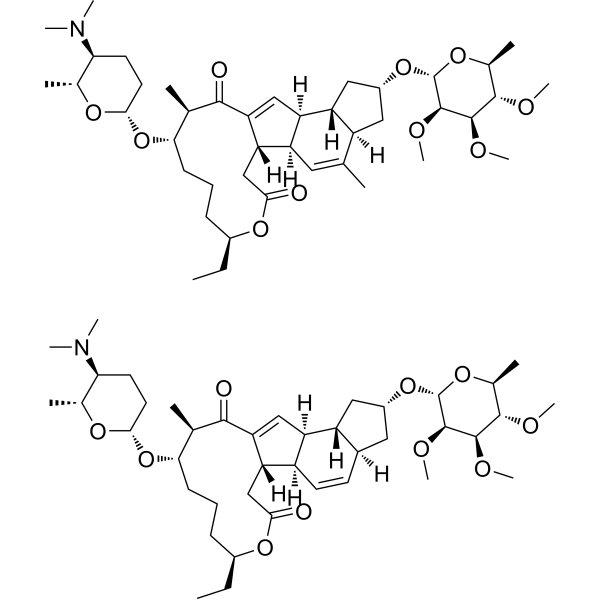
Spinosad, a mixture of spinosyns A and D known as fermentation products of a soil actinomycete (Saccharopolyspora spinosa), is a biological neurotoxic insecticide with a broader action spectrum. Spinosad targets the nicotinic acetylcholine receptor (nAChRs) of the insect nervous system. Spinosad has an excellent environmental and mammalian toxicological profile. Larvicidal activity .
|
-
-
- HY-N0336
-
|
Butylidenephthalide
|
Parasite
|
Infection
|
|
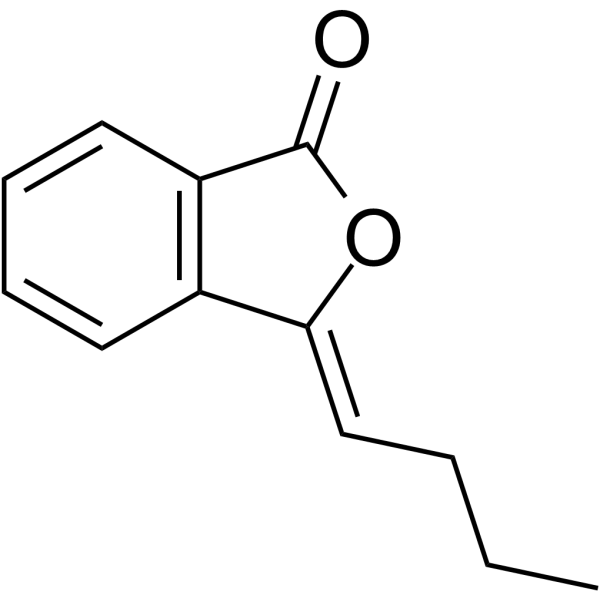
3-Butylidenephthalide (Butylidenephthalide) is a phthalic anhydride derivative identified in Ligusticum chuanxiong Hort, and has larvicidal activity (LC50 of 1.56 mg/g for Spodoptera litura larvae) .
|
-
-
- HY-N1739
-
-
-
- HY-116934
-
|
Adipostatin A
|
Insecticide
|
Infection
Cancer
|
|
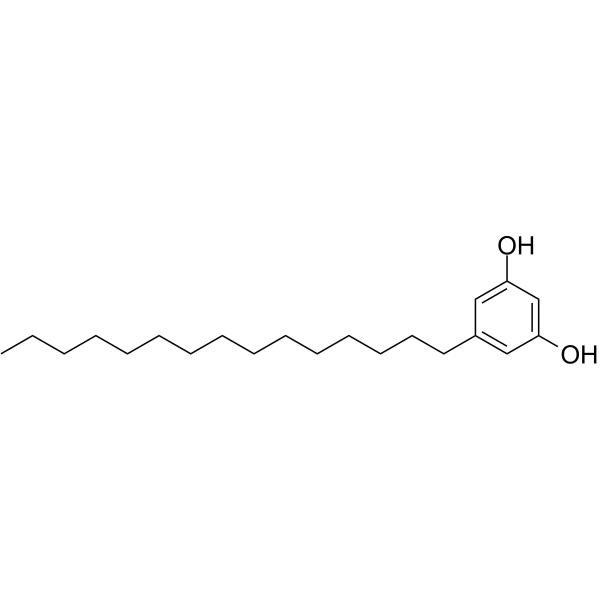
5-Pentadecylresorcinol (Adipostatin A) is a glycerol-3-phosphate dehydrogenase (GPDH) inhibitor with an IC50 of 4.1 μM. Adipostatin A shows good larvicidal activity against Aedes aegypti .
|
-
-
- HY-B1851
-
|
|
Environmental Pollutants
Parasite
|
Infection
|
|
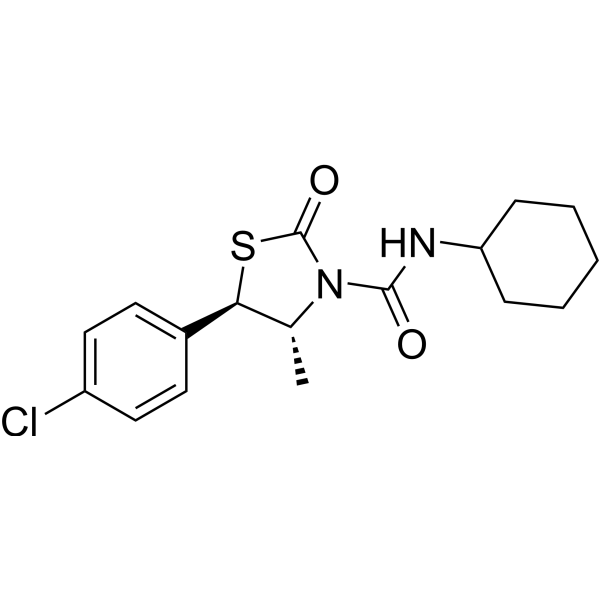
Hexythiazox is a selective acaricide with ovicidal, larvicidal and nymphicidal activities. Hexythiazox is widely used for chemical control of mites on cotton, fruits and vegetables. Hexythiazox is harmless to mammals and has no effect on beneficial insects and predators of mites .
|
-
-
- HY-B1973
-
|
|
Environmental Pollutants
Insecticide
|
Others
|
|
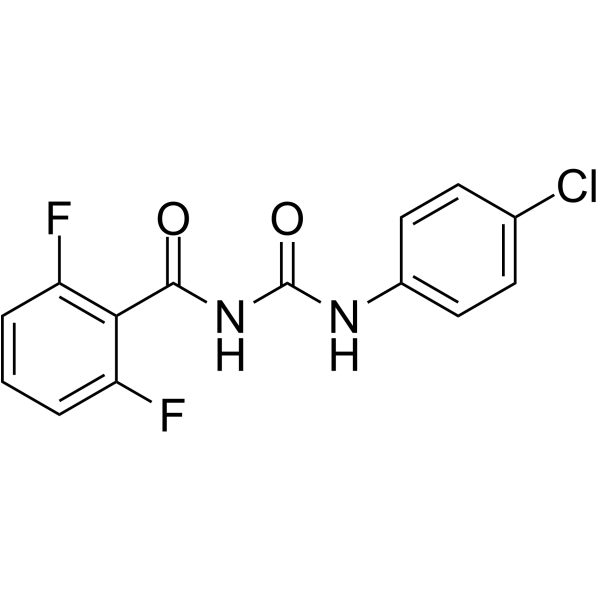
Diflubenzuron is an insecticide with larvicidal and ovicidal activities. Diflubenzuron can inhibit the synthesis of chitin in insects, affect insect molting and lead to the death of insects .
|
-
-
- HY-N2434
-
|
|
COX
Interleukin Related
NF-κB
Parasite
|
Infection
Inflammation/Immunology
Cancer
|
|
[10]-Shogaol is an orally active antioxidant. [10]-Shogaol can be extracted from ginger (Zingiber officinale). [10]-Shogaol1 inhibits COX-2 with an IC50 value of 7.5 μM. [10]-Shogaol inhibits the production of proinflammatory cytokines (IL-1β, IL-6). [10]-Shogaol inhibits NF-κB phosphorylation. [10]-Shogaol has anti-inflammatory effects. [10]-Shogaol has anticancer effects against Docetaxel (HY-B0011)-resistant prostate cancer. [10]-Shogaol exhibits larvicidal activity against L5 larvae of Angiostrongylus cantonensis .
|
-
-
- HY-B1120
-
|
Temefos
|
Insecticide
Cholinesterase (ChE)
Dengue Virus
Flavivirus
|
Infection
|
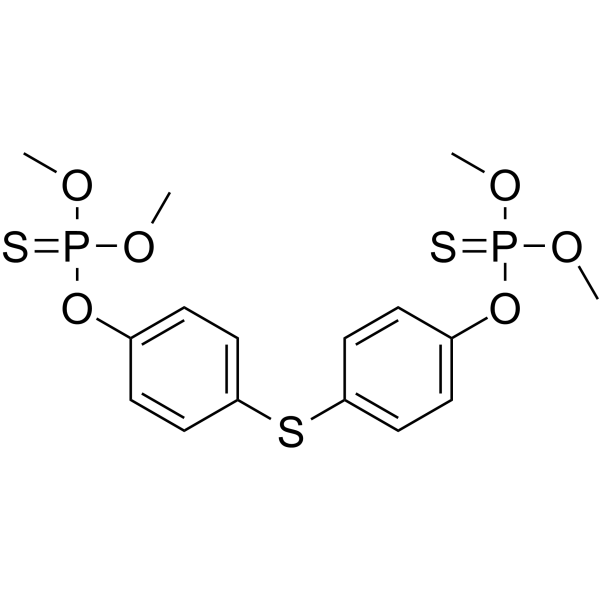
Temephos (Temefos) is an orally active, blood-brain barrier-permeable organophosphate insecticide and AChE inhibitor. By irreversibly inhibiting AChE to induce cholinergic overactivation, Temephos effectively blocks larval development of Aedes aegypti (yellow fever mosquito) and Aedes albopictus (Asian tiger mosquito), and is commonly used in studies related to Dengue Virus, Zika Virus and other relevant pathogens. Temephos exhibits genotoxicity and neurodevelopmental toxicity, and may also cause liver injury, reproductive system abnormalities and cholinergic poisoning symptoms in mammals. Temephos tends to accumulate in adipose tissues and aquatic organisms, and is excreted via feces after metabolism through oxidation and hydrolysis. Note that CYP-mediated metabolic detoxification may reduce the actual larvicidal efficacy of Temephos against some mosquito species. Temephos can be used in research related to dengue fever, Zika virus disease, chikungunya and dracunculiasis .
|
-
-
- HY-N10423
-
|
(-)-Cubebin
|
Cholinesterase (ChE)
Bacterial
Fungal
Parasite
p38 MAPK
|
Infection
Neurological Disease
Metabolic Disease
Inflammation/Immunology
Cancer
|
|
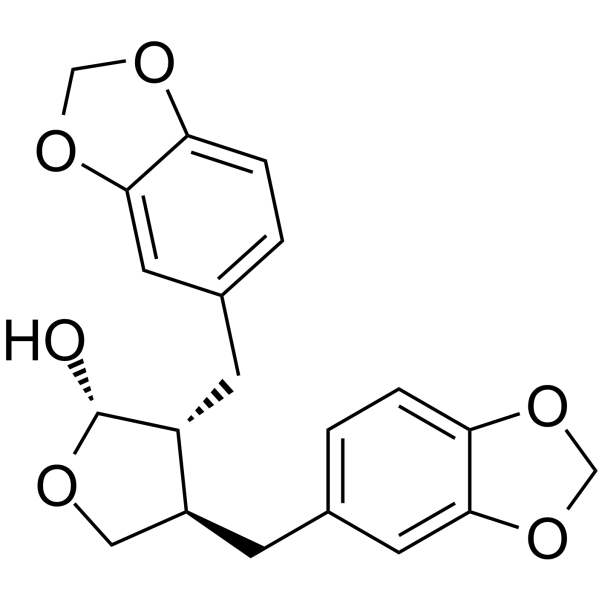
Cubebin ((-)-Cubebin), a dibenzyl butyrolactone lignan, is an orally active AChE inhibitor. Cubebin binds to active sites of NF-κB, TNF-α, and TGF-β1 via hydrogen and hydrophobic interactions, obstructing critical residues to inhibit pro-inflammatory or renal fibrosis-related activity. Cubebin enhances p38 MAPK phosphorylation to increase tyrosinase gene expression, stimulating melanogenesis via elevated tyrosinase activity, expression, and mRNA levels. Cubebin reduces oxidative stress via enhanced endogenous antioxidant enzyme activity and inhibited lipid peroxidation, regulates lipid metabolism, improves glycemic control, and exerts renoprotective effects via reduced renal dysfunction markers and improved renal architecture. Cubebin shows antimicrobial activity. Cubebin exerts larvicidal activity against Angiostrongylus cantonensis larvae, with no cytotoxicity toward monkey or human cell lines or Caenorhabditis elegans. Cubebin can be used for the research of diabetic nephropathy, melanoma, colon adenocarcinoma, neuroangiostrongyliasis, Alzheimer’s disease (AD) and depression .
|
-
-
- HY-W272217S
-
|
n-Octacosane-d58; NSC 5549-d58
|
Bacterial
Endogenous Metabolite
|
Cancer
|
|
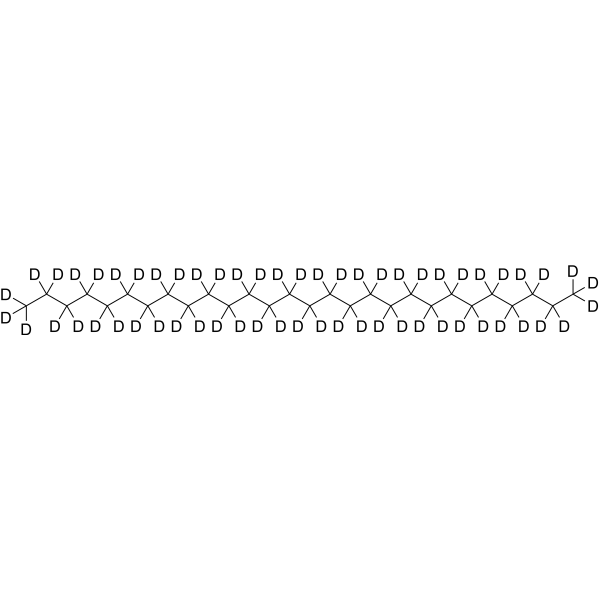
Octacosane-d58 is the deuterium labeled Octacosane . Octacosane is an endogenous metabolite with antibacterial activity. Octacosane shows high cytotoxicity against murine melanoma B16F10-Nex2 cells besides inducing protection against a grafted subcutaneous melanoma. Octacosane has the larvicidal activity against mosquito Culex quinquefasciatus with the LC50 concentration of 7.2 mg/l .
|
-
-
- HY-W272217
-
|
n-Octacosane; NSC 5549
|
Endogenous Metabolite
Bacterial
|
Inflammation/Immunology
Cancer
|
|
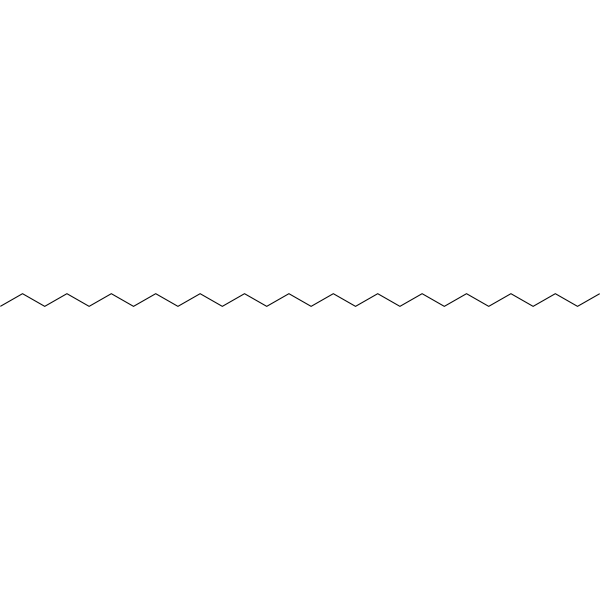
Octacosane is an endogenous metabolite with antibacterial activity. Octacosane shows high cytotoxicity against murine melanoma B16F10-Nex2 cells besides inducing protection against a grafted subcutaneous melanoma. Octacosane has the larvicidal activity against mosquito Culex quinquefasciatus with the LC50 concentration of 7.2 mg/l .
|
-
-
- HY-N10743
-
|
|
Parasite
|
Infection
|
|
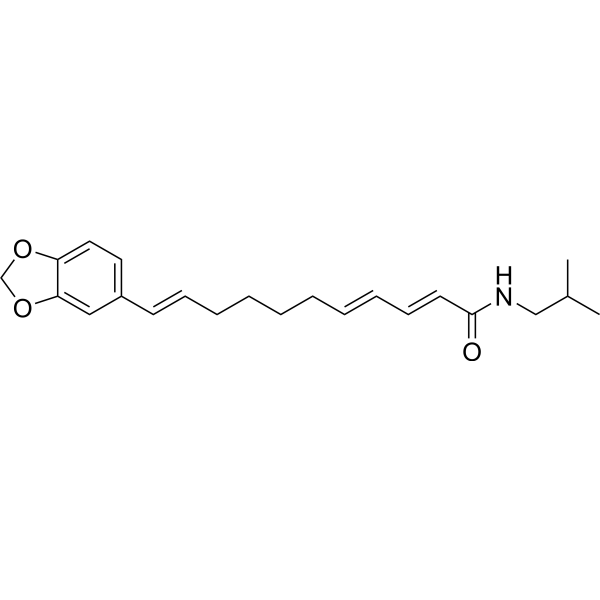
Pipercide is an amide of piper nigrum fruits. Pipercide has larvicidal activity to mosquito. Pipercide acts on the nervous system and induces repetitive discharge on the central nerve cord. Pipercide can be used as an insecticide .
|
-
-
- HY-W127493
-
|
Ceryl Alcohol
|
Biochemical Assay Reagents
|
Infection
|
|
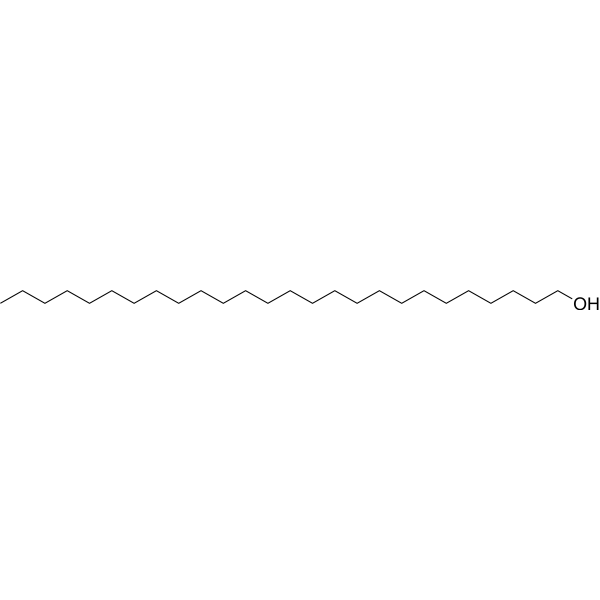
1-Hexacosanol can be used as an inhibitor of acetylcholinesterase (AChE). 1-Hexacosanol has larvicidal activity and can inhibit the acetylcholinesterase activity of Culex quinquefasciatus, Aedes aegypti and Chironomus riparius, exerting neurotoxic effects .
|
-
-
- HY-B0601R
-
-
-
- HY-W009993
-
|
|
Parasite
|
Infection
Metabolic Disease
|
|
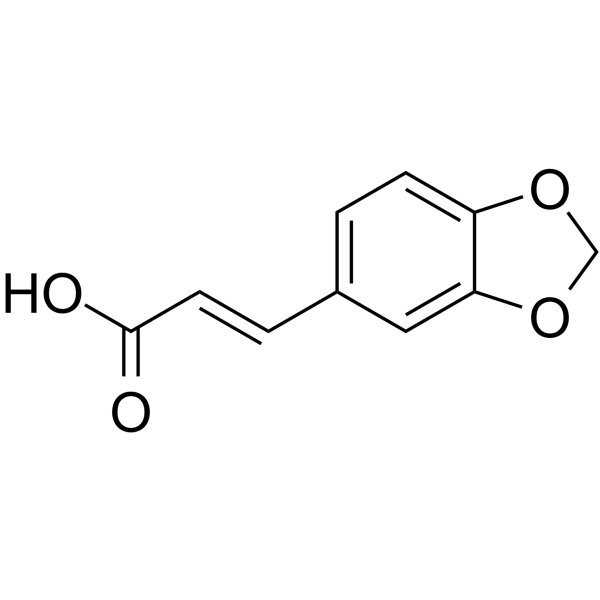
3,4-Methylenedioxycinnamic acid is an inhibitor of the 4-hydroxycinnamoyl-CoA ligase (4CL) with a Ki of 100 μM. 3,4-Methylenedioxycinnamic acid exhibits the Km value for the substrate ferulic acid of 4CL is 8.4 μM.3,4-Methylenedioxycinnamic acid increases the formation of soluble phenolics in particular of vanillic acid. 3,4-Methylenedioxycinnamic acid demonstrates larvicidal activity .
|
-
-
- HY-N8914
-
|
|
Others
|
Others
|
|
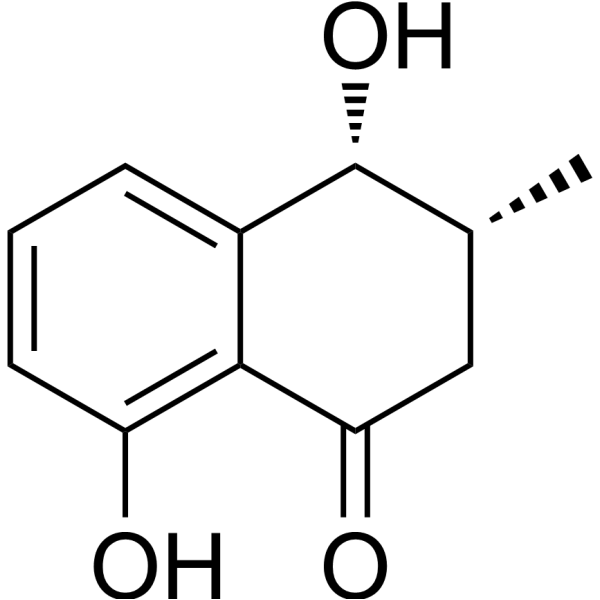
Isoshinanolone is a natural product that can be extracted from Plumbago capensis. Isoshinanolone has mosquito larvicidal activity against fourth instar larvae of A. aegypti, with an IC50 value of 1.26 μg/mL .
|
-
-
- HY-N8585
-
|
|
Parasite
|
Infection
|
|
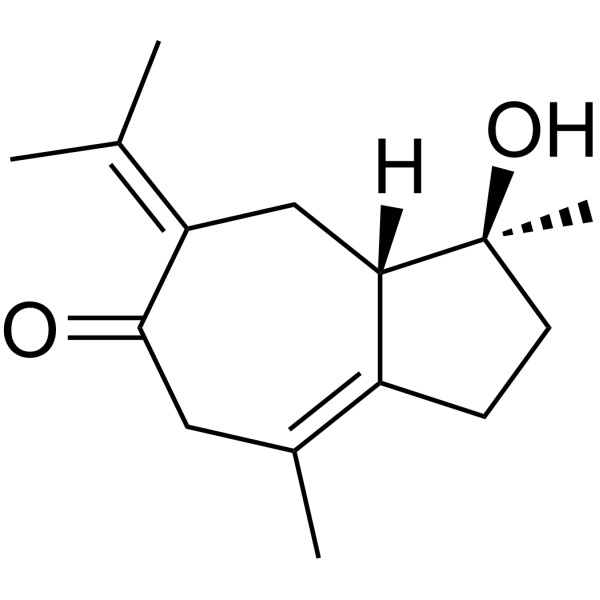
Neoprocurcumenol is a larvicidal compound that exerts significant toxicity on mosquito larvae with LC50 and LC 90 values of 13.69 and 23.92 ppm, respectively .
|
-
-
- HY-N16403
-
|
|
Cytochrome P450
Endogenous Metabolite
Bacterial
Insecticide
Fungal
|
Infection
Cancer
|
|
Aspergillusidone F is a Depsidone and antibacterial agent. Aspergillusidone F can be isolated from a marine fungus Aspergillus unguis. Aspergillusidone F potently inhibits Aromatase with an IC50 of 0.5 μM. Aspergillusidone F exhibits antibacterial activity against Pseudomonas aeruginosa and Methicillin (HY-121544)-resistant Staphylococcus aureus. Aspergillusidone F exhibits potent larvicidal activity against Artemia salina larvae, with an LC50 value of 12.8 μM. Aspergillusidone F exhibits anticancer activity against intrahepatic cholangiocarcinoma, non-small cell lung cancer, and acute lymphoblastic leukemia .
|
-
-
- HY-N2563
-
|
|
Fungal
|
Infection
|
|
Neocnidilide is an alkylphthalide, which has the activity of inhibiting the growth of mycotoxin-producing fungi. Neocnidilide also has larvicidal activity against D. melanogaster with a LC50 value of 9.9 μmol/mL .
|
-
-
- HY-135422
-
|
Methylustin
|
Bacterial
Fungal
|
Infection
|
|
Nidulin (Methylustin) is a depsidone isolated from a marine fungus Aspergillus unguis. Nidulin shows antifungal and antibacterial against pathogenetic strains, Pseudomonas aeruginosa, Methicillin-resistant Staphylococcus aureus and Candida albicans with inhibition zones of 9.5 mm, 9.0 mm and 9.0 mm, respectively. Nidulin exhibits potent larvicidality against brine shrimp .
|
-
-
- HY-175607
-
|
|
Cholinesterase (ChE)
nAChR
|
Infection
Neurological Disease
|
|
AChE/nAChR-IN-1 (Compound 1a) is dual-functional inhibitor of AChE and nAChR. AChE/nAChR-IN-1 has potent toxicity and larvicidal effectiveness against Culex pipiens larvae with a LC50 of 4 ng/mL. AChE/nAChR-IN-1 can be used as larvicides for mosquito-borne diseases research .
|
-
-
- HY-N1739R
-
|
2-Methylanthraquinone (Standard)
|
Reference Standards
SARS-CoV
Virus Protease
|
Infection
|
|
Tectoquinone (Standard) is the analytical standard of Tectoquinone. This product is intended for research and analytical applications. Tectoquinone (2-Methylanthraquinone) is an inhibitor for SARS CoV-2 major protease (SARS CoV-2 Mpro). Tectoquinone exhibits anti-termite and antiviral activities .
|
-
-
- HY-146109
-
|
|
Parasite
|
Infection
|
|
RyRs activator 1 (compound 7f) is a potent activator of ryanodine receptors (RyRs). RyRs activator 1 at 0.5 mg/L displays 100% larvicidal activity. The larvicidal activity of RyRs activator 1 is 90% at 0.01 mg/L .
|
-
-
- HY-149399
-
|
|
GABA Receptor
|
Infection
|
|
GABA-IN-1 (Compound 6) is a GABA inhibitor. GABA-IN-1 has larvicidal activity and insecticidal effect, with mortality rates of 93% at 50 mg/L .
|
-
-
- HY-149400
-
|
|
GABA Receptor
|
Infection
|
|
GABA-IN-2 (Compound 5) is a GABA inhibitor. GABA-IN-2 has larvicidal activity and insecticidal effect, with mortality rates of 87% at 50 mg/L .
|
-
-
- HY-N9842
-
|
|
Microtubule/Tubulin
|
Infection
|
|
Violanone, an isoflavanone compound, can inhibit tubulin polymerization. Violanone also exhibits larvicidal activity against A. aegypti .
|
-
-
- HY-146110
-
|
|
Parasite
|
Infection
|
|
RyRs activator 2 (compound 7o) is a potent activator of ryanodine receptors (RyRs). RyRs activator 2 is 30% larvicidal activity, comparable to chlorantraniliprole (30%) and better than cyantraniliprole (10%) .
|
-
-
- HY-N2976
-
|
Betulafolianediol 3-acetate; Cabraleadiol 3-acetate
|
Others
|
Infection
|
|
Cabraleadiol monoacetate is a compound isolated from the lichen Pyxine consocians Vainio. Cabraleadiol monoacetate shows mosquito larvicidal activity against the second instar larvae of Aedes aegypti .
|
-
-
- HY-116934R
-
|
Adipostatin A (Standard)
|
Reference Standards
Others
|
Infection
Cancer
|
|
5-Pentadecylresorcinol (Standard) is the analytical standard of 5-Pentadecylresorcinol. This product is intended for research and analytical applications. 5-Pentadecylresorcinol (Adipostatin A) is a glycerol-3-phosphate dehydrogenase (GPDH) inhibitor with an IC50 of 4.1 μM. Adipostatin A shows good larvicidal activity against Aedes aegypti .
|
-
-
- HY-B1851R
-
|
|
Reference Standards
Parasite
|
Infection
|
|
Hexythiazox (Standard) is the analytical standard of Hexythiazox. This product is intended for research and analytical applications. Hexythiazox is a selective acaricide with ovicidal, larvicidal and nymphicidal activities. Hexythiazox is widely used for chemical control of mites on cotton, fruits and vegetables. Hexythiazox is harmless to mammals and has no effect on beneficial insects and predators of mites .
|
-
-
- HY-N0336R
-
|
Butylidenephthalide (Standard)
|
Parasite
Reference Standards
|
Infection
|
|
3-Butylidenephthalide (Standard) is the analytical standard of 3-Butylidenephthalide. This product is intended for research and analytical applications. 3-Butylidenephthalide (Butylidenephthalide) is a phthalic anhydride derivative identified in Ligusticum chuanxiong Hort, and has larvicidal activity (LC50 of 1.56 mg/g for Spodoptera litura larvae) .
|
-
-
- HY-W272217R
-
|
n-Octacosane (Standard); NSC 5549 (Standard)
|
Reference Standards
Endogenous Metabolite
Bacterial
|
Inflammation/Immunology
Cancer
|
|
Octacosane (Standard) is the analytical standard of Octacosane. This product is intended for research and analytical applications. Octacosane is an endogenous metabolite with antibacterial activity. Octacosane shows high cytotoxicity against murine melanoma B16F10-Nex2 cells besides inducing protection against a grafted subcutaneous melanoma. Octacosane has the larvicidal activity against mosquito Culex quinquefasciatus with the LC50 concentration of 7.2 mg/l .
|
-
-
- HY-114525
-
|
|
Insecticide
|
Others
|
|
Chlorbenside is an organochlorine pesticide. Chlorbenside targets organism such as mites and ticks and possesses efficient ovicidal and larvicidal activities .
|
-
-
- HY-159148
-
|
|
Cholinesterase (ChE)
|
Others
|
|
AChE-IN-70 (compound 4) is a AChE inhibitor. AChE-IN-70 shows larvicidal activity against mosquito larvae (Culex pipiens L.). and can be used for study of mosquito control .
|
-
-
- HY-116016R
-
|
L-DOPA ethyl ester (Standard); Levodopa ethyl ester (Standard)
|
Reference Standards
Dopamine Receptor
Drug Metabolite
|
Neurological Disease
|
|
Chlorbenside (Standard) is the analytical standard of Chlorbenside. This product is intended for research and analytical applications. Chlorbenside is an organochlorine pesticide. Chlorbenside targets organism such as mites and ticks and possesses efficient ovicidal and larvicidal activities .
|
-
-
- HY-114525R
-
|
|
Insecticide
Reference Standards
|
Others
|
|
Chlorbenside (Standard) is the analytical standard of Chlorbenside. This product is intended for research and analytical applications. Chlorbenside is an organochlorine pesticide. Chlorbenside targets organism such as mites and ticks and possesses efficient ovicidal and larvicidal activities .
|
-
-
- HY-155334
-
|
|
Parasite
|
Others
|
|
RyRs activator 4 (compound B18) is an insect ryanodine receptor activator. RyRs activator 4 has a larvicidal activity of Mythimna separata with an LC50 value of 1.32 mg/L .
|
-
-
- HY-B1973S
-
|
|
Isotope-Labeled Compounds
|
Others
|
|
Diflubenzuron-d4 is the deuterium labeled Diflubenzuron. Diflubenzuron is an insecticide with larvicidal and ovicidal activities. Diflubenzuron can inhibit the synthesis of chitin in insects, affect insect molting and lead to the death of insects .
|
-
-
- HY-B1973R
-
|
|
Insecticide
Reference Standards
|
Others
|
|
Diflubenzuron (Standard) is the analytical standard of Diflubenzuron. This product is intended for research and analytical applications. Diflubenzuron is an insecticide with larvicidal and ovicidal activities. Diflubenzuron can inhibit the synthesis of chitin in insects, affect insect molting and lead to the death of insects .
|
-
-
- HY-B1851S
-
|
|
Isotope-Labeled Compounds
Parasite
|
Infection
|
|
Hexythiazox-d11 is deuterium labeled Hexythiazox. Hexythiazox is a selective acaricide with ovicidal, larvicidal and nymphicidal activities. Hexythiazox is widely used for chemical control of mites on cotton, fruits and vegetables. Hexythiazox is harmless to mammals and has no effect on beneficial insects and predators of mites .
|
-
-
- HY-N7144AR
-
|
|
Reference Standards
TRP Channel
PKC
PKA
|
Neurological Disease
|
|
Citronellyl acetate (Standard) is the analytical standard of Citronellyl acetate (HY-N7144A). This product is intended for research and analytical applications. Citronellyl acetate is a monoterpene product of the secondary metabolism of plants, with antinociceptive activity. Citronellyl acetate exhibits pro-apoptotic activity in human hepatoma cells. Citronellyl acetate shows fungicidal, larvicidal, bactericidal and repelling/insecticidal effects .
|
-
-
- HY-N2621
-
|
|
Cytochrome P450
|
Inflammation/Immunology
|
|
Evodol is a natural product isolated from the dried and nearly ripe fruits of Euodia rutaecarpa. Evodol shows inhibitory activity against NO production . Evodol possesses larvicidal activity against the Asian tiger mosquitoes with a LC50 value of 32.43 μg/ml . Evodol has the inhibitory effect on CYP3A .
|
-
-
- HY-W127493R
-
|
Ceryl Alcohol (Standard)
|
Biochemical Assay Reagents
Reference Standards
|
Infection
|
|
1-Hexacosanol (Standard) is the analytical standard of 1-Hexacosanol. This product is intended for research and analytical applications. 1-Hexacosanol can be used as an inhibitor of acetylcholinesterase (AChE). 1-Hexacosanol has larvicidal activity and can inhibit the acetylcholinesterase activity of Culex quinquefasciatus, Aedes aegypti and Chironomus riparius, exerting neurotoxic effects.
|
-
-
- HY-N0655R
-
|
3-O-Methyl-D-chiro-inositol (Standard)
|
Reference Standards
Influenza Virus
|
Infection
Cardiovascular Disease
Inflammation/Immunology
|
|
D-Pinitol (Standard) is the analytical standard of D-Pinitol. This product is intended for research and analytical applications. D-pinitol (3-O-Methyl-D-chiro-inositol) is a natural compound presented in several plants, like Pinaceae and Leguminosae plants. D-pinitol exerts hypoglycemic activity and protective effects in the cardiovascular system . D-pinitol has antiviral and larvicidal activities .
|
-
-
- HY-N2434R
-
|
|
Reference Standards
COX
Interleukin Related
NF-κB
Parasite
|
Infection
Inflammation/Immunology
Cancer
|
|
-Shogaol (Standard) is the analytical standard of -Shogaol (HY-N2434). This product is intended for research and analytical applications. [10]-Shogaol is an orally active antioxidant. [10]-Shogaol can be extracted from ginger (Zingiber officinale). [10]-Shogaol1 inhibits COX-2 with an IC50 value of 7.5 μM. [10]-Shogaol inhibits the production of proinflammatory cytokines (IL-1β, IL-6). [10]-Shogaol inhibits NF-κB phosphorylation. [10]-Shogaol has anti-inflammatory effects. [10]-Shogaol has anticancer effects against Docetaxel (HY-B0011)-resistant prostate cancer. [10]-Shogaol exhibits larvicidal activity against L5 larvae of Angiostrongylus cantonensis .
|
-
-
- HY-B1120S
-
|
Temefos-d12
|
Cholinesterase (ChE)
Dengue Virus
Flavivirus
Parasite
|
Infection
|
|
Temephos-d12 is the deuterium labeled Temephos. Temephos (Temefos) is an orally active, blood-brain barrier-permeable organophosphate insecticide and AChE inhibitor. By irreversibly inhibiting AChE to induce cholinergic overactivation, Temephos effectively blocks larval development of Aedes aegypti (yellow fever mosquito) and Aedes albopictus (Asian tiger mosquito), and is commonly used in studies related to Dengue Virus, Zika Virus and other relevant pathogens. Temephos exhibits genotoxicity and neurodevelopmental toxicity, and may also cause liver injury, reproductive system abnormalities and cholinergic poisoning symptoms in mammals. Temephos tends to accumulate in adipose tissues and aquatic organisms, and is excreted via feces after metabolism through oxidation and hydrolysis. Note that CYP-mediated metabolic detoxification may reduce the actual larvicidal efficacy of Temephos against some mosquito species. Temephos can be used in research related to dengue fever, Zika virus disease, chikungunya and dracunculiasis .
|
-
-
- HY-B1120R
-
|
Temefos (Standard)
|
Reference Standards
Insecticide
Cholinesterase (ChE)
Dengue Virus
Flavivirus
|
Infection
|
|
Temephos (Standard) is the analytical standard of Temephos. This product is intended for research and analytical applications. Temephos (Temefos) is an orally active, blood-brain barrier-permeable organophosphate insecticide and AChE inhibitor. By irreversibly inhibiting AChE to induce cholinergic overactivation, Temephos effectively blocks larval development of Aedes aegypti (yellow fever mosquito) and Aedes albopictus (Asian tiger mosquito), and is commonly used in studies related to Dengue Virus, Zika Virus and other relevant pathogens. Temephos exhibits genotoxicity and neurodevelopmental toxicity, and may also cause liver injury, reproductive system abnormalities and cholinergic poisoning symptoms in mammals. Temephos tends to accumulate in adipose tissues and aquatic organisms, and is excreted via feces after metabolism through oxidation and hydrolysis. Note that CYP-mediated metabolic detoxification may reduce the actual larvicidal efficacy of Temephos against some mosquito species. Temephos can be used in research related to dengue fever, Zika virus disease, chikungunya and dracunculiasis .
|
-
-
- HY-W587961
-
|
|
Insecticide
|
Infection
|
|
S-Hydroprene is an insecticide. S-Hydroprene prolongs larval and pupa durations, disrupts larval development, suppresses pupation, and exhibits larvicidal activity against Culex quinquefasciatus and Blatta orientalis .
|
-
-
- HY-N2230A
-
|
|
Parasite
|
Infection
|
|
(E/Z)-N-p-trans-Coumaroyltyramine is an amide. (E/Z)-N-p-trans-Coumaroyltyramine is present in the leaves of Annona muricata L. (E/Z)-N-p-trans-Coumaroyltyramine exhibits certain brine shrimp larvicidal activity .
|
-
- HY-N17963
-
|
|
Glutathione S-transferase
Influenza Virus
Interleukin Related
IFNAR
STAT
|
Infection
|
|
Cappariloside A is a larvicide that exhibits larvicidal activity against Aedes aegypti larvae and reduces larval glutathione-S-transferase activity. Cappariloside A also possesses antiviral activity, decreases the level of phosphorylated STAT1 in cells, inhibits the replication of influenza viruses H1N1, H3N2, PIV3 and ADV, and downregulates the expression of IL-6, IP-10, MIG, RANTES/CCL-5, IFN-β and IL-29. Cappariloside A suppresses the inflammatory response induced by mouse lung-adapted influenza virus strains. Cappariloside A can be used in studies related to larvicidal applications and influenza virus infection .
|
-
- HY-N13754
-
|
|
Parasite
|
Infection
|
|
Leptostachyol acetate is a lignan compound that can be isolated from the roots of Phryma leptostachya var. asiatica. Leptostachyol acetate exhibits larvicidal activity against mosquito larvae, with LC50 values of 0.41, 2.1, and 2.3 ppm against third instar larvae of Culex pipiens pallens, Aedes aegypti, and Ocheratatos togoi, respectively. Leptostachyol acetate can be used for research on mosquito larval control .
|
-
- HY-180558
-
|
|
Parasite
|
Others
|
|
Acaricidal agent-2 (compound 12aa) is a potent acaricidal agent that exhibits activity in T. cinnabarinus. Acaricidal agent-2 exhibits good ovicidal (LC50 = 0.14 mg/L) and larvicidal activities (LC50 = 0.09 mg/L). Acaricidal agent-2 shows low acute toxicity in Zebrafish. Acaricidal agent-2 can be used for pest management .
|
-
- HY-W009993R
-
|
|
Parasite
Reference Standards
|
Infection
Metabolic Disease
|
|
3,4-Methylenedioxycinnamic acid (Standard) is the analytical standard of 3,4-Methylenedioxycinnamic acid (HY-W009993). This product is intended for research and analytical applications. 3,4-Methylenedioxycinnamic acid is an inhibitor of the 4-hydroxycinnamoyl-CoA ligase (4CL) with a Ki of 100 μM. 3,4-Methylenedioxycinnamic acid exhibits the Km value for the substrate ferulic acid of 4CL is 8.4 μM.3,4-Methylenedioxycinnamic acid increases the formation of soluble phenolics in particular of vanillic acid. 3,4-Methylenedioxycinnamic acid demonstrates larvicidal activity .
|
-
- HY-180778
-
|
|
Insecticide
Cholinesterase (ChE)
|
Infection
|
|
Insecticidal agent 28 (Compound 10) is an insecticide targeting the Culex pipiens. Insecticidal agent 28 exhibits LC₅₀ values for killing larvae and adults of 40.15 ppm and 55.02 ppm respectively. Insecticidal agent 28 inhibits the acetylcholinesterase (AchE) of the Anopheles gambiae. Insecticidal agent 28 shows lower cytotoxicity .
|
-
- HY-N14120
-
|
Opopanax oil
|
Insecticide
|
Others
|
|
Opoponax oil is an effective insecticide against mosquito larvae .
|
-
| Cat. No. |
Product Name |
Type |
-
- HY-W127493
-
|
Ceryl Alcohol
|
Biochemical Assay Reagents
|
|
1-Hexacosanol can be used as an inhibitor of acetylcholinesterase (AChE). 1-Hexacosanol has larvicidal activity and can inhibit the acetylcholinesterase activity of Culex quinquefasciatus, Aedes aegypti and Chironomus riparius, exerting neurotoxic effects .
|
-
- HY-W127493R
-
|
Ceryl Alcohol (Standard)
|
Biochemical Assay Reagents
|
|
1-Hexacosanol (Standard) is the analytical standard of 1-Hexacosanol. This product is intended for research and analytical applications. 1-Hexacosanol can be used as an inhibitor of acetylcholinesterase (AChE). 1-Hexacosanol has larvicidal activity and can inhibit the acetylcholinesterase activity of Culex quinquefasciatus, Aedes aegypti and Chironomus riparius, exerting neurotoxic effects.
|
| Cat. No. |
Product Name |
Category |
Target |
Chemical Structure |
-
- HY-N0655
-
-
-
- HY-138800
-
-
-
- HY-N0336
-
-
-
- HY-N1739
-
-
-
- HY-116934
-
-
-
- HY-N2434
-
-
-
- HY-N10423
-
|
(-)-Cubebin
|
Structural Classification
Classification of Application Fields
Lignans
Piperaceae
Piper cubeba L.f.
Phenylpropanoids
Plants
Inflammation/Immunology
Disease Research Fields
Source Classification
|
Cholinesterase (ChE)
Bacterial
Fungal
Parasite
p38 MAPK
|
|
Cubebin ((-)-Cubebin), a dibenzyl butyrolactone lignan, is an orally active AChE inhibitor. Cubebin binds to active sites of NF-κB, TNF-α, and TGF-β1 via hydrogen and hydrophobic interactions, obstructing critical residues to inhibit pro-inflammatory or renal fibrosis-related activity. Cubebin enhances p38 MAPK phosphorylation to increase tyrosinase gene expression, stimulating melanogenesis via elevated tyrosinase activity, expression, and mRNA levels. Cubebin reduces oxidative stress via enhanced endogenous antioxidant enzyme activity and inhibited lipid peroxidation, regulates lipid metabolism, improves glycemic control, and exerts renoprotective effects via reduced renal dysfunction markers and improved renal architecture. Cubebin shows antimicrobial activity. Cubebin exerts larvicidal activity against Angiostrongylus cantonensis larvae, with no cytotoxicity toward monkey or human cell lines or Caenorhabditis elegans. Cubebin can be used for the research of diabetic nephropathy, melanoma, colon adenocarcinoma, neuroangiostrongyliasis, Alzheimer’s disease (AD) and depression .
|
-
-
- HY-W272217
-
-
-
- HY-N10743
-
-
-
- HY-W009993
-
|
|
Ketones, Aldehydes, Acids
Piperaceae
Plants
Piper nigrum Linn.
Source Classification
|
Parasite
|
|
3,4-Methylenedioxycinnamic acid is an inhibitor of the 4-hydroxycinnamoyl-CoA ligase (4CL) with a Ki of 100 μM. 3,4-Methylenedioxycinnamic acid exhibits the Km value for the substrate ferulic acid of 4CL is 8.4 μM.3,4-Methylenedioxycinnamic acid increases the formation of soluble phenolics in particular of vanillic acid. 3,4-Methylenedioxycinnamic acid demonstrates larvicidal activity .
|
-
-
- HY-N8914
-
-
-
- HY-N8585
-
-
-
- HY-N16403
-
|
|
Structural Classification
Natural Products
Microorganisms
Source Classification
|
Cytochrome P450
Endogenous Metabolite
Bacterial
Insecticide
Fungal
|
|
Aspergillusidone F is a Depsidone and antibacterial agent. Aspergillusidone F can be isolated from a marine fungus Aspergillus unguis. Aspergillusidone F potently inhibits Aromatase with an IC50 of 0.5 μM. Aspergillusidone F exhibits antibacterial activity against Pseudomonas aeruginosa and Methicillin (HY-121544)-resistant Staphylococcus aureus. Aspergillusidone F exhibits potent larvicidal activity against Artemia salina larvae, with an LC50 value of 12.8 μM. Aspergillusidone F exhibits anticancer activity against intrahepatic cholangiocarcinoma, non-small cell lung cancer, and acute lymphoblastic leukemia .
|
-
-
- HY-N2563
-
-
-
- HY-135422
-
|
Methylustin
|
Natural Products
Microorganisms
Source Classification
|
Bacterial
Fungal
|
|
Nidulin (Methylustin) is a depsidone isolated from a marine fungus Aspergillus unguis. Nidulin shows antifungal and antibacterial against pathogenetic strains, Pseudomonas aeruginosa, Methicillin-resistant Staphylococcus aureus and Candida albicans with inhibition zones of 9.5 mm, 9.0 mm and 9.0 mm, respectively. Nidulin exhibits potent larvicidality against brine shrimp .
|
-
-
- HY-N1739R
-
-
-
- HY-N9842
-
-
-
- HY-N2976
-
-
-
- HY-116934R
-
-
-
- HY-N0336R
-
-
-
- HY-W272217R
-
-
-
- HY-N7144AR
-
-
-
- HY-N2621
-
-
-
- HY-N0655R
-
-
-
- HY-N2434R
-
|
|
Zingiber officinale Roscoe
Structural Classification
Monophenols
Phenols
Plants
Source Classification
Zingiberaceae
|
Reference Standards
COX
Interleukin Related
NF-κB
Parasite
|
|
-Shogaol (Standard) is the analytical standard of -Shogaol (HY-N2434). This product is intended for research and analytical applications. [10]-Shogaol is an orally active antioxidant. [10]-Shogaol can be extracted from ginger (Zingiber officinale). [10]-Shogaol1 inhibits COX-2 with an IC50 value of 7.5 μM. [10]-Shogaol inhibits the production of proinflammatory cytokines (IL-1β, IL-6). [10]-Shogaol inhibits NF-κB phosphorylation. [10]-Shogaol has anti-inflammatory effects. [10]-Shogaol has anticancer effects against Docetaxel (HY-B0011)-resistant prostate cancer. [10]-Shogaol exhibits larvicidal activity against L5 larvae of Angiostrongylus cantonensis .
|
-
-
- HY-N2230A
-
-
-
- HY-N17963
-
-
-
- HY-N13754
-
-
-
- HY-W009993R
-
|
|
Ketones, Aldehydes, Acids
Piperaceae
Plants
Piper nigrum Linn.
Source Classification
|
Parasite
Reference Standards
|
|
3,4-Methylenedioxycinnamic acid (Standard) is the analytical standard of 3,4-Methylenedioxycinnamic acid (HY-W009993). This product is intended for research and analytical applications. 3,4-Methylenedioxycinnamic acid is an inhibitor of the 4-hydroxycinnamoyl-CoA ligase (4CL) with a Ki of 100 μM. 3,4-Methylenedioxycinnamic acid exhibits the Km value for the substrate ferulic acid of 4CL is 8.4 μM.3,4-Methylenedioxycinnamic acid increases the formation of soluble phenolics in particular of vanillic acid. 3,4-Methylenedioxycinnamic acid demonstrates larvicidal activity .
|
-
-
- HY-N14120
-
-
| Cat. No. |
Product Name |
Chemical Structure |
-
- HY-W272217S
-
|
|
|
Octacosane-d58 is the deuterium labeled Octacosane . Octacosane is an endogenous metabolite with antibacterial activity. Octacosane shows high cytotoxicity against murine melanoma B16F10-Nex2 cells besides inducing protection against a grafted subcutaneous melanoma. Octacosane has the larvicidal activity against mosquito Culex quinquefasciatus with the LC50 concentration of 7.2 mg/l .
|
-
-
- HY-B1973S
-
|
|
|
Diflubenzuron-d4 is the deuterium labeled Diflubenzuron. Diflubenzuron is an insecticide with larvicidal and ovicidal activities. Diflubenzuron can inhibit the synthesis of chitin in insects, affect insect molting and lead to the death of insects .
|
-
-
- HY-B1851S
-
|
|
|
Hexythiazox-d11 is deuterium labeled Hexythiazox. Hexythiazox is a selective acaricide with ovicidal, larvicidal and nymphicidal activities. Hexythiazox is widely used for chemical control of mites on cotton, fruits and vegetables. Hexythiazox is harmless to mammals and has no effect on beneficial insects and predators of mites .
|
-
-
- HY-B1120S
-
|
|
|
Temephos-d12 is the deuterium labeled Temephos. Temephos (Temefos) is an orally active, blood-brain barrier-permeable organophosphate insecticide and AChE inhibitor. By irreversibly inhibiting AChE to induce cholinergic overactivation, Temephos effectively blocks larval development of Aedes aegypti (yellow fever mosquito) and Aedes albopictus (Asian tiger mosquito), and is commonly used in studies related to Dengue Virus, Zika Virus and other relevant pathogens. Temephos exhibits genotoxicity and neurodevelopmental toxicity, and may also cause liver injury, reproductive system abnormalities and cholinergic poisoning symptoms in mammals. Temephos tends to accumulate in adipose tissues and aquatic organisms, and is excreted via feces after metabolism through oxidation and hydrolysis. Note that CYP-mediated metabolic detoxification may reduce the actual larvicidal efficacy of Temephos against some mosquito species. Temephos can be used in research related to dengue fever, Zika virus disease, chikungunya and dracunculiasis .
|
-
Your information is safe with us. * Required Fields.
Inquiry Information
- Product Name:
- Cat. No.:
- Quantity:
- MCE Japan Authorized Agent: