1. Search Result
Search Result
Results for "

meningioma

" in MedChemExpress (MCE) Product Catalog:

7

Inhibitors & Agonists

1

Screening Libraries

Cat. No. Product Name Target Research Areas Chemical Structure
  • HY-400902

    YAP VEGFR Hippo (MST) Cancer
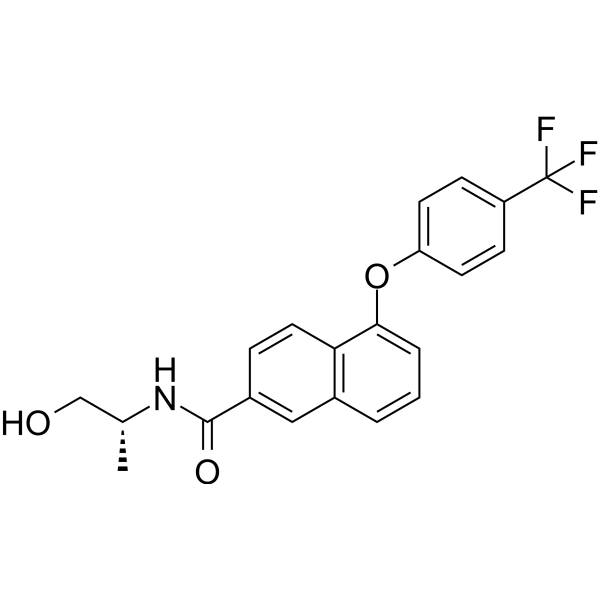
    VT3989 is an orally active pan-TEAD autopalmitoylation inhibitor that modulates the Hippo signaling pathway. VT3989 directly binds to TEAD transcription factors to block their palmitoylation modification, thereby disrupting the formation of YAP/TAZ-TEAD complexes and inhibiting downstream oncogenic transcriptional activity. VT3989 effectively inhibits the growth of NF2-deficient schwannoma and meningioma cells and reverses the Schwann cell phenotype. In addition, VT3989 exerts a synergistic effect when combined with Osimtinib (HY-15772) in EGFR-mutant non-small cell lung cancer models, significantly delaying tumor recurrence and prolonging survival. VT3989 can be used for the research of epithelioid hemangioendothelioma, malignant pleural mesothelioma, type 2 neurofibromatosis and related advanced solid tumors .
    VT3989
  • HY-B1016

    AR-12008

    PDGFR Phosphodiesterase (PDE) Prostaglandin Receptor Cardiovascular Disease Neurological Disease
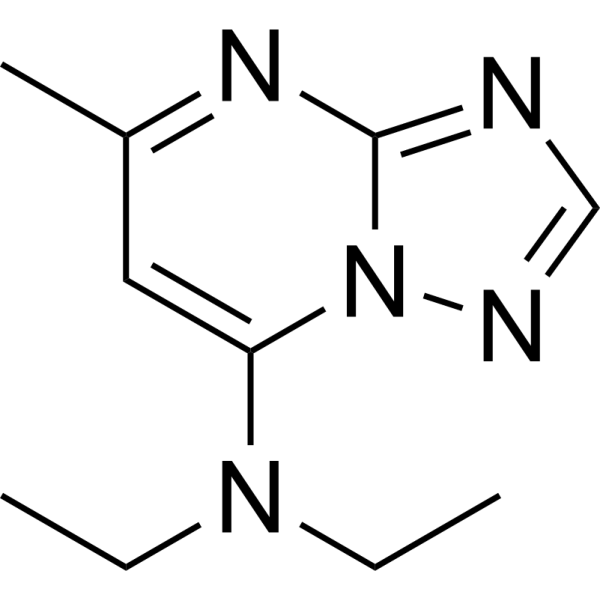
    Trapidil (AR-12008) is an orally active vasodilator and antiplatelet agent. Trapidil antagonizes platelet-derived growth factor (PDGF), inhibits phosphodiesterase, thromboxane A2 synthesis and pro-inflammatory cytokine production. Trapidil promotes prostacyclin biosynthesis, reduces lipid peroxidation, regulates nitric oxide metabolism, and inhibits cell proliferation and migration. Trapidil exerts tissue-protective effects, regulates bone turnover, and inhibits pyroptosis via the GPX3/Nrf2 pathway. Trapidil is applicable to research related to renal ischemia-reperfusion injury, chronic stable angina, restenosis, meningioma, diabetic cardiomyopathy and peripheral nerve crush injury .
    Trapidil
  • HY-B1016R

    AR-12008 (Standard)

    Reference Standards PDGFR Phosphodiesterase (PDE) Prostaglandin Receptor Cardiovascular Disease Cancer
    Trapidil (Standard) (AR-12008 (Standard)) is the analytical standard of Trapidil (HY-B1016R). This product is intended for research and analytical applications. Trapidil (AR-12008) is an orally active vasodilator and antiplatelet agent. Trapidil antagonizes platelet-derived growth factor (PDGF), inhibits phosphodiesterase, thromboxane A2 synthesis and pro-inflammatory cytokine production. Trapidil promotes prostacyclin biosynthesis, reduces lipid peroxidation, regulates nitric oxide metabolism, and inhibits cell proliferation and migration. Trapidil exerts tissue-protective effects, regulates bone turnover, and inhibits pyroptosis via the GPX3/Nrf2 pathway. Trapidil is applicable to research related to renal ischemia-reperfusion injury, chronic stable angina, restenosis, meningioma, diabetic cardiomyopathy and peripheral nerve crush injury.
    Trapidil (Standard)
  • HY-E70559

    PGE synthase Cardiovascular Disease Cancer
    Prostaglandin D synthase is a biomarker for meningioma cells and coronary artery disease. Lipocalin-type Prostaglandin D synthase (L-PGDS) is present in the atherosclerotic plaque of the human coronary artery and can be detectable in human serum .
    Prostaglandin D synthase
  • HY-183124

    Akt Cancer
    AKT1-IN-12 is a AKT1 inhibitor. AKT1-IN-12 is applicable to research related to breast cancer, colorectal cancer and meningioma .
    AKT1-IN-12
  • HY-180306

    Estrogen Receptor/ERR Radionuclide-Drug Conjugates (RDCs) Cancer
    Fluoroestradiol is an Estrogen receptor PET imaging tracer precursor. Fluoroestradiol, when radiolabeled with 18F, can be used as an Estrogen receptor PET imaging tracer. 18F-Fluoroestradiol exhibits the highest uptake selectivity and target-to-background ratio among
    several 18F-labeled estrogens. 18F-Fluoroestradiol has demonstrated Estrogen receptor expression in normal brain tissues and in meningiomas. 18F-Fluoroestradiol can quantify regional Estrogen receptor expression in breast cancer. 18F-Fluoroestradiol has potential applications in assessing and monitoring heterogeneity in ovarian cancer .
    Fluoroestradiol
  • HY-119080

    Progesterone Receptor Endocrinology Cancer
    CP8754 is an orally active, selective human progesterone receptor (hPR) antagonist that blocks progesterone-mediated signaling pathways. CP8754 competitively inhibits the binding of [ 3H]-progesterone to hPR. And in vitro, CP8754 inhibits progesterone-dependent exogenous luciferase and endogenous alkaline phosphatase expression; while in vivo, CP8754 inhibits rabbit endometrial transformation. CP8754 does not significantly bind to human glucocorticoid receptors (hGR), estrogen receptors (hER), or rat androgen receptors (rAR). CP8754 can be used in the study of progesterone-related diseases such as breast cancer, endometriosis, uterine fibroids, and meningioma, as well as hormone-dependent tumors .
    CP8754

Inquiry Online

Your information is safe with us. * Required Fields.

Salutation


Country or Region *

Applicant Name *


Organization Name *

Department *


Email Address *


Product Name *

Cat. No.


Requested quantity *

Phone Number *


Remarks

Inquiry Online

Inquiry Information

Product Name:
Cat. No.:
Quantity:
MCE Japan Authorized Agent:

