1. Search Result
Search Result
Pathways Recommended: Immunology/Inflammation
Results for "

microglial inflammation

" in MedChemExpress (MCE) Product Catalog:

17

Inhibitors & Agonists

2

Peptides

2

Inhibitory Antibodies

4

Natural
Products

1

Isotope-Labeled Compounds

Cat. No. Product Name Target Research Areas Chemical Structure
  • HY-W011474

    NF-κB Inflammation/Immunology
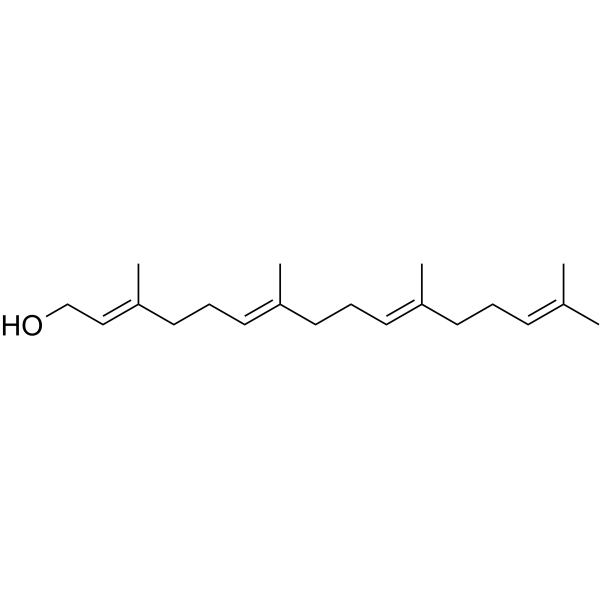
    Geranylgeraniol is an orally acitve vitamin K2 sub-type, an intermediate of the mevalonate pathway. Geranylgeraniol targets NF-kB signaling pathway and could alleviate LPS-induced microglial inflammation in animal model .
    Geranylgeraniol
  • HY-A0183
    Phosphatidylserine
    1 Publications Verification

    Phospholipids, phosphatidylserines; Serine glycerophosphatides

    Akt TGF-β Receptor Inflammation/Immunology
    Phosphatidylserine (Phospholipids) is a well-conserved anti-inflammatory and immunosuppressive signal. Phosphatidylserine is involved in membrane translocation and the activation of protein kinase C, participating in Akt signaling through its interaction with PIP3. The local exposure of Phosphatidylserine can interact with complement and other proteins, promoting microglial phagocytosis during critical periods of synaptic refinement. Phosphatidylserine can promote blood coagulation in the extracellular environment and acts as a "eat me" signal to clear out apoptotic cells. Phosphatidylserine can suppress inflammation in tissues by inducing TGF-β secretion and inhibiting immune responses .
    Phosphatidylserine
  • HY-170621

    STAT NO Synthase COX Interleukin Related TNF Receptor Neurological Disease Metabolic Disease Inflammation/Immunology Cancer
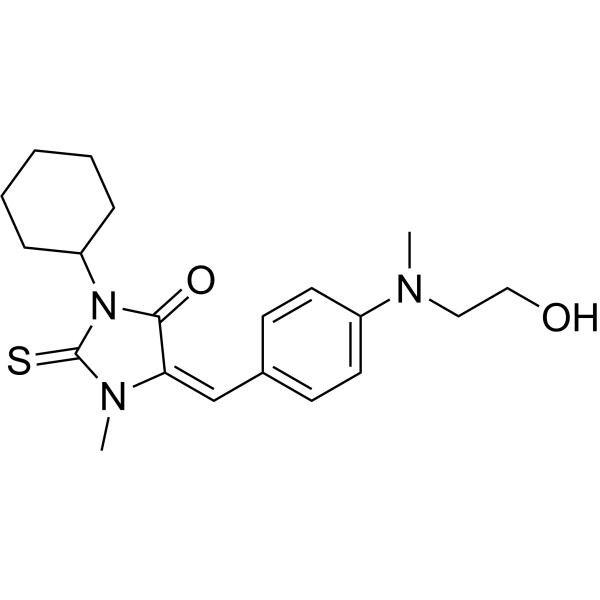
    STAT1/3-IN-1 is a potent STAT1/3 inhibitor with potent anti-inflammatory effect. STAT1/3-IN-1 inhibits phosphorylation and nuclear translocation of STAT1/3 to modulate microglial inflammation, reduces LPS (HY-D1056)-induced pro-inflammatory cytokines (NO, IL-1β, IL-6, and TNF-α) and inflammatory mediators (iNOS, COX-2). STAT1/3-IN-1 exhibits low toxicity in mice. STAT1/3-IN-1 can be used for the research of neuroinflammation .
    STAT1/3-IN-1
  • HY-P99019
    Fremanezumab
    2 Publications Verification

    TEV-48125; LBR-101; PF-04427429; RN-307

    CGRP Receptor Neurological Disease Inflammation/Immunology
    Fremanezumab (TEV-48125) is a humanized lgG2 monoclonal antibody that selectively and potently binds to calcitonin gene related peptide (CGRp) (IC50 values = 7.943 nM). Fremanezumab binds to mouse CGRP with an IC50 value of 19.6 nM. Fremanezumab counteracts anti-inflammatory effects of CGRP in vitro, including CGRP-mediated inhibition of LPS (HY-D1056)-induced microglial activation. Fremanezumab selectively inhibits the activation of Aδ meningeal nociceptors by cortical spreading depression (CSD) in rats. Fremanezumab can be used for the study of inflammation and chronic migraine .
    Fremanezumab
  • HY-101364
    CHPG
    4 Publications Verification

    mGluR NF-κB ERK Akt Cardiovascular Disease Inflammation/Immunology
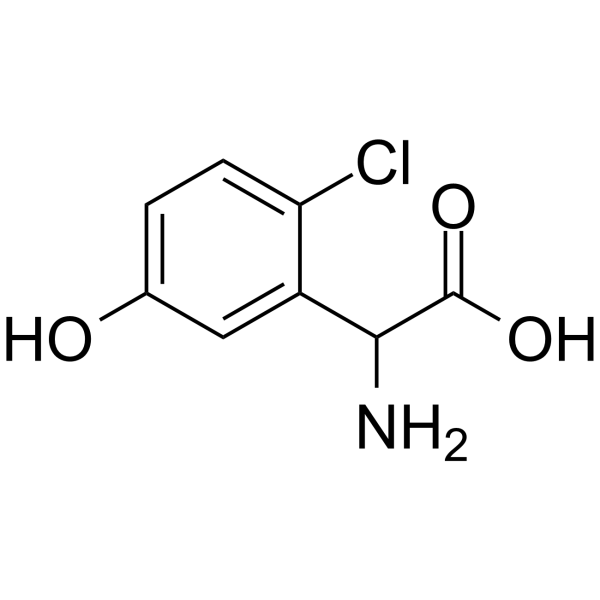
    CHPG is a selective mGluR5 agonist, and attenuates SO2-induced oxidative stress and inflammation through TSG-6/NF-κB pathway in BV2 microglial cells . CHPG protects against traumatic brain injury (TBI) in vitro and in vivo by activation of the ERK and Akt signaling pathways .
    CHPG
  • HY-P6442

    Chemerin Receptor Syk ERK Src p38 MAPK P-selectin Cardiovascular Disease Neurological Disease Inflammation/Immunology
    Chemerin15 is an anti-inflammatory peptide derived from Chemerin. Chemerin15 binds to ChemR23. Chemerin15 inhibits TNFα-induced activation of Syk, ERK and Src kinases. Chemerin15 increases the expression of p-p38 mRNA and protein. Chemerin15 mediates phagocytosis, resolution of inflammation, CD62L shedding and downregulation of PSGL-1 expression in macrophages and microglia. Chemerin15 inhibits neutrophil-mediated vascular inflammation and myocardial ischemia-reperfusion injury via ChemR23. Chemerin15 enhances microglial phagocytosis, thereby alleviating cerebral ischemia-reperfusion injury .
    Chemerin15
  • HY-101364A
    CHPG sodium salt
    4 Publications Verification

    mGluR NF-κB ERK Akt Neurological Disease Inflammation/Immunology
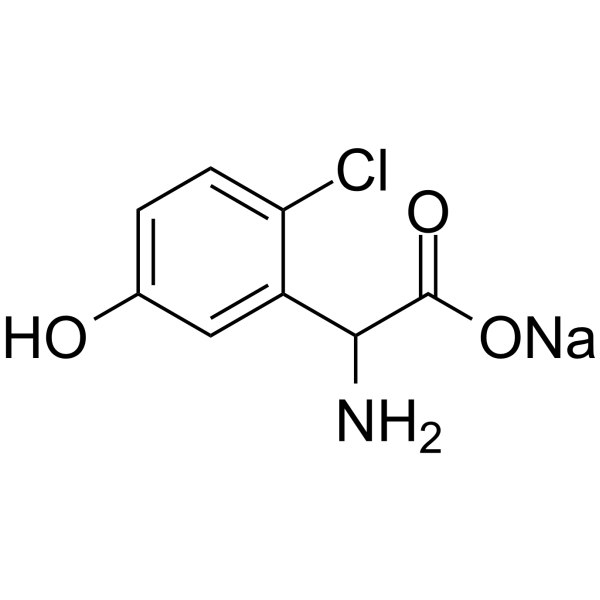
    CHPG sodium salt is a selective mGluR5 agonist, and attenuates SO2-induced oxidative stress and inflammation through TSG-6/NF-κB pathway in BV2 microglial cells . CHPG sodium salt protects against traumatic brain injury (TBI) in vitro and in vivo by activation of the ERK and Akt signaling pathways. .
    CHPG sodium salt
  • HY-152026

    NADPH Oxidase Neurological Disease
    NADPH oxidase-IN-1 is an orally active NADPH oxidase (Nox) inhibitor, related with neuronal inflammation. NADPH oxidase-IN-1 can cross the blood-brain barrier (BBB), inhibits Nox2 and Nox4 with IC50s of 1.9 μM and 2.47 μM, respectively. NADPH oxidase-IN-1 suppresses pro-inflammatory cytokines production and LPS-mediated microglial migration, also has in vivo efficacy .
    NADPH oxidase-IN-1
  • HY-P990283

    CD22 Neurological Disease Inflammation/Immunology
    Anti-Mouse CD22 Antibody (Cy34.1) is a mouse-derived IgG1 κ type antibody inhibitor, targeting to mouse CD22. Anti-Mouse CD22 Antibody (Cy34.1) can deplete CD22 cells and B cells. Anti-Mouse CD22 Antibody (Cy34.1) can promote microglial phagocytosis. Anti-Mouse CD22 Antibody (Cy34.1) can be used for the researches of inflammation and neurological disease, such as Alzheimer's disease (AD) and neuromyelitis .
    Anti-Mouse CD22 Antibody (Cy34.1)
  • HY-W011474R

    Reference Standards NF-κB Inflammation/Immunology
    Geranylgeraniol (Standard) is the analytical standard of Geranylgeraniol. This product is intended for research and analytical applications. Geranylgeraniol is an orally acitve vitamin K2 sub-type, an intermediate of the mevalonate pathway. Geranylgeraniol targets NF-kB signaling pathway and could alleviate LPS-induced microglial inflammation in animal model [4].
    Geranylgeraniol (Standard)
  • HY-N9164

    TREM receptor Toll-like Receptor (TLR) MyD88 NF-κB Keap1-Nrf2 Heme Oxygenase (HO) TNF Receptor Interleukin Related p38 MAPK PI3K Akt Reactive Oxygen Species (ROS) Neurological Disease Inflammation/Immunology
    Hecubine is a monoterpene indole alkaloid found in Ervatamia ocinalis. Hecubine activates TREM2 expression, reduces LPS (HY-D1056)-stimulated inammatory cytokines (TNF-αIL-6IL-1β) overexpression, as well as suppresses the levels of TLR4-, MyD88-, MAPK/PI3K/AKT- and NF-κB-related proteins. Hecubin also exhibits antioxidative effect, reduces ROS production and activates of the Nrf2/HO-1 pathway. Hecubine rescues LPS-induced behavioral deficits in zebrash larvae. Hecubine can be used for the research of neural inflammation-associated central nervous system diseases .
    Hecubine
  • HY-W092110

    Angiotensin-converting Enzyme (ACE) Cardiovascular Disease
    Phe-Tyr is an ACE inhibitor. Phe-Tyr can be isolated from wakame. Phe-Tyr exhibits mild concentration-dependent toxicity to fibroblasts. Phe-Tyr can be used in studies related to hypertension and cardiovascular diseases .
    Phe-Tyr
  • HY-W011474S

    Isotope-Labeled Compounds NF-κB Inflammation/Immunology
    Geranylgeraniol-d5 is the deuterium labeled Geranylgeraniol (HY-W011474). Geranylgeraniol is an orally acitve vitamin K2 sub-type, an intermediate of the mevalonate pathway. Geranylgeraniol targets NF-kB signaling pathway and could alleviate LPS-induced microglial inflammation in animal model .
    Geranylgeraniol-d5
  • HY-146168

    Keap1-Nrf2 Inflammation/Immunology
    Nrf2 activator-5 (compound 1) is a potent Nrf2 activator that can attenuate H2O2-induced oxidative stress and LPS-stimulated inflammation in BV-2 microglial cells. Nrf2 activator-5 exhibits antioxidant and anti-inflammatory activities .
    Nrf2 activator-5
  • HY-168091

    NOD-like Receptor (NLR) Interleukin Related Inflammation/Immunology
    YM-I-26 is a selective NLRP3 inflammasome inhibitor. YM-I-26 enhances the phagocytosis of β-amyloid protein by mouse microglial BV2 cells and inhibits the production of IL-1β and IL-10. YM-I-26 can be used to study the immunomodulatory activity associated with inflammation .
    YM-I-26
  • HY-101364AR

    Reference Standards mGluR NF-κB ERK Akt Neurological Disease Inflammation/Immunology
    CHPG (sodium salt) (Standard) is the analytical standard of CHPG (sodium salt). This product is intended for research and analytical applications. CHPG sodium salt is a selective mGluR5 agonist, and attenuates SO2-induced oxidative stress and inflammation through TSG-6/NF-κB pathway in BV2 microglial cells . CHPG sodium salt protects against traumatic brain injury (TBI) in vitro and in vivo by activation of the ERK and Akt signaling pathways. .
    CHPG sodium salt (Standard)
  • HY-W283930

    Tau Protein ATP Synthase Mitophagy Reactive Oxygen Species (ROS) Mitochondrial Metabolism Neurological Disease Inflammation/Immunology
    YHV98-4 is a selective, blood-brain barrier permeable Hv1 channel inhibitor. YHV98-4 specifically inhibits Hv1 with a half-maximal inhibitory concentration of 1 µM without inhibiting other ion channels. YHV98-4 reduces the propagation of p-tau. YHV98-4 increases ATP production, and enhances microglial mitophagy. YHV98-4 attenuates inflammatory pain via inhibition of Hv1 and ROS production. YHV98-4 enhances microglia-to-neuron mitochondrial transfer, promoting the delivery of functional mitochondria to rescue neuronal damage and improve cognitive function. YHV98-4 reduces inflammation. YHV98-4 can be used in the research of Alzheimer's disease .
    YHV98-4

Inquiry Online

Your information is safe with us. * Required Fields.

Salutation


Country or Region *

Applicant Name *


Organization Name *

Department *


Email Address *


Product Name *

Cat. No.


Requested quantity *

Phone Number *


Remarks

Inquiry Online

Inquiry Information

Product Name:
Cat. No.:
Quantity:
MCE Japan Authorized Agent:

