
1. Search Result
Search Result
Results for "

multi-drug

" in MedChemExpress (MCE) Product Catalog:

430

Inhibitors & Agonists

4

Screening Libraries

3

Fluorescent Dyes

3

Biochemical Assay Reagents

28

Peptides

1

Inhibitory Antibodies

109

Natural
Products

2

Recombinant Proteins

31

Isotope-Labeled Compounds

10

Antibodies

3

Click Chemistry

2

Oligonucleotides

2

GMP Molecules

Targets Recommended:
Cat. No. Product Name Target Research Areas Chemical Structure
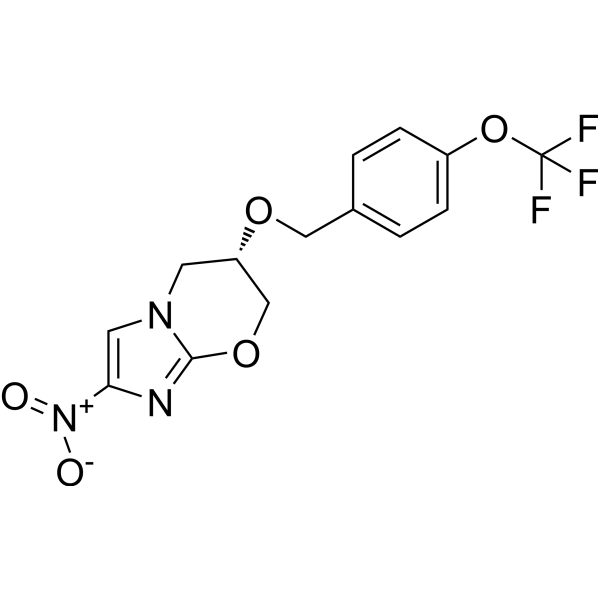
  • HY-10844
    Pretomanid
    10+ Cited Publications

    PA-824; (S)-PA 824

    Bacterial Antibiotic Infection Cancer
    Pretomanid (PA-824) is an antibiotic used for the research of multi-drug-resistant tuberculosis affecting the lungs. Pretomanid exhibits a sub-micromolar MIC against M. tuberculosis (MTB). The MIC values of PA-824 against a panel of MTB pan-sensitive and Rifampin mono-resistant clinical isolates range from 0.015 to 0.25 μg/mL.
    Pretomanid
  • HY-N3308
    Medicarpin
    2 Publications Verification

    Apoptosis Cancer
    Medicarpin is a flavonoid isolated from Medicago sativa. Medicarpin induces apoptosis and overcome multidrug resistance in leukemia P388 cells by modulating P-gp-mediated efflux of agents .
    Medicarpin
  • HY-P1939

    Cyclo(L-prolyl-L-leucyl)

    Fungal Bacterial Influenza Virus Infection
    Cyclo(L-Leu-L-Pro) is a cyclic dipeptide with broad-spectrum antibacterial, antiviral and antifungal activities. Its biological activity is highly dependent on the stereoconfiguration and is widely present in microbial metabolites. Cyclo(L-Leu-L-Pro) efficiently and specifically inhibits the production of aflatoxin by Aspergillus flavus. The cis configuration of Cyclo(L-Leu-L-Pro) (cis-cyclo(L-Leu-L-Pro)) has broad-spectrum antibacterial activity against multi-drug resistant bacteria and significantly inhibits the influenza A virus H3N2 .
    Cyclo(L-Leu-L-Pro)
  • HY-N2598

    Environmental Pollutants Bacterial Infection Cancer
    Methyl oleate is a fatty acid methyl ester (FAME) with anti-extended spectrum β-Lactamase (ESBL) potential, anticancer and antibacterial activities. Methyl oleate substantially improves the antioxidation ability but markedly impaired the antiwear capacity of zinc dialkyldithiophosphate (ZDDP). Methyl oleate is promising for research of ESBL producing multi drug resistant (MDR) pathogens .
    Methyl oleate
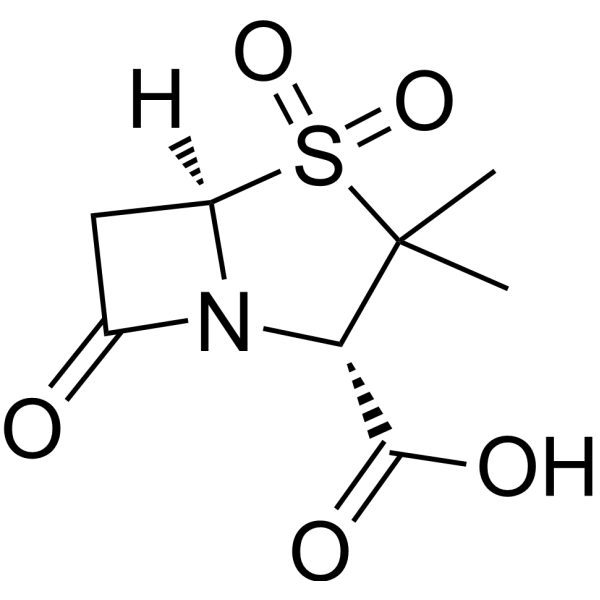
  • HY-B0334
    Sulbactam
    10+ Cited Publications

    CP45899

    Bacterial Antibiotic Infection
    Sulbactam (CP45899) is a competitive, irreversible beta-lactamase inhibitor. Sulbactam shows antimicrobial activity against multidrug-resistant (MDR) acinetobacter calcoaceticus--Acinetobacter baumannii (Acb) complex .
    Sulbactam
  • HY-D0180

    18C6; 1,4,7,10,13,16-Hexaoxacyclooctadecane

    Bacterial Infection
    18-Crown-6-ether is a type of crown ether compound and a specific structure dissociating agent. 18-Crown-6-ether can compete with K + for binding to G-quadruplexes, disrupting their stable structure to regulate the functions of related systems. 18-Crown-6-ether combines with K + and other metal ions to achieve precise ion transmembrane transport. 18-Crown-6-ether can act as an "susceptibility substrate" for the multi-drug efflux pump EmrE (a bacterial multidrug resistance transporter), ultimately inhibiting bacterial growth. 18-Crown-6-ether can be used in microcapsule controlled release and the research on developing antibacterial enhancers .
    18-Crown-6-ether
  • HY-146331

    Bacterial Infection
    PC190723 is a bacterial cell division protein FtsZ inhibitor (IC50 = 55 nM). PC 190723 prevents cell division. PC190723 has potent and selective bactericidal activity against staphylococci, including methicillin- and multi-drug-resistant Staphylococcus aureus. PC190723 induces nucleated assembly of Bs-FtsZ into single-stranded coiled protofilaments and polymorphic condensates. PC190723 can be studied in anti-bacterial infection research .
    PC190723
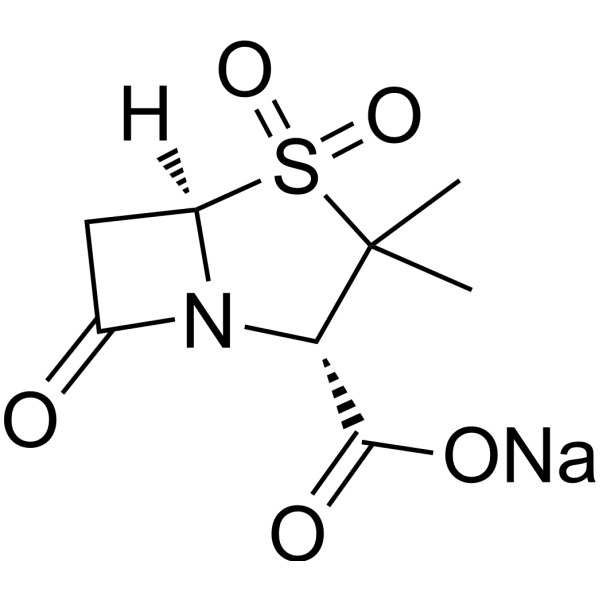
  • HY-B0334A
    Sulbactam sodium
    10+ Cited Publications

    CP45899 sodium

    Bacterial Antibiotic Infection
    Sulbactam (CP45899) sodium is a competitive, irreversible beta-lactamase inhibitor. Sulbactam sodium shows antimicrobial activity against multidrug-resistant (MDR) acinetobacter calcoaceticus--Acinetobacter baumannii (Acb) complex .
    Sulbactam sodium
  • HY-79490

    ADC Payload Topoisomerase Cancer
    Ac-Exatecan is acetylation-modified Exatecan (HY-13631). Exatecan is a common toxin component in ADC preparation (ADC cytotoxin) and an inhibitor of DNA topoisomerase I (IC50 = 2.2 μM). Exatecan has antitumor activity. Exatecan can be used as a payload for ADC. Exatecan is effective against P-glycoprotein mediated multi-drug resistant cells .
    Ac-Exatecan
  • HY-W018791
    Bifendate
    2 Publications Verification

    DDB

    HBV Autophagy Cytochrome P450 Atg8/LC3 p62 P-glycoprotein Infection Cardiovascular Disease Cancer
    Bifendate (DDB), extracted from Schisandrae chinensis, is an orally active anti-HBV agent against chronic hepatitis B. Bifendate inhibits ATG5-dependent autophagy and attenuates oleic acid-induced lipid accumulation with anti-oxidant properties in vitro. Bifendate can decrease alanine transaminase (ALT) level in mice. Bifendate attenuates hepatic steatosis in cholesterol/bile salt- and high-fat diet-induced hypercholesterolemia in mice. Bifendate potently increases the activity of cytochrome proteins (CYPs) and reverse P-gp-mediated multi-drug resistance (MDR) .
    Bifendate
  • HY-17013
    Dofequidar
    2 Publications Verification

    MS-209 free base

    P-glycoprotein Cancer
    Dofequidar (MS-209 free base) is an orally active quinoline compoundthat blocks P-glycoprotein (P-gp) and multidrug resistance-associated protein-1 (MDR-1). Dofequidar has highly potent reversing effect on multidrug-resistant tumor cells. Dofequidar competitively inhibits ABCB1/P-gp, ABCC1/MRP-1, blocks the efflux of chemotherapeutic agents, increases the drug concentration in cancer cells, and enhances the chemotherapeutic effect .
    Dofequidar
  • HY-12892
    SKI-178
    1 Publications Verification

    SphK Apoptosis Cancer
    SKI-178 is a potent sphingosine kinase-1 (SphK1) and SphK2 inhibitor. SKI-178 is cytotoxic at IC50 concentrations ranging from 1.8 to 0.1 μM in both agent sensitive and multi-agent resistant cancer cell lines (i.e., MTR3, NCI-ADR and HL60/VCR cells). SKI-178 induces apoptosis in a CDK1-dependent manner in human acute myeloid leukemia cell lines .
    SKI-178
  • HY-P10856

    P-glycoprotein Cancer
    CPI1 is a multidrug resistance protein 1 (MRP1) inhibitor with a Ki value of 100 nM. CPI1 binds to the same substrate-binding site as leukotriene C4, stabilizes MRP1 in an apo-like inward-facing conformation, blocks the conformational changes required for ATP hydrolysis and substrate transport, and inhibits the ATPase activity of human and bovine MRP1. CPI1 serves as a tool for investigating the substrate transport mechanism of MRP1. CPI1 is applicable to research related to cancer multidrug resistance .
    CPI1
  • HY-15975

    Parasite Infection
    GNF179 is an optimized 8,8-dimethyl imidazolopiperazine analog that exhibits antimalarial potency (IC50 of 4.8 nM against the multidrug resistant strain W2). GNF179 is orally active .
    GNF179
  • HY-N1050

    mTOR Ribosomal S6 Kinase (RSK) Bacterial Infection Neurological Disease Cancer
    Zederone is a sesquiterpene. Zederone inhibits ovarian cancer cell proliferation through mTOR/p70s6K signalling pathway. Zederone inhibits CYP activities with IC50s of 2.9 μM (CYP2B6), 9.2 μM (CYP2C9), 11,2 μM (CYP2C19) and >30 μM (CYP1A2 and CYP2D6). Zederone is hepatotoxic with LD50 value at 24 hours in mice of approximately 223 mg/kg and cytotoxic against the KG1a cell line. Zederone shows antibacterial activity against a number of multi-drug resistant and Methicillin (HY-121544)-resistant Staphylococcus aureus strain. Zederone shows cognition improving capacity and assists in the modulation of gut bacterial dysbiosis .
    Zederone
  • HY-13574A
    Biricodar
    1 Publications Verification

    VX-710

    P-glycoprotein Cancer
    Biricodar (VX-710) is a modulator of P-glycoprotein and MRP-1; shows effective chemosensitizing activity in multidrug resistant cells.
    Biricodar
  • HY-135813
    LtaS-IN-1
    1 Publications Verification

    Bacterial Infection
    LtaS-IN-1 (compound 1771) is a potent small-molecule inhibitor of Lipoteichoic acid (LTA) synthesis in multidrug-resistant (MDR) E. faecium and by altering the cell wall morphology. LtaS-IN-1 alone inhibits Enterococcus.spp 28 strains with varying MIC values ranging from 0.5 μg/mL to 64 μg/mL. LtaS-IN-1 combination with antibiotics abolishs multidrug-resistant E. faecium growth almost completely .
    LtaS-IN-1
  • HY-17013A
    Dofequidar fumarate
    2 Publications Verification

    MS-209

    P-glycoprotein Cancer
    Dofequidar fumarate (MS-209) is an orally active quinoline compoundthat blocks P-glycoprotein (P-gp) and multidrug resistance-associated protein-1 (MDR-1). Dofequidar fumarate has highly potent reversing effect on multidrug-resistant tumor cells. Dofequidar fumarate competitively inhibits ABCB1/P-gp, ABCC1/MRP-1, blocks the efflux of chemotherapeutic agents, increases the drug concentration in cancer cells, and enhances the chemotherapeutic effect .
    Dofequidar fumarate
  • HY-162959

    Bacterial Topoisomerase DNA/RNA Synthesis Infection
    BWC0977 is an antibacterial agent that inhibits bacterial DNA replication via inhibition of DNA gyrase and topoisomerase IV. BWC0977 exhibits a minimum inhibitory concentration (MIC90) of 0.03-2 µg/mL against MDR (Multi-Drug Resistant) Gram-negative bacteria .
    BWC0977
  • HY-N2103

    P-glycoprotein Cancer
    Tenacissoside G is a C21 steroid from the stems of Marsdenia tenacissima. Tenacissoside G reverses multidrug resistance in P-glycoprotein (Pgp)-overexpressing multidrug-resistant cancer cells .
    Tenacissoside G
  • HY-N3373

    Bacterial Infection
    Loganetin is a non-toxic natural product that may be applied in the antibacterial agent development for treating multidrug-resistant Gram negative infections.
    Loganetin
  • HY-117452

    P-glycoprotein Inflammation/Immunology Cancer
    LY-402913 is a selective multidrug resistance protein (MRP1) inhibitor .
    LY-402913
  • HY-10844R

    PA-824 (Standard); (S)-PA 824 (Standard)

    Reference Standards Bacterial Antibiotic Infection Cancer
    Pretomanid (Standard) is the analytical standard of Pretomanid. This product is intended for research and analytical applications. Pretomanid (PA-824) is an antibiotic used for the research of multi-drug-resistant tuberculosis affecting the lungs. Pretomanid exhibits a sub-micromolar MIC against M. tuberculosis (MTB). The MIC values of PA-824 against a panel of MTB pan-sensitive and Rifampin mono-resistant clinical isolates range from 0.015 to 0.25 μg/mL.
    Pretomanid (Standard)
  • HY-135578

    Parasite Infection
    Artelinic acid, a derivative of Artemisinin, is an antimalarial agent for the treatment of multidrug resistant strains of Plasmodium falciparum. Artelinic acid can be administered by various routes of administration, including intravenous, intramuscular and oral routes .
    Artelinic acid
  • HY-126906

    Environmental Pollutants Antibiotic P-glycoprotein Cancer
    Milbemycin A4 inhibits P-glycoprotein activity, and reverses multidrug resistance of tumor cells. Milbemycins are a family of macrolide antibiotics with insecticidal and acaricidal activity sup>[2].
    Milbemycin A4
  • HY-10844S1

    PA-824-d5; (S)-PA 824-d5

    Antibiotic Bacterial Isotope-Labeled Compounds Infection Cancer
    Pretomanid-d5 is deuterated labeled Pretomanid (HY-10844). Pretomanid (PA-824) is an antibiotic used for the research of multi-drug-resistant tuberculosis affecting the lungs. Pretomanid exhibits a sub-micromolar MIC against M. tuberculosis (MTB). The MIC values of PA-824 against a panel of MTB pan-sensitive and Rifampin mono-resistant clinical isolates range from 0.015 to 0.25 μg/mL.
    Pretomanid-d5
  • HY-149809

    Bacterial Infection
    AcrB-IN-1 (Compound H6) is a potent AcrB inhibitor. AcrB-IN-1 can be used for the reversal of bacterial multidrug resistance .
    AcrB-IN-1
  • HY-P3270

    Bacterial Antibiotic Infection
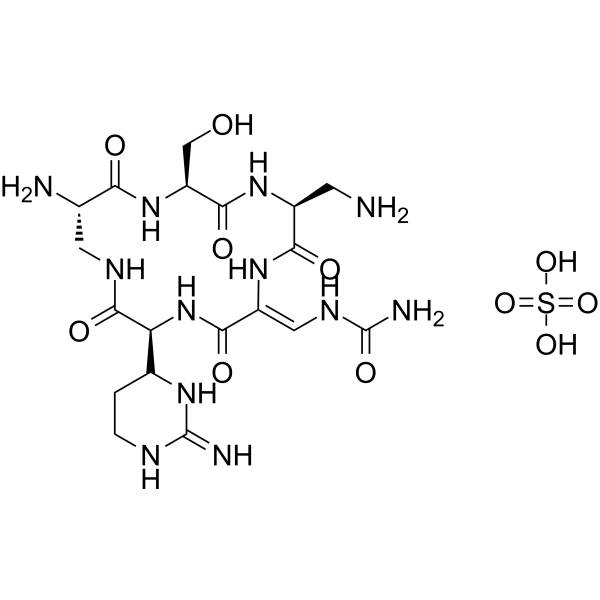
    Capreomycin is a macrocyclic peptide antibiotic. Capreomycin can be used for anti-multidrug-resistant-tuberculosis research. Capreomycin can inhibit phenylalanine synthesis in in mycobacterial ribosomes translation
    Capreomycin
  • HY-156753

    Bacterial Cancer
    NorA-IN-1 (Compound 16) is a NorA inhibitor. NorA-IN-1 inhibits NorA efflux pump in everted membrane vesicles. NorA-IN-1 can be used for research of multidrug resistance .
    NorA-IN-1
  • HY-101791

    P-glycoprotein Cancer
    P-gp inhibitor 1 is a novel inhibitor reversing P-glycoprotein-mediated multidrug resistance.
    P-gp inhibitor 1
  • HY-10844S

    Isotope-Labeled Compounds Bacterial Antibiotic Infection Cancer
    Pretomanid-d4 is the deuterium labeled Pretomanid. Pretomanid (PA-824) is an antibiotic used for the research of multi-drug-resistant tuberculosis affecting the lungs. Pretomanid exhibits a sub-micromolar MIC against M. tuberculosis (MTB). The MIC values of PA-824 against a panel of MTB pan-sensitive and Rifampin mono-resistant clinical isolates range from 0.015 to 0.25 μg/mL .
    Pretomanid-d4
  • HY-136217

    P-glycoprotein Cancer
    PU 23 is a non-carboxylic multidrug resistance protein 4 (MRP4) inhibitor as an active agent reducing resistance to anticancer agent 6-Mercaptopurine .
    PU 23
  • HY-N15551

    Bacterial Infection
    Armeniaspirol C is a potent antibacterial agent targeting Gram-positive bacteria. Armeniaspirol C is is promising for research of infections caused by multidrug-resistant Gram-positive bacteria .
    Armeniaspirol C
  • HY-B1401

    Quinine ethyl carbonate

    Parasite Infection
    Euquinine is an odorless salt that can be used as a substitute for quinine. Euquinine has anti-Plasmodium falciparum activity. Euquinine can be used for the study of multidrug resistance and bioavailability of Plasmodium falciparum .
    Euquinine
  • HY-W064918

    Bacterial Infection
    NITD-304 is an orally active anti-tuberculosis agent. NITD-304 exerts inhibitory and bactericidal activities gainst Mycobacterium tuberculosis and multidrug-resistant Mycobacterium tuberculosis. NITD-304 inhibits mycobacterial cell wall biosynthesis and demonstrates synergistic or additive growth inhibitory activity with select antibacterial agents. NITD-304 shows low risk of cardiotoxicity and drug-drug interactions, with no inhibition of major cytochrome P-450 enzymes or hERG channel. NITD-304 can be used for the research of tuberculosis and multidrug-resistant tuberculosis .
    NITD-304
  • HY-146391

    P-glycoprotein Cancer
    P-gp inhibitor 4 (Compound 8b) is a selective P-glycoprotein modulator with an EC50 of 94 nM. P-gp inhibitor 4 increases agent transport across gastro-intestinal barrier and recovers doxorubicin toxicity in multidrug resistant cancer cells .
    P-gp inhibitor 4
  • HY-162959A

    Bacterial Topoisomerase DNA/RNA Synthesis Infection
    BWC0977 formic is an antibacterial agent that inhibits bacterial DNA replication via inhibition of DNA gyrase and topoisomerase IV. BWC0977 formic exhibits a minimum inhibitory concentration (MIC90) of 0.03-2 µg/mL against MDR (Multi-Drug Resistant) Gram-negative bacteria .
    BWC0977 formic
  • HY-178504

    Bacterial Infection
    Lug-15 is a rapid bactericidal agent. Lug-15 exhibits strong antibacterial activity against both Gram-positive and Gram-negative bacteria, including drug-resistant strains. Lug-15 rapidly kills bacteria primarily through membrane disruption and had a very low propensity to induce bacterial resistance. Lug-15 demonstrates low hemolytic toxicity and significant therapeutic potential in various infection models. Lug-15 can be used for research on combating infections caused by multi-drug resistant bacteria .
    Lug-15
  • HY-W018791R

    DDB (Standard)

    Reference Standards HBV Autophagy Cytochrome P450 Atg8/LC3 p62 P-glycoprotein Infection Cardiovascular Disease Cancer
    Bifendate (DDB), extracted from Schisandrae chinensis, is an orally active anti-HBV agent against chronic hepatitis B. Bifendate inhibits ATG5-dependent autophagy and attenuates oleic acid-induced lipid accumulation with anti-oxidant properties in vitro. Bifendate can decrease alanine transaminase (ALT) level in mice. Bifendate attenuates hepatic steatosis in cholesterol/bile salt- and high-fat diet-induced hypercholesterolemia in mice. Bifendate potently increases the activity of cytochrome proteins (CYPs) and reverse P-gp-mediated multi-drug resistance (MDR) .
    Bifendate (Standard)
  • HY-178942

    VEGFR EGFR Apoptosis Bcl-2 Family Caspase MDM-2/p53 Cancer
    EGFR/VEGFR2-IN-9 (Compound 9b) is an inhibitor of VEGFR-2 (IC50 = 1.325 μM) and EGFR (IC50 = 1.891 μM). EGFR/VEGFR2-IN-9 significantly inhibits the proliferation of multiple cancer cell lines, particularly leukemia cells. EGFR/VEGFR2-IN-9 upregulates the expression levels of Bax, caspase-3, and p53, while downregulating the expression of Bcl-2. EGFR/VEGFR2-IN-9 induces apoptosis and arrests the cell cycle in the G1 phase. EGFR/VEGFR2-IN-9 can be used to investigate anti-tumor angiogenesis and multi-drug resistant cancers .
    EGFR/VEGFR2-IN-9
  • HY-178952

    Bacterial Infection
    Anti-infective agent 12 (Compound A09) is a competitive inhibitor of type I signal peptidease (SPase I), with an IC50 of 4.475 μM and a Kd of 16.3 μM. Anti-infective agent 12 has the ability to disrupt bacterial membranes and remove biofilms. Anti-infective agent 12 exhibits potent bactericidal activity against Gram-positive bacteria, with MIC values of 4, 4, 8, and 8 μg/mL for Staphylococcus aureus, Enterococcus faecalis, Enterococcus faecium, and Streptococcus suis, respectively. Anti-infective agent 12 remains effective against multi-drug resistant strains, but has weaker activity against Gram-negative bacteria (such as Escherichia coli and Salmonella), with MIC values > 64 μg/mL. Anti-infective agent 12 has low hemolytic activity and shows significant efficacy in mouse skin infection models .
    Anti-infective agent 12
  • HY-101741

    A-289099

    Microtubule/Tubulin Apoptosis Cancer
    A-259745 is an orally active antimitotic agent that binds to the colchicine-binding site of tubulin. A-259745 exhibits potent in vitro cytotoxic activity against both multi-drug-resistant and non-multi-drug-resistant cancer cell lines, with ED50 values of 0.018 μM against HCT-15 and 0.028 μM against NCI-H460 cell lines. A-259745 inhibits tubulin polymerization, disrupts the dynamic equilibrium of the mitotic spindle, arrests dividing cells in metaphase, and subsequently induces apoptosis. A-259745 shows dose-dependent antitumor efficacy in murine tumor models. A-259745 can be used for the study of cancer .
    A-259745
  • HY-174219

    Bacterial Infection
    BT-33 is a fuorinated macrobicyclic oxepanoprolinamide antibiotic with broad-spectrum activity against multidrug-resistant bacterial pathogens .
    BT-33
  • HY-103250

    Antibiotic Infection
    PF-945863 is an orally active macrolide antibiotic that can be used for the research of multidrug resistant respiratory tract bacterial strains .
    PF-945863
  • HY-18051

    Calcium Channel Cancer
    CXL 017 is a sarco/endoplasmic reticulum Ca 2+-ATPase (SERCA) inhibitor. CXL 017 can inhibit the ATPase activity of SERCA by competing with ATP for binding. CXL 017 exhibits selective cytotoxicity against multidrug-resistant acute myeloid leukemia cells HL60/MX2. CXL 017 can be used in the research of tumors such as multidrug-resistant acute myeloid leukemia .
    CXL 017
  • HY-P1720

    Antibiotic Bacterial Infection
    Telomycin is a calcium-dependent antibiotic, which can be produced by Streptomyces. Telomycin inhibits gram-positive bacteria, including multidrug-resistant (MDR) pathogens .
    Telomycin
  • HY-N2632

    Apoptosis Cancer
    Uvarigrin, isolated from the roots of Uvaria calamistrata, induces tumor multidrug resistance cell apoptosis and triggers Caspase-9 activation .
    Uvarigrin
  • HY-149089

    Bacterial Infection
    Antibacterial agent 138 has excellent antibacterial activity to multi-drug resistant bacteria. Antibacterial agent 138 inhibits bacterial protein synthesis but bacterial cell walls .
    Antibacterial agent 138
  • HY-N11697

    P-glycoprotein Cancer
    α-Cryptoxanthin is a natural carotenoid with anticancer effects. α-Cryptoxanthin inhibits multidrug resistance 1 (MDR1) mediated efflux pump .
    α-Cryptoxanthin
  • HY-B2170

    Bacterial Infection
    Octenidine is a potent antibacterial agent, possessing activity against multidrug-resistant Gram-negative pathogens. Octenidine can inhibit the expression of biofilm genes and destroy the formation of biofilms .
    Octenidine

Inquiry Online

Your information is safe with us. * Required Fields.

Salutation


Country or Region *

Applicant Name *


Organization Name *

Department *


Email Address *


Product Name *

Cat. No.


Requested quantity *

Phone Number *


Remarks

Inquiry Online

Inquiry Information

Product Name:
Cat. No.:
Quantity:
MCE Japan Authorized Agent:

